Muzzleloader Deer Dates and Rules
For many hunters, the appeal of the muzzleloader season lies in its unique challenge and often quieter, less pressured timing. But trying to navigate the specific dates and intricate rules for muzzleloader deer hunting in Saskatchewan can feel like deciphering ancient scrolls, leaving you wondering if you're even allowed to use your preferred rifle and what days you can actually be out there. This guide aims to clear up all that confusion, giving you a crystal-clear understanding of Saskatchewan's muzzleloader deer dates and equipment regulations so you can confidently plan your next hunt.
Understanding Saskatchewan's Muzzleloader Deer Seasons
Saskatchewan's hunting regulations can feel like a labyrinth, especially when you start looking at specific weapons and their corresponding seasons. Muzzleloader hunting offers a unique window into the deer woods, often preceding or overlapping with the general rifle seasons, providing opportunities that modern firearm hunters might miss. It’s a chance to connect with a more traditional form of hunting, and for many, that adds an extra layer of satisfaction.
General Muzzleloader Season Structure
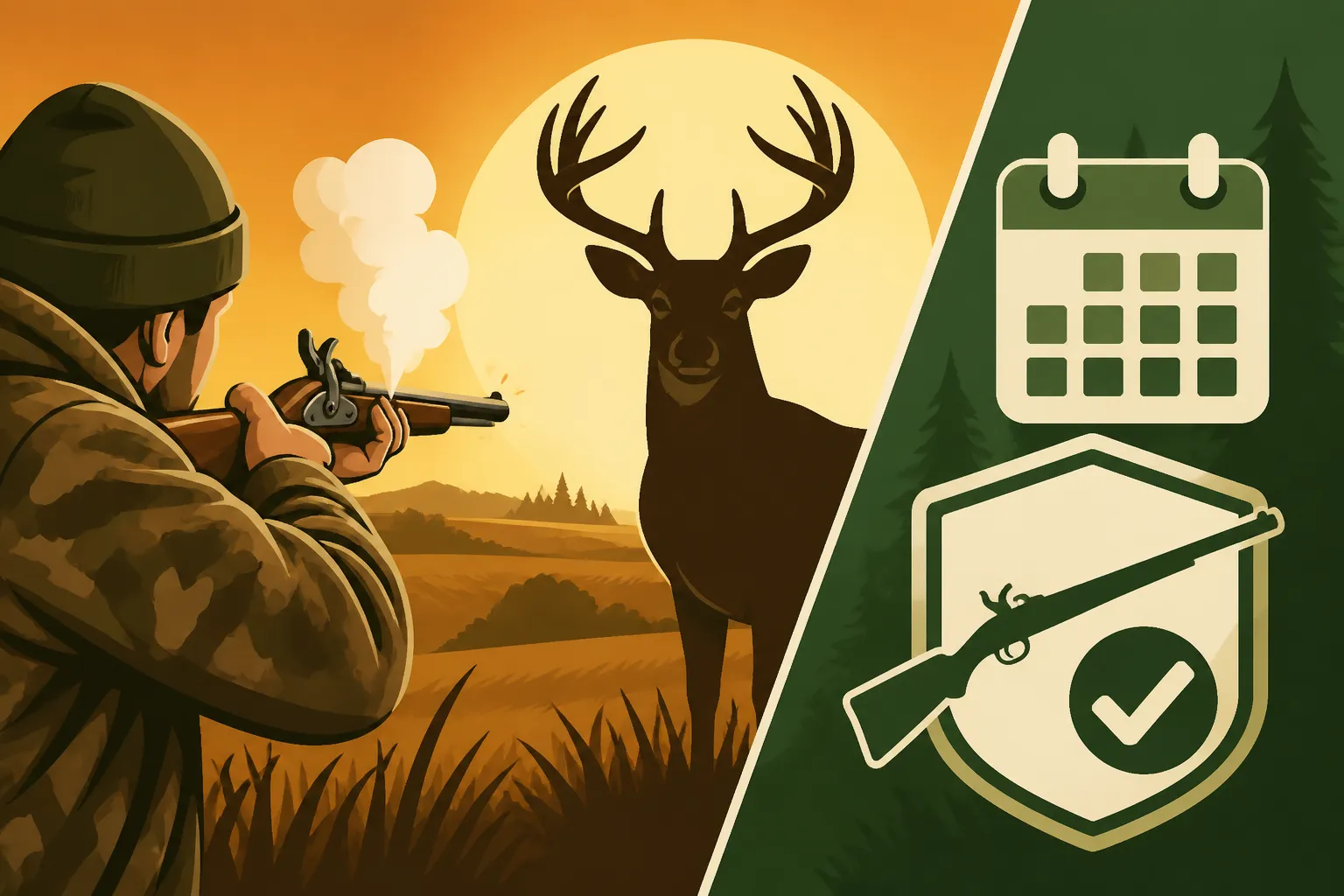
Unlike the broad strokes of the general rifle season, muzzleloader seasons in Saskatchewan are typically more restricted, often limited to specific Wildlife Management Zones (WMZs) and running for shorter durations. Generally, the muzzleloader season for deer, specifically white-tailed deer, tends to kick off in early to mid-November, sometimes running concurrently with the archery season in certain zones or acting as a bridge before the main rifle rut season. This timing can be fantastic, as you're often hunting just as the whitetail rut in early to mid November starts to intensify, meaning bucks are on the move and more susceptible to calling and rattling. However, it's crucial to understand that these aren't province-wide free-for-alls. Each zone will have its own specific opening and closing dates, and sometimes different regulations for antlered versus antlerless deer.
Zone-Specific Dates and Considerations
This is where the rubber meets the road. Simply knowing there's a muzzleloader season isn't enough; you absolutely need to drill down into the regulations for the specific WMZ you plan to hunt. For instance, a zone in the heart of the Aspen Parkland might have different dates than one in the southern prairie or the forest fringe. These variations are designed to manage local deer populations effectively and distribute hunting pressure. What might be an open muzzleloader season for antlered deer in one zone could be completely closed or restricted to antlerless only in an adjacent zone. Always, and I mean always, double-check the current Saskatchewan Hunting Guide for your chosen WMZ. Websites like GoHunt often have excellent resources that can help you cross-reference this information quickly, but the official provincial guide is your ultimate source of truth. Without this granular understanding, you could inadvertently be hunting out of season, which is a mistake no one wants to make.
Antlered vs. Antlerless Opportunities
Another key distinction in muzzleloader deer hunting is whether your tag allows you to harvest an antlered or antlerless animal. In many WMZs, the general muzzleloader season might be for antlered deer only, meaning you’re strictly targeting bucks. However, some zones, particularly those with higher deer populations or specific management goals, might offer antlerless opportunities, allowing you to take a doe. These antlerless tags are often available through the Saskatchewan Antlerless Draw Rules, and if you're keen on filling the freezer, keeping an eye on those application periods is paramount. Knowing your target animal before you head out is not just about legal compliance; it helps you tailor your scouting and hunting strategies. Are you looking for a trophy buck or simply to put some meat in the freezer? Your target will dictate where and how you hunt within the muzzleloader season.
Muzzleloader Equipment Regulations in Saskatchewan
The essence of muzzleloader hunting lies in its adherence to historical firearm technology. This isn't just a preference; it's enshrined in the regulations. Deviating from these specific equipment rules can quickly turn a legal hunt into a serious infraction, so understanding the nuances of what's allowed and what's not is crucial.
Legal Muzzleloader Types and Calibers
In Saskatchewan, a legal muzzleloader is generally defined as a firearm loaded from the muzzle, where the powder, projectile, and igniting charge are all inserted through the barrel. This typically includes traditional flintlock, percussion cap, and modern in-line muzzleloaders. The key is how it's loaded, not necessarily its age or appearance. For big game like deer, there are also minimum caliber requirements to ensure an ethical harvest. While specific minimums can vary, a general rule of thumb is a .45 caliber or larger for deer, though many hunters opt for .50 caliber for its proven effectiveness. Projectile types also matter; usually, solid lead or saboted projectiles are acceptable, but you need to ensure they are designed for muzzleloader use and meet any specific weight or construction requirements outlined in the regulations. This isn't the time to experiment with homemade concoctions or projectiles not intended for the modern muzzleloader.
Prohibited Accessories
This is where many hunters, especially those new to muzzleloading or transitioning from modern rifles, can get tripped up. While technology has advanced muzzleloader performance significantly, Saskatchewan regulations often maintain a more traditional spirit. For instance, optical sights, like scopes, are generally not permitted on muzzleloaders during the dedicated muzzleloader seasons. You're typically limited to open, iron sights. This adds to the challenge and charm of muzzleloader hunting, requiring hunters to hone their shooting skills at closer ranges. Furthermore, many regulations prohibit the use of smokeless powder pellets, sabots that fully encase the projectile, or certain primer types that essentially turn a muzzleloader into a cartridge firearm. For example, some jurisdictions have very strict rules against "209 primers" or certain forms of pre-loaded charges. Always check the current hunting guide to understand exactly what is not allowed. Websites like GoHunt can often offer clarity on common misconceptions, but the official guide remains supreme. Knowing these restrictions beforehand saves you from wasted effort and potential legal trouble.
Ammunition and Loading Rules
The act of loading a muzzleloader is distinct and governed by specific rules. Only black powder or approved black powder substitutes (like Pyrodex or Triple Seven) are permitted. You absolutely cannot use modern smokeless powders, which generate significantly higher pressures and can dangerously damage a muzzleloader designed for black powder. The projectile, whether it's a patched round ball, a mini-ball, or a saboted bullet (if sabots are permitted for your specific zone and firearm), must be loaded from the muzzle. Pre-loading the powder and projectile, and then capping or priming the rifle just before the hunt, is often permissible, but having multiple loads ready to go in a speed loader or individual tubes is a common practice. Remember, you're not allowed to carry a loaded muzzleloader in a vehicle, just like a modern firearm. Understanding the nuances of loading, carrying, and discharging a muzzleloader is paramount for both safety and legal compliance.
Essential Rules and Best Practices for Muzzleloader Hunting
Beyond the specific dates and equipment, there's a broader set of rules and best practices that apply to all hunting in Saskatchewan, but some take on particular importance for muzzleloader enthusiasts. Adhering to these ensures a safe, ethical, and successful experience.
Licensing and Tagging Requirements
Before you even think about stepping into the field with your muzzleloader, you need to ensure you have the correct licenses and tags. This starts with having a valid Saskatchewan hunting license, which you can typically obtain through the Saskatchewan's HAL Account and Licensing system. For big game like deer, you'll need a specific deer tag for the species (e.g., White-Tailed Deer) and potentially for the antler configuration (antlered or antlerless) that matches your muzzleloader season opportunity. These tags often specify the WMZ and weapon type, so make sure your tag explicitly covers "muzzleloader" if that's what you're using in a specific muzzleloader-only season. Once you've harvested an animal, promptly validating your tag by notching or cutting out the date and relevant information is a legal requirement. Failure to do so can result in significant penalties, and it's a simple step that shows your respect for the regulations.
Safety Considerations Unique to Muzzleloaders
Muzzleloaders, while generally safe, have unique characteristics that demand extra vigilance. "Hangfires" are a common concern, where the primer ignites but the main powder charge takes a moment longer to catch fire, resulting in a delayed discharge. This is why it's critical to keep the muzzle pointed in a safe direction for a longer period after a misfire or click, rather than immediately lowering the gun to inspect it. Loading is another critical safety point. Always be mindful of pouring the correct amount of powder for your firearm and never double-charge. A double charge can have catastrophic results, leading to barrel ruptures and severe injury. Furthermore, unlike modern firearms, clearing a misfired muzzleloader in the field can be more involved. Knowing how to safely de-prime, remove the powder, or in extreme cases, safely discharge the rifle into a clearing barrel is part of responsible muzzleloader ownership. Staying safe when hunting Saskatchewan Winter Weather Safely is crucial, and handling a muzzleloader in extreme cold requires extra care.
Planning Your Muzzleloader Hunt
Effective scouting is always important, but with the typically shorter ranges of muzzleloaders, it becomes even more critical. You'll want to focus on areas where you can get within 100 yards, or even 75 yards, for a high-percentage shot. This means looking for dense cover, natural funnels, and food sources where deer activity is concentrated. Consider the terrain; the open prairie might be more challenging for a muzzleloader hunter than the broken country of the Forest Fringe. Checking the weather forecast is also paramount. Muzzleloaders can be notoriously sensitive to moisture. Rain or heavy snow can wet the powder or primer, leading to misfires. Bringing waterproof covers for your muzzle and action, and keeping your powder dry, are essential preparations. Finally, given the potential for cold weather during Saskatchewan's muzzleloader seasons, planning for proper meat care in Saskatchewan's Cold Snaps is vital. You might be hunting the December Late Season Cold, and having a plan for processing and packing out your game quickly will ensure the quality of your harvest. Using a mapping tool like GoHunt can be invaluable here, allowing you to identify potential bedding areas, travel corridors, and even locate specific features like a bluff between two fields where deer might funnel.
Muzzleloader Deer Season Overview – Saskatchewan
Here's a generalized overview of what to expect for muzzleloader deer seasons in Saskatchewan. Always consult the current official Saskatchewan Hunting Guide for precise dates and regulations for your chosen WMZ, as these can change annually.
| Aspect | General Characteristics (Always verify WMZ specific) | Key Considerations |
|---|---|---|
| Season Dates | Primarily early to mid-November, sometimes overlapping archery or preceding rifle. | Check specific WMZ for exact open/close dates. Can vary year-to-year. |
| Target Species | White-tailed Deer (Mule Deer are typically rifle-only or draw). | Confirm if your zone allows antlered, antlerless, or both with a muzzleloader tag. |
| Legal Firearms | Muzzle-loaded firearms (flintlock, percussion cap, in-line). | Must load from the muzzle. Check specific rules on powder type, projectile, and igniting charge. |
| Minimum Caliber | Generally .45 caliber or larger for deer. | .50 caliber is common and recommended for effectiveness. |
| Allowed Sights | Typically open/iron sights only during dedicated muzzleloader season. | Optical sights (scopes) are generally not permitted. |
| Prohibited Items | Smokeless powder, certain pelletized powders, specific sabots, modern primers. | Avoid anything that "modernizes" the muzzleloader beyond traditional means. |
| Licensing | Requires a valid Saskatchewan hunting license and appropriate deer tag. | Ensure your tag specifies "muzzleloader" if applicable for a special season. |
| Safety Focus | Vigilance for hangfires, proper loading procedures, dry powder storage. | Always keep muzzle pointed in a safe direction, especially after a misfire. |
Ultimately, muzzleloader deer hunting in Saskatchewan offers a rewarding challenge for those willing to embrace its unique demands. By thoroughly understanding the specific season dates, adhering to the equipment regulations, and practicing sound hunting ethics and safety, you'll be well on your way to a successful and memorable hunt. Don't forget that scouting with satellite imagery in Saskatchewan is a great way to locate prime muzzleloader hunting spots, helping you get close to your quarry.
Disclaimer
The information provided in this guide is for general informational purposes only and is not a substitute for the official Saskatchewan hunting regulations. Hunters are responsible for consulting the current year's Saskatchewan Hunting Guide and related provincial legislation to ensure full compliance. Regulations can change annually, and adherence to all laws is mandatory.