Invasive Species Saskatchewan Hunters Should Report
Invasive species in Saskatchewan harm native wildlife habitats, and hunters must spot leafy spurge or wild boar to protect local game.
Know what you’re after.
Big game, small game, upland birds, and waterfowl — identification, behavior, rut and migration timing, and how each species moves through the season.
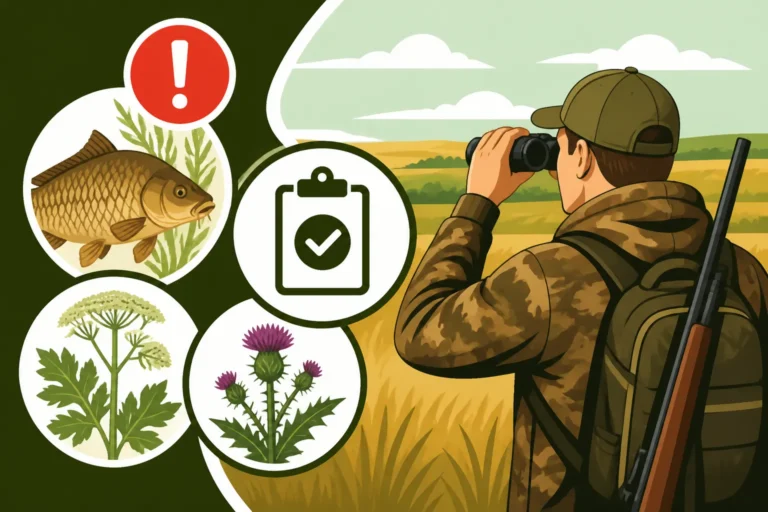
Invasive species in Saskatchewan harm native wildlife habitats, and hunters must spot leafy spurge or wild boar to protect local game.
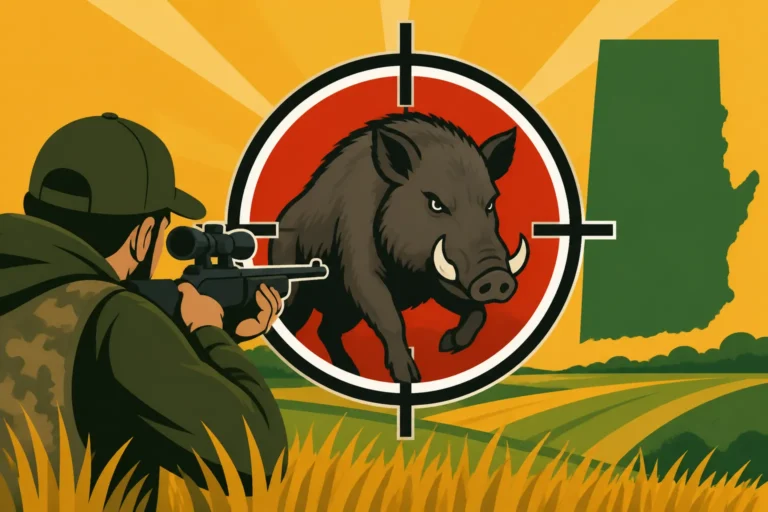
Saskatchewan’s wild boar eradication effort explains control strategies and how hunters can help protect local agriculture and ecosystems.
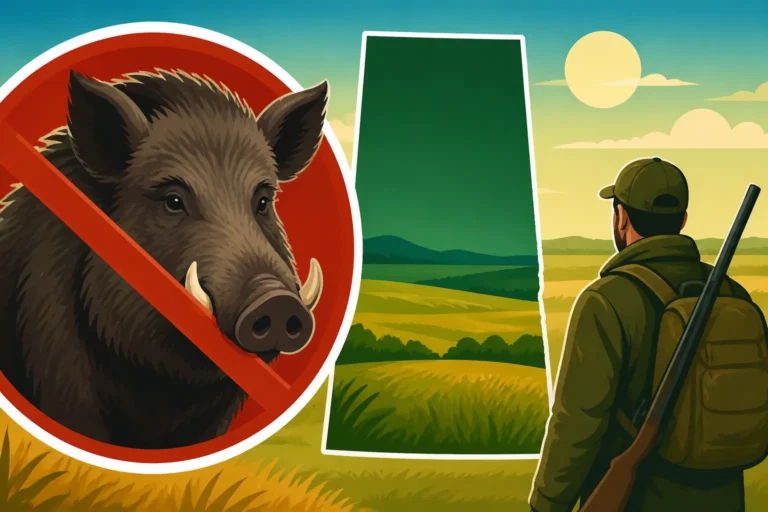
Saskatchewan wild boar populations, their invasive spread, and how landowners and hunters manage this growing agricultural threat.
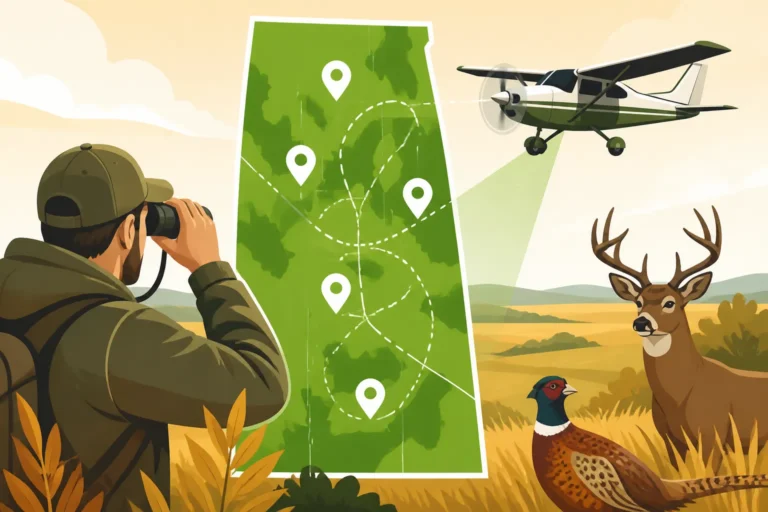
Saskatchewan aerial game surveys use helicopters and fixed-wing aircraft across northern boreal forests and southern prairies.
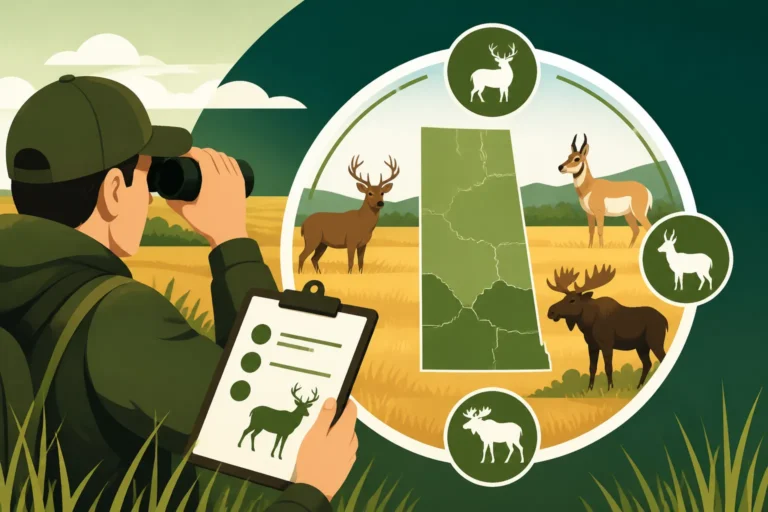
Saskatchewan game animal monitoring uses aerial surveys and biological data to set hunting quotas and maintain wildlife populations.
Saskatchewan Parkland wildlife productivity relies on an ecological transition zone combining diverse habitats and rich agricultural crop development.
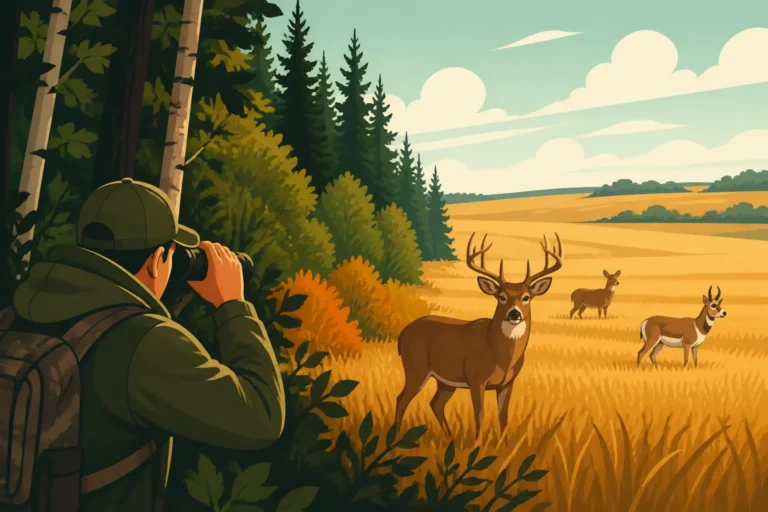
Saskatchewan forest fringe ecology and edge habitats explain why agricultural lands and boreal forests attract abundant wildlife.
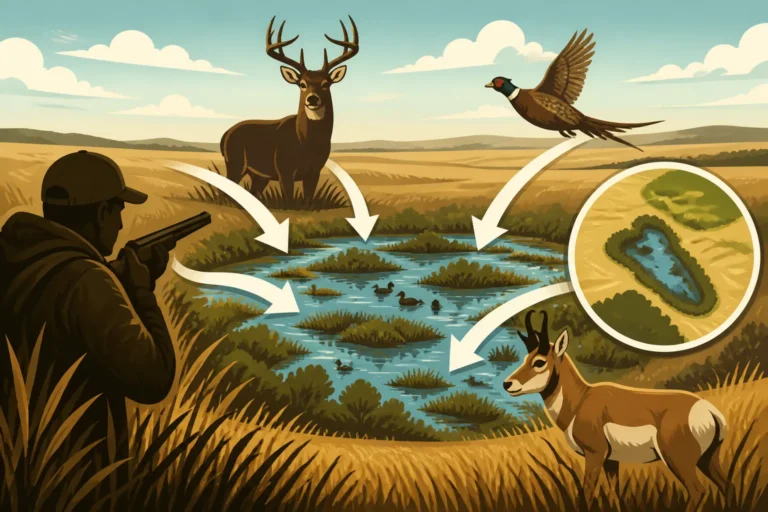
Saskatchewan sloughs concentrate wildlife by providing water, food, and cover, improving hunting success across prairies.
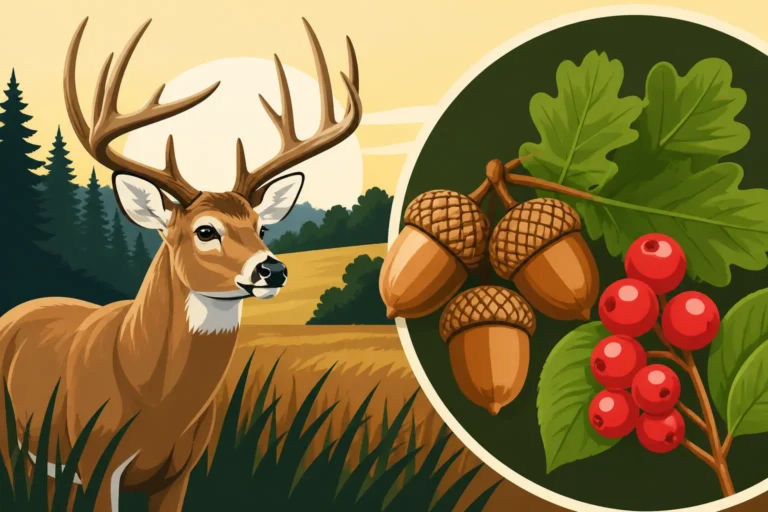
Acorn and berry crops in northern Saskatchewan dictate wildlife locations, health, and hunting success for northern animals.
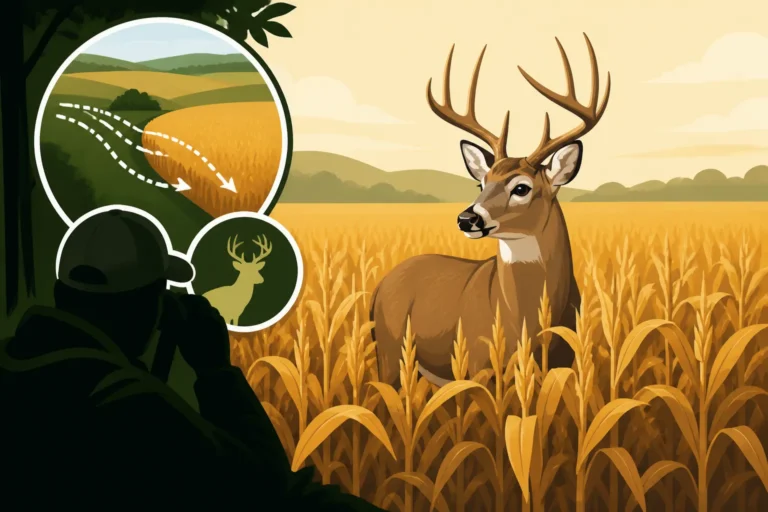
Saskatchewan deer hide inside standing crops to access abundant food, dense cover, and crucial thermal regulation throughout the winter.