Saskatchewan Shooting Hours for Big Game
There’s nothing quite like the anticipation of a Saskatchewan hunting morning, sitting in your blind or on stand, waiting for the first hint of light. But that feeling can quickly turn to anxiety if you’re not absolutely certain when you can legally raise your rifle or nock an arrow. Misunderstanding Saskatchewan's shooting hours for big game is a common frustration, risking not only a missed opportunity but serious legal trouble. This guide is here to clear up all the confusion, providing practical advice and vital information to ensure your hunt is always legal and ethical.
The Foundation: Understanding Saskatchewan's Legal Shooting Hours for Big Game
When you're out in the vastness of Saskatchewan, whether it's the open prairie, the dense forest fringe, or the northern bush, knowing exactly when you can legally hunt big game is paramount. It’s not just a suggestion; it’s a non-negotiable rule. Many hunters, especially those new to the province or coming from areas with different regulations, find themselves scratching their heads over the precise timing.
The "Half-Hour Rule" Demystified
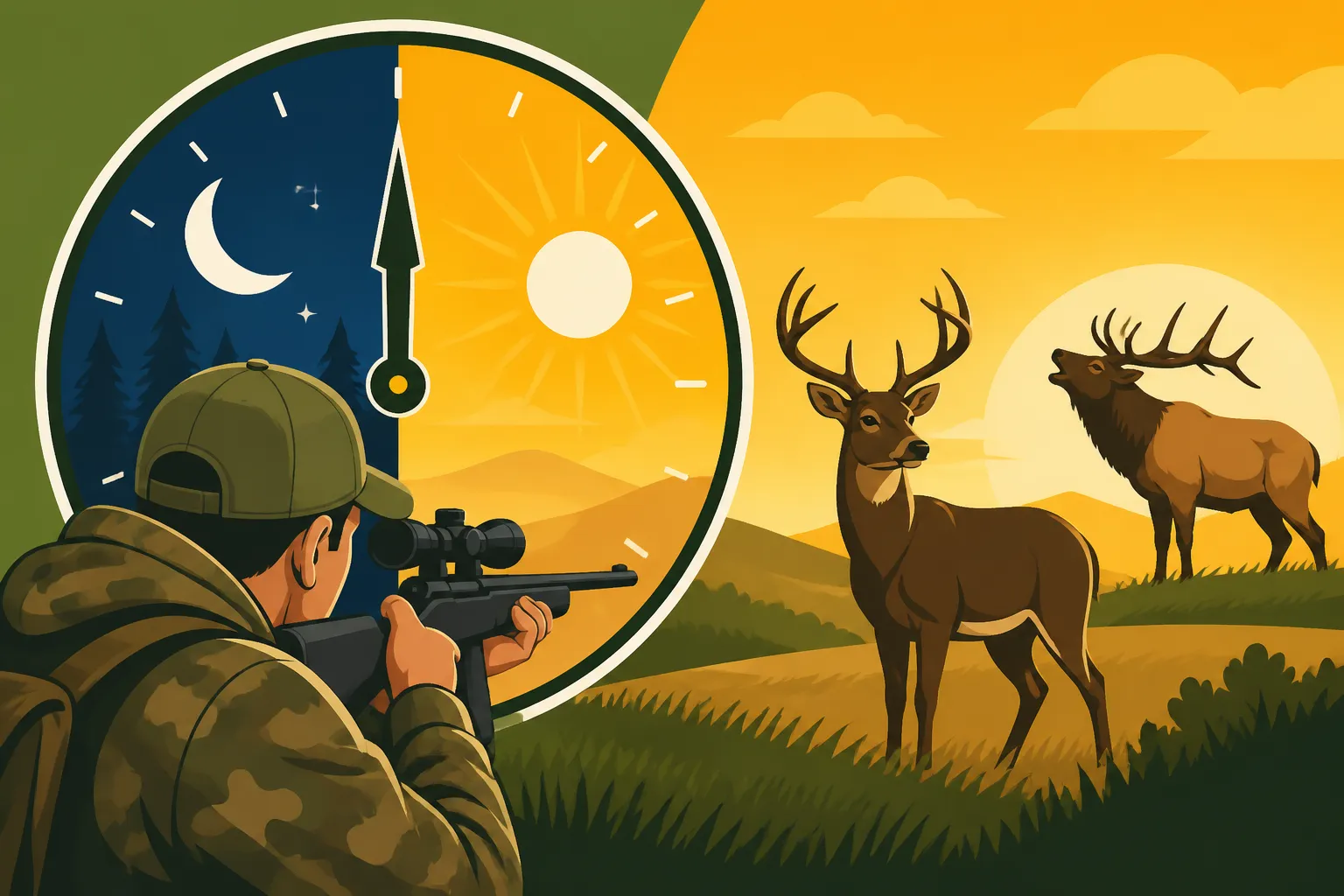
Saskatchewan's regulations for big game hunting are quite specific, yet surprisingly simple once you understand the core principle. For big game, including species like white-tailed deer, mule deer, moose, elk, and bear, the legal shooting hours extend from one half-hour before official sunrise to one half-hour after official sunset.
Now, that "official" part is key. This isn't about when you personally can see well enough, or when the sun peeks over the horizon from your specific vantage point in a valley. It refers to the astronomical definitions of sunrise and sunset for your precise location on a given day. These times are scientifically calculated and published, not left up to individual interpretation. Think of it as a fixed, measurable parameter that ensures fairness and a consistent standard across all hunters. This specific window is designed to provide sufficient natural light for positive target identification, promoting both safety and ethical hunting practices. It removes any ambiguity that might arise from varying weather conditions or terrain, which could otherwise affect a hunter's personal visibility.
Why Precision Matters: Safety and Ethics
Adhering strictly to these legal shooting hours isn't just about following the law; it's deeply rooted in hunter safety and the principles of fair chase. Imagine the potential for accidents if hunters were allowed to shoot in near-darkness. Poor light significantly increases the risk of misidentifying your target, not only between different species but even between antlered and antlerless animals, or worse, between an animal and another hunter.
Ethically, big game animals deserve a fair chance. Hunting in twilight hours can give the hunter an undue advantage, making it harder for the animal to detect a threat. Furthermore, a shot taken in marginal light conditions is more likely to be poorly placed, leading to a wounded animal that might suffer and be difficult to track. Nobody wants to be in that situation, especially in the cold and unforgiving Saskatchewan wilderness. By respecting the half-hour rule, we commit to clean, humane kills and responsible stewardship of our wildlife resources. It’s a reflection of our dedication to ethical hunting, ensuring that every harvest is done under conditions that allow for a clear, identifiable, and responsible shot. For more on safe hunting practices, you might want to review resources on Saskatchewan Hunter Education and Firearms Safety.
Navigating the Nuances: Determining Exact Times
The half-hour rule is straightforward enough, but putting it into practice means accurately knowing the precise sunrise and sunset times for your specific hunting location on any given day. This can be trickier than it sounds, especially in a province as geographically expansive as Saskatchewan.
Leveraging Technology for Accuracy
In today’s world, we’re fortunate to have a wealth of tools at our fingertips to help pinpoint these crucial times. Your smartphone is arguably your most powerful ally in this regard. Most modern weather apps built into your phone, or third-party weather applications, will provide local sunrise and sunset times. However, you need to ensure the app is using your exact location, not just a nearby city that might be many miles away.
Dedicated hunting apps are even better. Many popular platforms now integrate hyper-local sunrise/sunset data, often including the legal half-hour buffer times. Tools like GoHunt, for instance, are designed with hunters in mind, allowing you to mark your stand location and get precise, minute-by-minute updates for that spot. These apps often account for factors like elevation and your precise longitude, which can make a difference of several minutes compared to a generalized city forecast. Always double-check that your phone's location services are enabled and that the app is using them. Before you head out, especially if you anticipate poor cell service in the bush, take a screenshot or write down the times for your hunting day. Using apps for precise times is a critical part of Scouting With Satellite Imagery in Saskatchewan and integrating it with your hunt plan.
The Impact of Daylight Saving Time and Location
One of the biggest pitfalls for hunters is forgetting about Daylight Saving Time (DST). While DST shifts our clocks forward or backward by an hour, the astronomical events of sunrise and sunset remain constant in universal time. This means if you check a generic table from before or after the time change, your calculations could be off by a full hour. Always ensure that whatever source you're using for sunrise/sunset times is adjusted for the current date and whether DST is in effect. Saskatchewan is unique in that it largely observes Central Standard Time (CST) year-round and does not adjust for daylight saving in most areas, which can add another layer of confusion for those from outside the province or hunting in the small portions of Saskatchewan that do observe DST. Always confirm the local time standard for your specific hunting zone.
Beyond DST, Saskatchewan's sheer size means that sunrise and sunset times vary significantly from east to west. For example, the sun rises and sets considerably earlier in the eastern parts of the province, near cities like Yorkton or Estevan, compared to the western reaches, such as Swift Current or Lloydminster. It’s not just a few minutes; it can be a substantial difference that absolutely affects your legal shooting window. Even within a single Wildlife Management Zone (WMZ), if it spans a considerable east-west distance, the exact times at your stand could differ from the official times given for the center of the zone. Always use a tool that specifically accounts for your exact latitude and longitude to avoid any accidental violations.
Here's a quick example to illustrate the variations and the "half-hour rule":
| Location | Date | Official Sunrise | Legal Shooting Start | Official Sunset | Legal Shooting End |
|---|---|---|---|---|---|
| Regina, SK | Nov 10, 2023 | 7:40 AM CST | 7:10 AM CST | 4:55 PM CST | 5:25 PM CST |
| Swift Current, SK | Nov 10, 2023 | 7:59 AM CST | 7:29 AM CST | 5:14 PM CST | 5:44 PM CST |
| Saskatoon, SK | Nov 10, 2023 | 7:49 AM CST | 7:19 AM CST | 5:04 PM CST | 5:34 PM CST |
Note: These are approximate times for illustrative purposes and actual times can vary slightly based on specific daily conditions and precise location.
As you can see, even on the same day, the legal shooting window shifts significantly across the province. This table highlights why relying on a general "Saskatchewan time" is a risky game; precise location data is indispensable.
Practical Tips for Staying Legal and Ethical
Knowing the rules and how to find the times is one thing; consistently applying them in the field is another. The excitement of the hunt, changing weather, or that trophy buck suddenly appearing can all challenge your discipline.
Pre-Hunt Preparation and On-Stand Habits
The best way to stay compliant is to integrate checking shooting hours into your routine. Every evening before a hunt, make it a habit to check the exact sunrise and sunset times for your specific hunting spot for the following day. Write these times down on a piece of paper, save them as a note on your phone, or etch them into memory. It’s a simple step that eliminates guesswork when you’re cold, tired, and in the dark.
When you get to your stand in the morning, ensure you're settled and ready well before legal shooting light begins. This means having your rifle or bow in position, optics ready, and silently scanning your surroundings. When that first legal minute arrives, you'll be prepared. Conversely, as sunset approaches, start mentally preparing for the end of your hunting window. Begin packing up your gear or simply cease active hunting at the half-hour past sunset mark. It can be incredibly tough when a deer, especially a big one, steps out just as legal light is fading, or a few minutes before it's officially open in the morning. This is where your commitment to ethical hunting is truly tested. Remember, a lost opportunity is far better than a potentially unethical shot or a legal violation. This discipline is particularly important when Hunting the Rut in Early to Mid November, when bucks are most active at dawn and dusk.
Equipment and Visibility Considerations
While the legal shooting hours define your window, the quality of your optics can greatly influence your effective hunting time within that window. High-quality binoculars and rifle scopes with good light-gathering capabilities can extend your ability to identify game clearly in low light conditions. This doesn’t mean you can shoot outside the legal window, but it does mean you can make a more confident and ethical decision about a shot within the legal window. If your optics are struggling to resolve detail, it's a good sign that actual shooting light might be insufficient, even if it's technically legal.
For safety, especially during these low-light periods, always ensure you are visibly wearing the required amount of blaze orange. This is crucial for big game hunting in Saskatchewan, where clear visibility of other hunters is paramount. Even if you’re tucked away in a dense bush bluff, wearing proper blaze orange helps you stand out to other hunters who might be moving through the area. During the low light of dawn and dusk, the distinctive colour of blaze orange becomes even more critical, ensuring you are seen and reducing the chance of accidental encounters. For specific requirements, consult the rules on Saskatchewan Blaze Orange Rules. It's a key part of staying safe, especially when hunting the edges of cover like Hunting Whitetails in Saskatchewan's Forest Fringe.
Common Misconceptions and Avoiding Pitfalls
Even with clear rules, misunderstandings about legal shooting hours persist. It's vital to address these head-on to prevent hunters from inadvertently breaking the law or making poor ethical decisions.
It's Not Just About "When You Can See"
One of the most common misconceptions is that legal shooting hours are simply about when you, the individual hunter, can see well enough to make a shot. "I could see him perfectly!" is a phrase often heard, but personal visibility is subjective and variable. Your eyesight, the specific weather conditions (fog, clouds, heavy snow), your location (dense bush vs. open field), and even the colour of the animal can all impact your perception of light.
The half-hour rule removes this subjectivity entirely. It provides an objective, verifiable standard. The law doesn't care if you have night-vision goggles or eyes like a hawk; it cares about the official sunrise and sunset times. This legal framework protects wildlife, ensures fair chase, and, most importantly, enhances safety for everyone in the field. Relying solely on your personal judgment of light quality is a recipe for trouble. Always check and adhere to the published, official times. This is especially true when facing the challenges of Hunting Saskatchewan Winter Weather Safely, where deep cold and low sun angles can drastically alter perceived light.
Consequences of Violating Shooting Hours
Violating legal shooting hours for big game in Saskatchewan is a serious offence, not a minor oversight. The penalties can be significant and far-reaching. Depending on the severity and circumstances of the violation, you could face hefty fines, confiscation of your firearm or hunting equipment, and even suspension of your hunting privileges for an extended period. Imagine losing your right to hunt in Saskatchewan, perhaps even nationwide, all because you took a chance a few minutes too early or too late.
Beyond the legal ramifications, there's also the profound ethical cost. Shooting outside legal hours diminishes the public perception of hunting as a responsible and regulated activity. It casts a shadow on the entire hunting community, undermining conservation efforts and fostering negative stereotypes. Remember, every hunter is an ambassador for the sport. Adhering to these fundamental rules is a testament to our respect for wildlife, the land, and the laws that govern us. If you're ever in doubt, err on the side of caution. It's always better to wait a few extra minutes for full legal light than to regret a hasty decision. For a deeper understanding of potential consequences, you can look into Penalties for a Hunting Violation.
Disclaimer
The information provided in this article is for general guidance only and does not constitute legal advice. Hunting regulations can change, and it is the individual hunter's responsibility to consult the most current Saskatchewan hunting guide and regulations published by the Ministry of Environment before participating in any hunting activities. Always prioritize safety and ethical practices in the field.