Whether You Can Hunt in a Provincial Park
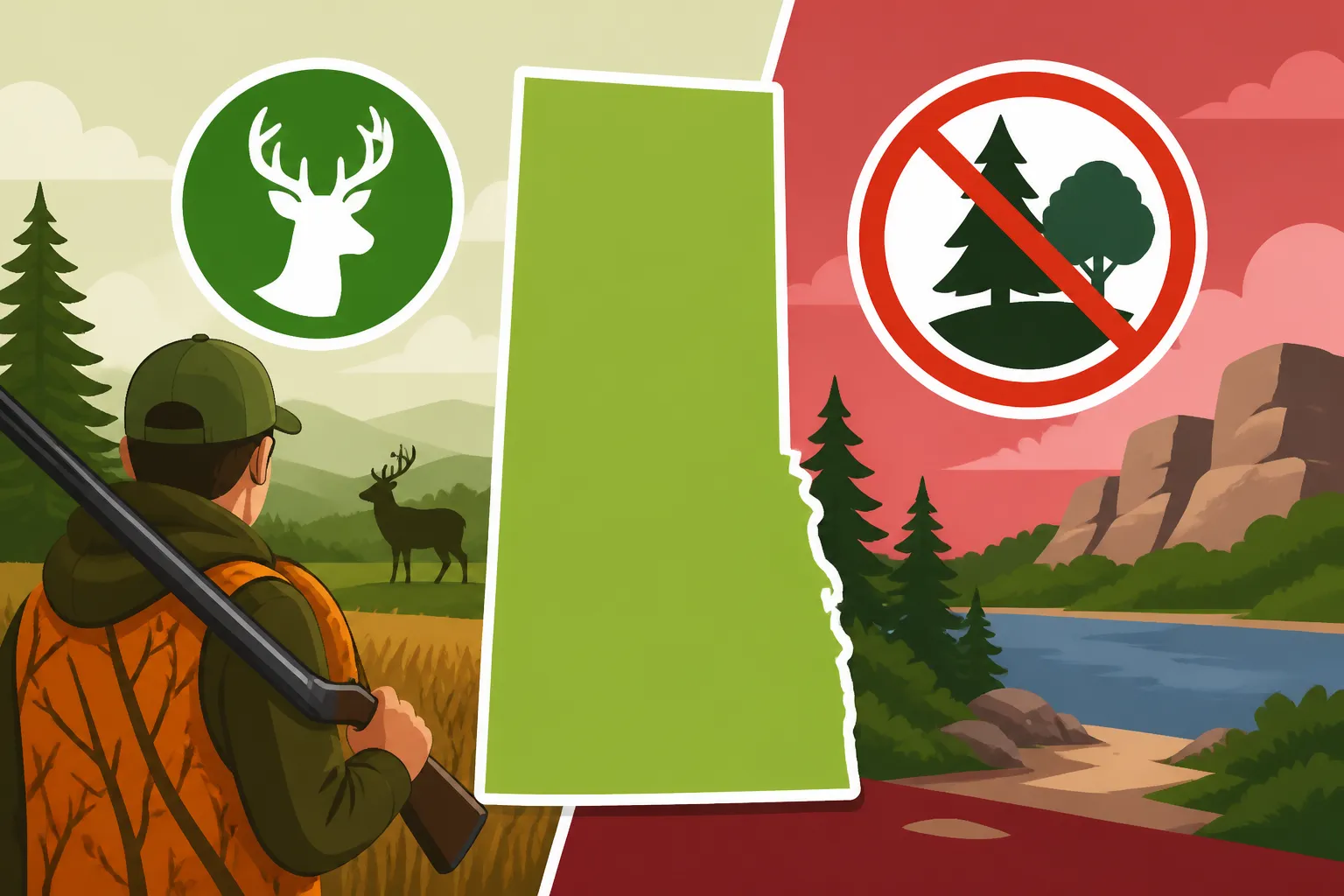
One of the most common questions I hear from hunters, especially those new to Saskatchewan or exploring new areas, is whether they can hunt in our provincial parks. It's a natural question to ask when you see promising habitat or an abundance of game animals within what appears to be an accessible area. However, the reality is that provincial parks are generally off-limits to hunting, and understanding why, and where you can hunt instead, is crucial for a safe and legal season.
The General Rule: Hunting and Saskatchewan Provincial Parks Don't Mix
It's a common misconception that because provincial parks conserve wildlife, they must be great places to hunt. In truth, the very purpose of these parks often conflicts directly with hunting activities, leading to strict prohibitions.
Understanding the Purpose of Provincial Parks
Saskatchewan's provincial parks are established primarily for conservation, public recreation, and the preservation of natural and cultural heritage. Think of places like Cypress Hills Interprovincial Park, Meadow Lake Provincial Park, or Duck Mountain Provincial Park—these areas are magnets for campers, hikers, birdwatchers, anglers, and families looking to enjoy nature in a relatively undisturbed setting. The emphasis is on non-consumptive uses of the landscape. When you introduce hunting, even regulated hunting, into such an environment, you immediately create significant safety concerns and conflicts with these other user groups. The idea is to provide a sanctuary for both wildlife and people who want to experience it without the presence of hunting.
This means that while these parks certainly hold an abundance of game, including everything from deer and moose to various bird species, they serve as refuges where wildlife can often roam freely without direct hunting pressure. This is a critical distinction that sometimes confuses hunters who are used to public land where hunting is encouraged. The goal here isn't necessarily to manage game populations through hunting, but rather to protect ecosystems and provide a safe space for diverse recreational activities.
The Legal Framework and Regulations
The legal basis for prohibiting hunting in Saskatchewan provincial parks stems from the province's legislative framework, particularly the Parks Act and its associated regulations. These laws clearly define the permitted activities within park boundaries, and hunting is explicitly excluded. The provincial government has designated these areas for specific uses, and hunting simply isn't one of them for the vast majority of parks.
These regulations are put in place for a few key reasons. First and foremost is public safety. With countless visitors enjoying trails, picnic areas, and campgrounds, the presence of firearms or archery equipment could lead to dangerous situations. Secondly, it's about minimizing disturbance to wildlife and other park users. Imagine trying to enjoy a quiet hike only to hear gunshots nearby, or having a family camping trip interrupted by hunting activity. Provincial parks aim to provide a more serene experience. Violating these regulations can lead to significant penalties, including fines, loss of hunting privileges, and even confiscation of equipment, so it's absolutely essential to know and respect these boundaries before you ever head into the field. When you are planning your trip, consult the official Saskatchewan Hunting Guide which clearly outlines where specific activities are prohibited, including hunting in provincial parks.
Navigating the Nuances: Exceptions and Misconceptions
While the general rule is clear, there are always unique situations and misunderstandings that can arise. It's important to differentiate between hard and fast rules and the occasional, highly specific exception.
Controlled Hunt Areas Very Rare and Specific
It's extremely rare, but in some jurisdictions, or in very specific circumstances, a provincial park might host a highly controlled, limited entry hunt. This would typically be driven by scientific management needs, such as overpopulation causing ecological damage, or to address specific disease concerns. However, I can tell you unequivocally that this is not a regular occurrence in Saskatchewan Provincial Parks. These aren't general hunting opportunities; if they ever were to happen, they would be highly publicized, very specific draws or permits, and would be focused on precise areas and species, often under strict supervision.
The key takeaway here is not to assume that such opportunities exist or that any specific park is open for hunting. Always operate under the assumption that provincial parks are closed to hunting unless you have seen an official government announcement for a specific, limited controlled hunt in a clearly defined area, and you have successfully applied for and received a special permit for that specific event. These are not recreational hunts but rather management tools, and they are not a substitute for regular hunting seasons. Hunters should avoid even speculating about such possibilities and instead focus on clearly designated hunting grounds.
"Adjacent" vs. "Within" Park Boundaries
This is where things can get a little tricky, and it's a critical distinction to understand. While you cannot hunt within a provincial park, many parks are bordered by vast areas of Crown land or private land where hunting is perfectly legal, assuming you have permission or are following public land regulations. Wildlife, being wild, doesn't respect imaginary lines on a map. Animals frequently move in and out of park boundaries, especially during migratory periods, the rut, or in search of food and cover.
This means that areas immediately adjacent to provincial park boundaries can sometimes be very productive hunting grounds. Deer, moose, and bear might bed down inside the perceived safety of a park and then venture out into adjacent forests or fields to feed. This is where your mapping skills, combined with tools like GoHunt, become absolutely invaluable. You need to know precisely where the park boundary ends and where legal hunting ground begins. Erring on the side of caution is always best. A few yards over a boundary can turn a successful hunt into a costly legal issue. Always verify your location, especially if you're tracking an animal that might lead you close to, or even across, a park line. Respecting these boundaries is not just about legality, but also about ethical hunting and maintaining a positive image for all hunters.
Where to Hunt If Not in Provincial Parks
Given that provincial parks are generally off-limits, where can you pursue game in Saskatchewan? Thankfully, this province offers a wealth of diverse hunting opportunities across various land types.
Exploring Crown Land Opportunities
Saskatchewan boasts an incredible amount of Crown land, particularly in the central and northern parts of the province. These are lands owned by the province and generally open for public use, including hunting, subject to specific regulations. This includes vast tracts of provincial forests, wildlife management areas, and other publicly designated lands. Many hunters, myself included, spend countless hours exploring these areas. However, not all Crown land is the same. Some areas might have specific restrictions, require special permits, or have different rules for motorized access. It's not a free-for-all, but with diligent research, you can uncover fantastic hunting spots.
When planning to hunt Crown land, it is absolutely essential to consult current maps and the Saskatchewan Hunting Guide. Tools like GoHunt are a game-changer for identifying these public parcels, often showing different types of Crown land (like FWDF lands or provincial forests) with distinct boundaries and specific access rules. Knowing how to read a Saskatchewan WMZ Map Before You Go and understanding the specific regulations for that Wildlife Management Zone (WMZ) is paramount. Remember, even on Crown land, responsible stewardship is key. Leave no trace, respect other users, and be aware of any fire bans or other seasonal restrictions. You'll find that Saskatchewan's Crown Land Access offers diverse hunting scenarios, from dense boreal forest to sprawling parkland.
Securing Private Land Permission
In the agricultural heartland of Saskatchewan, private land makes up a significant portion of the landscape. While you can't just wander onto someone's property with a rifle, many landowners are open to granting permission to responsible hunters. This requires a different approach than hunting Crown land – it demands communication, respect, and often a bit of networking. Knocking on doors and asking permission is a time-honored tradition and often leads to some of the best hunting experiences, especially for species like whitetail deer or upland birds.
When seeking private land access, always be polite, prepared, and respectful of the landowner's time and property. Introduce yourself, state your intentions clearly, and offer to share your contact information. Be ready to show your hunting license and ask about any specific rules they might have (e.g., no driving off trails, specific times to hunt, areas to avoid). Building a good relationship with a landowner can open doors to prime hunting ground year after year. For more detailed advice, check out Getting Private Land Permission in Saskatchewan. Remember, posting "No Hunting" signs is common, so always look for What Saskatchewan's Posted Signs Must Say and only enter property where you have explicit permission.
Federal Lands and Specific Designations
Beyond provincial parks, there are also federal lands with specific designations, such as National Wildlife Areas (NWAs) and Migratory Bird Sanctuaries (MBSs). These areas are managed by Environment and Climate Change Canada and have their own distinct sets of rules, which often vary from site to site. While some may allow waterfowl hunting under strict conditions, they are generally not open for big game hunting, and certainly not for general recreational hunting of all species.
For example, a Migratory Bird Sanctuary might allow hunting of certain waterfowl species during specific seasons, while strictly prohibiting the hunting of all other game. It's crucial not to confuse these federal designations with provincial lands or assume that because birds are present, hunting is automatically permitted. Always check the specific regulations for each individual NWA or MBS you intend to visit. The general rule of thumb is that these areas prioritize habitat and species protection, and any hunting allowed is typically highly regulated and targeted. If you're considering these areas, educate yourself thoroughly by looking into Hunting Saskatchewan's National Wildlife Areas before you even consider heading out.
Respecting Boundaries and Ethical Hunting
Regardless of where you choose to hunt in Saskatchewan, being a responsible and ethical hunter means understanding and respecting land boundaries. This is not just a legal obligation but a moral one that preserves access for all of us.
The Importance of Mapping Tools
In today's hunting world, advanced mapping applications like GoHunt are indispensable. Gone are the days of relying solely on paper maps and vague directions. These digital tools provide detailed satellite imagery, property boundaries, and overlays for Crown land, provincial parks, and even private land ownership information. This technology allows you to pinpoint your exact location in real-time and visualize hunting zones and restricted areas with incredible accuracy. This is particularly vital when you're hunting near a provincial park or other sensitive areas.
Before heading out, take the time to study your chosen hunting area using these apps. Identify all nearby provincial parks, wildlife refuges, and private land parcels. Understand where the boundaries lie. This proactive approach helps prevent accidental trespass, ensures you're hunting legally, and significantly boosts your confidence in the field. When an animal leads you close to a boundary, a quick glance at your phone or GPS device can save you from a major headache. Utilizing tools for Scouting With Satellite Imagery in Saskatchewan combined with good map reading skills makes you a more effective and ethical hunter.
Safety Considerations Around Parks
Hunting near provincial park boundaries introduces unique safety considerations that require heightened awareness. Since these parks are popular with non-hunting recreationists, the potential for encountering hikers, cyclists, or families is much higher than in remote wilderness areas. This amplifies the golden rule of hunter safety: always be sure of your target and what is beyond it. A missed shot or an errant projectile can have devastating consequences.
When hunting close to these boundaries, wear sufficient Saskatchewan Blaze Orange Rules to make yourself visible to both other hunters and non-hunters. Be extra diligent about identifying your target; clearly identify the animal, confirm it's legal, and ensure your shooting lane is absolutely clear, with a safe backstop. Avoid taking risky shots that could travel into a park or toward unknown individuals. Being a responsible hunter means prioritizing safety above all else, especially when operating in areas that border public recreational spaces. This thoughtful approach not only keeps everyone safe but also helps foster a positive public perception of hunting.
Comparison of Hunting Regulations by Land Type
To summarize the key differences regarding hunting access, here's a quick overview:
| Land Type | Hunting Permitted? | Typical Regulations | Key Considerations |
|---|---|---|---|
| Saskatchewan Provincial Park | No (Generally) | Explicitly prohibited by Parks Act. Very rare, specific exceptions. | Designed for conservation and non-consumptive recreation. High public use. Strict penalties for violations. |
| Saskatchewan Crown Land | Yes (Generally) | Open access, but vary by WMZ. May have specific access rules. | Vast opportunities. Utilize mapping tools. Check for Saskatchewan Big Game Season Dates and specific zones. |
| Saskatchewan Private Land | Yes (With Permission) | Requires landowner permission. Landowner may set additional rules. | Build relationships with landowners. Respect posted signs. No automatic right of access. |
| Federal Lands (NWA/MBS) | Specific/Limited | Highly site-specific. Often only for migratory birds, not big game. | Check regulations for each individual site. Primarily for conservation. Consult Saskatchewan Game Bird Seasons and Limits if applicable. |
Hunting in Saskatchewan is an incredible privilege, and understanding where you can and cannot pursue game is fundamental to enjoying it responsibly. While provincial parks offer wonderful opportunities for other forms of recreation, they are, by and large, not hunting grounds. By respecting these boundaries and focusing your efforts on the vast tracts of Crown land or private land where you have permission, you ensure a safe, legal, and ultimately more fulfilling hunting experience for yourself and for everyone else enjoying Saskatchewan's beautiful outdoors.
Disclaimer
The information provided in this guide is for general informational purposes only and does not constitute legal advice. Hunting regulations are subject to change and vary by specific location and species. It is the responsibility of every hunter to consult the official Saskatchewan hunting regulations and local authorities before engaging in any hunting activities. Always ensure you have the appropriate licenses, tags, and permissions.