What Saskatchewan’s Posted Signs Must Say
There's nothing quite as frustrating as heading out for a promising day of hunting, only to find yourself confronted by a "No Trespassing" sign that leaves you second-guessing your entire plan. It's a common dilemma, and one that can quickly turn a hopeful outing into a frustrating one if you're not sure about the rules. This guide is here to unravel the complexities of posted land in Saskatchewan, clarifying exactly what those signs mean and what hunters need to know to stay on the right side of the law while still finding great hunting opportunities.
Understanding Saskatchewan's Posted Land Laws for Hunters
Saskatchewan, like many jurisdictions, has clear rules governing access to private property and even some Crown land. As hunters, it’s not just about ethics; it’s about legal responsibility. Understanding these laws before you even set foot out the door is paramount, not only to avoid fines but also to maintain positive relationships with landowners, which is crucial for future hunting access.
The Legal Foundation: Trespass to Property Act
At the heart of Saskatchewan's posted land regulations is the Trespass to Property Act. This act is designed to protect landowners' rights and clearly defines what constitutes trespassing. Essentially, it states that you are trespassing if you are on private land without the express or implied permission of the owner or occupier. For hunters, this is particularly important because unlike some areas where unposted land might imply permission for certain activities, Saskatchewan's rules are quite specific.
The burden of proof often lies with the hunter to demonstrate they had permission if challenged. This means that if you're on land that is clearly marked with "No Trespassing" or similar signs, or if you haven't received explicit permission, you are in violation. It’s not simply about avoiding a direct confrontation; it’s about adhering to the letter of the law. This fundamental understanding is critical for all hunters, as highlighted in our deeper dive on Saskatchewan Landowner Permission Law. Knowing these regulations helps you navigate the landscape confidently and ethically, ensuring that hunting remains a privilege for everyone.
What Constitutes Valid Posted Signage?
This is where many hunters get confused. What exactly makes a "No Trespassing" sign legitimate? It’s not just any piece of paper tacked to a fence post. The Trespass to Property Act lays out some general guidelines for what constitutes valid signage. While the Act doesn't specify an exact minimum size, the expectation is that signs must be "clearly visible" and "legible" from the points of ordinary access to the property, such as roads, trails, or property lines.
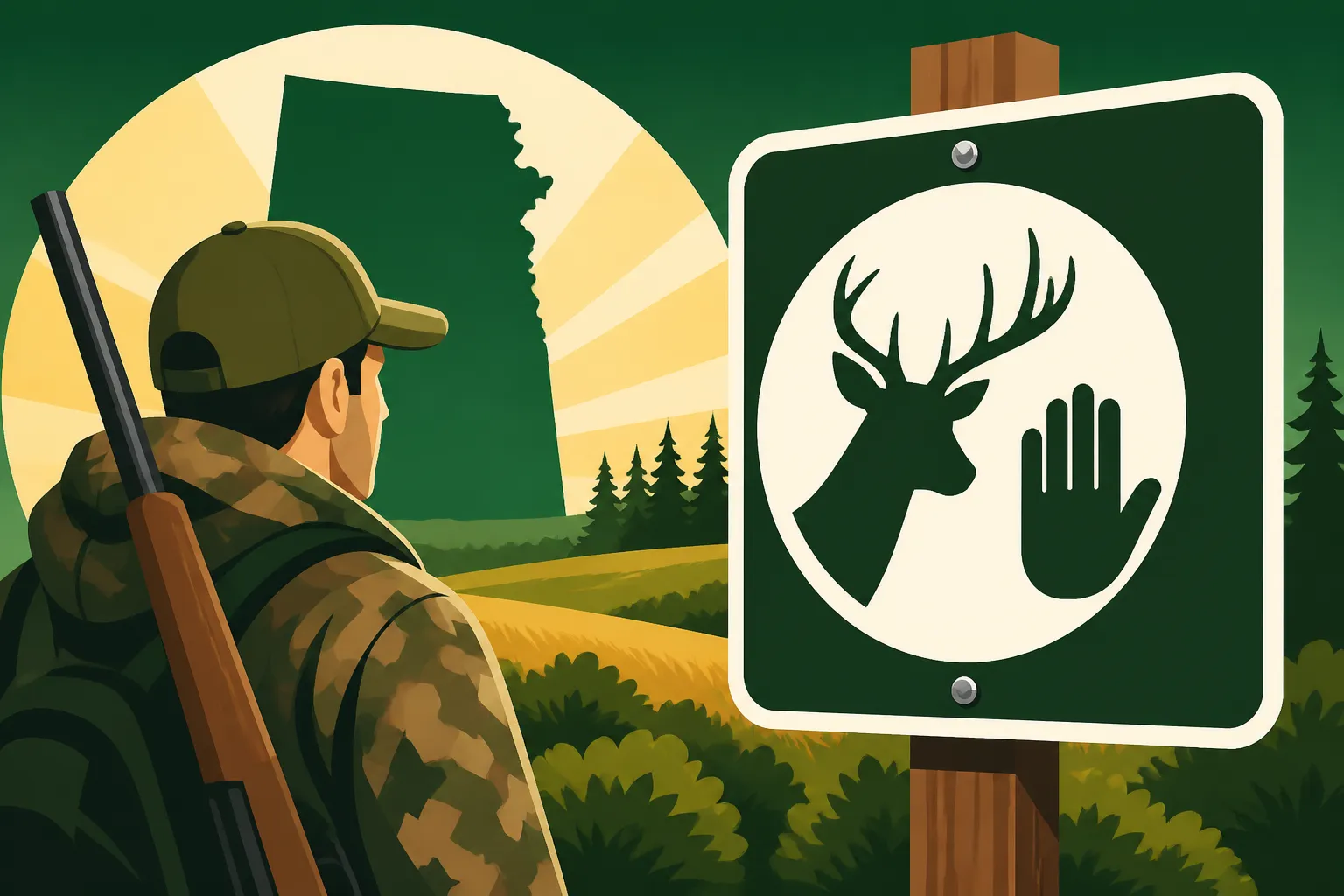
The signs should clearly state that entry is prohibited or restricted, often using phrases like "No Trespassing" or "Hunting by Permission Only." They need to be durable enough to withstand the elements and positioned at reasonable intervals around the property, especially where access points are obvious. A single faded sign half-hidden in the bush at one corner of a quarter section might not be considered adequately posted by everyone, but it’s always best to err on the side of caution. Conversely, a property lined with bright, clearly worded signs every few hundred yards leaves no room for doubt. If you encounter signs that are ambiguous, faded to the point of being unreadable, or very sparse, it's still best practice to assume the land is posted and seek permission or avoid it altogether. Remember, even if the signage isn't perfect, the spirit of the law is to respect private property, and landowners can still revoke implied permission at any time. For more specific details on what constitutes adequate posting, refer to information like How Big a Posted Land Sign Must Be.
Decoding the Language on Posted Signs
When you're driving down a grid road in Saskatchewan, you'll see a variety of signs, some clear, some less so. Knowing what each phrase means is your first line of defence against accidental trespass and helps ensure you're hunting legally and respectfully.
Common Phrases and Their Meanings
The terminology on posted signs can vary, but generally, they convey a clear message about access. Here are some of the most common phrases you'll encounter and what they mean for you as a hunter:
- "No Trespassing": This is the most straightforward and absolute prohibition. It means you are not permitted on the property for any reason without explicit, prior permission from the landowner. This applies to hunting, hiking, or even retrieving a downed animal if it crosses the property line without permission. It's a clear boundary marker.
- "Hunting by Permission Only": This sign indicates that hunting is permitted, but only if you have directly contacted and received permission from the landowner or occupier. It's an invitation to communicate, not an automatic grant of access. Always ensure you have a contact name and number, and ideally, written permission. This is your cue to Knocking on Doors in Saskatchewan Farm Country or making that phone call well in advance.
- "No Hunting" or "No Discharge of Firearms": These signs are specifically aimed at hunters and often appear on properties where general access might be allowed for other activities, but hunting is explicitly forbidden. It's not just about ethical hunting; it's a legal directive.
- "Foot Access Only": This is a common sign you might see, particularly on some Wildlife Management Zones (WMZs) or certain private properties where landowners want to limit vehicle traffic to prevent damage to fields or trails. If you see this sign, it means your quad, side-by-side, or truck must be parked, and you must proceed on foot. This is particularly relevant when considering Vehicle Rules on Saskatchewan Crown Land, as these regulations can also apply to some public access lands.
- "Posted" or "Private Property": These general terms usually imply "No Trespassing" unless otherwise specified. When in doubt, always assume these signs mean no access without permission.
Beyond these, you might see signs related to specific activities, such as "ATV Trail Only" or "No Littering." While not directly prohibiting hunting, they inform you about the landowner's expectations for behaviour on their land. Always adhere to these directives to maintain a good reputation for hunters.
Distinguishing Between Private and Occupied Crown Land
One area that often trips up even experienced hunters is the distinction between private land and various forms of Crown land, especially when that Crown land is "occupied." In Saskatchewan, not all Crown land is open for unfettered public access. Some Crown land is leased for agricultural purposes, such as grazing leases, or administered through programs like Community Pastures.
While the fundamental ownership is public (Crown), the occupier (the leaseholder or pasture manager) often has rights to control access. Therefore, even if you identify a piece of land as "Crown Land" on a map, it might still require permission if it's under a grazing lease or designated as an occupied area. Signs on these lands might reflect the leaseholder's rules rather than the general Crown land regulations. For example, a grazing lease may have signs similar to private land, stating "No Trespassing" or "Permission Required," particularly if the leaseholder has made improvements or is actively managing livestock.
Tools like GoHunt, and other mapping applications, are invaluable here. They often display different layers for private land, provincial Crown land, and sometimes even highlight specific types of occupied Crown land. When using these tools, pay close attention to the specific land designation. For a deeper understanding of navigating these complexities, resources like Reading Saskatchewan Crown Land Layers on onX or Finding Saskatchewan Public Land Boundaries can provide crucial information, allowing you to identify these areas before you ever leave home. Additionally, specific rules apply to different types of Crown land, such as those governed by Saskatchewan's FWDF Land Access Rules or those under Hunting a Saskatchewan Community Pasture, each potentially having its own set of access conditions.
Ultimately, if you see signs, regardless of whether you suspect it's technically Crown land, assume permission is required. A quick call to the leaseholder or pasture manager is always the safest and most respectful approach, demonstrating you are a responsible hunter who values land access.
| Sign Type | Meaning | Action for Hunter |
|---|---|---|
| No Trespassing | Absolute prohibition of entry. | Do not enter without explicit, prior permission. |
| Hunting by Permission Only | Hunting allowed with explicit landowner permission. | Contact landowner for permission before entering. |
| No Hunting | Hunting is specifically prohibited. | Do not hunt on this property. |
| No Discharge of Firearms | Firearms discharge is prohibited. | Do not hunt with firearms. |
| Private Property | General indicator of private land. | Assume "No Trespassing" and seek permission before entry. |
| Foot Access Only | Entry permitted only on foot, no vehicles. | Park vehicles and proceed on foot. Respect What Hunt on Foot Only Means. |
| Posted | General indicator of restricted access. | Assume "No Trespassing" and seek permission before entry. |
Practical Steps for Hunters When Encountering Posted Land
Being a responsible hunter means more than just knowing the regulations; it means proactive planning and ethical decision-making in the field. Posted land situations are often where these qualities truly shine.
Before You Go: Research and Planning
The best way to avoid issues with posted land is to do your homework long before you ever leave home. Modern technology has made this easier than ever, but it still requires diligence.
Start by meticulously researching the areas you plan to hunt. Utilize online mapping tools and apps, many of which now offer detailed land ownership overlays. Brands like GoHunt provide excellent resources that allow you to distinguish between private land, various types of Crown land, and even identify specific lease boundaries. This visual information is incredibly powerful for pre-planning. Using these tools, you can pinpoint parcels that are clearly private and require permission, or identify accessible Crown land. Don't underestimate the value of Scouting With Satellite Imagery in Saskatchewan combined with land ownership layers; it's a powerful combo.
Once you’ve identified private parcels where you wish to hunt, the next step is to proactively seek permission. This often involves Knocking on Doors in Saskatchewan Farm Country or making phone calls well in advance of the season. Building a relationship with landowners is invaluable; it not only secures access but also fosters trust and respect. Landowners are far more likely to grant permission to someone who has shown initiative and courtesy. Make sure you understand the specific boundaries they've granted access to, any restrictions they might have (e.g., no vehicles, specific dates), and what to do if you harvest an animal. Always carry proof of permission, whether written or a text message exchange.
Finally, always have a good understanding of the Saskatchewan Wildlife Management Zones you intend to hunt in. These zones dictate specific season dates, bag limits, and often influence land access rules, especially for certain species or methods. Being knowledgeable about your zone ensures you're not only adhering to land access rules but also general hunting regulations.
In the Field: When in Doubt, Back Out
Despite all your best planning, you might still encounter confusing or unexpected posted land situations in the field. Perhaps a sign appeared overnight, or you misread a boundary on your map. In these moments, there's one golden rule that will keep you out of trouble: when in doubt, back out.
Never assume. If a sign is unclear, partially obscured, or you're simply unsure whether you're on private or public land, treat it as private and restricted. It’s far better to err on the side of caution, walk an extra mile, or choose an alternative hunting spot than to risk trespassing. The consequences of accidental trespass can range from a stern warning to significant fines and even legal action, as outlined in Saskatchewan Trespass Penalties for Hunters. Beyond the legal ramifications, there's the ethical consideration: trespassing damages the reputation of all hunters and makes it harder for everyone to secure future access.
If you find yourself in a situation where you've unknowingly crossed onto posted land, immediately and quietly retreat. If you have a downed animal that crosses a property line, do not pursue it without first contacting the landowner for permission. This can be a tough pill to swallow, but it's the legal and ethical choice. Always be prepared to walk away if access isn't clear or granted. By consistently demonstrating respect for private property, you contribute to a positive perception of hunters and help preserve hunting opportunities for generations to come.
Disclaimer
Please note that this information is intended for general guidance only and does not constitute legal advice. Hunting regulations and trespass laws in Saskatchewan can change. It is the responsibility of every hunter to consult the most current Saskatchewan hunting regulations guide and relevant provincial legislation before heading into the field.