Saskatchewan Hunting Access Near Regina
If you're a hunter living in or near Regina, you know the frustration: staring at maps, wondering where on earth you can actually go hunting without driving for hours or facing a maze of private property. It can feel like all the good spots are already taken, or too far away for a quick trip. This guide is here to cut through that confusion, offering practical advice and insights on how to find hunting access in the areas surrounding Saskatchewan's capital city, making your next hunt a little less about searching and a lot more about actually hunting.
Understanding the Challenges of Hunting Near Regina
Hunting near a major urban centre like Regina presents a unique set of challenges that hunters in more rural parts of Saskatchewan simply don't face. It's not just about finding game; it's about navigating population density, land ownership complexities, and varying local sentiments towards hunting. Understanding these hurdles is the first step in successfully planning your hunts.
The Reality of Urban Proximity
When you live close to a city, you're immediately dealing with a higher concentration of people. This means more eyes on the land, more general recreational use, and inherently, more competition for prime hunting spots. Public land that might be openly accessible can often feel "loved to death" by other outdoor enthusiasts, from hikers to birdwatchers. The sheer volume of traffic, both human and vehicle, can push game further into secluded areas, making them harder to find and pattern. You might find a promising bluff or coulee, only to realize it's right on the edge of a new housing development or a busy gravel road.
Furthermore, urban proximity often comes with tighter restrictions. You need to be acutely aware of municipal bylaws regarding firearm discharge zones, which can extend surprisingly far from city limits. There are also safety considerations: ensuring you have a safe backdrop for every shot, understanding where non-hunters might be recreating, and generally being a highly visible and responsible advocate for hunting. The closer you are to town, the more critical it is to operate with utmost caution and respect for everyone.
The continuous growth of a city like Regina also means that what might have been prime hunting ground a decade ago could now be farmland slated for development, or even built-up residential areas. Land values are higher, and the pressure to convert natural habitat into agricultural or residential use is constant. This progressive loss of accessible wild space creates a shrinking pie for hunters, demanding more creativity and persistence to find opportunities.
The Dominance of Private Farmland
Regina is nestled in the heart of Saskatchewan's highly productive agricultural belt. Drive in any direction for a short distance, and you'll be surrounded by vast tracts of wheat, canola, lentil, and pea fields. While these fields often hold abundant game, particularly deer and waterfowl, the vast majority of this land is privately owned. This immediately shifts the paradigm from simply finding game to securing explicit permission from landowners.
Farmers and ranchers work tirelessly on their land, and their property is their livelihood. They are not obligated to grant anyone hunting access, and they often face significant pressures, from crop damage to general public misuse of their property. Many have had negative experiences with hunters in the past, making them understandably hesitant to open their gates. This reality can be a significant frustration for hunters, as you might see impressive deer or flocks of geese on private land with no clear path to access.
The legal implications of hunting on private land without permission are severe. Trespassing, even accidentally, can lead to fines, confiscation of equipment, and loss of hunting privileges. It's not just about avoiding legal trouble; it's about respecting property rights and the hard work of those who manage the land. This makes the process of securing private land access a cornerstone of successful hunting near Regina, and it requires a different skillset than simply scouting public areas.
Exploring Public Land Options Around Regina
While much of the immediate area around Regina is privately owned, there are still public land opportunities if you know where to look. These public lands can provide valuable access, but they often come with their own specific rules and might require a bit more travel or prior research than hunters might initially expect.
Fish and Wildlife Development Fund (FWDF) Lands
One of the most valuable resources for public hunting access in Saskatchewan, including near Regina, are the lands acquired and managed by the Fish and Wildlife Development Fund (FWDF). These parcels are purchased using funds primarily generated from hunting and fishing license fees, meaning hunters are directly contributing to their existence. The purpose of FWDF lands is explicitly for wildlife habitat and public access for hunting, fishing, and other outdoor pursuits.
You'll typically find FWDF lands marked by distinctive signs, often green and yellow, indicating "Wildlife Habitat Land" or similar wording. These signs are your clear indication that you're on public access land. While many of these parcels are smaller, they are often strategically located in areas that provide excellent habitat, such as bluffs, slough systems, or river bottoms. They can be excellent for smaller game like Hungarian partridge or sharp-tailed grouse, and often hold whitetail deer that utilize the cover.
When hunting FWDF lands, it's generally understood that access is for foot traffic only, unless otherwise specified. Vehicle access is typically restricted to designated parking areas. Always respect the boundaries; FWDF parcels are often surrounded by private land, so understanding where the public land ends is critical. These lands are an incredible benefit for resident hunters, and knowing how to locate and utilize them is key to expanding your opportunities. For more detailed information on regulations and how to identify these areas, check out Saskatchewan's FWDF Land Access Rules.
General Crown Land Access
Beyond dedicated FWDF lands, there are also parcels of general Crown land in Saskatchewan that are open to hunting. However, immediately around Regina, large blocks of true, unencumbered Crown land suitable for hunting are not common. You'll generally need to venture further afield, perhaps an hour or more drive, to find significant tracts. These can include provincial forests or other provincial Crown lands not designated as parks or other restricted areas.
Identifying general Crown land requires diligent map reading. You can't just assume a block of bush is public. Modern mapping applications are invaluable for this, as they often overlay property boundaries and ownership information directly onto topographic or satellite maps. You'll need to learn how to interpret these layers to distinguish between private land, FWDF land, and general Crown land.
It's also crucial to understand that even general Crown land might have caveats. Some Crown land is leased for agricultural purposes, such as grazing leases, which means it's occupied by a private operation. While hunting may still be permitted on these lands, it often requires contacting the leaseholder for permission, similar to private land. Always check for any specific restrictions, designations, or closures that might apply to a particular Crown land parcel. Hunting Occupied Crown Land in Saskatchewan provides more context on this.
Community Pastures and Their Nuances
Saskatchewan has a unique system of community pastures, many of which were historically managed federally (PFRA pastures) but are now under provincial or patron management. These pastures are large tracts of grassland, often interspersed with coulees, bluffs, and slough systems, making them fantastic habitat for big game like whitetail deer and mule deer, as well as upland birds. However, access rules can vary significantly.
For many community pastures, hunters are generally expected to contact the pasture manager to request permission before hunting. This isn't just a courtesy; it's a critical step to ensure you're aware of any active livestock rotations, sensitive areas, or specific rules for that particular pasture. Managers are usually happy to work with responsible hunters, but they need to know who is on their land and for what purpose. They're trying to manage a ranching operation, after all.
The type of pasture can also influence access. Provincial community pastures and patron-managed pastures might have different processes. Federal community pastures (now mostly transitioned) also had their own protocols. It's never a "just show up and hunt" situation. Do your homework, find the contact information for the appropriate manager, and make that call well in advance of your hunt. Being polite and understanding of their operations goes a long way. For more guidance, see Hunting a Saskatchewan Community Pasture.
Navigating Private Land Access: The Key to Success
For many hunters looking to pursue game near Regina, the vast majority of accessible land will be private. Mastering the art of gaining private land access isn't just a skill; it's often the single most important factor in having consistent hunting opportunities. It's about respect, communication, and building trust.
The Art of Asking for Permission
This is where the rubber meets the road. Simply driving around and hoping to stumble onto open land isn't a strategy for success near Regina. The most effective approach is to directly ask landowners for permission. This isn't always easy, and it takes courage and a thick skin, as you will likely face rejection sometimes. However, a polite, well-prepared hunter can often secure access where others fail.
When approaching a landowner, first impressions are everything. Drive a clean vehicle, be well-groomed, and ensure any firearms are cased and out of sight. Approach their home respectfully, preferably not at meal times or late in the evening. Introduce yourself clearly, explain why you're there, and be specific about what you're asking for: "I'm interested in hunting whitetail deer on some of your bush bluffs," or "I've noticed geese feeding in your stubble field and was wondering if I might get permission to hunt."
Crucially, be ready to listen more than you talk. Farmers and ranchers often have valid concerns about safety, crop damage, gates being left open, or livestock being disturbed. Address their concerns directly and genuinely. Offering to share some of the game, or simply a friendly "thank you," can go a long way. This isn't just about one hunt; it's about potentially building a long-term relationship. I always stress the importance of Getting Private Land Permission in Saskatchewan because it’s so critical in this part of the province.
Understanding Posted Land Signs
Saskatchewan's trespass laws underwent significant changes, placing a greater emphasis on landowners' rights and the need for explicit permission. The old adage of "if it's not posted, it's open" is no longer applicable. Now, the onus is on the hunter to seek permission for any private land, regardless of whether signs are present.
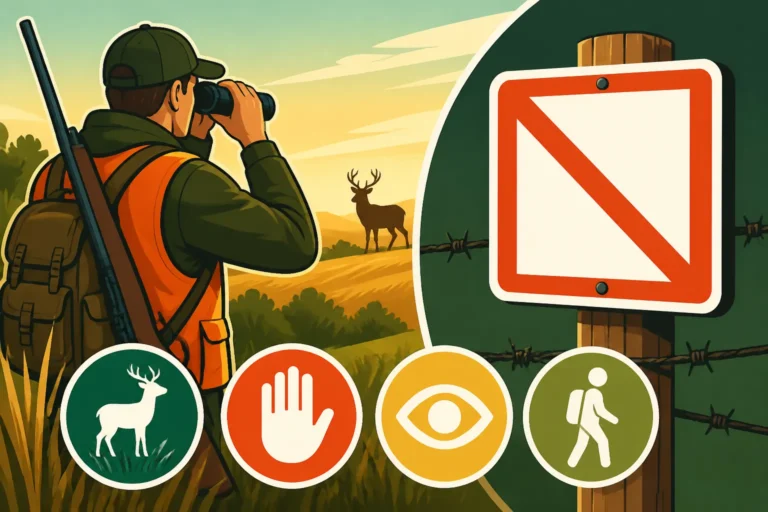
However, posted land signs still carry legal weight and serve as clear indicators of a landowner's wishes. Signs that say "No Hunting," "No Trespassing," or "Permission Required" are undeniable messages. Even if you theoretically could get permission, these signs often mean the landowner is not open to it. Ignoring a clearly posted sign is a direct violation of their property rights and the law.
Always assume that any private land you wish to hunt requires permission. If you see signs like "Foot Traffic Only" or "No Vehicles," respect them, as they are often compromises allowing access under specific conditions. Never try to interpret vague signage in your favour. When in doubt, don't go in, or find the landowner and ask. Knowing Saskatchewan Posted Land Sign Rules is essential for any hunter.
Building Relationships with Landowners
The most successful hunters in private-land-dominant areas near Regina aren't just good at asking for permission once; they're masters of maintaining those relationships. Think of it as cultivating a partnership. Once you've gained access, your actions speak volumes. Always close gates, drive only on established trails, avoid damaging crops or fences, and pick up any spent shells or trash. Leave the land cleaner than you found it.
Follow up with a thank you, maybe a small gift, or offer to help out during busy times like harvest or calving. Keeping in touch throughout the year, even if it's just a friendly wave, reinforces your reputation as a respectful and responsible individual. Landowners will remember these positive interactions, and you'll find yourself welcomed back year after year.
A good relationship with one landowner can also open doors to others. Farmers often know their neighbours, and a positive recommendation from someone they trust can be invaluable for gaining access to adjacent properties. This ripple effect of good behaviour benefits not only you but the entire hunting community, painting a picture of hunters as respectful stewards of the land.
Leveraging Technology for Hunting Access
In today's hunting world, technology isn't just a convenience; it's an indispensable tool, especially when trying to navigate the complex land ownership patterns around Regina. Modern mapping apps and online resources can dramatically reduce the guesswork and significantly improve your chances of finding viable hunting spots.
Mapping Apps and Their Power
Gone are the days of relying solely on paper maps and vague directions. Apps like onX Hunt have revolutionized how hunters scout and access land. These applications layer public and private land ownership boundaries directly onto satellite imagery and topographic maps, often displaying landowner names. This feature alone is a game-changer when you're trying to figure out if that promising looking bluff or slough system is public or who you need to call for permission.
With onX Hunt, you can literally draw a virtual boundary around your target area and see instantly what type of land it is. It highlights Crown land, FWDF parcels, and private property with different colours and textures. This allows you to quickly identify publicly accessible areas or, more often near Regina, pinpoint exactly which landowner you need to approach. You can scout from your living room, marking potential access points, game sign, or likely travel corridors, saving countless hours of driving around aimlessly. Learning how to effectively utilize these detailed maps, especially for identifying various types of public and private property, is covered in resources like Reading Saskatchewan Crown Land Layers on onX.
Beyond just ownership, these apps also provide invaluable topographic data, showing elevation changes, water bodies, and vegetation types. This allows you to understand the terrain even before you step foot on it, helping you predict where game might bed, feed, or travel. The ability to measure distances, mark waypoints, and track your movements provides an unprecedented level of situational awareness, making you a more effective and safer hunter.
Online Resources for Zone Information
While mapping apps excel at parcel-level detail, other online resources provide broader context and regulatory information crucial for hunting near Regina. The Saskatchewan government's environment website is your go-to source for official Wildlife Management Zone (WMZ) maps, season dates, and specific regulations. Understanding which zone you're in and what species are open, as well as any special restrictions, is foundational.
Sites like GoHunt offer a wealth of information that can provide insights into game populations, historical trends, and general hunting strategies for different regions. While not always focused on hyper-local access like onX Hunt, these platforms can help you understand the broader ecological landscape and what species thrive in the prairie and parkland regions surrounding Regina. They can also connect you with other hunters in forums, allowing for shared knowledge and experiences.
Combining these digital tools allows for a powerful synergy. You can use government resources to understand the legal framework and broader zone characteristics, then dive into detailed mapping apps to find specific access points and plan your routes. Before venturing out, a quick check with satellite imagery, as detailed in Scouting With Satellite Imagery in Saskatchewan, can reveal changes in land use or crop types that influence game movement. This layered approach ensures you're both compliant with regulations and strategically positioned for success.
Species-Specific Hunting Opportunities Near Regina
The landscape around Regina, while heavily agricultural, is incredibly diverse and supports a surprising variety of game species. Knowing what to target and where these animals prefer to live will significantly improve your success rates.
Whitetail Deer in the Parkland and Farmland
If you're looking for big game near Regina, the white-tailed deer is by far your most accessible and abundant option. The region sits at the interface of true prairie and aspen parkland, offering a mix of open fields, brushy bluffs, river valleys, and shelterbelts—all prime whitetail habitat. These deer are incredibly adaptable and thrive in agricultural environments, using pockets of cover within or adjacent to fields for bedding, and venturing out to feed on crops.
Hunting whitetails in this landscape often involves focusing on these transition zones. Think about the edges where a bush bluff meets a stubble field, the thick willows lining a creek bottom, or even the small patches of uncultivated land around sloughs. Deer will use these corridors for travel and security cover. Tactics often revolve around still-hunting these edges, setting up blinds near pinch points or known travel routes, or using rattling and grunt calls, especially during the rut. For more specific strategies on hunting in these environments, refer to Hunting Whitetails on Saskatchewan Farmland.
Success with whitetails near Regina often comes down to patience, thorough scouting, and understanding how deer use the available cover and food sources. They can be elusive even in seemingly open country, so identifying those hidden bedding areas and key feeding patterns is crucial. Don't overlook small, isolated patches of bush that others might drive past; these can often hold mature bucks seeking refuge close to food.
Waterfowl and Upland Birds in the Grain Belt
The Regina area is world-renowned for its waterfowl hunting, and for good reason. Situated in the heart of the "duck factory" of the Canadian prairies, with countless potholes and vast grain fields, it's a major staging ground for migrating ducks and geese. Species like Canada geese, snow geese, specklebellies, mallards, and pintails are all abundant.
Hunting waterfowl usually means seeking permission on private grain fields. Farmers often welcome hunters who can help manage goose populations that cause crop damage. Field hunting for geese involves setting up large decoy spreads in stubble fields and calling birds in, often requiring early mornings and careful camouflage. For ducks, "pothole hopping" on various sloughs and small water bodies, or setting up blinds on field edges near water, can be very effective. Detailed strategies for this kind of hunting can be found in Field Hunting Geese in Saskatchewan Stubble.
Beyond waterfowl, the agricultural landscape also provides excellent opportunities for upland birds. Hungarian partridge, often called "Huns," are common throughout the farmland, usually found in coveys along shelterbelts, field edges, and brushy draws. Walking up these birds with or without a dog can provide fast-paced action. Sharp-tailed grouse are also present, preferring native grasslands and larger uncultivated areas. While pheasants are not native or widely established, Huns offer a fantastic wing-shooting experience close to the city. For tips on finding these elusive birds, explore Hunting Hungarian Partridge on Saskatchewan Farms.
Planning Your Hunt: Logistics and Local Considerations
Successful hunting, especially near an urban center like Regina, isn't just about finding game or gaining access; it's about meticulously planning the logistical details. From how you get to your spot to how you scout, every decision impacts your overall experience.
Road Access and Navigating Local Grid Systems
Saskatchewan is famous for its grid road system: a vast network of gravel roads running north-south and east-west, often at one-mile intervals. While these roads provide access to nearly every quarter section of land, their condition can vary dramatically. Near Regina, many grid roads are well-maintained, but others can quickly deteriorate after heavy rain or snow, turning into muddy tracks or snow-drifted impassable routes.
It's crucial to understand that simply driving down a grid road doesn't grant you access to the adjacent land. Roads are public rights-of-way, but the land immediately bordering them is almost always private. Always park legally and respectfully, ensuring you're not blocking field entrances, private driveways, or obstructing traffic. A reliable vehicle, preferably 4×4, is highly recommended if you plan to explore less-trafficked grid roads, especially during shoulder seasons or late fall. For more on navigating these routes, see Saskatchewan Grid Road and Winter Access.
Always be mindful of your surroundings. While the grid roads are public, the expectation is that hunters will use them responsibly and not disrupt farming operations or private residents. This means keeping noise to a minimum, not leaving litter, and being a good neighbour, which helps maintain positive relationships between hunters and landowners in the area.
Pre-Season Scouting and Observation
The importance of pre-season scouting cannot be overstated, particularly when hunting in new areas or close to urban development. Game animals, especially whitetail deer, establish routines and patterns based on food sources, cover, and pressure. A good scout allows you to identify these patterns before opening day, increasing your chances significantly.
Start by poring over your maps, whether paper or digital like onX Hunt. Look for natural funnels, unpressured pockets of cover, water sources, and obvious food plots or fields. Identify potential bedding areas and the most likely travel corridors between them and feeding grounds. Use satellite imagery to confirm these observations, noting changes in crop types or new development.
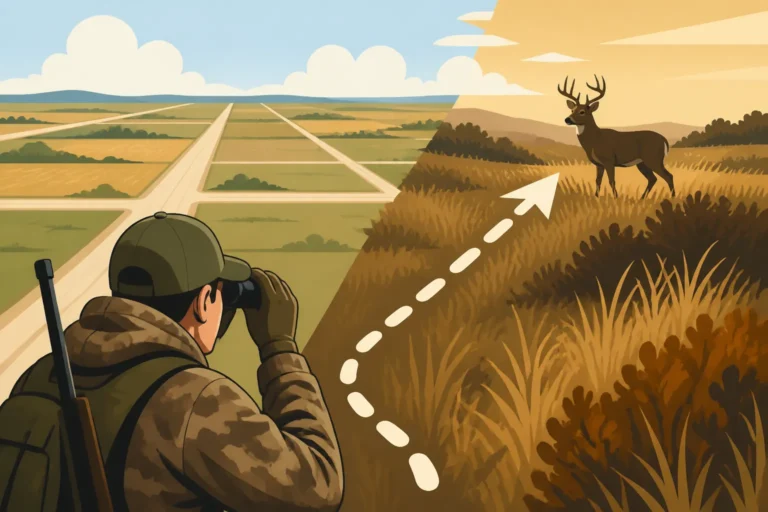
Then, transition to physical scouting. This might involve driving grid roads during daylight hours, using good optics to glass fields, bluffs, and coulees from a distance. Look for fresh tracks, rub lines, scrapes, or heavy trails. The key is to observe without disturbing the animals or encroaching on private land without permission. Early morning and late evening drives are often the most productive for spotting game movement. Never underestimate the value of Reading Whitetail Sign in Saskatchewan Bluffs to understand local deer activity. Pay attention to fence lines, tree rows, and slough edges – these are often highways for deer.
| Land Type | Typical Location Near Regina | General Access Method | Pros | Cons |
|---|---|---|---|---|
| Private Farmland | Surrounds Regina, vast majority of land | Landowner permission required | High potential for big game/waterfowl, exclusive | Requires effort, rejections, relationship building |
| FWDF Lands | Scattered parcels, often smaller | Generally walk-in, public access | Designated for wildlife, well-marked | Can be small, higher pressure, surrounded by private land |
| Community Pastures | Further out from Regina (e.g., south/west) | Contact manager for permission | Large areas, diverse habitat, good for big game | Rules vary, may have livestock, less immediate access |
| General Crown Land | Sparse close to Regina, more further north | Public access, check for leases | Undeveloped, remote opportunities (if found) | Scarce, can be leased (requiring permission), distant from city |
Disclaimer
This article is for general informational purposes only and does not constitute professional advice. Laws, prices and regulations vary by location and change over time. Consult a qualified professional for guidance on your specific situation.