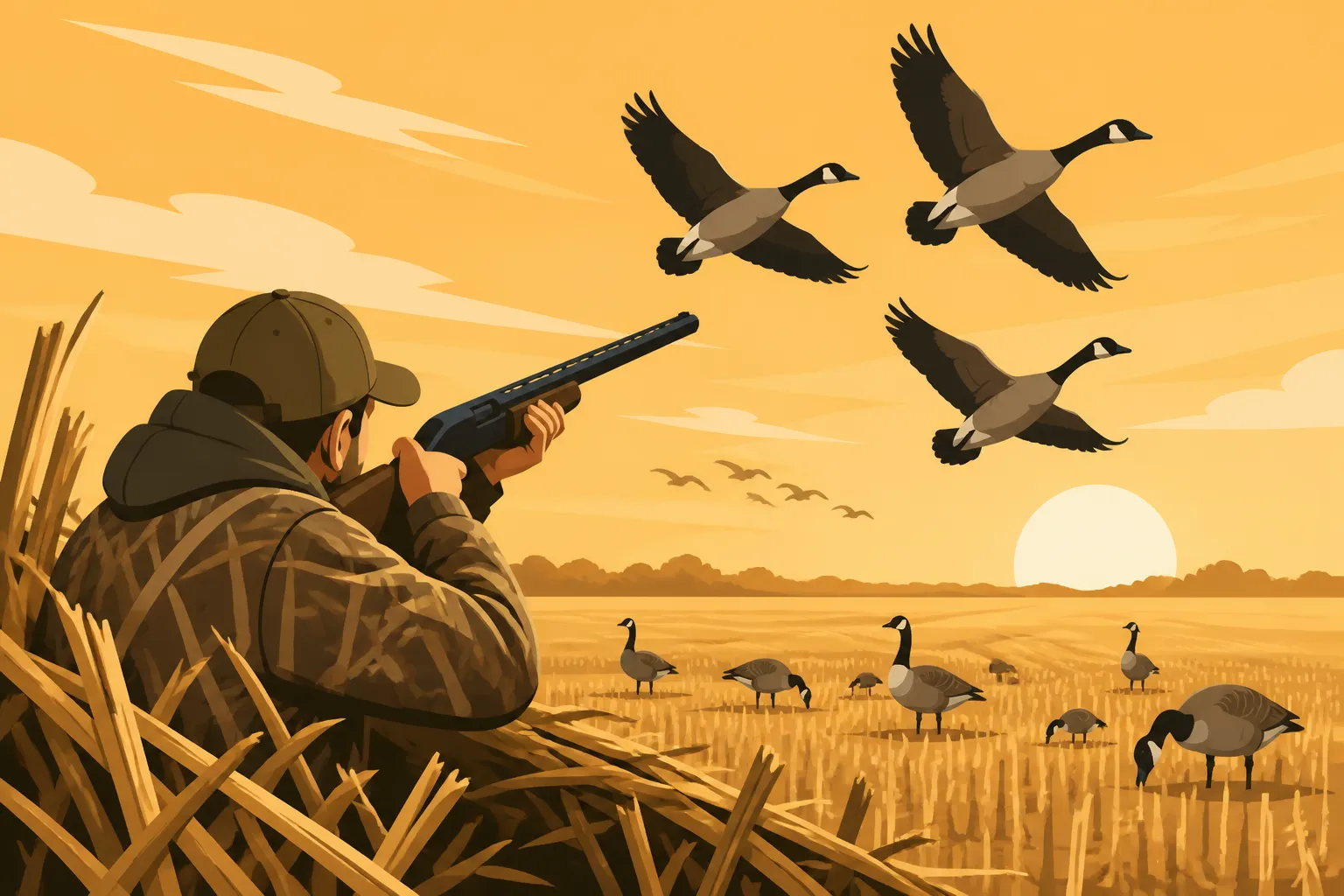
Field Hunting Geese in Saskatchewan Stubble
There are few things as frustrating as spending hours setting up a perfect goose spread, only to watch flock after flock skirt your decoys, ignoring your calls as they land in the next field over. Saskatchewan is legendary for its goose hunting, but that doesn't mean it's easy. These birds are sharp, and hunting them in wide-open stubble fields demands meticulous scouting, strategic setup, and a deep understanding of their behavior. This guide will walk you through the essential methods for consistently luring geese into your spread and filling your freezer.
Understanding the Prey and Environment
Hunting geese in Saskatchewan stubble fields is a unique challenge, primarily because these birds are incredibly intelligent and operate in large, wary flocks. They've seen it all, and any deviation from what looks "natural" can send them packing. But understanding why they're here and what they're looking for is half the battle.
Why Saskatchewan Stubble Fields Are Goose Magnets
Saskatchewan is often referred to as the "breadbasket" of Canada, and for good reason. The vast expanses of grain fields—wheat, barley, peas, lentils, and especially corn—provide an irresistible smorgasbord for migrating geese. As soon as the combines finish their work, these fields become prime feeding grounds. Geese, whether Canada geese, snow geese, or specklebellies (greater white-fronted geese), are constantly seeking high-energy food sources to fuel their long migrations. The leftover grain in stubble fields is exactly what they need.
The wide-open nature of these fields also offers a crucial sense of security. Geese are very vulnerable on the ground, and in an open stubble field, they have an unobstructed view of their surroundings, allowing them to spot predators from a distance. This combination of abundant, accessible food and perceived safety makes Saskatchewan's stubble fields the ultimate destination for countless waterfowl. Hunters who can effectively mimic this safe, food-rich environment are the ones who find success. The frustration often comes when you pick a field that looks good, but the birds have other ideas because of pressure, subtle food differences, or simply a preferred flight path you haven't identified.
Key Goose Species and Their Habits
Saskatchewan sees a incredible diversity of geese, each with its own quirks. Knowing the species you're targeting can drastically influence your hunting strategy.
- Canada Geese: These are perhaps the most common and recognizable. They're often found in smaller family groups or larger flocks, known for their distinctive "honk." Canada geese are typically more predictable in their feeding patterns, often returning to the same fields day after day if undisturbed. They tend to be a bit more tolerant of smaller, more realistic spreads. When scouting, pay close attention to the particular field they prefer, as they can be creatures of habit. Their preference for larger grain kernels like wheat and barley means you'll often find them in those types of stubble.
- Snow Geese: Known for their sheer numbers, Hunting Saskatchewan's Snow Goose Migration is a spectacle. Snow geese travel in immense flocks that can number in the thousands. They are notoriously wary and can be incredibly difficult to decoy, often circling high overhead before committing. Their vocalizations are a cacophony of high-pitched barks and yelps. Snow geese are also aggressive feeders, often "burning out" a field quickly, leaving little behind. Their sheer numbers mean that hunting them often requires a huge spread of decoys, sometimes hundreds, to even hint at a natural flock.
- Specklebellies (Greater White-Fronted Geese): Often considered the most prized by many hunters, specklebellies are known for their beautiful plumage, incredible table fare, and challenging nature. They are often less numerous than Canada geese or snow geese but are equally, if not more, intelligent. They have a distinct "laughing" call. Hunting Specklebellies Over Decoys requires a very realistic spread and precise calling. They tend to prefer smaller grains like peas and lentils, so targeting these fields can be very effective.
Understanding these individual behaviors—their preferred foods, typical flock sizes, and specific calls—is critical. Trying to call in snow geese with Canada goose honks, or setting a small Canada goose spread for massive snow goose flocks, is a recipe for frustration.
The Challenges of Open Field Hunting
Hunting geese in wide-open stubble fields presents a unique set of challenges compared to, say, duck hunting in a pothole or even deer hunting in the bush. There's nowhere to hide, and the birds have an aerial advantage.
- Vast Openness: Unlike timber or brush, there's often minimal natural cover in a stubble field. This means hunters need to be hyper-vigilant about concealment, often relying on specialized layout blinds or meticulously crafted natural blinds that blend seamlessly with the environment. Even a slight silhouette or an unnatural lump can cause geese to flare.
- Bird's Eye View: Geese approach from the sky, giving them a panoramic view of your setup. They can spot unnatural elements, shine from blinds, or even human movement from hundreds of yards away. Their eyesight is legendary, and you're essentially trying to fool thousands of years of evolutionary caution.
- Weather Dependent: Wind, rain, and fog play a huge role. Wind dictates flight paths and how birds finish into the decoys. Heavy fog can ground birds or make them impossible to see. A sudden shift in wind can make your perfectly placed spread completely ineffective. Hunters often lament the "wrong wind" that forces geese to land downwind, far from the intended shooting zone.
- Logistics of Equipment: Deploying hundreds of decoys, carrying heavy layout blinds, and transporting all your gear across vast, often muddy or uneven stubble fields is physically demanding. It's not a solo sport, and having a good team is essential.
Overcoming these challenges requires meticulous planning, the right gear, and an unwavering commitment to detail. It's an art form, and every successful field hunt is a testament to observing, adapting, and executing perfectly.
Scouting: The Absolute Non-Negotiable Step
You wouldn't head out Whitetail Hunting in Saskatchewan without scouting, and goose hunting is no different. In fact, it's arguably more critical for geese. These birds are patternable, but those patterns change daily, sometimes hourly. Skipping or skimping on scouting is the single biggest mistake you can make.
Day-Before Reconnaissance and E-Scouting
Effective scouting often begins long before you even leave your couch, thanks to modern technology. Tools like GoHunt (or other satellite imagery apps) can provide invaluable insights into the landscape, potential feeding areas, and access points.
- Digital Deep Dive: Start by looking at satellite maps of your chosen Wildlife Management Zone. Identify large stubble fields, particularly those near water bodies where geese might roost, or flight corridors like river valleys. Look for changes in field colour, which might indicate different crops or harvesting stages. These digital maps allow you to get a lay of the land, mark potential access roads, and identify parcels of Crown Land or other publicly accessible areas. This initial e-scouting can save you hours of driving and knocking on doors for fields that aren't even viable.
- On-the-Ground Verification: E-scouting is a great starting point, but there's no substitute for eyes on the ground. The day before your hunt, dedicate significant time to driving and observing. This isn't just a quick look; it's a patient, hours-long surveillance mission. Drive around the area in the late afternoon or evening, observing flight patterns. Look for the actual fields where geese are pitching in to feed. Pay attention to how they enter and exit the field, which part of the field they prefer, and the general direction of the prevailing wind.
- Identify Roosting and Feeding Habits: Geese typically fly from a roost (a large body of water, a sheltered marsh) to a feeding field in the morning, and often again in the late afternoon. Understanding where they're coming from and going to is key. Sometimes, the birds will hit a certain field hard for a few days, then move on when the food source is depleted or hunting pressure mounts. Being able to adapt to these changes is paramount. Remember, geese don't lie – if they're in a field, that's where they want to be.
The best hunters are the best scouts. They know that success isn't about calling or shooting, it's about being where the birds want to be.
Identifying Feed Fields and Entry/Exit Routes
Once you're on the ground, the real detective work begins. It's not enough to just see geese in a field; you need to understand why they are there and how they are using it.
- Focus on Fresh Sign: Look for fresh droppings and scattered grain. A field that was hammered by geese yesterday might be empty today if they've cleaned it out or moved due to disturbance. Fresh sign tells you where they've been recently and where they're likely to return. A key indicator is often a "pancake" effect, where the stubble is matted down in a specific area by hundreds of birds landing and feeding.
- Observe Flight Paths: Geese often use predictable flight corridors. Watch how they enter and exit a field. Do they fly over a specific bluff or a power line? Do they come in low over a treeline or high from a particular direction? This information is vital for positioning your spread and blinds to intercept them effectively. Trying to pull them off their established flight path is a monumental task.
- Consider Wind Direction: The wind is a goose hunter's best friend and worst enemy. Geese almost always land and take off into the wind. When scouting, note the prevailing wind direction and how it influences where birds land in the field. This will directly impact where you set up your decoys and blinds the next day. If the birds are consistently landing into a northerly wind on the north side of the field, that's your target zone.
- Analyze Crop Type: Different goose species prefer different grains. As mentioned, snow geese often hit pea or lentil fields, while Canada geese might prefer larger grains like wheat or barley, and corn fields are magnets for all. Knowing what was harvested can give you an edge. Sometimes, you'll find geese feeding on volunteer oats or other grains that sprout after harvest, so keeping an eye on new growth is important.
This meticulous observation allows you to choose not just a field, but the perfect spot within that field for your setup, maximizing your chances of a successful hunt. This granular detail is what separates a good hunt from a frustrating one.
Obtaining Permission and Respecting Landowners
This step is as vital as scouting, and frankly, it's where many hunters fail. Saskatchewan is predominantly private land, and without permission, you're not hunting. Getting Permission for a Goose Field is an art form itself.
- Knock on Doors, Don't Assume: Never, ever assume a field is public or unowned. Always knock on the door, introduce yourself, and respectfully ask for permission. Even if you see other hunters, it doesn't mean you have an open invitation. Many farmers are wary of strangers, especially after bad experiences with disrespectful hunters.
- Be Polite and Offer to Help: A friendly demeanor goes a long way. Offer to share some of your harvest, or even offer to help with a small chore on the farm. Showing respect for their property and livelihood is paramount. Remember that they live and work there, and their fields are their income.
- Adhere to Rules: If permission is granted, clarify any specific rules they might have: no driving off the main trails, specific entry/exit points, areas to avoid, no leaving trash behind. Follow these rules to the letter. Leaving ruts, gates open, or trash ensures you'll never get permission again, and potentially ruin it for other respectful hunters.
- Build Relationships: The best goose hunting spots often come from long-standing relationships with landowners. A successful hunt isn't just about bagging birds; it's about fostering goodwill and being a good ambassador for hunting. Many hunters also use land access apps or services, like some functions offered by
GoHuntif they have a land ownership layer, to identify landowners beforehand, making the "cold call" easier. Remember, Saskatchewan has strict Saskatchewan Landowner Permission Law rules.
Neglecting permission is not only illegal but also harms the reputation of all hunters. A respectful approach ensures future opportunities and a positive experience for everyone involved.
Decoy Spreads: More Than Just Numbers
You can scout perfectly, get permission, and call like a pro, but if your decoy spread doesn't look convincing, those geese will simply laugh at you as they fly by. A good spread isn't just about having a lot of decoys; it's about creating a realistic, inviting scene that screams "safe food!"
The Power of a Realistic Spread: Full-Bodied vs. Silhouettes
When it comes to goose decoys, you generally have two main categories, and each has its place, often used in combination.
- Full-Bodied Decoys: These are the gold standard. They offer a three-dimensional, realistic appearance that can be seen from all angles, even by high-flying birds. Their lifelike posture, feather detail, and natural movement in the wind make them incredibly effective. The downside, of course, is their bulk, weight, and cost. Transporting and deploying dozens, if not hundreds, of full-bodied decoys is a significant logistical undertaking. Brands like Avian-X and Tanglefree offer excellent full-body options that can significantly increase your success, particularly for wary Canada geese and specklebellies. When Setting a Goose Spread in Swathed Barley, full-bodied decoys tend to stand out better in the taller stubble.
- Silhouette Decoys: These are flat, two-dimensional decoys that offer a profile view. They are much lighter, more compact, and more affordable than full-bodied decoys. While they lack the 3D realism, they can be incredibly effective for adding bulk to a spread, especially for snow geese where numbers are key. A spread composed primarily of silhouettes can look like a massive feeding flock from a distance. The trick is to position them so they are mostly seen from the side, maximizing their visual impact.
- Combination Spreads: The most effective spreads often combine both types. Use full-bodied decoys in the "kill hole" (the area where you want birds to land) and closer to your blinds, providing maximum realism where birds will get the best look. Then, extend the spread with silhouettes to create the illusion of a much larger flock, drawing birds in from a distance. The depth and varied textures make it much more convincing.
The goal is always to create a scene that looks like a thriving, unconcerned flock. Any unnatural shine, repeated patterns, or lack of movement will be a red flag to incoming geese.
Dynamic Spreads for Different Species
One spread does not fit all. Different goose species, and even different hunting situations, require tailored decoy layouts.
- Canada Goose Spreads: For Canada geese, realism often trumps sheer numbers. A spread of 2-5 dozen high-quality full-bodied decoys, arranged in family groups or small feeding clusters, often works best. Leave a distinct landing zone (the "kill hole") upwind of your blinds. Canada geese are often looking for familiar groups to join, so a natural, somewhat scattered spread that mimics feeding and resting birds is ideal. You want to give them space to land comfortably within range.
- Snow Goose Spreads: Hunting Snow Geese Over a Big Spread is the name of the game. For these massive flocks, you need numbers – hundreds, sometimes even thousands, of decoys. A mix of full-bodies, silhouettes, and even old grocery bags on stakes can create the necessary visual mass. Snow goose spreads are often very large, amoeba-shaped, with a wide, open landing zone. The sheer white mass is what attracts them from miles away. Don't be afraid to experiment with different patterns; sometimes a "blob" works, other times a loose "V" or "J" shape.
- Specklebelly Spreads: Specklebellies are perhaps the most finicky. They require extreme realism. A spread of 3-6 dozen high-quality specklebelly full-body decoys, often with some Canada goose "confidence decoys" (a few Canada geese mixed in to suggest safety), can be effective. They tend to land quite close to their perceived flock mates, so a tighter, more cohesive spread with a clear landing zone is often successful. Their unique calls are also crucial for sealing the deal.
Always arrange your decoys facing into the wind, as real birds do, to facilitate their landing and natural appearance. Varying head positions (feeders, sentries, resters) adds to the illusion of a relaxed flock.
Motion Decoys and Confidence Boosters
In an era of increasingly wary geese, static spreads often aren't enough. Motion and additional confidence elements can be game-changers.
- Motion Decoys: Flapping-wing decoys (like the "V-wing" or "flapper" types) or rotary machines that spin decoys create crucial movement that mimics geese landing or stretching their wings. This motion catches the eye of distant birds and suggests a lively, active feeding area. They are particularly effective for snow geese, whose sheer numbers create constant movement. Just remember to use them judiciously; too much erratic motion can sometimes spook wary birds.
- Flagging: A simple white or black flag (depending on the species) waved at incoming birds can be incredibly effective, especially for snow geese. It mimics the flash of wings from feeding or landing birds and can draw attention to your spread from afar. Learn the rhythm and timing; aggressive flagging for distant birds, subtle flagging as they approach.
- Confidence Decoys: Adding decoys of other species can increase the perceived safety of your spread. A few sandhill cranes, a couple of swans (where legal and applicable), or a small group of duck decoys can make your goose spread look even more natural and unthreatening. The idea is that if these other, often warier, birds are comfortable, then the geese should be too.
- Realism Beyond Decoys: Think about the small details. Are your decoys clean? Is there any unnatural glare? Are your bags or gear visible? Even leaving some real goose feathers scattered around the kill hole can add to the authenticity. These small touches, combined with a dynamic and species-specific decoy arrangement, will give you the best chance of pulling those wary Saskatchewan geese into range.
The key is to observe and adapt. If birds are skirting your spread, ask yourself why. Is there enough movement? Is it realistic enough for the species you're hunting? Sometimes, a subtle tweak can make all the difference.
Blind Placement and Concealment: Becoming Invisible
You can have the best decoys and call like a champion, but if the geese see you, it's game over. Concealment is paramount in open stubble fields, where there's often nowhere to naturally disappear.
Layout Blinds: Your Best Friend in the Stubble
For hunting geese in open fields, layout blinds are not just a convenience; they are an absolute necessity. Trying to hide in a ditch or under a tarp will almost always result in flared birds and frustration.
- Designed for the Job: Layout blinds are low-profile, coffin-like blinds designed to allow a hunter to lie prone in the field, covered by camouflage fabric and stubble straps. Their design minimizes your silhouette against the sky, which is crucial for overhead birds. Modern layout blinds from brands like Avery Outdoors (now part of Banded) or Rogers Sporting Goods are incredibly effective at making you vanish into the field.
- Blending is Key: Simply lying in a layout blind isn't enough. You must meticulously "stubblemize" it. This means weaving natural stubble, grasses, and any other vegetation from the immediate environment into the stubble straps on your blind. The goal is to break up the blind's outline and make it disappear into the field texture. Don't be lazy here; the extra 10-15 minutes you spend blending your blind can be the difference between birds landing at your feet and flying away.
- Comfort and Functionality: Good layout blinds offer comfort features like padded headrests and backrests, which are vital for long, cold waits in a Saskatchewan stubble field. They also have quick-deploy doors for shooting, gun rests, and flags to allow you to interact with the birds. Practice deploying and shooting from your blind before the hunt so you're not fumbling when birds are overhead. Cold fingers fumbling with a blind door can spook a whole flock.
- Strategic Placement: Place your blinds slightly downwind of your kill hole. This way, incoming geese will be looking directly into the wind as they approach to land, giving you a better chance to remain unseen. Position them so you have a clear shot at the landing zone without obstruction. Don't crowd the blinds; give each hunter ample space to operate safely.
Mastering the art of using a layout blind effectively is a critical skill for any serious goose hunter in Saskatchewan. It's the ultimate tool for achieving true invisibility in an unforgiving landscape.
Utilizing Natural Cover and Field Edges
While layout blinds are essential, smart hunters also utilize any natural cover the field might offer to enhance their concealment and blend in even further.
- Ditch Lines and Terraces: Often, stubble fields have subtle variations in terrain, like shallow ditch lines, terraces, or old farm tracks. These slight depressions can offer a bit of extra concealment for layout blinds, allowing them to sink lower into the ground plane. Placing your blinds along the edge of such a feature can effectively reduce your profile.
- Shelterbelts and Tree Lines: While you generally want to be out in the field where the geese are, setting up near a shelterbelt or the edge of a tree line can sometimes offer a natural backdrop that helps break up your silhouette. However, be cautious: geese are wary of anything that looks like a predator hiding in the edges, so your blinds must still be flawlessly camouflaged. This can work well for smaller flocks of Canada geese that might feel safer landing closer to cover.
- Tall Stubble or Weeds: Sometimes, a field will have areas of taller stubble, unharvested patches, or even sections of weeds. These can be excellent spots to set up, as the denser vegetation provides immediate natural camouflage for your blinds. Actively incorporate this natural material into your blind's stubble straps. The more organic your blind looks, the better.
- Power Poles or Fence Lines: In some cases, a well-placed blind near a power pole or fence line can help break up your outline, as geese are accustomed to seeing these vertical structures in fields. Again, it's about not presenting an unnatural blob against the sky. This works best when the structure itself creates a visual break rather than just being an object you're sitting near.
Always approach natural cover with a critical eye, asking yourself: "Would a goose see this as a safe place, or as a potential ambush point?" The goal is to disappear, not just to hide.
Concealment Techniques: Blending In Perfectly
Concealment goes beyond the blind itself. Every detail matters when dealing with the keen eyesight of geese.
- Head-to-Toe Camouflage: Your clothing must match the environment. Wear camouflage patterns that blend with the specific stubble you're hunting—tans, browns, and grays for dry straw, darker tones for greener stubble. Many hunters overlook their face and hands. A face mask and gloves are non-negotiable. Even a small patch of exposed skin can catch the light and alert wary birds.
- Eliminate Shine: Any reflective surface is a major red flag. This includes shiny gun barrels, metallic buttons, watch faces, phone screens, and even glasses. Cover everything with matte tape or cloth. Keep electronics tucked away. The smallest glint can send a flock veering off course. This is where attention to detail is truly rewarded.
- Dog Concealment: If you're hunting with a retriever, they also need to be invisible. Use a dog blind that is stubblemized just as meticulously as your own. Ensure your dog is trained to stay low and silent until commanded to retrieve. A wagging tail or a peeking head can ruin an entire setup.
- Equipment Concealment: Your gun, extra shells, calls, and any other gear need to be tucked away inside your blind or covered completely. Don't leave anything lying outside that could create an unnatural shape or colour. Even your vehicle, if parked nearby, should be out of sight or camouflaged. Many hunters drive their truck into a shelterbelt or behind a rise.
- Minimize Movement: This is perhaps the hardest part. Geese can spot the slightest movement. Resist the urge to peek over your blind, fidget, or reach for your call at the wrong time. Wait until the birds are committed and looking away, or until your designated caller gives the signal. Even a slight head turn can be detected from hundreds of yards up. Patience and stillness are your allies.
The essence of effective concealment is thinking like a goose. What would make a goose suspicious? Eliminate all those potential red flags, and you'll be well on your way to a successful hunt.
Calling Strategies: Speaking Their Language
Goose calling isn't just about making noise; it's about communicating. It's about convincing wary birds that your spread is where they want to be, safe and full of happy geese. A good caller can turn a mediocre spread into a fantastic one, while bad calling can undo even the best setup.
Mastering Basic Goose Calls
Before you can have a "conversation," you need to know the basic vocabulary of goose calling. Consistency and realism are far more important than complex routines.
- The Honk (Canada Geese): This is the quintessential Canada goose call. It's a loud, resonant "honk" or "cluck." Mastering varying the pitch and duration of the honk is key. Use single honks to get distant birds' attention. As they approach, switch to a series of more excited honks.
- The Cluck (Canada Geese): A shorter, sharper sound than a honk, often used when geese are relaxed and feeding. A series of soft clucks can make your spread sound very inviting. Mix clucks and honks to create a realistic feeding chatter.
- The Moan (Specklebellies): Specklebellies have a distinct "laughing" or "moaning" call. This is usually a two or three-note call, starting low and rising in pitch, often described as "ka-lunk" or "wah-wah-wah." This call is unique and essential for attracting specks. A good specklebelly call can be tricky to master, but it's worth the effort.
- The Yelp/Bark (Snow Geese): Snow geese have a higher-pitched, more rapid "yelp" or "bark" sound. Their calling is often a chaotic chorus of many birds. When calling snow geese, volume and replication of a large, noisy flock are important. Electronic calls (where legal) are often used for snow geese because of the sheer numbers needed to mimic a flock.
- The Greeting Call: This is a series of excited honks and clucks, often used to simulate geese calling out to new arrivals, encouraging them to join the flock. Use this when birds are directly approaching your spread.
- The Comeback Call: If birds begin to swing wide or move away, an aggressive series of honks and clucks can sometimes turn them around, making them think they're missing out on something. Don't overdo it, though; too much aggressive calling can spook them.
Practice, practice, practice! Listen to real geese and try to imitate them. Using a reputable call maker like Zink Calls or Fowl Language Game Calls can make a big difference in the quality of your sound. A realistic sound goes a long way.
Reading Bird Reactions and Adjusting Your Calling
Goose calling is a dynamic interaction, not a monologue. The most skilled callers are constantly reading the birds and adjusting their rhythm and intensity.
- Distant Birds: For birds far out, use loud, attention-grabbing honks or barks. The goal is simply to get them to look your way and maybe commit to a closer pass. Don't overcall; let them see your spread first.
- Approaching Birds (High): As birds get closer but are still high, reduce the volume slightly. Use a mix of honks, clucks, and maybe some greeting calls to sound inviting and active. If they're working, don't change a thing.
- Approaching Birds (Lower, Committed): When birds are low, on a string, and looking like they're going to commit, often less is more. Switch to softer, more contented clucks and moans, mimicking a relaxed feeding flock. Some callers even go completely silent right before the birds commit, letting the spread do the final work. This is when Rattling and Calling Farmland Whitetails is similar, in that knowing when to be subtle or silent is crucial.
- Birds Flaring or Swinging Wide: If birds suddenly flare or start to swing wide, hit them with some aggressive comeback calls. It might be a series of loud honks, or an excited burst of yelps. This can sometimes make them hesitate or turn back. If they keep going, don't keep blasting at them; you might be doing more harm than good. Let them go and reset for the next flock.
- Birds that are "Stuck": Sometimes birds will circle endlessly, never quite committing. This can be frustrating. Try changing your calling pattern: go quiet, then hit them with a sudden flurry of calls. Or try a different call type if you have multiple callers. This is where having several hunters, each with a different style or call, can be an advantage.
The trick is to avoid "calling at" the geese, but rather "calling to" them. Engage them in a conversation, and listen for their responses. They will tell you what they want.
The Role of Multiple Callers
While a single, skilled caller can be incredibly effective, having multiple callers, especially for larger flocks or particularly wary birds, can elevate your game considerably.
- Creating a Symphony of Sounds: A single caller can only produce one sound at a time. Multiple callers can create a much richer, more varied soundscape, mimicking the natural chatter of a large flock of geese. One person might be doing the main honks, another subtle clucks, and a third perhaps some excited greeting calls. This depth of sound is very convincing.
- Different Species, Different Calls: If you're targeting a mix of Canada geese and specklebellies, having different callers dedicated to each species ensures you're speaking the right language at the right time. One person might focus on specks while another focuses on Canadas.
- Strategic Positioning: Position callers within the spread, preferably in different blinds, to give the illusion that the calls are coming from different parts of the flock. This makes the sound more spread out and natural, rather than originating from a single point.
- The Conductor: Designate one person as the "lead caller" or "conductor." This person sets the pace, initiates calls, and signals when to be quiet or aggressive. This prevents a chaotic, uncoordinated mess of calls that can spook birds. The lead caller needs to have an excellent read on the birds and the situation.
- Calling for the Shot: When birds are committed and coming in to land, the lead caller (or another designated hunter) will often give a quiet signal, like a whisper or a hand gesture, for everyone to prepare to shoot. This ensures a coordinated rise and effective volley. This is especially important when Hunting Whitetails on Saskatchewan Farmland where coordinating shots on multiple deer can be tricky.
Ultimately, good calling, whether solo or with a team, is about creating an audio illusion that complements your visual spread, pulling those geese down from the sky and into your kill hole.
The Hunt: From Setup to Shot
All the scouting, planning, and decoy work culminates in the hunt itself. Execution, precision, and the ability to adapt in the moment are what separates a successful trip from a frustrating one.
Morning Setups and Wind Considerations
The early morning hours are often prime time for goose hunting, and getting your setup right before legal shooting light is critical.
- Early Bird Gets the Worm: Geese are often creatures of routine, flying from their roosts to feeding fields shortly after dawn. This means you need to be in the field, fully set up, and concealed well before first light. This often means a very early start, sometimes in the dark, cold, or even snow. Dragging decoys and blinds in the pre-dawn chill is part of the experience.
- Wind Direction Dictates Everything: The wind is the single most important factor in your morning setup. Geese will always land and take off into the wind. Therefore, your "kill hole" – the open area in your decoy spread where you want the geese to land – must be directly upwind of your blinds. This forces the birds to turn, set their wings, and present a broadside target as they approach.
- Layout Blind Orientation: Position your layout blinds so that when you sit up to shoot, you are facing into the wind, or at a slight angle to it. This allows for a natural swing on incoming birds. If the wind shifts unexpectedly, you may need to quickly adjust your blind orientation or even move it slightly to maintain this advantage.
- Decoy Arrangement for Wind: Arrange your decoys in a pattern that funnels birds into your kill hole, respecting the wind. A common pattern is a "J" or "U" shape, with the open end of the shape facing into the wind, guiding birds towards the landing zone just in front of your blinds. Ensure adequate spacing between decoys to look natural and provide landing room.
- Pre-Hunt Checklist: Before any birds arrive, do a quick check of everyone's blind. Are they fully stubblemized? Are guns loaded and safety on? Is everyone aware of the shooting lanes and the lead caller's signals? This quick check can prevent errors and ensure safety when the action starts. Hunting Saskatchewan Winter Weather Safely also means making sure everyone is dressed appropriately for the cold, especially during late season hunts.
A smooth, efficient, and wind-conscious morning setup lays the foundation for a productive hunt. Any shortcuts taken here will almost certainly come back to haunt you.
Making the Shot Count and Ethical Recovery
The moment of truth arrives when geese commit to your spread. This isn't the time to panic; it's the time for controlled, ethical shooting.
- Patience is a Virtue: Resist the urge to jump up and shoot at the first bird you see. Let the geese work the spread. Allow them to get in close, drop their feet, and fully commit to landing. A good general rule is to wait until they are "feet down, cupped and committed" in your kill hole. This ensures a closer, more ethical shot. The lead caller will often give the command to "take 'em!"
- Targeting Individual Birds: When the command is given, pick a single bird. Don't just blast into the flock. Aim for the head and neck, or the front half of the body. Swing through the bird and follow through with your shot. Geese are tough birds, and a clean, decisive hit is crucial for a quick kill and ethical recovery.
- Shot Placement and Choke: For geese, non-toxic shot (steel, bismuth, tungsten) is mandatory throughout Saskatchewan. For Non-Toxic Shot for Saskatchewan Waterfowl, larger shot sizes like BB, BBB, or T are commonly used, especially for big Canada geese. A modified or improved modified choke is a good all-around choice, offering a balance of pattern density and range. For high-flying snow geese, a full choke might be preferred.
- Immediate Follow-Up and Recovery: If a bird is crippled or hit but still flying, immediately focus on it and try to get a follow-up shot. Never let a crippled bird fly away if you can prevent it. Once a bird is down, quickly mark its location. If you have a retrieving dog, send them immediately. If not, go straight to the bird yourself to ensure a swift and humane dispatch if necessary, and prevent it from running off into the stubble. Losing a bird is a hunter's greatest regret.
- Safety First: Always be aware of your hunting partners and know your safe shooting zones. Never shoot across another hunter's line of fire. Communicate clearly, especially when moving to retrieve birds.
Making the shot count is not just about bringing home game; it's about respecting the animal and ensuring a clean, ethical harvest.
Adapting to Changing Conditions
Goose hunting, especially in Saskatchewan's dynamic weather, rarely goes exactly as planned. The ability to adapt to changing conditions is a hallmark of an experienced hunter.
- Wind Shifts: If the wind changes direction significantly, your entire spread might become ineffective. Geese will no longer land into the wind in your kill hole. You might have to make the difficult decision to quickly move your blinds and adjust your decoy pattern. Sometimes, it's just a slight adjustment; other times, it's a full relocation, which is a major hassle but often necessary.
- Weather Changes: A sudden fog can ground birds, or make them impossible to see. Heavy rain can make them fly lower or push them to different fields. A cold front can push new birds into the area, or make existing birds hungrier. Always have a plan for how you'll react to different weather scenarios, and remember your Hunting Saskatchewan Winter Weather Safely protocol.
- Bird Pressure: If you're hitting a field hard, or if other hunters are pressuring birds in adjacent fields, the geese might change their patterns, become warier, or move to different feeding areas. Pay attention to what other birds are doing. Are they flaring consistently? Are they avoiding certain parts of the field? This might indicate you need to change your approach, perhaps making your spread more spread out, or trying a completely different field the next day.
- Calling Adjustments: As mentioned, continually read the birds' reactions to your calling. If they're shying away, try less calling, or softer, more contented calls. If they're ignoring you, try more aggressive, attention-grabbing calls. Don't be afraid to experiment with different calls or techniques.
- Mid-Hunt Scouting: Sometimes, despite your best efforts, the geese simply aren't coming into your field. In these situations, it might be necessary to have one person quickly drive around and "power scout" neighboring fields, looking for where the geese are landing. It's frustrating to pack up a whole spread, but sometimes, moving is the only way to salvage a slow hunt.
Flexibility and a willingness to adjust are critical. The most successful hunters aren't necessarily the ones with the biggest spreads, but the ones who can think on their feet and adapt to whatever the Saskatchewan skies throw their way.
Decoy Comparison Table
To help illustrate some of the differences in decoy types, here's a quick comparison:
| Decoy Type | Pros | Cons | Best Use Case | Approximate Cost (per dozen) |
|---|---|---|---|---|
| Full-Bodied | Highly realistic, 3D, great in windy conditions | Bulky, heavy, expensive, time-consuming to set | Close to blinds, kill hole, wary Canada geese/specks | $200 – $600 |
| Silhouettes | Lightweight, compact, affordable, quick setup | 2D (less realistic from all angles), less movement | Adding bulk to spread, distant birds, snow geese | $50 – $150 |
| Shell Decoys | Lighter than full-bodies, stackable | Less realistic than full-bodies, can blow over | Budget option for numbers, mix with full-bodies | $70 – $200 |
| Rag/Bag Decoys | Extremely cheap, lightweight, easy to store | Least realistic, require wind to "inflate" | Massive snow goose spreads, adding numbers for cheap | $20 – $50 |
| Motion Decoys | Adds critical movement, highly attractive | Expensive, requires batteries/wind, can be fragile | Catching distant birds, enhancing realism | $50 – $300 (per unit) |
This table provides a general overview, and many hunters will employ a mix of these to create the most convincing and cost-effective spread for their specific hunting conditions and target species.
Disclaimer
Hunting is an inherently dangerous activity. Always prioritize safety, understand and follow all local, provincial, and federal hunting regulations. Ensure you have the proper licenses and permits, including a Saskatchewan Migratory Bird Permits and a Federal Migratory Game Bird Permit. This guide is for informational purposes only and should not replace proper hunter education and hands-on experience. Be aware of your surroundings, practice responsible firearm handling, and obtain landowner permission before accessing private land.