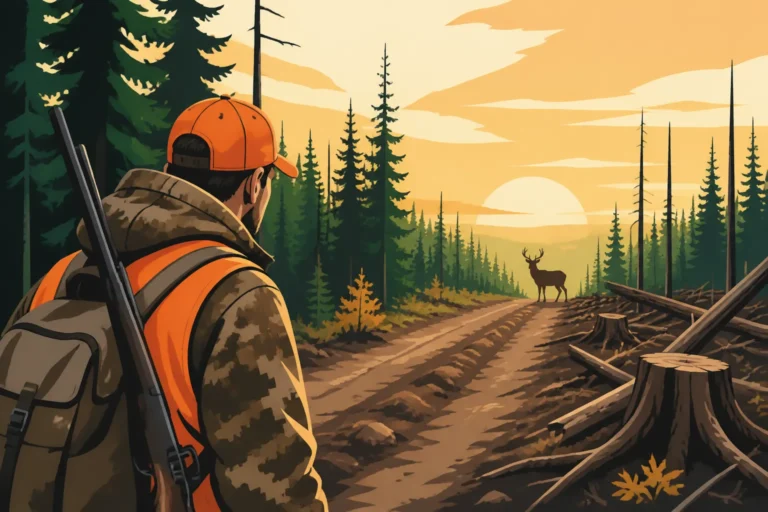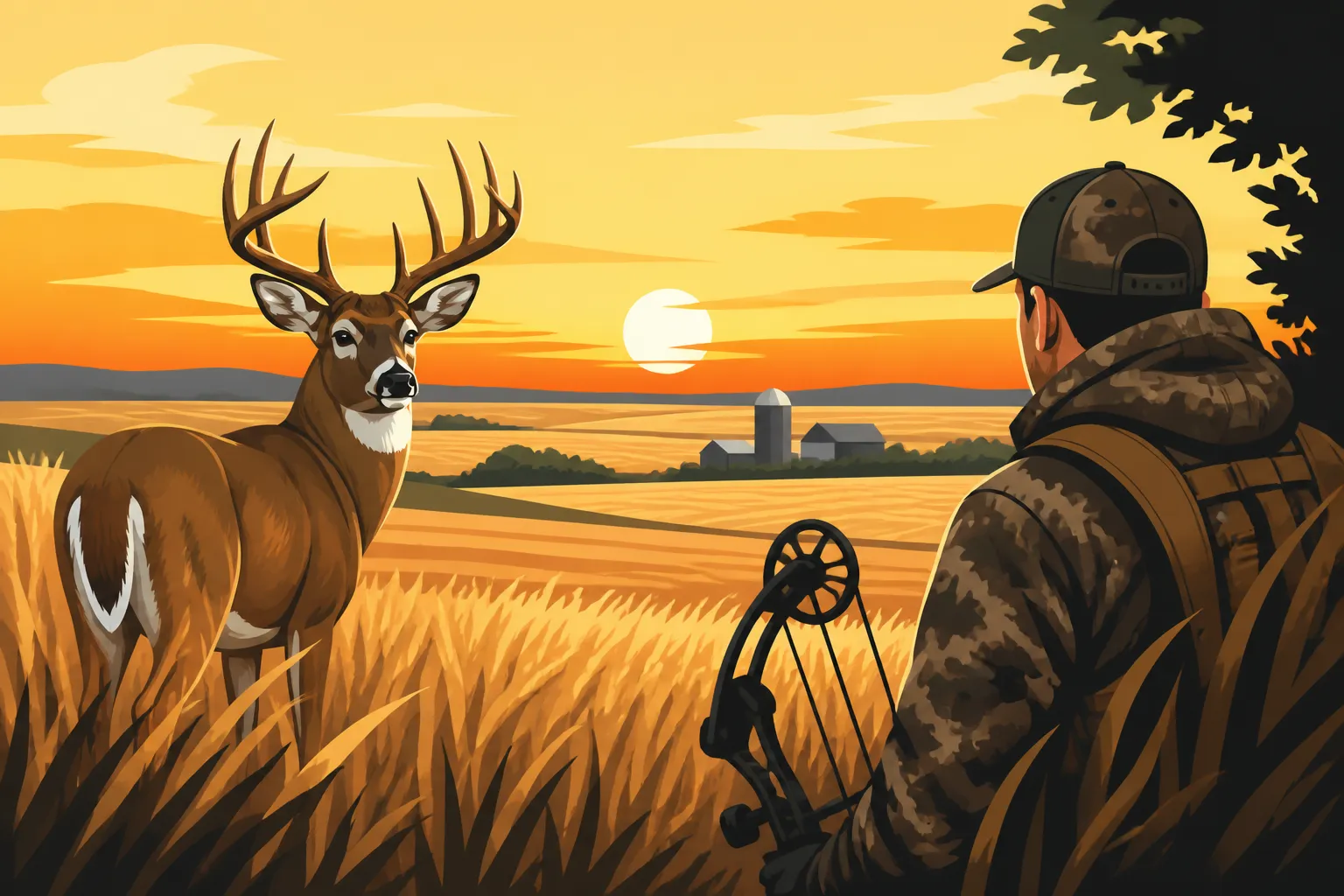
Hunting Whitetails on Saskatchewan Farmland
When most folks picture Saskatchewan whitetail hunting, their minds often drift to the dense, dark timber of the northern forest fringe, where big bucks seem to melt into the shadows. And don't get me wrong, that country is legendary! But if you're overlooking the vast agricultural lands that blanket much of this province, you're missing out on some of the biggest, most elusive whitetails Saskatchewan has to offer. This guide is dedicated to helping you unlock the secrets of hunting these farm-country giants, from understanding their patterns to navigating the unique challenges and opportunities that come with hunting among the crops.
Understanding Saskatchewan Farmland Whitetails
Saskatchewan's farmland might seem like an unlikely place for giant whitetails, especially when you compare it to the popular image of deer deep in the woods. But these open landscapes offer a unique blend of resources that allows deer to thrive, often growing larger than their northern counterparts.
Why Farmland Attracts Big Deer
The truth is, Saskatchewan's farmland is an absolute buffet for whitetails. Unlike the relatively sparse nutritional offerings of a deep boreal forest, agricultural fields provide an incredibly rich and abundant food source. Think about it: fields of peas, lentils, canola, wheat, and oats offer a concentrated caloric intake that deer simply can't find anywhere else. This high-protein, high-carbohydrate diet, coupled with essential minerals found in the rich prairie soils, fuels exceptional antler growth and body mass. Many hunters often marvel at "Why Saskatchewan Bucks Grow So Large," and the answer often lies right here in the fertile croplands.
Beyond the food, these areas can often experience less concentrated hunting pressure in some spots, purely because hunters perceive them as "too open" or "too challenging." This can allow bucks to reach older age classes, where their genetic potential for large antlers truly shines. While predators like coyotes are certainly present, the open nature of farmland can make it harder for larger predators like wolves to operate effectively, creating a slightly safer environment in certain pockets. This combination of superior nutrition and varied hunting pressure creates a perfect storm for growing massive, mature whitetails.
Typical Movement Patterns in Agricultural Landscapes
Deer in farm country are masters of adaptation. Their daily lives revolve around moving between secure bedding cover and abundant food sources, often traveling significant distances. During the day, they will seek refuge in whatever dense cover they can find: thick bluffs, isolated bush pockets, deep, cattail-choked sloughs, long shelterbelts, or even unharvested standing crops like corn or tall stubble. As dusk approaches, they'll leave these sanctuaries, often using subtle terrain features or linear cover to slip undetected into the feeding fields. Understanding this bedding-to-feeding pattern is fundamental, as it dictates where and when you'll intercept them.
Daytime hiding spots in farmland are often far more subtle than in the forest. A small, overgrown drainage ditch that barely registers on a map can hold a mature buck. A dense clump of willows in the middle of a pasture, or a small, overlooked woodlot, becomes prime real estate. Deer here are incredibly adept at using even the slightest elevation change or vegetation difference to their advantage, disappearing in plain sight.
Weather also plays a huge role in these open landscapes. A strong prairie wind can dictate travel routes, pushing deer to the leeward side of bluffs or into the shelter of thick cover. Snow cover, especially deep snow, can drastically alter their patterns, forcing them to yard up in larger bush pockets or along well-traveled trails where movement is easier. Even rain can influence their activity, often making them more active during lighter drizzles or causing them to hunker down during heavy downpours.
Reading the Land: Beyond the Bush Edge
When you're looking at farmland, it's easy to just see "fields." But a successful farmland hunter learns to see beyond the obvious. Identifying the subtle travel corridors is crucial. These might be obvious treelines or fence lines, but they can also be less apparent features like dry creek beds, grassed-over waterways, or even subtle depressions in a field that offer just enough cover for a deer to feel secure moving through. These linear features act as hidden highways, allowing deer to travel safely from bedding to feeding.
Never underestimate the importance of isolated cover. While the main draws are often large bluffs or dense river valleys, a single willow run cutting through a field or a small patch of poplars can serve as a vital staging area or even a primary bedding spot for a mature buck. I’ve seen some incredible bucks emerge from what seemed like impossibly small patches of cover. It pays to know how to locate and understand Hunting a Willow Run for Whitetails and how these micro-habitats can concentrate deer.
Finally, understanding the influence of crop types is paramount. Deer preferences shift throughout the year. Early in the season, lush alfalfa or pea fields are magnets. Later, once the combines have rolled, they might be drawn to spilled grain in a swathed barley field or even the lingering greens in a lentil field. Knowing how to read the landscape means understanding what crops are present, what has been harvested, and what might be left standing. For instance, Hunting a Standing Canola Field Edge can be incredibly productive during the archery season, offering both food and dense cover.
Key Scouting Strategies for Farmland Whitetails
Finding whitetails in Saskatchewan's vast farmlands requires a multi-pronged approach, blending modern technology with good old-fashioned boots-on-the-ground effort and, crucially, excellent people skills.
The Importance of Post-Harvest Scouting
For many farmland hunters, the period immediately after harvest is absolutely critical. Once the crops are off, the landscape completely changes, and what was once hidden is now revealed. This is when you can truly see the deer trails, rub lines, and scrape activity that were completely obscured by standing crops. These "post-harvest reveals" are invaluable for identifying primary travel routes and understanding how deer use the now-open fields.
Focus your attention on field edges and transitions. Deer rarely just pop out into the middle of a field; they'll use the edges, brush lines, and subtle terrain features to enter and exit. Look for pinch points – areas where natural features force deer to funnel into a narrow travel corridor. These could be small strips of bush between two large fields or a narrow section of a treeline that extends out into a pasture.
Glassing techniques become your best friend in open country. With the crops down, you can cover vast amounts of territory with a good pair of binoculars or a spotting scope. Early mornings and late evenings are prime times to observe deer moving from bedding to feeding, or vice-versa. Find a high vantage point, settle in, and meticulously scan the field edges, shelterbelts, and bluffs. Tools like a GoHunt account, with its mapping layers and topographical features, can really help you pinpoint these vantage points and identify potential deer movement corridors before you even step foot on the land. Consider how useful it is for Scouting With Satellite Imagery in Saskatchewan to pick out these details.
Leveraging Technology for Farmland Intel
In today's hunting world, technology is a game-changer, especially in farmland. Satellite imagery and mapping applications like GoHunt or onX Hunt are indispensable. These tools allow you to identify potential bedding areas (dense bluffs, sloughs), likely travel corridors (treelines, drainages), and prime food sources (crop fields) all from the comfort of your home. You can mark waypoints, measure distances, and get a bird's-eye view that would take days to cover on foot. They're excellent for Reading Saskatchewan Crown Land Layers on onX, but just as valuable for understanding private land layout.
Beyond satellite imagery, topographical maps (often integrated into these apps) are vital. Subtle elevation changes, even just a few feet, can create hidden pockets, drainages, or benches that deer will use for bedding or travel cover. What looks flat from the road might actually have enough contour to hide deer movement. These features become critical in vast, flat agricultural areas.
Trail cameras, used strategically, provide undeniable intel. Place them on well-used travel routes, near pinch points identified on your maps, or at the intersections of different cover types. They can confirm deer presence, identify specific bucks, and help you understand their patterns, telling you exactly when and where they're moving. Remember that Reading Whitetail Sign in Saskatchewan Bluffs often goes hand-in-hand with trail camera intel to confirm what you're seeing.
Ground Truthing and Door Knocking
While technology is powerful, there's no substitute for boots on the ground. You need to physically walk the land to confirm what your maps and cameras suggest. This is where you'll find fresh rubs, scrapes, and tracks that tell the story of recent deer activity. Ground truthing helps you identify those subtle nuances of the terrain that might not be visible from a satellite image, like a hidden seep or a particularly dense patch of cover.
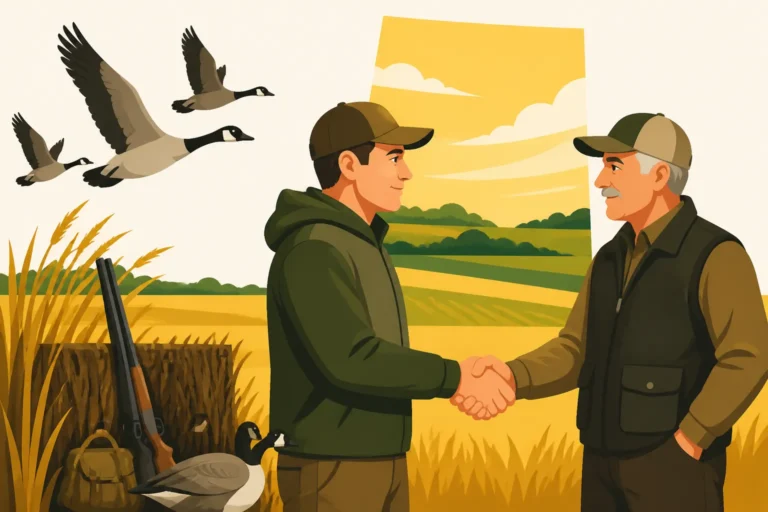
The art of asking permission is perhaps the most crucial skill for any farmland hunter. Landowner relations are paramount. Approach farmers with respect, politeness, and a genuine understanding that their land is their livelihood. Dress presentably, be concise, and always offer to share some of your venison or even offer to help with a chore around the farm. Many farmers are amenable to hunters who are respectful and trustworthy. Learning how to effectively approach landowners, much like with Knocking on Doors in Saskatchewan Farm Country, is a skill that will pay dividends for years to come.
Building long-term relationships with landowners is the ultimate goal. Don't just show up once a year. Maintain contact, offer help if you see a problem, and always be a good steward of their land. Pick up any trash you see, close gates, and drive slowly on their access roads. These small actions demonstrate respect and can secure hunting opportunities for many seasons. Think of it like building trust for Getting Permission for a Goose Field; the principles are largely the same for big game.
Effective Hunting Tactics for Open Farmland
Once you've done your scouting and secured your access, it's time to put a plan into action. Hunting whitetails in open farmland requires specific tactics that account for the unique challenges and opportunities of the landscape.
Stand Placement Near Food and Cover
In farmland, identifying and exploiting pinch points and funnels is critical. These are areas where natural or man-made features concentrate deer movement. This could be a narrow strip of bush between two large fields, a fence line that deer consistently cross at a specific spot, or a low-lying ditch that forces them to travel in a specific direction. Placing a stand in these high-traffic areas, especially where they connect bedding cover to food sources, is a recipe for success.
When considering your setup, think about elevated stands versus ground blinds. Elevated stands (tree stands) work well where there's sufficient background cover, like on the edge of a bluff or along a treeline. They give you a better vantage point and help keep your scent above the deer. However, in truly open country, a well-placed ground blind, camouflaged with natural vegetation, can be incredibly effective. Just make sure you have solid background cover to break up your silhouette. For advice on elevated setups, check out Hanging a Stand on a Saskatchewan Bush Edge.
Regardless of your choice, playing the wind is absolutely non-negotiable in open farmland. Your scent will travel far and wide. Always approach your stand or blind with the wind in your face or quartering, and never hunt a spot if the wind isn't right. Having multiple stand locations that cater to different wind directions is essential for consistent success throughout the season.
Still-Hunting and Stalking in Crop Edges
In the vastness of farm country, patience is truly a virtue, especially for still-hunting. This involves moving incredibly slowly, pausing often to scan the landscape, and utilizing every bit of available cover. Ditches, tall grass, fence lines, and the edges of standing or harvested crops can all provide enough concealment to slowly work your way through an area. This is particularly effective during the late season when crops are down, and deer are often concentrated around remaining food sources or thicker cover.
Stalking strategies require immense discipline and a keen understanding of the terrain. Always move into the wind, using subtle rises, creek beds, or even the shadows cast by sparse vegetation to stay hidden. This tactic is best suited for experienced hunters with excellent observational skills and patience. You're trying to close the distance on an animal in an environment where cover is minimal, making every step critical.
Utilizing natural blinds is another excellent tactic. Hay bales can provide surprising amounts of cover if you blend in properly. Old farm equipment, a line of fence posts, or a subtle rise in the ground can all be used to break up your outline and give you a shooting rest. The key is to blend into the environment and remain absolutely motionless.
Decoys, Rattling, and Grunt Calling
When the rut kicks in, supplemental tactics can be incredibly effective in open farmland, where visibility is often excellent. Decoys, especially a buck decoy, can be a game-changer. Place it in an open field where it's highly visible, ensuring the wind carries your scent away from the decoy itself. A dominant buck decoy can often draw in curious or challenging bucks, giving you a shot opportunity. Just be aware of other hunters in the area.
Rattling can be incredibly effective during the pre-rut and rut, especially in open parkland or farmland where sound carries far. Bucks are often cruising, looking for competition. The key is to know how much noise to make. In wide-open spaces, a louder, more aggressive sequence can be heard from further away, drawing in distant bucks. However, be mindful of overdoing it. For more specific advice, consider the nuances of Rattling Volume in Open Parkland.
Grunt calls and snort-wheezes, used appropriately, can seal the deal. A well-timed grunt can stop a buck in his tracks or draw him closer. A snort-wheeze, mimicking a dominant buck, can challenge a passing male into investigating. Knowing when and how to use these calls, especially Grunt Calls Late in Saskatchewan's Rut, can turn a slow sit into an unforgettable encounter. Always use calls sparingly and realistically to avoid alarming deer.
Navigating Access and Landowner Relations
Hunting farmland in Saskatchewan inherently means dealing with private land, and navigating access is often more challenging than the hunt itself. Building and maintaining strong landowner relationships is absolutely essential for success and for the future of hunting.
Building Trust with Farmers
The most important currency you have as a hunter on private land is respect. Recognize that the land you're hunting is someone's property, and often their livelihood. Never damage crops, cut fences, or leave gates open. These are fundamental rules that, if broken, will quickly shut down your access.
Communication is key. Always let the landowner know when and where you plan to hunt. A quick text or phone call before you head out is a simple courtesy that builds immense goodwill. Follow any specific rules they might have, such as areas that are off-limits, specific parking instructions, or times when they prefer you not to hunt. For more insights on this critical aspect, look into Getting Permission for a Goose Field, as many of the principles apply directly to deer hunting on farmland.
Offering a helping hand, even a small gesture, can go a long way. If you see a fence down, offer to help fix it. If they’re short a hand during harvest, a few hours of your time can solidify a relationship for years. Even something as simple as offering to share some of the venison from a successful hunt is a gesture of appreciation.
Understanding Posted Land Signs and Rules
Saskatchewan has clear regulations regarding posted land. A "No Hunting" or "No Trespassing" sign, or even just purple paint on fence posts, legally prohibits access without explicit permission. It's your responsibility as a hunter to understand what these signs mean and to respect them absolutely. Always ask before you enter any land that is posted or that you're unsure about.
Sometimes, situations can be ambiguous. A small corner of a field might not be clearly marked, or a sign might be old and faded. In these cases, the rule of thumb is simple: when in doubt, seek permission. It's far better to ask and be denied than to trespass and risk a fine, losing future hunting opportunities, and damaging the reputation of all hunters.
The penalties for trespassing in Saskatchewan can be significant, ranging from hefty fines to the loss of hunting privileges. It's not worth the risk. Always carry a copy of the Saskatchewan Hunting and Trapping Guide and be familiar with the regulations. Understanding your rights and responsibilities, as well as the landowner's, is crucial.
Ethical Considerations on Private Property
Beyond legal requirements, there are important ethical considerations when hunting on private property. Always stick to the specific areas the landowner has granted you permission to hunt. Do not explore new sections or expand your hunting area without first obtaining explicit permission. Maintaining this trust is vital.
Safety should always be your top priority. In farm country, this means being acutely aware of farm buildings, machinery, livestock, and most importantly, homes. Always know your backdrop and ensure a safe shot that won't endanger any property or people. This level of diligence protects everyone.
Finally, always leave no trace. This isn't just a courtesy; it’s an ethical imperative. Pack out all your garbage, including spent casings. If you create any disturbance, do your best to mitigate it. Leave the land cleaner than you found it. This simple act of respect ensures that landowners remain open to allowing hunters on their property in the future.
Dealing with Farmland-Specific Challenges
Hunting whitetails on Saskatchewan farmland presents its own unique set of challenges that require adaptability and strategic thinking.
The Impact of Crop Rotations and Harvest Schedules
One of the biggest variables in farmland hunting is the dynamic nature of agriculture itself. Crop rotations mean that your hot pea field from last year might be a wheat field this year, completely altering deer patterns. You can't rely on historical data alone; constant scouting and adaptability are required. What works for Hunting a Standing Canola Field Edge in September will be very different from hunting a stubble field in November.
Deer behavior shifts dramatically as crops are harvested. Before harvest, standing crops like corn or tall canola offer incredible security and bedding cover, making deer harder to pattern and hunt. After the combines roll, these deer are suddenly exposed, forcing them to find new bedding areas and often concentrating them around remaining food sources. This seasonal change means your strategy needs to be flexible, adapting from pre-harvest tactics to post-harvest glassing and stand hunting near remaining cover. For instance, successfully Hunting a Swathed Grain Field at Dusk requires understanding how deer react to the freshly cut landscape.
Communication with landowners becomes even more critical here. Knowing when fields are expected to be harvested can give you a significant advantage in planning your hunts. A quick conversation can provide invaluable intel that allows you to adjust your approach and be in the right place at the right time.
Managing Wind and Wide-Open Spaces
The open nature of Saskatchewan's farmland means that wind is a constant, often dominant, factor. It not only carries your scent for miles, potentially spooking deer before you even know they're there, but it also dictates deer movement, often pushing them to seek shelter in the lee of bluffs or dense cover. You must factor wind direction into every single aspect of your hunt, from your approach to your stand placement and even your exit strategy.
To combat the wind and vastness, utilize every bit of terrain and cover available. Subtle dips and draws, shelterbelts, rows of trees, and dense sloughs all provide relief from the wind and break up your profile. These features can be used to manage your scent, provide concealment for stalking, or offer a strategic advantage for stand placement.
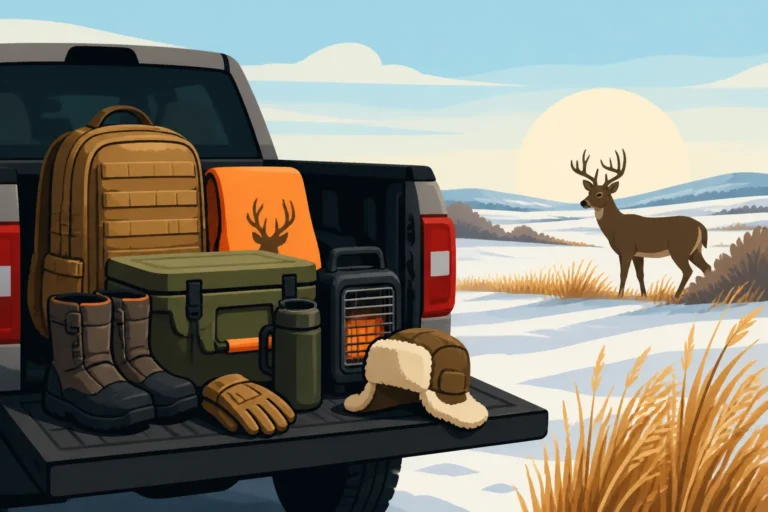
Layering your clothing for warmth and concealment is also crucial. Wind-resistant outer layers are a must to stay comfortable during long hours in a stand or blind. Furthermore, good camouflage that blends with the browns and golds of stubble fields or the greys of a late-season treeline is important to break up your outline in these open environments.
Retrieving Game in Agricultural Fields
Successfully harvesting a deer in farm country is just the first step; retrieving it can present its own set of challenges. Tracking can be difficult. A good blood trail might be easy to follow in fresh snow, but on dry stubble or through dense, standing crops, even a heavy blood trail can be hard to discern. This makes careful shot placement even more critical to minimize tracking distance.
The importance of a well-placed, ethical shot cannot be overstated in farmland. Aim for a clean, quick kill to reduce the animal's travel distance and the difficulty of recovery. Even with a perfect shot, be prepared for a tracking job. Bring a good light, extra flagging tape, and a patient mindset.
Finally, getting the animal out of a field requires planning and, often, landowner permission. If you need to drive a vehicle into a field to retrieve a deer, always get explicit permission from the landowner beforehand. Driving on crops or disturbing soil can cause damage, so be respectful of their property. Many farmers are happy to allow vehicle access for retrieval, but only if you ask first and respect their land. Consider how Getting a Deer Out on a Frozen Trail or other methods might apply, adapted for a field environment.
Disclaimer
Please note that hunting regulations, seasons, and licensing requirements can change. Always consult the most current Saskatchewan Hunter's and Trapper's Guide and relevant provincial government websites for the definitive and up-to-date information before planning any hunting trip. This guide is for informational purposes only and does not replace official regulations.