Which Saskatchewan Zones Hold the Most Crown Land
There's nothing quite like the freedom of planning a hunt on public land, but for many hunters, the biggest frustration isn't about calling in an animal or making a tough shot – it's simply finding legal, accessible ground to hunt on in the first place. With Saskatchewan's vast landscape, it can feel like a maze trying to figure out which corners of the province offer the most Crown land opportunities. This guide is going to peel back the layers and pinpoint exactly which Saskatchewan zones are your best bet for finding significant tracts of public hunting land.
Understanding Saskatchewan's Land Landscape for Hunters
Saskatchewan is a huge province, and its land ownership is a patchwork of private farms, ranches, and forests, interwoven with various forms of public or "Crown" land. For resident hunters, Crown land represents a vital resource, offering access without the need for explicit landowner permission. It's where many of us cut our teeth, learn to scout, and chase our dreams of a successful harvest. Knowing where this land is concentrated can save you countless hours of scouting and door-knocking, letting you focus on the hunt itself.
The Frustration of "Posted Land"
Let's be real, we've all been there. You spend days pouring over maps, driving dusty grid roads, and finally spot what looks like the perfect deer habitat – a brushy coulee, a dense poplar bluff, or a sheltered slough edge. You pull over, heart pounding with anticipation, only to see that dreaded "Posted No Hunting" sign nailed to a fence post. It's deflating, isn't it? The sheer amount of private land, and the increasing trend of landowners restricting access, makes finding huntable ground a significant challenge. This is why understanding where the province's Crown land is concentrated becomes so crucial. It opens up opportunities that might otherwise seem out of reach. If you're struggling with access, it's worth reviewing Saskatchewan Posted Land Sign Rules to understand your rights and responsibilities.
Why Crown Land Matters for Resident Hunters
For Saskatchewan residents, Crown land is our birthright as hunters. It's the ultimate equalizer, providing opportunities for everyone, regardless of whether they have family connections to farmland or the budget for a leased property. On Crown land, you're free to roam (within regulations, of course), scout, hang stands, and pursue game without the constant worry of trespassing. It’s the spirit of self-guided hunting, the raw, unadulterated experience of pitting your wits against the wild. While non-residents generally require an outfitter for big game, residents have the privilege of exploring vast stretches of public land. This availability is key to sustaining our hunting heritage and ensures that the thrill of the chase isn't reserved for a select few. Of course, even for residents, getting on private land is often beneficial, so understanding Getting Private Land Permission in Saskatchewan is always a good skill to hone.
Unveiling the Crown Land Hotspots: Regions of Opportunity
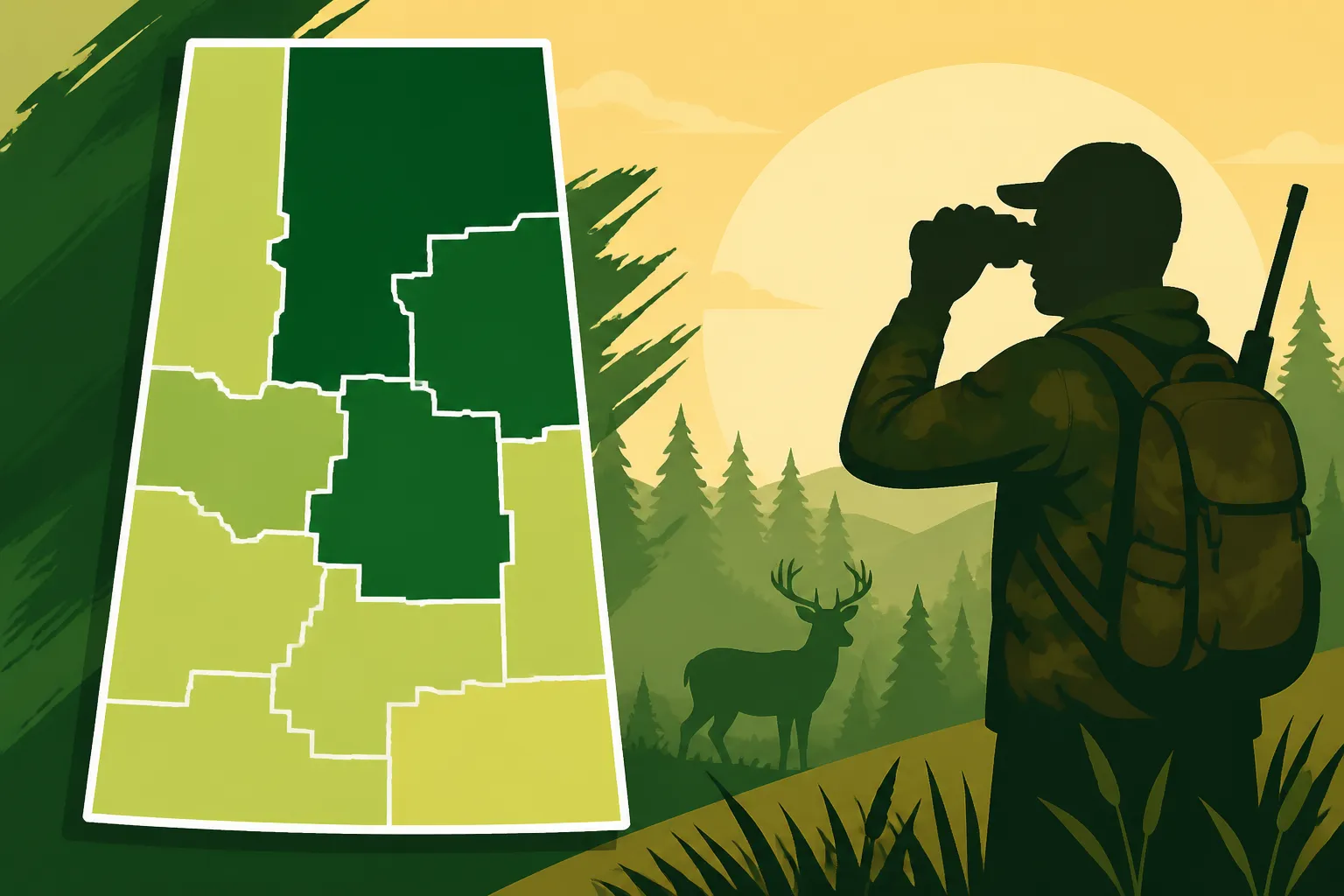
When we talk about where the bulk of Saskatchewan's Crown land lies, we're talking about a significant north-south divide, with the northern reaches of the province being overwhelmingly public. However, there are pockets and types of Crown land found throughout, even in the more agricultural south.
The Vastness of the Boreal North
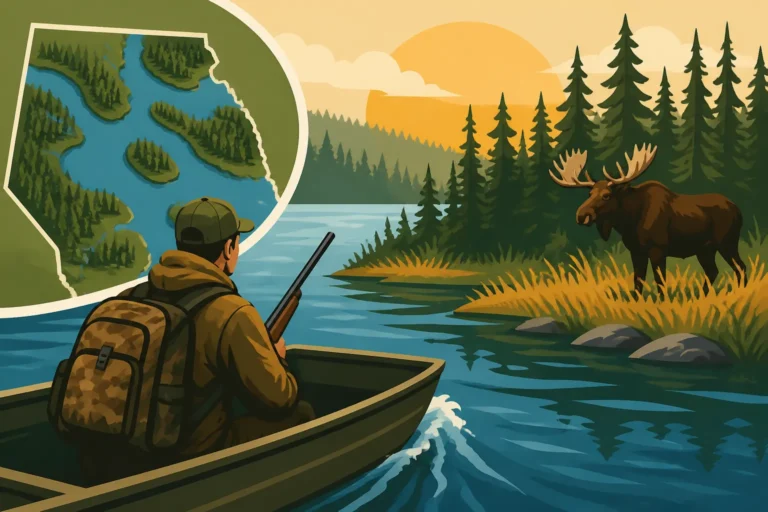
Without a doubt, if you're looking for the absolute highest concentrations of Crown land in Saskatchewan, you need to set your sights northward, deep into the Boreal Forest. This vast expanse of spruce, pine, and poplar forest, interspersed with countless lakes, rivers, and muskeg, is largely unallocated and remains public domain.
Zones in the far north, typically those with higher numerical designations and extending beyond the main agricultural belts, often boast 70% to 90% or even higher Crown land percentages. Think about the regions north of Prince Albert, extending towards La Ronge and beyond. These areas are remote, rugged, and often require serious planning and equipment to access. Roads can be limited, and navigating requires good mapping and bush skills. However, the reward is an unparalleled wilderness hunting experience, with species like moose, black bear, and wolf thriving in these untouched habitats. Hunting here is a true adventure, a deep dive into wild Saskatchewan. It's the heartland of Moose Hunting Saskatchewan's Farmland and Forest and prime black bear country. If you're dreaming of a truly wild hunt, learn more in our guide Hunting Saskatchewan's Boreal North.
The Productive Forest Fringe
Just south of the continuous boreal forest, where the dense bush starts to break up and give way to agricultural clearings, lies the "Forest Fringe." This is a highly sought-after area for many hunters because it offers a fantastic mix of cover and feed, leading to exceptional game populations.
In the Forest Fringe, Crown land percentages typically range from 40% to 70%. While not as overwhelmingly public as the deep boreal, these zones still offer substantial public hunting ground. The Crown land here often comes in larger blocks of provincial forest, intermixed with private farmland. This creates excellent edge habitat for whitetail deer, elk, and black bears, as animals can utilize the security of the bush and the rich food sources of the adjacent fields. Zones like those around Hudson Bay, Nipawin, and Meadow Lake are classic examples of the Forest Fringe. Access here is generally better than in the far north, with more grid roads, but you'll still encounter plenty of challenging terrain. The key here is identifying the specific blocks of Crown land that provide the best cover and access to feed. This is where you might find those elusive, heavy-bodied bucks. For serious deer hunters, understanding Hunting the Forest Fringe for Big Bucks is critical. Our article on Hunting Saskatchewan's Forest Fringe delves into the specifics of these productive areas.
Navigating Crown Land in Denser and More Developed Areas
As you move further south into the more populated and agricultural regions of Saskatchewan, finding contiguous blocks of Crown land becomes more challenging. It's not impossible, but it requires a different approach and a keen eye for smaller, often less obvious, opportunities.
Aspen Parkland and Scattered Opportunities
The Aspen Parkland is a beautiful transition zone characterized by rolling hills, aspen bluffs, vast sloughs, and a mix of cultivated fields and native grasslands. Here, the Crown land picture changes significantly. You're looking at percentages typically in the 20% to 40% range, but often these are not large, unbroken tracts.
Instead, Crown land in the Parkland often appears as smaller, isolated parcels, such as provincial Wildlife Management Areas (WMAs), specific parcels of provincial forest, or, critically, community pastures. These pastures, while leased for cattle grazing, often offer significant hunting access, especially for species like whitetail deer, waterfowl, and upland birds. They act as vital habitat corridors and refuges in a predominantly agricultural landscape. The key to hunting the Parkland is not just looking for "Crown land" but understanding the types of Crown land available and how to legally access them. It often means a lot more detailed map study and potentially reaching out to pasture managers for clarification on access rules. Hunting a Saskatchewan Community Pasture can be a fantastic way to find public land in these zones. This region is also a hotspot for diverse species, as detailed in Hunting Saskatchewan's Aspen Parkland.
The Southern Prairie: Smaller Pockets and FWDF Lands
Venturing into the Southern Prairie, the landscape shifts to expansive open fields, vast grasslands, deep coulees, and river valleys. Here, Crown land is generally the most scarce, often making up only 5% to 20% of a given zone. The majority of the land is privately owned and actively farmed or ranched.
However, even in the prairie, there are crucial pockets of public land. These often include the land directly within river valleys (such as the Qu'Appelle Valley or portions of the South Saskatchewan River), specific ecological preserves, or, very importantly, Fish and Wildlife Development Fund (FWDF) lands. These FWDF lands are acquired and managed specifically for wildlife habitat and public recreation, including hunting. They might be small – sometimes just a quarter-section or two – but they can be incredibly productive for mule deer, pronghorn, waterfowl, and upland birds. Hunting here requires precision; you need to know exactly where the FWDF parcels are and respect the boundaries of surrounding private land. It's about finding those needle-in-a-haystack opportunities and being highly efficient with your scouting. For more on these critical parcels, check out Saskatchewan's Fish and Wildlife Development Fund Lands. To understand the broader hunting opportunities in this region, consult our guide on Hunting Saskatchewan's Southern Prairie.
Tools and Tips for Locating and Accessing Crown Land
Finding Crown land in Saskatchewan, especially in the more fragmented areas, demands a systematic approach and the right tools. Gone are the days of guessing based on paper maps; modern technology is a hunter's best friend.
Mapping Technology: Your Best Friend
In today's hunting world, digital mapping applications are absolutely indispensable for locating and utilizing Crown land. Tools like onX Hunt and GoHunt have revolutionized how hunters scout and navigate. These apps provide detailed land ownership layers that clearly mark private, provincial Crown, and federal Crown lands in different colours. This visual clarity eliminates much of the guesswork and fear of inadvertently trespassing.
Here’s how they help:
- Clear Boundaries: You can see precise property lines and instantly know if you're on public or private ground.
- Offline Maps: In remote northern zones where cell service is non-existent, you can download maps in advance and still navigate confidently using your phone's GPS.
- Access Points: These maps often show grid roads, trails, and potential access points, helping you plan your approach without getting stuck or running into locked gates.
- Habitat Identification: By overlaying satellite imagery with land ownership, you can identify prime habitat on Crown land before you even step foot in the field.
Investing in a subscription to one of these services is, in my opinion, one of the best investments a Saskatchewan hunter can make. It dramatically reduces scouting time and boosts confidence when you're in unfamiliar territory. We have a great article that dives deeper into Reading Saskatchewan Crown Land Layers on onX. For broader scouting strategies, check out Scouting With Satellite Imagery in Saskatchewan.
Official Resources and Local Knowledge
While digital maps are powerful, they should be complemented by official resources and, whenever possible, local knowledge. The Saskatchewan Ministry of Environment publishes an annual Hunting and Trapping Guide, which includes important legal definitions and general maps of Wildlife Management Zones. While it doesn't show exact property lines, it's crucial for understanding the rules of the game in each zone.
Sometimes, the best information comes from simply talking to people. Engaging with local RMs (Rural Municipalities), conservation officers, or even established hunters in a particular area can provide invaluable insights into smaller, lesser-known Crown land parcels or unique access situations. Local knowledge can also shed light on unmaintained trails, seasonal access issues, or areas that might be under-hunted.
Here's a quick summary of the general distribution of Crown land across Saskatchewan's major hunting regions:
| Region | Typical Crown Land Percentage | Key Characteristics | Primary Hunting Opportunities |
|---|---|---|---|
| Boreal North | 70-90%+ | Dense forest, muskeg, countless lakes, remote | Moose, Black Bear, Wolf |
| Forest Fringe | 40-70% | Mixed forest, bush, agricultural edges, transition zone | Whitetail Deer, Elk, Black Bear |
| Aspen Parkland | 20-40% | Aspen bluffs, sloughs, cultivated fields, native grasslands | Whitetail Deer, Waterfowl, Upland Birds |
| Southern Prairie | 5-20% | Open fields, coulees, river valleys, large scale agriculture | Mule Deer, Pronghorn, Waterfowl, Upland Birds |
As you can see, the further north you go, the more Crown land you'll generally find. But regardless of the region, doing your homework with mapping tools and understanding the different types of public land available will be your ticket to unlocking fantastic hunting opportunities across Saskatchewan. Happy hunting, and good luck out there!
Disclaimer
This article is for general informational purposes only and does not constitute professional advice. Laws, prices and regulations vary by location and change over time. Consult a qualified professional for guidance on your specific situation.