Moose Hunting Saskatchewan’s Farmland and Forest
The sheer size and elusive nature of a Saskatchewan moose can make even the most seasoned hunter feel a knot of anxiety, especially when you consider the vast, diverse landscapes these magnificent animals call home. From the dense, unforgiving boreal forest to the surprising pockets of cover within agricultural fields, figuring out where and how to pursue a moose in this province can be a real head-scratcher. This comprehensive guide is here to untangle those complexities, offering practical insights and strategies to help you successfully hunt moose, whether you're navigating the familiar farmland fringes or venturing deep into the northern woods.
Understanding Saskatchewan's Moose Habitat Diversity
Saskatchewan might be known as the "Land of Living Skies" and endless golden fields, but it also holds incredible habitat diversity, making it a truly unique challenge for moose hunters. You’re not just looking for a moose; you’re looking for a moose in its specific type of habitat, which dictates everything from their movement patterns to how you’ll approach your hunt. Understanding these distinct environments is the first step to success.
The Boreal Forest: Traditional Moose Strongholds
When most people picture moose hunting, they envision the vast, dense boreal forest – and for good reason. This is the traditional domain of the moose, a landscape characterized by towering spruce and pine, interspersed with wetlands, muskeg, and poplar bluffs. These areas offer everything a moose needs: abundant browse, protective cover from predators and harsh weather, and plenty of water sources. The sheer scale of the boreal forest can be overwhelming, but it also means pockets of undisturbed habitat where moose can grow to impressive sizes.
Hunting in the boreal forest is often a physically demanding endeavour. You'll likely be dealing with thick underbrush, uneven terrain, and limited visibility. Moose here tend to be more wary, often melting into the dense timber at the first sign of human intrusion. Their movements are dictated by food sources – young regenerating forest after a burn or logging operation, and willow thickets along water bodies. Understanding these preferences is crucial; you're looking for areas that offer both food and sanctuary. This requires patience, keen observation, and often, the willingness to put in miles on foot or use an ATV to access remote areas where the biggest bulls often reside. Many hunters dream of calling a bull from a vast, untouched northern block, and with good reason – it's a profound experience.
Farmland and Parkland Edges: The New Moose Frontier
Perhaps one of the most surprising and increasingly popular moose hunting opportunities in Saskatchewan is found right in the agricultural belt. Over the last few decades, moose populations have expanded significantly into the parkland and farmland regions. This isn't the open prairie you might imagine; rather, it's a mosaic of cultivated fields, dense willow bluffs, trembling aspen groves, and extensive slough systems. These areas offer an incredible bounty of high-quality forage, including crops like canola, peas, and oats, which provide a rich diet for moose, leading to larger body sizes and impressive antler growth.
Hunting farmland moose presents a very different set of challenges and rewards. While the cover might seem sparse compared to the boreal forest, moose here are experts at utilizing every available patch of willows, every treed bluff, and even standing crops for bedding and concealment. Often, they are more habituated to human activity, which can be both a blessing and a curse. You might spot them feeding in a pea field at dawn, only for them to vanish into a willow run when you try to approach. Success in these areas often hinges on securing landowner permission, meticulous scouting for subtle signs, and understanding how moose travel between feeding and bedding areas. It's a game of hide-and-seek, but the potential for encountering a truly giant bull is very real, especially when considering Why Moose Moved Into Saskatchewan Farmland.
River Valleys and Wetlands: Key Moose Corridors
Regardless of whether you're in the deep bush or surrounded by fields, river valleys and extensive wetland systems are absolute magnets for moose. These areas provide consistent water sources, a rich diversity of browse, and natural travel corridors. In the boreal forest, river systems often carve through the landscape, creating breaks in the dense timber and providing access to different vegetation types. Moose will often follow these routes, especially during the rut, making them prime locations for intercepting travelling bulls.
In farmland and parkland regions, the significance of these features is even more pronounced. A river valley, even a relatively small one, can offer a continuous strip of dense cover and forage that acts as a highway for moose moving across otherwise open terrain. Similarly, large slough systems, with their cattails, bulrushes, and willow fringes, provide invaluable sanctuary and feeding grounds. Moose are perfectly adapted to these wet environments, often wading or swimming through marshes to escape pressure or access preferred browse. When you're scouting, pay close attention to the confluence of smaller creeks joining larger rivers, or the edges of extensive marshlands. These 'pinch points' can concentrate moose movement, offering excellent opportunities, especially if you're Hunting Farmland Moose in Saskatchewan.
Essential Scouting and Preparation for Moose
Moose hunting in Saskatchewan, whether in the forest or on farmland, isn't something you can just wing. It demands meticulous scouting and thorough preparation. These magnificent animals have an uncanny ability to disappear, and without understanding their patterns and preferences, you’ll spend more time frustrated than successful.
Interpreting Moose Sign: Rubs, Beds, and Browse
Before you even think about calling or setting up a stand, you need to become a detective in the woods. Moose leave a wealth of clues, and learning to read them is fundamental. Rubs, where bulls scrape their antlers on trees, are obvious indicators, especially as the rut approaches. Look for fresh rubs with sap still oozing, indicating recent activity. The size of the rub can also give you an idea of the bull's size; larger bulls tend to rub larger trees. Bedding areas, often found in thick cover or along the edges of bluffs, will show flattened vegetation and droppings. Fresh droppings and warm beds are like gold – they tell you a moose was there very recently.
Perhaps the most consistent sign is browse. Moose are voracious eaters, and they leave distinct feeding patterns. Look for snapped twigs and stripped bark on willow, aspen, and other deciduous trees, usually at heights ranging from knee-level to well above your head. Unlike deer, moose tend to clip branches rather than tear them. If you find a patch of heavy browsing that looks fresh, you're in an active feeding area. Identifying what they're currently eating can help you pinpoint other similar areas. Remember, a single set of tracks might just be a wanderer, but a concentration of fresh browse, rubs, and beds points to an established home range.
Using Technology to Your Advantage
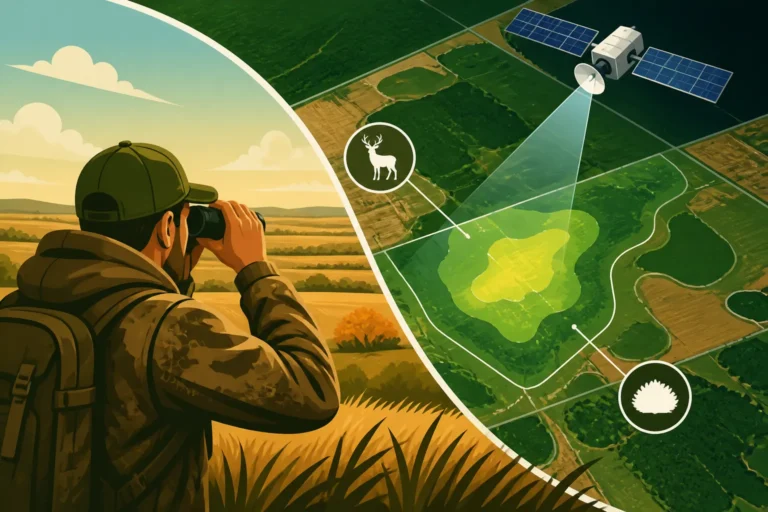
In today's hunting world, technology isn't just a convenience; it's a vital tool, especially for species as wide-ranging as moose. Satellite imagery and topographic maps are invaluable for identifying potential hotspots from home. Look for isolated bluffs in farmland, water sources, natural funnels created by terrain, or recent cutblocks and burns in the boreal forest. These maps help you create a strategic scouting plan, saving countless hours of aimless wandering. Services like GoHunt provide incredibly detailed overlays, allowing you to visualize terrain, vegetation types, and even identify potential travel corridors that might be invisible from the ground. Many hunters use these tools to mark likely bedding and feeding areas, plan approach routes that minimize wind exposure, and locate public land access points or gauge the extent of private land.
GPS devices or smartphone apps loaded with mapping software are crucial for navigation once you're in the field. They allow you to mark fresh sign, track your own movements, and ensure you can get back to your vehicle safely, especially in dense forest where it's easy to get disoriented. Beyond mapping, trail cameras can provide real-time intelligence on moose presence, movement patterns, and even individual animals, allowing you to fine-tune your hunting strategy. While technology can't replace boots-on-the-ground scouting, it certainly makes it more efficient and effective, helping you narrow down vast areas into manageable, promising hunting grounds.
Physical Conditioning and Gear for Moose Terrain
Hunting moose, regardless of the habitat, is a physically demanding pursuit. These are large animals often found in challenging terrain, and the work doesn't stop once the animal is down. If you're hunting in the boreal forest, expect to cover long distances through thick brush, muskeg, and over uneven ground. Even on farmland, navigating sloughs, deep ditches, and thick willow draws can be strenuous. Being in good physical condition is paramount for both your safety and your success.
Beyond physical fitness, having the right gear is non-negotiable. Sturdy, waterproof boots are essential for traversing wet environments and uneven ground. Layered clothing is crucial for adapting to Saskatchewan's unpredictable weather, which can range from mild autumn days to bitter cold, especially during Saskatchewan Moose Season Dates. A quality backpack to carry essentials like water, food, first-aid, navigation tools, and game bags is a must. Don't skimp on a good knife and a sharpening stone for field dressing. For those venturing into truly remote areas, a satellite communicator or InReach device can be a lifesaver. Finally, ensure your rifle or bow is properly sighted in and that you're comfortable making accurate shots under field conditions, as a moose is a massive animal requiring precise shot placement. Having Legal Firearms and Bows for Big Game that are suitable for moose is critical to ensure a clean harvest.
Hunting Strategies for Saskatchewan's Farmland Moose
Hunting moose in Saskatchewan's agricultural zones requires a blend of patience, stealth, and a keen understanding of how these adaptable animals utilize limited cover. It’s a completely different game than hunting in the big bush, and success often comes down to recognizing subtle patterns.
Focusing on Cover in Agricultural Landscapes
In farmland country, moose are masters of using whatever cover is available to them. This might include a narrow belt of poplars, a deep willow-choked slough, a dense shelterbelt, or even a large field of standing canola or corn. They often bed down in these areas during the day, emerging at dawn and dusk to feed in adjacent crop fields. Your strategy needs to revolve around systematically checking these cover pockets. This often means walking the edges, looking for fresh tracks leading in and out, and being prepared for a moose to burst out of seemingly thin cover. Remember, even a small stand of brush can hide a massive animal.
Often, the best approach is a slow, methodical still-hunt, especially on windy days when the rustling leaves can mask your sound. Pay close attention to wind direction; moose have an incredible sense of smell, and a shifting wind can quickly give you away. Another effective tactic is to set up an ambush point overlooking a well-used trail that leads from cover to a feeding area, especially in the mornings or evenings. Knowing Hunting a Shelterbelt Between Two Fields or Hunting a Slough Edge for Whitetails (and by extension, moose) becomes incredibly valuable here, as these are often prime spots for an encounter. Landowner permission is absolutely essential in these regions, so ensure you have secured access before venturing out.
Utilizing Calling Techniques in Open Country
While many associate moose calling with the deep boreal forest, it can be surprisingly effective in the parkland and farmland settings too. The key difference is often the volume and intensity of your calls. In open areas, sounds carry further, so you might not need to call as aggressively as you would in dense timber. Cow calls, soft and drawn-out, can pique a bull's curiosity, especially during the peak of the rut, which typically occurs When Saskatchewan's Moose Rut Peaks. A bull might hear the call from a distant bluff and decide to investigate.
Combine cow calls with subtle bull grunts and light antler rattling if you suspect a bull is in the vicinity. The challenge in open country is that a bull might circle downwind, so you need to be constantly aware of your surroundings and ready for a silent approach from an unexpected direction. Setting up with a partner, where one caller is slightly behind and downwind of the shooter, can be an effective strategy to counteract a bull trying to wind you. Patience is vital; a bull might take its time to respond, slowly making its way across a field edge or through a series of bluffs. Mastering Calling a Bull Moose in the Rut can be the difference-maker, drawing a hesitant bull out of cover.
Patience and Persistence on Farmland Perimeters
Hunting farmland moose often tests a hunter's patience. These animals are often nocturnal in their feeding habits, especially if there's any hunting pressure. You might spot a bull feeding in a field from a distance, but by the time you attempt an approach, it's vanished into a small patch of timber. This is where persistence comes in. Instead of giving up, try to predict where that moose might go next. Did it head into a specific bluff? Is there a creek bottom it might follow?
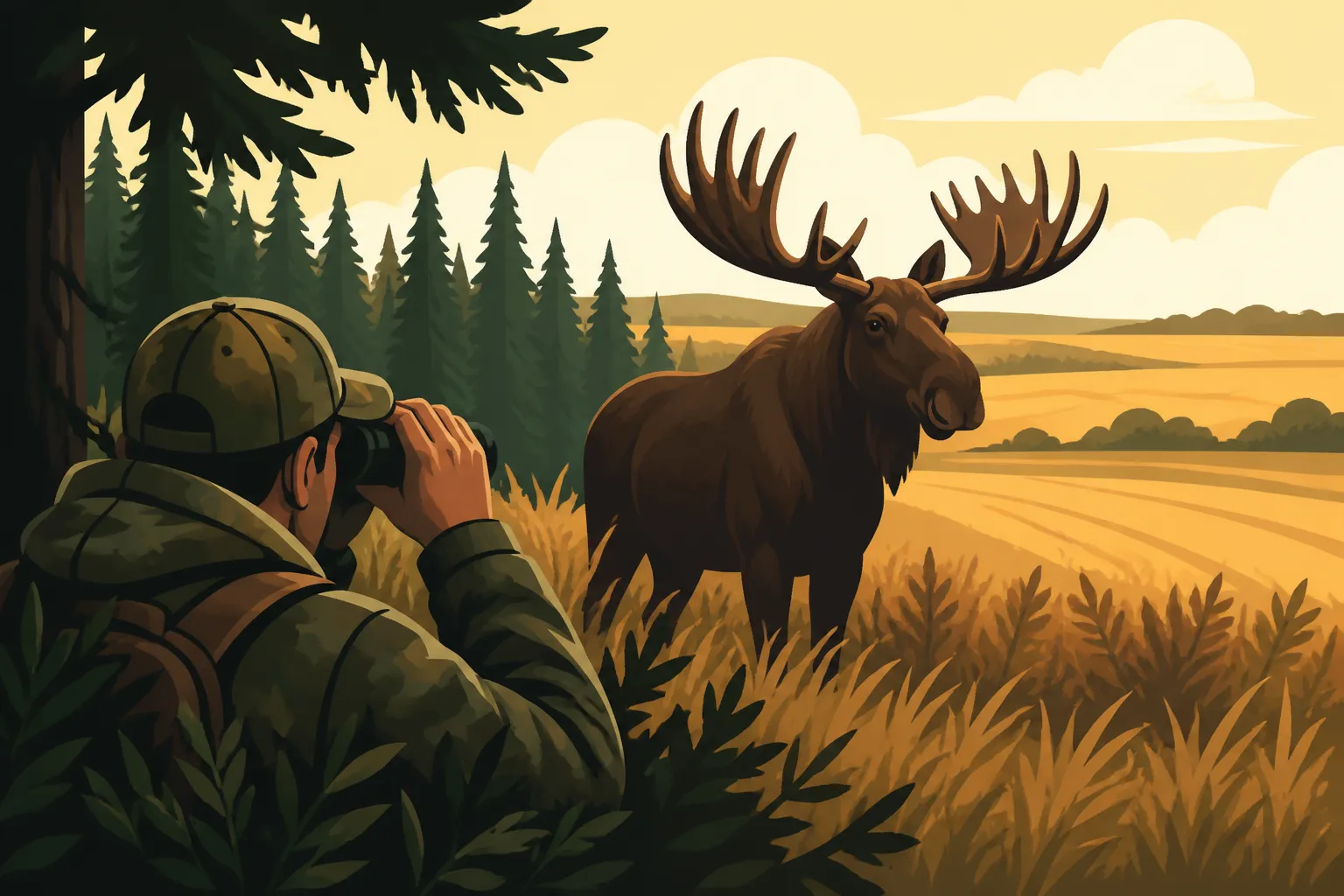
Often, success comes from long hours of observation. Using binoculars or a spotting scope to scan field edges, treelines, and slough rings from a vantage point can reveal a moose that is otherwise hidden. Sitting patiently for extended periods, particularly during the early morning and late evening, along these perimeters is often more productive than constant movement. Farmland moose often have very predictable travel routes between their bedding and feeding areas. Once you identify these, it's a matter of positioning yourself quietly and waiting for the right opportunity. This might also involve multiple days of scouting and observation before the actual hunt, making sure you know their patterns before the season even opens.
Hunting Strategies for Saskatchewan's Forest Moose
The boreal forest is a wild, expansive place, and hunting moose here presents a rugged, immersive experience. It's often a test of endurance, navigation skills, and the ability to read the subtle nuances of the wild.
Navigating Thick Bush and Timber Stands
The boreal forest is defined by its dense cover, which can be both a blessing and a curse. While it provides excellent habitat and security for moose, it makes travel and visibility challenging for hunters. Expect to push through thick stands of spruce, tangled willow thickets, and over downed timber. A quiet approach is critical, but sometimes the sheer density of the bush makes it impossible not to make some noise. In these situations, moving slowly and pausing frequently to listen is key. Moose often bed down in these thick areas, and you might surprise one at close range.
One effective strategy is to hunt along natural breaks in the timber, such as old logging roads, seismic lines, or Hunting Moose on a Saskatchewan Cutline. These corridors offer easier travel and better visibility, and moose often use them to move between different parts of their home range. However, these also tend to be areas of higher hunter pressure, so you might need to venture deeper off the beaten path to find undisturbed animals. Look for areas with a mix of mature timber and younger regeneration, as moose prefer to browse on new growth. Knowing the layout of the land, whether through previous scouting or detailed maps like those from GoHunt, helps immensely in planning your routes and knowing where to expect moose to be.
Calling and Decoying in Dense Cover
Moose calling in the boreal forest is often a more aggressive affair than on farmland. The dense timber absorbs sound, so you need to project your calls to reach distant animals. Deep, resonant cow calls, often followed by loud grunts or the thrashing of a shoulder blade (or a real shed antler) against trees to mimic a bull raking brush, can be highly effective during the rut. The goal is to convince a bull that there's a receptive cow, or a rival bull, in his territory.
When calling, choose a setup location that offers good visibility in one or more directions, preferably with dense cover behind you to conceal your presence. Remember that a bull responding to a call might not come straight in; they often circle downwind to get a scent. Having a partner positioned to cover different angles can be advantageous. Decoys, especially full-size cow decoys, can also be highly effective in the bush. A visual stimulant can seal the deal for a hesitant bull that hears your calls but needs more convincing. The challenge is transporting them into dense cover, but the reward can be a close-range encounter. Again, timing your calls with When Saskatchewan's Moose Rut Peaks is crucial for maximum effectiveness.
Understanding Moose Movement in Northern Zones
Moose in Saskatchewan's northern zones often have distinct movement patterns influenced by food availability, weather, and hunting pressure. During early season, they might be found near water sources or in lush, swampy areas. As the season progresses and browse becomes more critical, they often move to areas with fresh regeneration, such as recent burns or logged areas. Understanding how these factors influence their movement is key to anticipating their presence.
In periods of heavy snow, moose will often yard up in dense coniferous stands, which offer thermal cover and protection from predators. Learning Where Saskatchewan Whitetails Bed in Snow can also give clues, as some of these principles apply to moose seeking similar sanctuary. Also, consider the impact of logging. Fresh cutblocks might initially disturb moose, but after a few years, the regenerating browse can become a prime feeding area. Pay attention to wind direction and thermals, especially when hunting river valleys or hilly terrain; moose will use these to their advantage, often bedding in locations where they can smell danger from below and see it from above. Observing their tracks and trails will quickly reveal their preferred routes, allowing you to position yourself for an ambush.
Key Season Dates and Licensing for Moose
Navigating the regulations, draw processes, and season dates for moose hunting in Saskatchewan can be a bit daunting, but it's a critical part of planning a successful hunt. The province has specific rules designed to manage moose populations and hunting pressure effectively.
Navigating the Saskatchewan Big Game Draw
Moose hunting in many zones across Saskatchewan operates on a draw system, particularly for antlered animals. This means you can't just buy a license over the counter; you must apply through the provincial Big Game Draw. Understanding Saskatchewan's Big Game Draw Deadlines is paramount, as missing them means missing your chance for the season. The draw allocates licenses based on a priority pool system, where applicants with more accumulated points (from unsuccessful applications in previous years) have a better chance of drawing a tag. This system can be frustrating for new applicants, but it's designed to give everyone a fair shot over time.
Before applying, you'll need to set up a Setting Up a Saskatchewan HAL Account, which is your Hunter and Angler Licence account. This digital platform manages all your hunting and fishing licenses, draws, and certifications. Carefully research the specific Wildlife Management Zones (WMZs) you wish to apply for, considering factors like moose population densities, habitat types (farmland vs. forest), and historical draw odds. Some zones are highly sought after, while others may have better odds. Party applications are also possible, allowing a group of hunters to apply together and either all get drawn or none do, ensuring you can hunt with your chosen partners.
Open Season Opportunities and Regulations
While many moose tags are draw-only, Saskatchewan does offer some open season opportunities, particularly for antlerless moose or in specific zones, which are generally less concentrated with moose. These open seasons are typically available on a first-come, first-served basis once they become available. Keep a close eye on the annual Saskatchewan Moose Season Dates published by the Ministry of Environment, as these dates and zone-specific regulations can change from year to year. It's your responsibility as a hunter to know and understand these rules.
Beyond season dates, familiarize yourself with specific regulations regarding legal firearms and bows, shooting hours, and tag validation. Every moose harvested must be immediately validated by detaching the appropriate tag from your license and attaching it to the animal. There are also specific rules about Evidence of Sex Requirements when transporting moose, which typically means leaving a certain part of the animal (like antlers for a bull, or evidence of udder/vulva for a cow) attached to the carcass until it reaches its final destination or processing facility. Always carry your valid hunting license, Wildlife Habitat Certificate, and any necessary permits while hunting.
Mandatory CWD and Bovine TB Testing
Saskatchewan is proactive in monitoring wildlife health, and this includes mandatory testing for Chronic Wasting Disease (CWD) and Bovine Tuberculosis (bTB) in specific zones for moose. Hunters harvesting a moose in designated CWD mandatory testing zones are required to submit the head for testing by a specific deadline. This helps track the prevalence and spread of the disease, providing vital data for wildlife management. Similarly, there may be specific zones with bTB surveillance, requiring hunters to submit samples.
Always check the current hunting guide for the specific requirements related to your WMZ. Non-compliance can result in penalties. If you harvest a moose in a mandatory testing zone, your Saskatchewan Hunter Education and Firearms Safety course should have covered this, but a refresher on how to properly collect and submit samples (typically the head for CWD, or specific tissues for bTB) is always a good idea. Information on submission sites and deadlines is readily available from the Ministry of Environment. While a positive CWD test does not automatically mean the meat is unsafe, health authorities generally advise against consuming meat from infected animals. These programs are vital for the long-term health of Saskatchewan's moose population and the safety of its hunters.
Field Dressing, Meat Care, and Extraction Challenges
Harvesting a moose is an incredible achievement, but the real work often begins after the shot. Given the immense size of these animals, proper field dressing, meat care, and extraction are crucial to ensure your hard-earned meat doesn't go to waste.
Quartering a Moose Alone in the Bush
A mature bull moose can weigh upwards of 1,000 to 1,500 pounds, sometimes even more for What a Bull Moose Weighs in the North. Trying to move an entire animal, especially in thick bush, is a near-impossible feat for one person, or even a small group. This is why Quartering a Moose Alone in the Bush is often the most practical, and sometimes the only, way to handle the animal. The process involves systematically breaking down the carcass into manageable sections, usually the four quarters, backstraps, tenderloins, neck meat, and sometimes ribs.
You'll need a sharp, sturdy knife, a bone saw (or a reciprocating saw with a coarse blade if you have portable power), and plenty of game bags. Start by gutting the animal, then skinning it, being careful to keep the hide clean if you plan to keep it. Then, separate the quarters, working joint by joint or using a saw through bone. This process takes time and effort, but it minimizes waste and makes packing out significantly easier. It's also critical to keep the meat as clean as possible, avoiding dirt, hair, and digestive fluids. Working methodically, even in challenging conditions, pays off in the quality of your meat.
Keeping Meat Cool in Varying Temperatures
Saskatchewan's hunting seasons can present a wide range of temperatures, from warm early autumn days to freezing late November conditions. Maintaining proper meat temperature is paramount to prevent spoilage. Ideally, moose meat should be cooled rapidly to below 4°C (40°F) to inhibit bacterial growth. If you're hunting in warm weather, this means getting the hide off and the carcass quartered as quickly as possible to allow air circulation. Placing the meat in breathable game bags, elevated off the ground, helps significantly.
In colder temperatures, like those experienced during Meat Care in Saskatchewan's Cold Snaps, cooling isn't usually an issue, but freezing can be. You don't want the meat to freeze solid before it has had a chance to properly age. If temperatures are consistently below freezing, consider insulating the meat slightly or moving it to a shaded, but not freezing, location for a day or two before transport. The goal is a slow, even chill. Always transport meat in a way that allows air circulation, and never pile it directly into a sealed cooler for extended periods without ice, as this can trap heat and lead to souring.
Strategies for Getting a Moose Out
Once quartered, the challenge shifts to extracting hundreds of pounds of meat from often remote locations. This is where planning and specific tools become invaluable. If you're lucky enough to be hunting near a road or Hunting a Saskatchewan Cutline, an ATV or side-by-side can be a game-changer. Getting a Moose Out With a Quad might involve repeated trips, or a small trailer if the terrain allows. If you're deep in the bush, a game cart, a sled (especially in snowy conditions), or even simply a sturdy backpack frame might be your only options.
For truly remote kills, consider using a partner or two. Splitting the load significantly reduces the number of trips and the physical strain. Sometimes, the only way out is a series of slow, determined trips, packing out one heavy load at a time. It’s a testament to the hunter’s dedication and respect for the animal. Prior to your hunt, always consider your extraction plan. Are there trails? Is the ground too boggy for a vehicle? What resources do you have available? Having a solid plan for getting your moose out is just as important as the hunt itself.
Ethical Considerations and Safety in Moose Hunting
Moose hunting in Saskatchewan, like all hunting, comes with a profound responsibility to hunt ethically, safely, and respectfully. These large animals and the diverse landscapes they inhabit demand a high level of preparedness and adherence to principles that protect both the hunter and the hunted.
Respecting Private Land and Landowner Relations
Saskatchewan's mixed landscape means that much of the prime moose habitat, especially in the farmland and parkland regions, is found on private property. Securing Saskatchewan Landowner Permission Law is not just a legal requirement but an ethical imperative. Hunting on private land without explicit permission is trespassing and can severely damage the reputation of all hunters. Always ask for permission well in advance of your hunt, be polite and respectful, and offer to share some of your harvest if appropriate.
When you do get permission, respect the landowner's property as if it were your own. Close gates, don't drive off established trails unless explicitly permitted, and be mindful of livestock and infrastructure. If you harvest a moose, ensure you clean up any blood or offal responsibly. Good landowner relations are the backbone of hunting access in many areas, and one disrespectful act can ruin it for everyone. Many hunters build strong, long-term relationships with landowners, which is truly a privilege and an honour.
Understanding Moose Behaviour for Safety
Moose are generally not aggressive animals, but they are wild, powerful, and can be unpredictable, especially if provoked or surprised. A wounded moose, or a cow protecting her calf, can be extremely dangerous. Always approach a downed animal with caution, observing from a distance to ensure it is indeed expired. If it's not, be prepared to deliver a follow-up shot quickly and accurately.
During the rut, bull moose can be more assertive and less wary, sometimes approaching calls aggressively. While this can be exciting, it also means you need to be aware of your surroundings and have an escape route if a bull decides to charge. Remember that a moose, despite its size, can move incredibly silently and quickly through dense brush. When hunting in heavy cover, always assume there might be a moose nearby and be prepared for a close-range encounter. Staying alert and understanding What a Bull Moose Weighs in the North can help you appreciate the power and potential danger of these animals.
Preparing for Remote Hunting Conditions
Hunting moose, particularly in the northern boreal forest, often means venturing into remote areas with limited or no cell service, far from immediate help. This demands a high level of self-sufficiency and preparation for potential emergencies. Always tell someone your hunting plan, including your intended route, expected return time, and specific hunting area. Carry a reliable map and compass, or a GPS device, and know how to use them. A satellite communication device like an InReach or satellite phone can be a lifesaver in an emergency.
Pack a comprehensive first-aid kit, emergency fire-starting supplies, extra layers of warm clothing, and sufficient food and water. Be prepared for sudden changes in weather, which are common in Saskatchewan. Knowing Hunting Saskatchewan Winter Weather Safely and how to dress for extreme cold, especially when sitting for long periods, is crucial for both comfort and survival. A mechanical breakdown of your vehicle or ATV, getting lost, or an unexpected injury can quickly turn a hunt into a serious survival situation if you're not prepared. Prioritize safety above all else, and never take unnecessary risks in remote terrain.
Common Moose Hunting Mistakes to Avoid
Even experienced hunters can make mistakes, and when you're pursuing an animal as challenging and majestic as a Saskatchewan moose, avoiding common pitfalls can make all the difference between a successful hunt and a frustrating one.
Underestimating Moose Size and Stamina
One of the biggest mistakes hunters make, especially those new to moose, is underestimating the sheer size and incredible stamina of these animals. A moose hit poorly can cover vast distances, especially through thick cover, making tracking a nightmare. Their robust bone structure and thick hides require a powerful cartridge and precise shot placement. Don't assume a hit is a kill until you've confirmed it with evidence like blood trail and animal reaction.
This underestimation also extends to the recovery process. Thinking you can drag a whole moose out of the bush, or even handle a quarter without proper gear, is a recipe for exhaustion and potential injury. Always assume the animal will require significant effort to get out, and plan accordingly. What a Bull Moose Weighs in the North is a stark reminder that this is not a deer; it's a monumental task. Have a solid plan for Quartering a Moose Alone in the Bush or with help, and be prepared for multiple trips to extract the meat.
Ignoring Wind and Scent Control
Moose possess an incredibly acute sense of smell, far more sensitive than a deer's. Ignoring wind direction or neglecting proper scent control is almost guaranteed to ruin your hunt, whether you're still-hunting, calling, or sitting in a blind. Even a slight shift in wind can carry your scent for hundreds of yards, alerting any moose in the vicinity to your presence. Always check the wind before you head out and continuously monitor it throughout your hunt.
Utilize scent-eliminating sprays, wash your hunting clothes in scent-free detergents, and store them in airtight containers. If possible, shower with scent-free soap before a hunt. When setting up an ambush or calling stand, always position yourself downwind of where you expect the moose to approach or bed. If the wind is swirling or unpredictable, especially in hilly or river valley terrain, it might be best to relocate or wait for more favourable conditions. Failing to prioritize scent control is one of the quickest ways to educate moose and send them deep into unpressured cover.
Rushing the Shot and Follow-Up
The excitement of seeing a massive bull moose can be overwhelming, leading to a rushed or poorly executed shot. A moose is a large target, but its vital organs are still a relatively small target within that mass. Take a breath, compose yourself, and ensure you have a clear, ethical shot at the kill zone before squeezing the trigger. Avoid "moose fever" – the intense adrenaline rush that can cloud judgment. Practice shooting from various field positions to ensure you're confident when the moment of truth arrives.
Equally important is the follow-up. If the moose doesn't drop immediately, give it time. If you suspect a good hit, wait at least 30 minutes to an hour before beginning to track, especially if it ran into thick cover. This allows the animal to lay down and bleed out. Rushing in too quickly can push a wounded animal further, making recovery much harder. Mark the spot where the moose was standing when you shot, and the last place you saw it. Then, meticulously follow the blood trail, looking for consistent signs of the animal's path. Patience, a steady hand, and a disciplined follow-up are hallmarks of a responsible and successful moose hunter.
Disclaimer
Hunting is an inherently risky activity. This guide provides general information and recommendations for moose hunting in Saskatchewan. Regulations, conditions, and best practices can change. Always consult the most current Saskatchewan hunting regulations guide from the Ministry of Environment before heading into the field. Ensure you have proper training, licensing, and equipment, and prioritize safety above all else. The author and publisher are not responsible for any incidents or accidents that may occur from following the advice contained herein.