Hunting the Big Muddy Badlands
Finding truly wild, challenging hunting spots in Saskatchewan can feel like searching for a needle in a haystack, especially when so much of our province is defined by vast, open fields. But for those craving a rugged adventure far from the usual spots, the Big Muddy Badlands offer an experience unlike any other. This guide will take you deep into what makes this unique landscape a premier destination for hunters seeking a real challenge and an unforgettable connection to the land.
What Makes the Big Muddy Badlands Unique for Hunting?
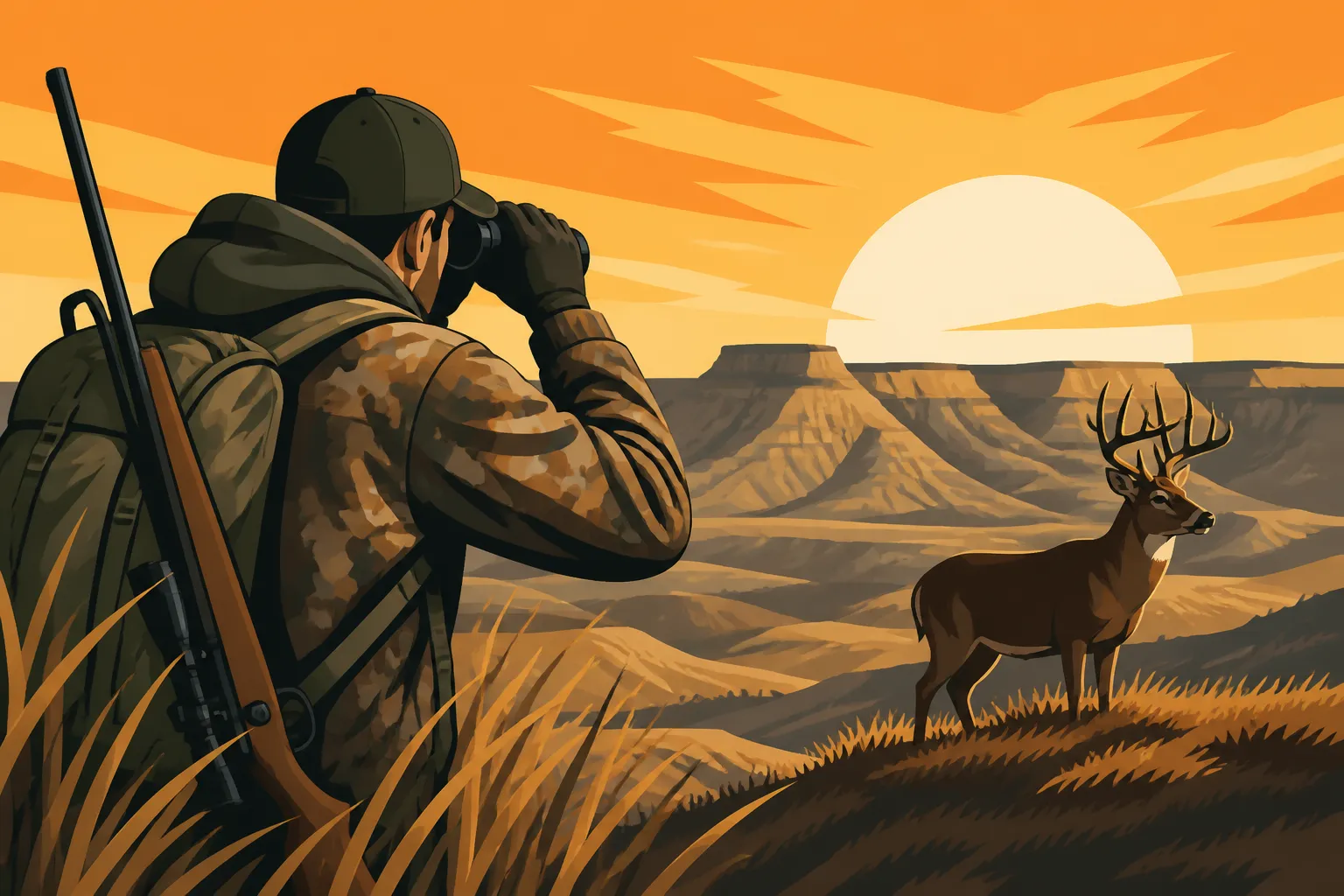
The Big Muddy Badlands, located in south-central Saskatchewan, are a stark contrast to the gently rolling prairie that defines much of the province. This ancient landscape, carved by glacial meltwaters and millennia of erosion, presents a labyrinth of coulees, buttes, and steep-sided valleys that offer both exceptional challenge and incredible opportunity for hunters. It's a place where the landscape forces you to slow down, pay attention, and truly adapt your hunting style.
The Geographic Tapestry and Its Game Appeal
The terrain here is simply breathtaking and incredibly diverse. You’ll find dramatic sandstone cliffs, deep, winding ravines, and isolated flat-topped mesas known as buttes. Interspersed with these rugged features are pockets of dense brush, thorny scrub, and sparse grasslands. Water, though often seasonal, collects in stagnant pools or flows in trickles through the coulee bottoms, creating vital oases in an otherwise arid environment. This varied topography creates a mosaic of microclimates and habitats, supporting a surprising array of wildlife. Game animals use the steep cuts and draws for cover from the elements and predators, making them prime travel corridors and bedding areas.
The vegetation plays a huge role in supporting wildlife. Sagebrush, greasewood, and various native grasses provide essential forage for deer and pronghorn, while the occasional stands of aspen or willow in protected draws offer thicker cover. You'll also find a surprising number of chokecherry and saskatoon berry bushes, which are a major food source for bears if they happen to wander this far south, though they are rare here. Understanding this botanical patchwork is key to anticipating where game might be feeding or seeking refuge throughout the day. The sheer scale and complexity of the Big Muddy mean that a hunter has to learn to read the land on a much more intimate level, much like when Hunting a Prairie Coulee Bottom.
Key Game Species Drawn to the Badlands
The Big Muddy Badlands are most renowned for their mule deer and whitetail populations. Mule deer thrive in the broken, rugged country, using the steep slopes and draws to their advantage. They are masters of using topography to vanish, often appearing as if from nowhere and disappearing just as quickly. Whitetail deer, while often associated with treed areas, adapt remarkably well to the Badlands, finding sanctuary in the thicker brush of the coulee bottoms and along the few perennial watercourses. You'll often find them tucked into surprisingly tight pockets of cover, making a careful approach essential.
Beyond deer, this region is also home to healthy populations of pronghorn, especially on the higher, flatter plateaus bordering the true badlands. These speedsters of the prairie use their incredible eyesight and burst of speed to evade predators. Coyote populations are also robust, often seen patrolling the ridges or heard howling at dusk and dawn. For the predator hunter, the opportunities here are significant, as coyotes are constantly on the move, scavenging and preying on smaller game. If you're looking for a different challenge, the Big Muddy offers it in spades compared to other areas like Hunting Saskatchewan's Aspen Parkland.
Challenges and Rewards of Hunting This Terrain
Hunting the Big Muddy is not for the faint of heart, but the rewards are immense. The physical demands are significant; expect steep climbs, tricky footing on loose shale, and long treks through uneven terrain. The sheer vastness means you’ll often be miles from your vehicle, requiring careful planning and a good understanding of your physical limits. Navigation can be a challenge too, as many coulees look similar, and getting turned around is easier than you might think. Weather can change in an instant, from scorching hot sun to sudden thunderstorms, and the wind can be relentless.
However, the satisfaction of harvesting an animal from such wild country is unparalleled. There's a profound sense of accomplishment that comes from successfully navigating the landscape, outwitting a wary buck or pronghorn, and packing it out from a deep coulee. The solitude is another major draw; you can often spend days without seeing another hunter, providing a true wilderness experience. This level of immersion fosters a deep connection with the land and the animals, creating memories that last a lifetime, far more intense than hunting easier access areas.
Accessing the Big Muddy: Public vs. Private Land Strategies
Understanding land ownership is paramount when planning a hunt in the Big Muddy. Like much of Saskatchewan, the region is a mix of Crown land and privately owned agricultural land, and navigating this patchwork responsibly is key to a successful and ethical hunt. Getting permission is not just a courtesy; it's a legal requirement and an essential part of being a respected hunter in Saskatchewan.
Navigating Crown Land in the Badlands
While much of the prairie south is privately owned, the Big Muddy region does contain scattered pockets of Crown land, often in the more rugged, less cultivatable areas. Identifying these parcels is your first critical step. Digital mapping applications are an absolute game-changer here. Tools like onX Hunt allow you to overlay land ownership maps directly onto satellite imagery, instantly showing you what's public and what's private. This capability is invaluable for scouting from home and planning your routes. Reading Saskatchewan Crown Land Layers on onX is a must before you ever hit the road.
Don't assume all Crown land is easily accessible, though. Some parcels might be landlocked by private property, meaning you'd still need permission from the surrounding landowners to cross their fields or pastures to reach the public ground. Always double-check regulations regarding vehicle access on Crown land; often, travel is restricted to foot access only beyond designated trails or access points to protect the fragile environment. Always have a physical map or a downloaded offline map on your device, as cell service can be spotty or non-existent in the deep coulees.
The Importance of Private Land Permission
Given the prevalence of private land, building relationships with landowners is crucial. Many of the most productive hunting areas, especially those bordering the badlands, are privately owned ranch or farm properties. Approaching landowners respectfully, well in advance of the season, can open up incredible opportunities. It's not always about a quick 'yes' or 'no'; sometimes, it's about making a good impression, demonstrating you're a responsible hunter, and perhaps even offering a hand with a chore. Getting Private Land Permission in Saskatchewan is a skill, and it's built on trust and respect.
When you do approach a landowner, be polite, clearly state your intentions, and be prepared to show your licence and Habitat Certificate. Ask specific questions about where they prefer you hunt, if there are any areas to avoid (like livestock pastures or sensitive equipment), and where you should park your vehicle. Always leave gates as you found them, pick up any trash, and if you're successful, consider offering some wild game meat as a thank you. A little goes a long way in fostering good landowner-hunter relations, ensuring access for yourself and others in the future. Don't underestimate the power of a simple, honest conversation over a cup of coffee.
Planning Your Entry and Exit Points
Once you've identified your hunting area, whether Crown or private, meticulous planning of entry and exit points is vital. The Big Muddy terrain can be deceivingly difficult to traverse, and what looks like a short walk on a map can turn into a grueling climb up a steep, crumbling incline. Scout your access routes beforehand, if possible, either physically or using detailed topographic maps and satellite imagery. Look for natural breaks in the topography, old ranch trails, or less steep slopes that offer manageable routes in and out.
Consider where you will park your vehicle. Is it secure? Is it off the main road and not impeding any farm operations? Mark your parking spot on your GPS or mapping app. When you're deep in the badlands, especially as daylight fades, every coulee can start to look the same. Knowing your planned route out and having GPS tracks saved can literally be a lifesaver. Think about potential challenges like wet conditions turning dirt roads into impassable mud or unexpected snowfall that could complicate getting your animal out. Always communicate your hunting plans and expected return time with someone reliable.
Essential Hunting Strategies for the Big Muddy
Hunting the Big Muddy Badlands demands a different set of skills and strategies than hunting the flat prairie or dense bush. It's a game of patience, keen observation, and strategic movement. The vastness of the landscape means you often need to hunt with your eyes first, then your feet.
Scouting and Glassing Techniques
Effective glassing is the cornerstone of hunting the Big Muddy. The open, broken country lends itself perfectly to spending long periods behind quality optics, searching for game. Invest in a good pair of binoculars (10x or 12x) and a spotting scope with a sturdy tripod. Set up on high points that offer expansive views of multiple coulees, draws, and slopes. Take your time, systematically dissecting the landscape, looking for even the smallest flick of an ear, a patch of hide, or an unnatural outline against the rocks. Early mornings and late evenings are prime times, as deer and pronghorn are often more active then.
Before you even set foot in the Badlands, a deep dive into historical harvest data and game movement, perhaps through resources like GoHunt, can offer invaluable insights into general areas that hold game. Once you're on the ground, don't rush your glassing. Use a grid pattern, moving your optics slowly across sections of terrain. Pay close attention to shaded areas, thickets, and the edges where different types of cover meet. Glassing a Saskatchewan Coulee for Mule Deer requires patience and a methodical approach. It’s amazing what you’ll spot once your eyes adjust to the subtle nuances of the terrain and you learn to pick out animal shapes from the natural contours.
Stalking and Approaching Game in Open Terrain
Once you’ve spotted an animal, the real challenge begins: the stalk. The open nature of the Badlands means cover can be sparse, making a successful approach tricky. Wind direction is paramount; always approach with the wind in your face or quartering to you. Use the topography to your advantage, staying below ridge lines, utilizing dry creek beds, or moving behind any available brush or rock formations. Take it slow, pausing frequently to re-evaluate the animal's position and look for any other unseen game.
Sound discipline is also critical. Loose rocks and dry brush can create noise that carries surprisingly far in the still air of the Badlands. Wear quiet clothing and watch your footing. Often, the final approach will require crawling or moving very slowly, taking advantage of every small dip and rise in the terrain. For species like pronghorn, this can be incredibly demanding, as they have exceptional eyesight. Stalking Pronghorn Across Open Ground tests your patience and ability to use minimal cover. Be prepared for a long, arduous stalk that might not always end in a shot opportunity, but learn from every attempt.
Water Sources and Travel Corridors
In an arid environment like the Big Muddy, water sources become magnets for wildlife. Identifying springs, dugouts, or even temporary pools in low-lying coulees can be critical for locating game, especially during dry spells. These areas often have well-worn game trails leading to and from them, indicating regular use. Similarly, natural travel corridors – like the bottoms of wide coulees, saddles between ridges, or less steep sections of a mesa – will concentrate game movement. Deer, in particular, will use the path of least resistance when moving between feeding and bedding areas.
Using your mapping app to identify potential water sources and then scouting these areas, either physically or via satellite imagery, can give you a significant advantage. Look for converging game trails, fresh tracks, and scat. The edges of these travel corridors, especially where they meet denser cover, are prime locations for ambushing animals. Remember that game will often bed down in areas that offer both cover and a good vantage point to spot approaching danger, so look for these combinations when scouting.
| Game Species | Preferred Badlands Habitat | Primary Food Sources | Hunting Strategy Considerations |
|---|---|---|---|
| Mule Deer | Steep slopes, deep coulees, rocky outcrops | Sagebrush, shrubs, forbs, native grasses | Glassing from elevated positions, using topography for stalks |
| Whitetail Deer | Thicker brush in coulee bottoms, riparian areas | Willows, chokecherry, saskatoon berries, native grasses | Still-hunting thickets, ambushing along travel corridors |
| Pronghorn | Open, high plateaus, grassy flats | Forbs, sagebrush, native grasses | Long-range glassing, low-crawl stalks, decoy use |
| Coyote | Any terrain, often patrolling ridges | Rodents, small game, carrion | Calling, spot-and-stalk, using elevated vantage points |
Gear and Safety Considerations for Badlands Hunting
The Big Muddy Badlands demand careful preparation when it comes to gear and safety. This isn't a place where you can afford to be ill-prepared. The isolation and ruggedness amplify every challenge, making a comprehensive kit and a cautious mindset absolutely essential.
Footwear, Optics, and Pack Essentials
Your feet are your most important tool in the Big Muddy, so invest in high-quality, broken-in hiking boots with excellent ankle support. The loose shale and steep climbs will punish anything less. Gaiters can be a blessing to keep small rocks and debris out of your boots. As mentioned, top-tier optics are non-negotiable; good binoculars and a spotting scope will save you countless miles of walking. For your pack, think lightweight but robust. A comfortable daypack or multi-day pack, depending on your plans, is essential.
Beyond your weapon and ammunition, your pack should contain a well-stocked first-aid kit, enough water for your entire outing (plus a purification method), high-energy snacks, a reliable knife, a headlamp with extra batteries, fire-starting materials, and a lightweight emergency shelter. Navigation tools like a GPS device or a phone with offline maps (and a power bank) are critical. Consider carrying a satellite communication device if you plan to venture deep into truly remote areas, as cell service can be non-existent.
Weather Extremes and Emergency Preparedness
The weather in the Big Muddy can be incredibly unpredictable and extreme. Summer temperatures can soar, leading to heat exhaustion and dehydration risks, while fall and winter can bring sudden, dramatic drops in temperature, fierce winds, and heavy snowfalls. You might experience all four seasons in a single day. Layering your clothing is key to adapting to these rapid changes. Always pack rain gear, even if the forecast looks clear, and carry extra warm layers, especially for early mornings and evenings. Being caught in a sudden downpour or a chilling wind without proper gear can quickly become dangerous.
Because of the isolation, emergency preparedness is paramount. Always let someone know your exact hunting plans, including your route and expected return time. Be aware of the signs of hypothermia and heatstroke, and know how to treat them. A sturdy whistle can be used to signal for help. If you're hunting alone, be extra cautious and consider less aggressive tactics. Remember that Hunting Saskatchewan Winter Weather Safely means always having a contingency plan, especially in remote, exposed locations like the Badlands.
Respecting the Environment and Other Users
The Big Muddy Badlands are a fragile ecosystem, and it’s our responsibility as hunters to treat them with the utmost respect. Practice Leave No Trace principles rigorously. Pack out everything you pack in, including all trash and spent casings. Avoid driving off established trails or roads to prevent erosion and damage to sensitive vegetation. When field dressing an animal, be mindful of water sources and disperse offal appropriately.
Be aware that these lands may also be used by hikers, photographers, or other outdoor enthusiasts. Extend courtesy and respect to everyone you encounter. If you’re on private land, remember you are a guest, and your actions reflect on all hunters. Adhering to regulations, respecting private property, and practicing ethical hunting methods ensures that this unique and challenging hunting ground remains open and healthy for future generations. Check for any specific rules regarding Saskatchewan Posted Land Sign Rules if you are unsure about particular parcels.
Disclaimer
This article is for general informational purposes only and does not constitute professional advice. Laws, prices and regulations vary by location and change over time. Consult a qualified professional for guidance on your specific situation.