Retrieving Game From Private Land in Saskatchewan
It’s a situation that can make any hunter's heart sink: you’ve made a clean shot, the animal is clearly hit, and then you watch it bolt across that fence line, disappearing onto private land. Suddenly, the thrill of the hunt is replaced by a gut-wrenching worry about how to legally and ethically retrieve your game. This guide is here to walk you through the complexities of retrieving game from private land in Saskatchewan, offering practical advice and legal insights to help you navigate this often-stressful scenario.
Understanding Saskatchewan's Landowner Permission Law
Before we even get into the scenario of a downed animal, it's absolutely crucial to understand the foundation of hunting access in Saskatchewan: landowner permission. This isn't just a courtesy; it's the law. Violating it can lead to serious consequences, impacting your hunting privileges and potentially incurring hefty fines.
The Absolute Requirement for Permission
In Saskatchewan, you are legally required to obtain permission from a landowner or occupant before hunting, carrying a firearm, or even entering private land. This isn't just for actively pursuing game; it applies to scouting, tracking, and, yes, even retrieving game that has crossed a boundary. The logic is simple: private land is someone's property, and just like you wouldn't want someone walking through your backyard without asking, landowners expect the same respect. This applies whether the land is actively farmed, used for pasture, or appears to be undeveloped bush. There's no "implied consent" or right of access just because you're hunting nearby. This fundamental rule is in place to protect landowners' rights and ensure responsible hunting practices. Remember, Saskatchewan Landowner Permission Law is clear on this point, and ignorance of the law is no excuse.
What "Posted Land" Truly Means
While many hunters associate "posted land" signs with no-trespassing rules, it's important to understand that all private land in Saskatchewan is considered "posted" unless you have express permission. Signs just reinforce this. A "No Hunting" sign, "No Trespassing," or even just a simple gate or fence implies that entry is restricted. The absence of a sign doesn't automatically mean you can enter. In fact, under Saskatchewan's legislation, a landowner doesn't need to post signs for their land to be legally considered private and require permission for entry. However, if land is explicitly posted, it certainly leaves no room for doubt. Knowing Saskatchewan Posted Land Sign Rules can help you understand the nuances, but the golden rule always remains: when in doubt, ask.
The Legal Ramifications of Trespass
Let's not sugarcoat it: trespassing, even to retrieve game, is a serious offense. If you enter private land without permission, you could face fines, lose your hunting license, and even have your firearms confiscated. Beyond the legal penalties, there's the immense damage it does to the hunter-landowner relationship. One bad incident can sour a landowner's view of all hunters, making it harder for everyone to gain access in the future. Imagine a scenario where you've been granted permission on a specific quarter section for years, only for a fellow hunter to trespass on an adjacent parcel, leaving a gate open or driving through a sensitive area. This kind of behaviour erodes trust and makes landowners less likely to cooperate. The consequences of Saskatchewan Trespass Penalties for Hunters are designed to deter such actions and protect private property rights.
The Stressful Scenario: Your Game is Down on Private Land
Despite all your best efforts to hunt on legal ground and make a clean shot, sometimes an animal will run further than expected, crossing into a neighbouring private property. This moment is fraught with anxiety, but how you react determines the outcome.
Initial Steps and Remaining Calm
First and foremost, stay calm. Panicking and rushing onto private land without permission is the absolute worst thing you can do. It's tempting to want to immediately pursue a wounded animal, but violating property laws will only complicate matters, potentially making retrieval impossible and leading to legal trouble for you.
Here's a breakdown of what to do:
- Mark the Spot: Accurately mark where you last saw the animal and where it crossed the fence line. Use your GPS, a distinct landmark, or even tie a piece of blaze orange cloth to the fence where it crossed. This will be critical information for the landowner.
- Unload Your Firearm/Secure Your Bow: Once you've marked the spot and determined the animal is on private land, unload your rifle or secure your bow. You are no longer actively hunting if you're attempting to gain permission. This demonstrates respect and a non-threatening posture when you approach the landowner.
- Contain Your Emotions: You're likely feeling a mix of frustration, disappointment, and urgency. Take a deep breath. A calm, respectful approach is far more likely to yield positive results than an agitated one.
How to Approach the Landowner
This is the most critical step. Your success in retrieving your animal hinges on a positive interaction with the landowner.
- Identify the Landowner: If you don't already know who owns the land, this is where scouting and mapping tools become invaluable. Tools like onX Hunt or GoHunt allow you to view property boundaries and often display landowner names and contact information. Before your hunt, it’s always a good idea to scout out the surrounding properties for names and potential contact numbers. Many landowners list their numbers publicly or have them on signs at their driveways.
- Make First Contact (the Right Way):
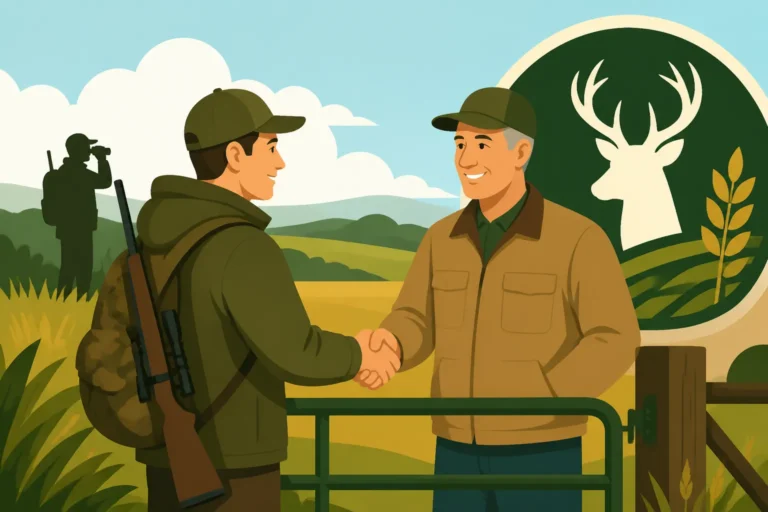
- In Person is Best: Whenever possible, approach the landowner in person. Drive to their house, knock on the door, and introduce yourself. A face-to-face conversation fosters trust.
- Time it Right: Avoid meal times (lunch, dinner) or early mornings/late evenings unless it's a dire emergency. Mid-morning or early afternoon usually works best.
- Be Polite and Respectful: Start with a sincere apology for the intrusion and clearly explain your situation. "Good morning/afternoon, my name is [Your Name], and I was hunting on the [your land description] next door. I've unfortunately shot a [species] and it appears to have run onto your land. I am so sorry for the inconvenience, but I was hoping to ask for your permission to retrieve it."
- Be Prepared for Any Answer: Understand that the landowner is under no obligation to grant you access. A "no" is always a possibility, and you must accept it gracefully.
Offering Assistance and Respect
When you talk to the landowner, consider offering more than just an apology.
- Offer to Help: "If you grant me permission, I'd be happy to check your fence lines for any damage, or help with any chores around the yard." This shows you value their property and are willing to put in effort.
- Ask About Specific Concerns: Some landowners might have specific concerns: livestock, sensitive crops, recently seeded fields, or even just family activities. Ask them directly: "Are there any areas I should avoid, or specific gates I need to make sure are closed?" This demonstrates you're thinking about their property and not just your game.
- Suggest a Joint Effort: "Would you be willing to come with me to show me where to go, or perhaps even help me retrieve it?" Many landowners are avid hunters themselves and might be more willing to assist or grant access if you're not going in alone. It's a sign of good faith and teamwork. Remember, respect for private property is paramount, and a courteous interaction can make all the difference when you're Knocking on Doors in Saskatchewan Farm Country.
Practical Strategies for Securing Retrieval Permission
The moment your game crosses onto private land is not the time to develop a strategy. Having a plan beforehand, and a clear understanding of how to execute it, will dramatically increase your chances of success.
Gathering Information Before You Approach
Being prepared with accurate information before you even knock on the door can make your appeal much more credible and efficient.
- Precise Location: Know exactly where the animal crossed and approximately where you believe it went down. Be able to point it out on a map if possible. This is where modern mapping applications really shine. Using apps like onX Hunt, you can instantly see property lines, landowner names, and even contact information in many cases. This allows you to say, "I believe the deer is down roughly 200 yards east of your northern fence line, right in that willow blough." This level of detail shows you've done your homework and aren't just guessing. Scouting With Satellite Imagery in Saskatchewan before your hunt can give you a lay of the land and potential escape routes onto neighbouring properties.
- Relevant Details: Be ready to describe the animal (e.g., "a mature whitetail buck"), what time you shot it, and what caliber or bow you used. The landowner might be curious or want to confirm details. Having your hunting license and ID readily available is also a good idea.
- Weather and Time of Day: Consider the conditions. If it's a warm day, retrieval becomes more urgent due to meat spoilage. If it's cold, you might have a bit more time. If you're Hunting Saskatchewan Winter Weather Safely, ensure you’re prepared for the elements, especially if the retrieval takes longer than expected. Understanding how Meat Care in Saskatchewan's Cold Snaps works is also vital.
Best Practices for Communication
How you communicate is just as important as what you say. It’s all about building rapport and trust, even in a brief interaction.
- Be Patient, Not Pushy: A landowner might be busy, hesitant, or even annoyed by the interruption. Give them space and time to consider your request. Do not argue or try to guilt-trip them. If they say they need to think about it, offer to wait or come back later.
- Transparency is Key: Be honest about what happened. Don't exaggerate the distance or minimize the situation. "I truly apologize, I thought it would drop sooner, but it got across your line." This honesty can go a long way.
- Offer to Show Them: Ask if they would like you to show them the animal's last known location from the fence line or even accompany you to the downed animal. This transparency builds trust and allows them to see exactly what you're doing. Some landowners are simply wary of unknown individuals wandering their property without supervision.
- Leave Contact Information: If the landowner isn't home, or if they need time to think, leave a polite note with your name, phone number, and a brief, respectful explanation of your situation. Don't trespass to leave the note; leave it at the gate or on their door in an obvious place.
When a "No" Means "No" (and What to Do Next)
Sometimes, despite your best efforts, a landowner will say no. This can be for a myriad of reasons: they might be anti-hunting, have had bad experiences with hunters in the past, have cattle in the area, or simply prefer not to have strangers on their land.
- Accept It Gracefully: This is non-negotiable. Thank them for their time and respect their decision. Do not argue, curse, or make threats. Doing so will only create animosity and potentially lead to legal trouble. Walking away calmly and respectfully, even if your heart is breaking, is the ethical and legal course of action.
- Alternative Solutions (Limited): If permission is denied, your options are extremely limited. You cannot legally retrieve the animal.
- Contact Conservation Officers: In some rare and specific circumstances, a conservation officer might be able to assist, particularly if there's a serious public safety concern (e.g., a wounded, dangerous animal near a populated area). However, they are generally bound by the same private land access laws and cannot force a landowner to grant access for retrieval. This is a last resort and should not be relied upon as a primary solution. They will likely advise you to continue trying to get permission.
- Consider the Loss: It's a hard truth, but if permission is denied, you may have to accept the loss of the animal. It's heartbreaking, but it's part of the ethical responsibility of hunting to respect property rights. This is a stark reminder of why identifying Hunting a Saskatchewan Quarter Section and its boundaries is so important before you ever take a shot.
Tools and Resources to Aid Your Landowner Contact
In today's age, technology and community connections can significantly streamline the process of identifying landowners and making respectful contact.
Mapping Apps for Landowner Identification
Gone are the days of relying solely on paper maps and word-of-mouth. Modern hunting apps have revolutionized how hunters access property information.
- onX Hunt: This application is a game-changer for many hunters. It layers detailed property boundary maps over satellite imagery, showing exactly where property lines lie. Crucially, it often provides landowner names and sometimes even contact information (where available publicly). If you find yourself in the difficult situation of needing to retrieve game from adjacent land, a quick check of onX Hunt can tell you who owns that quarter section. This feature is invaluable for proactively seeking permission before you hunt and reacting quickly when an animal crosses a line. You can mark waypoints where your animal crossed, making it easier to explain to a landowner.
- GoHunt: Similar to onX Hunt, GoHunt offers robust mapping and land ownership data. These tools are designed to help hunters be more informed and responsible. By using such apps, you can identify the specific individual or entity to contact, rather than just guessing. This precision makes your approach more professional and respectful. Think of it as a digital handshake before the actual one. When you can tell a landowner exactly whose land you're asking about, it shows you're serious and respectful of their property. Knowing Reading a Saskatchewan WMZ Map Before You Go in conjunction with these apps can give you a comprehensive understanding of the landscape.
Local Networks and Community Connections
While technology is powerful, never underestimate the value of old-fashioned community ties.
- Local Wildlife Federations/Clubs: Many communities in Saskatchewan have local wildlife federations or hunting clubs. These groups often have strong relationships with local landowners and can sometimes help facilitate introductions or provide insights into who owns what land in a particular area. They might even have a database of landowners willing to grant access under specific conditions. Consider Joining a Saskatchewan Wildlife Federation Branch to tap into these valuable networks.
- Local Businesses: Small-town gas stations, co-ops, or hardware stores often serve as informal community hubs. The folks working there often know who owns land in the surrounding area and might be able to provide a name or general direction to a landowner's home. Always be discreet and polite when asking; you don't want to broadcast your situation to everyone.
- Other Hunters: Network with other ethical hunters in the area. They might have established relationships with landowners or know who to contact for specific parcels. This is not about getting someone else to trespass for you, but about leveraging existing, legitimate connections to make your own respectful approach. These connections are vital, especially if you're hunting in areas like the Hunting Saskatchewan's Aspen Parkland or Hunting Saskatchewan's Forest Fringe, where private and public lands often intermingle.
| Scenario | Do This | Don't Do This |
|---|---|---|
| Animal Crosses onto Private Land | Immediately mark the boundary crossing point. Unload your firearm/secure your bow. Take a deep breath and compose yourself. | Panic and rush onto the land without permission. Continue to carry a loaded firearm or strung bow. Yell or express anger. |
| Identifying Landowner | Use mapping apps (e.g., onX Hunt, GoHunt) to find owner info. Ask around local businesses or reputable local hunters. | Assume the land is unowned or abandoned. Guess who the owner is and approach the wrong person. |
| Approaching the Landowner | Approach in person if possible (during reasonable hours). Be polite, respectful, and apologize for the intrusion. Clearly state your situation and request permission. | Show up late at night or early morning. Demand access, argue, or try to guilt-trip them. Lie about what happened or where the animal is. |
| During the Conversation | Offer to show them the spot, or for them to accompany you. Ask about any specific concerns they have (livestock, fields). Offer to help with a chore if granted access. | Be vague about the animal's location. Argue if they express concerns. Act entitled or dismiss their worries. |
| If Permission is Denied | Thank them for their time. Respect their decision without argument. Withdraw from the area calmly and legally. | Argue, yell, make threats, or trespass anyway. Call conservation officers as a way to force access. |
| Follow-up (if permitted) | Leave the property cleaner than you found it. Close all gates. If possible, send a thank-you note or offer a small token of appreciation later. | Leave gates open, litter, or damage property. Forget to thank them once the retrieval is done. |
Disclaimer
This article is for general informational purposes only and does not constitute professional advice. Laws, prices and regulations vary by location and change over time. Consult a qualified professional for guidance on your specific situation.