Treestand Rules on Saskatchewan Public Land
There's nothing quite like finding that perfect vantage point in the wilderness, seeing the whole world from above as the forest wakes up or settles down for the night. For many hunters, a treestand is an essential tool for quiet observation and ethical shot placement, but the rules for using them on Saskatchewan's vast public lands can feel like a tangled mess of "can I?" and "can't I?". It’s a frustrating scenario when you want to follow the rules, but you’re not sure exactly what they are, especially when dealing with property that belongs to all of us. This guide aims to clear up that confusion, diving deep into what's allowed, what's definitely not, and how to stay on the right side of the law while enjoying your hunt.
Understanding Saskatchewan's Public Land Categories
Before we even talk about hanging a stand, it's crucial to understand that "public land" isn't a single, uniform entity here in Saskatchewan. Just like different colours of soil yield different crops, different categories of public land come with their own unique sets of rules and regulations. What might be perfectly acceptable in one area could land you in hot water just a few miles down the road in another.
Crown Land and General Access
When most hunters talk about "public land," they're often referring to what we officially call Crown Land. This is land owned by the provincial government, and a significant portion of it is indeed open to public access for activities like hunting. It ranges from vast tracts of boreal forest in the north to smaller, often fragmented blocks scattered throughout the aspen parkland and prairie regions. While the general principle is that you can access Saskatchewan's Crown Land Access for hunting, that doesn't automatically mean you have free rein to build or leave anything you want.
The sheer scale and diversity of Crown Land mean that specific conditions or local regulations might apply. For instance, some areas may have sensitive ecosystems, ongoing forestry operations, or other land uses that influence what you can and cannot do. Always assume a "leave no trace" mentality, and remember that any structure you put up could be seen as an abandonment or even a form of unauthorized development, especially if it's left for extended periods. It's a privilege to use these lands, and respecting them is paramount.
Fish and Wildlife Development Fund (FWDF) Lands
Then we have the Fish and Wildlife Development Fund (FWDF) lands. These are special parcels of land acquired and managed specifically for wildlife habitat and public recreation, including hunting. They're often smaller, strategically located areas, usually identified by signage. While these lands are designed for hunter access, they tend to have more explicit and sometimes stricter rules regarding infrastructure like treestands.
Because these lands are managed intensively for wildlife and public use, there's a higher expectation for minimal impact. Leaving permanent structures or causing damage to trees is generally frowned upon, and in many cases, outright prohibited. The intent is to preserve the natural character of the habitat for wildlife and ensure equitable access for all users, without encountering someone else's permanent setup. It’s always best to check the specific guidelines for FWDF lands, which you can usually find through the provincial hunting guide or by contacting the Ministry of Environment. Think of FWDF lands as prime real estate for wildlife; we want to hunt there without changing the landscape for those that follow. You can find more specific details about these special areas in resources like Saskatchewan's Fish and Wildlife Development Fund Lands.
Provincial Parks and Wildlife Refuges
Lastly, there are areas where hunting is either entirely restricted or completely prohibited, and therefore, treestands would certainly be out of the question. This includes most provincial parks, wilderness areas, and designated wildlife refuges or sanctuaries. These areas are set aside for conservation, recreation (often non-consumptive), or ecological preservation. Attempting to hunt or set up a treestand in such areas is a serious offense.
It’s easy to look at a map and see a big block of green and assume it’s all open season. However, always double-check the specific designation of any land you plan to hunt. Using mapping tools like onX Hunt can be incredibly helpful here, as they often display different land ownership layers, allowing you to clearly see provincial parks or other restricted zones. A quick cross-reference with official provincial maps or the current Saskatchewan Hunters' and Trappers' Guide is always a smart move. Remember, protecting these special places ensures wildlife thrives for generations to come. If you're wondering about the specifics, check out Whether You Can Hunt in a Provincial Park.
The Core Regulations for Treestands on Public Land
This is where the rubber meets the road. Many hunters, especially those new to Saskatchewan or public land hunting, assume that if they can access an area, they can put up a stand. This isn't always the case, and there are key distinctions to understand that will keep you legal and ethical.
Non-Permanent vs. Permanent Stands
This is, without a doubt, the most critical distinction you need to grasp when considering treestands on public land.
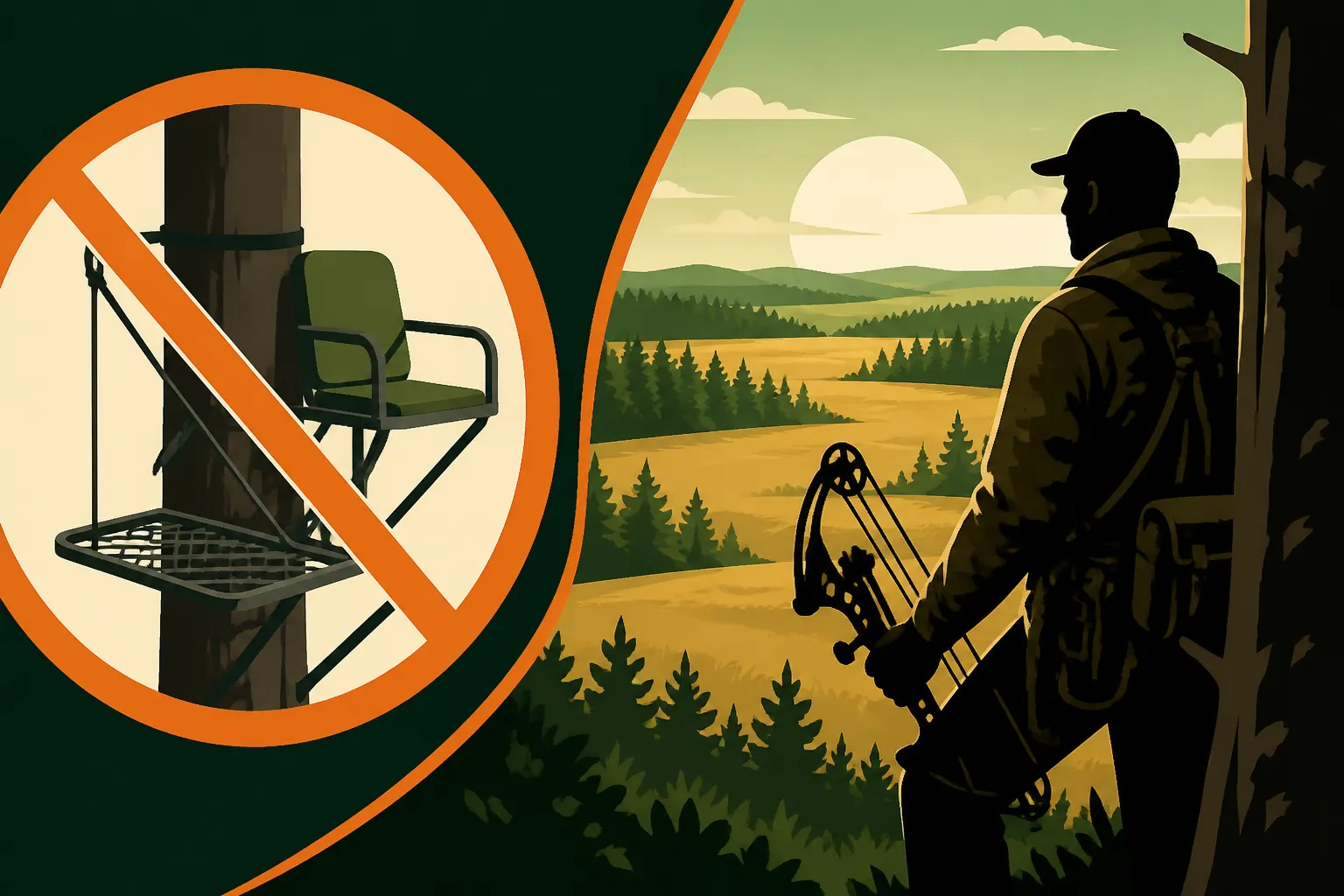
Permanent Stands (Generally Prohibited): A permanent stand is anything that is intended to be left in place for an extended period, often built on-site using materials like lumber, or a manufactured stand that is left unattended for weeks or months. Any stand that requires you to nail, screw, or significantly alter a tree for its installation falls into this category. The provincial regulations are very clear on this: you cannot erect or leave permanent structures on Crown Land.
Why the strict rule? There are several compelling reasons. Firstly, permanent stands can cause significant damage to the trees. Nails, screws, and even prolonged strapping can girdle a tree, hindering its growth and making it susceptible to disease or rot. Secondly, they become abandoned property, creating visual blight and potential safety hazards for other users, be they hikers, trappers, or other hunters. Thirdly, they monopolize a spot. Public land is for everyone, and one hunter leaving a permanent stand effectively claims that spot, limiting access and opportunities for others. Imagine showing up to your perfect spot only to find someone else’s rickety, abandoned stand taking up the best tree. It’s simply not fair or safe.
Non-Permanent, Portable Stands (Often Permitted, with caveats): This category includes modern hang-on stands, climbing stands, and lightweight ladder stands that are designed for easy setup and takedown. The general rule of thumb for these stands on most Crown Land is that they are permissible if they are removed daily or within a very short, specified timeframe. This is the "leave no trace" principle in action. If you carry it in, you carry it out.
The key here is "non-permanent." This means no damage to the tree (no nailing, screwing, or cutting branches for clearance beyond what's absolutely necessary for safety and shooting lanes, and even then, be extremely conservative). The stand should be secured using straps, chains, or ropes that do not penetrate the tree bark. The idea is that when you leave, the tree should look as though no one was ever there, save for perhaps a faint rub from a strap. While some jurisdictions elsewhere might allow stands to be left for a few days, in Saskatchewan, the safest and most generally accepted approach on public land is to remove your portable stand every single day you hunt. This eliminates any ambiguity and prevents your stand from being deemed abandoned property or a permanent structure.
Damage to Trees and Habitat
This point cannot be stressed enough: do not damage live trees or habitat when setting up a treestand on public land. This includes, but isn't limited to:
- Nailing or Screwing: Using nails, screws, or any other fastener that penetrates the bark and wood of a living tree is strictly prohibited. This is a common violation that can lead to significant harm to the tree, leaving it vulnerable to disease and pests.
- Cutting Branches or Limbs: While a hunter might be tempted to clear a shooting lane, excessive cutting or "pruning" on public land is generally not allowed. You're altering the natural habitat, and those branches provide cover and food for wildlife. Be judicious and minimalistic if you absolutely must trim anything, focusing on small, dead branches only, and even then, understand you might be pushing the boundary.
- Girdling: Leaving a strap or chain tightly cinched around a tree for a long period can "girdle" it, cutting off the flow of nutrients and eventually killing the tree. Even if a portable stand is allowed, if it's left for too long and girdles a tree, you could face penalties. This is another reason why daily removal of portable stands is the best practice.
The overarching philosophy is to minimize your impact. The forest and its inhabitants rely on these trees. Any action that compromises their health or the integrity of the habitat is a violation of the spirit, and often the letter, of the law.
Abandonment and Litter
Any equipment left behind on public land that isn't collected is considered abandoned property and litter. This applies to treestands, climbing sticks, ropes, safety harnesses, trail cameras, and even garbage like food wrappers or spent ammunition.
If your treestand or equipment is deemed abandoned, it can be confiscated by conservation officers. Beyond that, you could face fines for littering or illegal abandonment of property. The costs associated with clean-up and disposal often fall back on the public. It's a matter of respect for the environment and other users. Before you pack up for the day or the season, do a thorough sweep of your hunting area. Make sure every piece of equipment, every scrap of food packaging, and every spent shell casing comes out with you. You want to leave the area exactly as you found it – or better.
Practical Considerations and Best Practices
So, you understand the rules, but how do you apply them practically in the field? Public land hunting comes with its own set of challenges and courtesies, and managing your treestand use is a big part of that.
Daily Removal is Key
Let's reiterate: the absolute safest and most responsible approach to using a portable treestand on Saskatchewan public land is to take it down and remove it at the end of every hunting day. I know, I know. It sounds like a lot of work. Hauling a stand in and out, especially if you’re hiking a good distance into the bush, can be a real grind. But trust me, the peace of mind knowing you’re 100% compliant with the rules is worth it. Plus, it eliminates any risk of theft or damage if you were to leave it overnight.
Think of it this way: your stand is an extension of your hunting gear, just like your rifle or bow. You wouldn't leave those out overnight, would you? While some hunters might risk leaving a stand out for a short period, especially if they're coming back to the same spot first thing in the morning, this can be a grey area depending on local interpretation and enforcement. The definitive "no permanent structures" rule almost always defaults to no structures left unattended. If a conservation officer comes across an unattended stand, they have every right to deem it abandoned. So, if you're out there Hunting Saskatchewan's Aspen Parkland Bluffs or deep in the Hunting the Forest Fringe for Big Bucks, that stand needs to come out with you.
Scouting and Location Selection
Even with a portable stand, where you set up matters immensely. You're hunting on land that potentially hundreds of other people use – not just other hunters, but hikers, bird watchers, trappers, and recreational users.
- Privacy vs. Pressure: Try to find areas that offer a bit more solitude. Public land, especially around major population centres, can get a lot of pressure, particularly on opening weekend. A stand in a high-traffic zone might not only be less productive but could also lead to uncomfortable encounters with other users.
- Identify Boundaries: Before you even step foot in the woods, use reliable mapping resources to confirm you’re on public land. Tools like
onX Huntare invaluable for showing property lines, Crown Land designations, and even private land parcels. It's too easy to accidentally trespass if you're not absolutely sure of the boundaries, and the consequences can be severe. This goes hand-in-hand with Reading a Saskatchewan WMZ Map Before You Go. - Respect Other Users: Don't set up your stand directly over a well-used hiking trail or in an area clearly marked for other recreational activities. We share the land, and a little common sense and courtesy go a long way in ensuring positive interactions. If you're scouting for a new spot, consider Scouting With Satellite Imagery in Saskatchewan to pinpoint potential low-pressure areas.
Security and Respect for Other Users
If you do decide to risk leaving a portable stand out overnight (and again, I strongly advise against this on public land due to regulations and theft risk), security becomes a major concern.
Theft of treestands and other hunting equipment from public land is a real and frustrating problem. Even if you're legally allowed to leave it for a short time (which is rare), you're essentially leaving valuable property unsecured in the wilderness. Consider using locks if you absolutely must leave something, but understand that a determined thief can usually get through them.
Beyond theft, there's the issue of respect. While it's certainly legal to hunt an area someone else has scouted or put effort into, seeing another hunter's gear can lead to uncomfortable situations. Always respect others' space and avoid setting up right on top of another hunter, even if their stand is not "permanent." We're all out there to enjoy nature and the hunt, and a little courtesy ensures everyone has a better experience.
Here’s a quick overview of the differences:
| Feature | Permanent Treestand (Generally Prohibited) | Portable Treestand (Often Permitted, with caveats) |
|---|---|---|
| Construction | Built-in (wood, metal), nailed, screwed, or bolted to the tree. | Manufactured, strapped, chained, or clamped to the tree without penetration. |
| Removal | Left for extended periods (weeks, months, year-round); considered abandoned. | Removed daily, or at minimum, within a very short, specified period. |
| Tree Damage | Involves cutting, nailing, screwing, or otherwise altering the live tree. | Minimal to no damage (straps may slightly indent bark but not girdle). |
| Legality | Generally illegal on any Saskatchewan Crown Land or FWDF property. | Often legal if removed daily, causes no tree damage, and leaves no litter. |
| Ownership | Becomes abandoned property if left, subject to confiscation. | Remains personal property if removed according to regulations. |
| Risk | Fines, confiscation, environmental harm, charges for illegal construction. | Theft risk if left unattended, minor bark wear if not properly installed. |
| Effort | High initial setup, low daily effort. | Low initial setup, higher daily effort for transport. |
Navigating Specific Regulations and Staying Informed
The world of hunting regulations is constantly evolving, and what was true last year might have changed for this season. Being a responsible hunter means staying on top of the most current information.
Consulting Official Sources
This cannot be emphasized enough: the official Saskatchewan Hunters' and Trappers' Guide is your bible. While articles like this provide helpful context and interpretation, they are not the legal document. You should obtain a copy of the current guide every year, either online from the provincial government website or in print from a licence vendor. Read it thoroughly, paying particular attention to the "General Regulations" and any sections pertaining to land use and equipment.
If you're ever in doubt, the best course of action is to contact the Ministry of Environment directly. Their conservation officers and information staff are there to help clarify specific rules. Don't rely on hearsay or what "someone told you at the coffee shop." Invest the time to be absolutely sure. This vigilance is part of Saskatchewan Hunter Education Requirements – it’s about more than just gun safety; it’s about responsible land use.
Provincial and Federal Jurisdictions
Most of the land-use rules we've discussed fall under provincial jurisdiction, as the province manages its Crown Land. However, there are also some federal lands within Saskatchewan, such as National Wildlife Areas. These areas are governed by federal regulations, which might differ from provincial ones. Generally, hunting is either highly restricted or prohibited on most federal lands, and therefore, treestand use would follow suit. Always investigate the specific rules for any federal property you might encounter. Hunting Saskatchewan's National Wildlife Areas outlines some of these unique regulations.
Consequences of Non-Compliance
Ignoring or unknowingly violating treestand rules on public land can lead to a range of penalties, none of which are pleasant.
- Fines: You could face significant monetary fines for infractions such as littering, abandoning property, or causing damage to Crown property.
- Confiscation: Your treestand and associated equipment could be confiscated by conservation officers. This means not only are you out the cost of your gear, but you also won't get it back.
- Charges and Court: More severe violations, especially those involving significant environmental damage or repeated offenses, could lead to formal charges, requiring a court appearance.
- Loss of Privileges: In serious cases, a hunter could face a suspension of their hunting licence, meaning they lose the privilege to hunt in Saskatchewan for a period of time.
These aren't just minor slaps on the wrist. Violations undermine the conservation efforts and the public's trust in hunters. Our adherence to ethical practices ensures continued public access and maintains a positive image for the hunting community. Being informed about Penalties for a Hunting Violation is crucial for all hunters.
Remember, the goal is to enjoy our incredible Saskatchewan hunting opportunities responsibly. Understanding and adhering to treestand regulations on public land is a fundamental part of that responsibility. By following these guidelines, you not only stay legal but also contribute to a healthy, accessible hunting environment for everyone.
Disclaimer
This article is for general informational purposes only and does not constitute professional advice. Laws, prices and regulations vary by location and change over time. Consult a qualified professional for guidance on your specific situation.