Hunting the Nipawin Provincial Forest
The vastness of Saskatchewan's northern forests can be a double-edged sword for hunters. On one hand, it promises untouched wilderness and incredible opportunities; on the other, it presents a daunting challenge of navigation and understanding where to even begin. The Nipawin Provincial Forest, a gem in this northern expanse, is no exception. It's easy to feel overwhelmed by its sheer scale, wondering how to unlock its secrets for a successful hunt. This guide aims to demystify hunting in the Nipawin Provincial Forest, providing you with the knowledge and strategies to confidently explore its rich landscape and pursue the game it holds.
Understanding the Nipawin Provincial Forest's Unique Terrain and Ecosystem
The Nipawin Provincial Forest marks a significant ecological transition in Saskatchewan. As you head north from the agricultural fields that dominate much of the province, you move into the aspen parkland, and then finally plunge into the dense, sprawling boreal forest. This transition zone, where the northern edge of agricultural land meets the vast bush, creates a unique and incredibly productive ecosystem. However, this also means the terrain is far from uniform, offering a mix of challenges and opportunities that demand careful preparation.
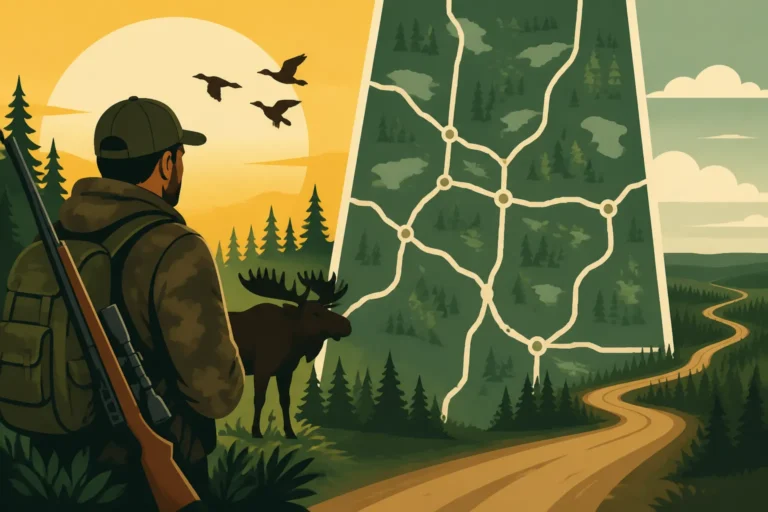
Imagine driving along a grid road, seeing endless fields of canola or wheat, only to round a bend and find yourself staring into a wall of dense jack pine and spruce. That's the Nipawin area. The forest itself is characterized by a mosaic of timber types: dark, thick stands of black spruce and tamarack often found in boggy, low-lying areas, interspersed with poplar and birch bluffs on higher ground. There are significant tracts of mature pine, and of course, those infamous, impenetrable patches of willow and alder that seem to absorb every sound you make. This diverse cover provides excellent habitat for a variety of game, but it also means visibility can be extremely limited, making still-hunting a test of patience and skill. Access can be a real headache too; main roads quickly give way to rough logging trails, and then to overgrown cutlines that might only be passable with an ATV, or often, only on foot. Understanding this varied landscape is step one to planning your hunt. If you're looking for a broad overview of this kind of hunting, check out Hunting Saskatchewan's Boreal North.
Prime Game Species and Habitat in Nipawin
When you're venturing into the Nipawin Provincial Forest, you're primarily thinking about two heavyweights: moose and black bear. While white-tailed deer are certainly present, especially in the fringe areas where the forest meets farmland, they tend to be less common in the deep woods than in the parkland or agricultural zones further south. Nipawin's habitat is perfectly suited for those larger, more robust northern species.
Moose: Masters of the Wetlands and Mixed Forest
Nipawin offers fantastic opportunities for moose hunting. These majestic animals thrive in the mix of dense cover and abundant water found throughout the forest. You'll often find them browsing on willows and aquatic vegetation along the edges of muskeg, sloughs, and beaver ponds. Areas with recent forest disturbances, like old burns or logging cutblocks where new growth is sprouting, can be moose magnets. The forest offers plenty of escape cover, making them elusive, but also provides the browse they need to grow to impressive sizes. When the rut hits, the opportunity to call in a bull can be exhilarating. The key is finding those areas where food, water, and thick cover converge. For more on these animals, read Moose in Saskatchewan's Farmland and Forest.
During the late fall and early winter, once snow has fallen, moose will often be found in slightly more open, but still well-covered, areas, feeding on young poplar and birch. Their large tracks are easy to spot in fresh snow, guiding you to their feeding and bedding areas. Don't be afraid to put in the miles walking old logging roads or trapline trails, paying close attention to any fresh sign. These trails can lead you directly to prime moose country that’s inaccessible by vehicle. It's a different kind of hunting than stalking deer in open coulees; it's about patience, observation, and understanding their movements within a vast, dense environment.
Black Bear: Forest Dwellers and Baiting Opportunities
The Nipawin Provincial Forest is also prime black bear country. The extensive forest cover, availability of berries and other natural foods, and the relatively low human population density make it an ideal home for them. You'll find bears across the entire region, from the forest fringe where they might raid a farmer's oats to the deepest bush. They often frequent berry patches in late summer and fall, and will travel established game trails or old cutlines.
For many hunters, bear hunting in Nipawin revolves around baiting. Setting up a well-maintained bait site in a strategic location can be incredibly effective, especially during the spring season. Bears are creatures of habit, and once they find a reliable food source, they're likely to return. Remember, if you're planning to bait, you need to be familiar with all the regulations surrounding it. Alternatively, spot-and-stalk can be effective along pipeline rights-of-way, old logging roads, or in areas of new growth where visibility is slightly better. Keep your eyes peeled for overturned rocks, claw marks on trees, and fresh scat – all signs that a bear is in the area. Setting up a proper bear bait site is critical, and you can learn more by checking out Setting a Bear Bait Site in Saskatchewan.
Navigating Access and Planning Your Nipawin Hunt
The sheer size of the Nipawin Provincial Forest, coupled with its variable terrain, makes access and planning absolutely critical. Unlike hunting private land or smaller public areas, you can't just wing it here. You need a solid strategy for getting in, moving around, and most importantly, getting your game out.
Understanding Crown Land and Access Points
Almost all of the Nipawin Provincial Forest is Crown Land, meaning it's publicly owned and generally accessible for hunting. However, "accessible" doesn't always mean easy. There are main highways that skirt the forest, but to truly get into the heart of the hunting grounds, you'll rely on a network of secondary gravel roads, older logging roads, and a labyrinth of cutlines and trails. Some of these are well-maintained, but many are seasonal, rough, and may require a high-clearance 4×4 or ATV, especially after rain or snow. It's also important to remember that vehicle rules on Crown Land can vary, so ensure you're compliant. For a deep dive into public access, see Saskatchewan's Crown Land Access.
You'll encounter various types of Crown Land within the forest:
- Provincial Forest Lands: These are typically managed for timber production and recreation, offering the most expansive hunting opportunities.
- Game Preserves/Refuges: Small, specific areas might have hunting restrictions or closures. Always verify boundaries carefully.
- Other Lease Lands: Some areas within the forest may be leased for other uses (e.g., grazing), but hunting access generally remains, though you must respect existing operations.
Knowing how to differentiate these areas on a map is vital. Tools like onX Hunt are invaluable here, as they often have layers showing Crown Land boundaries, logging roads, and even property ownership lines if you're near the fringe. GoHunt's mapping features can also help in pre-scouting, allowing you to identify potential travel corridors or dense cover from afar. Don't underestimate the need for physical maps as well, as cell service is often non-existent once you leave the main highways.
| Access Type | Pros | Cons | Vehicle Required |
|---|---|---|---|
| Main Highways | Fast travel, usually paved | Limited direct access to hunting areas | Standard car, truck |
| Gravel Roads | Connect to smaller towns, some forest access | Can be dusty/muddy, traffic | Truck, SUV |
| Logging Roads | Deeper forest penetration, often quiet | Rough, seasonal closures, dead-ends, can get overgrown | 4×4 truck, ATV recommended |
| Cutlines/Trails | Deepest penetration, less pressure | Very rough, ATV or foot traffic only, easy to get lost | ATV, on foot |
| River/Lake Access | Unique access to remote areas, waterfowl | Requires boat, specific launch points, weather dependent | Boat, canoe, kayak |
Maps, GPS, and Virtual Scouting
Before you even leave home, spend considerable time with maps. Online resources like provincial land-use maps and satellite imagery (think Google Earth or GoHunt's satellite views) can give you a fantastic head start. Look for patterns: where does the dense timber meet muskeg? Are there old clear-cuts or burns visible? Do you see any obvious game trails or travel corridors? These are the bread and butter of finding areas to focus on. For detailed mapping, applications like onX Hunt are excellent for showing property boundaries, potential access routes, and topographical features right on your phone, even without cell service once maps are downloaded. This is crucial for navigating the Nipawin. Reading Saskatchewan Crown Land Layers on onX can provide specific tips.
Once you're on the ground, a reliable GPS unit is non-negotiable. Mark your vehicle, your starting points, and any significant features or game sign you find. In dense bush, it's incredibly easy to become disoriented, even experienced hunters get turned around. A compass and paper map should always be carried as a backup. Beyond navigation, think about communication. Satellite phones or personal locator beacons (PLBs) are strongly recommended, especially if you plan to hunt solo or deep in the forest where help might be hours away.
Effective Hunting Strategies for Nipawin's Wilderness
Hunting the Nipawin Provincial Forest isn't just about finding game; it's about adapting your tactics to the environment. The dense cover, varied terrain, and often remote nature of the hunting mean you need a different approach than what might work in open prairie or farmland.
Still-Hunting and Calling in Dense Cover
For moose, still-hunting through quiet timber stands, along muskeg edges, or through patches of new growth can be incredibly productive. The key is to move slowly, deliberately, and quietly, stopping frequently to scan and listen. Moose are big animals, but they can disappear into thick cover with surprising stealth. Pay attention to wind direction, as moose have an excellent sense of smell. Using moose calls, especially during the rut, can be highly effective. Cow calls, grunts, and even rubbing a paddle against a tree to simulate a bull raking brush can pique a bull's interest and draw him closer. This takes practice and patience, but calling in a bull moose in the dense boreal forest is an experience you'll never forget. To brush up on calling techniques, consider Calling a Bull Moose in the Rut.
For bears, especially if not baiting, still-hunting along old logging roads, pipeline rights-of-way, or in areas of good berry production can work. Bears often use these clearings to travel or feed. Again, move slowly, use binoculars to scan ahead, and pay attention to fresh tracks, scat, or overturned logs. Scent control is vital for both moose and bear, as they both have keen noses.
Patience, Persistence, and Meat Care
Hunting in Nipawin often requires more patience and persistence than other areas. You might not see a lot of game, but when you do, it could be the opportunity of a lifetime. Sitting on an active game trail or near a food source for extended periods can pay off, especially at dawn and dusk. Remember, game in these areas is often less accustomed to human presence, but they are also very wary.
Finally, and this is critically important for Nipawin, is planning for meat care. If you're successful with a moose or a bear, you're likely in a remote location. These animals are huge, and getting them out of the bush quickly and efficiently is paramount, especially if temperatures are mild. Carry game bags, a good game cart or ATV for extraction, and be prepared for extensive field dressing. Having a plan for quartering an animal and transporting it back to your vehicle is not an afterthought; it's part of the hunt. Think about what you'd do if you dropped a moose a mile or two from the nearest trail. Knowing how to handle your game in the elements is key to preventing spoilage and respecting the animal. This is especially true for moose, due to their size, and more general advice can be found in Meat Care in Saskatchewan's Cold Snaps.
The Nipawin Provincial Forest offers a true wilderness hunting experience. It demands respect, preparation, and a willingness to embrace its challenges. But for those who put in the effort, it can deliver unforgettable memories and some of Saskatchewan's most sought-after big game.
Disclaimer
This article is for general informational purposes only and does not constitute professional advice. Laws, prices and regulations vary by location and change over time. Consult a qualified professional for guidance on your specific situation.