Saskatchewan Zones That Need a Quad
There's nothing more frustrating than looking at a promising hunting spot on a map, full of prime habitat, only to discover the approach road quickly devolves into an impassable quagmire, a maze of overgrown trails, or disappears altogether into dense bush. Saskatchewan offers incredible hunting, but a lot of its best country isn't reachable by a two-wheel-drive truck, or even a four-wheel-drive pickup. For many of Saskatchewan's most productive and remote hunting areas, an all-terrain vehicle (ATV) or utility terrain vehicle (UTV), commonly known as a quad or side-by-side, isn't just a luxury—it's an absolute necessity. This guide will help you understand which types of zones in Saskatchewan demand a quad and how to prepare for those adventures.
Understanding Saskatchewan's Diverse Terrain and Accessibility
Saskatchewan is far more than just flat prairie. Our province boasts a incredible variety of landscapes, from rolling grasslands to aspen parkland, vast boreal forests, and intricate river valleys. Each of these distinct regions presents its own set of challenges and opportunities for hunters, directly influencing the need for specialized off-road vehicles. Understanding these differences is the first step in knowing whether your hunt will require a quad.
The Flatlands vs. The Fringe vs. The Far North
Imagine the wide-open prairie of southern Saskatchewan, where grid roads stretch to the horizon and farmers' fields dominate the landscape. Here, while a good four-wheel-drive truck is always a bonus, much of the hunting for species like whitetails, mule deer, or even coyotes can be done with boots on the ground after parking near a field edge or public land access point. Access is relatively straightforward, and deep mud or thick bush are less common obstacles.
Move north into the aspen parkland or what we fondly call the "forest fringe," and things change dramatically. This is a patchwork of agricultural land, bluffs of poplar and willow, sloughs, and dense creek bottoms. Here, a quad starts to become highly advantageous. Many promising areas – those deep, secluded bluffs or willow runs where mature bucks hide – are often set back from main roads. They might be accessible only via old cattle trails, muddy tracks, or through low-lying areas that turn into swamps with a bit of rain. Hunting the Forest Fringe for Big Bucks often means getting off the beaten path.
Then, there's the far north: the vast boreal forest. This is true wilderness. Logging roads might get you part of the way, but beyond that, you're looking at seismic lines, old trapline trails, or simply no trails at all. Moose, bear, and often big whitetails reside deep within these inaccessible areas. Here, a quad or side-by-side isn't just helpful; it's absolutely critical for reaching prime hunting grounds, retrieving game, and even for your own safety and navigation. These zones are where the rubber truly meets the mud, literally.
Roads, Trails, and Lack Thereof
Saskatchewan's rural infrastructure is extensive, but it has its limits. Grid roads typically follow surveyed sections, providing relatively easy access to most quarter sections. However, once you leave the maintained grid, roads can quickly degrade. Old municipal roads might be barely maintained, turning into axle-deep mud holes after a spring thaw or heavy rain. Beyond that, many areas, especially Crown land, have limited or no developed road infrastructure.
This is where quads shine. They can navigate abandoned two-track trails, cutlines, seismic lines, and even push through light brush where a truck simply can't go. In the deep bush, these faint traces are often the only way in. For hunters targeting elusive animals that retreat into the thickest cover, the ability to follow these less-than-obvious routes is paramount. Without a quad, you're essentially restricted to hunting within a short walking distance of better-maintained roads, which often means more hunting pressure and fewer opportunities for truly undisturbed game.
Specific Saskatchewan Zones Where a Quad Becomes Essential
While every hunting trip is unique, certain geographical areas and Wildlife Management Zones (WMZs) across Saskatchewan consistently present challenges that make a quad an indispensable piece of equipment. These are the zones where success often hinges on your ability to venture beyond standard vehicle access points.
The Forest Fringe Transition Zones
The transition zone between the cultivated parkland and the denser northern forest is a mosaic of habitats, and consequently, a quad hunter's paradise. Think of WMZs in the central and northern parts of the province, where rolling hills are punctuated by extensive poplar bluffs, willow thickets, and numerous sloughs and creek systems. Access roads in these areas often weave through private land and then hit vast tracts of Crown land or grazing leases.
Here, the terrain is rarely flat or dry. Hunters frequently encounter deep ruts from agricultural equipment, stretches of soft, boggy ground, and trails that are heavily overgrown with brush and small trees. After a rain, these areas can become legendary for mud, trapping even aggressive 4×4 trucks. A quad allows you to bypass these impassable sections, navigate around downed trees, and cross small streams or wet spots that would stop a larger vehicle cold. This ability to penetrate deeper into these pockets of cover is often the key to finding those mature whitetail bucks that shy away from easy access. Hunting the Forest Fringe for Big Bucks becomes a whole lot easier with a reliable quad to get you where you need to be.
Deep Boreal Forest and Northern WMZs
Venture further north, into the heart of Saskatchewan's boreal forest, and the need for a quad intensifies exponentially. WMZs in regions like the Nipawin, Hudson Bay, and Meadow Lake areas, extending up towards La Ronge and beyond, are defined by vast tracts of spruce, pine, and poplar forest, interspersed with muskeg, wetlands, and countless lakes and rivers. This is truly remote country, often referred to as "the bush."
Access here is generally limited to a network of active and inactive logging roads, seismic lines, and old trapper trails. Many of these trails are not maintained, riddled with deep puddles, rocky sections, and fallen timber. For moose hunters, bear hunters, or those pursuing forest whitetails, getting off these main arteries and into the less disturbed wilderness is paramount. A quad with good ground clearance, a winch, and reliable all-weather tires is absolutely non-negotiable. It allows you to haul supplies deep into camp, retrieve a downed animal from miles off the nearest road, and explore vast areas that would otherwise be impossible to reach on foot. When you're Hunting Saskatchewan's Boreal North, your quad is your lifeline to success and safety.
River Valleys, Coulees, and Rough Country
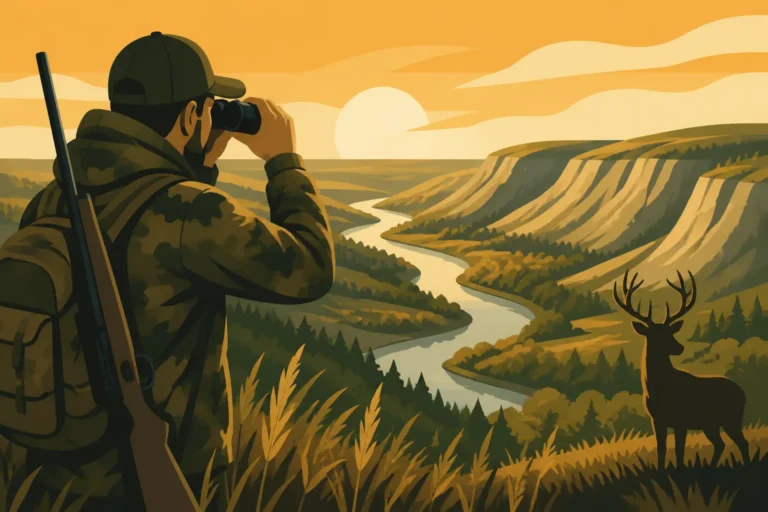
Even in Saskatchewan's southern and central regions, certain topographic features demand the use of a quad. The deep, often brushy river valleys, such as the Qu'Appelle River Valley or parts of the South Saskatchewan River break, are notorious for their challenging terrain. These areas feature steep slopes, numerous draws and coulees, and often heavy brush cover along the valley bottoms. While you might drive along the rim of the valley in a truck, descending into the depths or navigating along the lower benches often requires a smaller, more agile vehicle.
Similarly, in some of the rougher prairie and parkland zones, hunters will encounter extensive coulee systems or tracts of rolling hills with dense brush pockets. These areas can hold significant numbers of mule deer and whitetails. The bottoms of these coulees can be extremely soft and muddy, especially near natural springs or after heavy precipitation. A quad allows you to traverse these features, access hidden pockets of cover, and retrieve game from awkward, steep locations that would be back-breaking to do on foot. Imagine the effort of hauling a heavy buck up a steep, muddy coulee wall; a quad can make this task manageable, especially when Hunting a Saskatchewan River Valley.
Preparing Your Quad and Yourself for Saskatchewan's Backcountry
Owning a quad is one thing; properly preparing it and yourself for the rigors of Saskatchewan backcountry hunting is another. The provincial landscape can be unforgiving, with sudden weather changes, challenging terrain, and remote locations. A well-prepared hunter and machine are essential for a successful and safe experience.
Essential Quad Modifications and Gear
Your average recreational quad might get you down a few trails, but for serious Saskatchewan hunting in those quad-essential zones, some upgrades are highly recommended. First and foremost, a reliable winch is practically a requirement. You will get stuck, and a winch can be the difference between a minor delay and a night spent stranded. Invest in good, aggressive off-road tires that can handle mud, rocks, and uneven terrain. Factory tires simply won't cut it in many of these zones.
Consider extra fuel capacity, either with an auxiliary tank or carefully secured jerry cans. It's amazing how quickly fuel burns when navigating rough terrain. A robust front and rear rack system, or better yet, a small trailer if using a side-by-side, will be invaluable for hauling out game, camp supplies, and emergency gear. Don't forget a basic repair kit: tire plug kit, small air compressor, basic tools, a tow strap, and a shovel. A high-lift jack or similar recovery device can also be a lifesaver when you're far from any help.
Navigation and Safety Considerations
When you're miles from the nearest paved road, often with no cell service, reliable navigation is paramount. While a physical map and compass are always smart backups, digital mapping apps like onX Hunt or GoHunt are absolute game-changers. They allow you to download maps for offline use, pinpoint your exact location, mark waypoints (like fresh sign, game sightings, or your vehicle), and see property boundaries, which is crucial when navigating mixed Crown and private land. These tools are indispensable for Scouting With Satellite Imagery in Saskatchewan and then confirming your position on the ground.
Beyond navigation, safety in the backcountry cannot be overstated. Always let someone know your travel plans and expected return time. Carry a satellite communication device, such as a SPOT or InReach, for emergency contact. A comprehensive first-aid kit, fire-starting materials, extra food and water, and warm clothing (even in fall, temperatures can drop rapidly) are non-negotiables. Hunting solo is common, but hunting with a buddy, especially when venturing deep into quad country, adds a significant layer of safety.
Respecting the Land and Regulations
Using a quad in Saskatchewan's hunting zones comes with responsibilities. Always adhere to provincial regulations regarding ATV use on Crown land. Generally, this means sticking to established trails, cutlines, or roads where allowed. Creating new trails by driving through untouched bush is not permitted and can damage sensitive habitats. Understand that Quad and Side-by-Side Rules on Crown Land are in place to protect these valuable ecosystems.
When on private land, ensure you have explicit permission from the landowner not only to hunt but also to use your quad for access or game retrieval. Respect their property by staying on designated routes and avoiding damage to fields or fences. Leaving gates as you found them and being mindful of livestock are basic courtesies that help maintain positive landowner relations for all hunters. Remember, our access to these incredible hunting opportunities depends on responsible behavior from everyone.
| Terrain Type | Typical Location | Quad Necessity | Common Challenges | Game Species Often Sought |
|---|---|---|---|---|
| Open Prairie | Southern WMZs, large agricultural fields | Low | Long walks, limited cover | Mule Deer, Whitetail |
| Aspen Parkland | Central WMZs, mixed farmland & bluffs | Moderate | Muddy trails, sloughs, overgrown access | Whitetail, Moose |
| Forest Fringe | Transition zones, extensive bush pockets | High | Deep mud, deadfall, water crossings, remote access | Whitetail, Moose, Bear |
| Boreal Forest | Northern WMZs, vast wilderness | Very High | No maintained trails, muskeg, extreme remoteness | Moose, Bear, Whitetail |
| River Valleys/Coulees | Any region with significant river breaks | Moderate-High | Steep grades, muddy bottoms, dense brush, rocky areas | Mule Deer, Whitetail, Elk |
Disclaimer
This article is for general informational purposes only and does not constitute professional advice. Laws, prices and regulations vary by location and change over time. Consult a qualified professional for guidance on your specific situation.