Spot-and-Stalk Mule Deer in Saskatchewan
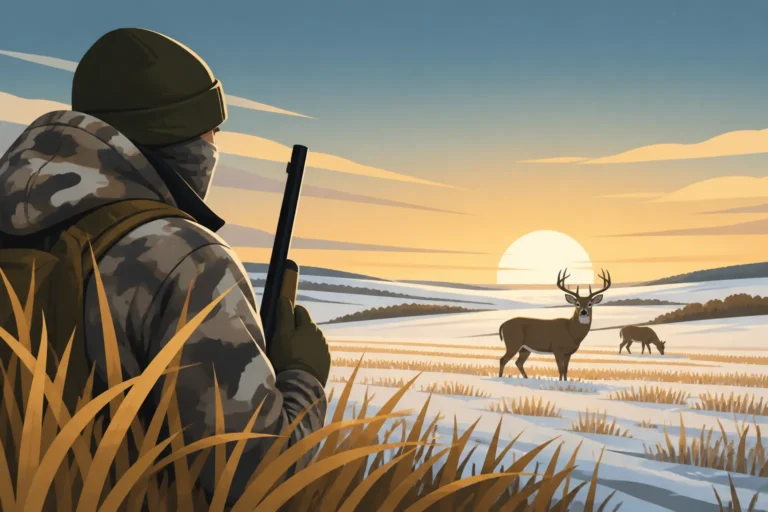
Hunting mule deer in Saskatchewan can feel like a daunting challenge. With vast open prairies and intelligent, elusive bucks, getting close enough for a shot often seems impossible without proper strategy. This guide will walk you through the nuances of the spot-and-stalk method, helping you understand how to locate, approach, and successfully harvest a Saskatchewan mule deer, even in the most exposed terrain.
The Allure of Saskatchewan Mule Deer
There’s something truly special about chasing mule deer across the sweeping landscapes of Saskatchewan. Unlike whitetails, which often prefer dense cover, mule deer are creatures of the open, thriving in the coulees, badlands, and rolling grasslands that define much of the province's southwest. For many hunters, the visual spectacle of spotting a big buck from afar and then meticulously planning a stalk is the pinnacle of the hunting experience. It's a game of chess played across miles of rugged terrain, demanding patience, skill, and an intimate understanding of the animal and its environment.
Why Saskatchewan is a Mule Deer Hotspot
Saskatchewan’s unique blend of habitat—from expansive grain fields to untouched prairie wilderness—provides an ideal environment for mule deer to thrive. The combination of rich agricultural lands offering abundant forage and the security of deep coulee systems or rugged badlands creates a perfect recipe for producing large-bodied, heavy-antlered bucks. While their numbers can fluctuate due to harsh winters or drought conditions, the province has consistently proven itself as a prime destination for quality mule deer hunting. The vastness of the landscape also means less pressure in many areas compared to more densely populated hunting regions, allowing bucks to reach maturity. If you're wondering Why Mule Deer Numbers Rise and Fall, it's often a complex interplay of habitat, weather, and hunting pressure.
The sheer scale of the hunting grounds here is what truly sets Saskatchewan apart. You can spend days glassing untouched public lands or gaining access to private farmland, often without seeing another hunter. This provides a truly immersive experience where you feel like you're matching wits directly with the deer, unhindered by crowded conditions. The quality of the genetics, combined with nutritious feed, consistently produces bucks that any hunter would be proud to hang on their wall. It’s not just about the size of the deer, though; it’s about the hunt itself, the vast horizons, and the quiet solitude of the prairie.
Understanding Mule Deer Behavior in the Prairies
Mule deer are incredibly adaptable animals, and their behavior in Saskatchewan is heavily influenced by the open environment. They are masters of using subtle terrain features for cover, whether it's a small dip in the prairie, the shadow of a lone bush, or the depths of a winding coulee. Unlike whitetails that often bolt at the first sign of danger, mule deer in open country are more likely to freeze, try to assess the threat, and then slip away unnoticed, using their incredible eyesight and hearing to their advantage. They often bed down in locations that offer a commanding view of their surroundings, making a direct approach incredibly difficult.
Their daily patterns revolve around feeding, bedding, and seeking water. In the early morning and late evening, you'll typically find them out grazing in fields, along coulee edges, or on open hillsides. As the sun climbs higher, they'll retreat to sheltered spots, often bedding on a leeward slope to stay out of the wind, or catching some shade under a cluster of brush. Learning these patterns, and recognizing how they use the terrain, is fundamental to successful spot-and-stalk hunting. Understanding their habits is key to Hunting Mule Deer in Prairie Coulees effectively. Knowing where they might feed, where they'll seek refuge during the heat of the day, and their travel corridors between these areas will dramatically increase your chances of intercepting them.
Essential Gear for Spot-and-Stalk Success
Successful spot-and-stalk hunting for mule deer in Saskatchewan hinges largely on having the right equipment. This isn't just about your rifle; it's about the tools that help you find the deer, plan your approach, and stay comfortable and effective in the field for long hours. Cutting corners on optics or suitable clothing can quickly turn a promising hunt into a frustrating ordeal. Remember, you're often covering vast distances on foot, in potentially challenging weather, and every piece of gear needs to pull its weight.
Optics: Your Most Critical Tool
When it comes to spot-and-stalk hunting, your optics are arguably more important than your rifle. You'll spend far more time looking for the deer than actually shooting it. A high-quality spotting scope (20-60x or 20-70x) is non-negotiable for picking apart distant hillsides and coulee bottoms. Pair this with a sturdy tripod for stability, as you'll be glassing for extended periods. Beyond the spotting scope, a good pair of binoculars (10x or 12x) are essential for quicker scans and closer work while on the move or during the stalk itself. Look for optics with excellent light gathering capabilities for those crucial low-light hours. Brands like Swarovski, Zeiss, and Vortex are popular choices among serious mule deer hunters for their clarity and durability.
The ability to resolve detail at extreme distances is what sets premium optics apart, and it’s a wise investment that will pay dividends season after season. Many hunters use mapping apps like GoHunt, which often have integrated public and private land layers, to help them identify potential glassing knobs and understand the terrain they'll be covering. This combination of digital scouting and high-quality glass in the field allows you to methodically break down vast landscapes, slowly uncovering the subtle forms of bedded deer that would otherwise go unnoticed. Don't underestimate the importance of comfort either; a good padded neck strap for binoculars and an easily adjustable tripod will make those long glassing sessions much more bearable.
Footwear and Clothing for Prairie Hunting
You'll be doing a lot of walking, often across uneven, brushy terrain, so comfortable and durable footwear is paramount. Waterproof, insulated boots with good ankle support are a must, especially if you're hunting in the shoulder seasons when rain, snow, or muddy conditions are common. Layering your clothing is also crucial for adapting to Saskatchewan's unpredictable weather swings. Start with moisture-wicking base layers, add insulating mid-layers, and top it off with a windproof and waterproof outer shell. Even on a seemingly mild day, the wind on the open prairie can make you incredibly cold if you're not prepared.
Think about clothing that is quiet and allows for full range of motion. Avoid noisy fabrics that can alert a deer during a close-range stalk. Blaze orange requirements are in effect during rifle season, so ensure your outer layers meet the legal visibility standards. Good quality gloves and a warm hat are often overlooked but can make a huge difference in your comfort, especially during early morning or late evening hunts when temperatures can drop significantly. Having a comfortable, well-fitting pack to carry extra layers, snacks, water, and your field dressing kit is equally important for those long days afield.
Carrying Your Rifle and Essentials
For spot-and-stalk hunting, a lightweight, accurate rifle is a distinct advantage. You'll be carrying it for miles, often navigating challenging terrain, so every ounce matters. Calibers like .270 Win, .30-06, 7mm Rem Mag, and .300 Win Mag are popular choices for mule deer, offering enough power and flat trajectory for the often longer shots encountered in open country. Be sure your rifle is sighted in precisely, as knowing your ballistic drop at various ranges is essential for ethical long-range shooting. A laser rangefinder is another indispensable tool to confirm distances before taking a shot.
Beyond your rifle, pack only the essentials to keep your load light. This includes extra ammunition, a small first-aid kit, fire-starting materials, a knife, game bags, and enough water and high-energy snacks for the day. A quality backpack with a comfortable hip belt and shoulder straps will distribute the weight effectively. Many hunters also choose to carry a lightweight shooting stick or bipod to ensure a stable shot from various field positions, as opportunities can be fleeting. Knowing your Legal Rifle Calibres for Big Game is also a good idea before heading out.
Mastering the Spotting Phase
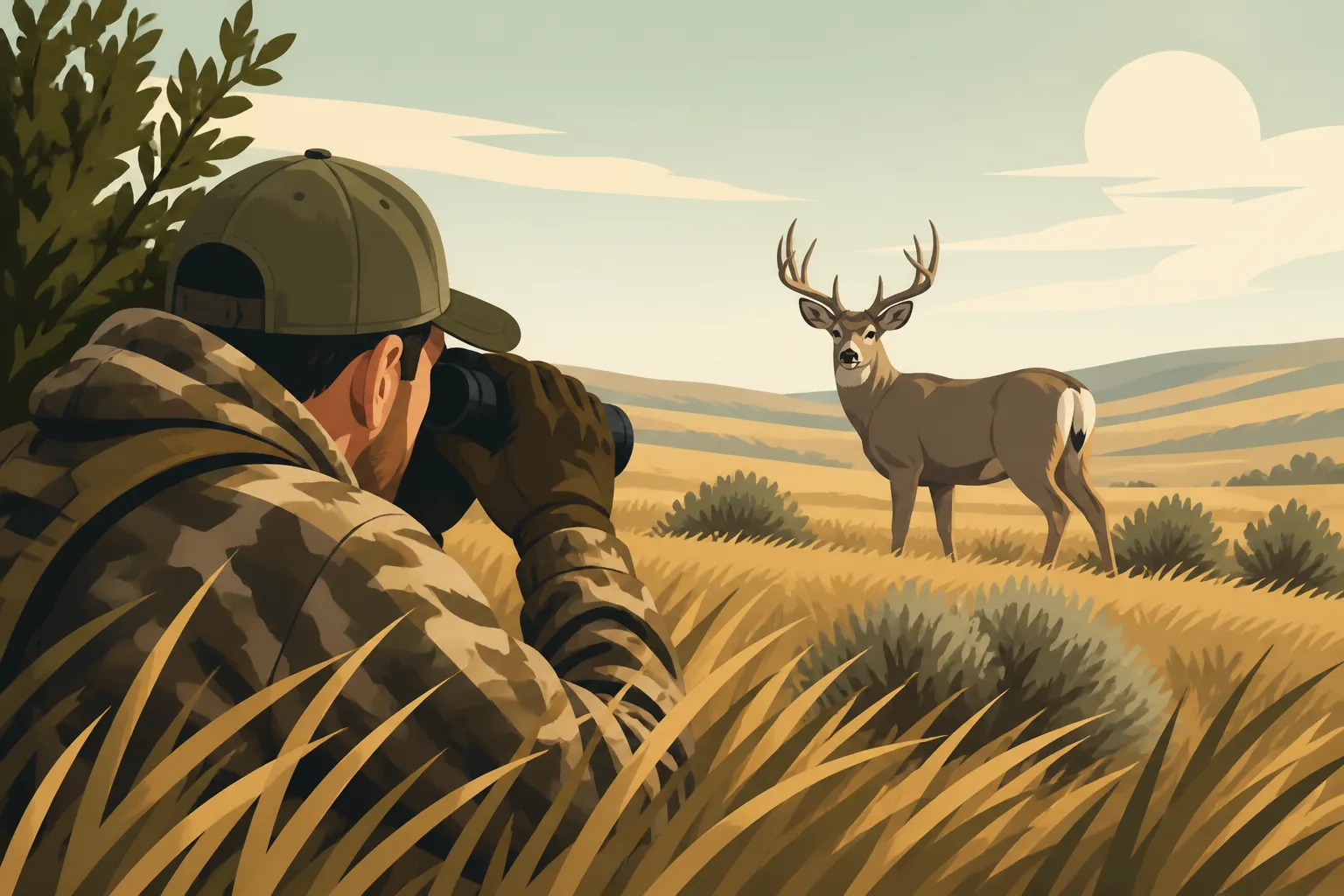
The core of spot-and-stalk hunting is, as the name suggests, the "spot." You can't stalk a deer you haven't seen. This phase demands patience, methodical scanning, and an understanding of where and how mule deer prefer to hide themselves in the vast prairie environment. Many hunters make the mistake of rushing this step, walking for miles without truly picking apart the landscape, only to bump deer they could have spotted from a distance.
The Art of Glassing Saskatchewan Coulees
Saskatchewan's coulees are intricate networks of ravines and draws that provide ideal habitat and cover for mule deer. Learning to effectively glass these features is critical. Start by finding a high vantage point that gives you a commanding view of the coulee system. Don't just glance; use your spotting scope on a tripod and methodically scan every inch of the opposing slopes, the coulee bottom, and any side draws. Pay close attention to areas with a mix of brush and open ground, as deer often bed just inside the brush line or in the shaded spots on a sunny slope.
Take your time. Break the landscape into grids and meticulously examine each section. Look for horizontal lines, patches of contrasting color, or the subtle glint of an antler tip that doesn't quite blend with the natural surroundings. Deer blends in incredibly well, so you're often looking for parts of a deer – an ear, a leg, the curve of a back – rather than a whole animal. This is where patience is truly a virtue; it might take an hour or more to fully dissect a single coulee system, but finding a buck from a mile away is far better than walking into one at 100 yards and spooking it. This process is deeply covered in Glassing a Saskatchewan Coulee for Mule Deer.
Utilizing Elevation and Vantage Points
Choosing the right vantage point is crucial for effective glassing. Seek out the highest point in the immediate area – a prominent hill, a bluff, or even the top of your vehicle if permitted and safe – that offers an unobstructed view of the terrain you intend to hunt. The higher you are, the more ground you can cover with your optics, and the less likely you are to be spotted by game. When approaching a new glassing location, always do so cautiously, using terrain features to mask your approach, and staying low until you've reached your desired point. The last thing you want to do is spook a deer that was bedded just over the ridge you're about to glass.
Once you’ve settled into your vantage point, take a few minutes to simply observe the overall landscape. Identify potential travel corridors, feeding areas, and bedding sites. Then, begin your detailed grid-search pattern with your binoculars, and once you've covered the broader landscape, switch to your spotting scope to really scrutinize those high-probability areas. Remember, a good vantage point also allows you to observe deer for longer periods, giving you crucial information about their movement patterns, preferred bedding areas, and potential escape routes before you even begin your stalk.
Timing Your Spotting Efforts
Mule deer activity levels are generally highest during the early morning and late evening hours, making these prime times for spotting. As the sun rises, deer will move from feeding areas to their bedding sites, offering opportunities to spot them in motion. In the mid-day, they'll typically be bedded, often in shaded or wind-sheltered locations, making them harder to spot but also more vulnerable to a well-executed stalk if found. During these mid-day hours, focus your glassing efforts on obvious bedding cover within coulees, along brushy edges, or under isolated clumps of trees.
However, don't dismiss the mid-day entirely. Deer sometimes get up to stretch, move to a new bed, or grab a quick bite. These brief movements can be your best chance to spot a buck that was previously invisible. Furthermore, adverse weather conditions, like a light snowfall or cooler temperatures, can extend deer activity later into the morning or start it earlier in the afternoon. Pay attention to the conditions and adjust your glassing schedule accordingly. Hunting Mule Deer After a Snowfall can actually improve spotting conditions, as deer stand out more against the white backdrop and their tracks are easier to follow.
Executing the Stalk
Once you've successfully spotted a target buck, the real challenge begins: the stalk. This is where the "stalk" in "spot-and-stalk" truly comes into play, demanding stealth, patience, and a deep understanding of wind, terrain, and deer behavior. A perfect spot means nothing if you can't close the distance undetected. This phase often takes far longer than the initial spotting and requires meticulous planning.
Reading the Wind and Terrain
The wind is your number one priority during a stalk. Mule deer have an incredible sense of smell, and even a slight shift in wind direction can alert them to your presence. Always approach from downwind, or at least crosswind, taking into account any swirling air currents that might be present in coulees or around hills. Carry a wind checker (a small bottle of powder or milkweed fluff works great) and use it frequently to confirm the wind direction, especially as you get closer to the deer. GoHunt's mapping features can sometimes offer topographical views that help predict wind behavior.
The terrain offers both obstacles and opportunities. Use every rise, dip, tree, or bush as cover to break up your silhouette and conceal your movement. Never skyline yourself on a ridge. Instead, stay just below the crest, using the contour of the land to your advantage. Plan your route carefully, identifying natural features that can shield you from the deer's line of sight. Sometimes, a longer, more circuitous route that keeps you hidden is far better than a shorter, more direct one that exposes you. This strategic use of terrain is vital for Stalking Mule Deer in Open Prairie.
Approaching Undetected
Stealth is paramount during the approach. Move slowly and deliberately, paying attention to every step. Avoid stepping on dry branches, rustling through thick brush, or kicking loose rocks. Wear quiet clothing and footwear. When moving across open ground, take advantage of any small depressions or folds in the land. Sometimes, crawling on your hands and knees or even belly-crawling is necessary to remain hidden in flat, exposed areas. If the deer raises its head or becomes alert, freeze immediately and remain motionless until it relaxes and returns to its normal behavior.
Be prepared to wait. Deer, especially bedded ones, can stay put for hours. If your initial approach is compromised, or the deer is in a tricky spot, you might need to back out and try again later, or even wait for the deer to move naturally into a more favorable position. Patience is often the deciding factor between success and failure. Remember, the goal is to get within your effective shooting range without the deer ever knowing you were there.
The Final Approach and Shot Opportunity
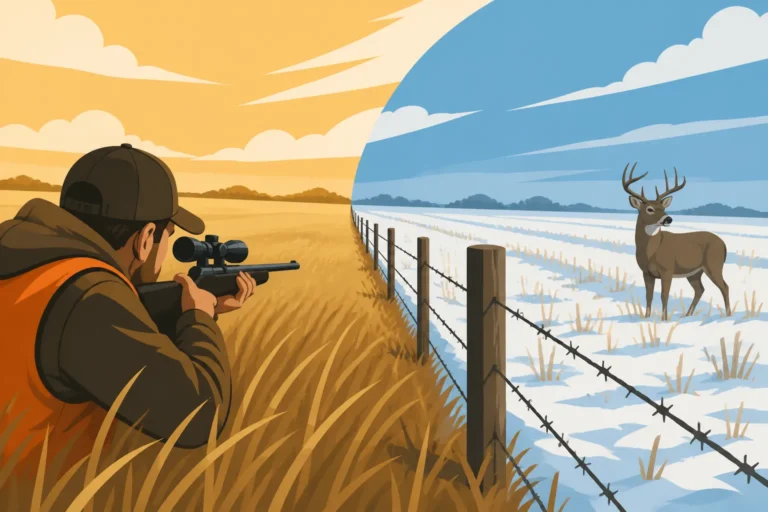
As you get closer, typically within a few hundred yards, your movements need to become even more precise. This is the stage where even the smallest mistake can blow the stalk. Continually check the wind and visually confirm the deer's location and posture. Identify potential shooting lanes and clear lines of sight. When you are within range, find a stable shooting rest – a bipod, shooting sticks, a backpack, or even going prone are all excellent options for making an ethical shot. Judging a Mule Deer Buck at Distance can be tricky, especially when the adrenaline is pumping, so take your time and verify your target before aiming.
Take a few deep breaths to calm your nerves, focus on your target, and execute a clean shot. Mule deer are tough animals, so aim for the vital zone. After the shot, be prepared for a follow-up shot if necessary, and watch the deer's reaction closely to determine the hit and direction of travel. Even if it appears to be a good hit, give the animal time to expire before approaching, especially in open country where a wounded animal can cover a lot of ground quickly.
Navigating Saskatchewan's Diverse Habitats
While mule deer are often associated with coulees, Saskatchewan offers a variety of habitats where these adaptable animals can be found. Understanding these different environments and how mule deer utilize them is key to expanding your hunting opportunities and increasing your success rate. From the rolling prairie to the fringes of agricultural land, each presents unique spotting and stalking challenges.
Hunting Mule Deer in Prairie Coulees
The quintessential Saskatchewan mule deer hunt often takes place in the extensive coulee systems that dissect the southern prairies. These natural drainage features provide critical shelter from the elements, security cover, and diverse vegetation for browse. When hunting coulees, focus on glassing the south-facing slopes in cold weather for bedding deer seeking warmth, and north-facing slopes or brushy bottoms during warmer periods for shade. Deer will use these features to travel between feeding areas and escape danger, often moving along the bottoms or just below the rim.
Always work into the wind when exploring coulees, as the swirling air currents within them can be tricky. When a buck is spotted, carefully plan your stalk using the contours of the coulee itself, often dropping into the bottom and using the rises and dips to stay hidden. Remember that mule deer in coulees often have multiple escape routes, so anticipate their movements and try to cut off escape when possible. The deeper and more complex the coulee system, the more cover and potential hiding spots there are, making patience in glassing absolutely crucial.
Spotting Mule Deer in Agricultural Edges
As Saskatchewan is an agricultural powerhouse, it's no surprise that mule deer frequently utilize the edges of cultivated fields. These areas provide a readily available food source, especially fields of lentils, peas, or winter wheat. Deer will often feed in these fields during low-light hours and then retreat to nearby cover – a bluff, a willow ring, or a small coulee – to bed down during the day. When hunting these agricultural fringes, concentrate your glassing efforts on the transition zones where the field meets natural cover.
Look for deer entering or exiting fields at dawn and dusk. During the day, they will likely be bedded just inside the cover, keeping an eye on the open field. Stalking in these areas requires extra caution, as cover can be sparse, and the deer are often accustomed to human activity, making them wary. You might need to make longer stalks or wait for the deer to move into a more favorable position before attempting an approach. Permission from landowners is, of course, absolutely essential when hunting private agricultural land.
Utilizing the Great Sand Hills and Badlands
For a truly wild and challenging mule deer hunt, consider the Great Sand Hills or other badland regions in southwestern Saskatchewan. These unique landscapes, characterized by shifting dunes, eroded buttes, and sparse vegetation, offer incredible solitude and often hold trophy-class bucks. The terrain itself is incredibly rugged, demanding physical fitness and excellent navigational skills. Mule deer here are masters of concealment, blending seamlessly with the broken landscape. The remote nature of these areas often means bucks face less pressure and can grow to impressive sizes.
When hunting these areas, methodical glassing is even more critical. Every ripple in the sand, every small knoll, and every patch of brush must be examined. The vastness and optical illusions created by the terrain can make judging distance and size difficult, so a quality rangefinder is indispensable. Stalking in the Sand Hills or badlands means taking advantage of every fold in the ground, every shadow, and every piece of sparse vegetation for cover. It's a physically demanding hunt, but the rewards of harvesting a buck from such an iconic and wild landscape are unparalleled. This type of hunting aligns well with strategies for Hunting the Great Sand Hills.
Overcoming Common Spot-and-Stalk Challenges
Spot-and-stalk hunting for mule deer in Saskatchewan is rarely straightforward. There are inherent challenges that seasoned hunters learn to anticipate and overcome. From the vast, open spaces to the province's notoriously fickle weather, successful hunters are those who can adapt on the fly and maintain a positive attitude even when things get tough.
Dealing with Open Country and Limited Cover
The most obvious challenge in Saskatchewan is the sheer openness of the landscape. Unlike denser forest hunting, cover can be scarce, making it incredibly difficult to approach a keen-eyed mule deer without being spotted. This often means longer stalks, more crawling, and a heavy reliance on subtle terrain features like small rises, coulee banks, or even tall prairie grass. When cover is minimal, every ripple in the ground becomes your ally.
One effective tactic is to use "dead ground" – areas where your silhouette is completely hidden from the deer's line of sight due to an intervening landform. This might mean dropping out of sight completely and then carefully peeking over a crest. Another strategy is to stalk during inclement weather, such as a light rain or strong wind, which can reduce a deer's senses. Sometimes, the best option is a "strategic retreat" – if a stalk is too exposed, it's better to back off and try again later or find a different deer than to rush in and spook your quarry. When you're in truly open country, techniques like those described in Stalking Mule Deer in Open Prairie become your bread and butter.
Adapting to Changing Weather Conditions
Saskatchewan weather is famously unpredictable. A beautiful, calm morning can quickly turn into a windy, snowy, or rainy afternoon. These changes can dramatically impact deer behavior and your ability to hunt. High winds make spotting difficult, but they can also mask your sound and scent. Rain or snow can reduce visibility but also make deer more active or easier to track. Hunters must be prepared for anything; this means dressing in layers, carrying waterproof gear, and being willing to adjust your plans. A sudden change in wind can necessitate an entirely new stalk route, or even calling off an attempt.
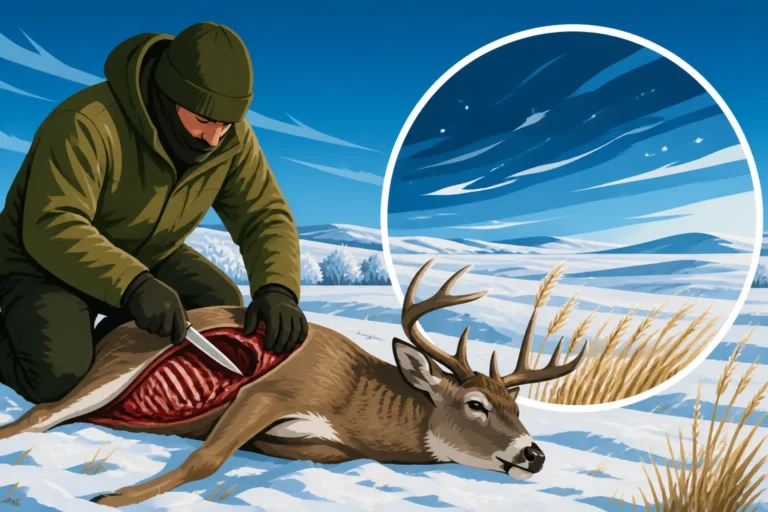
Heavy winds can often push deer into sheltered coulees or into the lee of bluffs. Snowfall can make deer stand out more visually against a white backdrop, aiding in spotting. However, extreme cold, as explored in Hunting Saskatchewan Winter Weather Safely, requires additional preparation to ensure your own safety and comfort in the field. Always check the forecast, but be ready for it to change. Having reliable gear that can handle the elements, from your optics to your clothing, will make these shifts less impactful on your hunt.
Managing Long-Range Shots
Given the open nature of Saskatchewan's mule deer habitat, long-range shots are often a reality. While every hunter strives for a close-range ethical shot, situations will arise where the only opportunity is at extended distances. This necessitates a rifle and cartridge combination capable of accuracy at these ranges, precise knowledge of your rifle's ballistic performance, and extensive practice. A rangefinder is non-negotiable for confirming distance, and a ballistic calculator or custom turret can help account for bullet drop and wind drift.
However, a long shot should only be taken if you are 100% confident in your ability to make an ethical kill. If there's any doubt about your skill, the conditions (e.g., strong, gusting winds), or your equipment, it's always better to pass on the shot and try to get closer or wait for another opportunity. Responsible long-range shooting requires discipline and knowing your limitations. Practice shooting from field positions, not just off a bench, to truly understand your capabilities when the pressure is on.
Here's a quick comparison of mule deer spotting and stalking scenarios:
| Scenario Type | Typical Habitat | Key Challenge | Recommended Strategy | Example Terrain Feature |
|---|---|---|---|---|
| Coulee Hunting | Deep, winding ravines, brushy slopes | Swirling winds, hidden pockets, multiple escape routes | Glass from high points, use coulee contours for approach | Ravine bottoms, brushy side draws |
| Prairie Flats | Open grasslands, rolling hills | Extreme lack of cover, deer's keen eyesight | Long crawls, use minor dips/rises, focus on low-light activity | Slight depressions, tall grass clumps |
| Agricultural Edges | Fields bordering natural cover | Wary deer, minimal cover on approach | Spot early/late, use field edges/tree lines for cover | Shelterbelts, field approaches |
| Badlands/Sand Hills | Eroded terrain, dunes, sparse brush | Rugged terrain, optical illusions, extreme solitude | Meticulous grid glassing, use unique formations for cover | Buttes, sand dunes, rock formations |
Disclaimer
Please remember that hunting regulations and conditions can change. Always consult the most current Saskatchewan hunting guide and ensure you understand all applicable laws and regulations before heading into the field. Safety should always be your top priority.