Stalking Mule Deer in Open Prairie
Stalking mule deer on Saskatchewan's open prairie is one of the most rewarding yet challenging hunts you can undertake. It's a game of patience, stealth, and acute observation, often leaving hunters frustrated as deer seem to vanish into thin air or bolt at the slightest hint of danger. This guide will walk you through the essential strategies and mindset needed to successfully close the distance on a prairie mule deer, turning those elusive encounters into memorable harvests.
Understanding the Prairie Landscape and Mule Deer Behavior
Before you even think about the stalk, you need to deeply understand the environment and the animal you're pursuing. Saskatchewan's open prairie isn't flat like a pancake; it's a tapestry of subtle rolling hills, coulees, draws, and surprisingly effective pockets of cover that mule deer utilize masterfully. Their behavior is intrinsically linked to this landscape, and failing to appreciate these nuances can lead to a lot of busted stalks.
The Dynamics of Prairie Habitat and Terrain
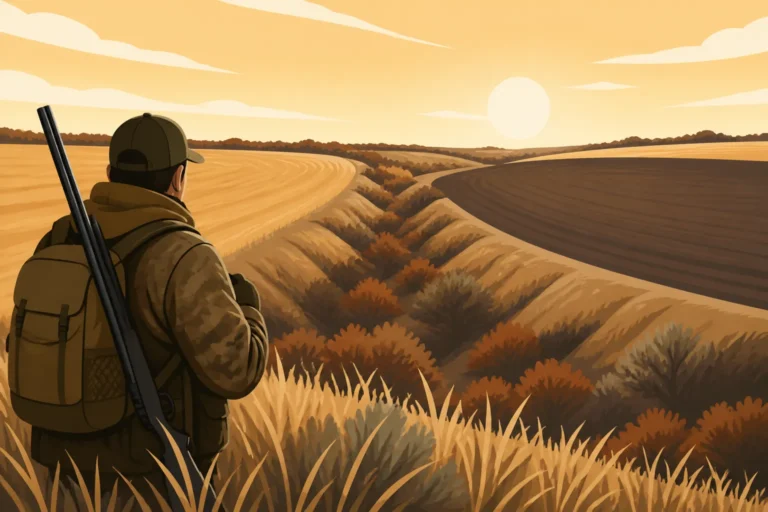
The term "open prairie" often conjures images of endless, flat fields, but Saskatchewan's mule deer country is far more complex and dynamic. You'll encounter vast stretches of native grasslands, cultivated fields of wheat, canola, or lentils, and interspersed areas of brush, often along river valleys or in the deeper depressions. What often looks like nothing from a distance can transform into intricate folds and pockets as you get closer. These subtle elevation changes and geological features are critical.
Coulees, for instance, are the lifeblood of prairie mule deer. These ancient drainage channels, carved by water over millennia, provide everything a mule deer needs: shelter from the wind, thermal cover from extreme temperatures, bedding areas, and crucial travel corridors. A mule deer can disappear into a seemingly shallow coulee, making it incredibly difficult to pinpoint once out of sight. Similarly, draws – smaller, less defined versions of coulees – offer temporary refuge and allow deer to move unseen from one section of open country to another. You'll want to spend a lot of time learning how to effectively hunt mule deer in prairie coulees, as they are key to success.
Mule Deer Habits in Open Country
Mule deer in the open prairie are creatures of habit but are also incredibly adaptable and wary. Unlike their whitetail cousins who often prefer denser cover, mule deer often bed right out in the open on a high knob, or a gentle slope, allowing them to survey their surroundings. This makes them inherently difficult to approach without detection. They often bed on south-facing slopes in winter to catch the sun's warmth, or in depressions and brush during hotter days to find shade.
Their feeding patterns are often concentrated in the early morning and late evening, venturing into crop fields or grazing on native grasses. During the day, they will typically move to bedding areas. When pressured, these deer don't just run; they often stop on the next rise, peering back, giving you a fleeting chance to reassess or for them to vanish over the next horizon. Understanding "How Mule Deer Use Coulees in Winter" is also crucial, as their movement patterns change with the seasons and snow depth. Recognizing these tendencies and anticipating their next move is paramount for a successful stalk.
The Art of Spotting and Glassing
In the vastness of the Saskatchewan prairie, your eyes and optics are your most important tools. You can't stalk what you can't see, and seeing often requires patience, elevation, and quality equipment. This phase of the hunt is where many make or break their chances.
Essential Optics for Prairie Hunting
Investing in quality optics isn't just a recommendation; it's a necessity for stalking mule deer on the prairie. A good pair of binoculars, generally 10×42 or 12×50, will be your primary scanning tool. They need to be clear, comfortable to hold for extended periods, and perform well in low light. You'll spend hours behind them, sweeping the landscape.
For serious long-range spotting and antler evaluation, a spotting scope is indispensable. A 60-80mm objective lens with 15-60x magnification will allow you to pick apart distant hillsides, scrutinize brush lines, and confidently judge a buck's antlers without spooking him. This is particularly important when trying to distinguish between a mature buck and a smaller one, or simply confirming legal antler points. Remember, judging a mule deer buck at distance is a skill that takes practice, and a good spotting scope makes all the difference. Always mount your spotting scope on a sturdy tripod for stability; even a slight tremor makes long-range viewing impossible.
Effective Glassing Techniques
Glassing isn't just looking through binoculars; it's a systematic, patient approach to dissecting the landscape. Find an elevated position that offers a panoramic view, preferably with the sun at your back or to the side. Begin by segmenting the landscape into manageable grids. Start at the closest point of your chosen sector and slowly work your way horizontally, then drop down slightly and work your way back. Don't rush. Take your time, letting your eyes adjust to what you're seeing. Pay close attention to any anomalies – a horizontal line in a vertical landscape, a patch of different color, a flicker of movement. Often, you'll pick up just a sliver of an ear, the shine of an antler tip, or a dark patch that looks "deer shaped" before you can fully identify the animal.
The time of day also plays a huge role. Early mornings and late evenings are prime feeding times, so focus on field edges and transitions. During the midday lull, shift your attention to known bedding areas: south-facing slopes, depressions, or the shaded sides of coulees and bluffs. Patience is key; it often takes 30 minutes or more to fully pick apart a section of terrain. Repeating your glassing routine throughout the day can reveal deer that were previously obscured or have since moved. It’s also wise to glass the same area multiple times over several days, as deer patterns can vary. This helps with Scouting with Satellite Imagery in Saskatchewan before you even set foot in the field.
Using Technology for Enhanced Scouting
Modern hunting technology has revolutionized how we approach the prairie. While it doesn't replace boots on the ground, it certainly enhances your chances. Mapping apps like GoHunt are invaluable. They allow you to study terrain features, identify potential coulees, draws, and even small bluffs from the comfort of your home. You can mark potential bedding areas, travel corridors, and even likely spots for water.
Before heading out, use these tools to identify access points, property boundaries (crucial for hunting on Saskatchewan Crown Land), and potential routes for your stalk. During the hunt, GoHunt can help you navigate precisely, showing your current location relative to terrain features, wind direction, and your target animal. You can mark the location of a spotted deer, track your progress during a stalk, and even pinpoint where a shot animal might be headed. This pre-visualization and real-time navigation greatly increase your efficiency and reduce the chances of getting disoriented in the vast, often featureless landscape.
Mastering the Stalk in Open Country
This is where the rubber meets the road. Spotting a mule deer is one thing; getting close enough for an ethical shot in open prairie is another entirely. This requires calculated movements, an intimate understanding of the wind, and often, an incredible amount of crawling.
Reading the Wind and Thermals
The wind is your absolute master on the prairie. Mule deer, like most big game, rely heavily on their sense of smell. A single whiff of human scent, carried by an errant breeze, will send them bolting, often before you even know they detected you. Always, always approach from downwind. This sounds simple, but prairie winds are notoriously fickle, especially in broken terrain. What starts as a steady breeze can swirl unpredictably in a coulee or around a hill.
Use a wind checker constantly – every few steps, at every change in elevation, every time you pause. These simple powder bottles or small strands of thread are non-negotiable. Pay attention to thermals as well. In the morning, as the air warms, thermals rise, carrying your scent uphill. In the evening, as the air cools, thermals fall, carrying your scent downhill. Plan your approach accordingly, taking advantage of stable wind conditions and avoiding times when thermals are swirling. Sometimes, waiting an hour for the wind to settle is the best move you can make.
Utilizing Sparse Cover and Terrain Features
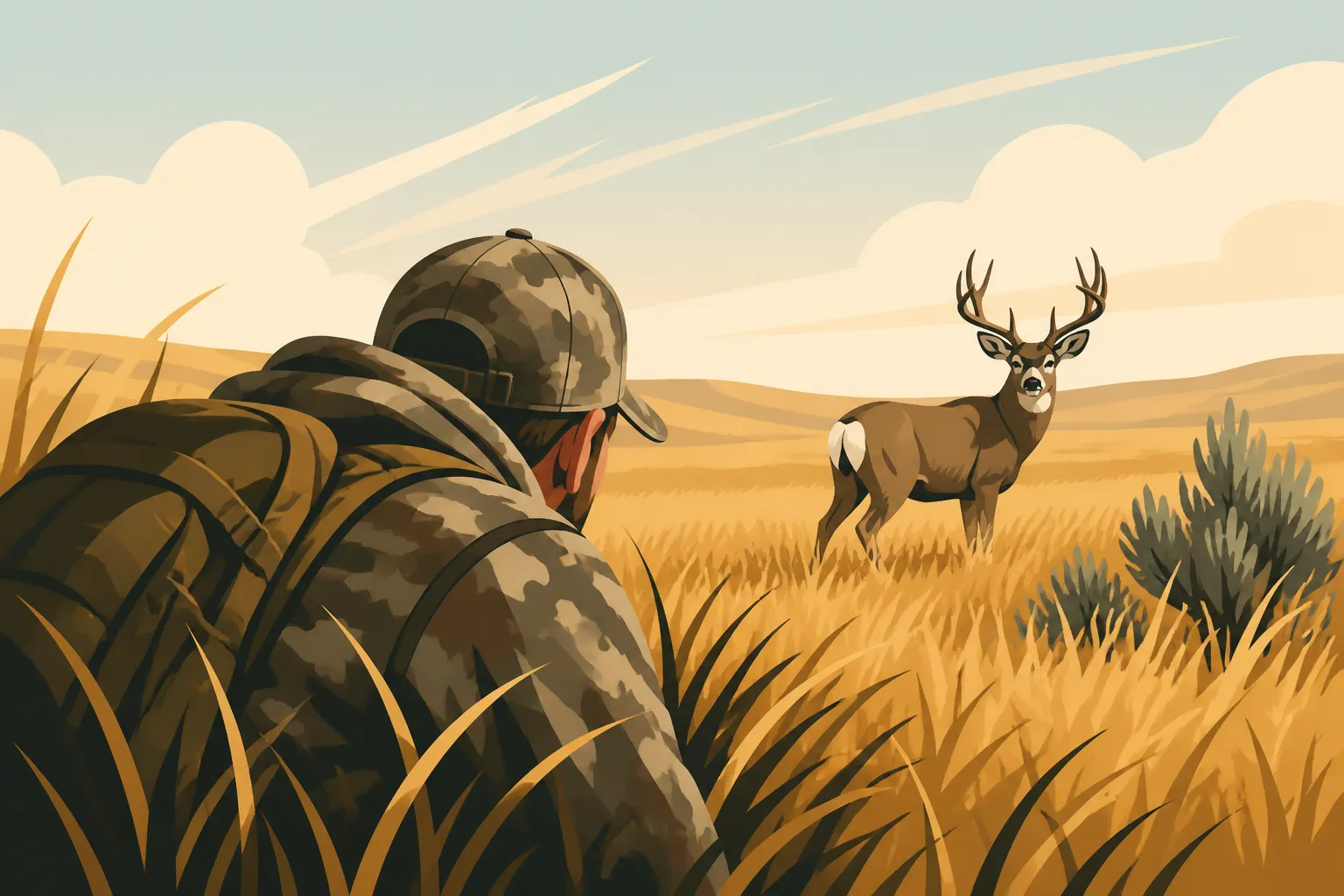
Open prairie doesn't offer much in the way of traditional "cover," but what it lacks in trees, it makes up for in subtle terrain features. Every slight rise, every small dip, every clump of sagebrush or tall grass becomes your best friend. The key is to think in terms of minimal exposure. Instead of walking, you'll often be crawling, belly-crawling, or moving in a low crouch, taking advantage of every inch of concealment.
Study the land between you and the deer through your binoculars or spotting scope. Map out your route, looking for the lowest points, the densest patches of vegetation, or the longest shadows. A fence line, a small drainage ditch, or even a line of taller stubble in a field can provide just enough visual break to mask your approach. Sometimes, the best cover is simply the earth itself; staying low to the ground, especially when the deer is bedded, makes you incredibly difficult to spot against the distant horizon. Remember the concept of skyline – never, ever silhouette yourself against the sky or a distant ridge. This is often the trickiest part of hunting a native grassland pasture.
Patience and Slow Movement
A mule deer stalk on the prairie is rarely a fast affair. It demands extreme patience and agonizingly slow movement. Think in terms of minutes per yard, not yards per minute. If you can see the deer, assume it can see you, or at least detect movement. When moving, do so slowly and deliberately. Place each foot carefully, avoiding crunching dry grass or snapping twigs. Move when the deer's head is down feeding, or when it's looking away. If it looks in your direction, freeze instantly, no matter how uncomfortable the position.
Sometimes, a stalk can take hours, especially if the deer is bedded and you're waiting for it to stand or shift position. Be prepared to sit for extended periods, assessing the situation, waiting for a cloud to pass, or for the wind to stabilize. Rushing a stalk in open country is almost always a recipe for disaster. The deer will spot you, and the game will be over. You need to embrace the slowness, the quiet observation, and the mental fortitude required for this challenging pursuit.
The Final Approach and Shot Preparation
As you near your target, the tension will build. This is the critical zone. Every movement must be calculated. At this point, you should already have an ethical shooting lane in mind and have verified the legal requirements for the animal, like what a mature Saskatchewan mule deer weighs or its antler configuration. As you get within comfortable shooting range, whether that's 200 yards for a rifle or 40 yards for a bow, slowly prepare for your shot.
For rifle hunters, find a stable shooting rest immediately. A bipod is almost mandatory for prairie hunting, but a backpack or even resting on a low rise of ground can work. Get into a comfortable, steady position. For bowhunters, this often means crawling into a final patch of cover, drawing when the deer is looking away or has its head down, and aiming for a clean, ethical shot. Breathe, control your heart rate, and focus. If the deer stands up and presents a shot, take it. If it moves to a less ideal position, be ready to freeze and wait. Never force a shot you're not confident in.
Shot Placement and Recovery in Prairie Conditions
Even after a successful shot, the hunt isn't over. Recovering an animal in the vastness of the prairie presents its own unique set of challenges, from tracking in sparse vegetation to dealing with potential weather changes.
Taking Ethical Shots at Range
Mule deer in Saskatchewan's open prairie often present longer shots than you might be used to in timbered country. It is absolutely crucial to know your effective range and stick to it. This means practicing regularly at various distances, including those longer shots you might encounter. A solid rest is paramount for accuracy; prone with a bipod is often the most stable position available. Account for wind drift, bullet drop, and the animal's movement.
Focus on ethical shot placement: the vital area of the lungs and heart. A double-lung shot will often drop an animal quickly or leave a significant blood trail. Avoid shoulder shots unless you are absolutely confident in your rifle and ability, as it can damage valuable meat. If you're unsure of the range, use a rangefinder. There's no shame in passing on a shot that's too far or too risky. The goal is a quick, humane harvest. If you hunt Saskatchewan winter weather safely, you'll know that a tracking job in extreme cold can be brutal for both hunter and animal.
Tracking in Open Prairie
Tracking a mule deer in open prairie after the shot can be incredibly challenging, especially if the animal doesn't drop immediately. The sparse vegetation means blood trails can be minimal, intermittent, or even non-existent. The ground can be hard and dry, making hoof prints difficult to discern.
If the deer runs, watch it until it's completely out of sight, marking the last spot you saw it and its direction of travel. Use landmarks – a lone tree, a distant hill, a fence post – to guide you. When you reach the shot site, look for hair, blood, or bone fragments. Small specks of blood are still blood; follow every sign meticulously. If the trail is sparse, expand your search pattern in the direction the deer was last seen. Often, a mortally wounded animal will try to get to the thickest cover available, which on the prairie might mean the bottom of a coulee or a dense willow run. If tracking becomes too difficult, back out and return with more help or at first light, especially if you think the shot wasn't immediately fatal. Consider checking for "Hunting Mule Deer After a Snowfall" if the weather shifts, as a fresh dusting can greatly aid tracking.
Dealing with Weather Challenges
Saskatchewan's prairie weather can be notoriously unpredictable and extreme. Hunters must be prepared for anything, from scorching sun and dry winds to sudden blizzards and extreme cold. These conditions can significantly impact your stalk and recovery efforts.
High winds can make precise shooting challenging, require constant wind checking, and make hearing a running animal nearly impossible. Rain or snow can obscure tracks, turn trails into slick mud, and soak your gear, leading to hypothermia if not properly dressed. Conversely, extreme heat can spoil meat quickly if the animal isn't field-dressed and cooled promptly. Always carry enough water, layers of clothing suitable for changing conditions, and emergency supplies. Be mindful of potential blizzards or heavy snowfalls that can make roads impassable, especially if you're deep in the back country. Plan your egress and inform someone of your hunting location and expected return time.
| Cover Type | Description | Stalking Advantage | Stalking Disadvantage |
|---|---|---|---|
| Coulee/Draw | Natural depressions, often with brush or taller grass along edges. | Excellent for concealed movement, breaks visual lines. | Wind can swirl unpredictably, steep sides can be noisy. |
| Standing Crops | Fields of unharvested wheat, canola, flax, or lentils. | Provides complete visual concealment. | Can be very noisy to move through, limited visibility. |
| Swathed Grain | Cut crops lying in rows; typically barley or wheat. | Offers low-profile concealment, good for crawling. | Rows can be noisy, hard to move perpendicular to rows. |
| Native Grassland | Taller prairie grasses, often on rolling hills or pastures. | Grass offers visual break, soft footing for quietness. | Very little elevation change, often open to wind. |
| Shelterbelt/Bluff | Man-made tree lines or natural clumps of trees/shrubs. | Offers solid visual break, good wind buffer. | Can be linear or small, forcing long detours. |
| Willow Run | Dense thickets of willow shrubs, often along water or in depressions. | Great for close-range concealment, good for archery. | Very dense and noisy, limited visibility once inside. |
Disclaimer
Hunting is an inherently dangerous activity. The information provided in this guide is for informational purposes only and should not be considered a substitute for professional training, official regulations, or personal judgment. Always consult the most current Saskatchewan hunting regulations and prioritize safety, ethical hunting practices, and respect for wildlife and private property. Be prepared for all conditions and always let someone know your hunting plans.