Rules for Hunting With Dogs
Navigating the rules for hunting with dogs across Saskatchewan’s vast grain fields, prairie pothole region, and dense forest fringe can leave even experienced handlers scratching their heads. One wrong move—like letting a dog run loose in a big game area or misinterpreting retrieval laws—can result in hefty fines, legal trouble, or confiscated gear. This guide breaks down Saskatchewan’s specific legal requirements, seasonal restrictions, and field ethics so you can work your canine partner safely, effectively, and within the law.
Legal Regulations for Working Gun Dogs in Saskatchewan
Working with a well-trained dog in the field is one of the most rewarding ways to hunt, but Saskatchewan’s wildlife regulations draw very clear lines around how, when, and where dogs can be used. These laws exist primarily to protect non-target wildlife, prevent the illegal coursing or harassment of big game species, and maintain agricultural safety across farm country. Understanding the core legal framework before you uncrate your dog at a grid road approach is essential for every handler.
Waterfowl and Upland Game Bird Compliance
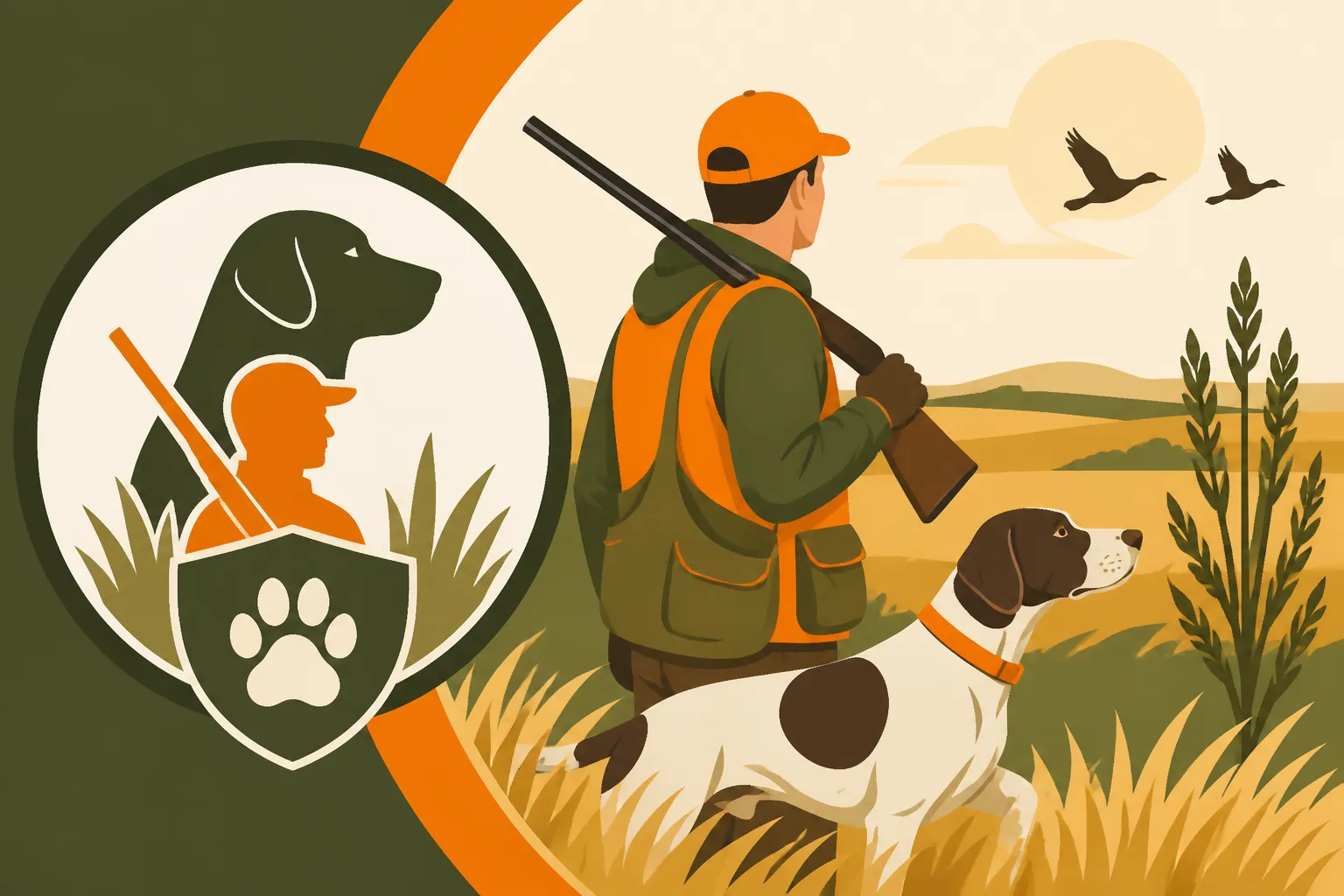
Saskatchewan is world-renowned for its bird hunting, and using dogs for retrieving waterfowl or flushing upland species is not only legal—it is highly encouraged as a matter of conservation and ethical game recovery. Whether you are hunting ducks in a flooded pothole or set up for Waterfowl Hunting Saskatchewan’s Grain Fields, working a retriever dramatically reduces the loss of unrecovered birds.
Under provincial regulations, dogs may be used freely to hunt, flush, and retrieve migratory game birds (such as ducks, geese, and sandhill cranes) as well as upland game birds (including sharp-tailed grouse, Hungarian partridge, and ruffed grouse). There are no restrictions on the breed of dog you can use for game birds, provided the animal is kept under control and actively engaged in bird hunting activities. However, handlers must ensure their dogs do not run at large on private land without landowner consent, nor disrupt livestock grazing nearby.
When hunting migratory birds, remember that federal migratory bird regulations run concurrently with provincial laws. Your dog must not be used to harass non-game migratory species, nest sites, or protected wetland habitats. Keep a close eye on your dog when working slough margins, as prairie potholes often harbor non-game wildlife that is strictly protected under provincial conservation acts.
Big Game Prohibitions and Wounded Animal Tracking Laws
The legal landscape changes dramatically when transitioning from feathers to fur. In Saskatchewan, the general rule regarding big game is strict: you cannot use dogs to hunt, pursue, chase, or harass big game animals such as whitetail deer, mule deer, elk, moose, or pronghorn. Attempting to use dogs to drive deer out of an aspen bluff or using hounds to track big game while carrying a firearm is illegal and carries severe penalties under provincial wildlife legislation.
This law is designed to prevent drive-hunting with dogs, coursing, and unnecessary stress on big game populations—especially during severe cold spells when energy preservation is critical for animal survival. If you are out scouting or hunting big game yourself, leaving your dog secured in your vehicle or at home is the safest way to avoid any suspicion of illegal pursuit.
The question often arises regarding tracking wounded big game. While some jurisdictions allow leashed tracking dogs for trailing wounded big game animals, hunters in Saskatchewan must adhere strictly to current Ministry of Environment guidelines. Unless specific legal provisions or permits explicitly allow leashed tracking in designated zones, using dogs to locate big game—even wounded animals—can easily cross into illegal pursuit if firearms or weapons are present. Before embarking on a hunt where you intend to use a dog for recovery, consult the latest official provincial hunting guide or speak directly with a local Conservation Officer to clarify local enforcement policies.
Furbearer and Predator Hunting Restrictions
Using dogs to hunt predators and furbearers in Saskatchewan carries a distinct set of operational rules. Coyotes and wolves are major focal points for predator hunters across the province, but the regulations surrounding canine assistance vary depending on whether you hold a trapping licence, a fur licence, or are hunting under a general big game or predator framework.
Houndsmen who use trained packs to run coyotes must pay strict attention to land access laws and seasonal closures. Running dogs across private cropland or community pastures without express permission from the landowner or pasture manager is a direct violation of provincial trespass laws. Additionally, dogs cannot be used to pursue furbearers on Crown land during times when big game seasons are open in that Wildlife Management Zone (WMZ), unless specifically exempted. This prevents conflict between hound packs and big game hunters sitting in tree stands or ground blinds.
If you are using digital mapping apps like GoHunt to locate open hunting ground, always double-check the regulatory status of the WMZ you are in. Boundaries between farmland and provincial forest blocks often carry differing rules regarding predator control and dog usage, making spatial awareness vital before unhooking a leash.
Species-Specific Practical Guidelines and Field Scenarios
To help you stay compliant while maximizing your success in the field, it helps to look at how these regulations apply across real-world hunting scenarios. Different game species require different approaches, dog behaviors, and handler precautions.
| Game Category | Dog Usage Legal Status | Key Legal Requirement | Primary Field Risk / Consideration |
|---|---|---|---|
| Waterfowl & Migratory | Fully Legal | Must be retrieving/flushing birds | Cold water hypothermia, hidden wire |
| Upland Game Birds | Fully Legal | Controlled hunting/flushing | Porcupines, skunks, property lines |
| Big Game (Deer, Elk, etc) | Strictly Prohibited | Cannot chase, track, or drive game | Heavy fines, weapon/gear confiscation |
| Coyotes & Predators | Restricted / Conditional | Landowner permission mandatory | Running onto private/posted property |
Bird Dogs in the Field: Prairie Coulees to Grain Stubble
When taking a pointer, setter, or retriever into the field for upland birds, success hinges on controlling your dog’s range and keeping them focused on targeted cover. Whether you are Using a Pointing Dog on Saskatchewan Prairie to pinpoint hidden coveys or Using a Flushing Dog in Thick Cover along overgrown shelterbelts, keeping the dog within reasonable whistle or electronic collar range keeps you compliant with field control expectations.
In prairie environments, birds like sharp-tailed grouse and Hungarian partridge frequently hold along crop edges, abandoned farmyards, and coulee bottoms. When Walking Up Sharptails on Saskatchewan Grassland, a dog that ranges two miles ahead is not only frustrating—it can flush birds off private land you do not have permission to hunt, or push game across busy grid roads.
- Whistle and E-Collar Training: Ensure your recall command is absolute. Prairie winds can carry sound away quickly, making vibrating or tone-based e-collars an invaluable safety tool.
- Property Line Awareness: Use GoHunt on your mobile device to track your real-time GPS location relative to quarter-section lines so your dog does not cross onto posted land while trailing an upland scent trail.
- Vehicle Safety: Always secure your dogs in properly insulated crates when traveling between bluffs or fields on rough grid roads. Unsecured dogs in truck beds face extreme hazard from sudden stops or gravel dust exposure.
Tracking Wounded Game: What the Law Allows
One of the most emotionally challenging situations a hunter faces is losing an blood trail on a hit animal. Naturally, hunters want to use every tool available, including a dog’s incredible sense of smell, to make a clean recovery. However, applying a dog to a big game recovery scenario in Saskatchewan requires extreme legal caution.
If you shoot a big game animal during a regular rifle or bow season—such as while Whitetail Hunting in Saskatchewan—you cannot simply go back to your truck, grab your dog, and walk into the bush with your rifle over your shoulder. Conservation Officers viewing that situation may reasonably interpret it as using a dog to hunt or drive big game.
If you find yourself in a scenario where blood trails vanish in dense timber:
- Mark the Last Known Sign: Clearly flag the last drop of blood, track, or disturbance before leaving the area.
- Contact a Conservation Officer: Call your local Ministry of Environment office or Turn In Poachers (TIP) line before introducing a canine to the trail. Explain your situation and ask for clarification on local policy regarding leashed recovery assistance.
- Leave Weapons Behind: If local policies permit a physical search assist, ensure no firearms or hunting weapons are present during the search to eliminate any suggestion of an ongoing active hunt.
- Prepare for Cold Care: If game recovery stretches into the evening hours, follow proper cold-weather meat protocols as outlined in Field Dressing in Saskatchewan’s Deep Cold to ensure meat quality remains intact once recovered.
Predator and Coyote Hunting Considerations
Hunting coyotes with sight hounds or trailing hounds is a deeply rooted tradition for some prairie outdoorsmen, but it requires rigorous oversight. Coyotes move fast, and a pack of hounds on a hot track can cover multiple quarter sections in a matter of minutes.
The primary legal trap for predator hound handlers is trespass. In Saskatchewan, hunters must obtain explicit permission before entering private land, whether on foot, in a vehicle, or via a hunting dog. If your dogs cross a fence line onto posted land or a non-permitted quarter section while pursuing a coyote, you as the owner can be held legally responsible for trespass and allowing dogs to run at large.
To protect yourself and your dogs during predator hunts, cross-reference your hunting area on GoHunt beforehand to identify wide contiguous stretches of permitted or public land. Keep communication radios charged, track your dogs with GPS collar handhelds, and cut off hounds before they approach cattle pastures, yard sites, or unpermitted boundary fences.
Land Access, Canine Safety, and Digital Scouting
Hunting with dogs in Saskatchewan is as much about managing logistics and safety as it is about scent work and retrieves. The province’s climate, terrain, and land ownership patterns present unique challenges that every canine handler must prepare for before stepping into the field.
Landowner Permission and Livestock Protocol
Saskatchewan’s trespass legislation places the burden of proof entirely on the hunter. You must have explicit permission from the landowner or legal occupant before entering private land to hunt, and this rule applies equally to your hunting dogs. A dog running through a quarter section of unharvested crop or working a willow bluff on private land without prior consent is considered an illegal entry.
Furthermore, farm country is working country. Cattle, horses, and bison are pastured across vast stretches of southern and central Saskatchewan. A hunting dog that harasses livestock—even out of playfulness or curiosity—creates a major liability situation. Farmers have legal rights to protect their livestock from domestic animals running at large.
- Ask Early: When securing hunting access, explicitly mention that you intend to hunt with a dog. Many landowners who welcome bird hunters appreciate knowing a retriever will be used to harvest game ethically.
- Verify Pasture Status: Always ask if livestock are currently grazing in the quarters you intend to hunt. If cattle are present, hunt a different quarter or keep your dog tightly heeled until you are clear of the area. Review Saskatchewan Landowner Permission Law for detailed guidance on legal access protocols.
- Respect Standing Crops: Never send a dog into standing unharvested crops like canola, wheat, or lentils. Walking or running dogs through unharvested fields causes crop damage and ruins relationships with farm hosts.
Managing Harsh Prairie Conditions and Canine Safety
Saskatchewan weather can shift from mild autumn sunshine to lethal freezing blizzards in a matter of hours. Working a dog under these extreme environmental conditions requires proactive care and constant monitoring.
Early autumn hunts bring hazards like porcupines, skunks, dry field stubble, and hidden barbwire fences buried in high grass. Razor-sharp grain stubble from cut wheat or barley can slice open dog footpads in short order, while thick needle-and-thread grass can penetrate skin and cause painful infections. Later in the season, plunging temperatures and ice-crusted water hazards become the dominant threat to retrieving breeds.
| Seasonal Hazard | Primary Risk to Hunting Dogs | Prevention & Handler Action Steps |
|---|---|---|
| Razor Stubble | Paw pad cuts, skin abrasions | Use fitted cordura dog boots; apply pad toughener |
| Porcupines | Quills in mouth, nose, and chest | Carry quill pliers, hemostats, and dog first aid |
| Freezing Sloughs | Hypothermia, thin ice breakthrough | Equipper neoprene vest; keep drying towels in rig |
| Barbwire Fences | Severe chest & leg lacerations | Keep dog in tight range near field fence lines |
| Deep Snow & Cold | Ice balling between toes, frostbite | Apply paw wax; limit outdoor exposure times |
Waterfowlers hunting late-season ducks must monitor water temperatures closely. When retrieving in near-freezing water, fit your retriever with a thick neoprene vest for buoyancy and thermal insulation. Keep heavy dry towels, a heated vehicle, and an insulated dog mat ready at your blind setup. Never force a dog to make long swims through breaking slush ice, as muscle fatigue and hypothermia can set in rapidly.
Equipment, Licensing, and Digital Mapping Tools
Modern technology has made hunting with dogs vastly safer and more manageable, but it must be paired with accurate regulatory knowledge.
Before heading into the field, ensure your dog is equipped with high-visibility gear. A bright orange vest or collar is essential during autumn bird seasons to ensure your dog is easily distinguishable from coyotes, wolves, or deer by other hunters in the area. GPS tracking collars (such as Garmin systems) are legally permitted for keeping tabs on gun dogs and hounds, providing critical peace of mind when hunting thick boreal fringe cover or rolling grassland.
Digital scouting tools are equally vital for keeping your hunt lawful. By using GoHunt on your smartphone or tablet, you can layer property boundaries, Crown land designations, and Wildlife Management Zone lines directly onto high-resolution satellite imagery. This enables you to:
- Map Out Safe Zones: Identify quarter sections where you have secured landowner permission and visually highlight areas to avoid.
- Monitor Dog Trajectories: Match your GPS dog tracking collar handheld with your GoHunt mapping layers to ensure your dog’s search pattern remains strictly within legal boundaries.
- Locate Water Resources: Pinpoint sloughs, dugouts, and field approaches before releasing your dog into dry prairie terrain.
- Avoid Active Cattle Grazing: Identify fenced community pastures or leased land where livestock may be present.
By taking time to understand provincial regulations, respecting private property, prioritizing canine health, and utilizing powerful mapping software like GoHunt, you can enjoy world-class hunting with your dog across Saskatchewan’s incredible landscapes while staying fully compliant with the law.
Disclaimer
This article is for general informational purposes only and does not constitute professional advice. Laws, prices and regulations vary by location and change over time. Consult a qualified professional for guidance on your specific situation.