Using a Flushing Dog in Thick Cover
Hunting thick cover in Saskatchewan can feel like searching for a needle in a haystack – frustrating, exhausting, and often fruitless when you're going it alone. Those dense willow thickets, tangled alder bottoms, and impenetrable stands of young spruce are perfect hideouts for grouse, partridge, and even whitetails, but getting them out can be a real challenge. This guide will walk you through the immense advantages of employing a well-trained flushing dog, helping you turn those frustrating moments into successful hunts in Saskatchewan's most formidable terrain.
Understanding Thick Cover in Saskatchewan
Hunting in Saskatchewan isn't just about wide-open fields and prairie coulees. While those certainly exist, a significant portion of our best hunting grounds, especially for upland birds and certain big game, lies hidden within incredibly dense, often unforgiving, cover. This isn't just brush; it's a labyrinth of vegetation designed by nature to protect its inhabitants. Navigating these areas solo can be a slow, noisy, and often disheartening endeavor, as game hears you long before you ever get close, slipping away unnoticed into the depths of the brush.
Types of Thick Cover Hunters Face
Saskatchewan offers a diverse range of landscapes, each with its own brand of dense cover that can make or break a hunt. Knowing what you're up against is the first step in formulating a successful strategy. The Aspen Parkland, for instance, is a mosaic of cultivated fields, grasslands, and aspen bluffs, but within those bluffs, you'll find thick willow and young poplar stands that grow incredibly dense. These areas are magnets for ruffed grouse and snowshoe hare, providing them with both shelter and forage. When hunters refer to Hunting Saskatchewan's Aspen Parkland Bluffs, they often mean navigating these very types of choked-up areas.
Moving further north into the Forest Fringe or the Boreal Forest, the cover becomes even more formidable. Here, you're dealing with tangled masses of black spruce, tamarack swamps, and alder thickets so dense you can barely push through them. These are prime habitats for spruce grouse, and often serve as bedding areas for moose and deer seeking refuge from pressure or harsh weather. Along river valleys and slough edges, you’ll encounter dense cattails and brush that can hold anything from ducks to pheasants, making it impossible to see more than a few feet in front of you. Even on the open prairie, deep coulees and shelterbelts can create surprisingly thick pockets of cover that hide upland birds like Hungarian Partridge on Saskatchewan Farms or Walking Up Sharp-Tailed Grouse in Saskatchewan, which use these areas for wintering and escape.
Why Thick Cover Holds Game
Game animals, whether it's a cunning whitetail buck or a wary ruffed grouse, gravitate towards thick cover for very clear reasons: safety and sustenance. Dense vegetation offers unparalleled protection from predators, including human hunters. It provides concealment, making it incredibly difficult for a hunter to spot an animal before it flushes or slips away unnoticed. The tangle of branches, stems, and leaves also muffles sound, allowing animals to hear approaching threats long before they are seen, giving them ample time to escape. This is particularly true for grouse, which often hold incredibly tight, relying on their camouflage and the density of their habitat to avoid detection until the last possible moment.
Beyond protection, thick cover also provides critical food sources and thermal regulation. Many berries, browse, and seeds thrive in these sheltered environments, offering a consistent food supply throughout the seasons. In winter, dense coniferous stands or thick willow can provide vital thermal cover, shielding animals from biting winds and heavy snow, conserving their energy. For a hunter trying to access these areas without a dog, it quickly becomes apparent that you’re often just pushing game from one side of a thicket to the other, never quite getting a clear shot. The game simply knows how to work the cover better than a solo human ever could, making a flushing dog an invaluable asset.
The Role of a Flushing Dog
When you find yourself staring down a wall of impenetrable brush, the thought of trying to push through it alone can be daunting. This is precisely where a flushing dog becomes not just a helper, but an absolute game-changer. They transform a seemingly impossible task into a strategic, often highly productive, hunt. Unlike a Using a Pointing Dog on Saskatchewan Prairie which might offer a different style, a flusher brings a direct, aggressive approach to dense vegetation.
How Flushing Dogs Work
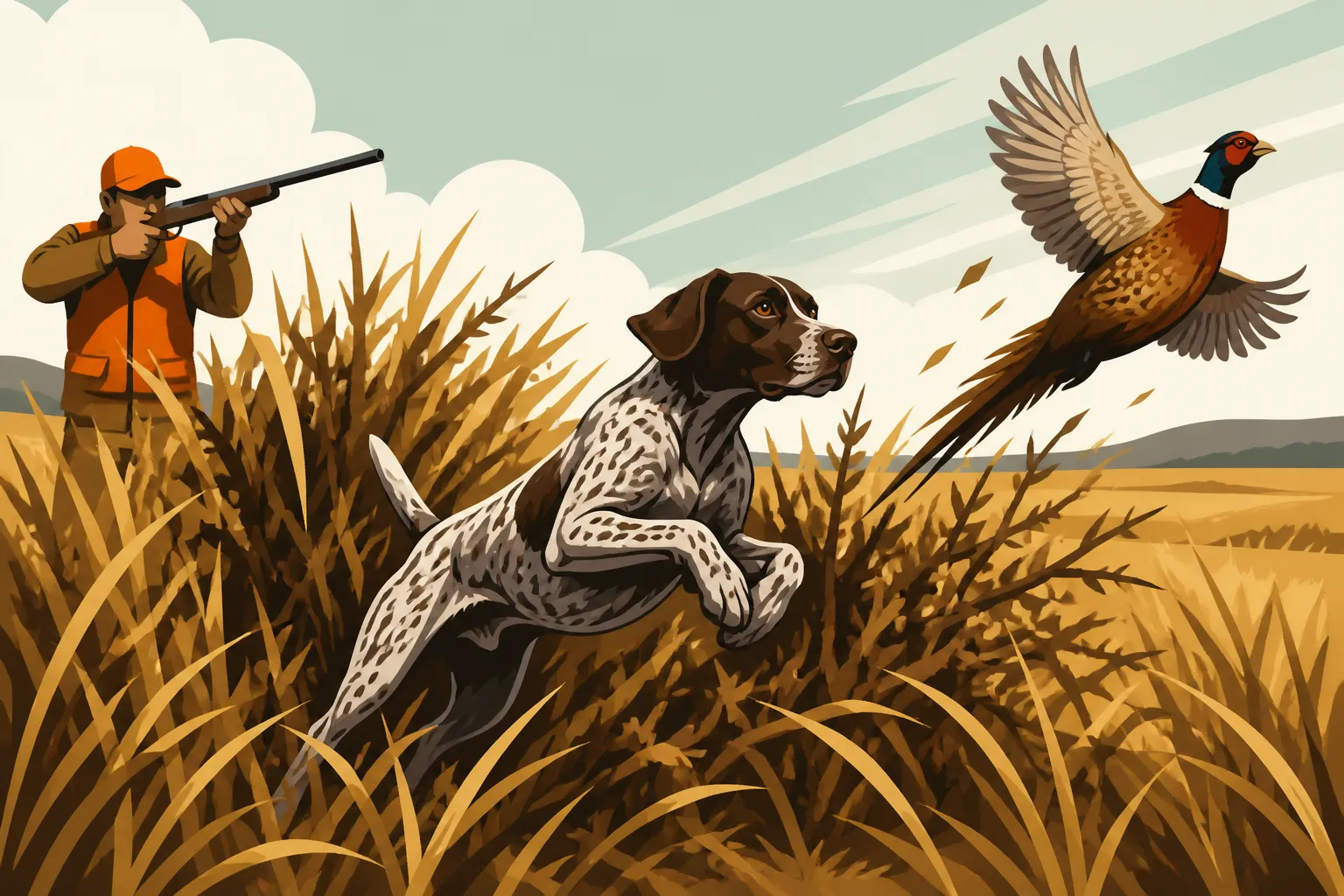
A flushing dog's primary directive is to find game and then push it, or "flush" it, into the air or out of cover within range of the hunter. Unlike pointing dogs, which freeze when they scent game, flushers are bred and trained to work cover thoroughly, methodically, and at a brisk pace. They use their superior sense of smell to locate birds or small game holding tight in dense vegetation. Once they find that scent cone, they move in purposefully, forcing the game to take flight or run, making it available for a shot. This direct engagement is what makes them so effective in Saskatchewan's toughest spots.
The effectiveness of a flushing dog in thick cover lies in their ability to penetrate areas a human hunter simply cannot. They can weave through dense undergrowth, tunnel through tangles of willow, and push deep into cattail marshes, creating disturbance and driving game out. Their enthusiasm and relentless energy compel even the tightest-holding birds to break cover. This allows the hunter to position themselves strategically on the edges of the cover, ready for the flush, rather than fighting through it blindly. It’s a partnership where the dog does the heavy lifting of finding and moving game, and the hunter is prepared for the shot, making the most of those fleeting opportunities.
Benefits of Using a Flusher
The advantages of hunting with a flushing dog, particularly in Saskatchewan's challenging thick cover, are manifold. Firstly, and perhaps most obviously, they dramatically increase your chances of finding and flushing game. Where you might walk past numerous birds simply because you couldn't see or reach them, a flushing dog's nose and drive will uncover them. This means more opportunities for ethical shots and a higher success rate, especially for species like Ruffed Grouse Hunting Saskatchewan's Bush Trails.
Secondly, flushers significantly improve game recovery. How many times have you marked a bird down in a dense thicket, only to spend agonizing minutes or even hours searching for it, often to no avail? A well-trained flushing dog, with its keen nose, will typically find downed game quickly and efficiently, even in the densest cover. This reduces wasted game and ensures a respectful retrieve. Thirdly, and not to be underestimated, hunting with a flushing dog adds an incredible layer of enjoyment to the experience. Watching a dog work, seeing their excitement, and sharing in their success creates a bond and a memory far richer than a solo hunt. It turns a solitary pursuit into a dynamic team effort, enhancing the entire Upland Bird Hunting in Saskatchewan experience. Lastly, they offer a crucial safety aspect by potentially alerting you to other wildlife in thick areas, like a hidden black bear, giving you more time to react.
Training and Preparing Your Flushing Dog for Saskatchewan's Conditions
Bringing a flushing dog into the Saskatchewan hunting landscape requires more than just basic obedience. Our varied terrain and often extreme weather demand specific training and preparation to ensure both your dog's success and safety. A well-prepared dog is a more effective and safer hunting partner.
Essential Commands and Socialization
Before your dog ever sets paw in a real hunting scenario, a solid foundation of obedience is paramount. Commands like "heel," "sit," "stay," "come," and "whoa" are non-negotiable. "Heel" is crucial for controlled movement, especially when navigating tricky terrain or approaching a shooting lane. "Come" is vital for safety, allowing you to recall your dog from potential hazards or when game is out of range. "Whoa" or a similar stop command, teaches the dog to stop and hold its position, which can be incredibly useful if a bird flushes unexpectedly or you need to re-evaluate your position, preventing an accidental shot or a lost bird.
Beyond basic commands, socialization is key. Your dog needs to be comfortable around other people, other dogs (if you hunt with a group), and different environments. Exposure to loud noises, like gunshots, must be done gradually and positively to prevent gun shyness. Start with distant, low-caliber shots while the dog is focused on a positive activity, slowly reducing the distance and increasing volume. Furthermore, introduce your dog to various types of cover during training walks, allowing them to gain confidence navigating different textures and densities of vegetation. This early exposure, reinforced with positive training, builds a confident and reliable hunting partner. Many hunters find resources from organizations like the Saskatchewan Wildlife Federation or even online platforms like GoHunt invaluable for training tips and finding local dog training groups that can help with these specialized skills.
Acclimatizing Your Dog to Local Terrain and Weather
Saskatchewan's landscape is diverse, from the thick willows of the parkland to the dense spruce of the Boreal Forest. Your dog needs to be physically conditioned and mentally prepared for these specific challenges. Regular exercise is essential, building stamina for long days in the field. This isn't just a leisurely walk; it's about conditioning them to move through resistance – tall grass, muddy ground, and brush. Gradually introduce them to various terrains they'll encounter: rocky areas, soft marshland, dense brush, and even small bodies of water. This builds muscle, coordination, and confidence, ensuring they are ready for any challenge the province throws their way.
Weather in Saskatchewan can be unpredictable. Early season hunts might be warm and dry, leading to concerns about overheating and dehydration. Later in the season, you could be facing freezing temperatures and deep snow. Train your dog in all types of weather conditions you expect to hunt in. Ensure they have appropriate protective gear if needed, like booties for icy or rough terrain, and a dog vest for visibility and protection from thorns and scrapes. Always carry water and offer frequent breaks, especially on warm days. In colder weather, watch for signs of hypothermia and provide warmth and shelter when resting, especially if you find yourself Hunting Whitetails at Thirty Below. Understanding how your dog performs in different conditions, from a Hunting Saskatchewan Winter Weather Safely perspective, is crucial for both their well-being and your hunting success. Proper nutrition, especially during hunting season, is also paramount to maintain their energy levels and overall health for sustained effort.
Practical Strategies for Hunting with a Flushing Dog
Having a well-trained flushing dog is only half the battle; knowing how to effectively integrate them into your hunting strategy in thick Saskatchewan cover is the key to consistent success. It's a partnership that requires communication, trust, and a clear understanding of roles, ensuring both hunter and dog are working in harmony.
Working the Cover Effectively
When approaching a promising patch of thick cover, whether it's a willow run for whitetails or a slough edge for ducks, the first step is to assess the wind direction. You want your dog working into the wind, allowing them to catch the scent of game more effectively. Position yourself on the downwind side, or along a known escape route, ready for birds or game animals to flush out. Give your dog a clear command to "hunt" or "seek," and allow them to work the cover methodically. A good flushing dog will naturally quarter back and forth, covering the ground efficiently, rather than just running wild. You can guide them with hand signals or verbal cues, directing them into particularly dense pockets where game is likely holding.
It's a dance between you and your dog. As they push through the cover, you need to move deliberately, staying within shooting range and constantly scanning for flushing birds. Don't rush. Let the dog do its job thoroughly. If you know a specific area is likely to hold game, like a Hunting a Willow Run for Whitetails or a small bluff, send your dog in and keep your eyes peeled. Remember that some game, like ruffed grouse, will hold incredibly tight, almost letting the dog step on them before flushing. Be prepared for sudden, close-range flushes. After a flush, command your dog to "whoa" or "sit" if a bird is downed, then send them for the retrieve. If no shot is taken, let them continue hunting the cover, ensuring no other birds were missed. This systematic approach, rather than just crashing through, is what makes a flushing dog invaluable.
Safety Considerations for Dog and Hunter
Safety is paramount when hunting with a flushing dog, especially in challenging Saskatchewan environments. For the dog, visibility is crucial. Always equip your dog with a bright blaze orange vest. Not only does this make them easily visible to you, but it's also essential if hunting with others, distinguishing them from game animals. Consider a GPS collar, especially if hunting in dense bush where your dog might temporarily disappear from sight. Products like those offered by GoHunt often include integrated GPS tracking features that can be lifesavers for finding a dog that has gone off-course or is injured, providing peace of mind in vast landscapes.
Protect your dog from the elements and terrain. Inspect their paws regularly for cuts or thorns, especially after a hunt in abrasive cover. Carry a small first-aid kit specifically for your dog, including antiseptic wipes, bandages, and paw balm. Be mindful of potential hazards such as barbed wire fences, open water, thin ice, or dangerous wildlife like coyotes or even moose. When retrieving downed game, particularly if it's a larger bird or small game animal, ensure the area is clear and safe before sending your dog. For the hunter, always know where your dog is before taking a shot. Maintain a clear shooting lane and never swing on game if your dog is in the line of fire. Communicate with hunting partners about your dog's position and movements. Adhering to these safety protocols ensures a successful and enjoyable outing for everyone involved, especially important when Reading Sign After Fresh Saskatchewan Snow where visibility might be reduced.
Choosing the Right Flushing Dog Breed
Deciding which flushing dog breed is right for you is a significant decision that depends on your specific hunting style, the types of game you pursue, and your home environment. Different breeds bring different strengths to the field, and selecting wisely can make a world of difference in your hunting experience.
Popular Breeds and Their Traits
Several breeds excel as flushing dogs, each with distinct characteristics that make them suitable for different hunting scenarios. Spaniels, particularly English Springer Spaniels and Cocker Spaniels, are perhaps the most renowned flushers. Springer Spaniels are known for their boundless energy, eagerness to please, and relentless drive in cover. They work close to the hunter, quartering efficiently, and have an excellent nose for upland birds like ruffed grouse and Hungarian partridge. Cocker Spaniels are smaller but equally tenacious, perfect for tighter cover and often favored by hunters seeking a more compact companion who can navigate dense undergrowth with ease.
Another strong contender is the Labrador Retriever. While often thought of as a retrieving specialist, Labs possess an incredible drive and excellent noses that make them formidable flushers, especially for waterfowl and larger upland birds like pheasants. Their robust build allows them to handle tough terrain and cold water with ease, making them versatile hunting partners. They can be trained to flush and then sit patiently on command, retrieving after the shot, offering a strong blend of skills. Other breeds like German Shorthaired Pointers, while primarily pointers, can also be trained to flush on command, offering a versatile option for hunters interested in both pointing and flushing game across varied Saskatchewan landscapes.
What to Look for in a Prospect
When selecting a flushing dog prospect, whether a puppy or an adult, several key factors should guide your decision. First, look at the dog's lineage and observe the temperament of the parents. A good flushing dog should have a strong prey drive, indicating an inherent desire to find and pursue game, but also a biddable nature, meaning they are eager to please and receptive to training. Avoid dogs that seem overly timid or aggressive, as these traits can be problematic in a hunting partner, making training an uphill battle.
Physical characteristics are also important. A good flushing dog needs to be athletic, with strong legs and a hardy coat suitable for Saskatchewan's varied conditions. Consider their size; a smaller dog might navigate dense tangles more easily, while a larger dog might have more stamina for extensive coverage. Observe how they interact with their littermates or people; signs of curiosity and boldness are often good indicators of a dog that will enthusiastically tackle new environments and learn quickly. Finally, talk to reputable breeders, many of whom are hunters themselves, and can offer valuable insights into specific bloodlines known for their flushing capabilities. Using online platforms like GoHunt can sometimes connect you with breeders or local hunting dog clubs that offer valuable advice and even training resources tailored to specific breeds and hunting styles, ensuring you find the best fit for your hunting adventures.
| Breed | Primary Strength | Size | Energy Level | Temperament | Ideal Game | Notes |
|---|---|---|---|---|---|---|
| English Springer Spaniel | Relentless flushing, close-working | Medium | High | Eager to please, biddable | Ruffed Grouse, Huns, Pheasant, Snowshoe Hare | Excels in thick brush, natural quartering pattern. |
| Cocker Spaniel | Agile in tight cover, strong nose, compact | Small | Medium-High | Affectionate, intelligent | Woodcock, Quail, smaller upland birds | Great for dense, confined spaces; needs consistent exercise. |
| Labrador Retriever | Powerful retriever, versatile flusher, water-loving | Large | High | Loyal, intelligent, trainable | Waterfowl, Pheasant, larger upland birds | Can be trained to flush on command; excellent in cold water and tough terrain. |
| German Shorthaired Pointer | Versatile, strong pointer/flusher, keen nose | Large | Very High | Energetic, devoted | Multi-species (pointers first, flush second) | Requires extensive exercise; strong natural hunting instincts; needs specific flushing training for this role. |
Disclaimer
Hunting is an inherently risky activity. Always prioritize safety, adhere to all Saskatchewan hunting regulations, and exercise good judgment in the field. The information provided in this guide is for informational purposes only and should not replace professional training, local knowledge, or official safety guidelines.