Reporting a Poacher in Saskatchewan
It’s a frustrating, disheartening moment when you’re out enjoying Saskatchewan’s incredible natural beauty, perhaps on a scouting trip or during the season, and you stumble upon something that just doesn’t feel right. Maybe it’s an animal left to rot, signs of hunting out of season, or someone engaging in truly questionable practices. As ethical hunters and stewards of the land, these situations can leave us feeling helpless or angry. This guide is all about empowering you to act responsibly and effectively when you suspect poaching in Saskatchewan, ensuring our wildlife resources are protected for everyone.
Why Reporting Poachers Matters to All Hunters
When we talk about hunting, we're not just talking about harvesting an animal; we're talking about a tradition, a lifestyle, and a deep connection to the land and its creatures. Poaching undermines all of that. It's not just a minor infraction; it's a direct assault on conservation and the integrity of hunting itself.
Protecting Wildlife Populations
Every legal hunter understands that hunting regulations are in place for a reason: to manage wildlife populations sustainably. These rules, often set with extensive scientific research and public consultation, ensure that game animals thrive, maintaining healthy numbers and balanced ecosystems. When poachers operate, they disregard these carefully established limits and seasons, often targeting animals indiscriminately, at vulnerable times, or in prohibited areas. This can have devastating consequences.
For instance, hunting big game like moose or elk out of season, or taking more than the legal limit, can disproportionately impact breeding populations or lead to localized depletion of a herd. If someone is illegally taking antlered whitetail bucks year-round, it can skew the age structure of the local deer herd, potentially leading to fewer mature animals for legitimate hunters in the future. It’s not just about the one animal; it’s about the ripple effect across an entire population and habitat. Protecting these resources means ensuring everyone follows the rules, and that includes calling out those who don't. Our collective diligence is a critical line of defense for Saskatchewan's game animals.
Upholding Ethical Hunting Standards
Let's be honest, the non-hunting public often paints all hunters with the same brush. The actions of a few bad apples, those who poach or act unethically, can quickly tarnish the reputation of the vast majority of us who adhere to the rules, respect wildlife, and practice fair chase. We spend countless hours scouting, preparing, and investing in licenses and equipment, all while understanding the privilege and responsibility that comes with hunting.
Poachers, on the other hand, show a blatant disregard for these values. They steal from all of us – from the wildlife itself, from the ethical hunter who patiently waits for a legal opportunity, and from the public trust that allows us to continue our traditions. When we report poaching, we're not just enforcing laws; we're actively demonstrating our commitment to ethical behavior and showing that we, as hunters, hold ourselves and our community to a higher standard. It sends a clear message that illegal activity has no place in the hunting community, helping to preserve the future of hunting for generations to come.
Understanding What Constitutes Poaching in Saskatchewan
It can sometimes be difficult to discern between an honest mistake or a minor rule bend and outright poaching. The line can feel blurry, but understanding the common types of violations can help you identify suspicious activity more clearly.
Common Violations to Watch For
Poaching encompasses a wide range of illegal activities, from minor infractions to serious criminal acts. Here are some of the most common types of violations encountered in Saskatchewan:
- Hunting Out of Season: This is one of the most straightforward violations. If you see someone hunting deer in July, or ducks in April, that’s a clear red flag. Different species have specific open and closed seasons. For example, knowing the nuances of Saskatchewan Whitetail Season Dates by Zone or Saskatchewan Moose Season Dates is crucial for legitimate hunters, and these dates are often ignored by poachers.
- Hunting Without a Proper License or Tag: Every hunter in Saskatchewan needs a valid licence and tags for the species they are pursuing. People hunting without having gone through the proper channels, like setting up a Saskatchewan's HAL Account and Licensing or buying their Saskatchewan Hunting Licences and What They Cost, are poaching. This also includes using someone else’s tag or harvesting an animal for which they don't have a specific tag, such as an antlered deer with an antlerless tag.
- Hunting in Closed Areas: Certain areas are off-limits to hunting, such as within the boundaries of a town, a provincial park, or a wildlife refuge. If you see hunting activity in an area you know to be prohibited, like when hunting in a provincial park, it’s a violation.
- Exceeding Bag Limits: Regulations specify how many animals of a certain species a hunter can take in a day or a season. Taking more than the legal limit, whether it’s deer or waterfowl (e.g., Duck Daily Bag Limit by Species), is poaching.
- Illegal Methods of Hunting: Saskatchewan has strict rules about how animals can be hunted. This includes prohibitions on hunting from a vehicle, shooting across a public road, using artificial light (spotlighting) at night, or using certain types of firearms or bows that don't meet legal requirements. Saskatchewan Rules on Baiting Big Game is another area where regulations must be followed closely, as improper baiting can be illegal for certain species.
- Wasting Game Meat: Ethical hunters prioritize using the meat from their harvest. Intentionally abandoning edible portions of game is a serious violation under Rules on Wasting Game Meat and is a particularly egregious form of poaching in the eyes of many.
- Trespassing to Hunt: Hunting on private land without permission, regardless of whether you have a valid tag, is also an act of poaching or illegal activity. Understanding Saskatchewan Landowner Permission Law is vital for all legitimate hunters.
The Nuances of Observing Suspicious Activity
It’s easy to jump to conclusions, but it's important to be observant and objective. Not every odd situation is poaching, but many are. For example, seeing a vehicle slowly cruising a field edge after dark might just be a farmer checking their land, or it could be someone spotlighting for deer. The key is to gather details without putting yourself in harm's way.
Look for patterns: Is the vehicle repeatedly driving the same remote road at unusual hours? Do you consistently find discarded animal parts (like hides or entrails) in the same inappropriate location, outside of typical gut piles? Pay attention to the types of animals being targeted and the manner in which they appear to have been taken. A well-placed, clean shot is one thing; a questionable shot followed by a hasty retrieval or an animal left suffering is another. Sometimes, the gut feeling you get from a situation is the first clue. Trust that feeling, but back it up with as much objective observation as possible.
How to Safely and Effectively Report Poaching
You’ve seen something suspicious, your gut is telling you it's wrong, and you've gathered a few details. Now what? The most crucial step is to report it to the authorities.
The Critical "Turn In Poachers" (TIP) Line
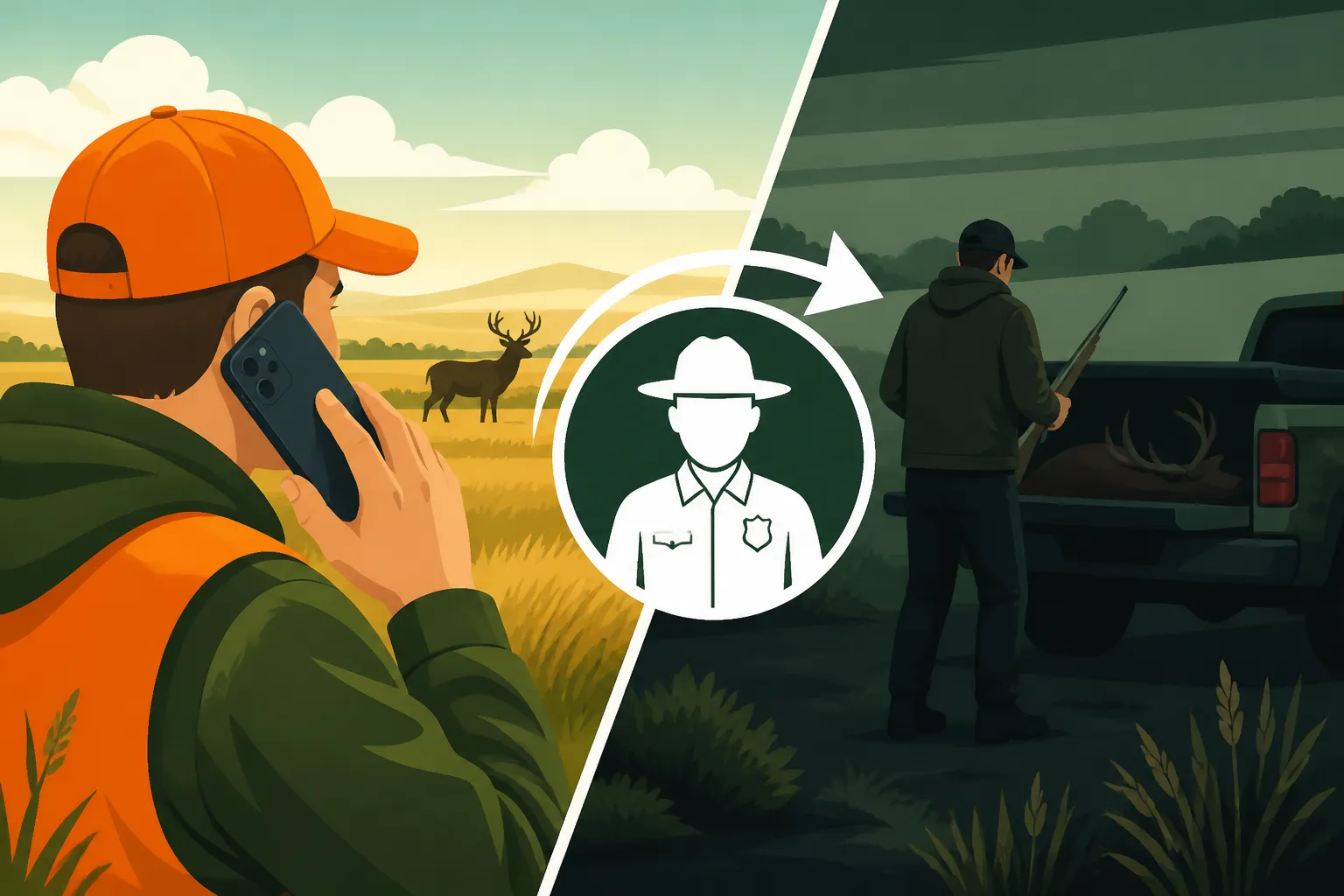
Saskatchewan has a dedicated, province-wide hotline specifically for reporting poaching and other wildlife violations: the Turn In Poachers (TIP) Line. This is your direct link to the professionals who can investigate and enforce wildlife laws – the Conservation Officers.
The TIP Line operates 24 hours a day, 7 days a week. The number is 1-800-667-7561. If you're in an emergency situation where public safety is at risk, you should always call 911 first. For all other poaching incidents, the TIP Line is the number to call.
One of the most important aspects of the TIP Line is the promise of anonymity. You do not have to give your name or any identifying information. This is a critical feature that protects callers from potential retaliation and encourages more people to report without fear. Conservation Officers are highly trained individuals dedicated to protecting Saskatchewan's natural resources. When you call the TIP Line, you're not just speaking into the void; you're providing vital intelligence that allows these officers to do their job, leading to investigations and potential penalties for a hunting violation. For more information, you can always refer to the official Saskatchewan's Turn In Poachers Line resources.
Gathering Essential Information for Your Report
When you call the TIP Line, the more specific and detailed information you can provide, the better. Your observations are crucial to help Conservation Officers act swiftly and effectively. However, never put yourself in danger to gather information. Your safety is paramount. Do not confront suspects or intervene.
Here’s a breakdown of the critical details to try and remember or discreetly note:
| Information Type | Specific Details to Look For |
|---|---|
| Date & Time | Exact date and time the activity occurred or was observed. |
| Location | As precise as possible. Include road names/numbers, nearest towns, GPS coordinates, land descriptions (e.g., "NE quarter of Section 12, Township 30, Range 15, W3M"), or distinguishing landmarks (e.g., "south side of the old barn, next to the willow bluffs"). Apps like GoHunt can be invaluable for pinpointing exact coordinates and property lines. |
| Individuals Involved | Number of people, physical descriptions (height, build, hair color, clothing, approximate age), any names if overheard, distinguishing features (tattoos, scars). |
| Vehicle Information | Make, model, color, license plate number (and province if possible), any distinguishing features (dents, decals, lifted, unique tires), direction of travel. |
| Specific Activity | What exactly did you see? (e.g., "shot fired after dark," "animal loaded quickly into truck," "snare found near fence line," "hunting in a standing canola field edge"). |
| Species Involved | Type of animal (e.g., white-tailed deer, moose, waterfowl, elk), number of animals, whether it was harvested, wounded, or abandoned. |
| Evidence | Any physical evidence left behind (e.g., spent shell casings, blood trails, discarded carcasses or parts, a recently hung stand on a Saskatchewan bush edge). Do not touch or disturb potential evidence. |
| Your Contact Info (Optional) | If you are willing to be contacted for follow-up, provide your name and phone number. Remember, you can remain completely anonymous. |
A good practice is to carry a small notepad or use your phone's notes app to jot down details as they happen. If you can safely take a photo or video from a distance without being detected, that can also be incredibly helpful, but again, safety first.
What Happens After You Make a Report
Once you've made your report to the TIP Line, that information is immediately dispatched to Conservation Officers in the relevant area. They will assess the information and prioritize the response based on the severity and immediacy of the threat.
The officers will use your details to initiate an investigation. This might involve patrolling the reported area, looking for physical evidence, tracking vehicle movements, or conducting surveillance. The more accurate and comprehensive your information, the higher the chance of a successful investigation. It's important to understand that not every report leads to an immediate arrest or charge. Investigations can take time, and officers often need to gather more evidence or observe repeated behavior. However, every piece of information contributes to their intelligence gathering and helps them build a case or identify repeat offenders. Even if you don't see immediate action, know that your report is taken seriously and contributes to ongoing efforts to curb illegal activity and protect Saskatchewan’s wildlife.
Common Concerns and Misconceptions About Reporting
Many people hesitate to report poaching, and those hesitations often stem from valid concerns or misunderstandings about the process. Let's tackle some of these head-on.
Anonymity and Fear of Retaliation
This is perhaps the biggest reason why many hesitate to pick up the phone. The fear of personal confrontation, backlash, or even violence from individuals engaged in illegal activity is a very real and understandable concern. You might live in a small community, or recognize the vehicle, and worry about being identified.
Let me be absolutely clear: The Saskatchewan Turn In Poachers (TIP) Line offers strict anonymity. You are never required to provide your name, phone number, or any other identifying information. Conservation Officers are trained to handle these reports with the utmost discretion. Their priority is the safety of the public and the protection of wildlife. They will not reveal your identity to the suspected poachers or to anyone else. Your role is simply to provide information, not to get involved in the enforcement side. Trust in the system designed to protect both the wildlife and the concerned citizens who report violations. Your anonymity is a cornerstone of this program, allowing you to contribute to conservation without putting yourself at risk.
Doubting if Something "Counts" as Poaching
Another common reason for hesitation is uncertainty. You might think, "Is this really poaching, or just someone being careless?" or "Maybe they have a permit I don't know about." It's easy to second-guess yourself, especially if the situation isn't a glaring, obvious act of waste or an animal being taken completely out of season.
Here’s the rule of thumb: when in doubt, report it. You are not expected to be a legal expert or a Conservation Officer. Your job is simply to report suspicious activity. It is the responsibility of the professionals to investigate and determine if a violation has occurred. Don't worry about wasting their time. Conservation Officers would much rather receive a report that turns out to be nothing than miss a critical opportunity to stop illegal activity because someone was too hesitant to call. Your observation, no matter how minor it seems to you, could be the missing piece of a larger puzzle they're already investigating, or it could prevent future, more serious infractions.
The Difference Between Reporting and Accusation
It’s important to understand that when you call the TIP Line, you are not accusing someone of a crime. You are merely providing information about an observation you made. The act of reporting is about bringing suspicious activity to the attention of law enforcement, allowing them to do their job of investigating and enforcing the law.
You are not the judge, jury, or executioner. Your role is similar to that of a witness providing testimony. You saw something, you reported it. The subsequent investigation, collection of evidence, and legal process are entirely handled by trained professionals. This distinction is vital for ethical hunters. We are not vigilantes; we are concerned citizens and stewards of wildlife who understand the importance of respecting the rule of law. By making a report, you are upholding these principles, not engaging in personal attacks or baseless accusations.
Working Together for Saskatchewan's Wildlife
Protecting Saskatchewan's wildlife is a shared responsibility, and every hunter plays a vital role in ensuring these resources remain healthy and abundant for future generations.
The Role of the Hunting Community
As hunters, we are on the front lines, so to speak. We spend countless hours in the fields, forests, and wetlands of Saskatchewan. We are often the first to notice unusual activity, signs of illegal harvesting, or changes in wildlife behavior that might indicate poaching is occurring. This intimate connection with the land and its creatures makes us invaluable allies in the fight against poaching.
Our commitment to ethical hunting and conservation is what truly defines us. By actively participating in the reporting process, we demonstrate our collective dedication to responsible wildlife management. It’s about more than just filling a tag; it's about being true custodians of the land. When we take a stand against poachers, we strengthen the integrity of our hunting heritage and ensure that non-hunters see us as true conservationists, not just harvest-focused individuals. Every report, every phone call, helps to safeguard our shared passion and legacy.
Supporting Conservation Efforts
Reporting poachers is one of the most direct and impactful ways to support broader conservation efforts in Saskatchewan. The fees from hunting licenses, habitat certificates like the Saskatchewan's Wildlife Habitat Certificate, and even the fines collected from poaching violations often go directly back into wildlife management, research, and habitat improvement projects.
When poaching goes unchecked, it not only directly harms wildlife populations but also undermines the very funding mechanisms that support conservation. Illegal harvesting means fewer animals for legal hunters, which can, in turn, impact future license sales and associated revenues. By reporting, you are contributing to a healthier ecosystem, ensuring that wildlife populations can recover and thrive, and supporting the long-term sustainability of hunting in Saskatchewan. It’s an essential act of stewardship that benefits all game species, from the majestic White-Tailed Deer, Saskatchewan's Signature Animal to the various Saskatchewan's Ducks and Geese that migrate through our prairies. Your vigilance helps ensure that Saskatchewan remains a haven for wildlife and a fantastic destination for ethical hunters.
Disclaimer
The information provided in this guide is for general informational purposes only and does not constitute legal advice. While efforts have been made to ensure accuracy, hunting regulations can change, and interpretations may vary. Always consult the official Saskatchewan hunting regulations and speak directly with a Conservation Officer for the most current and authoritative information.