Legal Firearms and Bows for Big Game
Trying to navigate the precise regulations for what firearms and archery equipment are legal for big game hunting in Saskatchewan can feel like deciphering an ancient scroll. It's not always straightforward, and making a mistake can jeopardize your hunt and even lead to fines. This comprehensive guide is here to cut through the confusion, helping you understand the specific legal requirements for rifles, shotguns, muzzleloaders, and archery equipment so you can hit the field with confidence and stay on the right side of the law.
Understanding the Foundation of Saskatchewan's Hunting Regulations
Before we dive into the specifics of each weapon type, it's crucial to grasp the overarching principles that guide Saskatchewan's hunting regulations. The province is committed to ensuring ethical hunting practices, hunter safety, and the conservation of its diverse big game populations. These regulations aren't just arbitrary rules; they're designed to ensure humane kills, prevent unnecessary suffering, and maintain a sustainable hunting environment for everyone. Ignoring them isn't just a risk to your hunting season; it's a disregard for the animals and the sport itself.
General Principles for Legal Hunting Equipment
Saskatchewan's hunting regulations for big game are built on a few core principles. First and foremost, any equipment used must be capable of delivering a swift, humane kill. This means there are minimum power and penetration standards for both firearms and archery gear. You can't just take any old rifle or bow out and expect it to be legal for a moose or a whitetail. Secondly, there are specific prohibitions on certain types of equipment, like fully automatic firearms or poisoned arrows, which are deemed unsafe or unethical. Finally, the regulations often differentiate between residents and non-residents, and sometimes even specific zones or species might have unique rules, though for general legal weapon types, the rules usually apply across the board. Always double-check the current Saskatchewan Hunters' and Trappers' Guide, as regulations can and do change from year to year.
The Importance of Hunter Education and Safety
Beyond the physical equipment, your knowledge and safe handling practices are paramount. The province mandates Saskatchewan Hunter Education Requirements for a reason: to ensure every hunter understands not just the rules, but also the ethics, safety protocols, and biological aspects of hunting. This education covers everything from firearm safety to game identification and responsible land use. Remember, the safest hunting trip is the one where everyone knows the rules, respects the land, and handles their equipment with utmost care. A weapon is only as safe as the person wielding it.
Rifles: The Backbone of Big Game Hunting
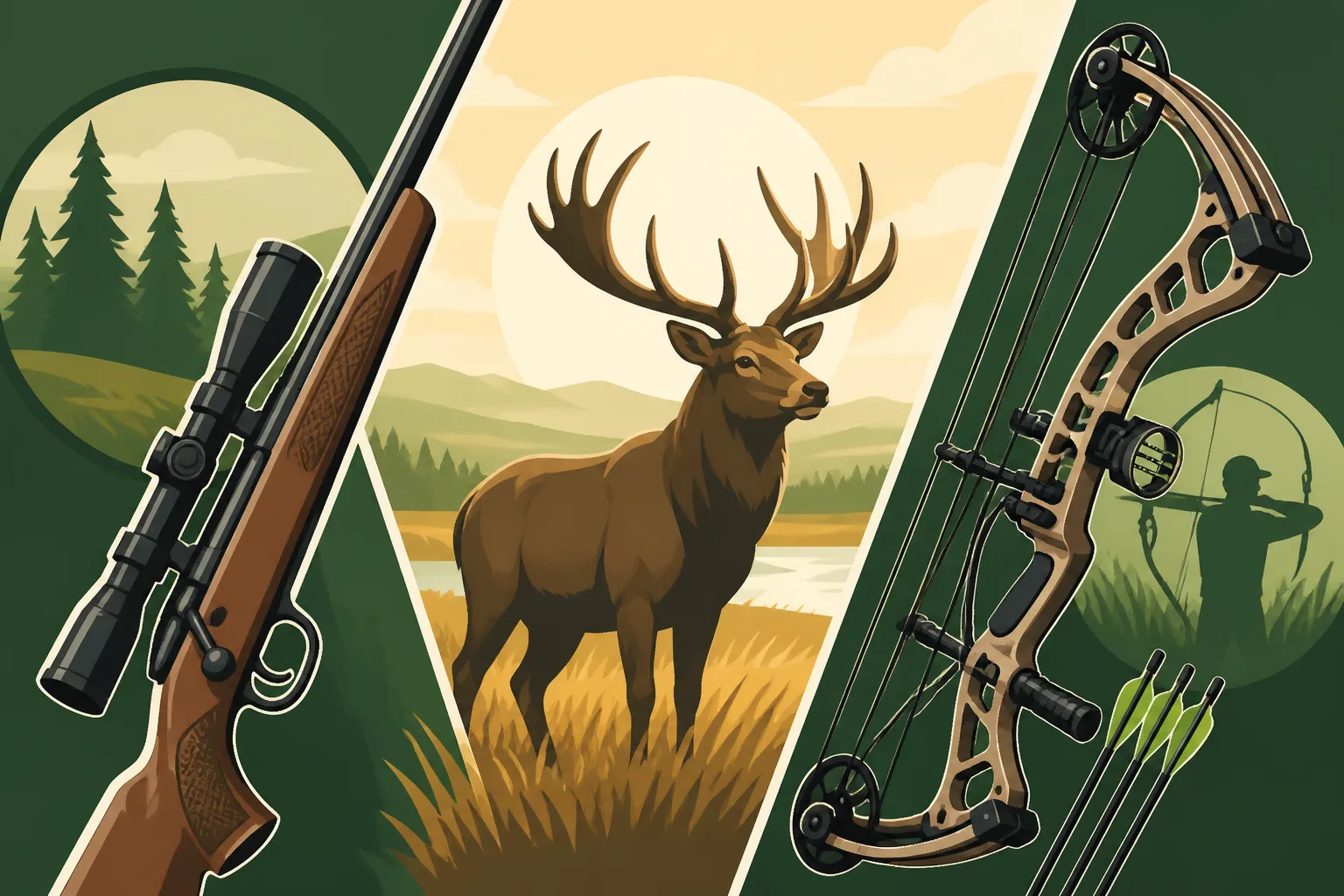
For many hunters chasing big game in Saskatchewan, a rifle is their go-to choice. Its power, accuracy, and versatility make it incredibly effective across the province's varied terrain, from the open prairie to dense bush. However, simply owning a rifle isn't enough; it has to meet specific legal criteria for big game.
Minimum Caliber and Bullet Requirements
Saskatchewan has clear rules regarding the minimum caliber and bullet construction for big game. You cannot use just any rifle for deer, moose, elk, or bear. The law specifies that any centerfire rifle used for big game must be at least .23 caliber (5.8 mm). This isn't just about bullet diameter, though. It's about the kinetic energy and bullet construction required to ensure a humane kill.
Bullets must be designed to expand upon impact, maximizing energy transfer and creating a sufficient wound channel. Full metal jacket (FMJ) or military-style bullets, which are designed for penetration without expansion, are generally prohibited for hunting big game, as they can lead to wounded animals that escape and suffer. Think of common calibers like .243 Winchester, .270 Winchester, .30-06 Springfield, .308 Winchester, 7mm Remington Magnum, or .300 Winchester Magnum – these are all popular choices that comfortably meet the legal requirements and are highly effective for various species. For larger animals like moose or elk, many hunters prefer stepping up to calibers that deliver even more knockdown power, such as a .338 Winchester Magnum, but even a well-placed shot from a .30-06 is more than adequate. For detailed specifics, a quick check of the regulations for Legal Rifle Calibres for Big Game is always a good idea, though we'll cover the main points here.
Practical Considerations for Rifle Hunting
Choosing the right rifle for Saskatchewan hunting involves more than just legal compliance; it also means considering the terrain, species, and weather conditions. If you're Rifle Hunting Saskatchewan's Whitetail Rut in the forest fringe, shots might be shorter and quicker, favouring a faster-handling rifle. If you're glassing vast stretches of open prairie for mule deer, longer-range accuracy becomes paramount. Many hunters prefer a bolt-action rifle for its inherent accuracy and reliability in harsh conditions. Semi-automatic rifles are legal as long as they meet Canadian firearms regulations and big game caliber requirements, but their magazine capacity may be restricted.
Consider the weight of the rifle if you'll be doing a lot of walking, and definitely consider how it handles in cold weather. Lubricants can thicken, and cold metal can be unforgiving on bare hands. When hunting in late fall or early winter, Hunting Saskatchewan Winter Weather Safely becomes a major factor in all equipment choices, including your rifle. Always sight in your rifle thoroughly before the season, practicing from various positions you might encounter in the field.
Shotguns and Muzzleloaders: Specialized Big Game Options
While rifles dominate the big game scene, shotguns and muzzleloaders offer specialized hunting experiences, each with their own set of rules and limitations. They are often chosen for specific hunting situations or simply out of a passion for traditional hunting methods.
Legal Shotgun Requirements
For big game in Saskatchewan, shotguns are typically restricted to slugs only, not buckshot or birdshot. The regulations stipulate that shotguns must be 20 gauge or larger, and must be loaded with a single projectile (slug). This means your trusty 12-gauge with deer slugs is perfectly legal, provided it meets Canadian firearms licensing requirements. Shotguns are often favoured in areas with denser cover or where shorter-range shots are expected, such as some parts of the forest fringe. Their effective range for slugs is generally much shorter than that of a rifle, usually under 100-150 yards, which influences hunting tactics. Modern rifled barrels and sabot slugs can extend this range and accuracy significantly, but it's crucial to understand these limitations.
When Hunting a Saskatchewan Bush Bluff, a shotgun with slugs can be very effective for those close-quarter encounters, offering quick handling in thick cover. However, always ensure your firearm is properly sighted in with the specific slug ammunition you intend to use, as accuracy can vary wildly between brands and types.
Muzzleloader Rules and Traditional Hunting
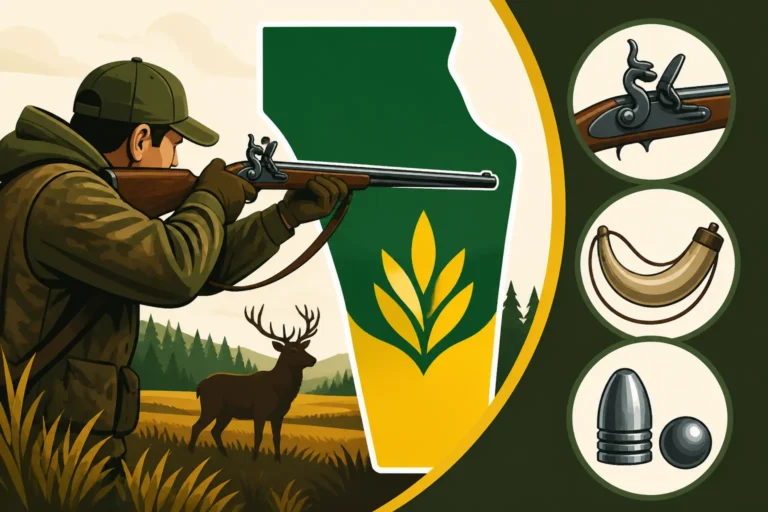
Muzzleloaders, including both traditional black powder rifles and modern inline muzzleloaders, provide a unique and challenging hunting experience. Saskatchewan allows the use of muzzleloading rifles for big game, but they must be at least .50 caliber. This ensures they have sufficient power to ethically take larger game. The regulations often specify the type of projectiles and powder that can be used. For example, solid lead projectiles or saboted bullets are generally permitted, but certain modern propellants might be restricted.
Many hunters choose muzzleloaders for a dedicated "primitive weapon" season if one is offered, or simply to add an extra layer of challenge to their hunt. Saskatchewan Muzzleloader Equipment Rules are quite specific, often requiring traditional open sights (though some modern seasons may allow scopes) and defining the type of powder. The effective range of a muzzleloader is usually comparable to, or slightly less than, a shotgun with slugs, making careful stalking and close-range shooting skills essential. Hunting with a muzzleloader in Saskatchewan can be an incredibly rewarding experience, connecting you to older hunting traditions and demanding a higher degree of skill and patience.
Archery Equipment: The Ultimate Challenge
Archery hunting demands a significant commitment to practice, scouting, and close-quarters strategy. It's a deeply personal and often humbling pursuit, and Saskatchewan offers fantastic opportunities for bowhunters, particularly during the early archery seasons. However, the legal requirements for archery equipment are just as stringent as for firearms, if not more so, to ensure ethical and humane harvesting.
Minimum Draw Weight and Arrow Specifications
For big game in Saskatchewan, there are specific minimum draw weights for bows. For compound bows and recurve bows, the minimum draw weight is 40 pounds (18 kilograms). This ensures enough kinetic energy to drive a broadhead through the vital organs of a large animal. Arrows must be at least 24 inches (61 cm) long and weigh a minimum of 300 grains (19.4 grams) including the broadhead. The broadhead itself is crucial: it must be an "unbarbed, cutting-edge" broadhead with a minimum cutting width of 7/8 inches (2.2 cm). Expandable or mechanical broadheads are legal, provided they meet the minimum cutting diameter when deployed.
These rules, sometimes referred to as Bow Draw Weight Rules in Saskatchewan, are in place to ensure maximum penetration and a quick, clean kill. A low draw weight or insufficient arrow weight simply won't reliably achieve the penetration needed for big game. Bowhunting Saskatchewan's September Season often sees hunters out in warmer weather, but the principles of shot placement and proper equipment remain consistent regardless of the temperature. Practice, practice, practice is the key to becoming a proficient bowhunter. This includes shooting from various positions, at different distances, and under simulated hunting pressure.
Ethical Considerations and Shot Placement
Beyond the legal requirements, ethical considerations are paramount for bowhunters. The short effective range of a bow means that shot placement is absolutely critical. A clean, humane kill requires hitting the animal's vitals, typically the lung/heart area. This often means waiting for the animal to be broadside or slightly quartering away. Unlike a rifle, there's no margin for error with a bow; a poor shot rarely results in a quick harvest. Many experienced archers adhere to a personal maximum range, often between 20-40 yards, regardless of how far they can shoot on a target.
Bowhunting requires intimate knowledge of animal behaviour and keen woodsmanship. You'll spend countless hours scouting, analyzing wind patterns, and perfecting your setup. Using tools like GoHunt can be immensely helpful for identifying prime hunting locations, mapping out access points, and understanding topography, which are all vital for setting up successful archery ambushes. For example, knowing the prevailing wind direction on a specific day can make or break a hunt from a treestand or ground blind.
Crossbows: A Modern Archery Alternative
Crossbows have gained popularity in recent years, offering a different approach to archery hunting. In Saskatchewan, crossbows are legal for big game, but like all other equipment, they come with their own set of regulations and considerations.
Crossbow Legal Specifications
In Saskatchewan, a crossbow used for big game must have a minimum draw weight of 150 pounds (68 kilograms). The bolt (arrow) used must be at least 18 inches (45.7 cm) long and weigh a minimum of 300 grains (19.4 grams), including the broadhead. As with vertical bows, the broadhead must be an unbarbed, cutting-edge type with a minimum cutting width of 7/8 inches (2.2 cm).
These regulations for When a Crossbow Is Legal to Use are designed to ensure that crossbows are capable of delivering enough power and penetration for a humane kill. Crossbows offer some advantages, such as higher velocity and often greater accuracy at longer distances compared to traditional bows, and they can be easier to master for hunters who may have physical limitations or less time for extensive practice with a vertical bow.
Advantages and Limitations of Crossbow Hunting
One of the primary advantages of crossbows is their ease of use and often superior accuracy, particularly for newer archers or those with shoulder injuries that prevent them from drawing a compound or recurve bow. They can be held at full draw for an extended period, which is a significant benefit when waiting for the perfect shot opportunity. However, crossbows are often heavier and bulkier than vertical bows, making them less manoeuvrable in dense cover. Reloading can also be slower and more involved than nocking an arrow on a compound bow.
The effective range of a crossbow for big game is typically similar to or slightly greater than that of a compound bow, usually pushing out to 50-60 yards for a skilled shooter, depending on the specific setup. Still, it is crucial to understand that even with a crossbow, ethical shot placement is non-negotiable. Always practice extensively at various ranges and angles to understand your crossbow's capabilities and your own limitations. Just like traditional archery, success with a crossbow depends on disciplined practice and understanding the animal's anatomy. When preparing for your hunt, platforms like GoHunt can help you scout your chosen Hunting a Saskatchewan Quarter Section or other public land areas, giving you an edge in finding the perfect ambush spot.
Essential Gear and Planning Beyond the Weapon
While the legal specifications for your chosen weapon are paramount, a successful and responsible big game hunt in Saskatchewan involves much more than just the firearm or bow itself. It requires careful planning, the right accessory gear, and a deep understanding of the environment and regulations.
Ammunition and Broadhead Selection
Choosing the right ammunition for your rifle or the correct broadhead for your bow is just as important as the weapon itself. For rifles, select bullets specifically designed for big game hunting, focusing on controlled expansion and weight retention. Different bullet weights and designs perform differently, so match your ammunition to your specific quarry and expected shooting distances. For instance, a heavy, bonded bullet might be ideal for moose, while a slightly lighter, faster bullet could be excellent for deer. Always test your chosen ammunition extensively with your rifle to ensure accuracy and consistent performance.
For archers, broadhead selection is a constant topic of debate. Fixed-blade broadheads are known for their reliability and penetration, while mechanical broadheads offer a larger cutting diameter upon impact, often resulting in quicker blood trails. Both are legal in Saskatchewan, provided they meet the minimum cutting width. The most important factor is a sharp broadhead and one that flies true with your specific arrow and bow setup. A dull broadhead, regardless of its design, is unethical and ineffective.
Optics and Accessories
High-quality optics are indispensable for big game hunting in Saskatchewan. Binoculars, spotting scopes, and rifle scopes all play critical roles. Good binoculars (10×42 or 10×50 are popular) will save your eyes and help you locate game efficiently, especially when Glassing a Saskatchewan Coulee for Mule Deer or scanning vast fields. A reliable rifle scope with clear glass and precise adjustments is essential for accurate shot placement, particularly at longer ranges or in low light conditions. Rangefinders have become standard equipment for both rifle and bow hunters, taking the guesswork out of estimating distances and dramatically improving accuracy. For archers, a rangefinder is absolutely non-negotiable for ethical shooting.
Other crucial accessories include appropriate clothing for the weather, a quality backpack, field dressing tools, and navigation equipment (GPS, maps like those found on GoHunt, compass). Your Winter Truck Kit for a Saskatchewan Hunt should also include emergency supplies, given the unpredictable nature of prairie and northern bush weather.
| Weapon Type | Minimum Caliber/Gauge/Draw Weight | Projectile Type | Key Legal Considerations | Typical Effective Range for Big Game | Common Use Cases |
|---|---|---|---|---|---|
| Rifle | .23 caliber (5.8 mm) | Expanding, non-FMJ centerfire bullet | Must be centerfire. Prohibited: fully automatic. Magazine capacity might be restricted depending on federal firearms regulations. | 100-400+ yards | Versatile for all big game species across varied terrain (open prairie, forest fringe, bush). Excellent for longer shots. |
| Shotgun | 20 gauge | Single slug projectile | Must be loaded with slugs only, no buckshot or birdshot. | 50-150 yards | Denser cover hunting, areas where shots are expected to be closer. |
| Muzzleloader | .50 caliber | Lead projectile or saboted bullet | May have restrictions on scope use (often traditional open sights are required). Specific powder types may be mandated. | 50-150 yards | Traditional hunting experience, dedicated primitive weapon seasons, close-range hunting. |
| Compound/Recurve Bow | 40 lbs draw weight | Arrow (min 24"), Broadhead (min 7/8" cut, unbarbed) | Arrow min 300 grains. Broadheads must be cutting-edge, unbarbed, and meet minimum cutting width. Prohibited: poisoned arrows. | 20-40 yards | Early archery seasons, close-quarters hunting, challenging personal pursuit. Requires significant practice and stealth. |
| Crossbow | 150 lbs draw weight | Bolt (min 18"), Broadhead (min 7/8" cut, unbarbed) | Bolt min 300 grains. Broadheads must be cutting-edge, unbarbed, and meet minimum cutting width. Prohibited: poisoned arrows. | 20-60 yards | Good for hunters with physical limitations, offers good accuracy, can be held at full draw. Bulkier than vertical bows. |
Permits, Licenses, and Zone Specifics
Beyond your gear, understanding the administrative side of hunting is non-negotiable. Always ensure you have your Saskatchewan's HAL Account and Licensing up-to-date, along with all necessary big game tags and permits for the species and zone you intend to hunt. Saskatchewan Big Game Season Dates vary by zone and species, so knowing precisely when and where you can hunt is crucial. Some zones might have specific restrictions or additional requirements, so always consult the current Saskatchewan Hunters' and Trappers' Guide for the latest information. Utilizing digital mapping applications like GoHunt can help you overlay Wildlife Management Zone (WMZ) boundaries, private land, and Crown land, ensuring you're always hunting legally within your permitted area. Before you head out, familiarize yourself with Reading a Saskatchewan WMZ Map Before You Go and understand the specific regulations for that zone.
Final Thoughts on Responsible Hunting
Ultimately, choosing the right legal firearm or bow for big game in Saskatchewan is a foundational step, but it’s part of a much larger commitment to responsible and ethical hunting. It’s about more than just meeting the minimum requirements; it’s about choosing equipment you are proficient with, continually honing your skills, and respecting the game you pursue.
Whether you prefer the thunder of a rifle shot, the quiet challenge of a muzzleloader, or the intense satisfaction of a bow hunt, Saskatchewan offers incredible opportunities. The vast landscapes that define the province, from the prairie plains ideal for Mule Deer Hunting Saskatchewan's Prairie to the dense forests holding trophy Moose Hunting Saskatchewan's Farmland and Forest, present unique challenges and rewards for every type of hunter. Your knowledge of regulations, coupled with dedicated practice and a deep respect for the outdoors, will pave the way for successful and memorable hunts here for years to come. Remember, the journey and the experience are as important as the harvest itself.
Disclaimer
The information provided in this article is for general guidance only and is not a substitute for the official Saskatchewan hunting regulations. Hunters are responsible for consulting the current Saskatchewan Hunters' and Trappers' Guide and provincial wildlife legislation before hunting. Regulations can change, and it is the individual hunter's responsibility to stay informed and compliant with all applicable laws.