Why Deer Move Into Standing Crop
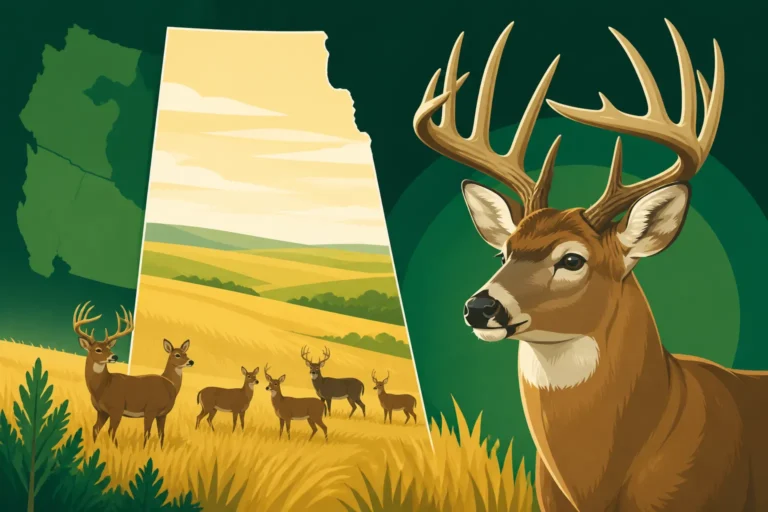
There's nothing quite like the sight of a magnificent Saskatchewan whitetail or mule deer, except perhaps the frustration of knowing they're just out of reach, tucked deep inside a vast standing crop. Many hunters scratch their heads, wondering why deer seem to vanish into these agricultural fortresses, making them incredibly difficult to pattern and pursue. This guide dives deep into the irresistible allure of standing crops for Saskatchewan's deer, exploring why they choose these fields, what kinds of crops they prefer, and how you can adapt your hunting strategies to these challenging environments.
Why Standing Crops are an Irresistible Sanctuary for Deer
For a deer, a standing crop isn't just a field; it's a multi-purpose paradise offering everything they need to survive and thrive, often right on the edge of prime hunting pressure. Think about it from their perspective: endless food, dense cover, and a sense of security that vast open spaces simply can't provide. It’s a literal buffet combined with a fortress.
The Allure of Abundant Food and Nutrition
First and foremost, standing crops are a massive food source. From early fall through to late season, these fields are packed with readily available nutrition. Whitetails and mule deer are opportunistic browsers, and a field of unharvested peas, lentils, or especially standing corn, represents a concentrated, high-calorie meal ticket. They don't have to expend much energy seeking out scattered browse or acorns; it's all there, within a few steps. This is particularly true as the natural forage begins to fade with the coming cold. A deer can spend hours, even days, just moving through a standing field, constantly munching and building up the fat reserves they need for the harsh Saskatchewan winter. You might see them entering a field at dusk, only to disappear completely, emerging hours later, or even the next morning, having spent the entire night feasting. The nutritional value of these crops is undeniable, contributing significantly to the impressive body weights and antler growth we often see in Saskatchewan deer.
Unparalleled Cover and Thermal Regulation
Beyond food, standing crops offer incredible cover. We're not talking about a thin stand of sparse willows; imagine rows upon rows of dense vegetation, often several feet high, creating a labyrinth that effectively conceals deer from predators, including hunters. This dense cover provides both visual and scent-blocking capabilities. A deer can lie down, completely out of sight, and the swirling air currents within the crop rows can confuse a hunter's scent cone, making it incredibly hard for them to detect danger until it's too close. This is especially true for crops like standing corn, which can be over eight feet tall, creating a truly impenetrable fortress.
Moreover, standing crops offer crucial thermal regulation. On a scorching early-season day, the canopy of a tall crop can provide significant shade, keeping deer cooler than they would be in open pasture or sparse bush. Conversely, as the temperatures plummet in late fall and early winter, these dense fields act as insulators, blocking biting winds and helping deer retain body heat. This thermal advantage means less energy expenditure for the deer, making them even more likely to choose a crop field for bedding and loafing.
The Psychological Security of the Labyrinth
Finally, there's the psychological aspect. Within a standing crop, a deer feels safe. They can move freely, knowing that detection is difficult. This sense of security reduces stress, allowing them to conserve energy and focus on feeding. It's a vast, intricate escape route where they can vanish at will. When pressured, a deer knows it can dive into a standing field and simply disappear, using the dense rows as a shield. This is a huge factor, especially during high-pressure times like the peak of the rifle season when hunter activity is at its highest. You'll often find mature bucks, wise to hunting pressure, opting for the impenetrable security of a standing crop over even seemingly good bush cover. It's their safe haven, their personal fortress where they can outwit even the most determined hunter.
Different Crop Types and Deer Preferences in Saskatchewan
Not all standing crops are created equal in the eyes of a deer. While most will offer some level of food and cover, certain types present a more attractive package, depending on the stage of growth and the time of year. Understanding these preferences can give you a crucial edge.
The Big Draws: Corn, Peas, and Lentils
When it comes to prime deer habitat within standing crops, corn is often king, especially for whitetails. A standing cornfield offers the ultimate trifecta: abundant, high-energy food (the kernels), dense visual cover, and excellent thermal protection. Deer will literally live in cornfields for weeks, rarely venturing out during daylight. They can bed, feed, and travel within the rows, often creating intricate trails and tunnels. Hunting a Field of Standing Corn is a unique challenge that many Saskatchewan hunters face.
Peas and lentils are also major attractions, particularly in the early to mid-fall. These legumes are packed with protein and are highly palatable to deer. While they don't offer the same towering cover as corn, a thick stand of peas or lentils still provides good visual cover, especially when they've grown a bit taller and begun to tangle. Deer will often browse these fields extensively, especially during low-light hours. If you're scouting, look for tracks and droppings deep within these fields, not just on the edges.
Other Attractive Options: Canola, Wheat, and Barley
While not quite as high on the deer menu as corn or legumes, standing canola fields can still be a significant draw, especially earlier in the season. The green foliage is palatable, and once it gets taller, it offers surprisingly good cover. You might not think of a bright yellow field as a hiding spot, but once you're on your hands and knees in a mature canola field, you'll realize just how dense it can be. Deer will bed down in these fields, particularly during the middle of the day. Hunting a Standing Canola Field Edge can be productive if you catch them transitioning.
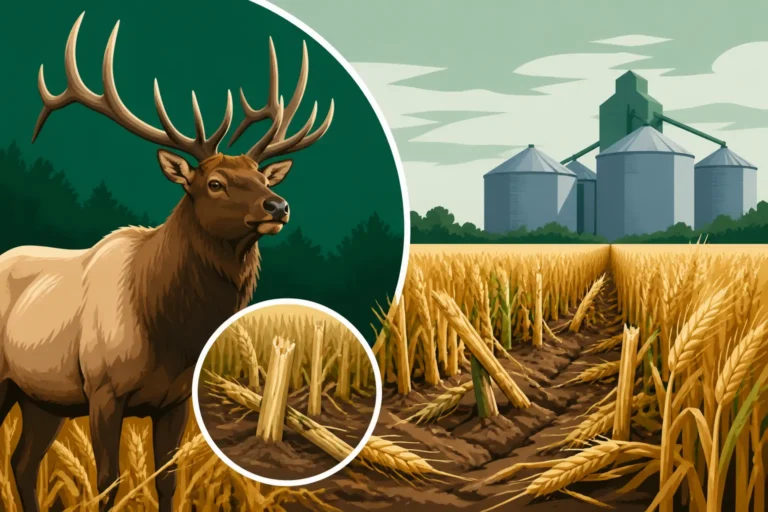
Wheat and barley fields, especially if they are late to harvest or left standing into the colder months, can also provide refuge. While the mature grain itself might not be the primary draw (deer typically prefer green forage or more palatable seeds), the sheer volume of stalks offers cover. In areas where other prime cover is limited, a standing wheat or barley field becomes a critical sanctuary. Deer will often utilize these fields for bedding, especially in windy conditions or during periods of heavy hunting pressure. They provide a dense, relatively dry place to escape the elements.
Here's a quick comparison of common Saskatchewan crop types and their appeal to deer:
| Crop Type | Primary Attractant | Cover Quality | Thermal Protection | Typical Deer Use |
|---|---|---|---|---|
| Corn | High-energy grain | Excellent (tall) | Excellent | Bedding, feeding, all-day security |
| Peas/Lentils | High-protein forage | Good (dense) | Good | Primary feeding, mid-day bedding |
| Canola | Green forage, seeds | Good (dense) | Good | Feeding (early season), mid-day bedding |
| Wheat/Barley | Stalks, residual grain | Fair to Good (density) | Fair to Good | Bedding, escape cover (especially late season) |
| Alfalfa (Hay) | Forage | Excellent (dense) | Good | Feeding, bedding (often preferred in summer) |
| Flax | Limited | Poor to Fair | Poor to Fair | Less preferred, occasional travel/minor browsing |
How Weather and Season Influence Crop Use by Deer
The dynamics of deer behavior in standing crops are far from static; they shift dramatically with the changing seasons and the whims of Saskatchewan's weather. Understanding these influences is key to predicting where deer will be and when.
The Impact of Early Fall and Pre-Rut Conditions
As autumn truly sets in, and especially before the heavy frosts or snow, standing crops become even more critical. During the early archery season, when temperatures can still be quite warm, deer will seek the cool, shaded interior of standing fields during the heat of the day. This provides a refuge from insects and direct sunlight. As the rut approaches in late October and early November, bucks begin to expand their ranges, but they still rely on these dense crops for security when not actively chasing does. A big buck might stage in a standing cornfield all day, only to emerge at last light to scent check field edges or intercept does.
Consider a warm, sunny October day. A big buck might be bedded deep in a canola field, completely undetectable from the outside. He’ll wait for the cooler evening air before making his move. Conversely, if it's a blustery, cold day, the thermal protection of a dense standing crop becomes even more attractive, keeping them out of the wind. This is a classic pattern that many hunters observe. When Saskatchewan's Archery Deer Season Runs offers ample opportunity to catch deer in these early-season crop patterns.
The Rut and the Late Season Shift
Once the peak of the rut hits, roughly Hunting the Rut in Early to Mid November, deer movement becomes more erratic and daylight activity increases. However, standing crops still play a vital role, albeit a slightly different one. Does will still use these fields for bedding and feeding, offering security for themselves and any fawns. Bucks, while often on the move, will constantly check the edges and interiors of standing crops, knowing that does are likely to be present. A buck might follow a doe deep into a standing cornfield, and even breed her within its confines, further illustrating the importance of these areas.
As harvest progresses and winter approaches, the availability of standing crops diminishes. Deer will then concentrate on the remaining unharvested fields, or switch to other food sources. Deep snow can also influence how deer use these fields. While standing crops offer cover from wind, very deep, soft snow can make movement difficult, sometimes pushing deer to seek out more open, but cleared, areas or dense bush. However, if the snow crusts over, deer can move more easily through the remaining fields. Where Saskatchewan Whitetails Bed in Snow outlines how these conditions affect their choice of cover. When the late season cold truly bites, deer prioritize shelter and warmth, making dense standing crops, especially corn, an even more vital sanctuary.
Adapting Your Hunting Strategies for Deer in Standing Crops
Hunting deer that have become masters of hiding in standing crops requires a significant shift in strategy. You can't just hunt the edges and expect success. It demands patience, thoughtful planning, and often, a willingness to get a little uncomfortable.
Thorough Scouting and Trail Camera Placement
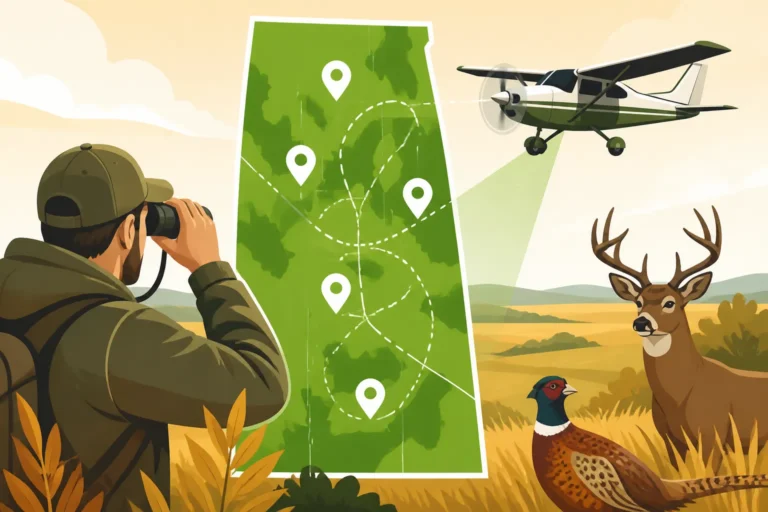
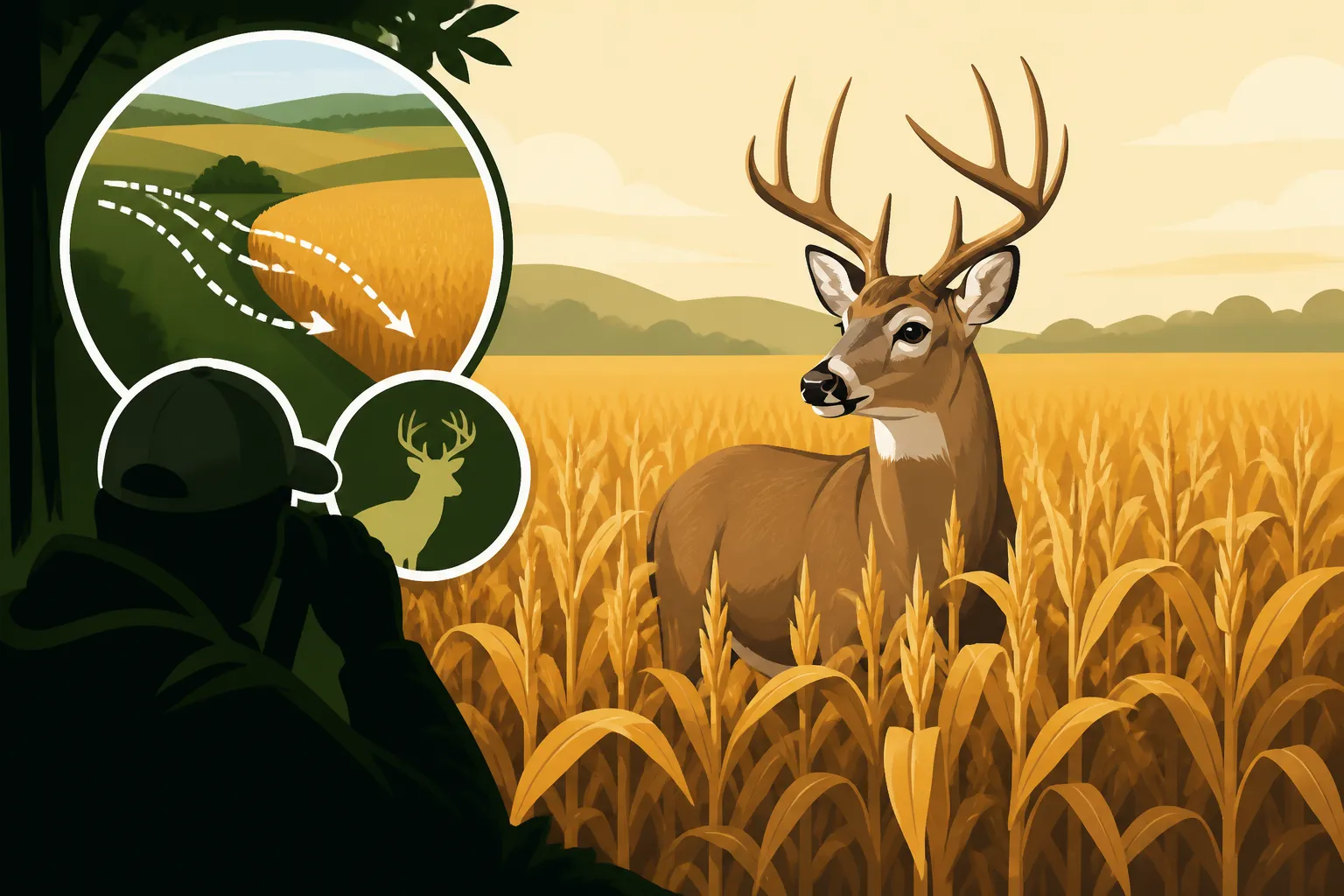
Before you even think about entering a standing crop, your scouting needs to be meticulous. Use binoculars and spotting scopes from a distance to observe entry and exit points at first and last light. Look for areas where deer are consistently funneling in and out. This might be a low spot in a fence, a natural draw, or a transition line between the crop and a woodlot.
Trail cameras are your best friend here. Place them on established deer trails leading into and out of the fields, or along field edges where deer pause before entering. Pay attention to how deer use these fields, the times of day they're most active, and which specific sections of the field they seem to favour. Thermal imaging can also be a game-changer for scouting, allowing you to spot warm bodies tucked away in the dense cover, revealing their precise bedding locations within the field without disturbing them. Consider using mapping tools like GoHunt to mark these observations, tracks, and travel routes, building a comprehensive understanding of deer movement within and around these crop fields.
Strategic Stand and Blind Placement
Once you've identified key entry/exit points and travel corridors, your stand or blind placement becomes critical. You want to be downwind, of course, but also positioned to intercept deer as they transition. This might mean setting up a stand where a Hunting a Shelterbelt Row in Open Prairie meets a pea field, or where a deep ditch or coulee provides a natural funnel to a cornfield.
Consider ground blinds placed just inside the crop edge, if permissible and safe, allowing you to shoot into the field or catch deer as they emerge. For taller crops like corn, a portable ladder stand or an elevated blind can provide the height needed to see over the stalks and spot deer moving within the field or emerging from it. Remember to set these up well in advance of your hunt to allow deer to get accustomed to their presence. If you're going to try still-hunting the edges, position yourself to see parallel to the crop rows, not just directly into them, as deer will often parallel the edge before committing to an open crossing.
Driving and Pushing Tactics (With Caution and Safety)
In some instances, particularly with groups of hunters, carefully orchestrated drives can be effective in standing crops. This isn't a free-for-all; it requires clear communication, safety protocols, and strict adherence to local regulations. One or two "pushers" move slowly through a section of the field, attempting to nudge deer towards "blockers" positioned strategically on the downwind side of known escape routes.
This tactic is most effective in smaller, manageable crop fields or specific sections of larger ones. It's crucial to know the lay of the land, potential escape routes, and to ensure everyone involved understands the plan and, most importantly, the safe zones of fire. Never attempt this alone or without absolute certainty of your shooting lanes and the location of other hunters. This is a tactic that requires significant planning and coordination to be done safely and effectively. Using a tool like GoHunt to share map waypoints and define safe shooting zones can be incredibly helpful for group hunts like this.
Still-Hunting the Edges and Beyond
For the lone hunter, still-hunting the edges of standing crops, particularly in a crosswind or into the wind, can be productive. Move slowly, stopping frequently to glass and listen. Deer often move along the very edge of the dense cover, taking advantage of the visual break. Be patient. If you're hunting corn, sometimes walking a few rows in can pay off, as deer often create distinct trails just inside the field.
However, still-hunting deep within a dense standing crop like corn is incredibly challenging and often unproductive, not to mention potentially dangerous due to limited visibility. It's usually a last resort or best saved for pushing deer towards an escape route. Focus your efforts on the transition zones: where the crop meets a treeline, a creek bed, a slough, or another type of habitat. These are the pinch points where deer are most vulnerable as they move between the security of the crop and other areas. Scouting these transition points carefully is crucial. Consider how deer might move between a Hunting a Bluff Between Two Fields and the adjacent crops.
Remember, deer are smart, and standing crops give them a tremendous advantage. Patience, persistence, and adapting your strategy to the specific crop and conditions are your best bets. And always, always prioritize safety and ethical hunting practices.
Disclaimer
This article is for general informational purposes only and does not constitute professional advice. Laws, prices and regulations vary by location and change over time. Consult a qualified professional for guidance on your specific situation.