Hanging Meat in Fall Temperature Swings
There's nothing quite like the feeling of having a successful hunt in Saskatchewan, especially as the crisp air of fall fills your lungs. But that triumph can quickly turn to anxiety when you look at the forecast and see those wild temperature swings that are so characteristic of autumn here. One day it's unseasonably warm, the next a hard frost, and you're left wondering how on earth you're going to keep that hard-earned game meat from spoiling before you can get it properly processed. This guide is here to walk you through the essential steps and considerations for effectively managing your game meat through Saskatchewan's notoriously fluctuating fall temperatures, ensuring your venison, moose, or elk makes it to your freezer in prime condition.
The Unpredictable Nature of Saskatchewan's Fall Temperatures
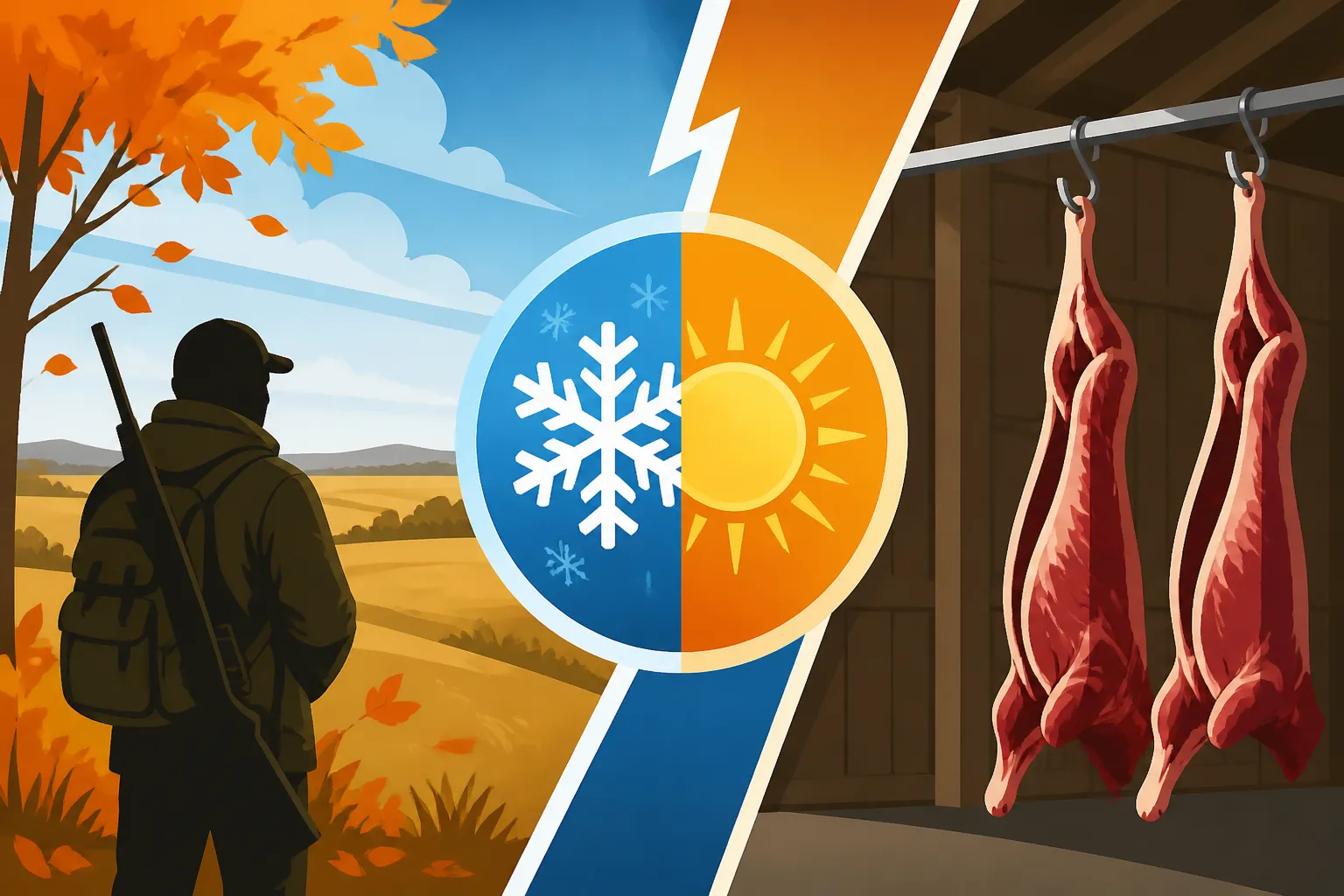
Anyone who's spent a fall season in Saskatchewan knows just how unpredictable the weather can be. It's not uncommon to experience all four seasons in a single week, or even a single day! You could be out in September, basking in a balmy 18°C (64°F) afternoon, only for the temperature to plummet to -2°C (28°F) overnight. As you move deeper into October and November, these swings often become even more dramatic, with daytime highs still reaching into the positive single digits, while night-time lows dip well below freezing. This climatic rollercoaster presents a unique challenge for hunters trying to properly care for their game meat.
The initial shock of a warm day on a freshly harvested animal means the body heat needs to dissipate quickly. If it's a sunny day, the carcass will retain a significant amount of heat, potentially leading to rapid bacterial growth if not addressed promptly. Conversely, if an evening brings a sudden, hard freeze, the outer layers of the meat can freeze solid, sealing in internal heat and preventing proper cooling and aging. This "meat shell" effect can be just as detrimental as too much warmth, as it creates an insulating layer that holds the warmth inside. Imagine dropping a big whitetail buck in the aspen parkland during a gorgeous October afternoon. The sun is high, and while the air feels cool, the ground is still warm. Without immediate and proper care, that carcass can start to degrade internally much faster than you'd expect, despite the crisp feel of the air. It’s a delicate balance, and ignoring these temperature realities is one of the quickest ways to ruin good meat.
Optimal Conditions for Aging and Storing Wild Game Meat
For most wild game, especially deer, moose, and elk, a period of controlled aging can significantly improve both tenderness and flavor. This process, often referred to as "hanging," allows natural enzymes in the meat to break down muscle fibers, resulting in a more palatable final product. However, aging is a precise science, not just throwing a carcass in a shed and hoping for the best.
The "sweet spot" for hanging game meat is generally a temperature range of 0°C to 4°C (32°F to 40°F). Within this narrow window, bacterial growth is significantly inhibited, while the enzymatic breakdown that tenderizes the meat can still occur. Any sustained temperatures above 4°C dramatically increase the risk of spoilage, as bacteria multiply rapidly. Below 0°C, the meat begins to freeze, which halts the aging process entirely. While freezing is an excellent long-term storage method, it defeats the purpose of aging if done prematurely.
Humidity and airflow are also critical, often overlooked, factors. Ideal humidity levels prevent the meat from drying out excessively, which can lead to a tough, leathery outer layer, but also avoids overly moist conditions that can promote mold growth. Good air circulation is absolutely paramount. Stagnant air allows heat to build up in pockets around the carcass and can create prime conditions for bacterial colonies. Think of it like a convection oven for bacteria – you want air moving freely around every surface of the meat. This helps to cool the meat evenly and also encourages the formation of a dry, protective "crust" on the outside, which can be trimmed off later. Without these optimal conditions, aging can turn into a race against spoilage, and that’s a race you absolutely do not want to lose when you’ve put so much effort into your hunt.
Practical Strategies for Managing Meat Through Temperature Swings
Successfully caring for your game meat in Saskatchewan's fall requires a proactive and adaptive approach. It starts the moment your animal is down and continues until the meat is safely in your freezer.
The absolute first step, no matter the temperature, is thorough and immediate Field Dressing in Saskatchewan's Deep Cold. Removing the viscera allows the body cavity to cool down rapidly, shedding much of the internal heat. If the weather is still warm, consider splitting the brisket and pelvis to allow for maximum airflow, and prop the cavity open with sticks or a spreader to prevent it from closing up. Wipe out any excess blood and fluids with clean cloths or paper towels, but avoid rinsing with water unless absolutely necessary, as adding moisture can encourage bacterial growth if the meat isn't dried quickly. If you're out in the bush and help is far away, even quartering the animal right away can be a wise move, especially for larger game like moose. For tips on handling bigger animals, check out our guide on Quartering a Moose Alone in the Bush.
When transporting your game, especially if there's a drive involved, protect the meat from direct sunlight, road grime, and excessive heat from your vehicle's exhaust. A clean tarp or even a heavy-duty moving blanket can help. Avoid piling it directly in the truck bed where residual engine heat can affect it. Some hunters even bring large coolers filled with ice to place quartered meat into during warmer transport, ensuring the core temperature drops quickly.
Once you're back home or at camp, finding a suitable hanging spot is crucial. An unheated garage, shed, or even a well-ventilated porch can work, provided you can control the temperature. The key is finding a place that can maintain that ideal 0-4°C range. This is where Saskatchewan's fall temperature swings become a real management challenge. If daytime temperatures are rising above 4°C, you might need to bring the meat into a cooler space, like a basement, or even wrap it in insulated tarps or blankets to slow heat absorption. Conversely, if a deep cold snap is forecast, potentially dropping below -5°C, you'll need to protect the meat from freezing solid. Wrapping it in several layers of blankets or a heavy sleeping bag can provide enough insulation to keep it above freezing, allowing the aging process to continue. You might even consider moving it into a slightly warmer, but still cool, area for the coldest part of the night. Using a reliable outdoor thermometer is non-negotiable – check it frequently, especially during the peak and trough of daily temperature swings.
For many Saskatchewan hunters, especially those targeting Whitetail Hunting in Saskatchewan during the Hunting Saskatchewan's November Rut, the choice often comes down to how long to risk hanging versus processing immediately. If the weather is consistently stable within that 0-4°C range, you can often hang smaller deer for 3-7 days, and larger animals like elk or moose for 7-14 days or even longer. However, if the forecast shows significant, uncontrollable swings (e.g., several days above 10°C followed by hard freezes), it's almost always safer to process the meat as soon as it's adequately cooled down. Don't be afraid to cut your aging time short to save the meat. When in doubt, gut it, cool it, and butcher it. Many hunters use a reputable app like GoHunt to keep a close eye on microclimates and extended forecasts, which can be incredibly helpful in making these critical decisions. They also offer resources for finding local meat processors, which can be a lifesaver if you decide to process sooner rather than later.
Common Mistakes and How to Avoid Them
Even experienced hunters can make mistakes when it comes to meat care, especially when facing the challenging conditions of a Saskatchewan fall. Being aware of these common pitfalls can help you ensure your harvest doesn't go to waste.
One of the most frequent errors is underestimating how quickly meat can spoil, particularly in what feels like cool weather. A crisp autumn breeze can be deceiving; if the ambient air temperature is consistently above 4-5°C, even with good airflow, bacterial growth will still be occurring. Don't assume "it's fall, it'll be fine." Always measure the actual temperature where the meat is hanging. You might think your unheated shed is cold enough, but a thermometer inside might tell a different story, especially during warmer daytime hours. Many hunters who meticulously plan their hunt, perhaps using tools like GoHunt for their scouting and planning, sometimes overlook the importance of an equally meticulous meat care plan.
Another significant issue is a lack of proper airflow. Hanging a carcass in a small, enclosed space with no ventilation is a recipe for disaster. The still air will trap heat and moisture, creating a perfect incubator for bacteria. Always ensure your hanging area is open enough for air to circulate freely around the entire carcass. If you're using a tarp for protection, ensure it's not wrapped tightly, but rather creating a loose canopy or barrier that still allows air movement.
Freezing the meat too quickly is another common mistake. While it seems counterintuitive, allowing the outer layer of the meat to freeze while the inner parts are still warm can "trap" that warmth, leading to internal spoilage. It also prevents the natural aging process from occurring, potentially resulting in tougher meat. If temperatures are dropping significantly, take steps to insulate the carcass slightly to keep it above freezing, as discussed earlier. If you simply can't avoid freezing conditions, then it's best to process the meat and freeze it in manageable portions, rather than attempting to age it under sub-optimal conditions. This is where our guide on Meat Care in Saskatchewan's Cold Snaps can provide more specific advice.
Contamination is another silent killer of game meat quality. Always maintain strict hygiene when handling the carcass. Use clean knives, gloves, and cloths. Keep the meat off the ground and away from domestic animals. Any dirt, hair, or gut material introduced to the meat can quickly lead to spoilage. For larger animals that require quartering in the field, use clean game bags immediately to protect the meat.
Finally, ignoring the forecast or failing to have a backup plan can derail even the best intentions. Saskatchewan weather can change on a dime. What if a sudden warm front pushes temperatures up to 15°C for two days? Or a surprise blizzard drops temps to -20°C? Having a plan B, such as knowing the nearest reputable meat processor, or having extra coolers and ice on hand, can save your meat. Sometimes, the safest and most practical solution is to simply process the animal quickly, especially if the weather is truly uncooperative. Many hunters use the detailed weather and land access information available on platforms like GoHunt to anticipate these issues, allowing them to adjust their hunting and meat care strategies in real-time.
Here’s a quick overview of how different temperature ranges impact your hanging decision:
| Temperature Range (for Hanging) | Primary Risk/Benefit | Action/Consideration |
|---|---|---|
| Above 10°C (50°F) | High spoilage risk, rapid bacterial growth | Do NOT hang. Field dress, skin, quarter, and get on ice immediately. Process within hours. |
| 5-10°C (41-50°F) | Moderate spoilage risk, very limited aging | Field dress, skin, cool rapidly. Hang for 12-24 hours MAXIMUM, with excellent airflow. Process ASAP. |
| 0-4°C (32-40°F) | Ideal for aging, minimal spoilage risk | Optimal hanging conditions. Ensure consistent temperature, good airflow, and moderate humidity. Monitor daily. |
| Below 0°C (32°F) | Freezing, stops aging, risk of external damage | Protect from freezing with insulation (blankets/tarps). If consistently below freezing, process or move to a warmer spot. |
| Fluctuating (e.g., 10°C day / -5°C night) | Significant challenge, high risk if not managed | Constant vigilance. Move/insulate as needed to stay in 0-4°C range. If unable to maintain, process quickly. |
Ultimately, successful meat care during Saskatchewan's fall temperature swings comes down to diligent monitoring, quick decision-making, and adapting to the conditions Mother Nature throws your way. Don't be afraid to cut short an aging period if it means saving the entire harvest. Your efforts in the field deserve a delicious reward on the table! For those considering Rifle Hunting Saskatchewan's Whitetail Rut in late season, or even Hunting the December Late Season Cold, these meat care considerations become even more pronounced. Understanding when to tag and when to move from hanging to processing is key. Make sure your Saskatchewan Resident Licence Options are in order, and you're familiar with Saskatchewan's CWD Testing Rules as proper carcass handling is critical for those too. And remember, having a solid plan for getting your deer out, perhaps using tips from Getting a Deer Out on a Frozen Trail, is also part of preserving your valuable meat.
Disclaimer
The information provided in this guide is for general informational purposes only and does not constitute professional advice. Hunting regulations, meat handling guidelines, and environmental conditions can change. Always consult the official Saskatchewan hunting regulations, local health authorities, and current weather forecasts for the most up-to-date and specific guidance. Hunters are responsible for their own safety and for ensuring their hunting and meat care practices comply with all applicable laws and regulations.