How Grassland Loss Changed Sharptail Range
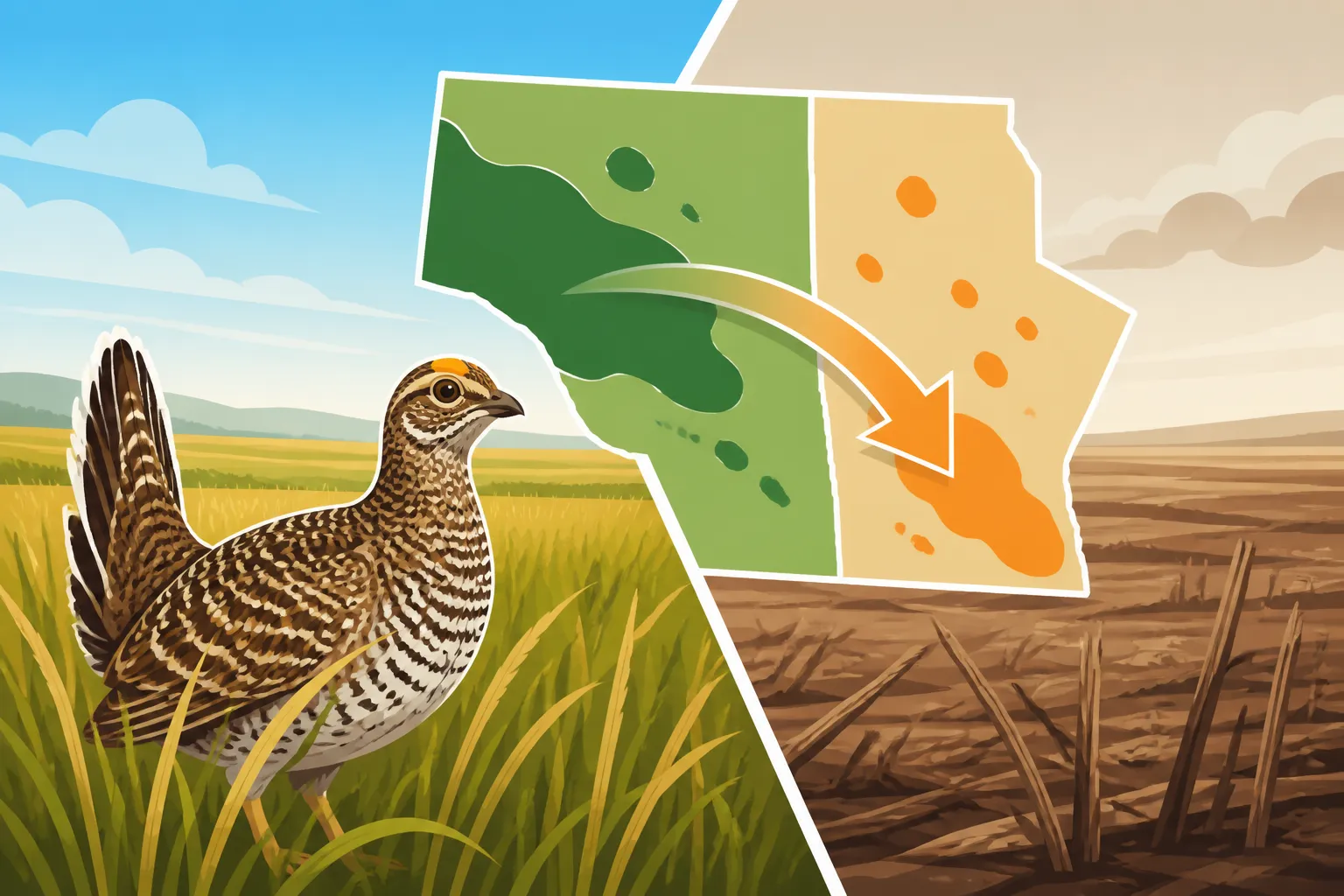
It’s a tough reality to face when you’ve heard the stories of grandfathers walking up grouse almost anywhere on the prairie, only to find wide-open fields today with nary a feather. Many of us have felt that disappointment, driving miles across what once was prime habitat, seeing only endless monoculture. This guide will dive deep into how the irreversible loss of native grasslands has fundamentally altered the range and abundance of sharp-tailed grouse across Saskatchewan, and what that means for both the birds and the hunters who cherish them.
The Historical Abundance of Sharp-Tailed Grouse in Saskatchewan Grasslands
Saskatchewan wasn't just known for its vast wheat fields; it was, for a long time, the undisputed heartland for sharp-tailed grouse. These hardy birds were synonymous with the open prairie, their unique calls echoing across countless acres of native grass. It's hard to imagine now, but the landscape was once a mosaic of untouched grasslands, interspersed with bluffs of aspen and willow, creating an ideal environment for sharptails to flourish.
Saskatchewan as a Sharptail Stronghold
Picture Saskatchewan a century or more ago – an endless expanse of swaying fescue, wheatgrass, and wildflowers stretching to the horizon. This wasn't just pretty scenery; it was a vibrant ecosystem. For sharp-tailed grouse, this meant food, cover, and breeding grounds were practically boundless. Hunters from the late 1800s and early 1900s often spoke of flushing large coveys, sometimes dozens of birds, from virtually any patch of native cover. The sheer scale of suitable habitat allowed sharptail populations to be incredibly robust, weathering harsh winters and predator pressures with relative ease. It truly was a sharptail paradise, a wild place where these birds dominated the avian landscape.
Why Grasslands Were Perfect
What made these native grasslands so perfectly suited for sharp-tailed grouse? It wasn't just one thing, but a combination of critical elements. Firstly, the diverse plant life offered a year-round pantry, from various seeds and forbs in the summer to buds and berries in the fall and winter. Secondly, the structure of the grasses themselves – tall enough for concealment, yet open enough for movement – provided essential cover from raptors and ground predators. More importantly, native grasslands were home to their unique breeding grounds, known as "leks" or dancing grounds. These open, elevated patches where males perform elaborate courtship rituals were plentiful and undisturbed. Without these specific locations, the sharptail's reproductive cycle simply can't function effectively. The natural flow of water, the low-lying areas, and the gentle rolling hills created a complex habitat that met every one of the birds' needs. Reading a Saskatchewan WMZ Map Before You Go can give you an idea of where grasslands still exist, even if fragmented.
The Onslaught of Agricultural Expansion and Habitat Conversion
The story of Saskatchewan's settlement is, in many ways, the story of breaking the land. While it brought prosperity and fed a growing nation, it came at an immense cost to native ecosystems, none more so than the vast grasslands. The transformation was rapid and far-reaching, fundamentally altering the landscape that sharptails had called home for millennia.
Breaking the Sod
The late 19th and early 20th centuries saw an explosion of agricultural settlement across Saskatchewan. Homesteaders arrived with plows and a vision of endless fields of grain. Native prairie, once thought inexhaustible, was seen as fertile ground waiting to be tamed. Acres upon acres of diverse grassland, some never touched by a plow, were turned over to grow wheat, barley, and oats. This wasn't just a few fields here and there; it was a systematic conversion on an industrial scale. The rich, black topsoil that had developed over thousands of years of grassland cycles was suddenly exposed. This process not only destroyed the existing vegetation but also dramatically altered the soil structure, hydrology, and microclimates that underpinned the grassland ecosystem. For sharptails, this meant their entire world was literally turned upside down, replaced by uniform fields that offered little in the way of the multi-layered habitat they required.
Fragmentation and Isolation
Even where some native grasslands weren't plowed under, they became islands in a sea of agriculture. Imagine a vast, unbroken carpet suddenly cut into tiny, disconnected rugs. This is habitat fragmentation. Sharptail populations, once able to roam freely and interbreed across wide areas, found themselves confined to smaller, isolated patches. This isolation leads to a host of problems. It reduces genetic diversity, making local populations more vulnerable to disease or environmental changes. It also makes it harder for birds to move between suitable areas, especially young birds looking to establish new territories or find mates. A single quarter-section of uncultivated land might provide temporary cover, but it often lacks the diversity and connectivity required for a robust, self-sustaining population. This is where tools like GoHunt become invaluable for hunters, allowing them to identify these remaining patches and understand their relationship to surrounding agricultural land. When you're Walking Up Sharptails on Saskatchewan Grassland, you're often walking these fragmented pieces.
The Direct Impact on Sharptail Populations and Movement
The widespread loss and fragmentation of grasslands had immediate and profound consequences for sharp-tailed grouse. Their numbers plummeted in many areas, and their overall range contracted significantly. Hunters and naturalists alike began to notice the stark difference, a clear signal that the birds were struggling to adapt to their drastically altered environment.
Loss of Essential Breeding Grounds Leks
One of the most devastating impacts was the destruction of leks. These communal dancing grounds, usually found on slightly elevated, open patches of native grass, are absolutely critical for sharptail reproduction. Plow a lek under, and you don't just lose a patch of grass; you destroy a traditional gathering place that might have been used for generations. Even if a small group of birds survives nearby, without a suitable lek, their breeding success is severely hampered. Males need these arenas to display, and hens need them to observe and choose mates. When leks are gone, or when remaining leks are too close to human disturbance or predator habitat (like new tree lines planted for shelterbelts), the birds struggle to maintain viable populations. Hunters understand the importance of these sites, and often, finding a thriving sharptail population means finding an intact, undisturbed lek.
Reduced Winter Cover and Forage
Saskatchewan winters are no joke. For sharptails, survival hinges on access to adequate winter cover and food sources. Native grasslands, with their varied plant communities, offered natural shelter in dense grass patches, willow thickets, and low-lying brush, protecting birds from biting winds and deep snow. They also provided a diverse range of seeds, buds, and residual berries to sustain them. When these are replaced by vast expanses of stubble or bare ground, sharptails are left exposed. Stubble fields, while providing some temporary food, lack the complex structure needed for thermal cover or protection from predators. This makes them much more vulnerable to severe winter mortality, which can drastically reduce spring breeding populations. Trying to find them when Hunting Saskatchewan Winter Weather Safely becomes an even greater challenge without proper cover.
Migration and Genetic Bottlenecks
While sharptails aren't typically considered migratory in the same way waterfowl are, they do undertake localized movements in search of food and cover, especially during harsh winters. Historically, these movements would have been unrestricted across vast grassland plains. With fragmentation, these movements are often blocked by agricultural fields, roads, or fences. This limits their ability to access new resources or find mates from different local populations. The result is often genetic bottlenecks, where a small, isolated group has reduced genetic diversity, making them less resilient to environmental stressors. It's like having a family tree that only has a few branches left – any disease could wipe it out completely. The widespread loss means there are fewer and fewer stepping stones or corridors for them to use. Why Sharptail Numbers Rise and Fall is intrinsically linked to these habitat pressures.
Current Status and Conservation Efforts for Sharptails
Despite the historical losses, sharp-tailed grouse haven't disappeared entirely from Saskatchewan. Pockets of their populations persist, and dedicated conservation efforts, often supported by hunters, are working to protect and restore what remains. Understanding where these birds still thrive and what's being done is crucial for their future.
Where Sharptails Still Thrive
Today, the most robust sharptail populations in Saskatchewan are found in areas where significant tracts of native grassland still exist. The southwestern regions of the province, particularly parts of the Great Sand Hills, the Missouri Coteau, and areas near the Cypress Hills, are prime examples. These regions, often less suitable for intensive cultivation due to topography or soil type, have retained more of their native prairie. The Hunting Saskatchewan's Southern Prairie and Hunting Saskatchewan's Aspen Parkland still offer opportunities. Even in the parkland region, where aspen bluffs are more prevalent, sharptails can be found in larger, unbroken expanses of grazed pastureland or community pastures that mimic native conditions. These areas become hot spots for hunters using tools like GoHunt to pinpoint likely locations, which often correlate directly with the remaining grassland.
The Role of Conservation Initiatives
Many dedicated groups and government initiatives are working tirelessly to conserve and restore sharptail habitat. Organizations focused on wetland and upland habitat preservation often play a crucial role, working with landowners to implement sustainable grazing practices, fence off sensitive areas, or even convert marginal cropland back to perennial cover. Programs that incentivize ranchers to maintain healthy grasslands provide a vital lifeline for sharptails and other prairie species. These efforts often focus on protecting remaining native prairie and promoting habitat connectivity, ensuring that existing populations aren't completely isolated. It's a slow, ongoing battle, but every acre of native grassland preserved or restored is a victory for the sharp-tailed grouse.
Hunter's Role in Monitoring and Advocacy
Hunters have always been at the forefront of conservation, and their role in the future of sharp-tailed grouse is more critical than ever. By observing bird numbers, reporting observations, and participating in surveys, hunters provide invaluable data that helps wildlife managers understand population trends. Platforms like GoHunt can help hunters log their sightings, contributing to a broader understanding of sharptail distribution. Beyond direct observation, being an advocate for grassland conservation, supporting organizations that work to preserve habitat, and promoting responsible land use are essential. It means talking to landowners, understanding their challenges, and finding common ground for habitat protection. When we are Using a Pointing Dog on Saskatchewan Prairie, we are experiencing a tradition that depends on these critical habitats. Our passion for hunting these unique birds naturally makes us stewards of the grasslands they call home.
Habitat Comparison: Historical vs. Modern Saskatchewan for Sharptail Grouse
| Feature | Historical (Pre-1900s) | Modern (Post-Agricultural Expansion) | Impact on Sharptails |
|---|---|---|---|
| Native Grasslands | Vast, unbroken, diverse ecosystems | Fragmented, isolated patches, reduced diversity | Severe habitat loss, population decline, genetic isolation |
| Lek Sites | Abundant, undisturbed, traditional locations | Scarce, vulnerable, often disturbed or destroyed | Impaired breeding success, localized extinctions |
| Winter Cover | Extensive native grass, willow bluffs, natural terrain | Limited, exposed stubble fields, shelterbelts (less ideal) | Increased winter mortality, greater predator vulnerability |
| Food Sources | Diverse native seeds, forbs, berries, insects | Monoculture crops (seasonal), reduced natural diversity | Seasonal food availability, reliance on less nutritious options |
| Movement/Dispersal | Unrestricted across large landscapes | Restricted by agricultural fields, roads, fences | Limited gene flow, reduced population resilience |
| Predator Pressure | Balanced within a natural ecosystem | Potentially higher in fragmented areas due to simplified cover | Increased vulnerability due to lack of adequate escape cover |
Disclaimer
This article is for general informational purposes only and does not constitute professional advice. Laws, prices and regulations vary by location and change over time. Consult a qualified professional for guidance on your specific situation.