Hunting Pronghorn Near a Prairie Water Hole
Hunting pronghorn in Saskatchewan's vast prairie can be one of the most exhilarating and frustrating experiences you'll ever have. Their incredible eyesight and the wide-open spaces they call home make them notoriously challenging. One strategy that often brings success, however, is keying in on prairie water holes, especially in dry conditions. This guide will walk you through everything you need to know to effectively hunt these speed demons near those crucial water sources, from understanding their habits to executing a successful hunt.
Understanding Pronghorn Behavior Around Water
The Saskatchewan prairie, while beautiful, can be incredibly harsh, especially in the heat of late summer and early fall. For pronghorn, often mistakenly called antelope, water is not just important; it's absolutely vital for their survival. If you understand why and when they visit water holes, you're already a significant step ahead in your hunting strategy.
Why Water Holes are Magnets for Pronghorn
Imagine spending your days grazing on dry grasses and forbs under a relentless prairie sun. That's a pronghorn's life. Unlike deer or moose that often inhabit areas with more consistent access to shade and lush vegetation, pronghorn thrive in arid and semi-arid environments. This means their bodies are finely tuned to conserve water, but they still need to replenish fluids regularly.
During periods of drought or intense heat, a reliable water source becomes an absolute lifeline. While they can extract some moisture from the plants they eat, it’s often not enough to sustain them, particularly if those plants are dry and cured. A study by the University of Wyoming found that pronghorn, especially lactating does and growing fawns, require free water more frequently than previously thought. This critical need turns certain water holes into undeniable magnets, concentrating animals that would otherwise be spread across miles of country. Knowing that these animals will seek out water can give you a significant advantage, especially if you're trying to figure out Stalking Pronghorn Across Open Ground.
Daily Patterns and Peak Activity
Pronghorn aren't usually creatures of the night. Their primary activity times tend to be in the cooler parts of the day. You'll often see them grazing in the early morning shortly after sunrise and again in the late afternoon/early evening before sunset. Their visits to water holes typically follow a similar rhythm.
- Early Morning: Often, the first visits of the day will happen shortly after dawn. Pronghorn may drink as part of their morning routine before bedding down or moving to prime feeding areas. If the overnight temperatures were cool, their need might be slightly less urgent, but it's still a consistent pattern.
- Midday (especially during heat): If temperatures soar, particularly during the early archery season in Saskatchewan, midday can be a surprisingly productive time. Pronghorn, much like us, seek refuge from the heat. A drink of cool water can be a critical relief. This might mean a quick dash to the water hole before retreating to a shady coulee or the sparse cover of a willow run.
- Late Afternoon/Early Evening: This is arguably the most consistent and often most productive time for water hole hunting. As the day cools, pronghorn move from their midday beds to feed, and a stop at the water is frequently part of that transition. They're often more relaxed and less hurried during these times, especially as the sun begins to dip towards the horizon.
Of course, these patterns aren't set in stone. Factors like recent rainfall, sudden temperature drops, or increased hunting pressure can alter their routines. A heavy rain means they might not need to visit a specific water hole for days. High winds can make them skittish and unpredictable. However, in consistent, dry conditions, these general patterns hold true, giving you a strong framework for planning your hunt. Understanding What a Pronghorn Buck Weighs and how it relates to their hydration needs can also inform your hunting strategy.
Scouting and Location Selection
You can’t just pick any random puddle and expect success. Effective water hole hunting demands meticulous scouting, both from afar and on the ground. The key is finding not just a water source, but the right water source that pronghorn consistently use and that offers a reasonable chance for a successful ambush.
Identifying Prime Water Sources
The Saskatchewan prairie is dotted with various water sources, from natural springs that bubble up in low spots to man-made dugouts and cattle tanks. Each has its pros and cons.
- Dugouts and Potholes: These are common throughout the prairie and can be fantastic. Look for those that are relatively isolated from human activity, perhaps nestled in a small depression or surrounded by a bit of taller grass or sagebrush. The edges of dugouts often show clear tracks.
- Cattle Tanks/Troughs: These can be real hotspots, especially if they’re actively being used by livestock. While the presence of cattle might seem like a deterrent, pronghorn often share these water sources, especially if there's no other option nearby. The constant replenishment of water from a well keeps it fresh and appealing.
- Natural Springs or Seeps: These are gold. They often provide cooler water and can be hidden in draws or coulees, offering some natural cover for both the pronghorn and the hunter. Finding these might require a bit more effort on satellite imagery or by walking creek beds.
- Ephemeral Water Sources: Avoid temporary puddles or low spots that fill after a rain. While pronghorn might drink from them briefly, they're unreliable and won't hold animals consistently.
When you're evaluating a water source, look for sign. Fresh tracks are your best friend. Are they single prints, or do they show evidence of a herd? Look for droppings nearby. Are there worn trails leading to and from the water? These trails are crucial, as they tell you how the pronghorn approach and depart, which is vital for planning your ambush.
Using Technology for Scouting
In today’s hunting world, technology is an invaluable tool for long-range scouting, especially in the vastness of the prairie. Services like GoHunt provide detailed satellite imagery and property boundaries that can revolutionize your pre-season planning.
Start by zooming in on your hunting zone on a satellite map. Look for the telltale blue spots of water. Pay attention to the surrounding topography. Are there coulees, draws, or shelterbelts nearby that could provide cover for a stalk or an approach? Identify potential bedding areas—often slight rises or areas with sparse cover where pronghorn can see for miles.
Once you’ve identified potential water sources, trace likely travel corridors. Pronghorn, despite their speed, are efficient. They’ll often take the path of least resistance or use existing trails. Look for pinch points where terrain funnels them. This is where Scouting With Satellite Imagery in Saskatchewan truly shines. You can even identify potential blind locations – a lone bush, a small rise, or an old fence line that could offer concealment. This digital reconnaissance saves countless miles on your boots and ensures you’re focusing your ground efforts on the most promising locations.
On-the-Ground Reconnaissance
Nothing beats putting boots on the ground, but you need to do it smartly to avoid alerting animals. The best time for on-the-ground scouting is usually mid-day when pronghorn are often bedded, or on a different day than you plan to hunt.
When you approach a potential water hole, do so slowly and carefully. Use binoculars to scan the area before you commit. Look for fresh tracks, confirming pronghorn are indeed using it. Check the surrounding vegetation for signs of grazing or rubs. If you find multiple sets of tracks, especially larger ones, you might be onto a consistent buck haunt.
Crucially, identify potential ambush points. Where could you set up a ground blind, or find natural cover? Is the wind generally predictable in that spot? Consider all possible approach and departure routes for the pronghorn. What kind of cover will you need to remain hidden? A common frustration for hunters in this open country is being busted by a pronghorn's keen eyes long before they're in range. This detailed ground work is essential for mitigating that risk. For success in Saskatchewan's hunting zones, understanding how to apply for Saskatchewan's Big Game Draw Deadlines and secure your tag is also crucial.
Stalking and Ambush Strategies
Once you’ve found a promising water hole, the real challenge begins: getting within shooting range of one of the wariest animals on the prairie. This is where patience, precision, and an understanding of pronghorn senses become paramount.
Approaching the Water Hole Undetected
Pronghorn possess perhaps the best eyesight in the animal kingdom, often equated to an 8x binocular on each eye. This means they can spot movement and perceive threats from incredible distances. To approach a water hole, you need to become part of the landscape.
- Use Terrain to Your Advantage: This is your number one tool. Crawl, crouch, and use every ripple in the ground, every low-lying bush, every clump of grass for concealment. Never walk directly towards the water hole in the open. Circle wide and approach from an angle that uses the natural topography to break up your silhouette.
- Mind the Wind: Pronghorn also have a decent sense of smell, though not as acute as their eyesight. Still, always approach with the wind in your favor, blowing your scent away from the water hole and any approaching animals. Even a slight shift in wind can carry your scent for hundreds of yards. Use a wind checker constantly.
- Patience is a Virtue: Often, the best approach is a slow, methodical crawl. It might take you an hour to move a few hundred yards. Resist the urge to rush. Every movement must be deliberate and slow. If you spot a pronghorn moving towards the water, freeze. Let them settle, or wait until they pass behind a rise before continuing your crawl. For more general advice on dealing with Saskatchewan's weather, consider Hunting Saskatchewan Winter Weather Safely.
Setting Up a Blind or Stand
In the wide-open prairie, natural cover can be scarce. This often makes a well-placed ground blind an invaluable asset for water hole hunting.
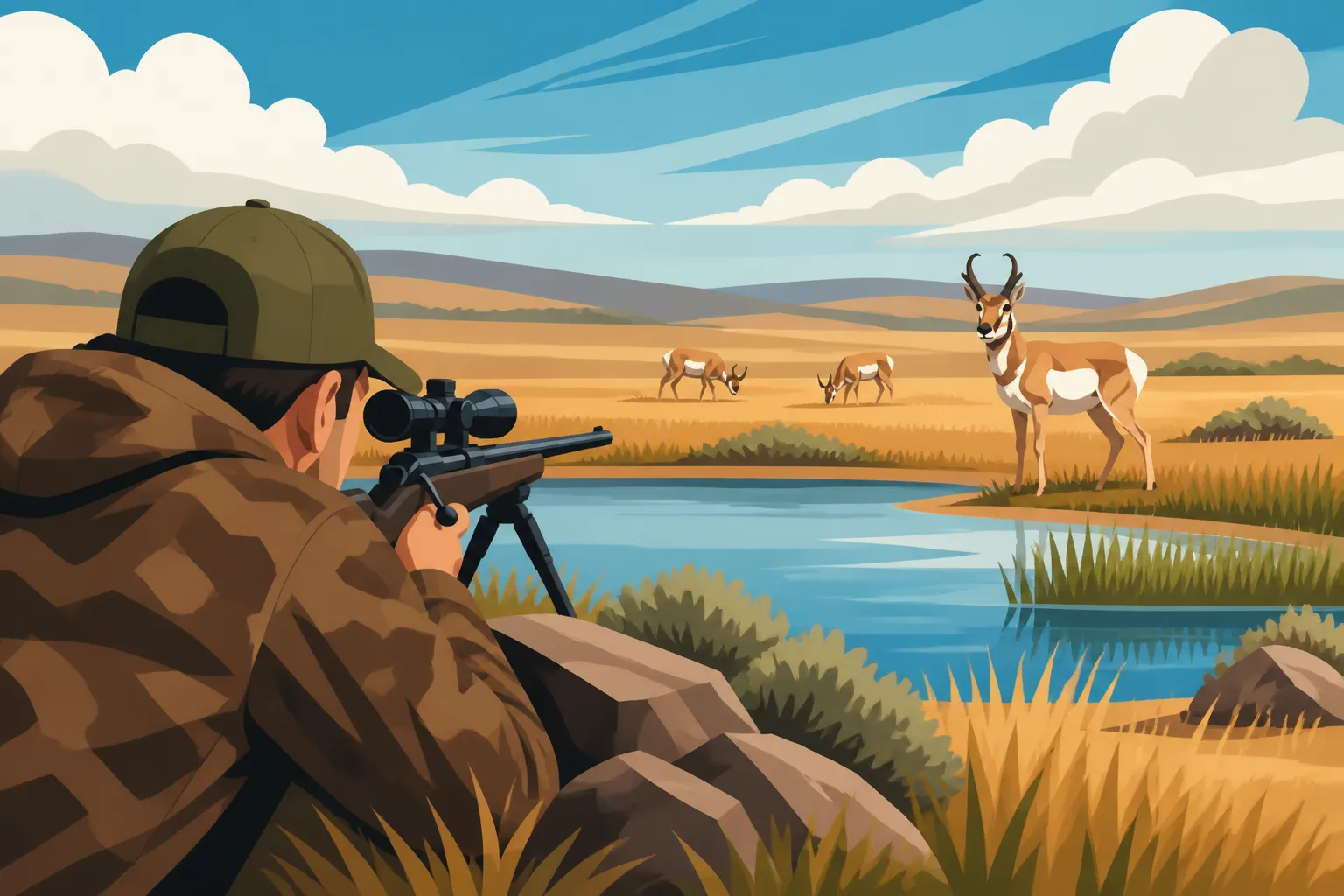
- Ground Blinds: A pop-up blind provides excellent concealment and helps contain your scent. Set it up well in advance of your hunt if possible, allowing the animals to get used to its presence. If you're setting it up on the day of the hunt, do so in low light (before dawn or after dusk) and as quietly as possible. Position it to take advantage of the prevailing wind, and ensure you have clear shooting lanes to the water source and any established trails leading to it. A good distance is often 75-150 yards from the water, allowing for comfortable rifle shots without feeling too close for the pronghorn to detect. Some hunters use natural materials like sagebrush or tumbleweeds to further "brush in" their blind.
- Natural Cover: If a blind isn't an option, look for natural depressions, large sagebrush clumps, or even a vehicle (if legal and ethically permissible) that can serve as a makeshift hide. The key is to break up your outline completely. Wearing effective camouflage that matches the prairie environment is critical. Remember, pronghorn see movement and shapes, so even subtle shifting can give you away.
The main advantage of a blind is the ability to move slightly, adjust your position, or even eat a snack without being detected. This is crucial during the long waits often associated with water hole hunting.
Patience and Shot Placement
Once you're set up, the waiting game begins. This is where mental fortitude comes into play. You might sit for hours, seeing nothing, only for a group of pronghorn to appear seemingly out of nowhere.
- Be Ready: Have your rifle or bow ready, optics clear, and rangefinder handy. When pronghorn approach, they often do so cautiously, stopping frequently to scan their surroundings. Don't rush your shot. Let them settle and offer a good, broadside opportunity.
- Range Everything: In the open prairie, distances are notoriously deceiving. Always use your rangefinder, even if you think you know the distance. A pronghorn's relatively small body size means accurate rangefinding is critical for ethical shot placement.
- Ethical Shot Placement: Pronghorn are not particularly large animals, and their body cavity is positioned a bit further forward than a deer. A shot aiming for the heart/lung area should be precise. Aim for the crease behind the shoulder, slightly lower than you might on a whitetail. Given their speed and the open terrain, a well-placed shot is essential to prevent a long, potentially unsuccessful recovery. Consider bringing a shooting stick or bipod to ensure a stable shot. Many hunters find success with cartridges like the .270 Winchester, 6.5 Creedmoor, or .30-06 Springfield, paired with a good quality, fast-expanding bullet. If you're curious about suitable calibres, check out Legal Rifle Calibres for Big Game.
Pronghorn Water Hole Hunting Considerations
| Factor | Best Practices | Considerations |
|---|---|---|
| Water Source | Isolated dugouts, active cattle tanks, natural springs | Avoid temporary puddles; ensure consistent use. |
| Scouting | Satellite imagery (GoHunt), on-the-ground confirmation, fresh sign | Scout mid-day/off-days to avoid disturbing animals. |
| Blind Setup | Pop-up blind (pre-set or set in low light), natural cover, 75-150 yards from water | Consider prevailing wind, clear shooting lanes, brush in blind. |
| Approach | Use terrain, low light, crawl/crouch, always mind the wind | Extreme eyesight of pronghorn means slow, deliberate movement. |
| Shot | Patient wait, rangefinder use, ethical shot placement (heart/lung behind shoulder) | Practice long-range shooting; use stable rest (bipod/sticks). |
| Scent Control | Scent-free clothing, strategic wind direction | Pronghorn have a keen nose, especially when on high alert. |
Gear and Considerations for Water Hole Hunts
A successful water hole hunt isn't just about strategy; it's also about having the right gear and minding important details that can make or break your trip. The prairie environment, combined with the nature of pronghorn hunting, demands specific considerations.
Essential Gear for Prairie Hunting
You wouldn't head out onto the open prairie without the right tools, and hunting pronghorn is no exception.
- High-Quality Optics: This cannot be overstated. A good pair of 10x binoculars is non-negotiable for spotting pronghorn at a distance and identifying specific bucks. Many hunters also carry a spotting scope (20-60x or similar) for detailed antler evaluation, especially when judging a buck for size, or to get a better look at Pronghorn on Saskatchewan's Southwest Grassland from afar.
- Rangefinder: As mentioned earlier, distances are deceptive. A reliable laser rangefinder is absolutely critical for making ethical shots. Practice with it beforehand so you can get a quick, accurate reading when the moment counts.
- Shooting Sticks or Bipod: The prairie offers few natural rests. A sturdy set of shooting sticks or a bipod attached to your rifle will provide the stability needed for those potentially longer shots.
- Quiet, Camouflage Clothing: Choose patterns that blend with the prairie grasses and sagebrush. Ensure your clothing is quiet, as any rustling can alert a nearby pronghorn. Layers are also important, as prairie temperatures can swing wildly from morning chill to midday heat.
- Water and Snacks: You’ll be sitting for long periods, potentially in the heat. Bring plenty of water to stay hydrated and quiet, easy-to-eat snacks.
- Sun Protection: A wide-brimmed hat, sunglasses, and sunscreen are crucial. The prairie sun is intense, and you'll be exposed for hours.
Managing Scent and Visibility
Pronghorn might rely heavily on their eyes, but their nose is not to be ignored. Combined with their visual acuity, managing your scent and remaining invisible is key.
- Scent Control: While not as critical as for whitetails in dense timber, scent control is still important. Shower with scent-free soap, use scent-free detergent on your hunting clothes, and store them in airtight bags. Use a scent eliminator spray, especially on your boots and lower clothing, to mask human odor. Most importantly, always play the wind. Even with perfect scent control, a direct wind blowing your scent to a pronghorn will likely bust you.
- Camo for the Prairies: Forget the dark, dense forest patterns. You need camouflage that mimics the dry, muted tones of prairie grasses, sage, and dirt. Patterns with a lot of open space and natural greens, tans, and browns are best.
- Minimize Glare: Any shine can instantly give you away. Cover your face with a face mask or face paint. Ensure your rifle scope lenses are free of glint. Even a shiny watch or belt buckle can be a problem. This attention to detail can be the difference between success and a long drive home.
Respecting the Land and Other Hunters
Saskatchewan's hunting lands, both public and private, are a shared resource. As hunters, it's our responsibility to act as ethical stewards and ensure a positive public perception.
- Landowner Permission: The vast majority of prime pronghorn hunting in Saskatchewan occurs on private land. Always obtain explicit permission from the landowner before stepping foot on their property. This often means Knocking on Doors in Saskatchewan Farm Country long before the season. Be polite, respect their property, and follow any specific rules they might have. A simple "thank you" and offering to share some game meat goes a long way. Understanding Saskatchewan Landowner Permission Law is fundamental.
- Leave No Trace: Pack out everything you pack in. This includes spent casings, food wrappers, and any trash. Leave the land cleaner than you found it. This helps maintain good relationships with landowners and ensures future hunting access.
- Respect Other Hunters: If you see another hunter already set up on a water hole, give them ample space. The prairie is big enough for everyone. Communicate politely if there's any confusion. We're all out there to enjoy the outdoors and pursue game ethically.
- Mandatory CWD Testing: Always be aware of the current Saskatchewan's CWD Testing Rules for pronghorn and other big game. Follow all instructions regarding sample submission. This is a critical part of wildlife management and protecting our herds.
Hunting pronghorn near a prairie water hole is a test of patience, observation, and skill. But with the right approach and an understanding of these magnificent animals, it can be an incredibly rewarding experience. Good luck out there, and hunt safely!
Disclaimer
The information provided in this guide is for general informational purposes only and does not constitute legal advice. Hunting regulations in Saskatchewan are subject to change. It is the sole responsibility of the hunter to be familiar with and adhere to all current provincial and federal hunting laws, regulations, and licensing requirements before engaging in any hunting activities. Always prioritize safety, ethical hunting practices, and respect for wildlife and private property.