Knocking on Doors in Saskatchewan Farm Country
It's a frustrating reality for many hunters, isn't it? You spend hours poring over maps, dreaming of that perfect cover, only to realize much of the prime hunting ground in Saskatchewan is private land. Figuring out how to access those hidden gems, those sloughs, bluffs, and bush pockets on private property, can feel like trying to solve a puzzle with half the pieces missing. But don't despair! This guide is all about demystifying the art of "door knocking" in Saskatchewan farm country – the old-school, tried-and-true method that still opens more hunting doors than anything else. We'll walk through exactly how to approach landowners, what to say, and how to build those invaluable relationships.
Why Door Knocking is Still King in Saskatchewan
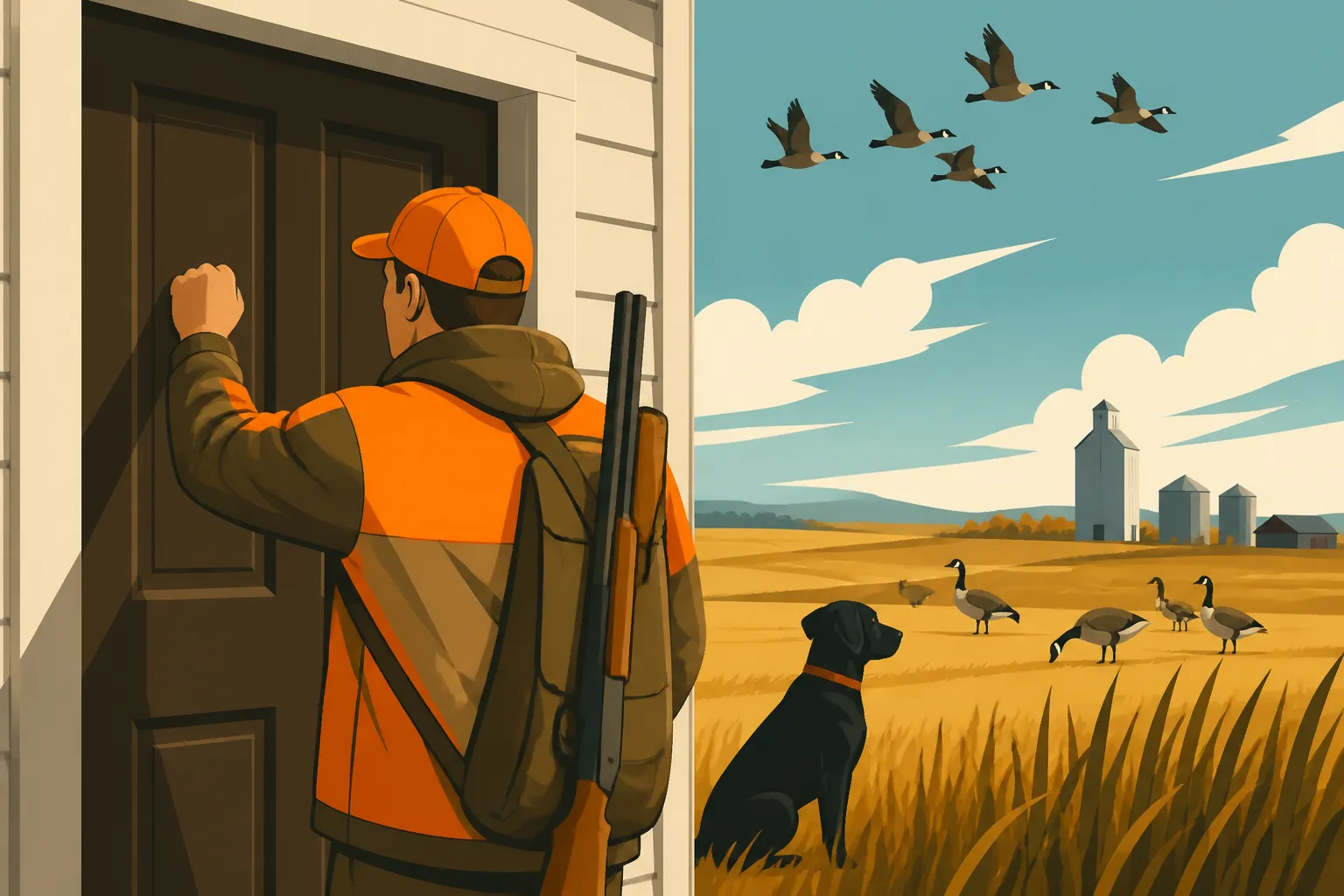
In an age where everything seems to be digital, from maps to communication, the idea of driving up to a farmyard and knocking on a stranger's door might feel archaic, even intimidating. But here in Saskatchewan, where vast stretches of productive land are privately owned, that personal interaction remains the absolute gold standard for gaining hunting access. It's about respect, building trust, and showing you're not just another faceless name on a screen.
The Reality of Private Land Access
Let's be blunt: a huge chunk of the best hunting in Saskatchewan happens on private land. Whether it's prime whitetail habitat, mule deer country, or those grain fields attracting migrating waterfowl, farmers and ranchers own it. While we're blessed with significant parcels of Crown land, like those covered in Public Hunting Land in Saskatchewan, the reality is that many of the most game-rich areas, particularly in the agricultural zones, are not publicly accessible. This isn't a slight against hunters; it's simply the nature of the landscape. Farmers are busy, their livelihoods depend on their land, and they want to know who is on it. They face issues with trespassers, irresponsible hunters, and people who don't respect their property. This is why a personal request carries so much weight.
The Personal Touch Advantage
Think about it from a landowner's perspective. Would you rather have an unknown name on an email asking for permission, or a polite, well-spoken individual standing on your doorstep, looking you in the eye and explaining exactly what they're looking to do? The answer is almost always the latter. That face-to-face interaction allows for an immediate connection, even if it's brief. It gives them a chance to size you up, ask questions, and gauge your character. It’s an opportunity to show that you're a responsible hunter who respects their land, their family, and their livelihood. This personal connection is priceless, especially when you're hoping to hunt for species like Hunting Whitetails on Saskatchewan Farmland, where specific knowledge of property boundaries and agricultural practices can make all the difference.
Dispelling Common Myths
I hear it all the time: "Farmers always say no," or "They're too busy," or "It's awkward." While you'll certainly get some rejections (it's part of the process, and we'll talk about that), many of these fears are overblown. Most landowners are reasonable people who appreciate being asked. They want to know who is on their property. Many have hunting stories of their own, or they have family members who hunt. The key is how you approach them. It’s not about begging; it’s about a respectful negotiation of access. By putting in the effort to knock on doors, you're already setting yourself apart from the crowd who simply drive by, hoping nobody notices them. You're showing commitment and respect, which goes a long way.
Pre-Trip Homework: Setting Yourself Up for Success
You wouldn't head into the bush without checking your gear, right? Well, door knocking requires its own kind of preparation. Showing up prepared and knowledgeable can drastically increase your chances of getting that coveted "yes." It's about demonstrating competence and consideration before you even open your mouth.
Mapping and Scouting Before You Go
Before you even think about driving down a grid road, you need to do your homework. This isn't just about finding land; it's about understanding it. Use modern mapping tools – apps like GoHunt are incredibly useful for identifying property lines, showing landownership (where available), and pinpointing potential habitat. Look for key features like bluffs, treelines, coulees, sloughs, and areas adjacent to known game movements. Apps like GoHunt allow you to layer satellite imagery with property boundaries, giving you a detailed overview of the terrain. This kind of Scouting With Satellite Imagery in Saskatchewan is vital.
Pinpoint specific parcels you're interested in, noting the quarter sections and legal land descriptions if possible. Having a specific ask, like "I'm interested in hunting deer on your south quarter that borders the bush," is far more effective than a vague, "Can I hunt your land?" Also, take note of what crops are in the fields. A standing canola field will hold game differently than a cut barley stubble field. Knowing these details shows you've done your research and understand their property. Before you even leave home, you should have a good idea of the Reading a Saskatchewan WMZ Map Before You Go so you know what species are in season and what the regulations are for that specific area.
Gear for the Approach
Your "kit" for door knocking isn't complex, but it's important. First and foremost, dress respectably. This doesn't mean a suit, but clean clothes, a presentable appearance, and a tidy vehicle speak volumes. Avoid showing up in your muddy hunting clothes, with your rifle prominently displayed in the truck rack. You're making a first impression, and you want it to be a good one.
Carry a small notebook and a pen. If you get permission, you'll want to write down names, phone numbers, specific instructions, and any boundaries they mention. A good map (digital on GoHunt or paper) is also essential for pointing out exactly where you're asking to hunt. Some hunters like to bring a small, thoughtful gift – maybe a box of chocolates, a gift card for a local coffee shop, or even some fresh baked goods. While not required, it's a nice gesture of appreciation, particularly if you're asking for extensive access or repeated visits. Remember, you're not trying to buy access, but a small token of gratitude can certainly help foster goodwill.
Understanding Local Etiquette
Timing is everything. Farmers and ranchers work incredibly hard, and their schedules are often dictated by the weather and the season. Avoid knocking on doors during peak farming times like seeding in the spring or harvest in the fall. During these periods, they're often working from dawn till dusk (and beyond) and have very little spare time or patience for interruptions. Sundays are often family days, so it's best to avoid those too.
Mid-afternoon during the week, once the morning chores are done and before the evening rush, can often be a good window. If you see them out in a field working, it's generally best to wait until they're closer to the house, or simply come back another time. Never just drive out into a field to flag them down unless it's truly an emergency. Respecting their time and their property is paramount. A quick glance for "Posted Land" signs, as detailed in Saskatchewan Posted Land Sign Rules, is also critical. If a sign explicitly says "No Hunting" or "No Trespassing," respect it and move on. No amount of door knocking will change that.
The Art of the Ask: What to Say (and Not Say)
This is the moment of truth. You've done your homework, you're looking presentable, and you've found a good time to approach. Now, how do you actually ask for permission without stumbling over your words or sounding disrespectful? It's a skill, and like any skill, it gets easier with practice.
Making a Great First Impression
When you step out of your vehicle, take a deep breath. Approach the door confidently, but not aggressively. Leave your hat off and make eye contact. A genuine smile can go a long way. When the door opens, start with a polite introduction. "Hi, my name is [Your Name], and I hope I'm not bothering you. I'm a hunter from [Your Hometown], and I was admiring your property from the road."
Immediately state your purpose clearly and concisely. Don't beat around the bush. "I was wondering if you might allow me to hunt [specific animal, e.g., whitetail deer] on a specific part of your land – perhaps the quarter section just north of the creek, near that poplar bluff." Being specific shows you've done your homework and aren't just looking to roam aimlessly. Avoid having any hunting gear visible or carrying your firearm – the goal is to appear as a responsible, respectful individual, not a hunter already prepared to shoot. Remember, under Saskatchewan Landowner Permission Law, explicit permission is required, and your clear, polite request is the first step.
Crafting Your Pitch
Now it's time to elaborate on your request and address potential concerns. Here are some key points to weave into your conversation:
- Be Specific about What You Want to Hunt: "I'm primarily interested in deer this fall, as I saw some good sign in that area."
- Be Specific about Where You Want to Hunt: Use those mapping skills. "I've been looking at maps, and I'm interested in the bluffs along the east side of your land, on the [quarter section number]." Point it out on your GoHunt app or map if they're receptive.
- Explain Your Hunting Style: "I'm a quiet hunter, I mostly still-hunt or use a ground blind, and I'm always very mindful of livestock and property lines."
- Emphasize Safety: "Safety is my top priority. I'm a certified hunter and very careful with firearms. I'll only shoot if I have a safe backdrop and a clear shot." You might even offer to show them your Saskatchewan Hunter Education Requirements certificate.
- Address Their Concerns: Proactively mention things like closing gates, driving slowly on approach roads, avoiding crops, and retrieving game ethically. "I would, of course, close all gates, drive slowly on your approach, and never enter fields with standing crops. If I'm lucky enough to harvest an animal, I'll make sure to get it out cleanly and not cause any damage."
- Offer to Help: "If there's ever a gate left open or anything out of place on your land, I'd be happy to let you know." Sometimes, just having an extra set of eyes on their property is a benefit.
- Offer to Share: While not required, some hunters offer to share venison or offer a small gift. "If I'm successful, I'd be happy to share some of the meat with you and your family." This can be a genuine gesture of goodwill.
Listen carefully to their responses. They might have specific areas they want you to avoid, or concerns about livestock. Address these directly and respectfully. Sometimes, they might grant permission for one area but not another, or only for certain times of the day. Be flexible and grateful for any access you receive. Knowing What Saskatchewan's Posted Signs Must Say can also help you understand their boundaries even if no physical person is present.
Handling Rejection Gracefully
This is crucial. You will get "no"s. It's not a personal affront; it might be because they already have hunters, they had bad experiences in the past, or simply because they don't want hunters on their land. If you hear "no":
- Don't Argue: Never try to persuade or guilt-trip them.
- Don't Press for a Reason: They don't owe you an explanation.
- Thank Them Sincerely: "Thank you very much for your time anyway. I understand. Have a great day."
- Leave a Good Impression: By remaining polite and understanding, you leave a positive memory. Who knows, their situation might change next year, or they might mention your respectful approach to a neighbour who does grant permission.
Remember, a "no" doesn't close all doors; it just means that particular door isn't opening right now. Simply move on to the next potential property.
Building Relationships: Beyond the First Hunt
Getting permission is a great first step, but the truly successful Saskatchewan hunters understand that it's just the beginning of a long-term relationship. Treating land access as a privilege, not a right, and consistently demonstrating respect and gratitude will ensure you have hunting spots for years to come.
Showing Gratitude and Respect Constantly
Once you've secured permission, your work isn't over; it's just evolved. Every time you're on their land, act as if they are watching you, because in a small community, they often are, or their neighbours are.
- Communicate: If you're going to hunt, send a quick text or call to let them know you'll be on their property. This keeps them informed and comfortable.
- Follow All Instructions: If they said no ATVs, don't use one. If they said avoid a certain field, stay out. Don't push boundaries.
- Drive Carefully: On farm roads, approaches, and especially near livestock. Dust can be a nuisance, and livestock can be easily spooked.
- Leave No Trace: Pack out everything you pack in. Don't leave spent casings, trash, or anything else behind. Leave the land cleaner than you found it.
- Report Back: After your hunt, successful or not, contact them. "Just wanted to let you know I was out this morning, saw a few does but no bucks. Thank you again for the access." If you harvested an animal, let them know immediately. "Got a nice buck on the north quarter today. I'm going to process it tonight. Thanks again!" This quick follow-up builds immense trust and goodwill. It’s also important to remember that if you're Hunting a Swathed Grain Field at Dusk, being extra careful not to damage the swaths is paramount.
Becoming a Trusted Hunter
Over time, consistent communication and respectful behavior will transform you from "that hunter who asked for permission" into "our trusted hunter." This level of trust can open up incredible opportunities. They might call you if they see a big buck, or if a particular field is experiencing crop damage. They might even refer you to neighbours who are also looking for responsible hunters. This is how you build a network of hunting spots that money often can't buy.
Imagine having multiple farmers who trust you implicitly. This means you might gain access to diverse habitats, from Hunting a Field of Standing Corn to a specific Hunting a Lentil Field Edge, allowing for varied hunting strategies. GoHunt (mention 5) can even help you keep detailed notes on each property and landowner, including specific instructions or areas to avoid, ensuring you always remember the unique aspects of each permission.
The Long-Term Payoff
The benefits of building these relationships are immeasurable. You gain consistent access to quality hunting ground, avoid the crowds of public land, and become part of the rural community. The effort invested in door knocking and relationship building pays off exponentially over the years, leading to more enjoyable and successful hunts.
It also fosters a better image of hunters as a whole. When you act responsibly, you're not just representing yourself; you're representing all hunters. This helps maintain positive landowner-hunter relations, which is crucial for the future of hunting in Saskatchewan. So, next time you're planning your hunt, grab those maps, put on a clean shirt, and don't be afraid to knock on a few doors. It truly is the best way to gain access and find those incredible Saskatchewan opportunities.
Here's a quick summary of the Dos and Don'ts to keep in mind:
| DO | DON'T |
|---|---|
| DO your homework with maps (like GoHunt). | DON'T show up unannounced without research. |
| DO dress neatly and presentably. | DON'T wear muddy hunting clothes. |
| DO be polite and introduce yourself. | DON'T be aggressive or demanding. |
| DO state your specific request clearly. | DON'T be vague ("Can I hunt your land?"). |
| DO emphasize safety and respect for property. | DON'T bring your firearm to the door. |
| DO respect their time and avoid busy periods. | DON'T interrupt during seeding or harvest. |
| DO listen to their concerns and instructions. | DON'T argue or try to convince them. |
| DO thank them sincerely, whether "yes" or "no". | DON'T leave litter or trespass. |
| DO follow up after your hunt. | DON'T take advantage of their generosity. |
| DO build a long-term relationship. | DON'T just disappear after the season. |
Disclaimer
Please note that hunting regulations, land access rules, and specific landowner preferences can change. Always consult the most current Saskatchewan hunting guide and confirm any rules with landowners directly before hunting. Respect for private property is paramount, and obtaining explicit permission is a legal requirement in Saskatchewan.