Night Rules for Saskatchewan Predator Hunting
Trying to navigate the complex world of night hunting for predators in Saskatchewan can feel like deciphering ancient scrolls in the dark. Many hunters get incredibly frustrated by the seemingly contradictory rules or the sheer lack of clear guidance on what’s allowed after the sun dips below the horizon. This comprehensive guide aims to shed light on Saskatchewan's night hunting regulations, specifically focusing on predators like coyotes and wolves, so you can hunt legally, safely, and effectively without feeling like you're stepping into a legal minefield.
Understanding the Legal Framework for Night Hunting
Let's be upfront: Saskatchewan takes its hunting regulations seriously, and for very good reasons. The rules around hunting hours are a cornerstone of ethical and safe wildlife management.
The Rationale Behind Night Hunting Restrictions
The primary reason most hunting activities are restricted to daylight hours – specifically, half an hour before sunrise to half an hour after sunset – is deeply rooted in principles of fair chase, public safety, and species protection. Imagine trying to identify the sex or antler points of a deer in the dead of night, or even confirming it’s the legal species you’re after. It's incredibly difficult, if not impossible, to do so ethically. There's a heightened risk of misidentification, wounding animals that aren't recovered, or even accidental injury to other people. These general rules apply to almost all big game species like whitetail deer, mule deer, moose, and elk, as well as most game birds. The province wants to ensure that hunters can clearly identify their target, take a responsible shot, and recover their game efficiently.
Defining Legal Shooting Hours in Saskatchewan
For the vast majority of hunting in Saskatchewan, the legal shooting hours are quite clear: from one-half hour before sunrise to one-half hour after sunset. This timeframe is strictly enforced for almost all game animals. You can find detailed breakdowns of these hours by species and season in the provincial hunting guide. Sticking to these precise windows is critical to avoid legal trouble and ensure responsible hunting practices. It means you need to be packed up and off your stand or out of the field once that half-hour after sunset window closes. It’s not just a suggestion; it’s the law, designed to prevent unethical hunting and maintain public safety. For all your general big game pursuits, remember to check the exact times for legal shooting hours in Saskatchewan.
Exceptions and Opportunities: When Night Hunting IS Permitted
While the general rule prohibits night hunting, there are specific, carefully controlled exceptions, especially when it comes to managing certain predator populations. This is where things get interesting for coyote and wolf hunters.
Predator Hunting Under Specific Conditions
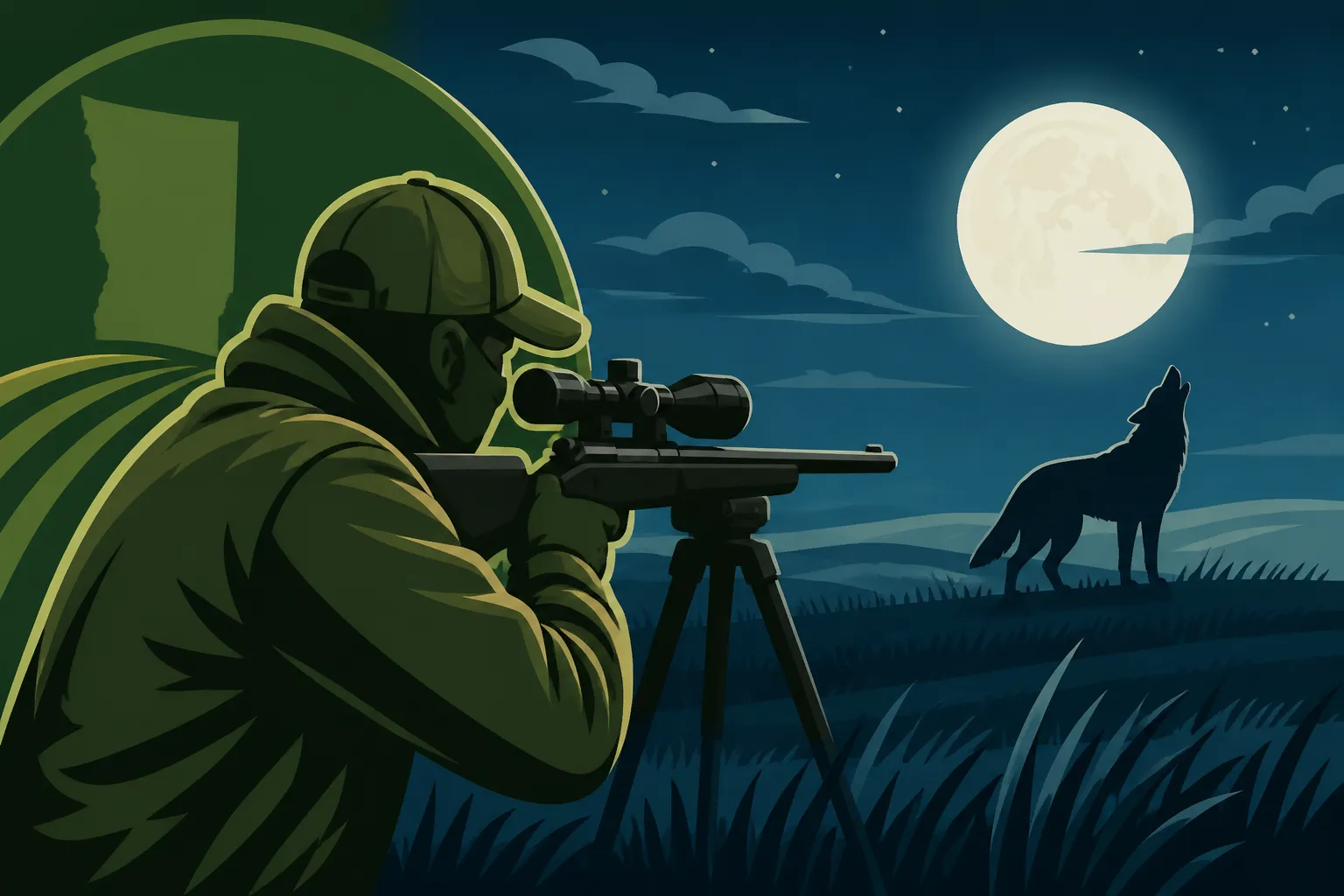
Here’s the good news for predator hunters: it is indeed possible to hunt coyotes and wolves at night in Saskatchewan. However, this isn't a free-for-all. It's permitted under very specific conditions, primarily through the issuance of a special "Night Hunting Licence" (NHL). This licence is not available to everyone and comes with stringent requirements. It's generally aimed at Saskatchewan residents who are looking to control nuisance predators, often in agricultural areas where coyotes might be preying on livestock. The provincial government recognizes the need for effective predator management, and in certain situations, night hunting can be the most effective method, especially for wary animals like coyotes. If you're looking to target these opportunistic hunters, whether by Hunting Coyotes in Saskatchewan Stubble or Hunting Wolves in the Northern Bush, understanding these specific licence requirements is paramount.
The Role of Artificial Light and Thermal/Night Vision
When it comes to night hunting, artificial light is often a necessary tool. For those holding a valid Night Hunting Licence, the use of artificial light, such as spotlights or vehicle-mounted lights, can be permitted under specific conditions. However, there are limitations. You cannot, for example, simply drive around with a spotlight shining willy-nilly. The regulations often stipulate how and when these lights can be used, usually tied directly to the act of hunting after a predator has been located.
Now, let's talk about thermal and night vision devices. These technologies have advanced dramatically, offering incredible advantages in low-light conditions. In Saskatchewan, thermal imaging and night vision devices can be used for hunting coyotes and wolves by those holding a valid Night Hunting Licence. This is a significant tool for ethical night hunting, allowing for clearer target identification and safer shot placement than traditional spotlights alone might offer in some scenarios. However, just like with artificial lights, their use must comply with the specific terms and conditions of your Night Hunting Licence. Always prioritize public safety and ensure you have a clear understanding of your target and its backdrop, even with advanced optics. Using a mapping app like GoHunt can be invaluable here, helping you identify exact property boundaries and terrain features, ensuring you stay within permitted areas and understand your shooting lanes even in the dark.
Landowner Permission and Designated Areas
This point cannot be stressed enough: night hunting for predators in Saskatchewan, particularly with the use of artificial light, is almost exclusively permitted on private land with the explicit, often written, permission of the landowner or occupant. You cannot simply decide to night hunt on Crown land or public access areas without very specific authorization, which is rare for general recreational hunting. Landowners, especially those with livestock or valuable crops, might grant permission for night predator control to mitigate damage. This is where establishing good relationships and understanding the Saskatchewan Landowner Permission Law becomes absolutely critical.
Before you even think about heading out at night, you must have that permission firmly in hand. It’s not enough to have a general "daylight" hunting permission; for night hunting, it needs to be specific. When you're knocking on doors in Saskatchewan farm country, be clear about your intentions to hunt at night, explain your safety protocols, and reassure them you understand the responsibility. Sometimes, the permission might be restricted to certain fields or areas of their property to minimize disturbance to residences or other sensitive zones. Tools like GoHunt can help you visualize property lines and discuss specific hunting areas with landowners, ensuring everyone is on the same page.
Best Practices and Ethical Considerations for Night Predator Hunting
Night hunting, even for predators, demands an even higher level of responsibility and ethical conduct than daylight hunting. The stakes are higher, visibility is reduced, and the potential for misunderstanding or accidents increases.
Safety Protocols and Equipment
Safety is paramount, full stop. When hunting at night, your field of view is significantly reduced, making target identification and assessing your backdrop much more challenging. Never take a shot unless you are absolutely certain of your target and what lies beyond it. A solid backstop is crucial. Always assume there could be other people, livestock, or structures just outside your illuminated field. If hunting with a partner, maintain constant communication, know each other’s positions, and agree on clear zones of fire.
Your equipment must be up to the task. Beyond your firearm and ammunition, a powerful, reliable spotlight with fresh batteries is non-negotiable. Headlamps for hands-free movement, communication devices (fully charged cell phone, satellite messenger in remote areas), and a comprehensive first-aid kit are essential. A high-quality mapping app like GoHunt isn't just for scouting; it's a vital safety tool at night for confirming your location, marking downed animals, and navigating unfamiliar terrain. It can prevent you from getting disoriented or accidentally crossing into unauthorized areas. Additionally, consider having a Winter Truck Kit for a Saskatchewan Hunt, especially if you're out in colder months, as conditions can change rapidly and getting stuck in a remote area at night is a serious hazard.
Respecting Landowners and Local Communities
Maintaining good relationships with landowners and the broader rural community is vital for the future of night predator hunting. When granted permission, you are a guest, and your actions reflect on all hunters. Minimize noise, especially if hunting near residences or livestock operations. Avoid shining lights directly into homes or barns. Drive slowly and carefully on rural roads, being mindful of dust or disturbing livestock.
After a hunt, leave no trace. Pack out all your garbage, spent casings, and any other items. If you successfully harvest an animal, dispose of it responsibly, away from roadsides or public view, unless the landowner has specific instructions. A quick follow-up conversation or text with the landowner after your hunt, thanking them and reporting your activity, goes a long way. This kind of respect builds trust and ensures that opportunities like these continue to be available.
Responsible and Ethical Hunting Practices
Even for predators, ethical hunting means striving for a quick, humane kill. This requires proficiency with your firearm and a solid understanding of shot placement on coyotes or wolves, which can be surprisingly tough animals. Once a shot is fired, do everything in your power to confirm the kill and recover the animal. A wounded animal at night is far harder to track and recover. Use your lights and thermal devices to sweep the area thoroughly before moving.
Avoid over-hunting a specific area, as this can make predators even warier and potentially push them into neighbouring properties where they might become a nuisance. Vary your calling techniques, whether Calling Coyotes at First Light or Hunting Coyotes Over a Winter Bait, and your approach to keep them guessing. Remember, responsible management means not just culling numbers, but understanding the local population dynamics. Using tools like GoHunt can provide insights into terrain features and potential travel corridors, helping you plan your night setups more effectively and ensure you’re hunting in a sustainable manner.
Licensing and Permitting for Night Hunting
The specific permit that allows for night hunting of coyotes and wolves in Saskatchewan is a specialized one, and it’s critical to understand its requirements and limitations.
The Night Hunting Licence (NHL)
The Night Hunting Licence (NHL) is a separate endorsement from your general hunting licence. It is generally issued to Saskatchewan residents for the purpose of controlling coyotes and wolves, primarily in response to agricultural depredation. This isn't a licence for general recreational night hunting. Eligibility is specific, and you'll need to demonstrate a legitimate reason for needing it. Often, this involves having explicit permission from a landowner who is experiencing issues with predators.
The application process for an NHL typically involves contacting the Ministry of Environment. They will provide the necessary forms and outline any specific conditions or training requirements. Remember that the NHL has its own validity period and may come with restrictions on the type of weapon, area of use, or species covered. It's a privilege, not a right, and requires strict adherence to its terms. To fully understand the broader landscape of permits, consult resources like Saskatchewan Hunting Licences and What They Cost and Saskatchewan Resident Licence Options.
Adhering to Specific WMZ Regulations
Saskatchewan is divided into numerous Wildlife Management Zones (WMZs), and while the general rules for night hunting with an NHL apply across the province, specific WMZs might have additional nuances or restrictions. It's imperative that before you head out, you consult the most current Saskatchewan Hunters' and Trappers' Guide for the specific WMZ you intend to hunt in. Pay close attention to any footnotes or special conditions listed for predator hunting. What might be allowed in one zone for predator control might have subtle differences in another. This due diligence ensures you're fully compliant with all local regulations. A mapping tool like GoHunt can be exceptionally useful here, allowing you to overlay WMZ boundaries onto detailed satellite imagery, helping you plan your hunt to stay within legal zones and understand the terrain. Knowing how to read a Saskatchewan WMZ map before you go is a fundamental step for any hunter.
Reporting Requirements and Compliance
While not always explicitly stated for every single predator harvest, good practice dictates maintaining clear records of your night hunting activities, especially when operating under an NHL. Some licences may have specific reporting requirements for animals taken. Beyond formal reporting, consider providing updates to the local Ministry of Environment office if you are undertaking significant predator control efforts in an area. This helps them with population management data.
The consequences for non-compliance with night hunting regulations are severe. Illegally hunting at night, especially without the proper licence or outside of permitted areas, can result in hefty fines, confiscation of firearms and equipment, and even suspension of your hunting privileges. These penalties are in place to deter unsafe and unethical practices. Always err on the side of caution, verify your understanding of the rules, and ensure all your documents are in order before heading afield. If you find yourself in a situation where you question the legality or safety, it's always best to pack up and get clarification. Remember that knowing what to do if you get stuck in the bush is also a critical part of compliance, as getting into trouble often leads to further scrutiny.
Summary of Legal Night Hunting vs. General Hunting Hours
To help clarify the differences, here's a quick overview of when night hunting is generally permitted versus standard hunting hours.
| Aspect | General Hunting (Most Species) | Night Hunting (Coyotes/Wolves with NHL) |
|---|---|---|
| Legal Hours | 1/2 hour before sunrise to 1/2 hour after sunset | Any time, as per NHL conditions |
| Species Covered | Deer, Moose, Elk, Birds, etc. | Coyotes, Wolves |
| Licence Required | General Hunting Licence + Tags | General Hunting Licence + Night Hunting Licence (NHL) |
| Artificial Light Use | Generally Prohibited | Permitted under NHL conditions |
| Thermal/Night Vision | Generally Prohibited | Permitted under NHL conditions |
| Location | Crown Land, Private Land (with permission) | Primarily Private Land (with explicit permission), specific Crown Land (rarely) |
| Primary Purpose | Recreation, Meat, Trophy | Predator Control, Nuisance Management |
| Safety Considerations | High, but visibility helps target ID | Extremely High, target ID critical, backstop vital |
Disclaimer
The information provided in this guide is for general informational purposes only and is not legal advice. Hunting regulations in Saskatchewan can change. Always consult the most current Saskatchewan Hunters' and Trappers' Guide published by the Ministry of Environment, as well as any relevant federal regulations, before engaging in any hunting activities. It is your responsibility to know and obey all applicable laws.