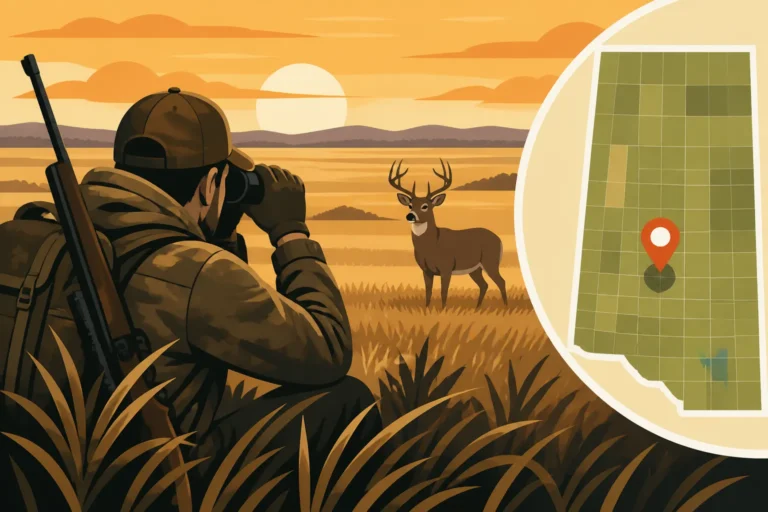
Hunting a Native Grassland Pasture
Hunting a native grassland pasture in Saskatchewan can feel like a daunting task, especially when you're used to the thick cover of the bush or the defined edges of farmland. The sheer vastness and seemingly endless stretches of rolling hills and waving prairie grasses can leave a hunter feeling exposed and unsure of where to even begin. This guide will walk you through understanding these unique hunting grounds, identifying the game that thrives there, and developing effective strategies to turn those wide-open spaces into successful hunting opportunities, all while navigating the nuances of access and ethics.
Understanding Native Grassland Pastures in Saskatchewan
Saskatchewan's native grasslands are truly a sight to behold, a living relic of what much of the prairie once looked like. Unlike cultivated fields or managed hayland, these pastures consist of complex ecosystems of diverse grasses, forbs, and wildflowers that have evolved over millennia, shaped by grazing animals and natural processes. For a hunter, this isn't just pretty scenery; it's a completely different kind of hunting environment that demands a unique approach. It's easy to look at a sea of grass and think there's nowhere for game to hide, but that couldn't be further from the truth. The subtle dips, rises, and hidden draws are natural sanctuaries.
One of the main frustrations hunters face with native grassland is the perception of a lack of cover. We're often conditioned to look for treelines, bush bluffs, or heavy timber. On native prairie, the cover is subtler, relying on topography, the height and density of the grass itself, and the incredible camouflage of the animals that call it home. Learning to "read" these landscapes is a skill that takes time, but it's incredibly rewarding. You'll soon start to see the faint trails, the subtle changes in grass height that indicate a travel corridor, or the slight depression where a deer might bed down for the day.
The Ecosystem and Its Appeal to Game
Native grassland ecosystems are incredibly resilient and productive, supporting a surprising diversity of wildlife. The rich soil, nourished by generations of plant life, provides forage for everything from microscopic insects to large ungulates. Think of the deep-rooted prairie grasses; they offer not just food but crucial cover from predators and the harsh prairie elements. They hold thermal cover in winter and shade in summer. This complex tapestry of plant life creates microhabitats within the larger pasture, each offering something different to various game species.
These areas are especially appealing to game because they often include crucial features like shallow depressions that might hold water, dense stands of silverberry or chokecherry in low spots, or even the remnants of old homesteads that offer a touch of vertical cover. Whitetails might tuck into a brushy draw, while mule deer prefer the sun-drenched slopes of a coulee. Even small rodents and insects thrive here, forming the base of a food chain that supports predators like coyotes, badgers, and various raptors. It's a vibrant, interconnected world, far from the barren landscape it might appear to be at first glance.
The quality of forage in native grasslands is another huge draw. The diverse grasses and forbs provide a higher nutritional value than monoculture crops, contributing to the health and size of the animals that browse and graze here. This rich diet, combined with the often sparse human disturbance, allows animals to grow to impressive sizes and develop robust antler growth. Hunters often target these areas for the chance at a truly mature animal that has spent its life thriving on nature's bounty.
Identifying Native Grassland Areas
Finding true native grassland pastures isn't always as simple as looking for green on a map. Many "pastures" in Saskatchewan are actually tame forage, seeded with non-native grasses. While these can also hold game, native grasslands often offer a more wild experience and distinct habitat. Your best bet is to use mapping tools that show land cover types. Satellite imagery on platforms like onX Hunt or even Google Earth can be incredibly helpful in distinguishing native prairie from cultivated land. Look for areas with a varied texture, often a more yellowish-brown hue in late summer or fall, lacking the uniform patterns of crop fields.
Another key identifier is topography. Native grasslands often follow the natural contours of the land, featuring rolling hills, coulees, and river breaks that haven't been flattened by agricultural machinery. Areas designated as Community Pastures or lands managed by the Saskatchewan Fish and Wildlife Development Fund (FWDF) are strong candidates for native grassland, as these are often preserved for grazing and wildlife habitat. Consulting a Reading a Saskatchewan WMZ Map Before You Go can highlight these larger land classifications and help you narrow down your search.
Physical characteristics on the ground are also telling. You'll notice a greater diversity of plant species, not just one or two types of grass. You might find buffalo berry, sagebrush, or various wildflowers alongside the grasses. The ground itself might feel less disturbed, often without the deep ruts of heavy equipment. Pay attention to fence lines, too; often, one side of a fence will be cultivated, and the other, a native pasture, will stand in stark contrast, showcasing the natural vegetation.
Key Species and Their Habits in Grassland Pastures
Native grasslands, despite their open appearance, are absolute magnets for certain game species. It's a common misconception that all big game prefers dense forests. While some do, other species are perfectly adapted to using the subtle undulations and persistent cover of the prairie. Understanding which animals you're likely to encounter and, more importantly, how they use this unique environment is fundamental to your success.
The trick to hunting these areas isn't about finding thick cover for yourself, but learning to identify where the game finds their cover. This often means glassing for extended periods, using high-quality optics, and patiently dissecting the landscape for any sign of movement or hidden forms. It's a game of patience and observation, far removed from still-hunting timber.
Whitetails and Mule Deer in the Grass
While whitetails are often associated with the bush, Saskatchewan's prairie whitetails are masters of adaptation. In native grasslands, they'll use deep coulees, willow bottoms, small bluffs of aspen or brush, or even just tall, dense grass to bed down. These deer often follow historical game trails that cut through the undulating terrain, moving between bedding areas, water sources, and any nearby crop fields for feeding. Don't be surprised to find a big buck tucked into a small clump of brush in what seems like the middle of nowhere; they are incredibly adept at making themselves invisible. Hunting a Prairie Coulee Bottom can be a prime strategy for these animals.
Mule deer, on the other hand, are quintessential grassland dwellers. Their large ears, keen eyesight, and bounding gait are perfectly suited for this open environment. They prefer the more rugged terrain, often found on the slopes of coulees, along river breaks, or in the badlands areas within large pastures. Unlike whitetails, mule deer are more likely to bed on an open hillside, relying on their camouflage and the vastness of the landscape to avoid detection. They will often hold tight, allowing a hunter to walk past if they feel unthreatened, only to bust out at the last moment. For a focused hunt, mastering Spot-and-Stalk Mule Deer in Saskatchewan techniques is crucial here.
When hunting either species in these environments, always consider the wind. In open country, your scent can carry for incredible distances. Approaching from downwind is paramount. Also, be aware of their feeding patterns. Both deer species will often move into nearby crop fields or agricultural edges at dusk to feed, returning to the safety of the native pasture's cover during daylight hours. This means glassing transitions, where the pasture meets cultivated land, can be very productive, especially at first and last light.
Upland Birds and Waterfowl Opportunities
Native grassland pastures are a paradise for upland bird hunters. Sharp-tailed grouse are practically synonymous with these landscapes, frequenting the rolling hills and sagebrush flats. They often hold tight, offering exciting flushes for hunters with or without a dog. Hungarian partridge, while preferring the edges of cultivation, will also use the denser cover found in native grassland pockets, especially where it borders stubble fields. Walking Up Sharp-Tailed Grouse in Saskatchewan is a classic prairie hunting experience, and these pastures are prime territory.
For waterfowl hunters, native pastures dotted with potholes or sloughs can offer fantastic opportunities. Many of these natural wetlands, often too small or numerous to drain for agriculture, become critical staging and feeding grounds for ducks and geese. While the main focus for geese might be crop fields, ducks will readily use these grassland potholes, especially early in the season. Remember, Non-Toxic Shot for Saskatchewan Waterfowl is mandatory for all migratory bird hunting.
The key to successful bird hunting here is covering ground. Whether you're walking up grouse or hunting edges for Huns, you need to be prepared to hike. For waterfowl, careful scouting of specific potholes or flight lines is essential. Sometimes, a small, unassuming slough in the middle of a large pasture can be holding dozens of ducks, providing an unexpected bonus to a big game hunt.
Strategies for Hunting Native Grassland Effectively
Hunting native grassland requires a shift in mindset and tactics from what you might be used to in timber or dense bush. The cover is different, the game behavior is different, and your approach needs to adapt accordingly. It's not about hiding in the trees; it's about using the land's natural contours to your advantage, maximizing your line of sight, and embracing the challenge of open-country hunting.
One of the biggest frustrations for hunters new to this terrain is the feeling of being completely exposed. You might be accustomed to sneaking through the woods, barely visible. Here, you're often silhouetted against the sky. The trick is to use that to your advantage, by becoming a master of reading the landscape and moving smart, rather than simply hiding. Patience, a good pair of binoculars, and a willingness to walk are your most valuable assets.
Scouting and Reading the Terrain
Effective scouting is paramount in native grasslands. Since thick cover is minimal, animals rely heavily on topography for concealment. This means spending significant time before your hunt, and during it, with good optics. Start by using satellite imagery from tools like onX Hunt or GoHunt to identify key features: coulees, draws, isolated clumps of brush, old farmsteads, or even subtle rises that might offer a thermal advantage. Look for patterns of use – areas where trails converge, or where the terrain offers natural bedding locations with good visibility. Reading Saskatchewan Crown Land Layers on onX can save you countless hours of unproductive walking.
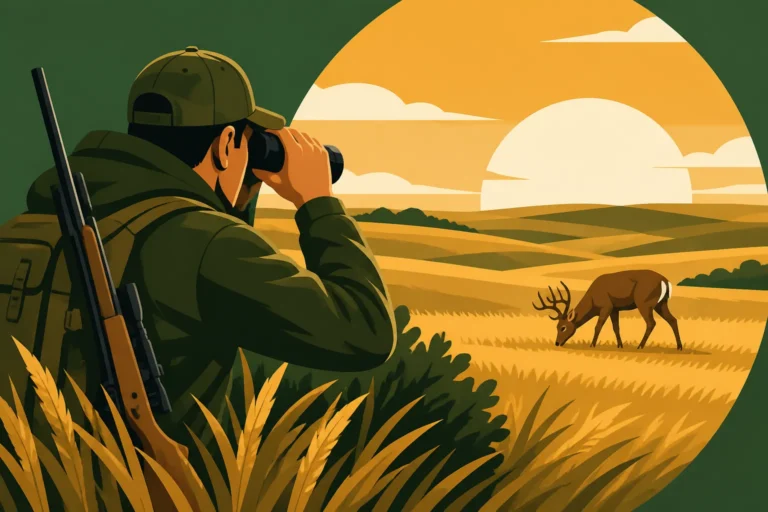
Once on the ground, use your binoculars to systematically glass the landscape. Don't just scan; pick apart every square yard. Look for anything that breaks up the natural patterns – a horizontal line that could be a deer's back, an antler tines glinting in the sun, or even just a darker patch that seems out of place. Pay close attention to wind direction, as this will heavily influence how animals move and where they choose to bed. A good spot to glass from is often a high point, but always be aware of your own silhouette. Sometimes, glassing from lower ground into a coulee can be more effective.
Walking the edges of these pastures where they meet cultivated land can also reveal valuable intel. Game often moves between the safety of the pasture and the bounty of the fields. Look for tracks, scat, and rubs along these transition zones. Remember, Scouting a Saskatchewan Wildlife Management Zone is not just about finding game, but understanding their patterns and how they interact with the specific environment of that pasture.
Approaching and Stalking Tactics
Once you've spotted game, the real challenge begins: the stalk. In open country, this demands extreme patience, careful use of available cover, and an unwavering respect for the wind. Always try to approach from downwind, even if it means taking a much longer, circuitous route. Use every dip, rise, and clump of grass to your advantage, moving slowly and deliberately. Think like a predator, using the ground to break up your outline.
A successful stalk in native grassland often involves crawling, belly-crawling, or moving on your hands and knees for significant distances. This is where good knee pads and durable clothing come in handy. Never move when the animal is looking in your direction. If they pick up their head, freeze. Wait until they return to feeding or looking away before resuming your movement. It's often a game of inches, making incremental progress towards a shooting position. Stalking Mule Deer in Open Prairie is an art form in itself, requiring meticulous planning and execution.
If the terrain simply offers no cover for a stalk, sometimes the best strategy is to be patient and wait for the animal to move into a more favorable position. This might mean watching it for hours, understanding its direction of travel, and positioning yourself for an ambush. For upland birds, a classic "walk-up" strategy, systematically covering ground with a keen eye for flushes, is often most effective. For both big game and birds, remember that distances can be deceptive in open country; rangefinders are absolutely essential.
Understanding Access and Regulations
Access to native grassland pastures in Saskatchewan can vary significantly. Many of these areas are Crown land, some managed as Community Pastures, others as part of the Fish and Wildlife Development Fund (FWDF). However, a vast amount of grassland is also privately owned and often used for cattle grazing. It's critical to know who owns the land and to always obtain permission before hunting on private property. Knocking on Doors in Saskatchewan Farm Country is a time-honored tradition and the best way to secure access.
For Crown land, be aware of specific regulations. Some Community Pastures might require contact with the pasture manager for access, especially during grazing season. FWDF lands are generally open to foot traffic for hunting, but always double-check the specific rules for the parcel you intend to hunt. Posted land regulations are also critical: Saskatchewan Posted Land Sign Rules dictate what constitutes proper posting and what your responsibilities are as a hunter. Never assume land is public or accessible; always verify.
Regardless of land ownership, always be mindful of livestock. Cattle are often present on these pastures. Give them a wide berth, and never harass them. Close gates behind you, respect existing infrastructure, and leave no trace of your presence. Remember that responsible hunting practices include being a good steward of the land and building positive relationships with landowners and managers.
Gear and Safety Considerations for Grassland Hunts
Hunting native grassland pastures presents its own unique set of challenges, especially when it comes to gear and safety. The vast, open nature of these environments means you need to be prepared for everything from extreme weather shifts to the deceptive distances that can play tricks on your eyes. Investing in the right equipment isn't just about comfort; it's about safety and increasing your chances of success.
It's easy to underestimate the prairie. While it might look flat and uneventful, it can change in an instant. A sunny, calm morning can turn into a howling blizzard or a torrential downpour by afternoon. Being caught unprepared miles from your vehicle is a serious situation, so planning ahead for all contingencies is non-negotiable.
Essential Gear for Open Country
When hunting native grasslands, optics are king. A high-quality pair of binoculars (10×42 or 12×50 are excellent choices) is non-negotiable for glassing vast expanses. A spotting scope can also be incredibly useful for long-distance identification and assessing animals before making a move. Pair these with a reliable rangefinder; judging distance in open country is notoriously difficult, and a rangefinder ensures ethical shots.
Clothing needs to be versatile and able to handle rapid temperature changes and wind. Layering is key: start with a good base layer, add insulating layers, and top it off with a windproof and waterproof outer shell. Even on sunny days, the prairie wind can cut right through you. Durable, comfortable hiking boots are a must, as you'll be covering a lot of ground. Consider gaiters to keep burrs and seeds out of your socks and boots. A good pack for carrying extra layers, water, snacks, and your optics is also essential.
Don't forget navigation tools. While your phone with a mapping app like onX Hunt is invaluable, always carry a physical map and compass as a backup, and know how to use them. Cell service can be spotty in remote grassland areas. A satellite communication device for emergencies, especially if you're hunting alone, is also a smart investment.
Navigating Weather and Terrain Challenges
Saskatchewan weather is famously unpredictable, and on the open prairie, there's little to hide from it. A sunny, mild morning can quickly give way to strong winds, sudden thunderstorms, or even an unexpected early season snowfall. Always check the forecast, but be prepared for conditions to change rapidly. Wind chill can be a significant factor, even when temperatures seem moderate.
Terrain-wise, while not mountainous, native grasslands can still be physically demanding. Rolling hills can mean constant elevation changes, and soft, uneven ground can be tiring. Hidden badger holes or gopher mounds pose tripping hazards, especially when you're focused on spotting game. Always watch your footing, and be aware of your surroundings. A Winter Truck Kit for a Saskatchewan Hunt is an absolute must if you're hunting late in the season, as roads can drift in with snow or become impassable.
Safety extends beyond just weather and terrain. Carry a well-stocked first-aid kit, and let someone know your hunting plans, including your route and expected return time. Be aware of other hunters, especially on public land; blaze orange requirements are there for a reason, and you should always be visible. Always be absolutely certain of your target and what is beyond it, as backgrounds can be very long and open in these areas. Saskatchewan Hunter Education Requirements covers many of these crucial safety principles, and a refresher is always a good idea.
Disclaimer
This article is for general informational purposes only and does not constitute professional advice. Laws, prices and regulations vary by location and change over time. Consult a qualified professional for guidance on your specific situation.