Saskatchewan’s Grouse Species and Their Country
The vast prairies and sprawling boreal forests of Saskatchewan hold a hidden treasure for upland bird hunters: its diverse and often challenging grouse species. It's easy to get overwhelmed trying to figure out which bird lives where, what they look like, and the best ways to hunt them across such varied terrain. This comprehensive guide will walk you through the distinct characteristics, preferred habitats, and effective hunting strategies for Saskatchewan's primary grouse species, ensuring you're well-prepared for your next upland adventure.
The Feathered Gems of Saskatchewan's Uplands
Saskatchewan is home to three main species of grouse that offer unique hunting experiences. Each one has its own charm, its own preferred haunts, and presents a distinct challenge to the hunter. Understanding these differences is the first step to successful upland hunting in this beautiful province.
The Iconic Sharp-Tailed Grouse
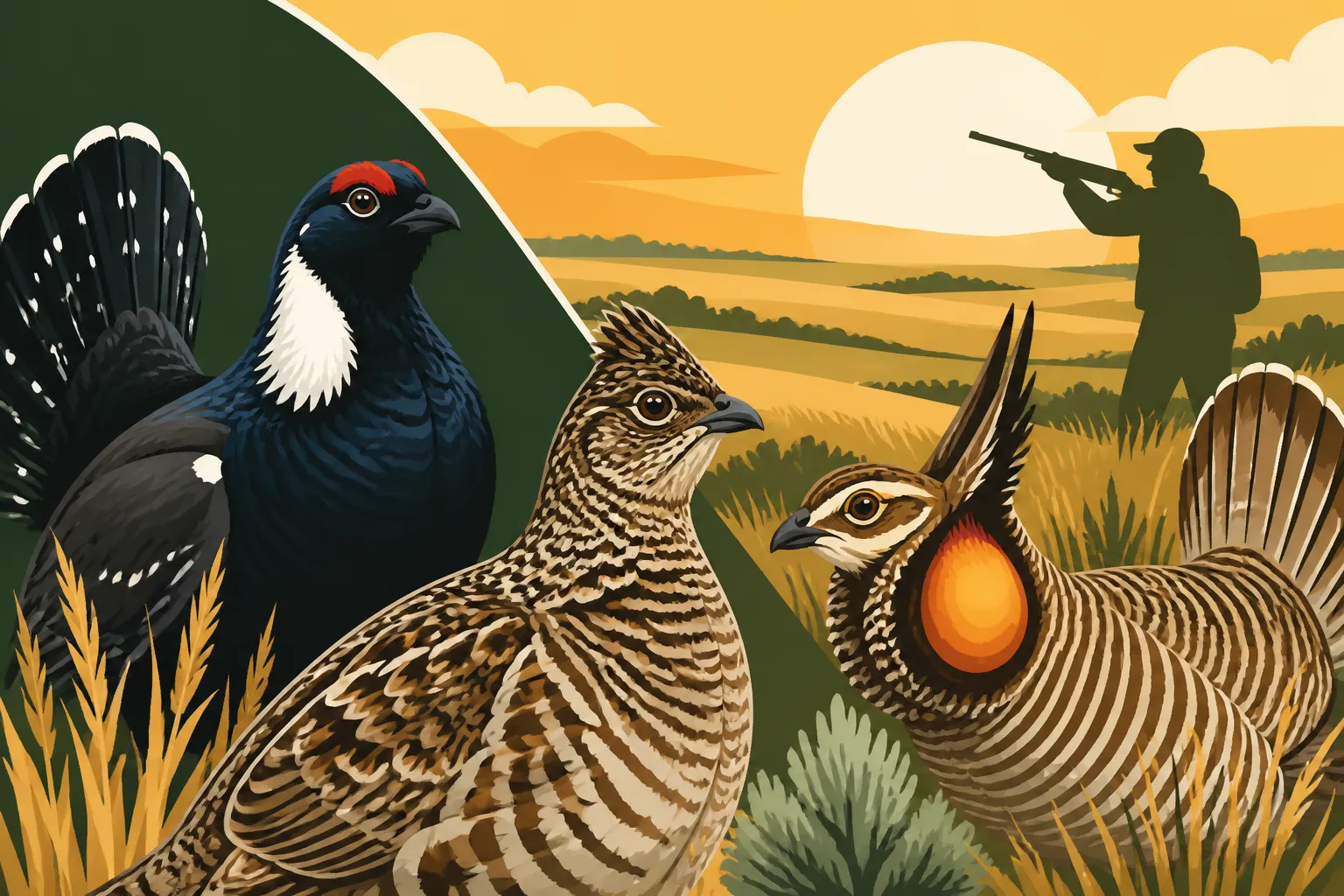
Often considered the quintessential prairie grouse, the sharp-tailed grouse is a bird many hunters associate with Saskatchewan's open landscapes. These birds are truly magnificent to behold, with their distinctive pointed tail feathers, hence the "sharp-tailed" name, and intricate barred plumage that helps them blend seamlessly into their grassy environments. You'll find them ranging in size from roughly a pound and a half to two pounds, with males slightly larger. They're known for their social nature, particularly during their spring courtship displays on traditional "lek" sites, where males dance and vocalize to attract mates. This social aspect means that if you find one, you'll often find several.
Sharp-tailed grouse thrive in Saskatchewan's aspen parkland, native grasslands, and the edges of agricultural fields. They love areas with a mix of tall grass for cover and nesting, along with scattered brush and small trees for roosting and protection from predators. You'll frequently encounter them near the transition zones where stubble fields meet native prairie or a bluff of aspens. Their historical significance on the prairie is immense, having been a food source for Indigenous peoples and early settlers. While their populations fluctuate with habitat changes and weather patterns, they remain a strong presence across much of the province. Their distinctive cackle and quick, powerful flight make for an exhilarating flush, often surprising the unsuspecting hunter.
The Elusive Ruffed Grouse
When you head into the bush and hear the rhythmic drumming sound echoing through the trees, you know you're in ruffed grouse country. These forest dwellers are masters of camouflage, their mottled brown and grey plumage blending perfectly with the dappled light of the forest floor. What truly sets them apart is the "ruff" of iridescent feathers on their neck, which males display during courtship, and their fan-shaped tail banded with a distinct dark strip. They're slightly smaller than sharp-tails, typically weighing between one and one and a half pounds, but what they lack in size, they make up for in explosive power when flushed.
Ruffed grouse are the birds of the boreal forest and aspen parkland, favoring young, regenerating forests, willow thickets, and riparian zones along creeks and rivers. They love dense cover where they can hide from predators and find a plentiful supply of berries, buds, and insects. Old logging roads and overgrown trails are prime locations, as these openings provide access to sunlight and diverse vegetation while still offering quick escape routes into thick cover. The "drumming" you hear is the male rapidly beating his wings against the air to create a vacuum, a sound that can carry for surprising distances and is a sure sign you're in their territory. Hunting Ruffed Grouse on a Saskatchewan Bush Road is a classic experience for many.
The Resilient Spruce Grouse
Often overlooked by hunters due to their remote habitat and less explosive nature, the spruce grouse is a true resident of Saskatchewan's dense northern forests. These birds are the smallest of the three, usually weighing under a pound, and are identifiable by their dark, barred plumage, with males sporting a striking red comb above their eyes. Their incredible camouflage makes them incredibly difficult to spot, even when they're right in front of you. They are sometimes referred to as "fool hens" because of their tendency to hold tight, often allowing hunters to walk right past or even almost step on them before flushing.
Spruce grouse are inextricably linked to the coniferous forests of the boreal shield. They are found almost exclusively in dense stands of spruce, pine, and fir, often in muskeg areas or along the edges of peat bogs. Their diet primarily consists of conifer needles, especially spruce, which gives their meat a slightly resinous flavour if not prepared correctly. This specialized diet and habitat preference means they are rarely found outside of these specific forest types. Hunting Spruce Grouse in Black Spruce requires a specific approach and knowledge of these unique environments. While they might not offer the dramatic flush of a sharp-tail or ruffed grouse, finding and successfully harvesting a spruce grouse is a rewarding experience that speaks to the deeper wilderness hunting spirit.
Understanding Grouse Habitat: Where to Find Your Birds
Knowing what each grouse species looks like is only half the battle. The real key to consistent success lies in understanding their preferred environments, which often dictate their behaviour and accessibility. Saskatchewan's vast and varied landscape offers distinct "country" for each of these birds.
Sharptail Sanctuaries
Sharp-tailed grouse are true creatures of the open and semi-open landscapes. Their ideal habitat is a mosaic of native prairie, cultivated fields, and aspen bluffs. When you're scouting for sharptails, look for areas where these different cover types converge. Think about the transition lines: where a large expanse of stubble gives way to a patch of short, native grass, or where a willow-lined coulee cuts through a rolling pasture. These edges provide both food sources and essential cover. GoHunt mapping tools, for instance, can be invaluable for identifying these transitional areas and large blocks of grassland.
They often utilize the taller, denser grasses for nesting and rearing young, while shorter, sparse grass might be where they feed on insects and seeds. During the fall and winter, agricultural fields, especially those of barley, wheat, or lentil, become critical feeding grounds. A well-placed shelterbelt or a small bluff of aspens adjacent to a field can be a prime spot, offering refuge from the wind and predators. You might find them in the morning feeding in a stubble field and then moving to a nearby bluff or heavy grass for the midday loaf. Pay close attention to the contours of the land; sometimes, even a subtle rise or a slight depression in the prairie can offer enough cover to hold a covey of birds.
Ruffed Grouse Realms
Ruffed grouse are the masters of the mixed-wood forest. Their realm is characterized by dense undergrowth, young trees, and a diverse canopy. To find ruffed grouse, focus on areas with a high density of aspen, poplar, birch, and willow. These trees provide the buds and catkins that are a crucial food source, especially in winter. Look for areas with a mix of different age classes of trees, as they provide varied cover and food throughout the year. For example, a clear-cut area that has been regenerating for 5-15 years often creates fantastic ruffed grouse habitat, with dense new growth and abundant berry-producing shrubs.
Riparian zones, those lush areas along creeks, rivers, and sloughs, are also hotspots. The increased moisture supports a richer variety of vegetation, creating prime foraging and hiding spots. Old logging roads, ATV trails, and even overgrown fence lines that cut through aspen bluffs act as natural travel corridors and feeding areas, making them excellent places to walk and hunt. The key is to find variety within the forest – a mix of dense cover, openings, and water sources will almost certainly hold birds. These types of locations are often highlighted on topographic maps, which you can access through apps like GoHunt. Consider consulting a Saskatchewan WMZ Map Before You Go to target zones with suitable forest cover.
Spruce Grouse Strongholds
Hunting spruce grouse takes you deep into the heart of Saskatchewan's boreal forest. These birds have a highly specialized habitat requirement, favoring mature and dense coniferous stands. Think black spruce bogs, jack pine ridges, and areas with a thick understory of evergreen shrubs. They often prefer areas with a significant amount of ground cover from fallen trees, moss, and dense evergreen saplings, which provide both shelter and their primary food source.
Unlike the other grouse species that might utilize edges or open areas, spruce grouse are true interior forest birds. They are less likely to be found on the edges of fields or along wide open trails. Instead, focus your efforts on traversing the quieter, thicker sections of the forest, particularly those with a continuous canopy of conifers. These habitats often occur in the northern reaches of the province, where the boreal forest truly dominates the landscape. Accessing these areas sometimes means navigating old seismic lines, cutlines, or just good old-fashioned bushwhacking. Their reliance on specific tree species and dense cover makes them more predictable in terms of location but much harder to spot before they flush.
Strategies for Success: Hunting Saskatchewan's Grouse
Successfully hunting grouse in Saskatchewan often boils down to understanding the birds' behaviors and adapting your approach to their specific habitat. Whether you're covering miles of prairie or navigating dense bush, a few key strategies will increase your odds.
Walking Up Sharptails
Hunting sharp-tailed grouse is often a game of covering ground and anticipating the flush. Most hunters employ a "walking up" strategy, traversing likely habitat either alone or with a partner. The goal is to walk in a pattern that systematically covers an area, pushing birds towards an open edge or into a position where you can get a clean shot. Early mornings and late afternoons are often the most productive times, as birds are typically more active and feeding. When walking, pay attention to subtle changes in elevation, clumps of brush, and the edges where different cover types meet, as these are prime holding spots.
A well-trained pointing dog can be an absolute game-changer for sharp-tailed grouse. These dogs will lock up on scent, giving you time to approach the bird and prepare for the flush. Without a dog, you need to be constantly vigilant, ready to raise your shotgun at a moment's notice. When a covey flushes, try to pick out a single bird and focus on it, as they often scatter in multiple directions. Consider Walking Up Sharp-Tailed Grouse in Saskatchewan as a classic upland pursuit. For hunters without dogs, hunting along a Summerfallow Field Border can be very effective, as the birds often use the field for feeding before moving into the cover of the border.
Ruffling Feathers in the Bush
Hunting ruffed grouse typically involves a slower, more methodical approach through their wooded domain. Still-hunting, where you move slowly and deliberately, pausing frequently to listen and scan ahead, is very effective. These birds will often hold tight, relying on their camouflage, so a keen eye is essential. Focus on walking old trails, logging roads, and through aspen thickets. Listen for the distinctive drumming, which can help pinpoint a general area, though it's more common in spring.
Flushing dogs, like English Springer Spaniels or Brittany Spaniels, are excellent companions for ruffed grouse hunting. They'll work ahead, crashing through the cover and flushing birds into the air, giving you a target. If hunting without a dog, walk with purpose, but be prepared to stop suddenly, as a bird might flush unexpectedly from a dense clump of willows just feet away. The flush of a ruffed grouse from thick cover is one of the most exciting moments in upland hunting, a burst of speed and sound that demands quick reflexes. You can learn more about Using a Flushing Dog in Thick Cover for this type of hunting.
Stealth and Patience for Spruce Grouse
Hunting spruce grouse demands a different kind of patience and attention to detail. These birds are known for holding incredibly tight, often refusing to flush until nearly stepped on. This means you need to slow down, sometimes to a snail's pace, and meticulously scan the ground and lower branches of conifers. Their excellent camouflage makes them incredibly hard to spot. Many hunters find them almost by accident while still-hunting for big game or ruffed grouse.
When you do find a spruce grouse, it's often a unique experience. They may simply walk away slowly, or if pressured, make a short, weak flight to a nearby branch. Because of their calm nature, a slow, deliberate walk through their dense conifer habitat is often the most effective method. A pointing dog can be very useful here, as they'll often point the bird well before you see it. The key is to be observant, move quietly, and accept that you might cover a lot of ground before encountering one of these hardy forest birds.
Seasons, Regulations, and Conservation Efforts
Understanding the rules and the broader conservation landscape is paramount for any responsible hunter in Saskatchewan. This ensures not only legal compliance but also the sustainability of these cherished upland resources for future generations.
Navigating Saskatchewan's Upland Seasons
Saskatchewan offers generous seasons for upland game birds, including grouse, generally starting in early September and running through to mid-December. Specific dates can vary slightly by Wildlife Management Zone (WMZ), so always consult the current year's Saskatchewan Hunters' and Trappers' Guide. Daily bag limits and possession limits are also clearly outlined for each species. For sharp-tailed, ruffed, and spruce grouse, the daily bag limit is typically 5 birds, with a possession limit of 15. This allows for ample opportunity to enjoy diverse hunts across the province.
It's crucial to distinguish between the different grouse species as their seasons and bag limits are typically uniform, but understanding the identification is key for accurate reporting and appreciation of your harvest. While not a grouse, Hungarian partridge are often hunted in similar fashion and share similar season dates and limits, so many hunters pursue them concurrently. Always make sure your provincial hunting license and Wildlife Habitat Certificate are current. You can find detailed information on Saskatchewan Upland Bird Seasons in the official guide.
Responsible Hunting and Conservation
Responsible hunting practices are at the core of conservation. This includes ethical shooting, respecting land, and understanding the role hunters play in managing wildlife populations. While Chronic Wasting Disease (CWD) is a major concern for deer, moose, and elk in Saskatchewan, it is not currently known to affect grouse species, so CWD testing is not required for upland birds. However, understanding general wildlife health and reporting any unusual observations is always a good practice.
Grouse populations, especially sharp-tails, can experience natural cycles of boom and bust, influenced by weather, habitat conditions, and predator populations. Organizations like the Saskatchewan Wildlife Federation (SWF) and Ducks Unlimited Canada play vital roles in habitat preservation and restoration, benefiting grouse and countless other species. Hunters contribute directly to these efforts through licence fees and stamps. Learning about Why Sharptail Numbers Rise and Fall can give you a deeper appreciation for these cycles. Continuing education through programs like Saskatchewan Hunter Education Requirements ensures all hunters understand these responsibilities.
Tools and Resources for the Grouse Hunter
In today's age, technology significantly aids hunters. Digital mapping applications, such as GoHunt, are indispensable for scouting and navigating unfamiliar terrain. These apps provide detailed satellite imagery, property boundaries, and often overlay various land classifications like Crown land and Wildlife Management Zones. This allows you to identify potential grouse habitat, mark access points, and plan your routes efficiently, especially when Hunting Whitetails on Saskatchewan Crown Land (a useful skill for finding grouse too).
Beyond digital tools, local knowledge is invaluable. Connecting with local hunters, joining a Saskatchewan Wildlife Federation branch, or simply knocking on doors in farm country can yield valuable insights into local hot spots and land access. Always remember to ask for permission before accessing private land. The provincial government's hunting guide is your ultimate regulatory resource, providing all legal requirements and updates.
The Thrill of the Chase: Beyond the Shot
Hunting grouse is about more than just the harvest; it's about the experience, the connection to nature, and the satisfaction of a challenge met. From field care to enjoying the meal, every aspect contributes to the overall adventure.
Field Care and Culinary Delights
Once a grouse is harvested, proper field care ensures the best quality meat for the table. The most common method is to breast out the bird, removing the breast meat from the carcass immediately. This significantly reduces weight and bulk for transport, especially if you're hiking a long distance. Some hunters prefer to pluck and dress the entire bird, which is also excellent, particularly for larger grouse. Cool the meat as quickly as possible, especially in warmer early season temperatures. A small cooler with ice can be a lifesaver.
Grouse meat is lean and flavourful, with a mild gamey taste that varies slightly by species and diet. Sharp-tailed grouse, feeding on prairie grains and berries, often have a lighter, sweeter flavour. Ruffed grouse, with their diet of buds and berries, are also prized. Spruce grouse, consuming conifer needles, can sometimes have a stronger, more resinous flavour, which can be mitigated by soaking the meat in buttermilk or saltwater before cooking. They are excellent pan-fried, roasted, or used in stews and pies.
The Joy of a Grouse Dog
For many upland hunters, the experience is truly enhanced by the presence of a well-trained bird dog. The partnership between hunter and dog is a deeply rewarding aspect of grouse hunting. A pointing dog's intense focus as it locks onto scent, or a flushing dog's energetic quartering through thick cover, adds an entirely new dimension to the hunt. Dogs not only help locate birds that would otherwise be missed but also aid in retrieving downed game, minimizing lost birds.
Choosing the right dog breed depends on your preferred hunting style. Pointers (like German Shorthaired Pointers, English Pointers, or Setters) excel at finding and holding birds, allowing the hunter to walk in for the shot. Flushers (like Labrador Retrievers, Springer Spaniels, or Brittany Spaniels) work closer, pushing birds out of cover. Regardless of breed, consistent training and plenty of field experience are essential for a successful grouse dog. The bond formed over countless hours in the field, witnessing your dog's instincts at work, is truly unforgettable. Using a Pointing Dog on Saskatchewan Prairie is a testament to this unique hunting relationship.
Planning Your Grouse Adventure
Planning is key to a successful and enjoyable grouse hunt in Saskatchewan. Start by deciding which species you'd like to target and then research the appropriate Wildlife Management Zones that hold those birds. Utilize online maps, like those offered by GoHunt, to identify potential habitats – grasslands and aspen bluffs for sharp-tails, dense mixed woods for ruffed grouse, and conifer stands for spruce grouse. Consider the time of year; early season offers milder weather but denser cover, while late season provides less cover but potentially colder temperatures.
Pack appropriate gear for walking long distances in varied terrain. Comfortable, sturdy boots are a must. Layered clothing is crucial for adapting to Saskatchewan's unpredictable weather. A good bird vest or backpack to carry water, snacks, extra shells, and your harvested birds is essential. Don't forget bug spray, especially in early season. If you're heading into remote areas, carry a GPS or satellite communication device for safety. Review resources on Hunting Saskatchewan Winter Weather Safely if planning a late-season outing. Being prepared for diverse conditions and challenging terrain will make your grouse hunting adventure in Saskatchewan more productive and much more enjoyable.
Table: Saskatchewan Grouse Species at a Glance
For a quick reference, here's a summary of the key characteristics of Saskatchewan's primary grouse species:
| Grouse Species | Key Identification | Primary Habitat | Common Hunting Method |
|---|---|---|---|
| Sharp-Tailed Grouse | Pointed tail, barred flanks, cackling flush | Open grasslands, aspen parkland, stubble | Walking, pointing dogs, systematic sweeps |
| Ruffed Grouse | Fan-shaped tail with dark band, neck ruffs, drumming | Aspen forests, willow thickets, bush roads | Still-hunting, flushing dogs, walking trails |
| Spruce Grouse | Dark, camouflaged plumage, red comb (male) | Dense coniferous forests, muskeg | Slow walking, stealth, pointing dogs |
Disclaimer
Hunting and fishing regulations can change. Always consult the official Saskatchewan Hunters' and Trappers' Guide for the most current and accurate information before planning any hunting trip. This guide is for informational purposes only and does not constitute legal advice.