When the Elk Rut Peaks
There’s a magic window every fall when the elk woods come alive with bugles and intense activity, but knowing exactly "When the Elk Rut Peaks" in Saskatchewan can feel like chasing a ghost. We all dream of being in the right place at the right time, hearing those spine-tingling calls, and witnessing the spectacle of bull elk battling for dominance. This guide is all about helping you pinpoint that elusive peak, understand what drives it, and how to best position yourself for success during this incredible period.
Understanding the Saskatchewan Elk Rut Cycle
The elk rut is an annual spectacle, a primal dance of dominance and reproduction that defines a specific window in the fall hunting season. For us hunters, understanding this cycle is paramount to maximizing our chances of success. It's not just about showing up; it's about understanding the progression, from the first tentative bugles to the full-blown, chaotic symphony of the peak. Saskatchewan’s diverse landscapes, from the rolling Aspen Parkland to the deep Forest Fringe, host healthy elk herds, and their rutting behavior, while consistent in its phases, can have subtle variations based on local conditions.
The Phases of the Rut: From Pre-Rut to Post-Rut
The elk rut isn't a single day; it's a gradual build-up, a crescendo, and then a tapering off. Think of it like a three-act play.
The Pre-Rut (Late August to Early September): This is when things start to stir. Bulls, having spent the summer in bachelor groups, begin to separate. Their velvet is shed, and they'll start rubbing their antlers on saplings and small trees, polishing them up for the battles to come. We might hear some tentative, almost half-hearted bugles – a bull testing the waters, perhaps just announcing his presence. Cows are still largely uninterested, focused on feeding and tending to their calves. For hunters, this phase is more about scouting. You're looking for fresh rubs, wallows that are just starting to see activity, and listening for those first distant calls. It's a time to locate herds and understand their patterns before the real show begins. You might be focused on areas where elk can easily access rich food sources, often near agricultural fields or lush forest clearings. Using an app like GoHunt can be invaluable here to mark potential hot spots based on terrain and historical data.
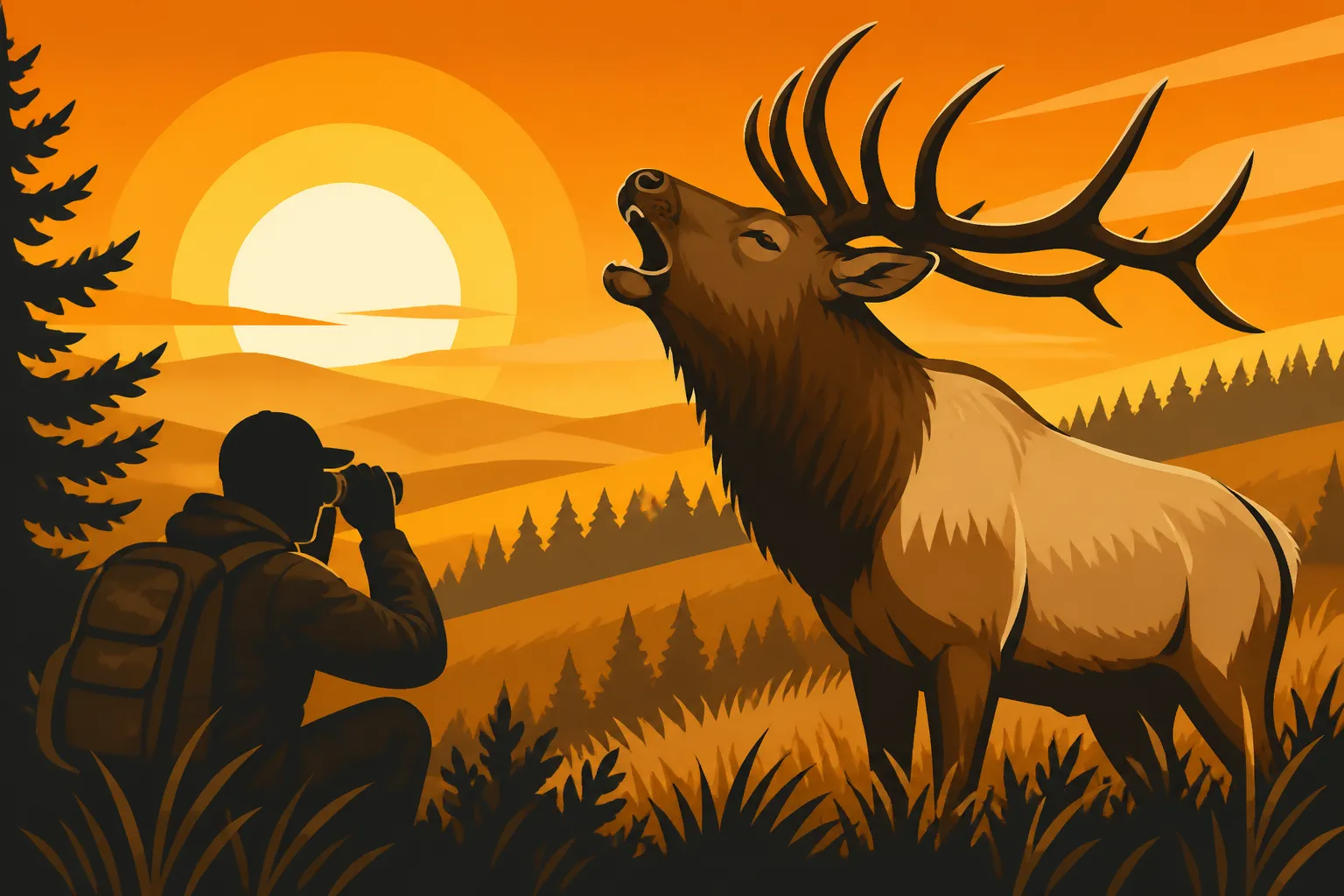
The Peak Rut (Mid-September to Early October): This is the main event, the time we all yearn for. Bull elk are actively seeking cows, herding harems, and challenging any other bull that dares to approach. The woods become alive with bugles – fierce, demanding, throaty calls that echo through the valleys. You'll hear chuckles, grunts, and the distinct sound of sparring antlers as bulls test each other. Wallows will be churned into muddy pits, indicating heavy use. Bulls will be scent-checking cows, and the air itself seems to crackle with anticipation. This is when aggressive calling strategies really shine, as bulls are eager to defend their breeding rights or challenge a perceived rival. It's an exhausting time for the bulls, as they eat less and expend massive amounts of energy. For hunters, this is often the most exciting and productive period.
The Post-Rut (Mid-October Onward): After the intensity of the peak, things begin to wind down. Most cows have been bred, and the dominant bulls are exhausted, often losing significant body weight. The bugling becomes less frequent and less aggressive. Bulls may start to drift away from the cows, seeking out secluded areas to rest and recover. Younger bulls might still be trying their luck with any remaining unbred cows, but the fierce competition has largely subsided. While elk can still be harvested, the tactics shift from calling to more traditional spot-and-stalk or ambush methods, as the animals return to feeding patterns and become warier. This phase often coincides with cooler temperatures, making it a different kind of challenge for hunters.
The Golden Window: When Elk Rut Activity Peaks in Saskatchewan
While the general timeframe for the elk rut is fairly consistent, the absolute peak—that intense, unforgettable week or two when bugles truly dominate the landscape and bulls are most vulnerable—can vary slightly year to year. In Saskatchewan, based on common observations, we generally see this fervent activity ramp up in mid-September and continue strong through early October.
Typical Peak Rut Timing in Saskatchewan
For most elk hunters in Saskatchewan, the sweet spot, that critical window for peak rut activity, usually falls between September 15th and October 5th. This isn't a hard and fast rule, but it's a reliable guideline that many successful hunters use to plan their trips. During these weeks, you can expect the most consistent and aggressive bugling, intense sparring, and active herding behavior from the dominant bulls.
It's crucial to remember that this "peak" refers to the period of most intense breeding activity and bull vocalization. Bulls will certainly be bugling before and after this window, but the sheer volume and fervor of the calls, and the corresponding vulnerability of the bulls to calling strategies, typically reach their zenith during these few weeks. If you're hoping to experience Bugling Elk on a Farm Edge or deep in the timber, this is the time to be out there.
Factors Influencing the Exact Peak
Even within this golden window, several environmental and biological factors can subtly shift or amplify the peak. No two ruts are exactly alike, and the elk are always responding to their immediate surroundings.
- Weather Conditions: This is perhaps the most significant external factor. Mild, stable weather, especially cooler temperatures following a hot spell, tends to get elk active. A sudden cold snap can sometimes kick things into high gear, making bulls more vocal and eager to move. Conversely, prolonged heat can suppress daytime activity, pushing rutting behavior more into the cooler hours of dawn and dusk, or even into the night. Heavy rains or snow can also affect elk movement and vocalization, though usually temporarily. I've seen years where a sudden early October snowfall made the elk go absolutely wild for a few days, bugling non-stop as if sensing the approaching winter.
- Moon Phase: While hotly debated among hunters, many believe that a full moon can influence rutting activity. Some argue that elk rut more intensely during the dark hours of a full moon, leading to quieter daytime periods. Others suggest it has minimal impact. My personal experience is that while elk might be more active at night under a bright moon, they will still respond vigorously during daylight hours if the overall rutting conditions are right. Don't let a full moon deter you, but be prepared for potentially earlier morning and later evening activity.
- Herd Dynamics and Age Structure: The makeup of the local elk herd plays a huge role. In areas with a good bull-to-cow ratio and a healthy population of mature bulls, the rut tends to be more aggressive and protracted. More competition means more bugling and fighting. If there's a strong, dominant herd bull, he might keep other bulls at bay, leading to less visible sparring but still intense rutting around his harem. Areas with high calf recruitment also indicate a healthy, active breeding cycle. Learning about Saskatchewan's Elk Herds and Their Range can give you a better idea of what to expect in specific zones.
- Hunting Pressure: High hunting pressure can also affect how visible and vocal elk are during the rut. In heavily hunted areas, bulls might become warier, bugling less and moving more stealthily, especially after the season has been open for a while. This doesn't mean the rut isn't happening, just that the elk are adapting to survive. Finding less pressured areas or adjusting your tactics to be more discreet becomes important in these scenarios. You might need to go deeper into the bush, far from typical access points, or use a tool like GoHunt to find remote pockets of cover.
Reading the Signs: Elk Rut Behavior to Watch For
Being in the field during the elk rut is an immersive experience. It's not just about hearing bugles; it's about observing the full spectrum of their behavior. The elk communicate a lot through their actions, and learning to interpret these signs can tell you exactly where they are in their rutting cycle and how to approach them.
Vocalizations: The Language of the Rut
The most iconic sign of the elk rut is, without a doubt, their vocalizations. Elk are incredibly talkative during this period, and understanding their calls is like learning a new language.
- Bugles: These are the primary communication tools for bulls during the rut. A bull's bugle is essentially a challenge, an advertisement of his presence and virility, and a way to gather and hold his cows.
- Challenge Bugles: These are loud, throaty, aggressive bugles, often ending with a deep chuckle. A bull uses these to intimidate rivals or respond to another bull's call. When you hear these, you know competition is high.
- Location Bugles: Sometimes, a bull will let out a less aggressive, often drawn-out bugle to simply announce his location or try to find other elk. These can be good starting points for locating a herd.
- Estrus Bugles (Cow Calls): While bulls are known for bugling, cows also vocalize during the rut. An estrus whine or mews from a cow indicates she is ready to breed, and this can often drive bulls into a frenzy. Learning to imitate these calls is key for enticing bulls.
- Grinding and Chuckles: These are often heard at the end of a bugle, or as a bull is herding his cows. The chuckles sound like a guttural, almost frantic series of grunts, indicating the bull is asserting dominance or getting his harem in line.
Physical Evidence and Visual Cues
Beyond the sounds, elk leave a lot of visual evidence of their rutting activity. These physical signs can tell you where the action has been and where it might be headed.
- Wallows: Bulls create muddy wallows by urinating, then rolling in the mud. This helps them spread their scent and cool off, and is a clear indicator of rutting activity. Fresh, wet wallows mean elk are actively using them. You'll often find these in damp, low-lying areas or near water sources. Finding a well-used wallow can be an excellent location to set up for an ambush or to try calling from.
- Rubs: Like deer, bull elk will rub their antlers on trees and saplings to polish them, strengthen their necks, and leave scent. These rubs are typically larger and higher off the ground than deer rubs, reflecting the size of a bull elk. Fresh sap running from a rubbed tree, or wood shavings on the ground, are signs of recent activity. Look for clusters of rubs, which indicate a bull has been spending a lot of time in an area.
- Tracks and Droppings: During the rut, elk movements can be less predictable as they chase cows. However, fresh tracks, especially larger bull tracks, and fresh droppings indicate recent presence. Look for disturbed earth where bulls have pawed the ground in frustration or dominance. Observing these can give you clues to their travel corridors and bedding areas. Knowing how to interpret these signs is part of Reading Sign After Fresh Saskatchewan Snow or on bare ground.
- Visual Sightings: Of course, seeing elk is the ultimate sign. Watch for bulls aggressively herding cows, chasing off smaller bulls, or sparring with each other. A bull with his nose to the ground, scent-checking cows, is a clear sign he's in full rut mode. Pay attention to how the cows are acting too; if they seem agitated or are frequently looking back at a bull, he's likely hot on their trail. When you're Hunting Saskatchewan's Aspen Parkland or the Forest Fringe, you'll want to glass open areas at dawn and dusk.
Hunting Strategies During the Peak Rut
The peak rut offers some of the most exciting and challenging hunting opportunities for elk. Bulls are less cautious, driven by their primal instincts, but they are also constantly on the move and highly sensitive to external stimuli. Your strategy needs to be dynamic and adaptable.
Calling Strategies: Bugles, Cow Calls, and More
Calling is often the most effective tactic during the peak rut, leveraging the bulls' territorial and breeding instincts.
- Aggressive Bugling: If you hear a distant bull, don't be afraid to challenge him with a confident, strong bugle. Mimic a dominant bull that’s invading his territory. This can often bring an eager bull stomping in, ready to fight. However, be prepared for him to come in fast and silently once he gets close. Use natural cover to break up your silhouette.
- Cow and Calf Calls: Sometimes, a less aggressive approach works wonders. A series of soft cow mews and chirps, perhaps mixed with a lost calf call, can pique a bull's curiosity and draw him in, thinking there's a receptive cow or a lost calf he needs to protect. This is particularly effective if the bulls are already heavily pressured by aggressive bugling from other hunters.
- Combining Calls: The most effective calling often involves a combination. Start with soft cow calls to gauge interest. If you get a response, you might then throw in a light bugle or a chuckle to simulate a bull moving in on "your" cows. The goal is to create a realistic scenario that the bull wants to investigate or defend.
- Location, Location, Location: When calling, consider the terrain. Sound carries differently in thick timber versus open ridges. Set up in a position that gives you good visibility downwind, as bulls often try to circle to get your scent. Use a mapping tool like GoHunt to understand wind direction relative to your position and potential elk travel routes.
Spot-and-Stalk and Ambush Techniques
While calling is king, spot-and-stalk or ambush hunting can still be highly effective, especially if you're not getting responses to calls or if you're hunting in heavily pressured areas.
- Glassing Openings: Elk often move through open areas like clear-cuts, old logging roads, or agricultural fields at dawn and dusk, even during the rut. Use good optics to glass these areas from a distance, looking for groups of cows and the bull that's herding them. Identifying Saskatchewan's Big Game Season Dates will show you when you can hunt certain zones.
- Stalking: Once you've spotted a herd with a desirable bull, a careful stalk is in order. Use terrain features, thick timber, and wind direction to your advantage. Move slowly, deliberately, and be prepared to freeze if an elk raises its head. The noise of a rutting bull can sometimes mask your approach, but never rely on it. This can be particularly challenging in areas like the Forest Fringe for Big Bucks, but effective.
- Ambush Points: Focus on natural funnels, pinch points, or well-used trails that elk are likely to use when moving between bedding and feeding areas, or when a bull is pushing his cows. Setting up a ground blind or treestand in these locations before light, or remaining there until dark, can pay off. Wallows are also prime ambush spots during the rut.
Understanding Elk Habits and Hunting Pressure
Elk are large, intelligent animals, and they adapt quickly to hunting pressure. Even during the rut, they won't throw caution entirely to the wind, especially older, wiser bulls.
- Early Morning and Late Evening: These are typically the most active times for elk during the rut, as they move and vocalize more. Be in your spot before first light and stay until legal shooting hours end.
- Mid-Day Lulls: There can be lulls in activity during the middle of the day, especially if it's warm. Bulls may bed down with their cows. However, don't abandon the woods; often, a persistent bull will still respond to a call, or you might catch them moving from one bedding area to another. This is when patience pays off, and understanding What a Bull Elk Weighs in Saskatchewan helps you appreciate the energy they're expending.
- Utilizing Technology for Scouting: Before your hunt, use satellite imagery and topographical maps, possibly with a subscription to GoHunt, to identify potential travel corridors, bedding areas, and feeding grounds. Look for changes in elevation, water sources, and areas with dense cover that might serve as sanctuaries for elk. This can save you valuable time in the field. Read up on Scouting With Satellite Imagery in Saskatchewan to refine your approach.
- Respecting Elk Space: Always approach elk with respect for their keen senses. They have excellent hearing and smell. Play the wind, move quietly, and be patient. Sometimes, the best strategy is to sit and listen, letting the elk tell you where they are before making a move.
Here's a quick overview of the rut phases:
| Rut Phase | Typical Timing in Saskatchewan | Key Bull Behavior | Calling Strategy | Hunter Focus |
|---|---|---|---|---|
| Pre-Rut | Late August – Early September | Shed velvet, make rubs, occasional soft bugles | Minimal bugling, soft cow mews | Scouting, locating herds, monitoring rubs/wallows |
| Peak Rut | Mid-September – Early October | Aggressive bugling, herding cows, sparring | Aggressive bugles, cow/calf calls | Active calling, stalking, ambush near wallows |
| Post-Rut | Mid-October Onward | Less bugling, bulls recovering, focus on feeding | Subtle cow calls, limited bugling | Spot-and-stalk, ambush feeding areas, patience |
Understanding these phases, along with the environmental factors and the specific behaviors, is what makes a successful elk hunter. It's a challenging but deeply rewarding pursuit, and being in Saskatchewan's elk country during the peak rut is an experience you won't soon forget. Plan your trips wisely, and good luck out there!
Disclaimer
This article is for general informational purposes only and does not constitute professional advice. Laws, prices and regulations vary by location and change over time. Consult a qualified professional for guidance on your specific situation.