Hunting the Frenchman River Valley
The Frenchman River Valley, a remarkable ribbon of rugged beauty winding through southwestern Saskatchewan, presents a hunting experience unlike almost anywhere else on the prairies. Many hunters feel overwhelmed by its vast, broken landscape, wondering where to even begin their search for game. This guide aims to demystify hunting in this iconic region, offering practical insights into its unique terrain, the species that call it home, and effective strategies for a successful and safe hunt.
Understanding the Unique Landscape of the Frenchman River Valley
The Frenchman River Valley isn't your typical Saskatchewan prairie. It's a land sculpted by ancient glacial meltwaters, leaving behind a dramatic landscape of deep coulees, rolling hills, and eroded badlands. This geological history has created a diverse ecosystem that funnels and holds game in predictable ways, if you know what to look for.
Geology and Topography
Imagine miles of undulating native grassland suddenly giving way to steep, broken banks dropping down to the meandering Frenchman River. The valley floor itself is often narrow, with the river snaking through it, flanked by occasional stands of cottonwood, willow, and buffaloberry. Above the immediate river breaks, you’ll find expansive prairie benches dissected by numerous smaller coulees and draws, all eventually feeding into the main valley. These features provide vital thermal cover from the biting prairie winds and deep snow, as well as crucial escape routes for animals. The sheer scale of the landscape can be intimidating, but it's precisely this vastness and complexity that make it so alluring for big game.
Vegetation and Water Sources
The vegetation here is a patchwork of native prairie grasses, sagebrush, and cactus on the drier slopes, transitioning to thicker brush and small trees closer to the river and in the bottoms of sheltered coulees. This mix offers both excellent grazing for grazers like mule deer and pronghorn, and browse for whitetails and moose in the riparian zones. Water is life on the prairie, and while the Frenchman River itself is a constant, scattered dugouts, springs, and temporary potholes can be found, especially in wet years. These water sources act as magnets for wildlife, particularly during dry spells or late in the season when other sources freeze. Understanding where these vital resources are located is paramount to predicting game movement. You'll often find animals bedding in the thickest cover near water, only venturing out to graze at dawn and dusk. This country can be unforgivingly dry, and finding even a small, stagnant pool can reveal heavy game sign.
Game Species and Their Habits in the Valley
The Frenchman River Valley is renowned for its diverse big game opportunities, primarily mule deer and pronghorn, with a strong presence of whitetails and various predators. Understanding how each species interacts with this unique habitat is critical for a successful hunt.
Mule Deer and Their Coulee Strongholds
Mule deer are undeniably the kings of the Frenchman River Valley's broken country. They thrive in the rugged coulees and river breaks, using the varied topography to their advantage. Unlike whitetails, mule deer are typically grazers and prefer open, elevated areas for feeding, but they'll quickly drop into a deep coulee for cover when alarmed or to bed down during the day. Their larger ears, a defining feature, allow them to detect predators from a distance, and their bounding gait, known as "stotting," is perfectly adapted for traversing steep, uneven terrain.
When hunting mule deer here, focus your efforts on glassing the south-facing slopes in the mornings to catch them feeding in the sun, and the bottoms of coulees where they seek shade and cover later in the day. During the rut, these bucks become more active, moving between groups of does across vast distances. If you're hunting after a fresh snowfall, look for tracks leading from open benches down into the thickest pockets of brush or mature timber along the river. This is often where they will seek shelter from the wind and snow. For more on locating these animals, check out Glassing a Saskatchewan Coulee for Mule Deer.
Pronghorn on the Open Flats
While the mule deer prefer the broken country, the swift pronghorn are masters of the adjacent open prairie flats that gently roll into the valley. These incredibly fast animals rely on their keen eyesight and speed to evade danger, making them a challenge to hunt. They typically graze on forbs and grasses found in the vast open stretches, often far from the immediate cover of the river breaks.
Hunting pronghorn in this area involves extensive glassing from elevated positions, often well back from the immediate valley edge, scanning the expansive plains. Once a herd is spotted, a long, careful stalk using any available terrain features – subtle dips, rises, or even large clumps of sagebrush – is required to get within range. Wind direction is paramount, as their excellent sense of smell can betray your approach. They are highly attuned to movement, so slow, deliberate actions are a must. Remember that these animals are not "deer" in the traditional sense; they are unique North American antelopes. Understanding their behavior on the open prairie is crucial, and you can learn more by reading Stalking Pronghorn Across Open Ground.
Whitetail Deer and Other Game
While less dominant than mule deer in the most rugged parts of the valley, whitetail deer can be found thriving in the denser riparian zones along the Frenchman River itself, and in the thicker brush pockets of larger coulees with good water and browse. They prefer the more secure cover, especially where there's timber or heavy willows, making them a more elusive quarry. Their movements are often more nocturnal than mule deer, particularly if hunting pressure is high. During the rut, however, whitetail bucks will become more visible, actively seeking does along the river corridors.
Beyond the deer species, the valley and its surrounding lands are home to a healthy population of coyotes, which can offer exciting hunting opportunities, especially in the winter months when they are drawn to deer carcasses or when calling. You might also encounter the occasional moose, especially in the broader, brushier stretches of the river bottom, though they are less common than in the northern forest fringe. Waterfowl also use the river and associated sloughs during migration.
Navigating Access and Terrain Challenges
Hunting the Frenchman River Valley, or any part of Saskatchewan's hunting landscape, demands careful consideration of access and a realistic appraisal of the physical demands. This isn't a place for casual strolls; it's a test of preparedness and endurance.
Public Versus Private Land Access
A significant portion of the land surrounding the Frenchman River Valley is privately owned. While there are some Crown land parcels and occasional Fish and Wildlife Development Fund (FWDF) lands, much of the prime hunting ground will require direct permission from landowners. This means taking the time to Getting Private Land Permission in Saskatchewan well in advance of your hunt, respecting posted land, and understanding the nuances of Saskatchewan's trespass laws. Always carry a map with land ownership details. Tools like onX Hunt or GoHunt are incredibly valuable here, allowing you to identify landowners and navigate boundaries accurately, helping you avoid accidental trespass. Many landowners are receptive to respectful hunters who ask permission, but it's a relationship built on trust. Never assume access; always ask. Pay close attention to Saskatchewan Posted Land Sign Rules and understand what "Hunt on Foot Only" truly means for your hunt.
Physical Demands and Gear Considerations
Hunting the Frenchman River Valley is physically demanding. You'll be climbing steep coulee banks, traversing uneven terrain, and potentially covering many miles on foot. Good physical conditioning is essential. Forget about hunting from your truck; this is a spot-and-stalk paradise that requires boots on the ground.
- Footwear: Invest in high-quality, ankle-supporting hunting boots that are waterproof and well broken-in. The terrain can be loose and rocky in places, and you'll encounter everything from thorny brush to slippery clay.
- Optics: Top-tier binoculars (10×42 or 12×50) and a spotting scope on a sturdy tripod are non-negotiable for effectively glassing the vast expanses of the valley. You'll spend far more time looking through glass than walking.
- Navigation: A reliable GPS unit or a mapping app like onX Hunt on your phone (with downloaded offline maps, as cell service can be spotty) is critical for navigating the maze of coulees and ensuring you stay on track and within designated hunting areas.
- Clothing: Layering is key. The prairie weather can change dramatically, from warm, sunny mornings to cold, windy afternoons. Prepare for everything, including sudden rain or even early-season snow.
- Hydration and Nutrition: Carry more water than you think you'll need, especially during warmer early season hunts. Energy-dense snacks will keep you fueled through long days afield.
Mapping and Pre-Scouting
Effective mapping and pre-scouting are crucial for a successful hunt in such a vast area. Before you even leave home, spend hours studying satellite imagery and topographic maps. Identify potential bedding areas, travel corridors, water sources, and escape routes. Pay attention to how the coulees connect and where they offer the thickest cover. Many experienced hunters use digital mapping platforms to drop pins on interesting features, measure distances, and plan potential stalking routes.
You can also cross-reference this with a Reading a Saskatchewan WMZ Map Before You Go to understand the specific regulations for the zone you plan to hunt. Driving the perimeter roads (where available) and using binoculars from vantage points can help you confirm potential areas and identify access points, but nothing beats putting boots on the ground to truly understand the micro-terrain.
Effective Hunting Strategies for This Rugged Region
The Frenchman River Valley demands a tailored approach. Passive hunting methods often yield little success; this is a place where strategy, patience, and adaptability are rewarded.
The Art of Glassing
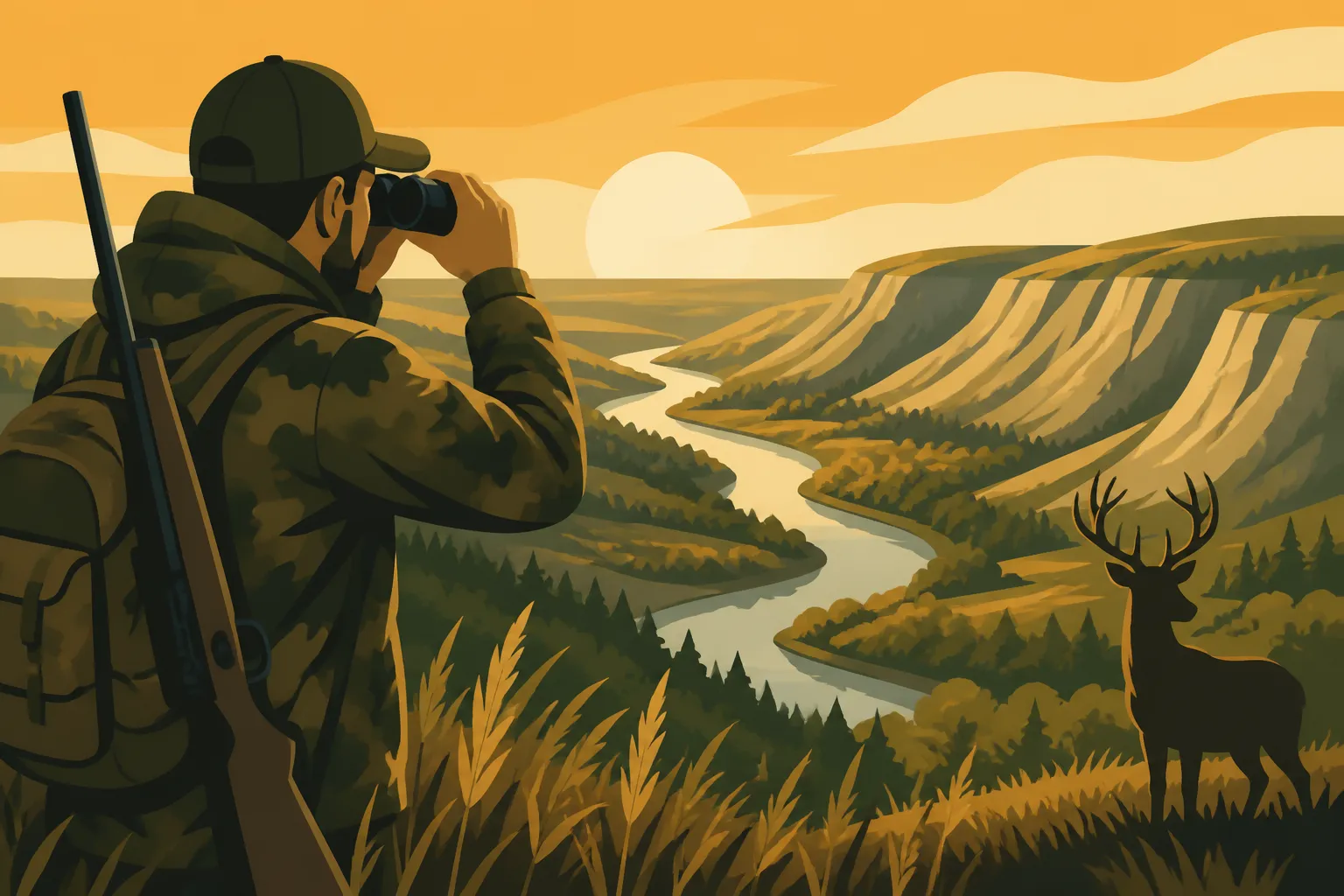
In the Frenchman River Valley, your binoculars and spotting scope are your most important hunting tools. The vastness of the landscape makes covering ground on foot inefficient and often counterproductive. Instead, find a high vantage point – the top of a large coulee, a prominent hill, or even the roof of your vehicle (safely, of course) – and systematically glass. Break the landscape down into grids, slowly scanning every fold, crease, and shadow. Look for subtle movements, a flick of an ear, a patch of contrasting color that doesn't quite look like a rock.
Mule deer often blend seamlessly into the sagebrush and rocks. Pronghorns, though lighter in color, can appear as distant specks. Patience is paramount; you might glass an area for an hour before a deer stands up or shifts position, revealing itself. Early mornings and late evenings are prime glassing times when animals are most active.
Spot-and-Stalk Excellence
Once you've spotted an animal you want to pursue, the real challenge begins: the spot-and-stalk. This is where your knowledge of the terrain, wind, and animal behavior comes into play. The broken country of the Frenchman River Valley is actually ideal for stalking, as the numerous coulees, draws, and rises provide natural concealment.
- Plan Your Approach: Before you move, take ample time to plan your stalk. Identify an approach route that keeps you out of sight, downwind, and ideally allows you to maintain elevation where possible for better visibility. Use mapping tools like onX Hunt to visualize the terrain between you and the animal.
- Mind the Wind: The prairie wind is a constant factor. Always approach from downwind, even if it means taking a longer, more circuitous route. Mule deer and pronghorn have an excellent sense of smell.
- Use the Terrain: Stay low, use every fold in the ground, every clump of brush, every rock to break up your silhouette. Move slowly and deliberately, pausing frequently to re-glass and ensure the animal hasn't moved or spotted you.
- Know Your Limitations: Understand your effective shooting range and don't push it. The excitement of a stalk can lead to rushed shots. Practice shooting from various positions, including prone and kneeling, as you'll rarely get a perfect bench rest in this country.
Hunting Water Sources and Travel Corridors
Animals, particularly in dry conditions, will gravitate towards reliable water sources. Identifying dugouts, springs, or stretches of the Frenchman River that offer easy access can be highly productive. Glassing these areas at dawn and dusk can reveal animals coming in to drink. Additionally, the coulees themselves act as natural travel corridors, funnelling game from feeding areas on the benches down to water or into more sheltered bedding sites. Look for well-worn trails, fresh tracks, and rub lines along these corridors. Hunting a Prairie Coulee Bottom can offer specific insights into utilizing these natural pathways.
The Role of Weather
Weather plays an immense role in hunting the Frenchman River Valley. Mild, calm days can make animals lethargic and harder to find. Conversely, a sharp cold front, high winds, or a fresh snowfall can trigger increased movement and make animals more predictable. Animals will often seek shelter in the deepest, most protected coulees during strong winds or heavy snow. After a snowfall, fresh tracks become invaluable, revealing recent movements and helping you narrow down bedding areas. However, always prioritize safety when Hunting Saskatchewan Winter Weather Safely, as conditions can turn treacherous quickly.
Using a Table for Quick Reference: Frenchman River Valley Hunting at a Glance
| Feature/Species | Key Characteristics | Hunting Implications | Important Considerations |
|---|---|---|---|
| Terrain | Deep coulees, river breaks, open flats, native grassland | Excellent for spot-and-stalk; demands extensive glassing and physical fitness | Wind direction, variable footing, potential for getting lost |
| Mule Deer | Coulee dwellers, grazers, keen eyesight, stotting gait | Focus on coulee bottoms for bedding, open slopes for feeding; spot-and-stalk is primary method | Highly adaptable, can be wary; utilize terrain for concealment |
| Pronghorn | Open prairie residents, incredible speed, keen eyesight | Hunt adjacent flats; long-range glassing, careful stalks using subtle terrain features | Very difficult to get close to; wind critical for stalks |
| Whitetail Deer | River bottoms, dense brush in larger coulees | Seek thicker cover in riparian zones; more nocturnal but active in rut along river corridors | Can be elusive in heavy cover; less common than mule deer |
| Access | Predominantly private land, limited Crown land | MUST obtain landowner permission; use mapping apps (onX Hunt, GoHunt) to identify parcels | Respect posted land, build relationships with landowners |
| Weather | Highly variable; wind, sun, cold, potential for snow | Layered clothing essential; animals seek shelter in bad weather, more active in transitions | Safety first in extreme conditions; prepare for anything |
| Key Strategy | Glassing, spot-and-stalk, patience | Dedicate significant time to glassing from high points; plan stalks meticulously, account for wind and cover | Requires discipline and physical capability |
Planning Your Hunt and Staying Safe in the Valley
A successful hunt in the Frenchman River Valley goes beyond just knowing where to find game; it involves meticulous planning and a deep commitment to safety.
Essential Gear and Emergency Preparedness
Due to the remote and rugged nature of the valley, being self-sufficient is paramount. Always carry a comprehensive survival kit, including a first-aid kit, fire-starting materials, extra layers of clothing, a headlamp, and emergency food and water. A satellite communication device (like a Garmin InReach or similar) is highly recommended, as cell service is unreliable, if not non-existent, in many parts of the valley. Let someone know your exact hunting plans, including your route and expected return time.
Your vehicle should be in excellent working order, especially if you plan to navigate gravel roads that can become muddy quagmires after rain. Consider carrying recovery gear like a shovel, tow strap, and traction mats. This is particularly important if you venture off main routes onto trails that might not see regular maintenance. Knowing What to Do If You Get Stuck in the Bush could literally save your hide.
Respecting the Land and Its Keepers
The vast majority of the land you'll want to hunt in the Frenchman River Valley is owned and managed by ranchers and farmers. Their livelihoods depend on these lands, and building respectful relationships is key to long-term access. Always ask permission, respect their property, close gates, and drive only on designated trails or field approaches. If you notice any damage or issues while on their land, report it to them. Leaving the land better than you found it ensures future opportunities for yourself and other hunters. This ethos extends to proper game retrieval and ethical hunting practices.
Responsible Hunting Practices
Beyond legal requirements, responsible hunting in the Frenchman River Valley means understanding the impact of your presence. Pack out everything you pack in, including spent shell casings. Field dress your animal responsibly, packing out all salvageable meat and leaving as little trace as possible. Be mindful of Chronic Wasting Disease (CWD); familiarize yourself with Saskatchewan's CWD Testing Rules, especially if hunting in designated zones, and follow all guidelines for carcass disposal and head submission. Ethical hunting means making clean shots, tracking diligently, and ensuring no meat is wasted. This rugged country demands respect, and those who offer it are often rewarded with unforgettable experiences.
Disclaimer
This article is for general informational purposes only and does not constitute professional advice. Laws, prices and regulations vary by location and change over time. Consult a qualified professional for guidance on your specific situation.