What to Do If You Get Stuck in the Bush
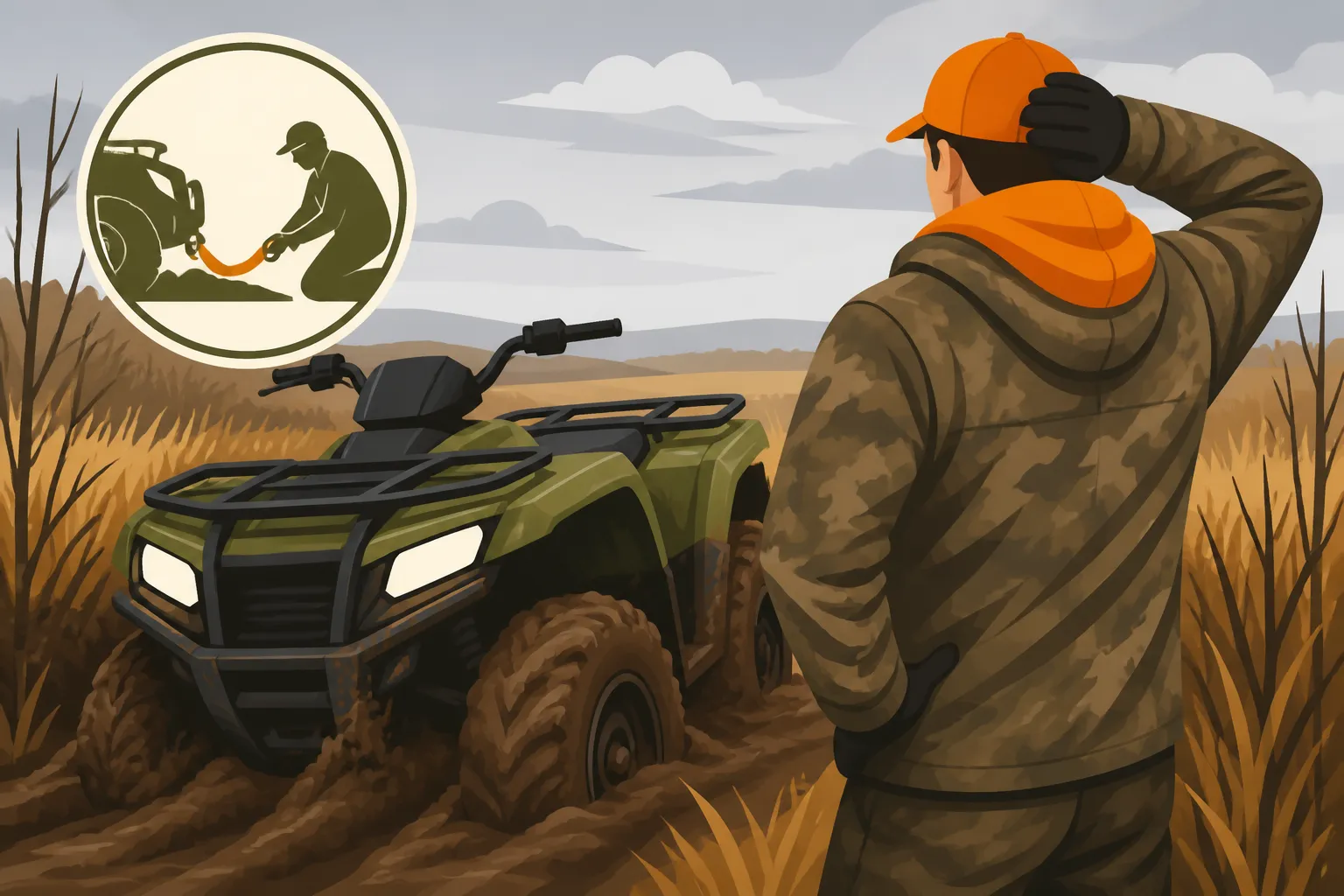
There's nothing quite like the heart-stopping moment when your vehicle, be it a trusty truck or a nimble quad, grinds to a halt, tires spinning uselessly in the muck or snow, miles from the nearest paved road. You're out in the Saskatchewan bush, focused on the hunt, and suddenly, you're stuck. This isn't just an inconvenience; it can quickly become a serious, even life-threatening, situation, especially when cold weather sets in or dusk approaches. This comprehensive guide is here to walk you through exactly what to do when that dreaded moment arrives, from proactive preparation to desperate measures, ensuring you have the knowledge to get yourself out of a sticky situation or, at the very least, stay safe until help arrives.
Preparation is Key: Preventing the Stuck Situation
Getting stuck is often preventable, or at least its severity can be lessened, with proper planning and preparation. Think of it as insurance; you hope you never need it, but you're profoundly grateful when you have it. Saskatchewan's diverse terrain, from the sticky gumbo of the farmlands to the soft muskeg of the boreal forest, presents unique challenges that demand respect.
Knowing Your Route and Terrain
Before you even leave your driveway, consider using tools like GoHunt to study satellite imagery and identify potential trouble spots. A seemingly innocent trail on a map can be a bottomless bog in real life, especially after a heavy rain or during spring thaw. Pay close attention to low-lying areas, creek crossings, and old logging roads that might not see regular traffic. Knowledge of the specific wildlife management zone (WMZ) you're hunting in can also inform your route planning; for instance, some northern zones are notorious for soft ground well into fall.
Beyond digital scouting, nothing beats local knowledge. Talk to landowners, other hunters, or even conservation officers about current road and trail conditions. They can offer invaluable insights into areas that frequently get washed out, become impassable with snow, or are simply known as "suck holes." Understanding the terrain types – whether it's heavy clay, sandy loam, or peat – will help you anticipate how your vehicle might react. Remember, what looks like a solid track in dry August can be a quagmire in wet October.
Always tell someone exactly where you're going and when you expect to return. This isn't just a suggestion; it's a critical safety measure. Provide specific coordinates if possible, or at least a detailed description of your intended hunting area. If you don't check in by a pre-arranged time, your contact knows where to direct search efforts, drastically cutting down on response time should something go wrong. This simple act can be the difference between a minor inconvenience and a full-blown emergency in the vastness of Saskatchewan.
Essential Recovery Gear and Survival Kits
No matter how confident you are in your vehicle or your driving skills, an unexpected situation can arise. That's why a well-stocked recovery kit is non-negotiable. For a truck, this means a heavy-duty tow strap (not just a cheap rope), a shovel, traction aids like recovery boards or chains, and a robust jack. Don't forget a compressor or tire repair kit if you're airing down your tires for better traction or dealing with punctures. For quads and side-by-sides, a winch is almost mandatory, along with a tree saver strap and a snatch block to maximize its pulling power. Having a Winter Truck Kit for a Saskatchewan Hunt should be standard practice.
Beyond vehicle recovery, you need a personal survival kit. This should include extra warm clothing (layers are crucial, especially if you're dealing with Dressing for Saskatchewan's November Cold), fire-starting materials (waterproof matches, lighter, fire starter), a first-aid kit, a headlamp with spare batteries, a knife, and enough high-energy food and water for at least 48 hours. Consider a compact shelter like a tarp or emergency blanket. Remember, even a short walk for help can turn into an overnight ordeal if you get turned around or the weather takes a sudden turn for the worse.
When packing, think about the worst-case scenario. If you have to spend a night unexpectedly, can you build a fire? Can you stay dry? Do you have enough calories to maintain body heat? These aren't trivial questions; they are the foundation of survival in Saskatchewan's often unforgiving wilderness. A small, but thoughtfully assembled kit, kept easily accessible, can make all the difference when you're caught off guard.
Initial Assessment and Action: What to Do Immediately After Getting Stuck
The moment you realize you're stuck, a wave of frustration, perhaps even panic, can set in. The key is to take a deep breath, fight the urge to spin your tires wildly, and logically assess the situation. Hasty actions often dig you deeper, both literally and figuratively.
Assessing the Situation Calmly
The absolute first step is to stop. Don't just keep hitting the gas; all that does is bury your vehicle further and churn up the ground, making recovery much harder. Get out, if it's safe to do so, and assess the scene. What are you stuck in? Mud, snow, sand, a ditch, high-centered on a stump? How deep is it? Which wheels are stuck? Is your frame resting on anything? Check for any potential damage to your vehicle, like a punctured tire or a bent steering rod.
Take stock of your immediate surroundings. Is there solid ground nearby that you could reach with a winch? Are there trees strong enough to use as anchor points? What's the weather doing, and what's the forecast? How much daylight do you have left? Crucially, where are you on your map or GPS? Knowing your exact location is paramount for both self-recovery and calling for help. This initial, calm assessment is crucial before you attempt any recovery.
Understanding the type of stuck you're in will dictate your next moves. If it's merely a loss of traction in a shallow snowdrift, a bit of shoveling and some traction aids might be all you need. If you're high-centered in deep mud with all four wheels off the ground, you're facing a much more complex recovery scenario. Don't underestimate the power of simply looking at the problem from all angles before jumping into action.
Basic Self-Recovery Techniques
Once you've assessed the situation, you can attempt some basic recovery. For traction issues, try clearing debris from around the tires and the undercarriage with your shovel. Place recovery boards, branches, or even your floor mats under the drive wheels to gain purchase. Sometimes, just letting a little air out of your tires (carefully, as you'll need a way to reinflate them later) can increase the contact patch and provide enough grip to get moving. Just remember to reinflate them as soon as you're on solid ground to prevent tire damage.
If you have a winch on your quad or side-by-side, or if your truck is equipped, now's the time to use it. Secure your winch line to a strong anchor point, like a sturdy tree, using a tree saver strap to protect the tree bark. Ensure everyone is clear of the winch line, as it can be incredibly dangerous if it snaps. Winch slowly and steadily, applying tension and watching how the vehicle responds. You may need to combine winching with gentle throttle input to help the vehicle along. Always know your winch's capacity and don't try to exceed it.
For trucks, a "rocking" motion can sometimes work if you're stuck in snow or sand. Gently shift between drive and reverse, building momentum, but be extremely careful not to over-accelerate and dig yourself deeper. This is a finesse move, not a brute force one. If these basic techniques don't work after a few attempts, stop and reassess. Continuing to try the same thing or making it worse will only exhaust you and make eventual extraction more difficult. It's often better to conserve energy and call for help than to worsen an already bad situation.
When Self-Recovery Fails: Signalling for Help and Survival
There comes a point when you have to admit defeat in self-recovery efforts. It's not a sign of weakness; it's a sign of good judgment. Pushing too hard can lead to injury, further damage to your vehicle, or complete exhaustion, leaving you in a far worse predicament. At this stage, your focus shifts to signaling for help and ensuring your immediate survival.
Communication and Emergency Signalling
First things first: do you have cell service? In many parts of rural Saskatchewan, especially as you head further north into the Hunting Saskatchewan's Boreal North or even the Hunting Saskatchewan's Forest Fringe, cell service is notoriously unreliable. Always check Where Saskatchewan Cell Coverage Ends before venturing out. If you have service, call for help immediately. Contact your pre-arranged emergency contact, or if unavailable, local authorities or a towing service. Be prepared to provide your exact location (GPS coordinates are best), a description of your vehicle, and the nature of your stuck situation.
If cellular service is nonexistent, you need a backup. A satellite messenger device (like an inReach or SPOT device) is an absolute lifesaver in the backcountry. These devices allow you to send pre-programmed messages, text contacts, or even initiate an SOS call to emergency services, all independent of cell towers. Even if it's just a simple "I'm stuck, but safe," it provides invaluable peace of mind for those waiting for you. Modern GPS devices, or even apps like GoHunt on your smartphone with downloaded offline maps, can help pinpoint your location precisely for rescue.
Other forms of signaling include flashing your vehicle's lights, honking your horn in a consistent pattern, or using signal mirrors during the day. At night, a bright flashlight or even a small signal fire can attract attention. Always have a backup communication plan, especially in areas where you know cellular service is spotty, even if you’ve checked coverage maps on platforms like GoHunt. Never rely on just one method for emergencies.
Building Shelter, Fire, and Securing Water
If help isn't immediate, or if you're facing an overnight stay, your priorities become shelter, fire, and water. These are the cornerstones of survival, especially in Saskatchewan's often harsh climate. Your vehicle itself can serve as a primary shelter against wind and cold, so stay with it. It's much easier for rescuers to spot a vehicle than a lone person. If you must leave the vehicle for any reason, leave a clear note indicating your direction of travel and destination.
However, your vehicle alone might not be enough in extreme cold. Supplement it with an emergency blanket, sleeping bag, or a tarp that can be fashioned into a lean-to for added warmth and protection from the elements. If you have any additional warm clothing (which you should, as part of your What to Bring to a Saskatchewan Deer Camp), put it on now. Insulation from the ground is critical; use floor mats, branches, or anything you can find to create a barrier between you and the cold earth.
Starting a fire is crucial for warmth, morale, cooking, and signaling. Gather dry tinder and kindling before it gets dark. Use waterproof matches, a lighter, or a ferro rod to get your fire going. Keep the fire small and manageable, but large enough to provide significant heat. Ensure it's in a safe spot, clear of flammable materials, and never leave it unattended. While water might seem less critical in cold weather, dehydration can still occur. If you have bottled water, ration it. If not, snow and ice can be melted (ideally boiled) for safe drinking, though this requires more fuel. In warmer months, knowing how to purify surface water is essential.
Staying Found and Staying Safe: Long-Term Considerations
The wait for rescue can be the hardest part, testing your patience and mental fortitude. It's during this time that smart decisions about managing your resources and maintaining a positive mindset become paramount.
Conserving Resources and Maintaining Morale
Once you've called for help and addressed your immediate survival needs, the long game begins: waiting. Conserve your vehicle's battery by turning off unnecessary lights and accessories. Use your phone sparingly for communication only, or keep it off to save power if you know there's no service. Ration your food and water supplies. Don't try to wander off looking for help unless you have a very clear plan, feel absolutely certain of your direction, and have left a detailed note at your vehicle. Most people who get lost do so after leaving their vehicle. Rescuers will start their search at your last known location, which is your vehicle.
Maintaining a positive mental attitude is incredibly important. Panic is a survival killer. Keep yourself busy by improving your shelter, gathering more firewood, or simply organizing your gear. Sing, talk to yourself, or try to recall familiar stories or songs. If you're with others, talk, play games, and support each other. Avoid dwelling on negative thoughts. Focus on the fact that help is coming and that you've done everything you can to prepare and signal. Every hour you safely endure is a step closer to rescue.
Understanding Emergency Plans in Saskatchewan's Bush and mentally rehearsing what you would do in a survival situation can make a real difference when it actually happens. Your vehicle is your lifeline; protect it and stay with it. Use its metal to reflect sunlight or its hood to spell out "SOS" with branches or rocks for aerial observation.
Dealing with Wildlife and Environmental Hazards
Saskatchewan's bush is home to a variety of wildlife, including bears and wolves, especially in the northern reaches. While most animals will avoid humans, it's wise to be aware of your surroundings. Keep your camp clean to avoid attracting critters. Store food securely, ideally hanging it from a tree away from your sleeping area. Make noise periodically, especially if you're moving around outside your vehicle at night, to alert any animals to your presence. A can of bear spray can offer peace of mind, but knowing how to use it properly is crucial.
Environmental hazards extend beyond just animals. Hypothermia is a significant risk in Saskatchewan, even in temperatures above freezing, especially if you get wet. Always prioritize staying dry and warm. Learn to recognize the symptoms of hypothermia (shivering, confusion, clumsiness) in yourself and others, and take immediate steps to warm up. Frostbite is another concern in colder months. Protect exposed skin, especially fingers, toes, nose, and ears.
Conversely, in warmer seasons, insect bites can be a nuisance and a health risk (think ticks and mosquitoes). Pack insect repellent and wear appropriate clothing. Dehydration and heatstroke can also be dangers during warmer hunting seasons. Always carry more water than you think you'll need. Understanding Hunting Saskatchewan Winter Weather Safely involves more than just dressing warm; it means being aware of all potential dangers the environment can throw at you. If you've been careful with Quad and Side-by-Side Rules on Crown Land and stuck to designated trails, you reduce risks, but the unexpected can still happen.
Remember, the goal is always to get home safely, with or without your vehicle. Be prepared, stay calm, and make smart decisions.
| Survival Priority | Immediate Action (First 1-2 hours) | Short-Term Action (Next 2-12 hours) | Long-Term Action (Beyond 12 hours) |
|---|---|---|---|
| Assessment | Stop, assess vehicle and surroundings. | Review situation, damage, and resources. | Continuously reassess environment and health. |
| Communication | Try cell phone, satellite messenger. | Attempt periodic calls/messages. | Maintain signaling efforts (fire, mirror, lights). |
| Shelter | Stay in vehicle. | Enhance vehicle insulation, build lean-to. | Fortify shelter, insulate from ground. |
| Fire | Gather tinder/kindling, prepare fire pit. | Start fire, maintain fuel supply. | Keep fire going, use for warmth and signaling. |
| Water | Ration existing supply. | Melt snow/ice (boil if possible). | Locate and purify additional water sources. |
| Food | Ration emergency food supply. | Eat high-energy items sparingly. | Continue rationing, consider foraging (if knowledgeable and safe). |
| Morale | Stay calm, focus on tasks. | Keep busy, maintain positive mindset. | Engage in mental exercises, plan for rescue. |
| Visibility | Vehicle lights, horn. | Signal mirror, small signal fire. | Large signal fire, ground-to-air signals. |
Disclaimer
The information provided in this guide is for general informational purposes only and does not constitute professional advice. Hunting in the Saskatchewan bush can be inherently dangerous. Always exercise caution, use common sense, and be prepared for unexpected situations. Conditions can change rapidly, and individual circumstances vary. Always prioritize your safety and the safety of others. Familiarize yourself with all local regulations and carry appropriate safety and communication gear.