Hunting the Churchill River Country
Hunting in the remote Churchill River Country of Saskatchewan presents an entirely different set of challenges and rewards compared to the agricultural zones or even the accessible forest fringe. It's a vast, wild landscape where roads often disappear into bush and water is the main highway, leaving many hunters feeling overwhelmed by the sheer scale and logistics. This comprehensive guide will walk you through what to expect when planning a hunting trip into Saskatchewan's far northern lake country, helping you navigate the unique terrain, target key species, and ensure a safe and successful wilderness experience.
Understanding the Churchill River Country's Unique Landscape
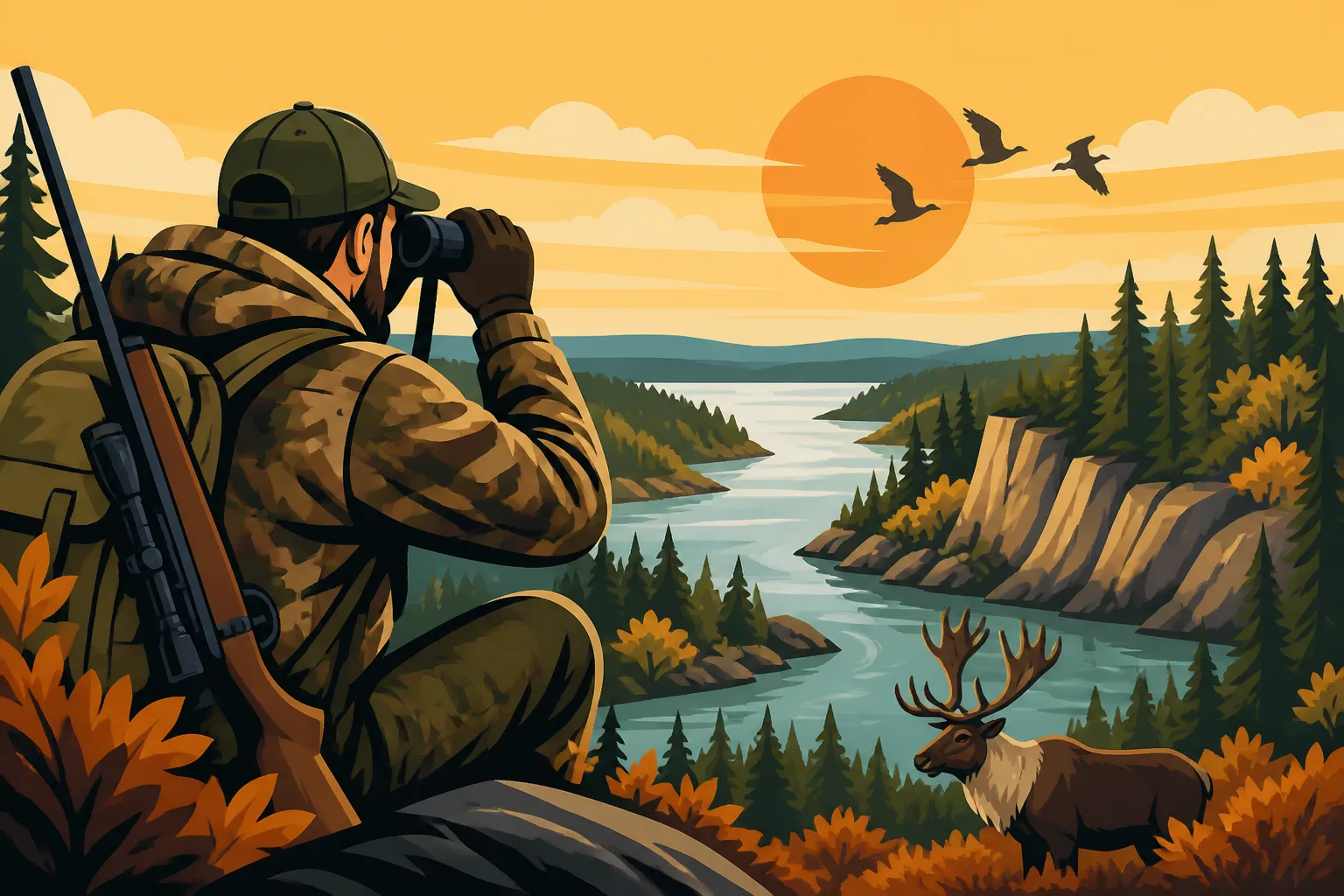
The Churchill River Country isn't just a place on a map; it's a feeling, a deep dive into genuine Canadian Shield wilderness. This region, defined by the mighty Churchill River system, is a labyrinth of interconnected lakes, rivers, rapids, and portages, all cradled within the expansive Boreal Forest. It's a world away from the prairie stubble fields and even the aspen parkland bluffs, demanding respect and thorough preparation.
The Vastness and Wild Character
Imagine endless stands of black spruce, jack pine, and balsam fir, broken only by granite outcrops, shimmering lakes, and winding waterways. This is the heart of the Canadian Shield, where the land is rugged and unforgiving, yet breathtakingly beautiful. Muskeg and peat bogs are common, often hiding treacherous footing beneath seemingly stable moss. The sheer scale of the wilderness can be daunting, with horizons defined by tree lines and distant islands rather than farmsteads. There are no convenience stores around the corner, no quick trips back to town for forgotten items. Everything you need for your hunt, you bring in. This wild character is precisely what draws many seasoned hunters; it’s an opportunity to truly disconnect and test your skills against nature on its own terms. The quiet is profound, broken only by the cry of a loon, the splash of a moose, or the rustle of wind through the pines.
This is a land shaped by ancient glaciers, leaving behind countless lakes, rapids, and exposed granite. The ground cover often consists of thick moss, lichens, and blueberry bushes, making travel on foot challenging in many areas. While there might be old trapline cutlines or forestry roads, they are often overgrown and only accessible by specific off-road vehicles or even just by foot. Understanding the topography from maps is one thing, but experiencing the dense undergrowth and uneven terrain firsthand is another. It's not uncommon to spend an entire day navigating just a few kilometers through the thick bush, especially if you're tracking game off the main waterways.
Game Species that Thrive Here
The Churchill River Country is prime habitat for several big game species, though they might not always be as concentrated as in the more accessible forest fringe. Moose are perhaps the most iconic residents, thriving in the abundant water sources and diverse vegetation. The mosaic of new growth in old burn areas, along with willow and alder thickets bordering lakes and rivers, provides excellent browse and cover for these giants. A successful moose hunt here often revolves around knowing their movements along water features. You might find yourself Calling a Bull Moose in the Rut from the edge of a bay, hoping to draw him out of the dense spruce.
Black bears are also prevalent, drawn to the plentiful berry crops, fish, and smaller game. They roam the vast wilderness, often frequenting shorelines, old cutlines, and areas with dense undergrowth. Unlike some regions where baiting is the primary method, hunting bears in the Churchill River Country might lean more towards spot-and-stalk opportunities along lakeshores or patiently watching travel corridors. Wolves are also natural predators in this ecosystem, a constant reminder of the wildness of the north. While they are often elusive, their presence speaks to the health of the entire food chain in this remote region. For those with appropriate licenses, it's a truly wild place to pursue these predators.
Beyond big game, the region offers excellent opportunities for smaller species. Ruffed grouse and spruce grouse are abundant, often found along old trails, logging roads, or in the dense evergreen stands. Waterfowl, particularly various duck species, utilize the countless potholes, lakes, and river bends, offering a bonus opportunity for those bringing a shotgun. While woodland caribou are present, they are a protected species and not huntable in Saskatchewan. Knowing your target species and their preferred habitat within this vastness is key to successful hunting.
Access Challenges and Remote Zones
One of the biggest hurdles for hunting the Churchill River Country is simply getting there. Unlike many southern zones with extensive grid roads, the northern road network thins out dramatically. Paved highways generally end around La Ronge, and from there, gravel roads often lead to specific communities like Missinipe or Stanley Mission, which serve as jumping-off points. Beyond these communities, access quickly becomes limited to water-based travel. This means anyone venturing into the deeper wilderness will be relying heavily on canoes, boats, or potentially air charters.
These remote zones offer an incredible hunting experience precisely because they are hard to reach. The reduced human pressure means game can follow more natural patterns, and the sheer challenge of the journey adds to the overall adventure. However, it also means a higher degree of self-reliance is required. Communication can be spotty or non-existent, and help is often a long way off. Understanding the specific Hunting Saskatchewan's Boreal Forest Fringe dynamics is a good starting point, but the Churchill is often even more isolated. Many hunters opt for guided trips with experienced outfitters who have established camps and the necessary equipment to navigate this complex environment.
Navigating Access and Planning Your Trip
Planning a hunt in the Churchill River Country is less about picking a quarter section and more about plotting an expedition. The planning phase is critical for safety and success, demanding a deep understanding of navigation, logistics, and self-sufficiency.
Road Access Points and Watercraft Reliance
As mentioned, the main road access points typically terminate at communities like La Ronge, Missinipe, or around the Stanley Mission area. From these points, your journey truly begins. If you’re bringing your own gear, a reliable boat and motor are essential for navigating the extensive lake and river systems. Larger, sturdy aluminum boats with reliable outboard motors are preferred, capable of handling variable water conditions and carrying heavy loads. Think about the logistics of launching your boat, securing your vehicle, and the fuel caches you'll need for your entire trip.
Many hunters use these access points to stage canoe trips, paddling into remote bays and river sections. This is a truly immersive way to experience the north, but it requires significant physical stamina and paddling experience, especially when dealing with rapids and portages. Companies like Churchill River Canoe Outfitters operate out of Missinipe and are well-versed in outfitting wilderness expeditions. They can offer advice on routes, provide canoes, and even arrange shuttle services. For heavier gear or larger parties, some operations use barges or specialized shallow-draft boats that can navigate rapids. Regardless of your chosen watercraft, safety must be paramount, with proper PFDs, emergency kits, and a contingency plan for capsizing or motor failure.
The Role of Air Charters and Outpost Camps
For hunters seeking to penetrate even deeper into the untouched wilderness, or those with limited time, air charters become an invaluable asset. Float planes can land on virtually any sufficiently large lake, dropping you and your gear off at remote outpost camps or pre-scouted locations far from any road. This instantly bypasses days of arduous travel by boat or canoe, putting you right into prime, undisturbed hunting grounds. Companies like Transwest Air often operate out of northern hubs and can provide charter services to specific locations.
Outfitters often run these remote outpost camps, providing comfortable, heated cabins, boats, and sometimes even guides. For non-residents, booking with an outfitter is often mandatory for big game species like moose and bear. Hunting Guides and Outfitters in Saskatchewan can provide not just logistical support but also invaluable local knowledge about game movements, current conditions, and safety protocols in this challenging environment. They have the experience to scout productive areas, set up baits (for bear), and ensure your meat is cared for and transported out. The cost associated with air charters and guided hunts is significant, but it buys you unparalleled access and greatly increases your chances of a safe and successful hunt in truly wild country.
Mapping and Navigation for Remote Terrain
Effective navigation is absolutely critical in the Churchill River Country. With limited landmarks and vast expanses of similar-looking forest and water, it’s easy to get disoriented. GPS units are non-negotiable, but never rely on a single device. Carry multiple GPS devices (handheld, phone apps) and always have paper maps and a compass as backups. Learning to read a topographic map is essential, understanding contour lines, water features, and vegetation changes.
Modern hunting apps like onX Hunt are a game-changer for northern Saskatchewan. With pre-downloaded satellite imagery and land ownership layers, you can see exactly where you are in relation to Crown Land, water bodies, and potential game habitat, even without cell service. This allows for detailed planning of travel routes, identification of Hunting a Boreal Muskeg Edge or old burns, and navigation in dense bush. GoHunt also offers planning tools and resources that can help with general area research and understanding species distribution. Before you even leave home, spend hours studying satellite imagery, marking potential bottlenecks, pinch points, and areas of interest. Understand that relying solely on intuition in this country can be a costly mistake.
| Access Method | Advantages | Disadvantages | Typical Game Hunted |
|---|---|---|---|
| Road & Boat | More economical; greater gear capacity; self-sufficient | Limited reach; time-consuming travel; complex logistics | Moose, Bear, Waterfowl |
| Air Charter (Fly-in) | Access to truly remote, untouched areas; faster travel | High cost; weight/size restrictions; dependent on weather | Moose, Bear (trophy potential) |
| Canoe Expedition | Deep immersion; quiet travel; highly rewarding | Physically demanding; limited gear capacity; slow travel | Moose (calling), Small Game, Fishing |
| Guided Hunt | Local expertise; all logistics handled; increased safety | Higher overall cost; less independent | Moose, Bear, Waterfowl |
Hunting Strategies for Northern Wilderness
Hunting in the Churchill River Country requires a different approach than sitting in a deer blind on a field edge. It’s a physically demanding, strategic game where understanding the terrain and animal behavior is paramount.
Moose Hunting in the Churchill River Country
Moose are the undisputed kings of the Churchill River Country. They thrive in the watery, mixed forest environment, making them a primary target for many northern hunters. The key to successful moose hunting here often revolves around their affinity for water. They'll use lakes and rivers as travel corridors, for feeding on aquatic vegetation, and as escape routes. This means hunting from a boat or canoe is an incredibly effective strategy. Quietly paddling along shorelines at dawn and dusk, listening for their tell-tale splashes or the sound of feeding, can lead to incredible opportunities.
Spot-and-stalk tactics often involve glassing large bays, willow flats, or recently burned-over blocks from a distance, then making a quiet approach. New growth in old burns provides excellent forage, and moose will often frequent these areas. Understanding where Moose Hunting Saskatchewan's Farmland and Forest techniques differ here is crucial; you won't be looking for rubs on a fence line, but rather assessing tracks along muddy shorelines or disturbed browse in a thicket. During the rut, calling can be incredibly effective. A skilled caller can imitate a cow's plaintive cry or a bull's grunts to draw a curious or territorial bull into range. Be prepared for a long haul if you get one down in the bush; field quartering and meticulous meat care are essential, especially since you might be a long way from camp or transportation.
Black Bear Hunting in Remote Boreal Settings
Black bears are also common inhabitants of the Churchill system, and hunting them in this remote setting can be a thrilling experience. While baiting is a popular and effective method for black bears in many parts of Saskatchewan, setting up and maintaining baits in the truly remote Churchill River Country can be a monumental logistical challenge dueor to accessibility issues. It often requires significant effort to get bait in, and then regular trips to replenish it, which can be difficult without consistent boat or air access. However, for those with the means and commitment, it can yield exceptional results, especially for larger, older boars. Setting a Bear Bait Site in Saskatchewan in the far north requires careful planning to ensure you can sustain it.
Many hunters in this region will pursue black bears through spot-and-stalk techniques. This involves slowly working along shorelines, old logging roads, or cutlines, especially in areas with abundant berry crops (like blueberries or saskatoons in late summer and fall). Bears are often drawn to these food sources and can be glassed as they forage. Fresh tracks along muddy banks, disturbed berry bushes, and overturned rocks can indicate recent bear activity. Understanding their natural travel corridors and focusing on areas of rich food sources are key. Spring bear hunting offers unique opportunities as bears emerge from their dens and seek out early green-ups. For fall hunting, bears are intensely focused on fattening up before winter, making them predictable around food sources.
Small Game and Waterfowl Opportunities
While big game often takes center stage, the Churchill River Country offers fantastic opportunities for small game and waterfowl, which can complement a big game hunt or be a rewarding pursuit in their own right. Ruffed grouse are plentiful in areas of mixed woods, particularly along old Hunting an Old Logging Road in the North or natural clearings. They often "drum" in the spring and early summer, but in the fall, they can be walked up with a shotgun. Spruce grouse, often found in dense coniferous stands, are notorious for their lack of fear, sometimes allowing hunters to literally walk right up to them. Ruffed Grouse Hunting Saskatchewan's Bush Trails in the north can provide excellent table fare and a break from big game pursuits.
The countless lakes, rivers, and secluded bays are a haven for waterfowl. Various species of ducks, particularly dabblers like mallards and teals, utilize the rich aquatic vegetation and sheltered waters. Mergansers and other diving ducks are also common. While large-scale field hunting is not typical here, jump-shooting from a boat or setting out a small spread of decoys in a quiet bay can provide excellent action. Hunters need to be aware of Non-Toxic Shot Requirements for Saskatchewan Waterfowl regulations, as steel or other non-toxic shot is mandatory for migratory birds. The sheer number of water bodies means that finding undisturbed pockets of birds is rarely an issue, offering a unique waterfowl experience in a pristine setting.
Essential Gear and Safety Considerations
A hunt in the Churchill River Country is a true wilderness experience, which means your gear choices and safety protocols are even more critical than in more accessible areas. Preparedness isn't just a suggestion; it's a necessity.
Packing for Northern Weather and Terrain
Saskatchewan's north can be unpredictable, even during the prime hunting seasons of fall. Layers are your best friend. Start with a good moisture-wicking base layer, add insulating mid-layers (fleece, down, synthetic), and top it off with a robust, waterproof and windproof outer shell. Conditions can swing from mild and sunny to bitterly cold and wet in a matter of hours. Always pack for colder and wetter weather than the forecast suggests. Durable, waterproof boots with good ankle support are crucial for navigating uneven, wet, and rocky terrain. Remember, you might be carrying a heavy pack or even game meat over challenging ground, so footwear comfort and performance are paramount.
Consider insulated waders or waterproof pants if you'll be spending a lot of time in a boat or traversing marshy areas. Good quality gloves, a warm hat, and a neck gaiter are also essential, as much of your body heat can be lost from your head and extremities. A comfortable and well-fitted backpack capable of carrying heavy loads is also indispensable. Think about the durability of everything you bring; gear failure in the remote north can be a serious problem. A small, lightweight backpacking tent for emergency shelter or spike camps can also be a wise addition to your gear list, even if you plan to stay in a cabin.
Wilderness Safety and Emergency Preparedness
This is where planning truly shines. Cell service is virtually non-existent in much of the Churchill River Country, making reliable communication devices essential. A satellite phone, a Garmin inReach, or a similar two-way satellite communicator is not optional; it's a mandatory safety item. These devices allow you to send and receive messages, access weather forecasts, and, most importantly, send an SOS signal in an emergency. Ensure someone back home knows your exact itinerary, your intended route, and when you expect to check in.
Beyond communication, a comprehensive first-aid kit, tailored for wilderness injuries, is vital. Include supplies for major trauma, burns, cuts, and common ailments. Carrying fire-starting materials (waterproof matches, lighter, fire steel, tinder) is crucial for warmth and signaling. A headlamp with extra batteries, a knife, multi-tool, compass, and sufficient calorie-dense food for unexpected delays are all part of a basic wilderness survival kit. Learn basic survival skills, like building a shelter, purifying water, and signaling for help. Having a plan for what to do if you get lost, injured, or encounter wildlife is paramount. This isn't just about having the gear; it's about having the knowledge and mindset to use it effectively. Hunting Saskatchewan Winter Weather Safely shares general principles that apply to this environment even in the fall.
Logistics: Meat Care and Transportation
Harvesting an animal in the remote Churchill River Country is only half the battle; getting the meat out and properly cared for is the other, often more challenging, part. Field quartering an animal, especially a large moose or bear, is essential. You'll need sharp knives, a game bag to keep meat clean and free from flies, and a strong frame pack to carry out the quarters. The dense bush and lack of trails mean you'll be packing heavy loads over difficult terrain.
Keeping the meat cool is a critical concern, particularly if temperatures are mild. This is where meticulous planning for Meat Care in Saskatchewan's Cold Snaps becomes relevant. Getting meat hung in the shade, allowing air circulation, and quickly transporting it to a cooler location (or with ice if possible) is crucial to prevent spoilage. If you're on a multi-day trip, consider bringing large coolers and ensuring you have enough ice, which might need to be flown or boated in. Outfitters often have dedicated cold storage facilities or can arrange for professional meat processing services once you return to civilization. For those self-guiding, a reliable plan for butchering, packing, and transporting the meat back to your vehicle or air charter is arguably as important as the hunt itself.
Disclaimer
This article is for general informational purposes only and does not constitute professional advice. Laws, prices and regulations vary by location and change over time. Consult a qualified professional for guidance on your specific situation.