Hunting a Prairie Coulee Bottom
Hunting the vast, open prairie of Saskatchewan can feel like searching for a needle in a haystack, especially when deer, moose, or elk seem to vanish into thin air. Many hunters find themselves frustrated, watching game disappear over the horizon or into distant tree lines, leaving them wondering how to get close. This guide will dive deep into the unique challenges and rewarding opportunities of hunting prairie coulee bottoms, offering practical strategies to help you effectively find and harvest game in these vital hidden havens.
Understanding the Prairie Coulee Ecosystem
Prairie coulees, these often-overlooked incisions in the landscape, are far more than just ditches. They are intricate, life-sustaining ecosystems that act as magnets for wildlife, especially when the surrounding prairie offers little cover or shelter. Understanding why game animals gravitate to these features is the first step toward becoming a successful coulee hunter.
What Makes Coulees So Special?
Imagine standing on a windswept Saskatchewan plain. The sun beats down in summer, the blizzards howl in winter, and there’s nowhere to hide. Now, picture a winding depression in that same landscape, a coulee. These geological formations are natural highways and sanctuaries for big game, providing essential resources that the open prairie lacks. They offer immediate protection from the elements – a crucial refuge from bitter winter winds, scorching summer sun, and driving rain or snow. The steep banks and winding turns create microclimates that are often several degrees warmer in winter and cooler in summer than the surrounding flatland.
Beyond shelter, coulee bottoms frequently harbor natural springs, seeps, or seasonal meltwater that collect in small pockets, providing vital water sources for thirsty animals. This is especially true in dry years when sloughs and dugouts on the open prairie might be parched. Furthermore, coulees often boast a different, richer vegetation profile than the adjacent fields. You might find patches of aspen, willow, chokecherry, or even small oak stands, offering diverse browse and dense thermal cover that deer, moose, and other animals crave. This unique combination of shelter, water, and varied forage makes coulee bottoms indispensable habitats.
Typical Game Found in Coulee Bottoms
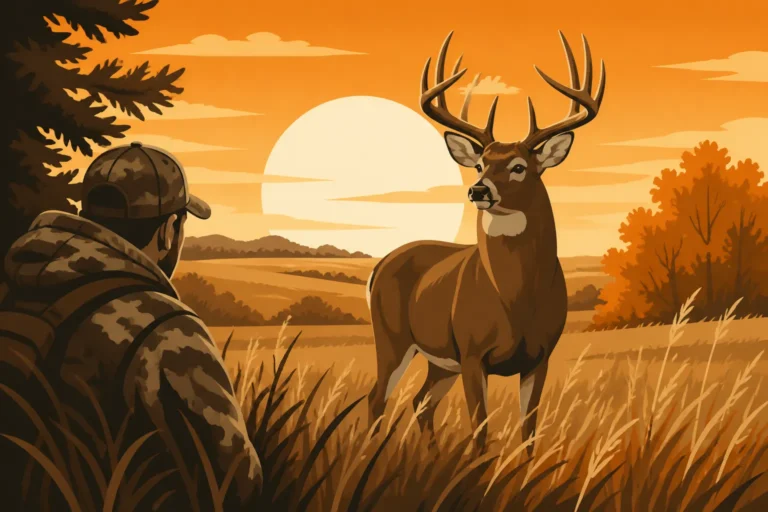
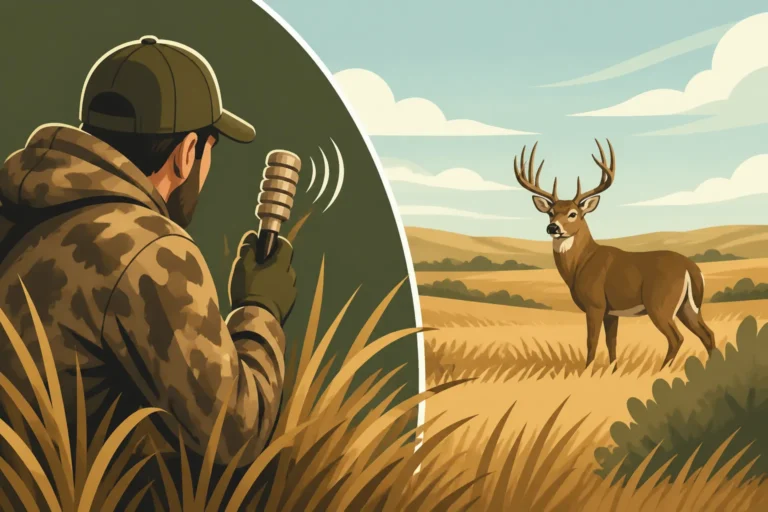
While coulees are veritable havens, not all game uses them the same way. The primary targets for most hunters in Saskatchewan's coulee country are mule deer and whitetail deer. Mule deer, with their distinctive bounding gait and preference for broken terrain, are masters of navigating coulees. They often bed down on sunny, sheltered slopes, using the contours to escape the wind and maintain watchful eyes on the prairie above. Whitetails, on the other hand, are more likely to seek out the densest cover within the coulee, often found in willow thickets or small stands of poplar, especially where they can access water. You’ll often find them tucked away, seemingly invisible, even in relatively narrow draws.
Beyond deer, coulees can be crucial travel corridors for moose, especially in the aspen parkland and forest fringe transition zones where coulees often connect larger patches of bush or provide access to water and browse. I've personally seen big bulls emerge from what seemed like impossibly small draws. You’ll also encounter smaller game and predators. Coyotes are frequent residents, using coulees for hunting small game like snowshoe hare and as travel routes. Badgers dig their dens into the banks, and various upland birds such as sharp-tailed grouse and Hungarian partridge will use the denser cover for roosting and feeding, especially in winter.
Scouting Coulee Bottoms for Success
Effective scouting is the bedrock of any successful hunting trip, and when it comes to coulees, it’s even more critical. These linear features can be long and complex, and without a solid scouting plan, you'll spend more time walking aimlessly than actually hunting.
Pre-Season Digital Scouting with Technology
Before you ever set foot in a coulee, you should be spending time with your boots up, digitally scouting from the comfort of your home. Modern mapping applications are invaluable here. Tools like GoHunt or even Google Maps satellite imagery allow you to zoom in and identify specific coulees that might hold game. Look for coulees that are particularly long, wide, or deep, as these tend to offer more consistent cover and resources. Pay close attention to features within the coulee: are there dense thickets, small stands of trees, or darker green patches that suggest springs or year-round water?
You'll want to pinpoint potential entry and exit points, looking for areas where the banks are less steep or where game trails appear to cross. Identify natural pinch points where a coulee might narrow, forcing animals into a more confined travel corridor. These are prime spots for ambushing. Consider where the coulee intersects with agricultural fields, connecting bedding cover to feeding areas. Using a digital mapping tool, you can mark these waypoints, plan your approach routes, and even get an initial understanding of land ownership – distinguishing between private land, Crown land, or even a community pasture. Knowing this beforehand is essential for getting proper Saskatchewan Landowner Permission Law if necessary.
Boots-on-the-Ground Reconnaissance
Once you've done your digital homework, it's time to hit the field. "Boots-on-the-ground" scouting is irreplaceable. You need to walk the coulees, ideally well before hunting season, to truly understand the terrain, prevailing winds, and animal movement patterns. Look for fresh sign: deer tracks, rubs on small trees, scrapes indicating active breeding activity, and especially bedded areas. Pay attention to how game trails enter and exit the coulee, and where they travel along the bottom or up the sides.
Thermal currents are a critical, often-overlooked factor in coulee hunting. In the mornings, cold air sinks into the coulee bottom, and as the sun warms the slopes, the air begins to rise. This creates predictable air currents that can carry your scent further than you'd expect. Knowing this allows you to plan your approach and stand placement to keep your scent out of the animals' noses. Identifying specific crossing points where game habitually moves from one side to the other, or from the coulee into an adjacent field, will inform your hunting strategy. While scouting, always be mindful of private property. Saskatchewan has clear rules on posted land, and respecting these boundaries is non-negotiable.
Effective Hunting Strategies for Coulee Bottoms
Hunting coulees demands a flexible approach, as the terrain and game behavior can change quickly. What works for a solo hunter stalking a mule deer might be different from a group trying to push a whitetail out of a dense draw.
Still Hunting and Stalking
Still hunting is a highly effective, yet patience-testing, method for coulees. It involves moving incredibly slowly, taking only a few steps at a time, and then pausing for several minutes to scan the terrain. You're trying to become part of the environment, moving at an animal's pace. Always move against the wind, or at least with a crosswind, to keep your scent from spooking game. Use every piece of terrain to your advantage: the folds of the land, the willow thickets, even the shadows cast by the coulee walls.
When still hunting, focus your eyes on small details – a flick of an ear, a patch of hide, an antler tines – rather than trying to spot an entire animal. Mule deer are notorious for blending in, often lying perfectly still until you're nearly on top of them. Reading fresh sign as you move is crucial. If you find fresh tracks or rubs, slow down even more. Anticipate where the game might be heading or where they might be bedded. For example, if you're stalking mule deer across open ground, remember that once they drop into a coulee, their ability to disappear is magnified, requiring an even more cautious approach. This is where a good pair of binoculars comes into play, allowing you to pick apart cover from a distance without revealing your presence.
Ambush Hunting from a Stand or Blind
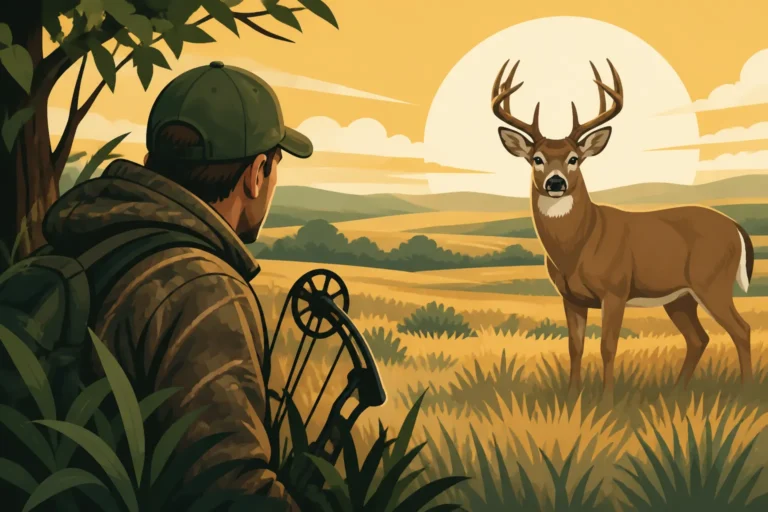
Setting up an ambush is another potent strategy, particularly for whitetails who often follow predictable travel routes. This involves identifying key crossing points within the coulee, or where the coulee meets a feeding area like a standing canola field edge or a pea field after harvest. Once identified, you can set up a ground blind or, if the vegetation allows and it's permissible, a treestand.
When choosing a spot, wind direction is paramount. You need to position yourself so your scent is carried away from the anticipated travel route of the game. Also consider the thermals – as mentioned earlier, air rises in the morning and falls in the evening. Place your blind or stand accordingly. For deer, look for areas where the coulee provides a natural funnel, or where a trail is well-used and shows consistent activity. Principles similar to Hanging a Stand on a Saskatchewan Bush Edge can be adapted, focusing on concealment and elevated vantage points where possible. The goal is to be hidden, scent-free, and positioned for a clean shot when an animal uses its natural corridor.
Driving or Pushing Coulees
For larger groups or when game is particularly tight-lipped, a coulee drive can be highly effective. This strategy involves a team of "drivers" who walk through the coulee, pushing game towards "blockers" strategically positioned at the opposite end or along the sides. Safety is the absolute priority here. Everyone involved must know the layout, the agreed-upon shooting lanes, and clear communication signals.
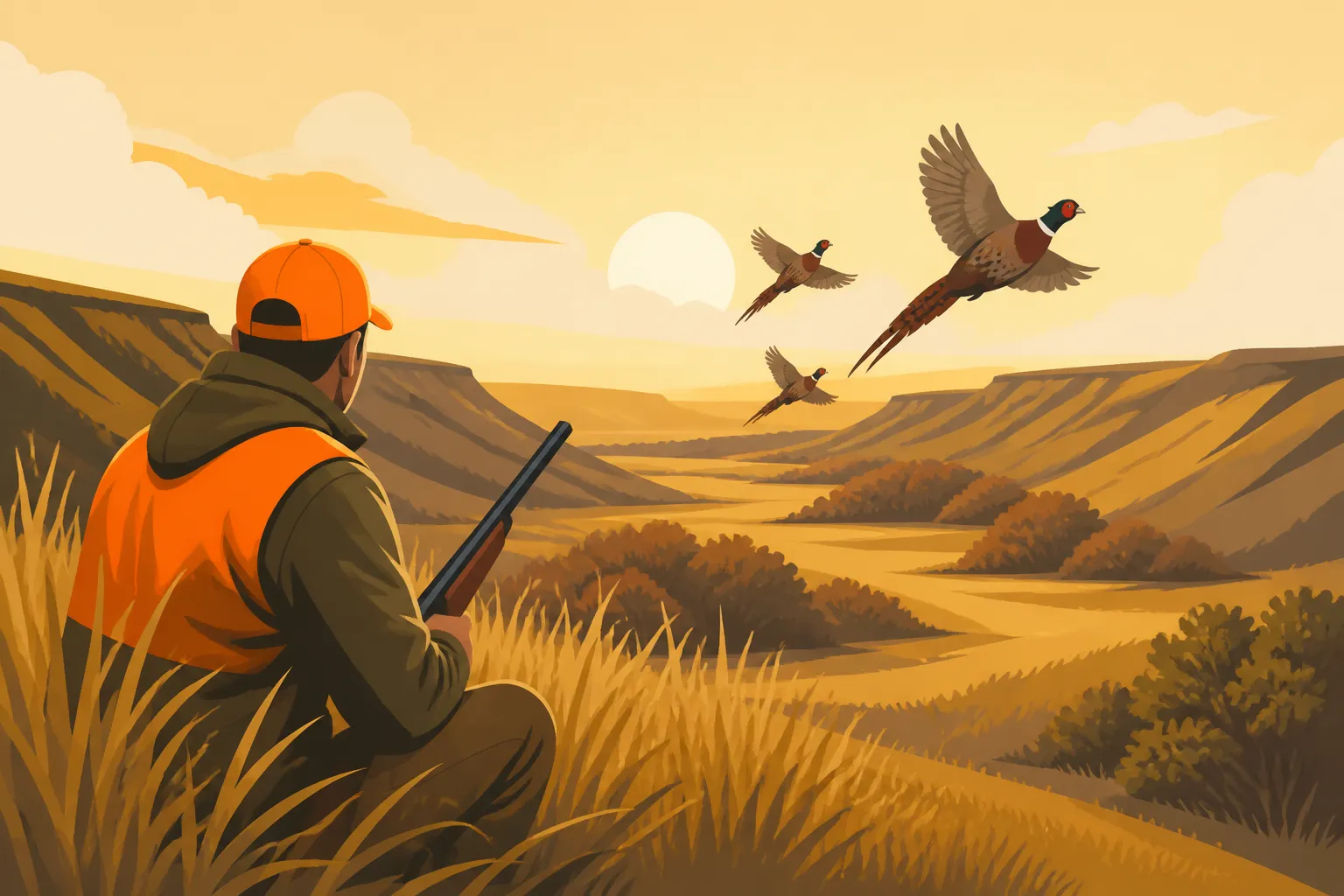
Drivers should move slowly and systematically, ensuring they don't miss any pockets of cover. Blockers need to be completely still and silent, observing the coulee with intense focus. This method works well for flushing whitetails from dense willow runs or pushing mule deer out of deep draws. A well-executed drive in a larger coulee system, such as described in Hunting a Prairie Coulee System, can often turn up multiple animals, but it requires careful planning and coordination to be safe and successful. Ensure all participants wear appropriate blaze orange, as required by Saskatchewan Blaze Orange Rules.
Gear and Safety Considerations
Hunting coulees isn't like walking a flat field; it's physically demanding and requires specific gear and a strong emphasis on safety. The dynamic nature of the terrain means you need to be prepared for anything.
Essential Gear for Coulee Hunting
Good optics are non-negotiable when hunting coulees. A quality pair of 10×42 binoculars will allow you to pick apart distant slopes, identify game bedded in thickets, and verify what you're seeing before making a move. A spotting scope can be invaluable if you're glassing a large coulee system from a high vantage point, helping you judge an animal from a distance.
Layered clothing is critical due to the often-changing prairie weather, particularly in fall and winter. You might start a morning hunt in the freezing cold, and by midday, the sun could have warmed things up considerably. Being able to shed or add layers will keep you comfortable and focused. Appropriate footwear is also crucial; think sturdy, waterproof hiking boots with good ankle support. The uneven ground, steep banks, and potential for hidden holes or loose rock demand footwear that can handle rugged conditions. For navigation, a handheld GPS or a mapping app like GoHunt on your phone (with downloaded maps for offline use) is essential. Cell service can be spotty in coulees, so never rely solely on your phone.
Safety in Rugged Terrain
The rugged topography of coulees presents its own set of safety challenges. Steep banks can be slippery, especially after rain or snow, leading to falls. Loose footing, hidden badger holes, or unexpected drop-offs are common hazards. Always watch where you step and use trekking poles for added stability, particularly when traversing steep sections or crossing frozen slough crossings.
If hunting with partners, maintain clear communication. Know where everyone is at all times, especially during drives. In winter, coulees can accumulate deep snow, making travel arduous and increasing the risk of getting stuck or experiencing hypothermia. Understanding Hunting Saskatchewan Winter Weather Safely is paramount. Be aware of ice on water sources or slippery mud from spring melt. Carrying a small first-aid kit, a whistle, and emergency signaling devices is always a good practice, especially if you're venturing into more remote coulees.
Post-Harvest and Ethical Considerations
Successfully harvesting an animal in a coulee bottom is a fantastic achievement, but the work isn't over. Getting your game out and respecting the land are just as important as the hunt itself.
Field Dressing and Game Retrieval
Field dressing an animal in a coulee bottom can be challenging. The uneven ground often makes it difficult to position the animal for proper drainage and cleaning. Always try to move the animal to the most level ground possible, and if you have a partner, they can help hold the animal in position. Having a sharp knife, game bags, and perhaps a small tarp or plastic sheet to keep the meat clean are invaluable.
Retrieval from a coulee can be the hardest part of the hunt. If the animal drops deep within a coulee, especially a large one like a moose or an elk, you're looking at a significant physical effort. Consider packing a game cart, a sled (for winter hunting), or even a robust pack frame. Quartering the animal in the field is often the most practical solution, especially if you're alone or if the hike out is long and steep. Remember that Getting a Deer Out on a Frozen Trail requires different techniques than pulling one through mud or tall grass. Planning for retrieval before you ever pull the trigger is crucial.
Respecting the Land and Other Hunters
Ethical hunting extends far beyond the shot. Always practice "leave no trace" principles. Pack out all your trash, including spent shell casings, food wrappers, and anything else you brought in. If you cross fences, close all gates behind you, and if you cause any damage to fences or property, report it to the landowner and offer to fix it. This goodwill is essential for maintaining positive landowner relations, which is vital for hunting access in Saskatchewan.
Also, be respectful of other hunters you might encounter. The prairie is vast, but coulees can concentrate hunters. Give others space, avoid disrupting their hunts, and share information if appropriate. Remember that you are an ambassador for all hunters, and your actions reflect on the entire hunting community. Understanding Saskatchewan Posted Land Sign Rules and strictly adhering to them helps maintain access for everyone.
Coulee Hunting Strategy Comparison
| Strategy | Best For | Pros | Cons | Key Gear |
|---|---|---|---|---|
| Still Hunting/Stalking | Solo hunters, wary game (mule deer), intimate knowledge of terrain | High control, quiet, adaptable, rewarding | Requires extreme patience, physical fitness, vulnerable to wind shifts, slow | Binoculars, rangefinder, quiet clothing |
| Ambush (Stand/Blind) | Predictable game movement (whitetails), specific pinch points | Low impact on game, can be comfortable, effective for specific times of day (dawn/dusk) | Fixed location, reliant on game pattern, sensitive to wind/thermals, limited visibility | Stand/blind, scent control, insulation |
| Driving/Pushing | Groups, flushing bedded game from thick cover, large coulee systems | High success for moving hidden game, covers large area quickly, social | Requires multiple hunters, safety risks (known lanes of fire), less selective, can push game off land | Blaze orange, radio/communication, map |
Disclaimer
Hunting is an inherently risky activity. This guide provides general information and strategies, but conditions in the field can vary greatly. Always prioritize safety, adhere to all local hunting regulations, and ensure you have the necessary licenses and permissions. The author and publisher are not responsible for any accidents, injuries, or legal issues that may arise from the use of this information. Always consult the most current Saskatchewan hunting guide and relevant authorities for specific rules and regulations.