Saskatchewan Hunter Education Requirements
Getting into hunting in Saskatchewan can feel like navigating a maze of paperwork and prerequisites, especially when you're just trying to figure out what courses you actually need to take. It's easy to get overwhelmed by the various requirements, thinking it's just a bureaucratic hurdle to jump through. But trust me, understanding Saskatchewan's hunter education requirements isn't just about ticking boxes; it's about ensuring safety, promoting ethical practices, and setting you up for a truly responsible and enjoyable experience in the field. This guide is here to demystify those requirements, walk you through the process, and help you understand why each step is a cornerstone of our hunting heritage.
Understanding Saskatchewan's Hunter Education Mandate
For many of us, the idea of "hunter education" might conjure images of sitting in a dusty classroom or slogging through an online module. But when you step back, you realize these courses are the bedrock of what makes hunting a safe and respected activity here in Saskatchewan. It’s not just about learning how to handle a firearm; it’s about understanding your role as a conservationist and an ethical participant in nature.
Why Hunter Education is Crucial
Let's be honest, nobody wants to spend more time in a classroom than they have to. However, the Saskatchewan Hunter Education Course is genuinely designed to prepare you for real-world scenarios you'll encounter in the bush or on the prairie. It covers vital topics far beyond just the mechanics of shooting. You'll delve into wildlife identification, understanding game regulations, learning proper field dressing techniques, and most importantly, instilling a profound sense of responsibility towards the animals and the land.
The frustrations often arise from the perceived "extra work" when you just want to get out there. But think of it this way: a single careless mistake can have devastating consequences, not just for you but for other hunters, non-hunters, and the wildlife itself. This education is about preventing accidents, promoting ethical shot placement, and ensuring you know your limits and the laws. It’s about more than safety glasses and orange vests; it’s about a mindset. It also touches on critical conservation principles, emphasizing sustainable hunting practices that ensure future generations can enjoy the same opportunities we do today. Understanding these aspects means you’re not just a hunter; you’re a steward of the land.
Who Needs Hunter Education in Saskatchewan?
This is where some of the common confusion really sets in. It's not a one-size-fits-all answer, and depending on your age, residency, and prior experience, your specific requirements might differ. Generally, if you're a new hunter in Saskatchewan and haven't held a hunting licence before, or can't prove prior certification, you're going to need to complete the Saskatchewan Hunter Education course.
For Saskatchewan Residents:
If you're 16 years of age or older and have never held a hunting licence in Saskatchewan (or can't prove you've completed a recognized hunter education course elsewhere), this course is mandatory. This also applies if you’ve had a licence in the past but let it lapse for a significant period and can no longer locate proof of your original certification. Even if you've been around hunters your whole life, the provincial government wants to ensure everyone has a baseline understanding of current laws and safety protocols.
For Non-Residents:
If you're coming to Saskatchewan from another province or country, the rules can vary slightly. Generally, you'll need to provide proof of a recognized hunter education course from your home jurisdiction. For instance, if you're coming from the United States, your state's hunter education certificate will typically be accepted. However, it's always best to verify with the Saskatchewan Ministry of Environment before your trip. For more details, you might want to read up on the Rules for Non-Residents Hunting Saskatchewan to make sure all your ducks are in a row.
Youth Hunters:
Saskatchewan has specific provisions for younger hunters, recognizing the importance of introducing the next generation to our outdoor traditions responsibly. While they might be able to participate in a mentored capacity, formal certification requirements kick in at certain ages. We'll dive into this more in a later section, but generally, the path to a full hunting licence for youth will involve these educational steps.
The Core Requirements for New Hunters
So, you've decided to take the plunge and become a licensed hunter in Saskatchewan – fantastic! Now let's talk about the specific courses you'll most likely need to take. It's important to understand that there are often two distinct, though complementary, educational components involved, especially if you plan on using a firearm.
The Saskatchewan Hunter Education Course
This is the cornerstone of your journey. The Saskatchewan Hunter Education Course is where you'll learn the provincial regulations, ethical hunting practices unique to Saskatchewan, and critical safety protocols that apply across all species. The course covers a wide array of subjects designed to make you a well-rounded and responsible hunter.
You'll learn about different types of game animals found here, from our famous whitetail deer and moose to upland birds and waterfowl. Identification is key, not just for legal purposes but for ethical hunting. Imagine the frustration of finally getting a shot opportunity only to realize you can't confidently identify the species or sex, leading you to pass up the shot! This course minimizes that uncertainty. It also dives into critical topics like shot placement, tracking wounded game, and the importance of meat care, especially in the variable Saskatchewan weather. For anyone starting out, this knowledge is invaluable and goes far beyond what you might pick up casually. The course is typically delivered by certified instructors and aims to foster a strong conservation ethic, reminding us that we are privileged to pursue these animals and have a responsibility to manage them wisely.
The Canadian Firearms Safety Course (CFSC)
Now, this is a separate, federally mandated course, but it’s absolutely essential if you plan to hunt with a rifle, shotgun, or muzzleloader. While the Saskatchewan Hunter Education Course teaches you about hunting safely and ethically, the Canadian Firearms Safety Course (CFSC) is specifically focused on the safe handling, storage, and transportation of non-restricted firearms (which includes most common hunting rifles and shotguns) in Canada.
Many new hunters find it a bit confusing to have two separate courses, and it can feel like a bit of a bureaucratic double-whammy. However, the CFSC is a federal requirement for obtaining a Possession and Acquisition Licence (PAL), which is what you need to legally own and purchase firearms and ammunition in Canada. So, even if you’ve taken hunter education, you still need the CFSC if you plan to use a firearm. This course covers the fundamental rules of firearms safety, different types of firearms, ammunition types, cleaning, and safe operation. It's comprehensive and includes both a written test and a practical handling test to ensure you can safely demonstrate your knowledge. Passing the CFSC is a mandatory step before you can even apply for your PAL, which in turn is necessary before you can actually purchase a hunting rifle or shotgun. It's a critical legal and safety requirement that can't be bypassed.
Navigating Online and In-Person Course Options
When it comes to completing your hunter education and firearms safety courses, you typically have choices: buckle down in a classroom with an instructor, or work through the material online at your own pace. Each option has its unique benefits and drawbacks, and the "best" choice really depends on your learning style, schedule, and personal preferences.
Advantages and Disadvantages of Online Hunter Education
The rise of online learning has made hunter education more accessible than ever, and that's a huge win for many folks with busy lives. The biggest advantage, without a doubt, is the flexibility. You can often complete the course modules from the comfort of your home, at hours that suit your schedule, without having to commute to a specific location. This is especially appealing for those of us living in more remote areas of Saskatchewan where in-person courses might be few and far between. You can pause, review sections, and really take your time to digest the information. Many online platforms are quite interactive, with quizzes and multimedia elements to keep you engaged. Tools and platforms like those offered by GoHunt can provide supplementary information for planning, but the core education courses usually have their own dedicated online portals.
However, the online format isn't without its downsides. One of the major frustrations some students report is the lack of hands-on experience. While you can watch videos of firearm handling or field dressing, it's not the same as physically holding a deactivated firearm under an instructor's watchful eye or practicing knot-tying for dragging game. There's also less opportunity for direct interaction with an instructor to ask specific, nuanced questions that might arise from hypothetical hunting scenarios. Some people find it harder to stay motivated in a self-directed online environment, requiring a good deal of discipline to complete the material. Furthermore, for the CFSC, while the course material can often be reviewed online, you will still need to attend an in-person session to complete the practical handling test and the written exam under supervision. So, while convenient, it doesn't entirely eliminate the need for an in-person component.
The Value of Traditional Classroom Settings
For many, the traditional classroom setting for hunter education and firearms safety remains the gold standard. There's an undeniable value in direct, in-person instruction. You get immediate feedback on your questions, can participate in group discussions, and benefit from the collective experience of both the instructor and your fellow students. This peer learning can be particularly enriching, as different people bring different perspectives and questions to the table.
More importantly, classroom courses often include practical, hands-on components that are difficult to replicate online. For firearms safety, this means handling various types of firearms, practicing safe loading and unloading, demonstrating trigger discipline, and understanding sight pictures – all under the direct supervision of a certified instructor. This practical application of knowledge is crucial for building confidence and developing safe habits right from the start. For hunter education, practical elements might include demonstrations of field dressing, basic first aid for hunters, or even navigating with a map and compass. While it requires a commitment to a specific schedule and location, many find the immersive nature and direct interaction invaluable. It’s a chance to learn from someone who has been there, done that, and can share personal anecdotes and wisdom that resonate far more than a textbook ever could. If you're looking for an immersive experience, check out your local Saskatchewan Wildlife Federation branch for scheduled in-person courses.
Special Considerations for Youth and Mentored Hunters
Introducing new hunters to the field is a vital part of preserving our hunting heritage, and Saskatchewan has developed programs specifically designed to safely and ethically bring youth into the fold. It's about more than just granting a licence; it's about fostering a deep respect for wildlife, conservation, and responsible outdoor practices from a young age.
Saskatchewan's Mentored Youth Hunter Program
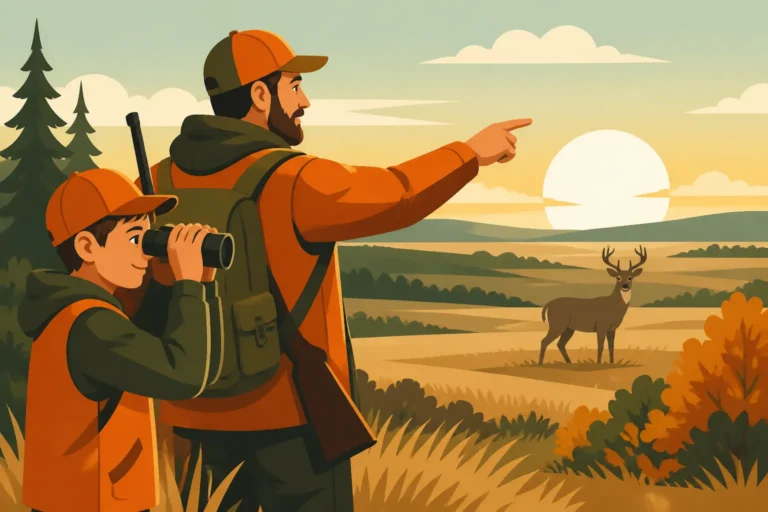
The Mentored Youth Hunter Program (MYHP) is a fantastic initiative that allows young, aspiring hunters to gain practical experience in the field under the direct supervision of an experienced adult mentor. This program is designed to provide hands-on learning before the youth hunter is fully licensed. It’s a common frustration for parents that their kids are keen to hunt but are too young for a full licence, or they just need that initial guided experience. The MYHP addresses this perfectly.
Under this program, youth who are 12 to 15 years of age can participate in big game and game bird hunting. To be eligible, they must have successfully completed the Saskatchewan Hunter Education Course and hold a valid Wildlife Habitat Certificate. The mentor, who must be 18 years or older and hold a valid hunting licence for the species being hunted, is responsible for directly supervising the youth at all times. This isn't just a casual supervision; the mentor must be within arm's reach and be able to immediately take control of the youth's firearm if necessary. The youth hunters do not possess their own big game tags; they use a portion of the mentor's tag if a big game animal is harvested. For game birds, they can hunt under the mentor's daily bag limit. This program offers an incredible opportunity for youth to learn firsthand about tracking, calling, reading sign, and ethical shot placement in a controlled and highly supervised environment. It’s an ideal way to bridge the gap between classroom learning and actual hunting experiences. You can find more specific details by looking into Saskatchewan Youth and Mentored Hunting Rules.
Age Requirements and Parental Supervision
Beyond the Mentored Youth Hunter Program, there are specific age requirements for youth to obtain their own hunting licences in Saskatchewan.
- Under 12 years of age: Youth cannot hunt big game or game birds, even under supervision, unless participating in specific, limited educational events sanctioned by the Ministry. The MYHP starts at age 12.
- 12 to 15 years of age: As mentioned, youth in this age range can participate in hunting through the Mentored Youth Hunter Program. To do so, they must have successfully completed the Saskatchewan Hunter Education Course and possess a Wildlife Habitat Certificate.
- 16 years of age and older: At 16, youth are generally eligible to apply for their own resident hunting licences, provided they have successfully completed the Saskatchewan Hunter Education Course and hold a valid Wildlife Habitat Certificate. If they plan to use a firearm, they will also need to have passed the Canadian Firearms Safety Course (CFSC) and obtained their Possession and Acquisition Licence (PAL).
For all youth participation, parental or guardian consent is a foundational requirement. This ensures that parents are fully aware and supportive of their child's involvement in hunting and understand the responsibilities that come with it. It's a progressive system designed to gradually introduce young people to the traditions of hunting, ensuring they are well-prepared, safe, and ethical hunters when they finally head out on their own.
Exemptions and Out-of-Province Certifications
One of the questions that often crops up, particularly for those moving to Saskatchewan or those with a long history of hunting elsewhere, is whether previous experience or certifications from other jurisdictions count. It’s a valid concern – nobody wants to retake a course they’ve already completed!
Recognizing Other Jurisdictions' Hunter Education
Good news! Saskatchewan generally recognizes hunter education certifications from other Canadian provinces and territories, as well as from most U.S. states. This is based on a principle of reciprocity, where provincial and state agencies acknowledge the equivalency of each other's basic hunter safety programs. So, if you've moved to Saskatchewan from Alberta and completed your hunter education there, you typically won't need to retake the Saskatchewan course. The same usually applies if you're a seasoned hunter from, say, Montana or Minnesota; your state's certification should suffice.
However, there's a crucial caveat: you must be able to prove your prior certification. This usually means presenting an official certificate, card, or documentation issued by the wildlife agency of the jurisdiction where you completed the course. A faded memory or a "trust me, I've been hunting for 30 years" won't cut it for the authorities or when setting up your Saskatchewan HAL Account. If you’re struggling to find your old certification, contact the agency in your previous jurisdiction; they often have records and can issue duplicates. It’s far less frustrating to do this proactive work than to discover you can’t get your licence when you need it most.
Prior Hunting Experience or Military/Police Exemptions
This is an area where specific exemptions are rare for the hunter education component, but more common for the Canadian Firearms Safety Course (CFSC).
For the Saskatchewan Hunter Education Course, generally, there are no broad exemptions based solely on prior hunting experience without documented certification. The province wants to ensure every hunter operating under Saskatchewan regulations has a foundational understanding of our specific laws, ethics, and conservation practices. While an experienced hunter might find parts of the course review, the unique aspects of Saskatchewan hunting might still be new.
However, for the Canadian Firearms Safety Course (CFSC), there can be certain exemptions. Individuals who have served in the Canadian Armed Forces or as a police officer (RCMP or municipal) might be exempt from taking the CFSC if they can demonstrate that their training and experience meet or exceed the requirements of the course. This typically involves providing proof of service and a declaration of equivalent training. These exemptions are handled on a case-by-case basis by the Canadian Restricted Firearms Program. This is less about hunting and more about the safe handling of firearms in general, which is why the military/police background is relevant here. But for the core hunter education component, don't assume your decades of experience mean you can bypass the provincial course without a documented certification from another recognized program. Always check the current regulations or call the Ministry of Environment for clarity on your specific situation.
What Happens After You Pass: Getting Your Hunter Number
So, you've put in the hard work, passed your hunter education course, and maybe even your firearms safety course. Congratulations! You're now on the home stretch to legally hunting in Saskatchewan. But there's one more crucial step: linking your education to your identity within the provincial system and getting your official "Hunter Number." This is where the digital world meets the hunting woods.
Applying for Your Saskatchewan Hunter Number
Saskatchewan utilizes an online system called the Hunting, Angling and Trapping Licence (HAL) system. This is your personal portal for all things licensing in the province. Once you've successfully completed your Saskatchewan Hunter Education Course, your certification needs to be recorded and linked to your HAL account. Typically, the course provider (whether online or in-person) will submit your completion information to the Ministry of Environment. It's a good idea to confirm with your course instructor how and when this information will be submitted.
Your "Hunter Number" is a unique identifier within the HAL system that signifies you have met the hunter education requirements. If you haven't already, you'll need to create a HAL account online. This process involves providing personal information, and eventually, your hunter education certification will be associated with your account. This number is what allows you to then purchase various hunting licences, such as your resident deer licence or waterfowl permits. It's not just a number; it's your key to accessing Saskatchewan's vast hunting opportunities. Navigating online systems can sometimes be a bit clunky, but the HAL system is generally user-friendly. Just make sure all your personal details match exactly what's on your ID to avoid frustrating delays. For more specific guidance on setting this up, checking out Setting Up a Saskatchewan HAL Account would be highly beneficial.
Keeping Your Certification Records Safe
Even after your hunter education is linked to your HAL account, it's incredibly important to keep your physical or digital copies of your certification records safe and accessible. Why? Because technology sometimes fails, systems change, and having your own proof of completion can save you a lot of headaches down the line.
Think of it as having a backup. Print out your certificates and store them in a safe place with your other important documents. Also, save digital copies to a cloud service or a secure folder on your computer. If you ever need to apply for a licence in another province or state, or if there's ever a question about your certification, having these documents readily available will make the process much smoother. It’s also good practice to carry a copy with you, especially during your first few hunting seasons. While the HAL system is the primary record, an officer in the field might ask for proof of your hunter number, and being able to quickly reference your original certificate can clear up any ambiguities. Don't underestimate the power of a simple piece of paper when dealing with regulations; it's a small effort for potentially huge peace of mind.
Advanced Training and Continuing Education for Hunters
Passing your basic hunter education and getting your first licence is a huge milestone, but it's really just the beginning of your journey as a hunter. The truly dedicated understand that learning is a lifelong pursuit, especially when it comes to something as dynamic and intricate as hunting. There's always more to learn, more skills to hone, and new regulations to keep up with.
Beyond the Basics: Advanced Hunter Education
While the basic hunter education course covers the fundamentals, there are many specialized areas where hunters can seek advanced training. These aren't typically mandatory for licensing but can significantly enhance your skills, safety, and success in the field.
Consider courses in advanced tracking, which delve into the nuances of deciphering subtle signs left by game animals – crucial for pursuing wounded game or simply understanding animal movements in a specific area, like when Reading Whitetail Sign in Saskatchewan Bluffs. There are also specific courses on things like wild game butchering and processing, which can save you money and ensure you get the most out of your harvest. For those interested in specific types of hunting, like bowhunting, specialized instruction can focus on equipment tuning, shot placement for archery, and close-quarters stalking techniques. Many local clubs, outfitters, and even provincial organizations offer workshops on everything from calling techniques for various species (e.g., Rattling and Calling Farmland Whitetails) to wilderness first aid, which is vital when you're far from immediate medical help. These advanced courses deepen your connection to the sport and transform you from a novice to a truly skilled and self-sufficient outdoors person. Tools like those from GoHunt can also offer incredible insights into different hunting strategies and areas, supplementing your formal education with practical, detailed information.
Staying Up-to-Date with Regulations
This is probably one of the most overlooked, yet critical, aspects of continuing education for every hunter. Hunting regulations in Saskatchewan (and everywhere else, for that matter) are not static. They can change annually based on wildlife populations, environmental factors, public safety concerns, and even shifts in conservation strategies. The frustration of running afoul of a regulation you didn't know existed is something no hunter wants to experience.
The absolute best way to stay current is to obtain a copy of the Saskatchewan Hunters' and Trappers' Guide every single year. This guide is typically available online through the Ministry of Environment's website and at most licence vendors. Don't just skim it; read it thoroughly, paying close attention to any highlighted changes from the previous year. Key things to look for include modifications to season dates (e.g., Saskatchewan Whitetail Season Dates by Zone), bag limits, specific zone restrictions (e.g., Which Saskatchewan Zones Require CWD Testing), and changes to legal equipment or methods.
Beyond the annual guide, subscribing to newsletters from the Ministry of Environment or reputable hunting organizations in Saskatchewan can provide timely updates. Checking official government websites periodically is also a good habit. The effort to stay informed is a fundamental responsibility of every ethical hunter. It ensures you're hunting legally, contributing to sound wildlife management, and upholding the integrity of the sport.
Key Saskatchewan Hunter Education Requirements at a Glance
To simplify things, here's a quick overview of the main requirements for new hunters in Saskatchewan. Remember, this is a general guide, and specific situations may warrant further investigation.
| Requirement | Who Needs It | Purpose | Notes |
|---|---|---|---|
| Saskatchewan Hunter Education Course | All new hunters (16+), youth (12-15) for MYHP, non-residents without recognized certification. | Teaches provincial hunting laws, ethics, wildlife ID, conservation, and general safety specific to Saskatchewan. | Can be taken online or in-person. Required for obtaining a Hunter Number and purchasing hunting licences. |
| Canadian Firearms Safety Course (CFSC) | Anyone (12+) planning to use a non-restricted firearm for hunting. | Federal requirement for safe handling, storage, and transportation of firearms. Mandatory for obtaining a Possession and Acquisition Licence (PAL). | Typically involves an in-person practical test and written exam, even if course material is reviewed online. Separate from hunter education, but often needed in conjunction. |
| Possession and Acquisition Licence (PAL) | Anyone 18+ wanting to legally own/purchase non-restricted firearms and ammunition. | Federal licence proving competency in firearm safety and legality to possess firearms. | Requires successful completion of the CFSC. Must be obtained before purchasing firearms. |
| Wildlife Habitat Certificate | All hunters (12+) purchasing a hunting licence. | A mandatory certificate that contributes funds directly to habitat conservation and enhancement projects in Saskatchewan. | An annual fee that supports wildlife, regardless of the species you hunt. Check What the Wildlife Habitat Certificate Costs for current rates. |
| Mentored Youth Hunter Program (MYHP) | Youth 12-15 years old who wish to hunt big game or birds under supervision. | Allows youth to gain practical, supervised hunting experience before becoming fully licensed. | Youth must complete Saskatchewan Hunter Education. Mentor must be 18+, licensed, and provide direct supervision. Covers aspects detailed in Saskatchewan Youth and Mentored Hunting Rules. |
| Proof of Out-of-Province Certification | Non-residents or new Saskatchewan residents with prior hunter education. | Verifies that an equivalent hunter education course has been completed in another recognized jurisdiction. | Must be official documentation from the issuing agency. Always confirm acceptance with Saskatchewan Ministry of Environment. |
Disclaimer
The information provided in this guide is intended for general informational purposes only and does not constitute legal advice. Hunting regulations in Saskatchewan can change, and it is the sole responsibility of the individual hunter to consult the most current Saskatchewan Hunters' and Trappers' Guide and relevant federal regulations before engaging in any hunting activities. Always refer to official government sources for the most up-to-date and accurate information.