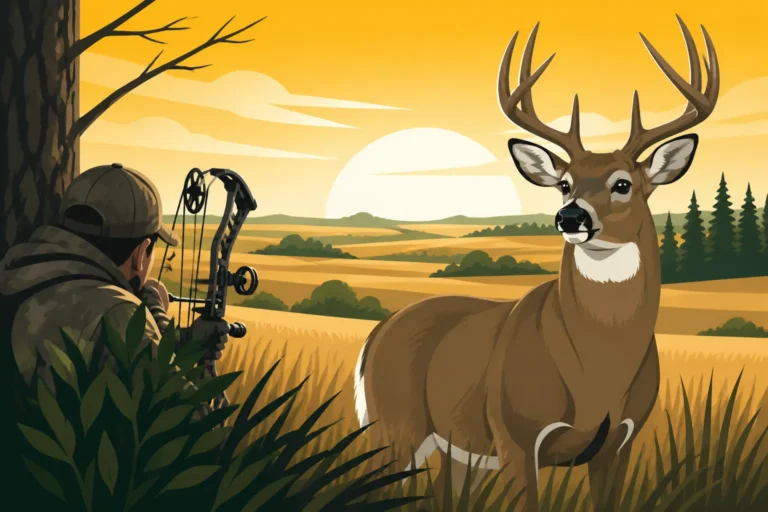
Rattling and Calling Farmland Whitetails
The flat, seemingly endless fields of Saskatchewan can feel daunting when you're trying to locate a mature whitetail buck, especially if you're used to dense woods. Traditional calling and rattling techniques often feel out of place, leaving many hunters frustrated and questioning their approach. This guide will walk you through the nuances of effectively rattling and calling whitetail deer in Saskatchewan's unique farmland environment, transforming your approach to connecting with those big prairie bucks.
Understanding Farmland Whitetail Behavior
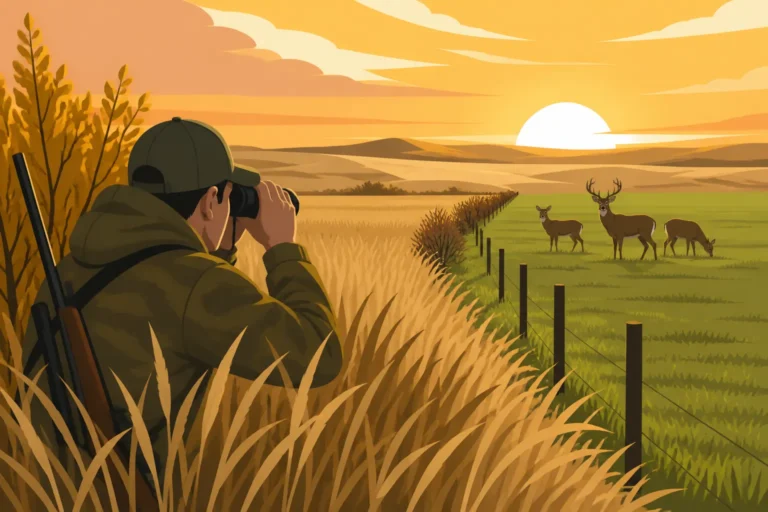
Hunting whitetails in Saskatchewan's agricultural zones presents a unique set of challenges and opportunities. Unlike their deep woods counterparts, farmland deer often live by a different rulebook, heavily influenced by crop cycles, limited cover, and open sightlines. To effectively call and rattle them, you first need to get into their heads and understand what drives their daily routines and seasonal movements in this landscape.
The Rut's Influence on Movement
Ah, the rut! It's the magical time every hunter dreams of, and it undeniably changes whitetail behavior across the board. In Saskatchewan's farmland, this shift is often even more pronounced due to the scarcity of consistent cover. Bucks that might be nocturnal and reclusive for much of the early season suddenly become bold, covering vast distances in search of does. This increased movement makes them more susceptible to calling and rattling, as their primary focus shifts from survival to procreation. You'll find these bucks cruising field edges, sneaking through willow runs, and even crossing wide-open stubble fields at times they normally wouldn't dare. Understanding when Saskatchewan's Whitetail Rut Peaks is absolutely crucial for timing your most aggressive calling strategies.
During the pre-rut, which often starts in late October, you'll see younger bucks starting to push and spar, testing their dominance. This is an excellent time for lighter rattling and aggressive grunting to mimic these encounters. As we move into early to mid-November, the full-blown rut kicks in, and that's when the big boys truly start to roam. They're seeking, chasing, and breeding, making them incredibly vulnerable to calls that simulate competition or a receptive doe. This intensity lasts well into the middle of the month, offering a prime window for strategic calling.
Post-rut, as does become bred and the initial frenzy subsides, bucks will still respond to calls, but often with less urgency and more caution. They're exhausted, often having lost significant body weight, and are more focused on feeding and recovering. However, a well-placed grunt or doe bleat can still pique their curiosity, especially if they believe there might be an unbred doe in the area. The key is adjusting your calling intensity to match their dwindling energy levels and renewed wariness.
Habitat Use in Agricultural Landscapes
Saskatchewan's farmland isn't just flat fields; it's a mosaic of stubble, standing crops, shelterbelts, bluffs, sloughs, and creek bottoms. Whitetails here are masters of using these limited cover types to their advantage. During the day, they'll bed down in dense willow rings around sloughs, thick stands of cattails, small poplar bluffs, or even in unharvested standing corn or canola fields. These areas offer thermal cover, protection from predators, and a place to chew their cud undetected. Knowing where Saskatchewan Whitetails Bed in Snow can provide invaluable clues, even when the ground isn't covered in white.
Travel corridors are often dictated by these cover pockets. Deer will use shelterbelts as highways between feeding areas and bedding grounds, especially at dawn and dusk. They'll skirt the edges of large fields, moving from one patch of cover to the next. Creek beds and drainage ditches, even if dry, provide excellent linear cover for movement, offering a low profile against the open sky. Understanding these movement patterns is paramount when setting up your calling ambush.
The presence of standing crops can completely change deer movement. A large field of unharvested corn, for example, becomes a secure sanctuary where deer can live for weeks, virtually undisturbed. They will emerge from these areas to feed in adjacent harvested fields. After harvest, deer rely more heavily on traditional cover like bluffs and slough rings. Your scouting must adapt to these seasonal changes in habitat availability.
Reading Sign in Open Country
Finding and interpreting deer sign in open farmland can feel like searching for a needle in a haystack, especially compared to the clearly defined trails in dense woods. However, the sign is there if you know what to look for, and in this open landscape, it often tells a more direct story. Instead of heavily worn trails, you might find more subtle pathways through taller grass, along fence lines, or at the very edge of stubble fields. These subtle trails lead to bedding areas, water sources, and feeding zones.
Scrapes and rubs are your calling card. While not as numerous or obvious as in the boreal forest, finding fresh rubs on willow saplings or small poplar trees within a bluff, or scrapes along a field edge, signals that a buck is actively using that area. These are prime locations to set up and initiate a calling sequence. A single, large rub on a prominent tree can indicate a mature buck is staking his claim, and that’s precisely the buck you’re trying to draw in.
Droppings and tracks also provide a wealth of information. Larger, solitary tracks usually point to a mature buck. The freshness of droppings can tell you how recently a deer was in the area. Pay close attention to where these signs concentrate – often near bottlenecks in cover, at the intersections of natural travel corridors, or leading into and out of prime bedding cover. Utilizing tools like GoHunt can help you overlay satellite imagery with known habitat features, making it easier to pinpoint these crucial areas from afar and strategize your approach for Hunting Whitetails on Saskatchewan Farmland.
Essential Rattling and Calling Techniques
Now that we understand the whitetail's playbook in Saskatchewan's agricultural zones, let's talk about the tools of the trade: rattling and calling. These techniques, when executed correctly, can turn a quiet morning into an unforgettable encounter. But it’s not just about making noise; it’s about mimicking the real sounds of the deer woods with conviction and timing.
Mastering Antler Rattling Sequences
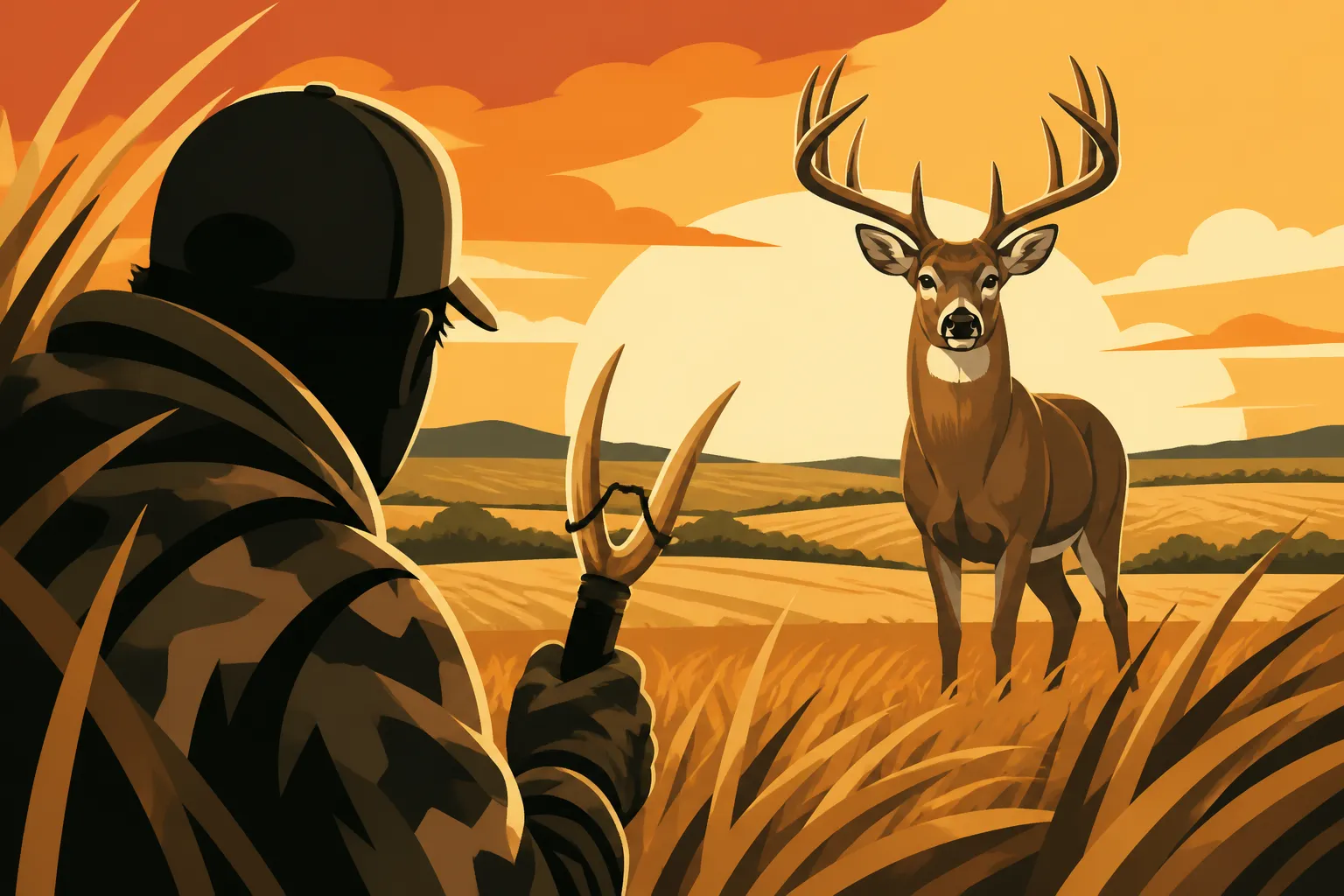
Rattling in open country is a bit different than in thick timber. The sound carries further, which can be both an advantage and a disadvantage. You need to be aware of the reach of your calls and how they might be perceived by deer far away. For effective antler rattling, start with a sequence that mimics two bucks sparring. Don't go straight into an all-out brawl. Begin with light ticking and clashing, like two smaller bucks testing each other, gradually increasing the intensity.
A typical sequence might start with 30 seconds of light sparring, then a minute or two of crashing, grunting, and thrashing the brush to simulate a serious fight. After that, go completely silent for at least 5-10 minutes. This period of silence is critical because a buck responding to your calls will often circle downwind or approach very cautiously, trying to pinpoint the source of the sound. If you're rattling continuously, you might miss him as he tries to sneak in. Consider varying your Rattling Volume in Open Parkland depending on the wind and visibility. If it's windy, you might need more volume, but on a still morning, a softer touch could be better.
Don't be afraid to add realism. Kick the ground, break small branches, and even throw in a few grunts or snort-wheezes during the most intense parts of your rattling sequence. This adds an undeniable layer of authenticity that makes it much harder for a real buck to dismiss your sounds as artificial. The goal is to paint a picture in the buck's mind – a real fight, a real challenge, something he feels compelled to investigate or intervene in.
The Art of Grunt and Doe Bleat Calls
Grunt tubes and doe bleat calls are indispensable in a Saskatchewan farmland hunter's arsenal. A deep, guttural buck grunt signals presence and sometimes aggression, while a series of shorter grunts can indicate a buck trailing a doe. Doe bleats, especially estrous bleats, are incredibly effective during the peak rut, signaling a receptive doe that's ready to breed. Combine these calls to tell a story: a buck grunting while trailing a hot doe, or a doe bleating to attract a suitor.
When using a grunt call, vary the cadence and intensity. A long, drawn-out grunt can attract attention from a distance, while shorter, softer grunts can be used when a buck is closer or when you want to make him think there's a deer just out of sight. During the rut, don't be shy with your grunts – challenge a buck. However, be mindful of overcalling; a buck that hears continuous, aggressive grunting without seeing the source might become suspicious.
Doe bleats, particularly the estrous bleat, can be absolute magic. These calls mimic the sound of a doe ready to breed, and a buck focused on finding receptive does will often come straight to the sound. Use a can call or a mouth call to produce these sounds. Start with a few bleats, then wait. Like rattling, silence is key. If you hear a distant grunt or see movement, another bleat can sometimes coax them closer. Remember that Grunt Calls Late in Saskatchewan's Rut can still be effective, as exhausted bucks might still be looking for that last receptive doe.
Fawn Distress and Snort-Wheeze Applications
Beyond the standard grunts and bleats, fawn distress calls and the snort-wheeze can be powerful tools in specific situations. A fawn distress call, while not directly related to the rut, can sometimes draw in does (who are often followed by bucks) or even curious bucks looking to see what the commotion is. It appeals to the maternal instincts of does and the general curiosity of all deer. This can be particularly effective during the early season or pre-rut when bucks aren't fully committed to chasing.
The snort-wheeze is a different beast altogether. This is a very aggressive, territorial call made by a dominant buck, essentially telling another buck to back off. It's not a call to be used lightly, especially in open country where a buck can pinpoint your location quickly. However, if you see a mature buck at a distance that seems uninterested in your other calls, a snort-wheeze can sometimes be the ultimate challenge that pushes him over the edge.
When you deploy a snort-wheeze, be ready. The buck might come in hot, looking for a fight. It's a high-risk, high-reward call. Practice the sound to make it as authentic as possible – a short inhale followed by a rapid, forceful expulsion of air through the nose, creating a "whoosh-whoosh-wheeze" sound. This call is best reserved for those moments when you've identified a specific buck you want to challenge and all other tactics have failed.
Gear and Setup for Farmland Calling
Having the right gear and knowing how to set up your ambush strategically are paramount when calling and rattling farmland whitetails. The open nature of Saskatchewan's agricultural zones means you're often exposed, and deer have excellent eyesight. Every detail, from your choice of calls to your stand placement, must be meticulously planned.
Choosing the Right Calls and Rattling Antlers
The market is flooded with calls, and it can be overwhelming to choose. For rattling, you have a few options: real antlers, synthetic rattling bags, or synthetic rattling horns. Real antlers provide the most authentic sound, but they can be cumbersome to carry. Synthetic options like those from brands like Primos or Flextone are often more convenient and can still produce excellent sounds. I've had good success with both, but I often lean towards a lighter, more packable synthetic option, especially if I'm doing a lot of walking across fields. The key is to practice with them to ensure you can create a realistic range of sounds, from light sparring to crashing fights.
For grunts and bleats, a good quality grunt tube with a versatile reed system allows you to mimic different buck grunts, as well as doe and fawn bleats. Some models even have an adjustable O-ring that lets you change the pitch and tone, which is incredibly useful for adapting to different situations. For doe bleats, a simple "can" call, like the Can Call from Primos, is incredibly user-friendly and produces a very realistic estrous bleat. Carry a variety of calls to adapt to the deer's mood.
When you're out there, remember that the sound carries. You don't always need the loudest call. Sometimes, a subtle, well-timed call is far more effective than a blaring attempt that might alert a buck to your exact position before he commits. Investing in a quality set of calls and practicing their use regularly, even outside of hunting season, will dramatically increase your confidence and success rates.
Strategic Blind and Stand Placement
This is where the rubber meets the road in farmland hunting. With less cover, your hide becomes critical. Ground blinds are often your best friend here. They offer excellent concealment, break up your silhouette, and allow for movement that treestands often restrict. Place your ground blind in a fenceline, within a bluffy draw, or tucked into the edge of a standing crop or willow thicket. Make sure it's brushed in well, breaking up its outline with natural vegetation. If you're going to be Hunting a Saskatchewan Bush Bluff, a blind can be strategically placed on the downwind side.
When choosing a treestand, focus on isolated cover. A lone poplar tree on a field edge, a small woodlot, or a major shelterbelt can provide excellent elevated vantage points. The challenge is often finding trees strong enough and tall enough for a safe and effective setup. Always consider the sun's position – you don't want to be silhouetted or have the sun directly in your eyes during prime calling times. A good starting point for learning how to identify potential locations is to review Hanging a Stand on a Saskatchewan Bush Edge.
Crucially, position yourself so a buck approaching your calls will have to expose himself before getting directly downwind of you. This means setting up so your calls project into an area where a buck might approach from, while giving yourself an advantage by forcing him into an open area at a shootable range. A general rule is to set up with the wind quartering towards your back or side, forcing the deer to move past you before getting a full scent.
Wind Direction and Scent Control Priorities
In open farmland, where deer often approach cautiously and use their noses heavily, wind direction and scent control are non-negotiable. One wrong puff of wind carrying your scent can bust your hunt before it even begins. Always, and I mean always, hunt with the wind in your favor. This might mean getting up earlier to circle around a bedding area to approach from the downwind side, or sitting out a hunt if the wind isn't cooperating with your planned setup.
Scent control goes beyond just showering with scent-free soap. It's a holistic approach. Wash your hunting clothes in scent-free detergent and store them in airtight containers. Use scent-eliminating sprays on your clothes, boots, and gear. Pay attention to your breath and any food you might be eating in the stand. Even small details, like using a scent-free deodorant, make a difference. Some hunters swear by ozone generators, like those from ScentLok or Ozonics, to further neutralize scent on their gear and in their blinds, although their effectiveness is often debated. The ultimate goal is to minimize your human odor as much as possible, leaving the deer with no reason to believe anything is amiss.
Moreover, consider your entry and exit routes. Try to approach your stand or blind without walking through areas where deer are likely to be bedding or feeding. Use ditches, tree lines, or the cover of darkness to sneak in undetected. A successful hunt starts long before you even make your first call – it begins with meticulous planning around wind, scent, and deer movement.
Timing Your Calls for Maximum Impact
Timing isn't just important in comedy; it's absolutely critical in deer hunting, especially when you're relying on calls and rattles. In Saskatchewan's farmland, where deer can see and hear you from a long way off, deploying your auditory tactics at the right moment can be the difference between a buck charging in and one ghosting away.
Peak Rut Strategies: Aggression and Persuasion
During the peak of the rut, roughly from the first to third week of November in Saskatchewan, bucks are in an entirely different mindset. They are driven by an instinct to breed, often overriding their usual caution. This is the time to be more aggressive with your calling and rattling. Bucks are actively seeking does and competing with other bucks, making them susceptible to sounds of a challenge or a receptive female.
Your rattling sequences can be longer and more intense, mimicking a full-blown fight. Don't be afraid to add aggressive buck grunts and snort-wheezes, especially if you spot a buck cruising a distant field edge. Combine rattling with estrous doe bleats to paint a complete picture: a hot doe being fought over. This creates a powerful illusion that can often pull a buck off his current path. When you know you're Hunting the Rut in Early to Mid November, this aggressive approach is often your best bet.
However, even during the peak rut, discretion is key. If a buck starts coming in, reduce your calling frequency. Let him commit. A series of soft grunts or bleats can guide him the rest of the way, but constant loud calls might make him wary if he can't pinpoint the source. The goal is to draw him in, not scare him off. Use the wind, use the cover, and let the buck's rut-fueled instincts do most of the work for you.
Pre-Rut and Post-Rut Adjustments
Before the full-blown rut kicks in, in late October, bucks are starting to feel the urge but aren't yet in full-chase mode. This "pre-rut" phase is excellent for lighter, more inquisitive calling. Start with softer rattling, mimicking younger bucks sparring. This can often draw in curious smaller bucks, and sometimes a bigger buck wanting to assert dominance without necessarily getting into a full-on brawl. A few subtle buck grunts or a questioning doe bleat can also work wonders, making a buck think there's a deer in the area that he hasn't seen yet.
After the peak rut, often into late November and December, bucks are exhausted. Many does are bred, and the frenetic energy subsides. While you might think calling is over, it's not. There are often still some unbred does, and exhausted bucks might be looking for that last opportunity. This "post-rut" period requires a more subtle and patient approach. Avoid aggressive rattling, as a tired buck isn't looking for a fight. Focus on soft doe bleats and light, infrequent grunts.
The aim during the post-rut is to appeal to a buck's lingering breeding drive or even just his curiosity. He might respond to the sound of an available doe, even if he's not charging in headfirst. Patience is paramount here, as responses will be slower and more cautious. Remember, many big bucks are taken during the late season by hunters who understand this shift in deer behavior and adjust their calling accordingly for Hunting the December Late Season Cold.
Calling Throughout the Day: Mornings, Midday, and Evenings
While many hunters focus their calling efforts on dawn and dusk, Saskatchewan's farmland whitetails can respond throughout the day, especially during the rut. Mornings are often prime. As the sun rises and deer are moving from feeding areas back to bedding, rattling and calling can intercept bucks cruising for does. The cool, crisp air also helps sound carry, making your calls more effective over long distances.
Midday hunting, often neglected, can be surprisingly productive, particularly during the peak rut. Bucks are constantly on the move, checking scrapes, rubbing trees, and pushing does. While deer movement might slow down in the open fields, bucks will often utilize cover like bluffs and willow thickets for travel. Setting up in a travel corridor or near a known bedding area and performing a rattling sequence around 10 AM to 2 PM can pull a bedded buck out of his hide or intercept a cruising buck. Remember, a buck only needs a few minutes of curiosity to close the distance.
Evenings, like mornings, are a natural time for deer movement as they head from bedding to feeding. As deer filter into harvested fields, a well-timed grunt or bleat can grab a buck's attention. Rattling can also work, but be more cautious with intensity as light fades. A buck coming into rattling at dusk might circle widely, and visibility can be a real issue. Timing your setup and calls to match deer movement patterns, which you've identified through scouting (perhaps even using a tool like GoHunt to mark travel routes), dramatically increases your chances of success.
Common Mistakes and How to Avoid Them
Even the most seasoned hunters can fall into traps when calling and rattling, especially in the unique environment of Saskatchewan's farmland. Recognizing and rectifying these common errors can significantly improve your odds and save you from countless hours of frustration.
Overcalling and Under-Calling Pitfalls
One of the biggest mistakes hunters make is either calling too much or not enough. Overcalling is particularly detrimental in open country. If you're constantly grunting or rattling, a wise buck will quickly figure out that the sounds aren't moving, and that something's off. It's unnatural for deer to be making continuous noise for extended periods without moving. A buck might approach, hear the constant calls from one spot, and either circle far downwind or simply lose interest.
The solution? Less is often more. Call or rattle for a short sequence, then wait. Give it 5 to 10 minutes of absolute silence. A responding buck will often come in cautiously, stopping to listen, circling, and trying to locate the source. If you're still calling, you might miss him as he tries to sneak in. Similarly, don't be afraid to put your calls away once a buck is committed and heading your way. Let him come to you.
Conversely, under-calling can also be an issue. If you only make one or two weak grunts and then wait indefinitely, you might not generate enough interest to pull a buck from a distance, especially if he's focused on something else. The balance is about confidence and realism. Make enough noise to get attention, but then allow the deer to do their part of the approach. When you are Hunting a Saskatchewan Quarter Section, you need to be mindful of sound travel and adjust your calling appropriately.
Ignoring Environmental Cues
Deer are masters of their environment, and they constantly react to changes in weather, wind, and landscape. Ignoring these cues while calling is a recipe for failure. For instance, if it's a calm, still morning, sound will carry incredibly far. Aggressive, loud rattling might spook deer rather than attract them, as they can pinpoint the source too easily. On a windy day, however, you might need to call louder and more frequently to cut through the noise.
Visibility is another massive cue. In wide-open stubble fields, a buck can see you from hundreds of yards away. Your calling setup must account for this. You might need to call from behind a knoll or a bluffy edge, forcing the buck to climb or come around to see the "fight." If you call from completely exposed ground, a buck will likely see you before he gets into range. Always factor in how the deer will approach and what they will see.
Temperature also plays a role. In extreme cold, deer movement might be limited to necessary feeding. Aggressive calling might be less effective than subtle bleats. Conversely, during mild rut days, bucks are more active and responsive. Always take a moment to assess the conditions before you even think about putting a call to your lips or clashing those antlers. When you are Hunting Saskatchewan Winter Weather Safely, remember that deer behavior will change significantly.
Inadequate Scouting and Prep
This is perhaps the most critical mistake. You can have the best calls, the perfect technique, and impeccable scent control, but if you're not in an area where deer, especially mature bucks, are present and active, it's all for naught. Farmland whitetails are creatures of habit and opportunity. They will be where the food, water, and cover are. If your scouting is lacking, you're essentially calling into a void.
Before you even step foot in the field, use tools like GoHunt to study aerial maps. Identify potential bedding areas (thick bluffs, slough rings, standing crops), travel corridors (shelterbelts, creek bottoms, fence lines), and feeding areas. Look for pinch points where deer traffic funnels. This digital scouting will guide your physical scouting efforts.
Once in the field, look for fresh sign: tracks, droppings, rubs, and scrapes. Pay attention to how the wind typically blows through potential calling setups. Where are the natural funnels? Where would a buck likely approach from? Where can you hide effectively? Without this foundational scouting, your calling efforts will be blind. Even if you're Scouting a Saskatchewan Wildlife Management Zone, detailed local knowledge of the ground you hunt is invaluable. A well-scouted area with limited deer sign will always be better than a "honey hole" you know nothing about.
Adapting to Saskatchewan's Unique Landscape
Saskatchewan's vast and varied landscape demands flexibility from hunters. What works in the boreal forest might fail miserably on the open prairie. Tailoring your rattling and calling strategies to the specific terrain and conditions you encounter is essential for success.
Calling in Open Prairie and Aspen Parkland
Hunting the open prairie or the more broken aspen parkland regions of Saskatchewan requires a keen understanding of sound travel and visual perception. In these environments, sound carries for incredible distances due to the lack of dense timber to absorb it. This means your calls, especially rattling, will be heard from much further away, potentially attracting bucks from vast distances but also giving them more time to pinpoint your location or circle downwind.
When rattling in these open areas, consider starting with a moderate volume. If you don't get a response after a few sequences, you can increase the intensity, but always be mindful of how far the sound travels. It's often better to make a realistic sound than simply a loud one. The challenge here is the lack of cover for the buck to approach stealthily. They'll often pop up over a knoll or out of a coulee, making a direct line for the sound. This means your setup needs to anticipate a long-range approach, and you need to be prepared for a shot quickly once they appear.
Visual barriers are your friends. Calling from behind a rise, a small bluff, or even a vehicle (if legal and safe) can force a buck to commit to coming over or around the obstruction to investigate, giving you the advantage. In aspen parkland, where there are more bluffs and treed coulees, these features act as natural funnels. Set up on the downwind side of these funnels, calling into the open areas where deer are likely to travel or feed. Sometimes, a subtle approach works best, such as when rattling a bluff between two fields where deer might be bedding.
Navigating Private Land and Permission
Much of Saskatchewan's prime farmland hunting is on private land, which means obtaining permission is often a prerequisite to even setting foot in the field, let alone calling. This can be a significant hurdle for many hunters, but it's a non-negotiable step. Respecting landowner rights is paramount, and without permission, you're not only breaking the law but also tarnishing the reputation of all hunters.
Start by identifying the land you want to hunt. Use resources like the iHunter app or municipal maps to determine property lines and ownership. Then, the old-fashioned method of knocking on doors and asking permission is often the most effective. Be polite, well-mannered, and clearly state your intentions. Offer to share game, help with chores, or simply be a good steward of their land. Sometimes, it takes multiple visits or attempts to get a "yes," but persistence, coupled with respect, often pays off. Knowing the local landowners can make all the difference, especially when you are Knocking on Doors in Saskatchewan Farm Country.
If you secure permission, make sure you understand any specific rules or restrictions the landowner might have. Are ATVs allowed? Can you set up a ground blind? What areas are off-limits? Maintaining a good relationship with landowners is critical, not just for your current hunt but for future opportunities. Saskatchewan also has "posted land" laws, so always be on the lookout for signage that indicates land is off-limits to hunters.
Weather Considerations for Effective Calling
Saskatchewan weather is famously unpredictable and extreme, and it profoundly impacts deer behavior and the effectiveness of your calls. Wind, as mentioned, is a major factor. On calm days, calls carry far and wide, so a subtle approach is best. On windy days, you'll need to increase volume and frequency to ensure your calls are heard above the rustling crops and whistling wind. However, remember that deer will also be more cautious on very windy days as their senses are impaired.
Temperature is another key element. During cold snaps, deer often move less during the day, focusing on conserving energy. Aggressive rattling might be less effective than a soft doe bleat or a few quiet grunts. Conversely, mild, overcast days during the rut can be absolute gold for calling, as deer are active and less worried about the elements. Snowfall can also muffle sound, requiring louder calls, but fresh snow can also create silent stalking conditions and makes tracking easier.
Rain and wet conditions generally suppress deer movement and calling effectiveness. However, a light drizzle or fog can provide excellent cover for movement, both for you and for the deer. Always check the forecast before heading out and adjust your calling strategy, intensity, and even your planned hunting location to match the prevailing conditions. Adaptability is the name of the game when facing Saskatchewan's dynamic weather patterns.
| Calling Technique | Best Rut Phase | Optimal Weather | Description | Potential Response |
|---|---|---|---|---|
| Light Rattling | Pre-Rut, Early Rut | Calm, crisp days | Mimics sparring, testing dominance | Curious younger bucks, cautious mature bucks |
| Aggressive Rattling | Peak Rut | Windy, overcast days | Simulates full-blown buck fight | Aggressive mature bucks, often charge in |
| Buck Grunt | Pre-Rut, Peak Rut, Post-Rut | Any | Signals buck presence, challenge, or trailing | Investigation, challenge, or approach to doe |
| Estrous Doe Bleat | Peak Rut | Any | Mimics receptive female | Direct approach by breeding bucks |
| Fawn Distress | Early Season, Pre-Rut | Any | Appeals to maternal instinct or curiosity | Does (often with bucks), curious bucks |
| Snort-Wheeze | Peak Rut (last resort) | Calm (for clear sound) | Aggressive territorial challenge | Immediate, often aggressive charge by dominant buck |
Disclaimer
Hunting involves inherent risks, and conditions in Saskatchewan can be unpredictable. Always prioritize safety, understand and follow all provincial and federal hunting regulations, and ensure you have proper training and licensing. This guide provides general information and should not replace official safety courses or direct instruction from experienced professionals. Always inform someone of your hunting plans and location.