Whether Saskatchewan Has Bison Herds
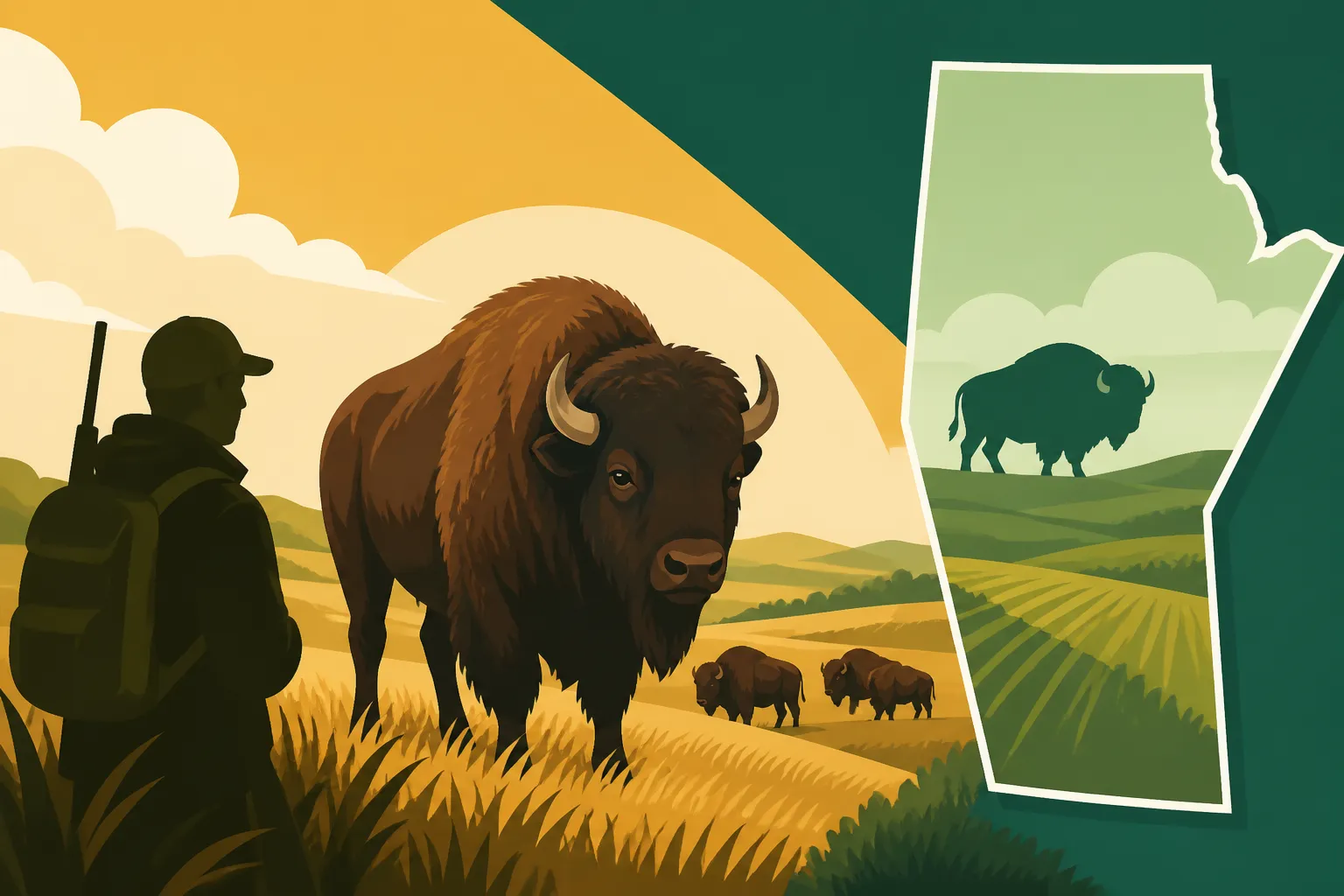
Many hunters and nature enthusiasts often wonder about the mighty bison in Saskatchewan. Given its vast prairies and deep forests, it's a natural question to ask whether these iconic beasts still roam wild and free, and if there are opportunities for hunting them. The truth is, while Saskatchewan was once home to millions of bison, their presence today is a complex story of history, conservation, and very specific management. This guide will explore the past and present of bison in Saskatchewan, shedding light on their populations and any potential hunting considerations for those curious about these magnificent creatures.
The Echoes of a Million Herds: Bison in Historical Saskatchewan
Before European settlement, the Saskatchewan prairies were an epicentre for plains bison. Imagine herds so vast they darkened the horizon for miles, their thunderous hooves shaping the very landscape. They were more than just animals; they were an ecosystem in motion, a foundational pillar of the prairie. Indigenous peoples like the Cree, Saulteaux, and Dakota depended on them entirely, not just for food, but for shelter, tools, and spiritual connection. The buffalo run, the buffalo jump – these were integral to survival and culture, leaving indelible marks on places like the vast Grasslands National Park area in the province's southwest.
The Plains Bison Empire
These incredible creatures were the ultimate grazers, their movements creating the rich soils and diverse plant life that still define parts of Saskatchewan today. Their sheer numbers were almost unimaginable, creating distinct trails and wallows that shaped drainage patterns and microclimates. Many of the natural features we see in our Hunting Saskatchewan's Southern Prairie today were sculpted by the endless migration of these giants. The very air must have vibrated with their presence, a truly wild, untamed land that stretched as far as the eye could see. It’s a legacy that’s hard to truly comprehend now, but one that deeply influenced the province's natural and human history.
The bison's impact extended beyond just grazing; they were a keystone species, meaning their presence influenced countless other plants and animals. Their wallows collected water, creating miniature wetlands for birds and amphibians. Their droppings fertilized the soil, and their constant movement prevented overgrowth in certain areas, promoting a mosaic of habitat types. This dynamic interaction created a highly productive and diverse ecosystem, supporting everything from prairie dogs to Saskatchewan's Predators and Furbearers. Without them, the prairie simply wasn't the same.
The Great Vanishing Act
The arrival of European settlers, the railway, and relentless market hunting brought an abrupt and tragic end to this bison empire. In what felt like mere decades, the millions dwindled to a few scattered survivors. The demand for hides and meat, coupled with a strategic effort to remove a primary food source for Indigenous populations, led to an ecological catastrophe. It’s hard to fathom how quickly such an abundant species could be pushed to the brink of extinction, a stark lesson in unsustainable exploitation that echoes through conservation discussions even today.
This rapid decline wasn't just an ecological tragedy; it caused immense cultural and economic devastation for Indigenous communities whose way of life was inextricably linked to the bison. The silence that fell over the prairies after the bison disappeared must have been profound, a stark reminder of a lost era. This period of intense exploitation fundamentally altered the Saskatchewan landscape, changing everything from grassland composition to predator-prey dynamics, and setting the stage for future conservation efforts to restore a semblance of what was lost. The scale of the loss is a sobering reminder of how quickly human actions can impact even the most numerous of species.
Modern Bison in Saskatchewan: A Story of Recovery and Management
Today, truly wild, free-ranging plains bison herds akin to those of the 1800s do not exist in Saskatchewan. However, there are significant conservation efforts and populations that represent a complex and managed return for these iconic animals.
Plains Bison: Protected Populations and Private Ranches
Saskatchewan today holds important plains bison populations, but they exist in distinct categories. Firstly, there are significant conservation herds, primarily within national parks. Grasslands National Park in southwestern Saskatchewan is a prime example, where plains bison were reintroduced to help restore the native prairie ecosystem. These bison roam within park boundaries, managed for ecological purposes, and are strictly protected. They represent a monumental effort to bring back a piece of Saskatchewan's natural heritage, allowing visitors a glimpse of what the vast plains once looked like.
Beyond these protected conservation herds, a substantial number of plains bison are raised on private ranches across the province. These are commercially raised animals, often for meat or breeding stock, and they are managed as livestock within large, fenced pastures. If you've driven through certain rural areas, particularly in the south, you might have seen large paddocks with bison grazing, looking quite at home. These private operations play a vital role in maintaining the genetics of the species and meeting market demand, but it's crucial to understand they are distinct from wild, free-roaming populations in terms of management and access.
For anyone keen on seeing these magnificent animals, visiting Grasslands National Park offers an incredible opportunity to witness a conservation herd up close. While it's not a hunting experience, it offers a glimpse into what the prairies once were. Understanding where these animals exist helps differentiate between wildlife management for species like White-Tailed Deer, Saskatchewan's Signature Animal and Mule Deer Across Saskatchewan's Prairie, and the very specific, often more hands-on, approach needed for bison conservation and ranching. This managed presence is a far cry from the historical free-ranging herds, but it ensures their survival.
Wood Bison: The Northern Giants
Saskatchewan is also home to a distinct subspecies: the wood bison. These are larger, darker, and more adapted to the boreal forest environment than their plains cousins. Unlike the plains bison, some wood bison populations in Saskatchewan can be considered more "wild" in their range, albeit still managed. Prince Albert National Park, for instance, has a herd of wood bison that roam largely unconstrained within the park's vast northern reaches. These populations are a testament to the dedication to preserving the genetic diversity within the bison family.
These northern giants occupy very different terrain than the plains bison. Instead of open prairie, they navigate dense bush, muskeg, and forested areas. Their presence here speaks to the incredible diversity of Saskatchewan's ecosystems, from the Hunting Saskatchewan's Southern Prairie to the Hunting Saskatchewan's Boreal North. While these populations are vital for biodiversity, they are subject to strict conservation protocols and are not typically available for public hunting. Their existence highlights the success of targeted conservation efforts for a species once teetering on the brink in a completely different ecological niche.
The wood bison's adaptation to the northern environment is fascinating. They possess thicker coats and a more upright, less humped profile than plains bison, allowing them to better navigate deep snow and dense timber. These herds are often more elusive, using the thick cover of the boreal forest for protection and forage. Observing them requires significant effort and a trip deep into the wilderness, often far from the readily accessible Saskatchewan's Crown Land Access found further south. Their remote nature adds to their mystique and the challenges of their ongoing conservation.
Hunting Bison in Saskatchewan: The Realistic Prospects
For many avid hunters, the idea of pursuing a bison in Saskatchewan is a compelling thought, given the province's rich hunting heritage. However, the reality of bison hunting opportunities is quite different from what you might imagine for other big game species.
No General Public Wild Bison Season
Let's cut right to the chase for most resident hunters: there is currently no general public hunting season for truly wild, free-ranging bison in Saskatchewan. This isn't just about preserving the species; it's also because there aren't truly "wild" populations outside of protected areas that could sustain regular hunting pressure. The conservation herds in national parks are precisely that – conservation efforts, not hunting opportunities. Unlike species such as Black Bear Hunting in Saskatchewan or Moose in Saskatchewan's Farmland and Forest which have regulated seasons and draws, bison fall under a different and much more restrictive management category.
Many hunters dream of the ultimate primitive hunt, pursuing a massive bison across the open land. It’s an evocative image, steeped in history. However, the reality of Saskatchewan's current wildlife management means that this particular dream, for a truly wild, public hunt, remains just that – a dream. The focus remains squarely on population recovery, genetic preservation, and ecological restoration for the conservation herds. The province simply doesn't have the wild, self-sustaining, free-ranging populations to support a hunting season without undermining decades of conservation work.
This lack of a general season is also tied to the complex logistics of managing a large, once-endangered species. The areas where bison thrive, particularly the wood bison in the north, can be remote and challenging to access. Furthermore, the populations, while stable in protected zones, are not at a level where they could withstand annual hunting pressure like more numerous species. Wildlife managers are incredibly cautious, prioritizing the long-term health and growth of these unique herds over any short-term hunting opportunities.
Exploring Private Ranch Hunts and Special Opportunities
For those determined to experience a bison hunt, the primary avenue in Saskatchewan is through private ranches that raise bison commercially. These operations offer regulated hunts for their privately owned animals. It's a different kind of experience than pursuing truly wild game on Public Hunting Land in Saskatchewan, but it allows individuals to participate in the harvest of a bison. These hunts typically involve working with the ranch owner or a specialized outfitter who manages the property, ensuring a controlled and ethical harvest.
It's important to understand that a private ranch bison hunt is an ethical, legal way to obtain bison meat and a trophy, but it's not comparable to drawing a tag for a wild elk or moose through the Saskatchewan's Big Game Draw. You're essentially harvesting a privately managed animal, often within a large enclosure. Costs, logistics, and hunting methods will vary greatly from ranch to ranch, so thorough research and direct communication with potential providers are absolutely essential. Always check current regulations, as special permits for nuisance animals or unique management objectives might arise very rarely, but these are exceptions, not regular occurrences for the average hunter.
When considering such an opportunity, understanding the specifics of the operation is crucial. For instance, are you hunting a wide-ranging herd within a large, multi-quarter enclosure, or a more confined group? These details shape the experience significantly. Tools like GoHunt or similar scouting apps are fantastic for understanding public land opportunities for deer or waterfowl, but for bison, your focus shifts to direct communication with private landowners or outfitters who specialize in ranch-raised bison. This type of hunt allows for the procurement of delicious, lean bison meat and a magnificent trophy, but it's a distinct experience from a traditional wilderness hunt.
The Path Ahead: Bison Conservation and Saskatchewan's Hunting Landscape
The story of bison in Saskatchewan is not just about historical loss, but also about ongoing efforts to bring them back. Their future remains a vital part of the province's ecological narrative.
The Long Road to Wild Bison Expansion
The future of truly wild bison in Saskatchewan is a testament to long-term vision and commitment. Conservation groups, government agencies, and Indigenous communities continue to work towards expanding genuinely wild populations, though it's a slow and complex process. Challenges include securing vast tracts of suitable habitat, managing potential disease transmission (like bovine tuberculosis, which is monitored in some wildlife populations, though Bovine Tuberculosis Testing Requirements primarily relate to domestic livestock and some specific wildlife interactions), and navigating human-wildlife conflicts, especially when bison move onto agricultural lands bordering conservation areas.
These efforts are crucial for restoring ecological balance and cultural connections. However, developing huntable wild populations would require a scale of reintroduction and land management that is currently not feasible for general public access. It involves delicate ecological considerations, ensuring genetic diversity, and providing adequate range for herds to function naturally without constant human intervention. The slow, methodical approach is necessary to ensure any gains are truly sustainable for the species and the ecosystem.
The dedication to bison conservation often involves land acquisition and habitat restoration within specific Saskatchewan's Wildlife Management Zones or protected areas. These zones are carefully managed to provide the best conditions for bison to thrive, often using strategies that benefit a wide range of Saskatchewan's game species. It's a testament to the belief that these animals deserve a place in Saskatchewan's wild landscapes, even if their return is gradual and highly controlled.
Bison's Role in a Shifting Ecosystem
As conservation efforts progress, the reintroduction of bison, even in limited areas, has a profound impact on Saskatchewan's ecosystems. Their grazing patterns help regenerate native grasslands, fostering biodiversity that benefits other species, from insects to birds. They are an integral part of a healthy prairie and boreal environment. Understanding how these massive grazers interact with the land can provide valuable insights for managing other large game species and restoring ecological integrity.
While bison hunting in the traditional sense remains a rarity, their presence, whether in parks or on private land, enriches the province's natural heritage. For hunters, it reinforces the importance of ethical wildlife management and the incredible effort required to bring a species back from the brink. It's a reminder that not every magnificent animal is available for a general hunt, but all play a critical role in the intricate web of Saskatchewan's wilderness. Appreciating the various roles different game animals play, from Saskatchewan's Ducks and Geese to our big game, helps frame the full picture of our diverse hunting and wildlife viewing opportunities.
The return of bison, even in a managed capacity, helps to restore a piece of the ecological puzzle that was missing for over a century. Their presence helps maintain the health of the very landscapes that support all our wildlife, from the smallest songbird to the largest elk herd. This broader ecological impact is a powerful argument for their continued conservation, even if direct hunting opportunities remain limited to highly controlled, private settings.
| Feature | Plains Bison | Wood Bison |
|---|---|---|
| Historical Range | Southern Saskatchewan Prairies | Northern Saskatchewan Boreal Forest |
| Current Status | Conservation herds (e.g., National Parks), Private commercial ranches | Conservation herds (e.g., National Parks), some wilder populations in the far north |
| Habitat | Open grasslands, prairie | Dense forests, muskeg, bush |
| Size/Appearance | Typically smaller, lighter brown, prominent shoulder hump, denser woolly mane | Larger, darker brown, taller hump, more slender build, less woolly mane |
| Huntability | No public wild hunting season. Available on private ranches only. | No public wild hunting season. Very limited to no private hunting opportunities due to protected status and remote habitat. |
Disclaimer
This article is for general informational purposes only and does not constitute professional advice. Laws, prices and regulations vary by location and change over time. Consult a qualified professional for guidance on your specific situation.