Mule Deer Across Saskatchewan’s Prairie
For many hunters, the image of Saskatchewan brings to mind massive whitetail bucks, but the prairie regions of this province offer an equally thrilling, albeit different, challenge: the mule deer. These iconic deer, with their large ears and distinctive bounding gait, present a unique puzzle for hunters accustomed to dense bush or open fields, thriving instead in the rugged coulees, badlands, and broken country of the southern and western parts of the province. This comprehensive guide will delve into everything you need to know about pursuing mule deer across Saskatchewan's vast and beautiful prairies.
Understanding Saskatchewan's Mule Deer Habitat
Saskatchewan's landscape is incredibly diverse, and the mule deer have carved out a niche in its more rugged, arid environments. Unlike their whitetail cousins who prefer dense cover, mule deer are creatures of the open, broken country, masters of camouflage and using the contours of the land to their advantage.
The Unique Prairie Ecosystem
When you think of Saskatchewan, vast flat farmland often comes to mind. However, the southern and western regions, particularly around areas like Swift Current, Maple Creek, and along the provincial borders, boast a completely different topography. Here, the prairie is deeply cut by ancient riverbeds, eroded into dramatic badlands, and sculpted by wind and water into intricate coulee systems. These are not flat, easily navigated areas; they are a maze of draws, ridges, sagebrush flats, and cottonwood groves that provide essential cover, bedding areas, and forage for mule deer. The vegetation often consists of various grasses, forbs, and shrubs, with sparse tree cover mostly concentrated in the deeper coulees or along riverbanks. This environment demands a different scouting and hunting approach compared to the forest fringe or farmland whitetail hunting.
Navigating these areas requires keen observation and an understanding of how mule deer utilize every fold in the landscape. Their preference for open-country travel means they often stick to the bottoms or sides of coulees during the day, emerging onto the higher benches or into adjacent fields to feed, especially at dawn and dusk. The sheer scale of these landscapes can be intimidating, but it also means that, with patience and good optics, you can often spot deer from a considerable distance, allowing for careful planning of your approach.
Key Habitat Features
Specific geographic features across Saskatchewan are renowned for holding healthy mule deer populations. The Great Sand Hills, located in the southwest, is a prime example. This unique area, characterized by shifting sand dunes, sparse grass, and the occasional clump of aspens, provides pockets of cover and specialized vegetation that mule deer thrive on. The Missouri Coteau, a broad, elevated plateau stretching across southern Saskatchewan, is another critical area. Its rolling hills, scattered bluffs, and numerous small wetlands offer a mix of cover and forage, making it a hotspot for both mule deer and other prairie wildlife. River valleys, such as the Frenchman River Valley near Val Marie or the Qu'Appelle Valley further east, also provide crucial habitat. These valleys, often much deeper and more treed than the surrounding prairie, act as natural corridors and sanctuaries, especially during harsh weather.
These geographical features are not just places to find deer; they dictate how mule deer live and move. The steep banks of a river valley offer protection from harsh winds, while the diverse flora in a coulee bottom provides a year-round food supply. When considering Hunting the Great Sand Hills, you'll quickly realize that the deer there are experts at blending into the unique, sparse environment. Similarly, Hunting the Missouri Coteau Hills requires hunters to adapt to the rolling, often brush-filled terrain. The deeper cuts of Hunting the Qu'Appelle Valley Coulees provide a completely different challenge, demanding careful glassing of shadowed slopes and dense thickets.
Seasonal Movements and Adaptations
Mule deer in Saskatchewan exhibit distinct seasonal movements driven primarily by food availability, weather, and breeding cycles. In spring and summer, they often disperse across their range, seeking out lush forage in coulee bottoms, irrigated fields, and undisturbed grasslands. As fall approaches, they begin to concentrate, especially around agricultural fields where crops like alfalfa or pea stubble provide a readily available food source. The rut, typically peaking in late November to early December, sees bucks becoming more active and less cautious, often venturing into more open areas in search of does.
Winter, however, is the real test. Deep snow and extreme cold can push mule deer into sheltered coulees or south-facing slopes where snow depth is less and solar radiation offers some warmth. They'll browse on shrubs, woody vegetation, and whatever residual forage they can uncover. Their ability to adapt to these harsh conditions, often moving great distances to find suitable winter range, is a testament to their resilience. Understanding these seasonal patterns is crucial for successful hunting, as it dictates where deer will likely be found and how they will react to hunting pressure and environmental changes. A severe winter can have a significant impact on herd health, affecting subsequent hunting seasons.
Mule Deer Biology and Behavior on the Prairies
To effectively hunt mule deer, it's not enough to know where they live; you also need to understand who they are. Their biology and behavior are distinct from other deer species and uniquely suited to their prairie home.
Distinctive Characteristics and Physicality
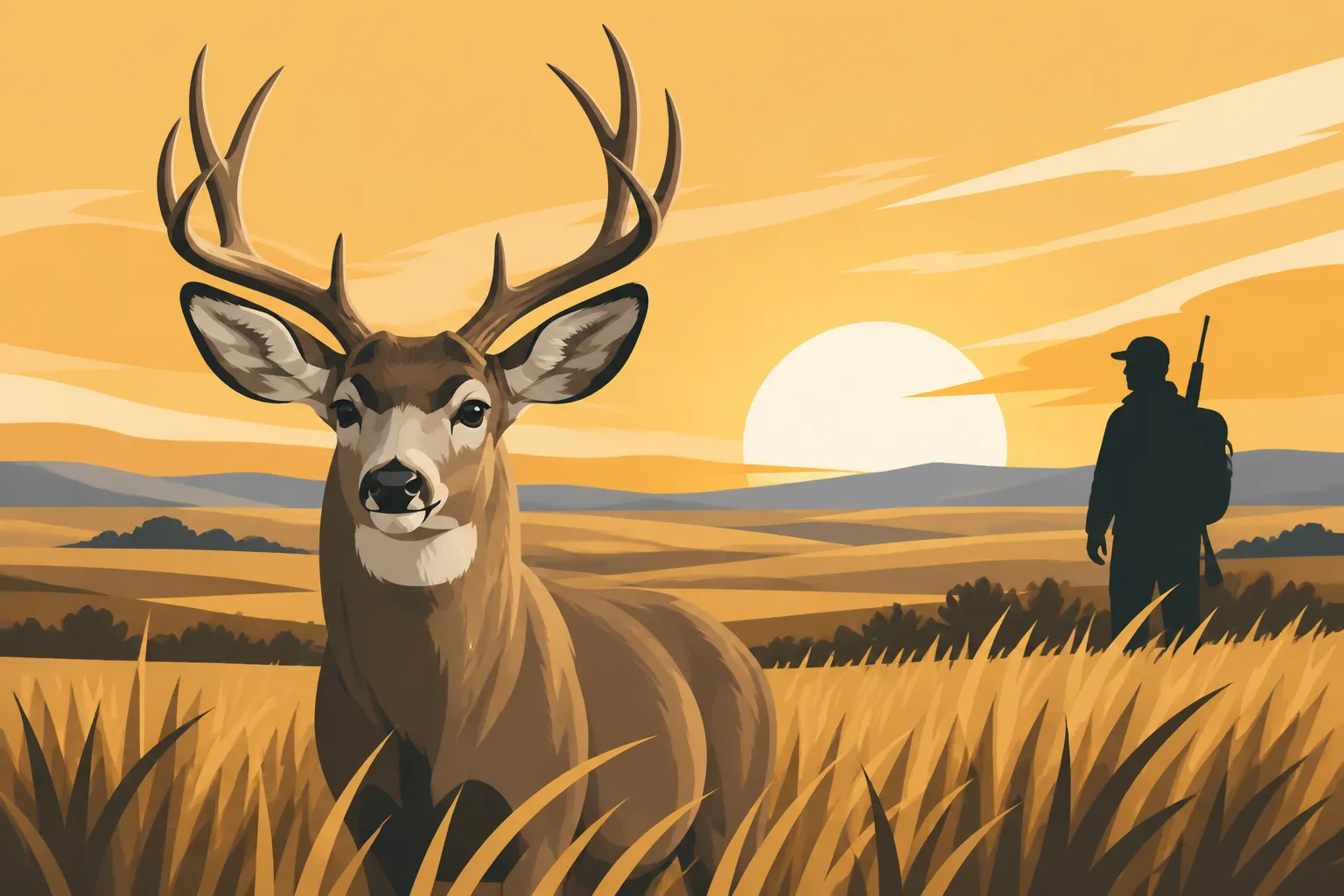
Mule deer, Odocoileus hemionus, are easily distinguishable from their whitetail cousins. Their most prominent feature, and the one that gives them their name, is their large, mule-like ears, which can rotate independently to pick up sounds from all directions. They typically have a more robust, stocky build than whitetails, with an average mature buck weighing between 200-300 pounds, though some can exceed that, especially in areas with rich forage. The antlers of a mule deer buck are also characteristic; they are typically bifurcated, meaning each beam forks, and then forks again, creating a distinctive "Y" shape on both sides. Their tails are short, narrow, and often rope-like, usually white with a black tip, unlike the broad, flag-like tail of a whitetail.
One of their most iconic behaviors is their unique gait, known as "stotting" or "pronking." When alarmed, a mule deer will often leap into the air, pushing off with all four feet simultaneously, landing on all four feet, and repeating the process in a series of stiff-legged bounds. This behavior is believed to help them clear obstacles and quickly gain a vantage point in broken terrain. Their large, dark eyes provide excellent vision, crucial for spotting threats in open country. If you're ever in doubt when you see a deer at a distance, looking for the tell-tale ear size and tail characteristics can help you in Telling a Whitetail From a Mule Deer. Knowing What a Mature Saskatchewan Mule Deer Weighs can also help you judge the size and health of the animal you're looking at.
Social Structure and Group Dynamics
Mule deer social structures vary throughout the year. During most of the year, does typically form small family groups with their fawns and yearling offspring. These doe herds are often quite cohesive and can provide a hunter with valuable clues, as larger bucks are rarely far from the does once the rut approaches. Bucks, especially mature ones, tend to be more solitary or form small bachelor groups outside of the breeding season. These bachelor groups are often seen together in summer and early fall, feeding and growing their antlers. They may tolerate each other, but there's a clear hierarchy.
As the rut approaches, these bachelor groups break up, and bucks become increasingly focused on finding receptive does. This is when they are most vulnerable, as their caution often gives way to the urge to breed. During the peak of the rut, a large buck might be seen trailing a single doe or attempting to gather a small harem. After the rut, bucks return to their more solitary existence, often recovering from the strenuous breeding season in secluded areas. Understanding these social dynamics helps hunters predict where bucks might be during different phases of the season.
Diet and Foraging Habits
Mule deer are primarily browsers, meaning their diet consists mainly of woody shrubs, forbs, and broad-leafed plants rather than grass, though they will graze on grasses when other options are scarce. On the Saskatchewan prairies, this includes a variety of native shrubs like sagebrush, silverberry, willow, and various forbs found in coulees and along draws. They are highly adaptable and will readily incorporate agricultural crops into their diet, especially during late summer and fall. Fields of alfalfa, peas, lentils, and even standing canola or wheat can become significant food sources.
Their feeding patterns are often crepuscular, meaning they are most active at dawn and dusk. During these times, they'll move from their bedding areas in dense cover to open feeding grounds. During the day, they will typically bed down in areas that offer both concealment and a good vantage point, such as on a coulee side, in a patch of sagebrush, or under a cutbank. Heavy hunting pressure or extreme weather can alter these patterns, pushing them to feed more at night or remain bedded longer during the day. Recognizing their preferred food sources and how these change seasonally is vital for pinpointing their location.
Key Challenges for Saskatchewan Mule Deer Populations
While Saskatchewan's mule deer are resilient creatures, their populations face several significant challenges that can impact their numbers and distribution. Understanding these factors is crucial for appreciating the conservation efforts and for hunters to gauge the health of the herds they pursue.
Habitat Loss and Fragmentation
One of the most persistent threats to mule deer in Saskatchewan is the ongoing loss and fragmentation of their preferred prairie habitat. As agricultural land expands and development encroaches on wild spaces, the coulees, badlands, and natural grasslands that mule deer rely on are reduced or broken up into smaller, isolated parcels. This process makes it harder for deer to move between feeding and bedding areas, find safe winter range, and disperse to new territories. The historical trend of converting native prairie to cropland, while beneficial for agriculture, has steadily diminished the contiguous habitat available for wildlife like mule deer and pronghorn.
The impact isn't just about reducing the sheer amount of space. Fragmentation can lead to increased stress, higher rates of road mortality as deer cross more human-dominated landscapes, and reduced genetic diversity in isolated populations. While some mule deer have adapted to living closer to agricultural fields, the core of their resilience lies in undisturbed, rugged terrain. This challenge isn't unique to Saskatchewan; it's a battle many prairie species, including even their distant relatives like Why Fences Are Hard on Pronghorn, face across North America, highlighting the need for careful land management and conservation.
Severe Winters and Droughts
Saskatchewan's climate is one of extremes, and these weather patterns can significantly impact mule deer populations. Severe winters, characterized by prolonged periods of deep snow and bitter cold, can be particularly devastating. Deep snow makes it incredibly difficult for deer to access forage, forcing them to expend more energy to move, leading to nutritional deficiencies. Extreme cold further compounds the problem, increasing energy demands simply to stay warm. Such winters can result in substantial "winter kill," where a significant portion of the herd, particularly fawns, older animals, and those in poor condition, perish. What a Hard Saskatchewan Winter Culls can be a stark reminder of nature's unforgiving cycles.
Conversely, periods of prolonged drought also pose a serious threat. Drought conditions reduce the quantity and quality of forage, impacting the overall health of the deer, their reproductive success, and the survival rates of fawns. Water sources can dry up, forcing deer to travel farther, increasing their exposure to predators and human activity. While mule deer are adapted to arid environments, extreme and persistent droughts push them beyond their limits, contributing to fluctuations in their numbers, a phenomenon explored in detail in analyses of Why Mule Deer Numbers Rise and Fall. These natural cycles make mule deer populations particularly sensitive to environmental shifts.
Predation and Disease
Mule deer on the prairie face a suite of natural predators, though their impact can vary. Coyotes are the most common predators, particularly targeting fawns and weaker or sick adults. While healthy adult mule deer are generally capable of fending off or outrunning coyotes, fawn survival rates can be significantly affected by high coyote populations. In the more remote, forested parts of their range, or near the forest fringe, wolves can also be a factor, though they are less prevalent in the open prairie where mule deer thrive.
Disease, however, presents a more insidious and growing threat. Chronic Wasting Disease (CWD) is a neurological disease affecting deer, elk, and moose, and it has become a serious concern across Saskatchewan. CWD is always fatal and can spread through direct contact or indirectly through environmental contamination (e.g., contaminated soil or plants). The province has mandatory CWD testing zones for deer and elk, reflecting the seriousness of the issue. Hunters play a critical role in monitoring CWD by participating in testing programs and properly disposing of carcasses to prevent further spread. The long-term implications of CWD on mule deer populations are still being studied, but it represents a significant challenge for wildlife managers and hunters alike.
Hunting Strategies for Prairie Mule Deer
Hunting mule deer in Saskatchewan's open country is a vastly different experience from hunting whitetails in dense bush. It demands patience, keen eyesight, and an intimate understanding of the terrain.
Spot-and-Stalk Techniques
The absolute cornerstone of successful prairie mule deer hunting is the spot-and-stalk method. This isn't a sit-and-wait game; it's an active, physically demanding, and mentally engaging pursuit. The vast, open nature of the prairie, punctuated by coulees and hills, lends itself perfectly to this strategy. The process typically begins with extensive glassing from a high vantage point, using quality binoculars and a spotting scope. You're looking for any tell-tale sign of a deer: an antler tip, the flick of an ear, a patch of grey-brown hide against the earth. Once a deer (or ideally, a buck) is spotted, the real chess match begins.
The challenge lies in planning an approach that keeps you undetected. This involves using every fold, dip, and rise in the terrain for cover. You must constantly monitor the wind direction, as mule deer have an excellent sense of smell. You'll often find yourself crawling, walking bent over, or making long detours to stay out of sight. The goal is to get within effective shooting range without being seen, heard, or smelled. This method often requires extreme patience; a stalk can take hours, sometimes covering miles, only for the deer to move before you get into position. It's a game of inches and calculated risks, and it’s why Spot-and-Stalk Mule Deer in Saskatchewan is considered the most rewarding method.
Utilizing Terrain and Cover
Prairie mule deer are masters of using the terrain to their advantage, and hunters must learn to do the same. Coulees, with their steep sides, varied vegetation, and winding paths, are natural highways and bedding areas for mule deer. They will often bed on the sunny side of a coulee in winter or the shaded side in summer, always with an eye on the prevailing wind, using thermals that rise in the morning and fall in the evening. Hunting these areas requires slow, methodical movement, always staying below the skyline and peeking over crests with extreme caution.
Other forms of cover include patches of willow or scrub brush, especially around prairie potholes or along fence lines. Even a slight rise in the ground can conceal a deer or provide you with a crucial advantage during a stalk. Mule deer will often bed just below the rim of a coulee or a hill, allowing them to survey the ground below without exposing themselves against the sky. When you are Hunting Mule Deer in Prairie Coulees, remember that the deer will often be tucked into the deepest, most inaccessible parts, where human pressure is minimal. Learning to "read" the ground for potential bedding sites and escape routes is a skill that only comes with experience and observation.
Understanding Mule Deer Rut
The mule deer rut in Saskatchewan typically peaks later than the whitetail rut, usually occurring from mid-November through the first week or two of December. During this period, bucks become significantly more active and less cautious as they search for receptive does. They will cover a lot of ground, often venturing into more open areas they might avoid at other times of the year. This increased activity makes them more visible and vulnerable to hunters.
Hunting during the rut can be incredibly exciting. Bucks will be focused on does, sometimes ignoring human presence if they are sufficiently distracted. You might see bucks chasing does, engaging in sparring matches with other bucks, or simply trailing a doe for hours. While the core strategies of spot-and-stalk remain, the rut offers opportunities to capitalize on the deer's altered behavior. It's not uncommon to spot a cruising buck in an area you wouldn't expect him during other seasons. While the timing for whitetail hunters might be specific to Hunting the Rut in Early to Mid November, mule deer hunters often find success pushing into the last weeks of November and even early December. This late-season window can be brutally cold, so being prepared for Hunting the December Late Season Cold is essential.
Scouting and Reading Sign for Mule Deer
Success in mule deer hunting on the prairie hinges on effective scouting and the ability to interpret the subtle clues deer leave behind. The vastness of the landscape means you can't just stumble into them; you need to systematically search and understand their patterns.
Pre-Season Scouting
Pre-season scouting is absolutely non-negotiable for mule deer in Saskatchewan. This isn't just a casual drive; it's a dedicated effort to locate prime habitat, identify deer populations, and understand their movements before the season even begins. Start by studying topographical maps and satellite imagery. Tools like GoHunt (and similar platforms) can provide invaluable insights into terrain features, access points, and potential bedding and feeding areas. Look for a combination of rugged coulees, draws, and adjacent agricultural fields. Pay attention to areas that offer diverse vegetation and water sources.
Once you have identified promising areas on maps, it's time for boots on the ground, or at least optics from a high point. Spend hours glassing these areas in the weeks and months leading up to the season. Identify travel corridors, specific feeding locations, and potential bedding sites. Look for historical sign like old rubs or well-used trails. Take notes, mark waypoints, and pay attention to how deer react to different times of day and varying weather conditions. The more information you gather beforehand, the higher your chances of success once the season opens. This dedication to detailed planning and observation is a hallmark of truly effective hunting.
Interpreting Tracks, Rubs, and Scrapes
While mule deer sign can sometimes be confused with whitetail sign, there are subtle differences and contexts that are unique to the prairie environment. Mule deer tracks are generally larger and rounder than those of a whitetail, and their gait in soft ground can show a more distinctive "stotting" pattern when they're moving quickly. Look for fresh tracks around water sources, crossing low points in coulees, or entering and exiting feeding areas.
Rubs and scrapes also exist, but they might not be as prevalent or as obvious as in heavily treed whitetail country. Mule deer bucks will rub their antlers on small trees, shrubs, or even fence posts to remove velvet and later to mark their territory and express dominance. Scrapes, patches of ground pawed bare with urine and scent glands deposited, are also made, particularly during the rut. In sparse prairie environments, these might be found on the edge of a brush patch or under a lone tree in a coulee bottom. The key is to look for these signs in the right places – often where cover meets open ground, indicating a transition area where deer feel secure. Reading these subtle clues helps you understand where deer are traveling and what their activity levels are.
Glassing Techniques and Equipment
Effective glassing is perhaps the single most important skill for a prairie mule deer hunter. You are trying to find a needle in a haystack, and good optics are your magnifying glass. Invest in the best binoculars you can afford, typically 10x or 12x magnification, and pair them with a high-quality spotting scope (20-60x or 20-70x) on a sturdy tripod. The spotting scope is essential for identifying small details, judging antler size, and confirming that distant speck is indeed a deer.
When glassing, find a high vantage point that offers a panoramic view of the terrain. Systematically grid the area, starting from the closest points and working your way out. Look for anything that seems out of place: a horizontal line in a vertical landscape, a patch of color that doesn't quite match, or the subtle movement of an ear. Pay particular attention to shaded areas, the bottoms of coulees, and where vegetation changes. Dawn and dusk are prime times for glassing, but you should glass all day, as deer will often shift bedding locations. Patience is paramount. You might spend hours Glassing a Saskatchewan Coulee for Mule Deer before a buck reveals himself, but that single glimpse can lead to a successful hunt. Integrating Scouting With Satellite Imagery in Saskatchewan with your field glassing will give you a powerful combination for locating deer.
Essential Gear for Saskatchewan Mule Deer Hunters
The wide-open, often rugged terrain of Saskatchewan's mule deer country demands specific gear choices to ensure comfort, safety, and success. Being prepared for anything the prairie throws at you is key.
Optics
As discussed, high-quality optics are not a luxury; they are an absolute necessity for mule deer hunting. Your primary tools will be a pair of powerful binoculars and a spotting scope. For binoculars, 10×42 or 12×50 are popular choices, offering a good balance of magnification, light-gathering capability, and field of view. Look for reputable brands known for crisp, clear glass and durable construction. They will be your constant companion, strapped to your chest or easily accessible.
A spotting scope, ideally 65mm or 80mm objective lens with a variable magnification eyepiece (e.g., 20-60x), is equally vital. It allows you to resolve detail at extreme distances, essential for judging bucks and planning stalks without disturbing them. Mount it on a sturdy, lightweight tripod that can handle windy conditions, as a shaky image is useless. Remember, good optics can save you miles of walking and reduce the chances of spooking game, making them one of your most valuable investments for Mule Deer Hunting Across Saskatchewan's Prairie.
Layered Clothing and Footwear
Saskatchewan weather can be notoriously unpredictable, especially during the fall hunting season. You can experience scorching sun, biting wind, freezing rain, and even snow, sometimes all in the same day. Therefore, a layered clothing system is critical. Start with a moisture-wicking base layer to manage sweat, add an insulating mid-layer (fleece or down) for warmth, and top it with a waterproof, windproof outer shell. This allows you to adjust to changing conditions throughout the day. Opt for quiet fabrics that won't rustle when you're making a close approach.
Footwear is equally important. You will be doing a lot of walking, often over uneven, rocky, or muddy terrain. Invest in comfortable, waterproof, and well-broken-in hiking boots with good ankle support. Consider insulated boots for colder late-season hunts, especially when you might be sitting still for periods of time. A good pair of gaiters can also be invaluable for keeping burrs, snow, and mud out of your boots. The ability to stay warm, dry, and comfortable directly impacts your endurance and focus.
Rifles and Ammunition
Given the open nature of prairie mule deer hunting, shots can often be at longer distances than typical whitetail engagements. Therefore, an accurate rifle chambered in a cartridge capable of extended ranges with good energy retention is advisable. Popular calibers include .270 Win, .30-06, .300 Win Mag, 7mm Rem Mag, and 6.5 Creedmoor. The key is to use a rifle you are comfortable and proficient with, capable of consistent accuracy at the distances you might encounter.
Pair your rifle with high-quality, reliable ammunition designed for hunting big game. Practice shooting from various field positions, not just from a bench, as you rarely get a perfect rest in the field. Familiarize yourself with your rifle's ballistics, especially bullet drop and wind drift, at different ranges. A good quality scope with clear glass and repeatable adjustments is also essential for making accurate shots. Many hunters use ballistic turrets or holdover reticles to compensate for drop.
Navigation and Communication
Venturing into Saskatchewan's vast prairie can quickly disorient you, especially when focused on a stalk. A reliable GPS unit or a smartphone with an offline mapping application like GoHunt is indispensable. These tools allow you to pinpoint your location, track your path, mark critical waypoints (like your vehicle or a spotted buck), and navigate back safely. Always carry a physical map and compass as a backup, and know how to use them, especially where cell service is non-existent.
For communication, particularly in remote areas, consider a satellite communicator or a satellite phone. These devices can be life-savers in an emergency, allowing you to send messages or call for help even far beyond cell service. Always let someone know your hunting plan, including your intended area and estimated return time. Being prepared for any situation, from getting turned around to a medical emergency, is paramount when exploring the expansive and often isolated landscapes of Saskatchewan's mule deer country.
Conservation and Management Efforts
The health and sustainability of Saskatchewan's mule deer populations are not accidental; they are the result of ongoing conservation efforts and careful management. Hunters play a crucial role in these efforts, both through their participation and their ethical conduct.
Saskatchewan's Management Approach
The Saskatchewan Ministry of Environment, through its wildlife division, is responsible for managing mule deer populations. This management involves setting hunting regulations, determining licence allocations, and monitoring herd health. For mule deer, hunting opportunities are typically managed through a draw system, especially for antlered bucks in certain zones. This ensures that harvest levels are sustainable and aligned with population objectives. These draw systems, such as the comprehensive Saskatchewan's Big Game Draw, aim to distribute hunting pressure and provide opportunities while protecting the long-term viability of the herd. Understanding these regulations is critical for any hunter.
Wildlife management zones (WMZs) are used to tailor regulations to specific local conditions, allowing managers to respond to regional variations in mule deer numbers, habitat conditions, and disease prevalence. For example, zones that have seen declining populations might have more restricted tags, while areas with stable or growing populations might offer more liberal opportunities. Information from hunters, including harvest reports and observations, is vital data that feeds into these management decisions. It's important to know Which Saskatchewan Zones Draw Fastest for Mule Deer as this often indicates higher demand and potentially stronger populations.
CWD Testing and Carcass Disposal
Chronic Wasting Disease (CWD) is a significant concern for mule deer and all cervid species in Saskatchewan. The province has implemented mandatory CWD testing in certain wildlife management zones, particularly those with a higher prevalence of the disease. Hunters harvesting deer in these Mandatory CWD Testing Zones are required to submit the head for testing. This data is critical for monitoring the spread and prevalence of CWD, allowing wildlife managers to track the disease and implement strategies to mitigate its impact.
Beyond testing, responsible carcass disposal is paramount. If you harvest a deer, especially in a CWD-positive area, it's crucial to dispose of the carcass remains (brain, spinal cord, spleen, lymph nodes) in a way that prevents the further spread of prions into the environment. This typically means double-bagging and disposing of these high-risk materials in a landfill. Never leave these parts in the field where other cervids might come into contact with them. By adhering to CWD regulations and practicing responsible disposal, hunters become active participants in protecting the future of Saskatchewan's deer herds.
Hunter's Role in Conservation
Hunters are often the most ardent conservationists, and their role in the long-term health of Saskatchewan's mule deer is indispensable. Through licence fees, hunters contribute directly to wildlife management and habitat conservation programs. Additionally, ethical hunting practices, such as adhering to fair chase principles, respecting private land, and following all regulations, uphold the integrity of the sport and foster positive public perception. Initiatives by organizations like the Saskatchewan Wildlife Federation, often supported by hunters, contribute to habitat restoration and protection.
Being an informed hunter, understanding the biology of the animal you pursue, and recognizing the challenges it faces are all parts of this conservation ethic. Tools and platforms like GoHunt that provide detailed mapping and regulatory information empower hunters to make informed and ethical decisions in the field. By being a responsible and knowledgeable participant, you contribute directly to the legacy of hunting and the preservation of Saskatchewan's mule deer for future generations.
Mule Deer vs. Whitetail Deer: A Hunter's Comparison
Understanding the differences between Saskatchewan's two main deer species is crucial for hunting success. While they share some similarities, their habits, appearance, and preferred habitats are distinct.
| Feature | Mule Deer | White-Tailed Deer |
|---|---|---|
| Ears | Large, prominent, "mule-like" | Smaller, more proportionate to head |
| Tail | Short, narrow, white with black tip | Broad, brown on top, white underneath ("flag") |
| Antlers | Typically bifurcated (forking, then forking again) | Main beam with tines branching off |
| Gait (Alarmed) | "Stotting" or "Pronking" (all four feet push off simultaneously) | Running, often with tail raised ("flagging") |
| Habitat | Open, broken country, coulees, badlands, sagebrush flats | Dense cover, forest fringe, bush, heavy timber |
| Color | Generally greyish-brown, dark forehead patch | Reddish-brown in summer, greyish-brown in winter |
| Typical Size | Often larger and stockier | Generally smaller, more slender |
| Primary Food | Browsers (shrubs, forbs), some crops | Mixed feeder (browsers, forbs, mast, crops) |
Disclaimer
This article is intended for informational purposes only and does not constitute legal advice. Hunting regulations in Saskatchewan can change. Always consult the most current Saskatchewan Hunter's and Trapper's Guide and the official regulations issued by the Saskatchewan Ministry of Environment before planning or undertaking any hunting activities. It is the hunter's responsibility to know and comply with all applicable laws and regulations.