Where the Highest Bear Densities Are
One of the most common frustrations for bear hunters, especially those new to Saskatchewan, is the sheer vastness of the landscape and trying to pinpoint where the black bears actually live. You can spend days driving around, looking at vast tracts of bush, and not see a single sign of a bear, leaving you wondering if they even exist. This guide aims to clear up that confusion, helping you understand the prime habitats and environmental factors that lead to the highest black bear densities in Saskatchewan, giving you a better starting point for your next hunt.
Understanding Saskatchewan's Black Bear Habitats
Saskatchewan is a huge province, stretching from the agricultural south well into the true boreal forest in the north. This diversity of landscape means that while bears exist across a significant portion of the province, their concentrations vary dramatically. You won't find significant numbers of black bears roaming the open prairies like you would a mule deer, for instance. Instead, they are intrinsically linked to specific types of cover and food sources that the forest environments provide. Understanding these fundamental habitat requirements is the first step to figuring out where the highest densities might be.
The Importance of Forest Cover
Black bears are creatures of the forest. They need dense cover for bedding, for raising cubs, and for feeling secure. This isn't just about having trees; it's about having large, contiguous blocks of forest that provide refuge from human activity. The deeper and thicker the bush, the more likely you are to find bears. They use this cover for everything from escaping the summer heat to finding denning sites in the fall.
Imagine a mosaic of dense spruce and pine stands, mixed with trembling aspen and balsam poplar. This kind of varied forest offers multiple layers of protection and diverse food sources. Young, regenerating cutblocks can also be fantastic, providing thick new growth for bedding and browsing, though they might not feel as "deep woods" as old growth. This need for substantial cover is why areas with fragmented bush or small bluffs surrounded by farmland typically hold far fewer bears, and often only transient ones.
Food Sources and Water Availability
While cover is crucial, bears go where the food is. Their diet is incredibly varied, shifting with the seasons. In spring, they're looking for fresh green shoots, carrion, and insects. As summer progresses, berries become a major draw – saskatoons, blueberries, raspberries, chokecherries. In the fall, they're intensely focused on putting on weight for hibernation, meaning they'll key into whatever the most abundant caloric food source is, whether that's acorns, hazelnuts, or even grain crops on the forest edge.
Water is another non-negotiable requirement. Bears need access to water for drinking, cooling off, and sometimes even as an escape route. Rivers, lakes, large sloughs, and muskegs are all vital components of good bear habitat. An area with a rich diversity of food plants, especially berry-producing shrubs, combined with reliable water sources, will naturally attract and hold a higher population of bears. This connection to food and water also means that prime bear habitat often looks lush and vibrant, not sparse and dry.
Key Geographic Areas for High Bear Density
When we talk about high bear densities in Saskatchewan, we're primarily looking north of the agricultural belt. The province's landscape changes dramatically as you move north, transitioning from open prairie to aspen parkland, and finally into the vast boreal forest. It's within these forested regions that the black bear truly thrives.
The Boreal Forest Proper
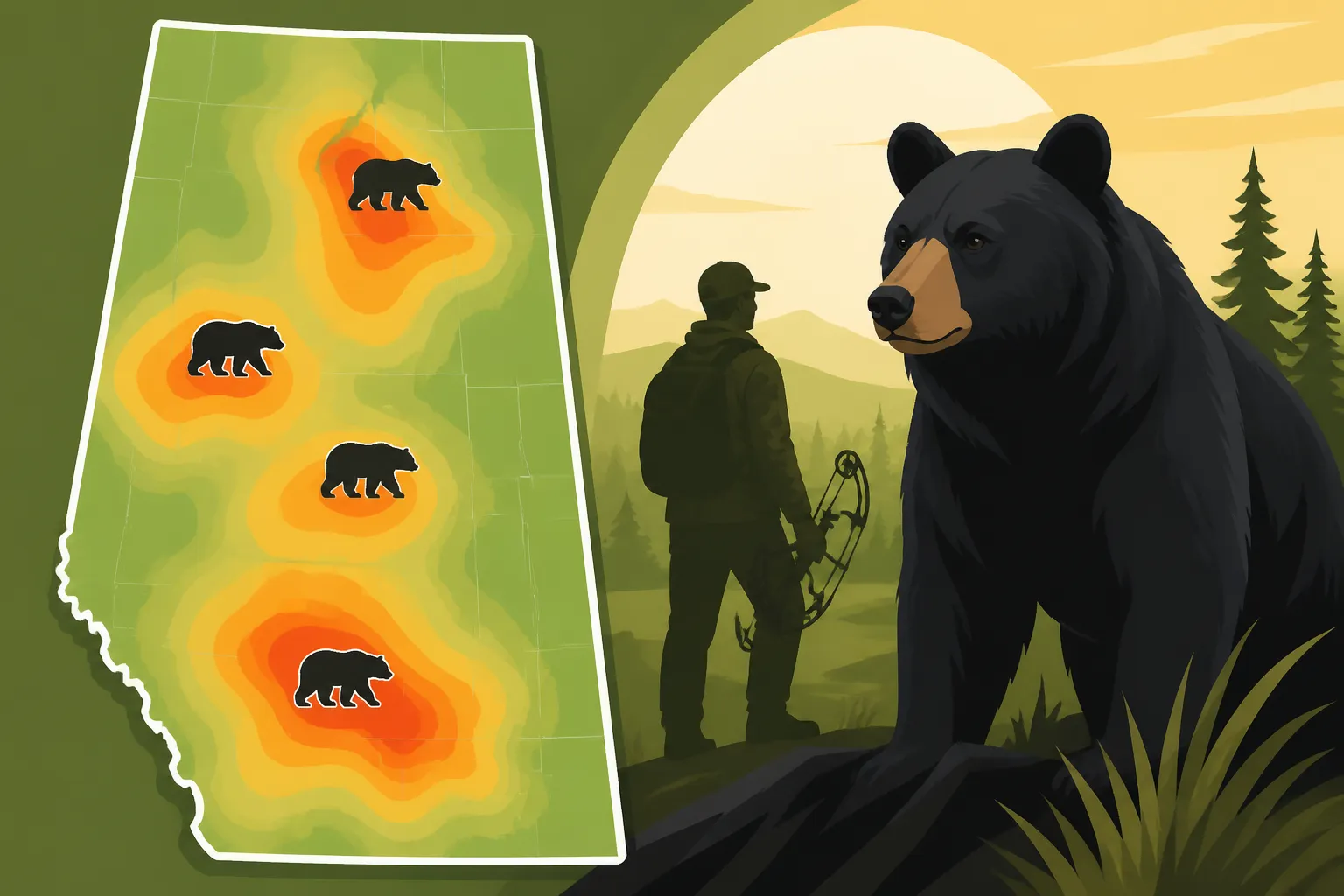
The true boreal forest, which dominates the northern half of Saskatchewan, is unequivocally where you will find the highest concentrations of black bears. This immense wilderness of coniferous and mixed forests provides everything a bear needs: vast, undisturbed cover, abundant water in the form of countless lakes and rivers, and a diverse range of seasonal food sources. Areas like the Meadow Lake Provincial Forest, Prince Albert National Park (though you can't hunt there, it gives an idea of natural densities), and the regions around La Ronge and further north are prime bear country.
These areas are often remote, with limited road access, meaning less human pressure and more pristine habitat. Hunters in these regions often focus on Spring Bear Hunting Saskatchewan's Cutlines or baiting operations tucked deep into the bush. The density here isn't just about survival; it's about a flourishing population. You'll find bears of all age classes, from small cubs to mature boars. This is the heartland for Black Bear Hunting in Saskatchewan.
The Forest Fringe and Transition Zones
Just south of the continuous boreal forest lies what's often referred to as the "forest fringe" or "transition zone." This area is a patchwork of dense bush, smaller forest blocks, aspen bluffs, and agricultural fields. While not as consistently high in density as the deep boreal, these areas can still hold very significant numbers of bears, especially where large tracts of contiguous forest meet cultivated land. The interface between these two landscapes often creates a super-productive zone for bears.
For instance, regions around Hudson Bay and Nipawin are classic forest fringe territory. Bears here can exploit agricultural crops like oats and canola for high-calorie fall feeding, while still having vast blocks of forest to retreat to for safety and denning. This mix provides an abundance of food that might not be as concentrated deep in the boreal, leading to localized pockets of very high bear density. Hunters often find success Hunting the Forest Fringe for Big Bucks and big bears because of this unique mix of resources.
Provincial Forests and Crown Land
Within both the boreal and forest fringe zones, the provincial forests and large blocks of Crown land are your best bets for finding consistent bear populations. These are publicly accessible lands, often managed for timber production, which incidentally creates excellent bear habitat through various stages of forest regeneration. Places like the Porcupine Hills Provincial Forest, the Pasquia Hills, and the Fort à la Corne Forest are well-known for their healthy bear populations.
When looking at these areas, utilize tools that show land ownership. Services like GoHunt are excellent for this, as they can overlay Crown land boundaries directly onto detailed maps. This allows you to identify large, huntable blocks of forest that might hold significant bear numbers. Knowing you're on public land also simplifies access compared to negotiating private land permissions. Remember, just because it's Crown land doesn't mean it's all equally good; focus on the areas within these blocks that offer the thickest cover, most diverse food sources, and reliable water.
Factors Influencing Bear Concentration
While broad geographic areas give us a good starting point, bear densities aren't uniform even within those regions. Several key factors can significantly influence how many bears an area holds at any given time. Understanding these can help you fine-tune your scouting efforts and increase your odds of encountering bears.
Seasonal Food Availability and Mast Crops
Bears are highly opportunistic eaters, and their movements are largely dictated by the availability of food. Areas that consistently produce excellent mast crops – think berries, hazelnuts, chokecherries – will attract and hold bears. A patch of blueberries that was barren last year might be bursting with fruit this year, drawing bears in from surrounding areas. This is why scouting isn't just about finding bear sign; it's about understanding the seasonal abundance of their preferred foods.
For instance, in the spring, bears are often found closer to den sites or areas with early green-up. By mid-summer, they might shift their focus to berry patches. In the fall, especially as bears prepare for Hunting the December Late Season Cold, they'll be intensely focused on caloric intake. If there's a strong hazelnut crop, that's where they'll be. Drought years can severely impact natural food sources, forcing bears to travel further or even venture into agricultural lands more frequently. Conversely, a wet summer might lead to an explosion of berries, concentrating bears in localized areas.
Water Access and River Systems
Water is life, and for bears, it's essential. Areas with reliable water sources, especially during dry spells, will naturally concentrate bears. River systems, with their associated riparian zones, are often corridors of high bear activity. These river breaks provide dense cover, easy travel routes, and a consistent water supply. Animals will often follow these natural pathways, and bears are no exception.
Consider the Saskatchewan River system, or the Churchill River further north. The bush bordering these waterways often contains exceptional bear habitat. Large sloughs and muskegs also provide critical water and often support the types of vegetation bears feed on. Hunters often overlook water's importance, but paying attention to drainages and wetland areas can reveal pockets of high activity, especially in areas that might otherwise seem less productive. Hunting a Beaver Dam Crossing can also be a strategic location.
Human Activity and Pressure
Bears are incredibly adaptable, but they are also wary of humans. Areas with less human activity, such as remote bush or large blocks of Crown land away from popular trails or cabins, tend to hold higher densities of bears that are less nocturnal and more comfortable moving during daylight hours. Conversely, areas with a lot of logging, ATV traffic, or residential development will typically see lower densities or more skittish bears.
This doesn't mean you can't find bears near human activity. Some bears learn to tolerate it, or even exploit it (think of bears drawn to landfills or unsecure cabins), but generally, the further you get from regular human presence, the more undisturbed the bear population. When scouting with tools like GoHunt, look for large blocks of green space, especially those with minimal visible roads or trails, as these are often sanctuaries for bears. The less pressure an area sees, the higher the likelihood of a strong, healthy, and visible bear population.
Comparing Bear Habitat Characteristics
To further illustrate the differences, here's a table comparing characteristics typically found in areas with high bear density versus those with lower density in Saskatchewan:
| Characteristic | High Bear Density Areas | Lower Bear Density Areas |
|---|---|---|
| Forest Cover | Vast, contiguous boreal/mixed forest; thick undergrowth | Fragmented bluffs, small woodlots; open prairie |
| Food Sources | Abundant berry crops, diverse mast, rich vegetation | Scarce natural food; dependence on agricultural fields |
| Water Access | Numerous lakes, rivers, large sloughs, muskegs | Limited natural water; isolated dugouts |
| Human Activity | Remote, low pressure; limited road/trail access | High traffic, residential areas, extensive agriculture |
| Terrain | Varied, sometimes rugged; dense riparian zones | Flat prairie, gentle rolling hills |
| Sign of Bears | Frequent tracks, scat, rubbed trees, claw marks | Sparse, often only transient sign |
| Hunting Opportunities | Consistent encounters, resident populations | Opportunistic, transient bears |
How to Scout for High Density Areas
Knowing where the general high-density areas are is one thing, but pinpointing the exact spots requires boots-on-the-ground (or virtual) scouting. It’s about more than just driving roads; it’s about understanding the landscape from a bear’s perspective.
Using Satellite Imagery and Mapping Tools
Before you even leave your couch, modern mapping tools are your best friend. Services like GoHunt allow you to zoom in and examine satellite imagery of potential hunting grounds. Look for large, unbroken blocks of forest. Identify areas where different forest types meet, such as coniferous stands bordering deciduous areas, as these interfaces often offer a greater diversity of food and cover. Pay close attention to drainage patterns – creeks, rivers, and the edges of large sloughs or swamps. Bears use these as travel corridors.
Look for areas with signs of past disturbances like old clearcuts or burned areas, especially if they are a few years old. These can often regenerate into thick, dense cover with abundant berry production. Identify existing trails, cutlines, or old logging roads that might offer access into these remote pockets. While you want low human pressure, an old access route can be your way in. Pinpoint potential bait sites or natural travel funnels, marking them for later in-person inspection. Scouting With Satellite Imagery in Saskatchewan is a critical first step.
Ground Scouting for Bear Sign
Once you've identified promising areas on a map, it's time for some old-fashioned ground scouting. This means walking the cutlines, checking the edges of logging blocks, and exploring those riparian zones you identified from above. Look for fresh bear sign: tracks in soft earth, scat (droppings), rubbed trees, and claw marks on trees. Rub trees are often used by bears to mark their territory, and fresh rubs indicate current activity. Scat can tell you what they're eating and how recently they've been there.
Pay attention to natural food sources. Are the saskatoon bushes loaded with berries? Are there signs of bears having grazed on green shoots in a marshy area? Bear activity will often be highest where these food sources are most abundant. Check under downed logs for signs of bears digging for insects. A good understanding of Reading Sign After Fresh Saskatchewan Snow can also be invaluable, though less common for spring bear, it helps with fall and understanding movements.
Locating Natural Funnels and Travel Corridors
Bears, like most big game, tend to use the path of least resistance or natural funnels when moving through their territory. These can be anything from narrow strips of timber between open fields to dense bush bordering a large body of water. Old logging roads, pipeline rights-of-way, or even game trails along a ridge can all serve as travel corridors. Identifying these areas is crucial because it tells you where a bear is likely to be moving, increasing your chances of an encounter, especially if you're Hunting Saskatchewan's Fall Bear Season.
Consider how a bear might move from a bedding area in a dense spruce stand to a feeding area in a berry patch or an agricultural field. The most efficient route will likely be a funnel. These are ideal spots for setting up a bait site or still-hunting. Combining knowledge from satellite imagery (identifying physical funnels) with ground scouting (finding fresh sign within those funnels) is key to maximizing your success in high-density areas. Remember, bears are not static; they move, and understanding their travel patterns is as important as knowing where they live generally.
Disclaimer
This article is for general informational purposes only and does not constitute professional advice. Laws, prices and regulations vary by location and change over time. Consult a qualified professional for guidance on your specific situation.