Grunt Calls Late in Saskatchewan’s Rut
It's late November, maybe even early December, and the magic of the peak whitetail rut feels like a distant memory. You're out in the Saskatchewan bush, the air is crisp, maybe there's even a dusting of snow, and you're wondering if that grunt tube in your pack is just dead weight. Many hunters pack away their calls, thinking the deer are done breeding, but that's a mistake. This guide will walk you through how to effectively use grunt calls in Saskatchewan's late rut, tapping into those last vestiges of breeding activity when other hunters have given up.
Understanding the Late Rut Mentality: Why Grunt Calls Still Matter
The whitetail rut isn't a single, explosive event that starts and stops on a dime; it's a dynamic, drawn-out period with distinct phases. When we talk about the "late rut" in Saskatchewan, we're generally moving past the chaotic chase phase of mid-November and heading into late November and early December. Many hunters become discouraged during this time because the frenetic activity they witnessed a few weeks prior seems to have vanished. Bucks appear to go back to their reclusive ways, and the woods feel quieter. However, to truly understand why grunt calls still have a place, you need to get inside the head of a late-rut buck.
The Worn-Out Buck and the Secondary Estrus Doe
Imagine a buck that's been running ragged for weeks. He's likely lost a significant amount of body weight, is physically exhausted, and has encountered countless hunters. He's bred several does, but his biological drive isn't completely gone. There are two primary reasons why a buck remains interested in breeding during the late rut:
First, some does may not have been bred during their initial estrous cycle. This could be due to a variety of factors: they might have been too young to come into estrus with the main group, or perhaps they simply weren't found by a buck during their peak receptiveness. These unbred does will cycle back into estrus roughly 28 days after their initial missed opportunity. This "secondary rut" can create pockets of renewed activity, where a buck's primal instinct kicks in once more. A weary buck, perhaps resting in a thick bluff between two fields, will still be attuned to the scent and sounds of a receptive doe.
Second, younger bucks, who were outcompeted by older, more dominant deer during the peak rut, are now getting their chance. These younger deer, while perhaps not the giants we all dream of, are still driven by the same urge and can respond to calls if presented correctly. They are still searching, still hoping to find that last unbred doe, and often their wariness is slightly less developed than that of an old monarch. They also might be more desperate for companionship, making them susceptible to a well-timed, subtle call. This is where your strategy needs to shift from aggressive challenges to more subtle, investigative invitations.
Increased Hunting Pressure and Buck Wariness
By the late rut, Saskatchewan's whitetails, especially the mature bucks, have faced weeks of intense hunting pressure. They've heard calls, seen hunters, and had close encounters. This means they are incredibly wary. A loud, aggressive grunt that might have brought a buck running in early November is now more likely to send him deeper into cover.
This heightened wariness is your biggest challenge and why subtlety is key. Bucks at this stage are often nocturnal, moving mostly under the cover of darkness, or sticking to the thickest cover during daylight hours. They’ve learned to associate certain sounds and movements with danger. Your job as a caller is to cut through that learned caution with a sound that suggests something irresistible or non-threatening. They're not looking for a fight; they're looking for love – or at least a brief, quiet encounter. This is where understanding their current state of mind becomes paramount. They are tired, hungry, and trying to avoid detection, but the drive to reproduce is still a powerful, lingering force. Using tools like GoHunt can help you analyze previous hunting pressure in specific zones, allowing you to choose areas where deer might be slightly less pressured, or to identify thick cover that bucks retreat to.
Mastering the Sound: Types and Cadence for Late-Season Grunts
When the calendar flips to late November and early December in Saskatchewan, the calls you make need to reflect the changed dynamics of the deer woods. Forget the roaring, aggressive grunts that might have worked during the peak of the rut. Those are more likely to spook a wary, worn-out buck. What you need now is a nuanced approach, focusing on softer, more inquisitive, and subtle vocalizations.
The Soft, Inquisitive Grunt
This is your bread and butter for the late rut. Instead of trying to imitate a dominant buck looking for a fight, you want to sound like a buck that’s simply cruising, perhaps checking out a doe or two, and generally just being curious.
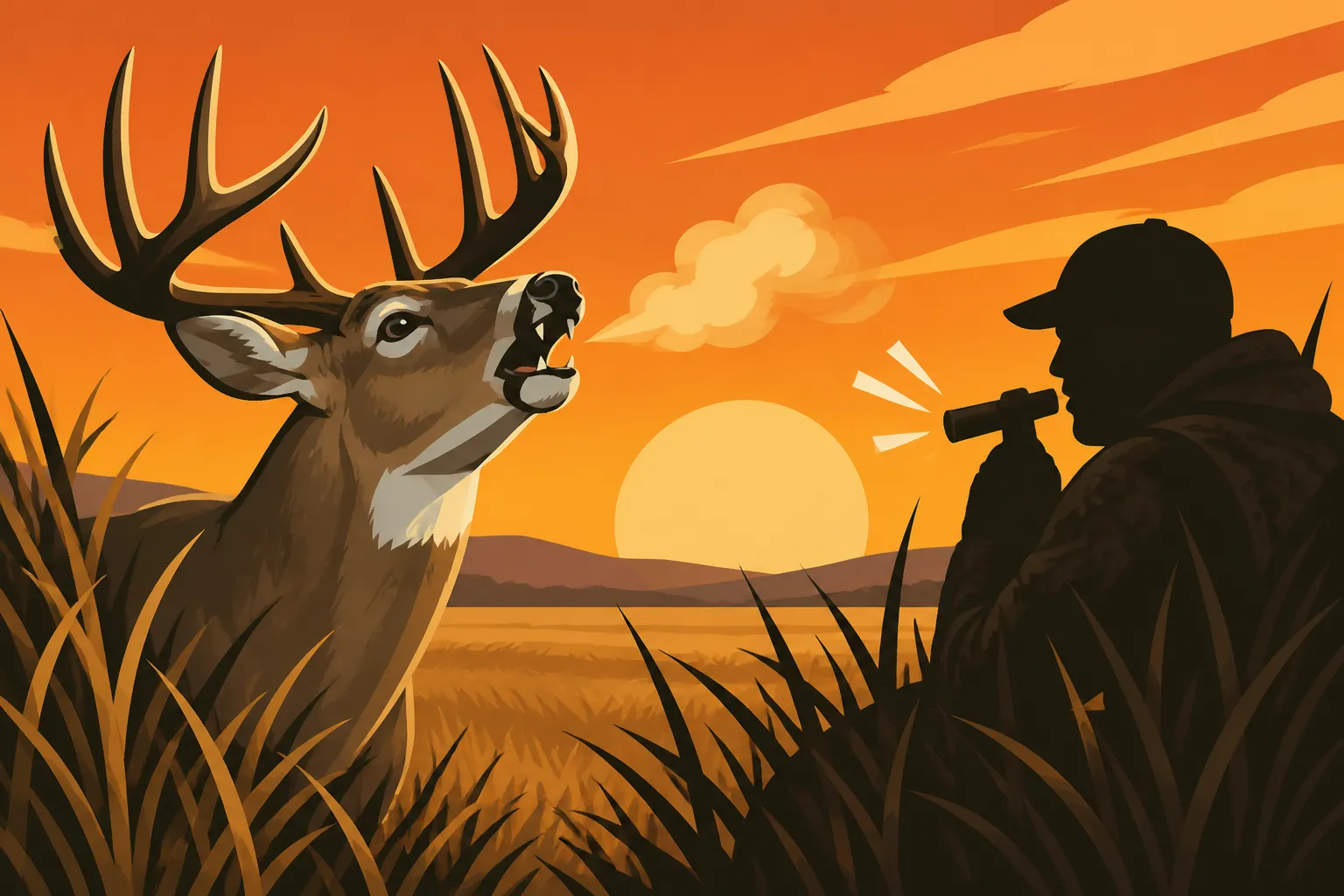
- Sound: A soft, drawn-out "grrr-uhh" or a quiet, single "urrrt." It's not loud or sharp. Think of a buck that’s just walked up on a doe and is quietly letting her know he's there, or a buck that's following a scent trail with mild interest.
- Cadence: Slow it down significantly. A single grunt every 15-30 minutes can be plenty. The goal isn't to create a flurry of activity, but to break the silence just enough to pique curiosity without raising alarm. You want it to sound natural, like a casual interaction in the woods. Avoid rapid-fire grunting at all costs.
- Situational Use: This call is excellent when you’re hunting near known bedding areas, food sources like a standing canola field edge, or travel corridors where you suspect deer are moving quietly. It’s also effective when you haven’t seen deer in a while, and you just want to put a subtle sound out there to see if anything is listening.
Incorporating Doe Bleats and Estrus Bleats
While the focus here is on grunt calls, it's a big mistake to ignore doe vocalizations in the late rut. Remember, bucks are still looking for receptive does. A doe bleat can be incredibly effective, especially when paired judiciously with a soft grunt.
- Doe Bleat: A simple, high-pitched "maaaah." This sounds like a contented doe or one simply moving through the woods.
- Estrus Bleat: This is typically a longer, more drawn-out, and often louder bleat, sometimes described as a "bawl." It signals that a doe is ready to breed.
- Cadence and Pairing:
- Start with a couple of quiet doe bleats. Give it a few minutes.
- Then, follow up with one or two soft, inquisitive buck grunts, as if a buck has just heard the doe and is investigating. This tells a compelling story: a doe is vocalizing, and a buck is quietly checking her out. This scenario is far less threatening to a wary buck than a challenger call.
- Avoid overdoing the estrus bleat. If you use it, make it short and sweet, then follow with a soft grunt. You don't want to sound like a constantly screaming doe.
Subtle Rattling or Antler Ticking
While full-blown rattling sequences are largely over by the late rut, a very subtle antler tick or brush sound can complement your grunts. Think of it as painting a fuller picture for a deer that’s already on edge.
- Sound: Gently tick two small antlers together, or use a bag of synthetic rattling sticks. You’re not trying to simulate a full-blown fight, but rather two bucks quietly sparing or a single buck raking a tree.
- Cadence: A few soft ticks, then silence. Or a gentle raking sound against a tree trunk. This can suggest natural activity that might draw a curious buck without alarming him. It’s best used sparingly, perhaps once every hour, and always accompanied by long periods of silence.
- Combining with Grunts: After a subtle rattling sequence, let the woods settle for a few minutes. Then, put out a soft grunt or a doe bleat followed by a grunt. This creates a natural-sounding interaction that can be very convincing. A buck hears the soft sound of antlers, then a quiet grunt — it makes him think there's a small, non-threatening interaction happening, which might be his last chance at breeding.
| Call Type | Sound Quality | Cadence and Timing | Best Use Case |
|---|---|---|---|
| Soft Grunt | Quiet, drawn-out | One every 15-30 minutes | General cruising, checking doe activity, low-pressure |
| Doe Bleat | High-pitched, simple | 1-2 bleats, then silence | Attracting bucks looking for does, often paired |
| Estrus Bleat | Longer, more urgent | Short burst, very sparingly | Signaling immediate receptiveness, with caution |
| Antler Tick/Rake | Soft, subtle clacks/scrapes | Intermittent, very quiet | Simulating natural activity, paired with calls, very subtle |
| Grunt + Doe Bleat | Combination | Bleat, pause, soft grunt | Creating a mini-scenario of buck-doe interaction |
Strategic Application: When and Where to Deploy Your Grunt Call
Effective calling in the late rut isn't just about making the right sounds; it's about making them in the right place and at the right time. By late November and early December, deer patterns have likely shifted dramatically due to hunting pressure, dwindling food sources, and colder weather. You can't just set up anywhere and expect results. You need a finely tuned strategy that leverages your knowledge of Saskatchewan's whitetails and their environment.
Targeting Food Sources and Bedding Areas
By the late rut, a buck's primary concerns often shift from breeding to survival. They are exhausted and need to regain weight. This means food sources become major hot spots, especially those offering high caloric value that they can access with minimal exposure.
- Standing Crop Fields: Don't underestimate the power of a field of standing corn, or even unharvested peas or lentils. These crops offer both vital nutrition and incredible thermal cover, especially when the snow starts to fly. Bucks will often bed down in these fields or use their edges for secure travel. Setting up on the downwind edge of such a field, particularly during the last hour of daylight, can be very productive. A series of soft grunts here can sound like a buck quietly working the edge, perhaps pushing a doe, and might draw another buck out of the dense cover.
- Thick Cover Edges: Think about the heavy bush bluffs, willow runs, or dense shelterbelts between fields that Saskatchewan is known for. These are prime bedding areas where weary bucks retreat to escape pressure and conserve energy. When you are Hunting a Saskatchewan Bush Bluff, a quiet grunt might entice a bedded buck to stand and investigate, especially if he thinks a doe is passing by. Your setup should be tight to the cover, ensuring your scent is well managed and you have good visibility into the thicket without giving away your position. Often, a buck won't step out completely, but will try to circle downwind to confirm the source of the sound. This is where using tools like GoHunt's mapping features to identify thick, overlooked cover can be invaluable.
- South-Facing Slopes: As the temperatures drop, south-facing slopes, whether they are in a coulee bottom or along a river valley, become magnets for deer. They offer maximum sun exposure, helping deer stay warm and melt snow, making browse more accessible. Bucks will often bed on these slopes to conserve energy. A gentle grunt echoing into these warmer pockets can be a subtle invitation.
Timing Your Calls: Less is More
The biggest mistake hunters make in the late rut is over-calling. During the peak rut, you might get away with more aggressive, frequent calling, but not now.
- Patience is Paramount: In the late season, a buck might take a long time to respond, if he responds at all. He's not going to charge in. He's going to listen, assess, and move cautiously. Wait at least 15-30 minutes between calling sequences. Sometimes, a buck will show up 45 minutes after a single, soft grunt.
- First and Last Light: While the secondary rut can see some daytime cruising, the most consistent activity will still be at dawn and dusk. These are the times when deer feel safest moving between bedding and feeding areas. Focus your calling efforts during these low-light periods. A quiet grunt just as the sun is rising, or as it's beginning to set, can be incredibly effective.
- Mid-Day Movement (Specific Conditions): Don't rule out mid-day. If you're out Hunting the December Late Season Cold, deer often move more during the warmer parts of the day to feed and soak up what little sun is available. If temperatures are particularly brutal, a deer might move more to maintain body heat. A single, soft grunt every hour or so during these conditions might catch a buck off guard as he transitions from a bedding area to a quick browse.
Wind and Scent: Non-Negotiables
In the late rut, especially with educated deer, managing your wind and scent is more critical than ever. A buck’s nose is his primary defense, and he will use it to his advantage.
- Hunt the Wind: Always, always hunt with the wind in your favor. This means setting up so your scent blows away from where you expect deer to approach. Bucks responding to a call, especially a cautious late-season buck, will almost invariably try to circle downwind to get a whiff of the "deer" they heard. Position yourself to intercept them before they can get a direct read on your location.
- Scent Control: While scent control products aren't magic bullets, minimizing human odor is essential. Wear clean clothes, store them properly, and use scent-eliminating sprays. Your goal is to make it as hard as possible for that circling buck to bust you. If a buck starts to circle, be ready to shoot as he comes into view, because he's likely trying to get your wind.
- Thermal Hubs: Pay attention to thermals. In the mornings, air currents often fall, carrying scent downhill. In the evenings, they rise, carrying scent upwards. Understanding these movements, especially in hilly or varied terrain, is vital. Use them to your advantage when setting up your stand or blind.
Common Pitfalls and Pro Tips for Late-Rut Calling Success
Even with the best intentions and the right calls, late-rut hunting can be incredibly challenging. Deer are smarter, the weather is often harsher, and competition from other hunters might still be present. Avoiding common mistakes and incorporating some seasoned advice can make a significant difference in your success rate.
Avoiding Common Calling Mistakes
Many hunters make the same errors when trying to call during the late rut, often out of frustration or a misunderstanding of deer behavior during this period.
- Over-Calling: This is by far the most frequent mistake. A buck that hears too many grunts, or grunts that are too loud and aggressive, will quickly become suspicious or simply bolt. In the late rut, deer are hypersensitive to anything unnatural. Stick to single, quiet grunts or short sequences, and space them out. Think of it as leaving a breadcrumb trail, not building a highway.
- Calling Without Purpose: Don't just grunt aimlessly. Every call should have a reason behind it. Are you trying to draw a buck out of heavy cover? Are you hoping to stop a cruising deer? Is there a secondary estrus doe you're trying to simulate a buck following? Having a mental picture of the scenario you're trying to create will make your calling more effective and realistic.
- Ignoring the Wind: As mentioned earlier, ignoring the wind in the late rut is a guaranteed bust. A late-season buck will often approach from downwind, even if it means taking a circuitous route. If your scent blows into his approach path, he's gone. No matter how good your call, if the wind is wrong, you're better off not calling at all.
- Lack of Patience: You won't always get an immediate response, especially from mature bucks. They've been hunted, they're tired, and they're cautious. A buck might take 20 minutes to an hour to show up, often circling or moving very slowly. Don't call, wait five minutes, and then pack up. Give your calls time to work and for the deer to react.
Pro Tips for Enhancing Your Late-Rut Calling Strategy
Seasoned Saskatchewan hunters understand that success in the late rut often comes down to attention to detail and a willingness to adapt.
- Visual Enhancements (Subtle Decoys): While not a direct calling tip, combining subtle calling with a visual aid can be potent. A quiet doe decoy placed in a natural-looking position can provide the visual confirmation a cautious buck needs. Even just a tail-flicking device on a remote can sometimes be enough to grab attention. However, never use a buck decoy in the late rut unless you are absolutely sure of your calling scenario and safety, as it can be perceived as an aggressive challenge.
- Thermals and Terrain: Pay extra close attention to thermals, especially in the mornings and evenings. In the colder late season, thermals can be more pronounced. Utilize the terrain—coulees, bluffs, and river valleys—to your advantage. When hunting a Prairie Coulee Bottom, morning thermals will carry your scent downhill, while evening thermals will carry it up. Adjust your setup and calling direction accordingly. GoHunt's mapping features can show you topo lines and help predict thermal movement.
- Dress for the Cold: When Hunting Whitetails at Thirty Below, being able to sit still and stay comfortable is paramount. If you're shivering uncontrollably, you won't be able to call effectively or hold your shot steady. Invest in quality cold-weather gear, including insulated boots, heavy layers, and hand warmers. Your ability to endure the cold directly impacts your patience and stealth. Proper clothing, like the heavy insulated gear from Brands like ArcticShield or Sitka, can make all the difference.
- Hunt Smart, Not Hard: The late rut can be physically draining. Focus your efforts on high-probability areas. Scout extensively before you hunt, looking for fresh tracks, rubs (though less common now), and recent droppings near food sources or heavy cover. Use scouting apps like GoHunt to mark these locations and plan your approach routes. Knowing where Saskatchewan Whitetails Bed in Snow can give you a significant advantage, allowing you to focus your calling efforts on those specific areas.
- Embrace the "Second Rut": Don't give up on calling just because the calendar says it's late. The secondary estrus cycle means there are still receptive does out there, and bucks are still looking for them. Maintain a positive attitude, be patient, and trust your refined calling techniques. Often, the biggest bucks are taken when other hunters have retreated to the warmth of their homes, thinking the season is over. This is your opportunity to connect with a weary, yet still driven, late-season monarch.
Disclaimer
Hunting is an inherently dangerous activity. Always prioritize safety, understand and obey all local hunting regulations, and ensure you have proper training and licensing before heading into the field. The information provided here is for educational and entertainment purposes only and should not replace professional guidance or official government regulations. Always get permission before hunting on private land.