Hunting a Lentil Field Edge
Hunting the vast agricultural landscapes of Saskatchewan can be incredibly rewarding, but it often leaves hunters scratching their heads about how to effectively approach wide-open fields. Lentil fields, with their specific growth patterns and post-harvest characteristics, pose a unique challenge. You've probably driven past countless lentil fields, wondering where the deer or other game might be hiding, or how on earth to set up a successful hunt in such exposed terrain. This guide is dedicated to unraveling the mysteries of hunting a lentil field edge in Saskatchewan, providing you with actionable strategies to transform these seemingly barren landscapes into prime hunting grounds.
Understanding the Appeal of Lentil Fields for Saskatchewan Game
Lentil fields, like many other pulse crops in Saskatchewan, are far more than just agricultural commodities; they are vibrant ecosystems that attract a variety of game animals throughout different stages of their growth cycle. Don't let the uniform appearance fool you – a healthy lentil field offers both sustenance and security, making its edges prime real estate for savvy hunters.
Nutritional Value and Forage Preference
What makes lentils such a draw for game, especially whitetail deer? It largely comes down to nutrition. Lentils are known for being quite high in protein, which is an essential nutrient for antler growth in bucks and overall health for all deer, particularly during the critical summer and early fall months. While deer might prefer lush alfalfa or tender browse when available, they won't pass up a protein-rich lentil field. As the plants mature, they offer a dense, palatable forage that keeps deer coming back.
Before harvest, when the plants are green and growing, deer will graze on the leafy tops. It's not uncommon to see deer, particularly in the quieter hours of dawn and dusk, cautiously stepping into a standing lentil field to feed. This green growth also offers a decent amount of cover when the plants are taller, allowing deer to feel more secure while feeding. Compared to a "Hunting a Standing Canola Field Edge" which can be quite tall and dense, lentils offer less vertical cover but excellent horizontal concealment, particularly for animals bedded down within the field during the day.
Smaller game birds, especially Hungarian partridge and sharp-tailed grouse, also find lentil fields appealing. They feed on spilled seeds and insects attracted to the plants, often using the field edges for dusting baths and quick escapes into nearby shelterbelts.
Security and Travel Corridors
While an open lentil field might not scream "security" to us, its edges often run alongside more substantial cover – whether it's a dense bush bluff, a winding willow run, a low-lying slough, or a prairie coulee. These transitions become natural travel corridors for deer moving between bedding areas and feeding grounds. Deer are creatures of habit, and they'll often stick to the path of least resistance or the most concealed route.
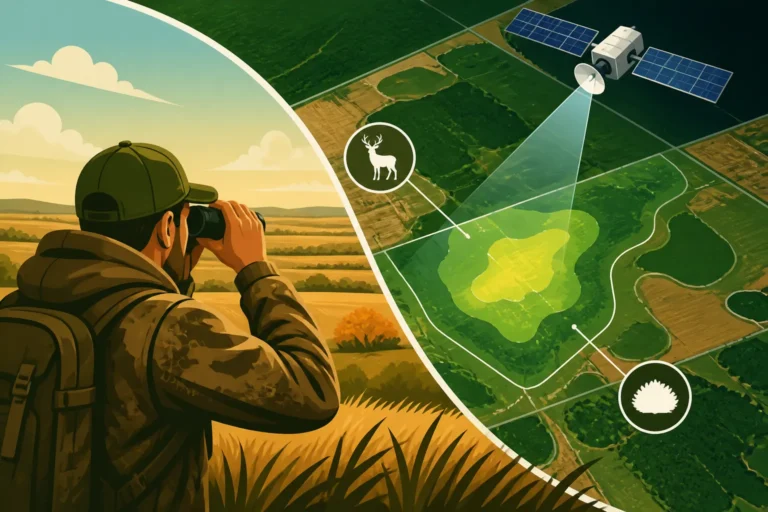
The edge of a lentil field, particularly one bordering a "Hunting a Saskatchewan Bush Bluff", provides a critical intersection. Deer might bed down in the bluff all day and emerge into the lentil field to feed in the evenings. Conversely, they might use the dense field itself for bedding during certain times, especially if the crop is thick enough to offer concealment from above. I've personally seen whitetails bedded deep within a mature lentil field, completely invisible until they suddenly stood up. The key is understanding these transition zones and how deer utilize them for both safety and efficient movement. An app like GoHunt can be incredibly useful here, allowing you to scout satellite imagery for these crucial cover edges and potential travel routes before you even step foot in the field. This helps you identify where deer might enter or exit the field, providing ideal ambush points.
Timing Your Approach to Lentil Fields Throughout the Season
Knowing that game uses lentil fields is one thing, but timing your hunt correctly is another entirely. Saskatchewan's hunting seasons span several months, and a lentil field changes dramatically from early summer growth to post-harvest stubble. Each stage presents different opportunities and demands different tactics.
Pre-Harvest Opportunities
The early archery season, typically opening in September, often coincides with lentil fields still standing. This can be a fantastic time to catch deer actively feeding on the green plants. Bucks are often still in their bachelor groups, or just starting to break up, and they're focused on putting on weight before the rigours of the rut.
Hunting during this pre-harvest phase presents challenges. The thick, standing crop can make visibility difficult, reducing shooting lanes significantly. Scent control becomes paramount because deer might be bedded within the field itself or moving through it, and any human scent can quickly put them on high alert. You'll need to focus on identifying specific entry and exit points where deer might cross a fence line, use a small ditch, or enter from a wooded edge. Consider placing ground blinds or tree stands strategically along these paths, ensuring your setup provides a clear shot while remaining concealed. Early mornings and late evenings are generally the most productive times, as deer feel safer moving and feeding under the cover of low light. This aligns well with general strategies for Hunting Saskatchewan's September Archery Opener, where capitalizing on reliable food sources is key.
Post-Harvest Strategies Swathed and Stubble
Once the harvest machines roll through, a lentil field transforms, but it doesn't lose its appeal. In fact, for many species, it becomes even more attractive. Lentils are often swathed before combining, meaning they are cut and laid in rows to dry. Even after combining, there's always a certain amount of grain that falls to the ground, creating an irresistible smorgasbord for deer, birds, and even moose.
Post-harvest, visibility opens up dramatically, which can be a double-edged sword. While it’s easier for you to see game, it’s also easier for game to see you. Deer become incredibly wary in these open fields, often sticking to the edges or only venturing out under the darkest conditions. Your strategy will need to adapt. Instead of focusing on where they might feed in the standing crop, you'll concentrate on where they will pick up the dropped lentils, and more importantly, their travel routes to and from these feeding grounds.
This is where understanding game movement between food and cover becomes critical. Deer will typically move from their bedding cover – a dense bluff, a willow patch, or a "Hunting a Willow Run for Whitetails" – along the most secure route to the open stubble. Look for pinch points, narrow strips of cover, or natural funnels that force deer into predictable travel paths. This approach is similar to how one might approach Hunting a Swathed Grain Field at Dusk, focusing on transition times and travel corridors.
During the peak of the rut, often around Hunting the Rut in Early to Mid November, a post-harvest lentil field can be a hotspot for cruising bucks. They might not be there to feed as much as to scent-check for does that are using the field. A buck covering ground will expose himself more readily, offering opportunities for those patient enough to wait. Using your GoHunt app, you can mark potential bedding areas and then draw lines to likely feeding zones to predict movement.
Effective Hunting Tactics for Lentil Field Edges
Hunting a lentil field edge demands patience, stealth, and a keen understanding of game behavior. It's not just about showing up; it's about anticipating movement and positioning yourself for success.
Stand Placement and Wind Considerations
Proper stand placement is crucial when hunting any field edge, but especially so with the open visibility of a lentil field. The wind is your absolute top priority. Saskatchewan's winds can be fickle, but generally, you'll want to set up with the prevailing wind carrying your scent away from where you expect game to appear. This often means placing your stand on the downwind side of a known travel corridor or feeding area.
Consider what types of cover are available along the edge. Is there a small bluffy area, a sparse treeline, or even just a thick patch of weeds? These are excellent spots for a tree stand or a ground blind. If you're planning on Hanging a Stand on a Saskatchewan Bush Edge, make sure it offers concealment not just from the field, but also from behind. Deer often approach fields from multiple directions, especially when cruising for does.
Using a mapping app like GoHunt is invaluable for analyzing wind direction forecasts against your chosen stand locations. You can mark multiple potential stand sites based on different wind conditions and choose the best one on the day of your hunt. Remember, it's better to move your stand or choose a different location entirely than to hunt with a questionable wind. A deer that smells you is a deer you likely won't see.
Spot and Stalk vs. Ambush
The choice between a spot and stalk approach and an ambush (stand hunting) largely depends on the time of year, the specific field conditions, and the species you're targeting.
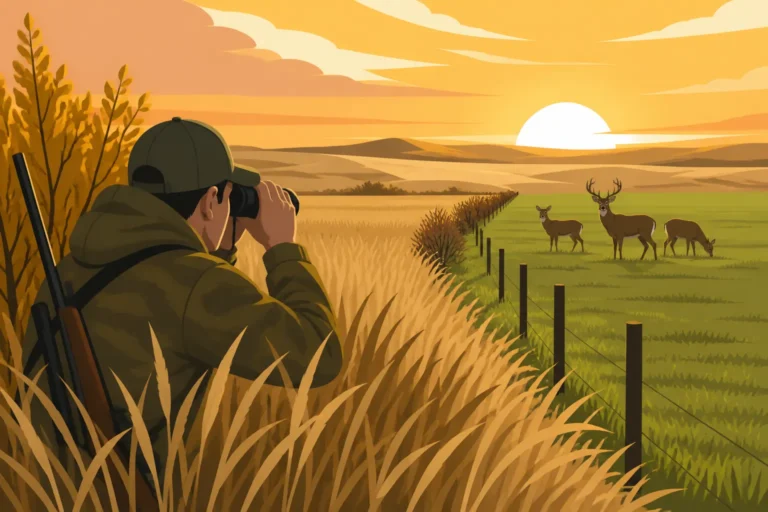
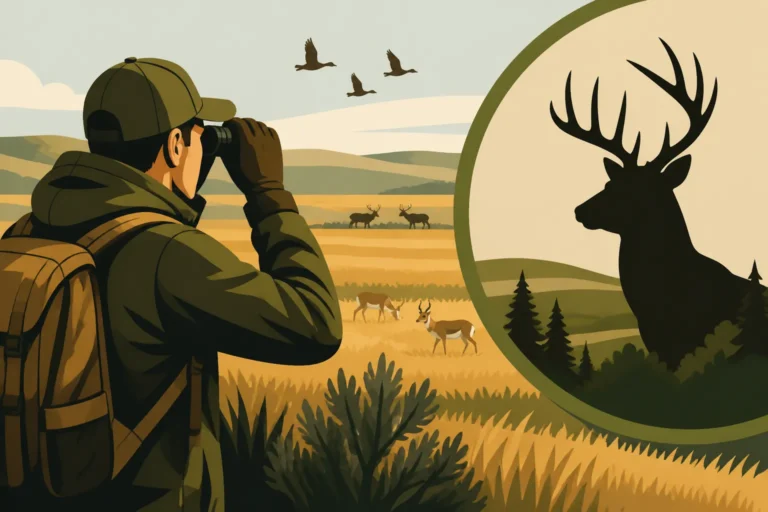
Spot and Stalk: This tactic shines in open, post-harvest lentil fields, especially when targeting mule deer, which are more accustomed to open country. If you're Stalking Mule Deer in Open Prairie, you'll spend a lot of time glassing from a distance with good binoculars or a spotting scope. Once you locate an animal, the challenge becomes using whatever terrain features are available – a rise in the ground, a small coulee, a fence line, or even standing crop in an adjacent field – to close the distance undetected. This requires extreme patience, moving slowly, and often crawling. For whitetails, spot and stalk in open fields is generally much harder due to their nervous disposition, but it can be done, especially when they are focused on feeding in groups.
Ambush: For whitetail deer, especially during the core feeding times of dawn and dusk, an ambush from a well-placed stand is often the most effective method. You've identified their travel routes to and from the lentil field edge, you've accounted for the wind, and now you wait. This can involve Sitting All Day in a Saskatchewan Blind during the rut, or simply hunting the golden hours. The key is to be in position early and remain absolutely still and quiet.
Reading Sign and Anticipating Movement
Deer constantly leave clues about their presence and travel patterns. Along a lentil field edge, you'll be looking for fresh tracks entering and exiting the field, droppings (indicating feeding activity), and rubs or scrapes on trees or fence posts along the adjacent cover. Reading Whitetail Sign in Saskatchewan Bluffs will teach you to look for these subtle indicators. The more recent and concentrated the sign, the more active the area.
Satellite imagery from GoHunt can help you "read" the landscape from above, identifying subtle changes in topography, faint game trails, and connecting pieces of cover that might funnel deer movement. Look for areas where a "Hunting a Fence Line Between Quarters" might create a natural travel lane, or where a slight depression leads into the field. Over time, as you observe deer movement and connect it to the sign you find, you'll start to anticipate where and when deer are most likely to appear on that lentil field edge.
Consider the time of day and year. Early season, deer are often predictable, moving to feed. Later in the season, during the rut, bucks might be cruising at all hours, less focused on feeding and more on finding does. If the ground has a fresh dusting of snow, you'll have an undeniable advantage in Reading Sign After Fresh Saskatchewan Snow, seeing exactly where deer are moving.
Essential Gear and Hunter Etiquette in Lentil Country
Hunting lentil fields might seem straightforward, but specific gear choices and adherence to proper hunter etiquette can significantly impact your success and reputation.
Optics, Scent Control, and Camouflage
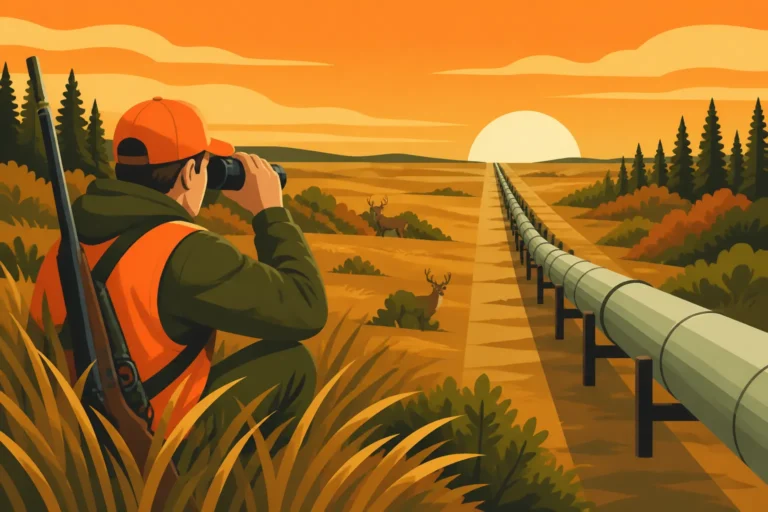
In the wide-open expanse of Saskatchewan's agricultural land, quality optics are non-negotiable. Good binoculars (10×42 or 10×50) and a spotting scope are essential for spotting game from a distance without disturbing them. You'll often be glassing hundreds of yards, sometimes even a mile or more, so clarity and light gathering capabilities are paramount. This allows you to identify animals, judge their size, and plan your approach long before they're aware of your presence.
Scent control is absolutely critical, especially on open field edges. Deer, particularly mature bucks, rely heavily on their sense of smell. Any detectable human odour will send them bolting. This means meticulous attention to your hunting clothes – washing them in scent-free detergent, storing them in airtight bags, and using scent-eliminating sprays on yourself and your gear. The more open the environment, the more vigilant you need to be.
For camouflage, traditional woodland patterns might work if you're deep in the bush, but on a lentil field edge, you'll often be silhouetted against the sky or the open field. Consider camouflage patterns designed for agricultural or open country settings, which often feature more browns, tans, and muted greens to blend with stubble fields, fence lines, and sparse vegetation. A simple dark, solid color, or even specific patterns like "Realtree Edge" or "Mossy Oak Bottomland", can also be surprisingly effective when used to break up your outline against natural elements like a "Hunting a Shelterbelt Between Two Fields".
Landowner Relations and Access
This cannot be stressed enough: always get permission before hunting on private land in Saskatchewan. The vast majority of lentil fields are on private property, and respect for landowners is not just common courtesy, it's the law. Saskatchewan Landowner Permission Law states that you must obtain permission to hunt on private land, even if it's not explicitly posted.
Make an effort to meet the landowner in person, well before hunting season if possible. A simple knock on the door, a friendly introduction, and a clear explanation of your intentions can go a long way. Building a good relationship with landowners is the single most important aspect of hunting in Saskatchewan's farming communities. Offer to share meat, help with chores, or simply be a good neighbour. Use resources like the Knocking on Doors in Saskatchewan Farm Country guide to help you navigate these crucial interactions.
When you do get permission, clarify boundaries, parking spots, and any specific requests they might have (e.g., avoid driving on certain roads, don't hunt near livestock, close all gates). Always leave gates as you found them, pick up any litter, and generally leave the property better than you found it. Remember, you're not just representing yourself, but all hunters. Bad behavior from one hunter can ruin access for everyone.
Hunting Strategies for Lentil Fields: A Comparative Look
| Factor | Pre-Harvest (Standing Crop) | Post-Harvest (Stubble/Swathed) |
|---|---|---|
| Visibility | Low. Cover for deer, difficult for hunter to spot. | High. Easy to spot deer, but deer can also spot you. |
| Primary Appeal | Green forage, protein-rich food, some bedding cover. | Spilled grain (easy food source). |
| Ideal Tactics | Ambush from elevated stand/blind on known travel paths. | Ambush from stand/blind near cover; spot & stalk if cautious. |
| Scent Control | Absolutely critical, deer can be very close or in field. | Highly critical, deer can smell you from further away. |
| Wind Importance | Paramount for stand placement near entry/exit points. | Paramount for all approaches, especially spot & stalk. |
| Times to Hunt | Early morning, late evening, during low light. | Dawn/Dusk for feeding; mid-day for cruising bucks. |
| Gear Focus | Camo for dense cover, good scent control, bow/rifle. | High-quality optics, long-range rifle (if applicable), open-country camo. |
| Associated Cover | Deep cover nearby (bush, bluffs, sloughs). | Any available cover (coulees, shelterbelts, minor rises). |
Disclaimer
Hunting is an inherently dangerous activity. Always prioritize safety, understand and adhere to all local hunting regulations, and ensure you have the necessary training and permits. This guide provides general information and recommendations; however, conditions and regulations can change, and individual experiences may vary. Always verify current rules and seek expert advice where appropriate. The author and publisher are not responsible for any incidents, accidents, or legal issues that may arise from the use of this information. Hunt ethically, hunt safely, and respect the land and its wildlife.