Hunting an Old Logging Road in the North
Finding good hunting ground in Saskatchewan's vast northern forest can feel like looking for a needle in a haystack, especially when you're trying to locate those elusive big game animals or even just a decent patch of grouse. The bush can be incredibly thick, making travel difficult and scouting a real challenge. But there's a secret that many seasoned northern hunters swear by: old logging roads. This guide will walk you through why these forgotten pathways are goldmines for hunters, how to approach them, and what you need to consider for a successful and safe hunt.
The Allure of Old Logging Roads for Northern Saskatchewan Hunters
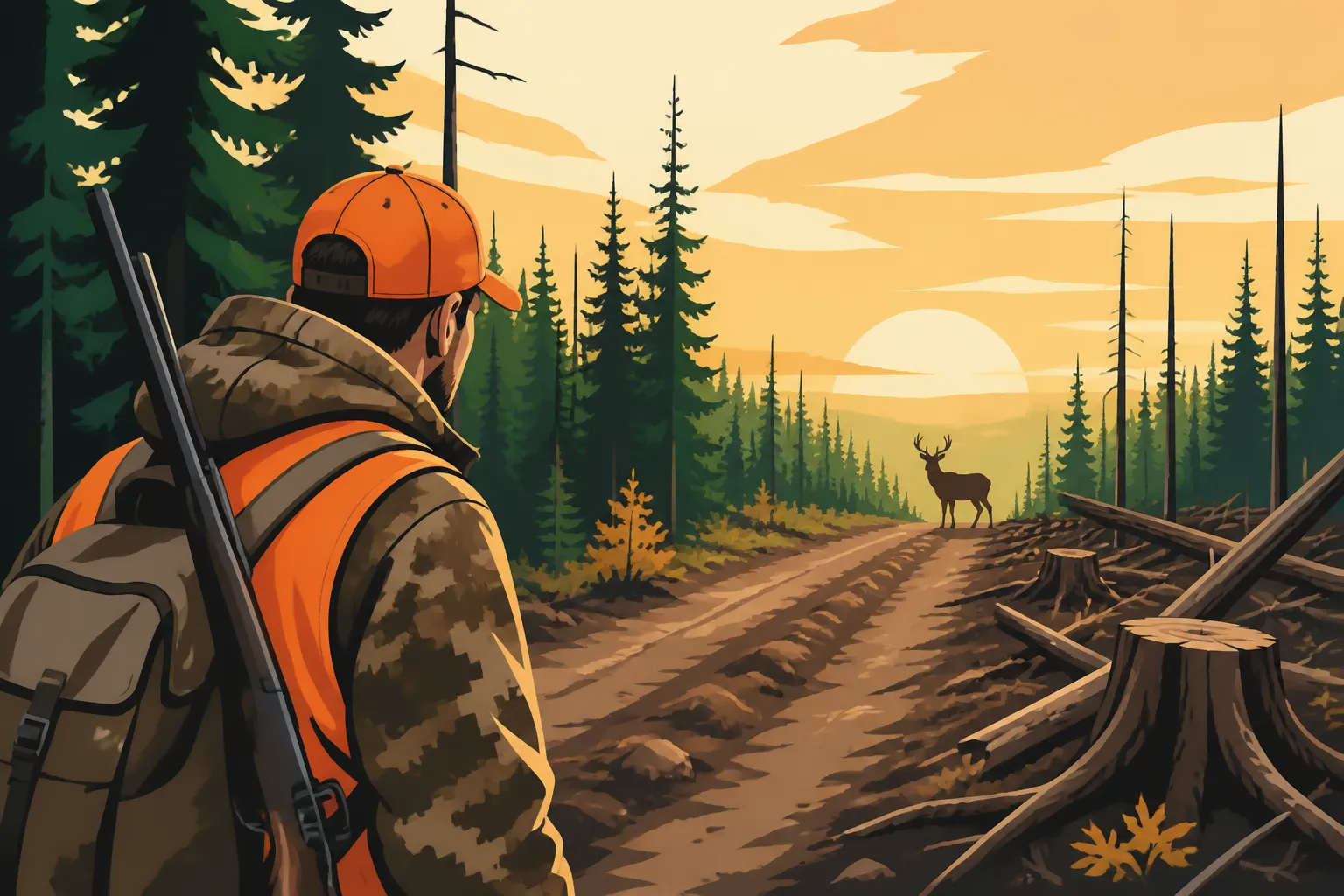
When you think of hunting the Boreal North, you might picture endless unbroken forest. While that's true in many places, the reality is that resource extraction, particularly logging, has shaped much of the accessible northern landscape. And with logging comes roads – miles upon miles of them, many now abandoned and slowly returning to nature. These aren't just muddy tracks; they're critical arteries for wildlife.
Why Wildlife Gravitate to These Forgotten Pathways
Think about it: an old logging road is essentially a long, narrow break in the dense forest canopy. This opening allows sunlight to reach the forest floor, encouraging a flush of new growth – everything from grasses and forbs to berry bushes and young saplings. This diverse vegetation is a magnet for deer, moose, and bear, providing vital forage that might be scarce in the mature, shaded woods.
For whitetail deer, these edges offer both food and cover. They can browse on the tender shoots along the road and quickly duck back into the thick timber if threatened. Mule deer, though less common in the deep boreal, will also utilize these open corridors for travel. Moose, especially, are drawn to the regenerating growth. They'll feed on willow, aspen, and balsam fir that often spring up along the edges and in the clearings created by these old roads. Black bears love the berries that flourish in sunny openings, and they'll use these roads as travel lanes between food sources and denning areas. Predators like wolves and coyotes also patrol these clearings, looking for easy prey. It’s a complete ecosystem often thriving right along these man-made paths. For an in-depth look at what Saskatchewan's northern forests offer, you might want to check out the guide on Hunting Saskatchewan's Boreal North.
Understanding the Habitat Dynamics They Create
Logging roads don't just provide food; they create varied habitat structures that are essential for different species. The roadbed itself, if it’s gravel or hard-packed dirt, offers an easier travel route than slogging through deep bush. This means animals conserve energy, especially during winter when snow can be deep. They become natural highways for game.
The adjacent cut blocks, now often several years post-harvest, are growing back with thick regeneration, providing incredible cover for bedding and security. Bucks, in particular, will seek out these dense areas during daylight hours, only to emerge onto the road edges to feed at dawn and dusk. The subtle undulations of the road, the occasional beaver pond where a culvert has failed, or even just a dense patch of spruce can create microhabitats that concentrate game. These features, often overlooked by those who just drive past, are precisely what you need to pay attention to. For instance, the edges of a peat bog or a beaver dam crossing adjacent to these roads can be absolute hotspots.
Deciphering Sign and Strategy Along Boreal Roads
Hunting old logging roads isn't about aimlessly wandering; it's about observation, patience, and understanding how animals use these areas. It's a methodical approach that pays dividends.
Reading the Tracks and Trails
Before you even think about setting up, your primary task is to scout for sign. The soft ground of an old logging road, especially after a rain or a fresh snow, is a perfect canvas for animal tracks. Look for deer tracks cutting across the road, indicating travel between bedding and feeding areas. Pay close attention to size – larger, heavier tracks with dewclaws showing often indicate a mature buck.
Moose tracks are unmistakable, large and often showing signs of heavy browsing on nearby brush. Bear scat and torn-up logs or stumps can signal their presence, especially during berry season. Beyond fresh tracks, look for rub lines on small trees or saplings along the edges of the road, indicating where bucks have marked their territory. Scrapes, particularly during the rut, will also be visible, often on the drier, more open sections of the road. Understanding what a scrape or rub tells you about deer activity is crucial for a successful hunt. Learning to read sign after fresh snow can be incredibly productive for tracking.
Beyond the road itself, scan the adjacent timber for well-worn game trails. These are the animal's preferred paths to and from the road. Often, a distinct "Y" in a game trail, where one path leads to the road and another parallels it deeper in the woods, indicates a major travel corridor. A mapping app like GoHunt can be invaluable here, allowing you to mark these trails and signs on satellite imagery as you scout, building a comprehensive picture of game movement patterns.
Positioning for Success: Stand Placement and Stalking Routes
Once you've identified areas of activity, the next step is strategic positioning. Given the linear nature of logging roads, stands or ground blinds are often best placed to overlook a longer section of the road, or more importantly, a game trail intersecting the road.
Stand Placement:
- Intersections: Look for where smaller, fainter game trails cross the main logging road. Animals often pause at these junctions, offering a shot.
- Bends and Corners: Animals tend to walk the inside of bends, and a stand positioned on the outside corner can offer a clear shot as they round the bend.
- Feeding Funnels: If the road passes through or alongside a natural feeding area (like a berry patch or a regeneration cut), position yourself downwind to catch animals moving in to feed.
- Thick Cover Edges: Place stands where a dense thicket of spruce or willow meets the more open road. Deer and moose will often stage in this cover before stepping out. For whitetails, specifically, hunting a bush bluff can be an extremely effective tactic in these transitional areas.
Stalking Routes:
If still-hunting or spot-and-stalk is your preference, use the logging road as your primary travel corridor. Walk slowly, scanning far ahead and to the sides. Use binoculars constantly. The key is to be quiet and blend in. Wear camouflage that matches the boreal environment. If the road is too open, consider walking parallel to it, just inside the timber line, using the natural cover to conceal your movement. Move into the wind whenever possible, and use any dips or rises in the road for concealment. This is especially effective when Stalking Mule Deer in Open Prairie, but the principles apply to any open area like a logging road.
Timing Your Hunt on Logging Roads
Timing is everything. Early mornings and late evenings are typically the most productive, as this is when most big game animals are actively feeding or moving between bedding and feeding areas. During the middle of the day, particularly on sunny days, animals will often retreat into the thicker cover adjacent to the road. However, don't write off midday hunting entirely, especially during the rut when bucks are constantly on the move, or on overcast, rainy days when animals might be more active throughout the day.
For moose, the rut in late September and early October can be phenomenal along these roads. Calling a bull moose in the rut often works best when you can project your calls down a long, open corridor like an old logging road. Bears are often more active in the spring and fall, with spring being a key time for them to emerge from dens and seek out new growth. Hunting the fall bear season often sees them foraging heavily on berries along these open stretches.
Essential Gear and Safety Considerations
Venturing into Saskatchewan’s northern bush, even along old logging roads, demands careful preparation. Remote areas mean help is often hours away, so self-reliance and a well-thought-out plan are paramount.
Navigation and Communication in Remote Territory
It's easy to get disoriented in the winding, often overgrown maze of old logging roads. Never rely solely on familiar landmarks, as they can look drastically different under varying light conditions or after a season's growth.
Must-Have Navigation Tools:
- GPS Device or Smartphone with Offline Maps: This is non-negotiable. Load your maps beforehand. Apps like GoHunt offer excellent satellite imagery and topographic maps that are crucial for identifying old roads, cutlines, and potential travel corridors. You can mark your truck location, game sightings, and planned routes.
- Traditional Map and Compass: Always carry a physical map of the area (a Saskatchewan WMZ map is excellent) and a compass, and know how to use them. Electronics can fail due to cold, moisture, or battery drain.
- Satellite Messenger/PLB: Cell service quickly disappears as you head north. A Garmin inReach or similar satellite messenger allows you to communicate with loved ones and, critically, send an SOS in an emergency. This peace of mind is invaluable.
Preparing for the Unexpected
The boreal forest is beautiful but unforgiving. A small mishap can quickly escalate into a serious situation.
Emergency Kit Essentials:
- First-Aid Kit: Comprehensive and easily accessible. Include essentials for cuts, sprains, blisters, and any personal medications.
- Fire Starter: Waterproof matches, lighter, and a ferro rod are a good combination. The ability to build a fire for warmth and signaling is critical.
- Emergency Shelter: A lightweight tarp or emergency blanket can make a huge difference if you're stranded overnight.
- Water and Food: Carry more than you think you'll need. A water filter or purification tablets are smart additions.
- Extra Layers: Weather in Saskatchewan can change rapidly, even in fall. Always have extra warm, waterproof layers, especially if you're planning on sitting for extended periods. This is particularly important when Hunting Saskatchewan Winter Weather Safely.
- Headlamp with Extra Batteries: Essential for early morning or late evening hunts, and critical if you get caught out after dark.
- Small Tool Kit: A multi-tool, small saw, and knife are always handy for various tasks.
Vehicle Preparedness:
If you’re driving these roads, a 4×4 vehicle is almost a necessity. Many old logging roads are rough, muddy, or have washouts. Carry a shovel, tow strap, and a working jack. Knowing what to do if you get stuck in the bush can literally save your life. While quads and side-by-sides are popular for accessing these areas, remember to check Quad and Side-by-Side Rules on Crown Land as regulations can vary.
Ethical Considerations and Respect for the Land
Hunting in Saskatchewan is a privilege, and it comes with a responsibility to practice good stewardship and respect both the wildlife and the land we hunt on.
Minimizing Impact and Practicing Good Stewardship
When utilizing old logging roads, remember that while they are often "public" access points, they are still part of a delicate ecosystem.
- Stay on Designated Paths: Avoid creating new trails with your vehicle or ATV. Stick to existing tracks to prevent habitat damage and erosion.
- Leave No Trace: Pack out everything you pack in. This includes spent shell casings, food wrappers, and any other garbage. The goal is to leave the area as pristine as you found it, or better.
- Respect Private Land Boundaries: While many logging roads are on Crown land, some may cross private property. Always know your boundaries using a reliable mapping app like GoHunt, and obtain permission if you plan to access or retrieve game from private land. Check out Saskatchewan Landowner Permission Law for specific regulations.
- Carcass Disposal: Be mindful of how you dispose of game carcasses. If possible, pack out all salvageable meat and hide, and leave remnants well off the road and away from visible areas to decompose naturally.
Navigating Access and Regulations
Old logging roads often traverse vast tracts of Crown land, but access isn't always straightforward. It's crucial to consult current Saskatchewan Hunting Regulations and map resources.
Key Considerations:
- Wildlife Management Zones (WMZs): Understand which WMZ you are in and its specific regulations regarding species, season dates, and limits. A single logging road can sometimes cross multiple WMZ boundaries.
- Seasonal Closures: Some roads, especially those used by active logging operations, may have seasonal closures or restrictions. Always check for local advisories before heading out.
- Hunting from Vehicles: Be aware of the rules regarding hunting from or shooting across roads. Generally, it is illegal to shoot from a public road or right-of-way. Always ensure you are on legal ground and have a safe backdrop for your shot.
- First Nation Reserve Land: Some logging roads may border or pass through First Nation reserve land. Hunting on reserve land is restricted and requires explicit permission from the First Nation council. Understand the boundaries and respect them.
- Provincial Forests and Parks: While many logging roads are within provincial forests where hunting is generally permitted, some may stray close to provincial parks or protected areas where hunting is prohibited. Consult your maps carefully.
By doing your homework and following these guidelines, hunting an old logging road in Northern Saskatchewan can be an incredibly rewarding experience, offering unique opportunities to encounter game in a less-pressured environment. Always prioritize safety, respect the land, and enjoy the vast wilderness Saskatchewan has to offer.
Disclaimer
Please remember that hunting regulations, seasons, and land access rules can change frequently. Always consult the most current Saskatchewan Hunting Guide and local authorities before planning any hunt. This article provides general information and should not be considered a substitute for official regulations.