Hunting the Great Sand Hills Dunes
The Great Sand Hills in Saskatchewan can feel like a world unto themselves – vast, wild, and incredibly intimidating if you don't know where to start. Many hunters are drawn to the mystique of this unique landscape, but they quickly discover that its beauty comes with some serious challenges, from navigating shifting sands to finding those elusive critters in such open country. This guide aims to demystify hunting in the Great Sand Hills, providing practical advice to help you plan a successful and safe adventure in this remarkable region.
Understanding the Great Sand Hills Ecosystem for Hunters
Hunting the Great Sand Hills isn't like hunting anywhere else in Saskatchewan. It's an experience that demands a deep respect for the land and an understanding of how its unique environment shapes the behaviour of the animals that call it home. You're stepping into a truly special corner of the province, and knowing what to expect is half the battle.
Unique Habitat and Terrain Challenges
When you picture "sand dunes," you might think of deserts far away, but here in Saskatchewan, we have our own impressive stretches of them. The Great Sand Hills are a mosaic of active sand dunes, stabilized grassland, sagebrush flats, and shallow depressions that can hold seasonal water. This creates an incredibly dynamic and challenging hunting environment. Walking across the soft, shifting sand is exhausting, and distances can be deceptive. What looks like a short jaunt on a map can turn into a serious trek, especially when you're navigating undulating terrain with no clear landmarks in every direction. The vegetation, while sparse in places, offers surprising pockets of cover for animals, making them disappear as if by magic.
The physical demands here are significant. You'll be climbing dunes, slogging through loose sand, and potentially covering many miles on foot in search of game. Hunters accustomed to bush country or even more consolidated prairie might find the effort required quite a shock. It's crucial to be in good physical condition and understand that your pace will likely be much slower than you anticipate. Furthermore, the lack of tall trees means natural shade is scarce, and the sun can be relentless, even in shoulder seasons.
Key Game Species and Their Adaptations
The Great Sand Hills is prime habitat for some truly magnificent animals, particularly our prairie mule deer and pronghorn. These species have evolved to thrive in this open, often arid environment. Mule deer here are masters of using the rolling terrain and sparse sagebrush for cover. They'll bed down in the bottom of a coulee, blend seamlessly into the sandy slopes, or simply walk over a dune and vanish. Their ability to cover ground quickly and utilize every dip and rise makes them incredibly challenging to hunt. Often, they'll be high on a ridge, silhouetted against the sky, or tucked into a small cut, seemingly out of nowhere.
While less common right in the active dunes, whitetail deer can be found in the more vegetated fringes of the Sand Hills, particularly near any permanent water sources or heavier bush lines that might border the area. They tend to stick to the heavier cover where it exists. Pronghorn also call this area home, utilizing their incredible eyesight and speed across the open plains and flats between the dunes. Spotting them can be a thrill, but getting within range often requires an elaborate stalk using every bit of available topography. Coyotes are also abundant, making for excellent predator hunting opportunities, and various upland birds like sharp-tailed grouse and Hungarian partridge can be found in the grassy and sagebrush areas, offering a different kind of challenge.
Navigating and Accessing the Great Sand Hills for Hunting
The sheer scale of the Great Sand Hills can be overwhelming. Knowing how to effectively navigate and gain access to hunting areas is paramount to a successful trip. This isn't a place where you can just drive up, jump out, and start walking without a solid plan.
Mapping and Scouting in a Challenging Landscape
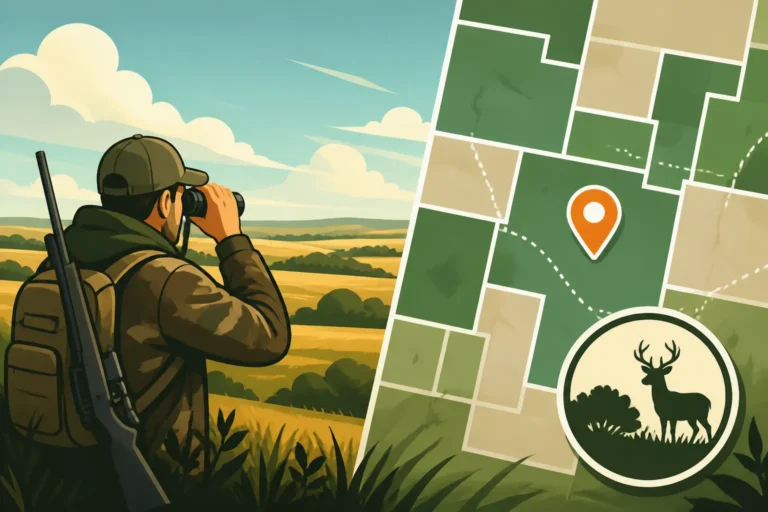
Before you even think about setting foot in the Sand Hills, thorough mapping and pre-scouting are essential. Traditional paper maps are a good starting point for the big picture, but modern digital tools are truly indispensable here. Satellite imagery becomes your best friend, allowing you to identify active dune fields, vegetated pockets, potential water sources, and access roads from the comfort of your home. You can often pick out subtle terrain features that might serve as natural funnels or bedding areas.
This is where tools like onX Hunt and GoHunt really shine. They allow you to overlay private and Crown land boundaries directly onto high-resolution satellite imagery, which is absolutely critical in an area with mixed land ownership. You can mark waypoints for potential glassing spots, note any discernible trails, or even mark areas where you've seen historical game sign. Without this kind of precise information, you could easily find yourself trespassing or wasting precious hunting time in unproductive areas. For more details on digital mapping, check out Scouting With Satellite Imagery in Saskatchewan. Once you've identified promising areas, especially those on Crown land, a physical scouting trip beforehand, if possible, can confirm your digital findings and give you a feel for the terrain's true scale.
Accessing Crown Land and Private Land Considerations
The Great Sand Hills region is a patchwork of Crown land and privately owned parcels. While there are significant tracts of public land available, especially in the core dune areas, understanding the boundaries is non-negotiable. Many of the most productive hunting spots, particularly along the fringes where game might seek more cover or water, are often on private land. This means you absolutely need to secure permission from landowners before you hunt. Knocking on doors well in advance of your trip is the most respectful and often most effective way to gain access. Be polite, be prepared to explain your intentions, and always respect a "no."
| Land Type | Access Requirement | Key Considerations |
|---|---|---|
| Crown Land | Generally open to public hunting | Verify boundaries with digital maps (e.g., onX Hunt); vehicle restrictions may apply; pack out all trash. |
| Private Land | Mandatory landowner permission | Ask well in advance; be respectful; confirm allowed hunting methods/species; leave gates as found. |
| FWDF Lands | Specific public access rules | Often well-signed, but verify boundaries and rules for each parcel. |
Navigating the sandy terrain with a vehicle also presents unique challenges. Many areas are inaccessible to conventional two-wheel-drive vehicles, and even a 4×4 can get stuck in soft sand. Be prepared for deep sand ruts, and always know your vehicle's limits. In some of the more sensitive or active dune areas, motorized vehicle access might be restricted entirely, requiring you to go on foot. Always check local regulations for vehicle use on Crown land in the specific Wildlife Management Zone you plan to hunt. Planning for foot access or knowing where you can safely park and walk in is part of the Sand Hills experience.
Hunting Strategies Specific to the Great Sand Hills
The open nature of the Great Sand Hills lends itself to certain hunting strategies that differ greatly from hunting in dense bush or even typical prairie farmland. Success here often hinges on your ability to use the landscape to your advantage and adapt to the animals' keen senses.
Spot-and-Stalk for Mule Deer and Pronghorn
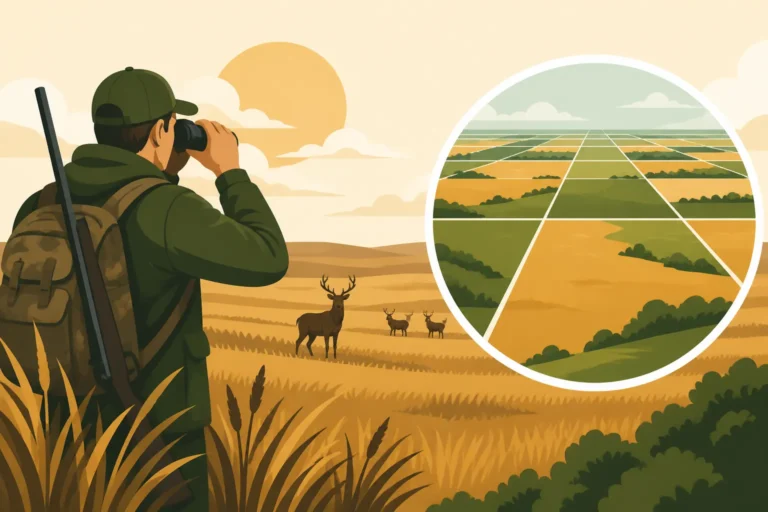
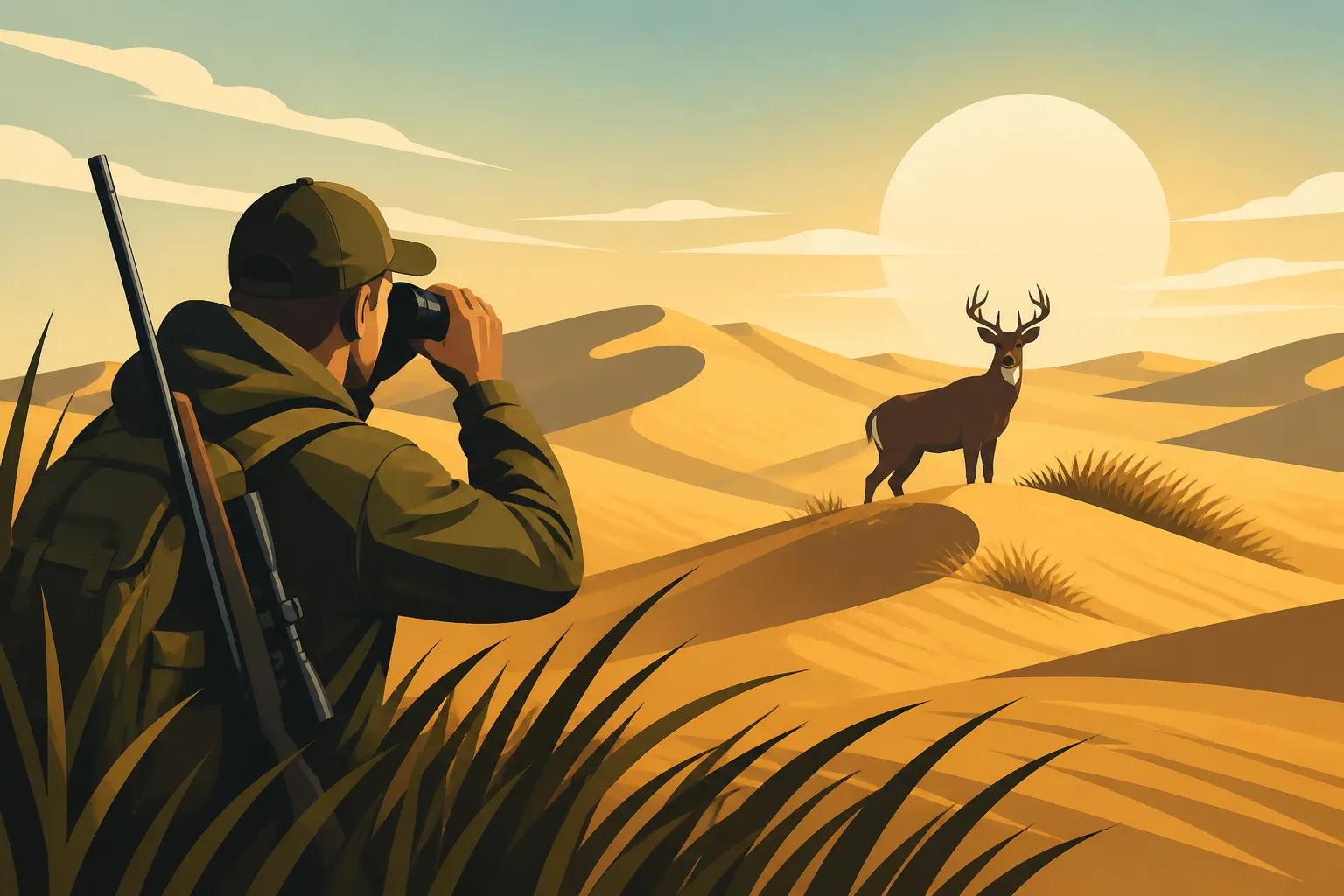
Given the expansive, often treeless landscape, spot-and-stalk is by far the most effective and exhilarating hunting method for both mule deer and pronghorn in the Great Sand Hills. This isn't a place for sitting in a blind, generally speaking. It's about covering ground with your eyes, not your feet, and using high-quality optics to pick apart distant hillsides and coulees. A good pair of binoculars (10x or 12x) and a spotting scope are indispensable. Climb to the highest point you can find, scan methodically, and be patient. Animals often appear as tiny specks that resolve into a deer or pronghorn only after careful scrutiny.
Once you've spotted an animal, the real chess match begins. The rolling dunes and sagebrush offer surprising amounts of cover, but you need to be acutely aware of the wind direction and the animal's line of sight. Plan your approach carefully, using every dip, rise, and clump of vegetation to stay out of sight. This might mean crawling on your hands and knees for hundreds of yards or taking a circuitous route that adds significant distance to your stalk. Patience is key; a rushed stalk in this open country will almost always result in a spooked animal. For more on this technique, consider Spot-and-Stalk Mule Deer in Saskatchewan. Remember, these animals have incredible eyesight, and they live in an environment where everything is a potential threat.
Hunting Whitetails and Upland Birds in the Fringe
While the active dune fields are primarily mule deer and pronghorn country, the fringes of the Great Sand Hills, where the sandy terrain transitions into more stable grassland, aspen bluffs, or river breaks, can hold good numbers of whitetail deer. These areas provide the heavier cover, food sources, and more consistent water that whitetails prefer. Hunting these transition zones often involves a blend of tactics. You might still do some spot-and-stalk along the field edges or coulees, but still-hunting through pockets of bush or setting up on known travel corridors can also be effective. Look for areas where the Sand Hills meet agricultural fields or denser shrubland, as these are natural magnets for whitetails seeking food and shelter. Check out Hunting a Shelterbelt Between Two Fields for relevant strategies.
The grassy flats and sagebrush areas within and around the Sand Hills also provide excellent habitat for upland birds. Sharp-tailed grouse and Hungarian partridge are common, and hunting them can be a fun and active way to spend part of your day. Walking up sharptails on grassland can be challenging, as they hold tight and then explode into flight. Using a flushing dog can be incredibly effective here, or simply walking slowly and deliberately through promising cover. For Huns, shelterbelts, abandoned farmyards, and brushy draws are often productive spots. The wide-open spaces mean once a covey flushes, they might fly a long distance, so marking where they land is important for a second try.
Essential Gear and Safety for Sand Hills Hunting
Hunting in the Great Sand Hills is an adventure, but it's also a serious undertaking that requires careful planning and the right gear. The remote nature of the area, combined with its unique terrain and changeable weather, means you need to be self-sufficient and prepared for anything.
Footwear, Water, and Navigation Tools
Your feet are your most important asset when hunting the Sand Hills. Investing in high-quality, comfortable, and well-broken-in boots is non-negotiable. Look for boots that offer good ankle support for uneven terrain and are durable enough to withstand abrasive sand. Blisters can quickly end a hunt, so proper socks and foot care are also critical. Beyond footwear, water is the single most important item you'll carry. The open environment, sun, and strenuous walking will dehydrate you quickly. Always carry more water than you think you'll need, and consider a water filter or purification tablets as a backup if you know of potential water sources.
Given the vastness and often featureless nature of parts of the Sand Hills, getting disoriented is a real possibility, especially on an overcast day or when focused on a stalk. A reliable GPS device or a smartphone app like onX Hunt with downloaded offline maps is essential. Don't rely solely on cell service, as it can be spotty to non-existent in many remote areas. A compass and paper map should also be part of your kit as a failsafe. Furthermore, consider carrying a satellite communication device (like a satellite messenger) for emergencies, as it can be a literal lifesaver if you get injured or stranded outside of cell coverage. Always tell someone your detailed hunt plan and expected return time.
Weather, Vehicle Preparedness, and Emergency Planning
Saskatchewan weather is famously unpredictable, and the Great Sand Hills are no exception. What starts as a warm, sunny morning can quickly turn into a windy, dusty, or even stormy afternoon. Be prepared for wide temperature swings throughout the day. Layers are your best friend, allowing you to adapt to changing conditions. A good windbreaker is essential, as the wind can pick up dramatically, especially on open dunes. In fall, snow can arrive suddenly, making navigation and travel even more challenging. You'll need to know Hunting Saskatchewan Winter Weather Safely if you plan a late-season trip.
Your vehicle is your lifeline in this remote country. A reliable 4×4 with good ground clearance is highly recommended. Ensure your tires are in excellent condition, and consider carrying recovery gear such as a shovel, tow strap, and traction mats. Let some air out of your tires (to 15-20 PSI) if you find yourself stuck in deep sand, but remember to re-inflate them once you're on solid ground. Carry extra fuel, as gas stations can be far apart. A well-stocked emergency kit in your vehicle, including extra food, water, blankets, and a first-aid kit, is a must. Before heading out, make sure your vehicle is in top mechanical condition. Always have a plan for what you would do if you got stuck miles from anywhere, and never venture off established trails or roads if you are unsure of the terrain or your vehicle's capabilities.
Disclaimer
This article is for general informational purposes only and does not constitute professional advice. Laws, prices and regulations vary by location and change over time. Consult a qualified professional for guidance on your specific situation.