Reading a Posted Land Sign Correctly
It's incredibly frustrating to be out in Saskatchewan's beautiful hunting country, boots on the ground, only to be met with a seemingly endless array of signs that leave you scratching your head. You’ve put in the time scouting, maybe even travelled a good distance, and suddenly you’re unsure if you’re even allowed to step foot on what looks like prime habitat. This guide is here to untangle the confusion surrounding posted land signs in Saskatchewan, helping you understand what they mean, what your responsibilities are, and how to navigate access so you can hunt with confidence.
Understanding Saskatchewan's Trespass Laws
Before we even get to the signs themselves, it’s crucial to understand the foundation: Saskatchewan’s trespass laws. They’ve evolved over the years, and it's not always as simple as "no fence, no problem." The general rule of thumb in Saskatchewan is that you need permission to hunt on private land. This isn't just a suggestion; it's a legal requirement. Unlike some other jurisdictions where land might be considered open unless explicitly posted, here, the burden is on the hunter to seek permission. This includes everything from a small quarter section of farmland to larger grazing leases that might look like open prairie.
The Hunter's Responsibility to Seek Permission
Imagine driving down a grid road and spotting a beautiful bluffy area between two stubble fields, perfect cover for a whitetail buck. Your first instinct might be to pull over and check it out. However, without knowing who owns that land, you could unknowingly be trespassing. The law states that you need either written or verbal permission from the landowner or occupier before entering private land for recreational purposes, and hunting certainly falls into that category. It’s not just about respecting property rights; it’s about upholding a good relationship between landowners and hunters, which is vital for the future of hunting in our province. Many landowners are incredibly generous, but they appreciate being asked. This proactive approach helps prevent misunderstandings and keeps doors open for future hunting opportunities. If you're wondering how to even approach this, our guide on Knocking on Doors in Saskatchewan Farm Country offers some excellent tips.
Penalties for Trespassing While Hunting
The consequences of failing to get permission can range from a polite request to leave to significant fines, and in some cases, even the confiscation of your hunting equipment or vehicle. Nobody wants to face those kinds of penalties, especially when the goal is to enjoy the outdoors. Beyond the legal ramifications, there's the damage to your reputation as a responsible hunter. Landowners talk, and word can spread quickly about hunters who disrespect property. This can make it harder for everyone to gain access in the future. Always err on the side of caution: if you're unsure, don't go in until you've confirmed it's either public land or you have explicit permission. For a deeper dive, check out Saskatchewan Trespass Law for Hunters.
Deciphering the Different Types of Posted Signs
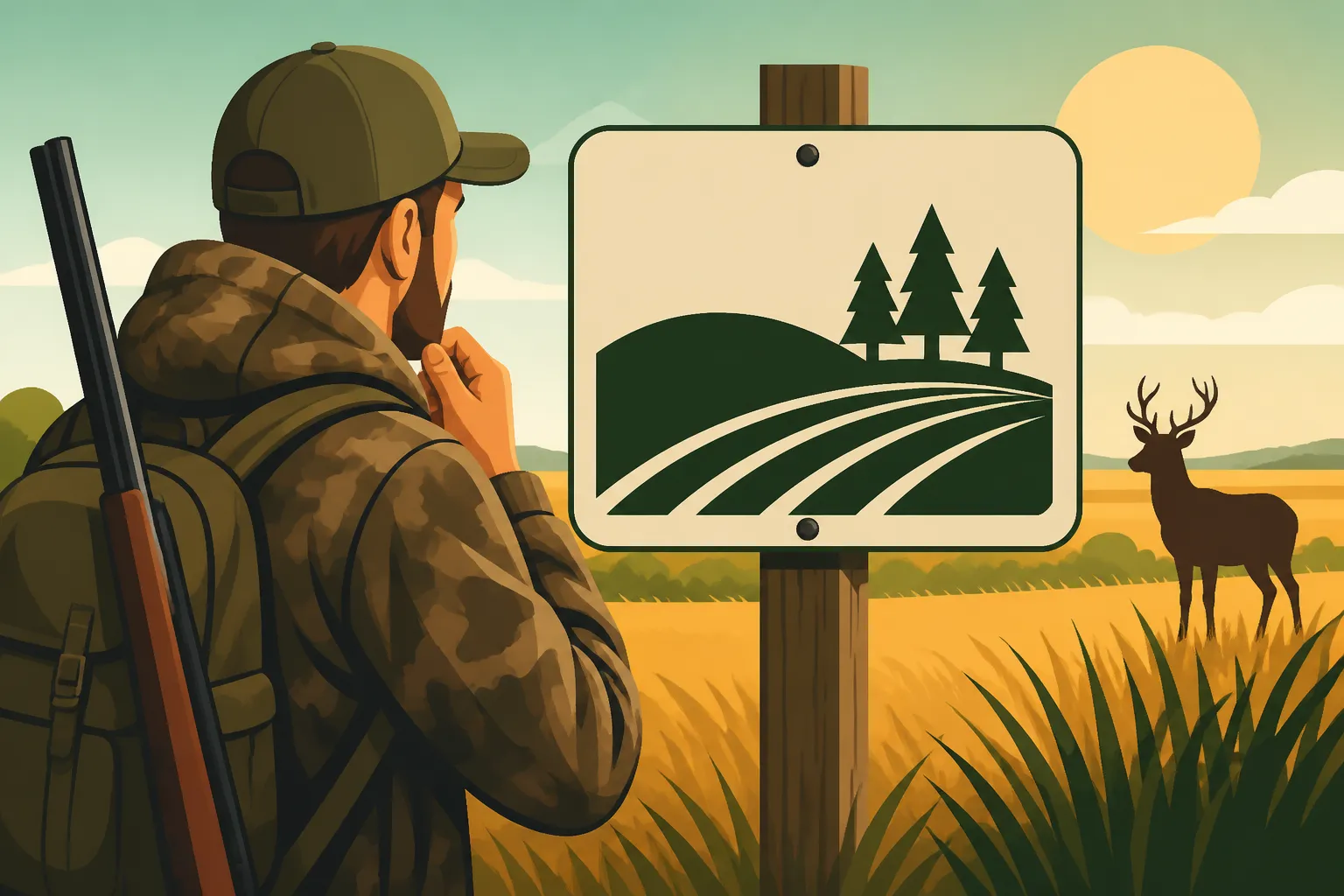
The variety of signs you might encounter in Saskatchewan can be a bit overwhelming, but each one carries specific meaning. Understanding these nuances is key to knowing where you stand, legally and ethically. It’s not just about a simple "No Hunting" sign anymore; there are variations that convey different levels of access or restrictions.
"No Trespassing" and "No Hunting" Signs
These are perhaps the most straightforward signs you'll see. A "No Trespassing" sign generally means exactly that: no entry for any reason without explicit permission. This applies to everyone, not just hunters. When you see one of these, it's a clear indication to stay out unless you've spoken directly with the landowner and received permission.
"No Hunting" signs are equally clear. They specifically prohibit hunting on that property, even if general access might otherwise be tolerated for other activities. Sometimes these signs might be placed by landowners who are okay with hiking or even trapping, but not with hunting activity. It's their land, and they have the right to dictate what activities occur on it. Always respect these clear directives. Ignoring them isn't just disrespectful; it's illegal.
Signs Indicating "Hunting by Permission Only"
These signs are a bit of a mixed bag and sometimes cause confusion. They explicitly state that hunting is permitted only with prior permission. This type of sign doesn't necessarily mean the landowner is against hunting; it means they want to know who is on their land, when, and for what purpose. They might want to ensure safety, manage wildlife populations, or simply keep track of who's around.
When you see a "Hunting by Permission Only" sign, it's an invitation to ask. This is your cue to Getting Private Land Permission in Saskatchewan. Often, these signs will include contact information, making it easier to reach out. Don't assume that because it says "permission only" that permission will be automatically granted, but it certainly offers a much better chance than a "No Hunting" sign. Be polite, explain your intentions, and respect their decision, whatever it may be.
"Posted" Land and Its Specific Requirements
Saskatchewan has specific rules for "posted" land. For land to be legally considered "posted" against entry, the landowner must erect signs that meet certain criteria. These signs generally need to be of a certain size, display specific wording like "Occupied Land – No Entry Without Permission," and be placed at certain intervals around the property, such as at each corner and at 800-meter intervals along boundaries, or at common access points.
These signs are designed to give unambiguous notice that entry is prohibited without permission. If you come across land that fits this description, consider it a firm "no entry" unless you've personally secured permission from the owner or occupier. Simply seeing a few isolated "No Hunting" signs might mean hunting is prohibited, but not necessarily that the entire quarter section is legally "posted" in the same way under the law, which can affect trespass charges. For full details on the specific requirements, look up Saskatchewan Posted Land Sign Rules.
Here’s a quick overview of common signs and their implications:
| Sign Wording | Common Appearance | Implication for Hunters | Action Required |
|---|---|---|---|
| No Trespassing | Red/White, usually with a hand symbol | No entry for any reason without permission. | Stay out, or seek explicit permission for any entry. |
| No Hunting | Red/White, often with a crossed-out rifle | Hunting is strictly prohibited. | Do not hunt on this property, even if general access is unclear. |
| Hunting by Permission Only | Varies, often with contact info | Hunting requires prior consent from the landowner. | Contact landowner to ask for permission. |
| Occupied Land – No Entry | Specific legal wording, often larger | Legal posting against all entry without permission. | Treat as "No Trespassing," must have permission to enter. |
| Private Property | Varies | Implies no general access; assume permission is needed. | Assume you need permission before entry. |
Navigating Posted Land with Digital Tools
In this day and age, having a good mapping app on your phone can be a game-changer for navigating land access in Saskatchewan. Gone are the days of relying solely on paper maps and vague directions. Digital tools empower you to identify land ownership and boundaries with impressive accuracy, helping you avoid accidental trespass.
Using GPS Mapping Apps Like onX Hunt
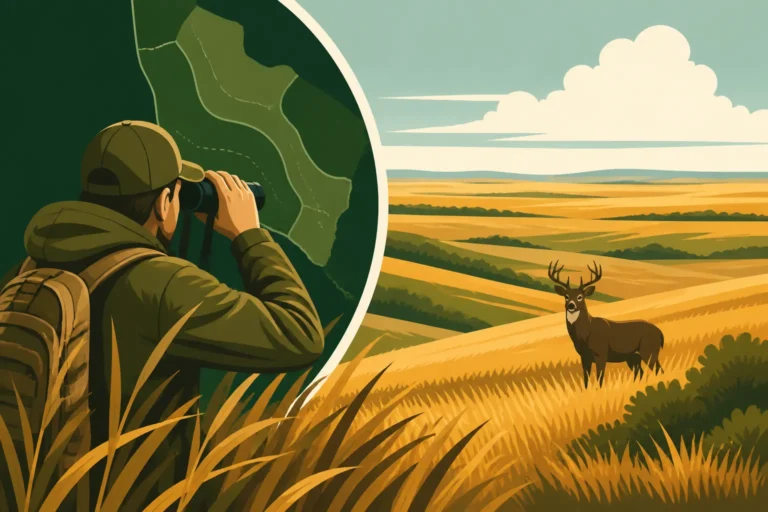
Apps like onX Hunt have revolutionized how many hunters approach land access. These applications offer detailed satellite imagery overlaid with property lines, land ownership information (often showing parcel numbers and owner names), and designations for Crown land, provincial forests, and other public access areas. Before you even leave the house, you can scope out your intended hunting area. You can identify potential access points, see where Crown land meets private, and even identify specific landowners to contact for permission.
For example, if you're planning a trip to the forest fringe where public and private land can be very intermingled, an app like onX Hunt becomes indispensable. You can clearly see a quarter section of privately owned bush right next to a block of Crown land. This allows you to hunt the public side with confidence, knowing exactly where the private boundary lies, so you don’t accidentally cross over. It can even show you who owns that private parcel, giving you a name to look up if you want to try Getting Permission for a Goose Field or some deer hunting.
Leveraging GoHunt and Other Scouting Platforms
While onX Hunt is great for detailed, on-the-ground navigation, other platforms like GoHunt offer similar benefits for research and scouting. These tools can help you identify large tracts of public land, understand wildlife management zone boundaries, and get a lay of the land from an aerial perspective. Many of these platforms also integrate data on things like soil types, topography, and historical burn areas, all of which can inform your hunting strategy.
Before your trip, you can use these platforms to perform digital scouting, identifying potential bedding areas, travel corridors, and feeding grounds. You can mark waypoints, measure distances, and plan your approach routes without ever stepping foot in the field. This saves valuable time and ensures you’re hunting legally and efficiently. Tools like these are fantastic for Scouting With Satellite Imagery in Saskatchewan and understanding the broader landscape before you ever encounter a physical posted sign. They are crucial for distinguishing between land you can access freely, and land where permission is absolutely required.
What to Do When You Encounter a Sign
So, you're out in the field, enjoying the fresh air, and suddenly, there it is: a posted sign. Your immediate reaction might be disappointment or confusion. But knowing how to react ensures you remain a responsible and ethical hunter.
The "When in Doubt, Stay Out" Principle
This is the golden rule of land access in Saskatchewan. If you see a sign and you're unsure of its exact meaning, or you haven't explicitly obtained permission for that specific piece of private land, then do not enter. It's not worth the risk of trespassing, the potential legal penalties, or the negative impact it has on landowner-hunter relations. Your hunt isn't ruined; it simply means you need to adjust your plans.
This principle extends to situations where signs might be ambiguous or partially obscured. If you can't clearly read what it says, or if it seems contradictory, assume it means no entry. Better safe than sorry, and better to find another spot to hunt than to create a problem for yourself or other hunters. This is especially important in areas where Saskatchewan's Crown land might be intermixed with private parcels, making boundaries harder to discern without a good map.
Respecting the Landowner's Wishes and Private Property
Ultimately, a posted sign is a landowner's way of communicating their wishes regarding their property. Even if you disagree with their decision, or feel that public access should be allowed, you must respect their legal right to control who enters their land. A negative interaction with a landowner can sour relations for all hunters, potentially leading to more land being posted in the future.
If you encounter a "Hunting by Permission Only" sign and you wish to ask, do so respectfully. Be prepared for a "no," and accept it graciously if that's the answer. Sometimes landowners have legitimate reasons, such as livestock in the area, ongoing farm operations, or simply wanting privacy. A polite inquiry, even if unsuccessful, leaves a positive impression, and that landowner might consider future requests or even recommend another spot. Always remember that hunting is a privilege, not a right, on private land.
Finding Alternative Hunting Opportunities
One posted sign doesn't mean the end of your hunting day. Saskatchewan is a vast province with immense hunting opportunities, both on private land where permission can be obtained, and on extensive public lands. If you encounter a posted sign, pull out your maps – digital or paper – and look for alternative spots. This might mean identifying nearby Crown land, a Wildlife Management Zone (WMZ) that allows public access, or even exploring Saskatchewan's FWDF Land Access Rules.
Sometimes, simply moving down the road a quarter-mile can open up a new area that is either public or has different access rules. Don't get discouraged by one "no"; use it as an opportunity to discover new hunting grounds. Remember to always consult a detailed map, like those provided by onX Hunt, to ensure you're on legal ground. With a little extra scouting and a willingness to adapt, you'll still find fantastic places to pursue game in Saskatchewan.
Disclaimer
This article is for general informational purposes only and does not constitute professional advice. Laws, prices and regulations vary by location and change over time. Consult a qualified professional for guidance on your specific situation.