How Much Blaze Orange Saskatchewan Requires
One of the trickiest parts of heading out into the Saskatchewan bush or prairie, especially for new hunters or those visiting from out of province, is figuring out all the rules and regulations. It’s not just about knowing your zones and seasons; it’s about safety, and a big piece of that puzzle is understanding exactly how much blaze orange you need to wear. It can feel like a minefield of conflicting advice, but this guide is here to clear up the confusion and ensure you're compliant and safe.
The Unmistakable Call for Visibility: Why Blaze Orange Matters
Let's be honest, nobody wants to be mistaken for game, and conversely, no hunter wants to accidentally put another person at risk. This isn't just a "rule"; it's a fundamental principle of hunting safety that saves lives every single year. Blaze orange, also known as hunter orange, fluorescent orange, or safety orange, is incredibly effective because it's a color that simply doesn't occur naturally in most hunting environments, making it stand out like a beacon. While deer and other game animals may not perceive the color spectrum the same way humans do, they detect movement and shapes. For humans, however, it's a high-contrast signal that screams "human!"
Think about the conditions we often hunt in here in Saskatchewan. Early mornings with low light, foggy or drizzly days, or dense bush where visibility is already compromised. In these scenarios, a hunter wearing camouflage, no matter how effective at blending into the natural surroundings, becomes almost invisible to other human eyes. That’s where blaze orange steps in, creating an undeniable visual cue that is critical for preventing misidentification accidents. It’s not just a suggestion; it's a non-negotiable part of our hunting culture and legal framework, designed to protect everyone in the field.
The Science Behind the Orange Glow
It might seem counterintuitive to wear a bright color when you're trying to be stealthy, but the science behind blaze orange is fascinating and incredibly effective for human safety. Deer and most other big game animals are dichromatic, meaning their eyes have two types of cone cells compared to our three (red, green, blue). This basically means they see the world in shades of blue and yellow, and can't distinguish red or orange from greens and browns. To a deer, that bright orange vest might look like another drab patch of grey or brown against the landscape, especially when you're holding still. It’s your movement that gives you away, not the color itself.
For us, though, our eyes are highly tuned to detect blaze orange, even in low light or against vibrant fall foliage. The fluorescent pigments in modern blaze orange materials absorb ultraviolet and blue light and re-emit it as orange, making the color appear to "glow" and stand out with remarkable intensity. This visual pop is precisely why it’s so effective at preventing hunting accidents involving misidentification, making it a critical piece of gear for anyone out in the field. This understanding allows us to prioritize safety without feeling like we’re compromising our hunt.
Historical Context and Modern Regulations
The adoption of blaze orange as a mandatory safety color isn't some arbitrary decision; it's the result of decades of research and a concerted effort by wildlife agencies and hunter education programs to reduce preventable accidents. Before blaze orange became widespread, hunting accident statistics, particularly those involving "mistaken for game" incidents, were significantly higher. Once states and provinces began mandating its use, those numbers saw a dramatic decline. Saskatchewan, like many other jurisdictions, has a clear set of rules because the evidence overwhelmingly supports its effectiveness.
These regulations are continually reviewed and updated to ensure they meet modern safety standards and account for changes in hunting practices or gear. It's a testament to the hunting community's commitment to safety that these rules are widely accepted and practiced. Every hunter has a responsibility not just to follow the law, but to understand the spirit behind it – that safety in the field is paramount, and a shared responsibility among all participants. When you're preparing for a season, perhaps using a tool like GoHunt to scout potential areas or reviewing Saskatchewan Big Game Season Dates, always double-check the current year's hunting guide for any updates to blaze orange requirements.
Breaking Down Saskatchewan's Blaze Orange Requirements
Alright, let's get down to the nitty-gritty of what Saskatchewan actually requires you to wear. It's not enough to just throw on any orange; there are specific rules about the amount and placement of blaze orange that all hunters, with very few exceptions, must adhere to. The provincial hunting regulations are very clear on this, and ignorance isn't an excuse if you're checked by a conservation officer. These regulations are designed to ensure maximum visibility without imposing undue burden on hunters.
For anyone hunting big game with a rifle, shotgun, or muzzleloader, or for those accompanying someone doing so, the rules are quite specific. It's important to understand these details so you're not just compliant, but genuinely safe. When you're out there, whether you're deer hunting or perhaps even engaged in Moose Hunting Saskatchewan's Farmland and Forest, ensuring you meet these requirements is crucial.
Mandatory Surface Area and Placement
Saskatchewan regulations state that hunters engaged in big game hunting (except for archery-only seasons and specific waterfowl or upland bird hunting scenarios where blaze orange isn't required or is even detrimental) must wear outer clothing of blaze orange. The key here is "outer clothing," meaning it needs to be visible on the outermost layer you're wearing.
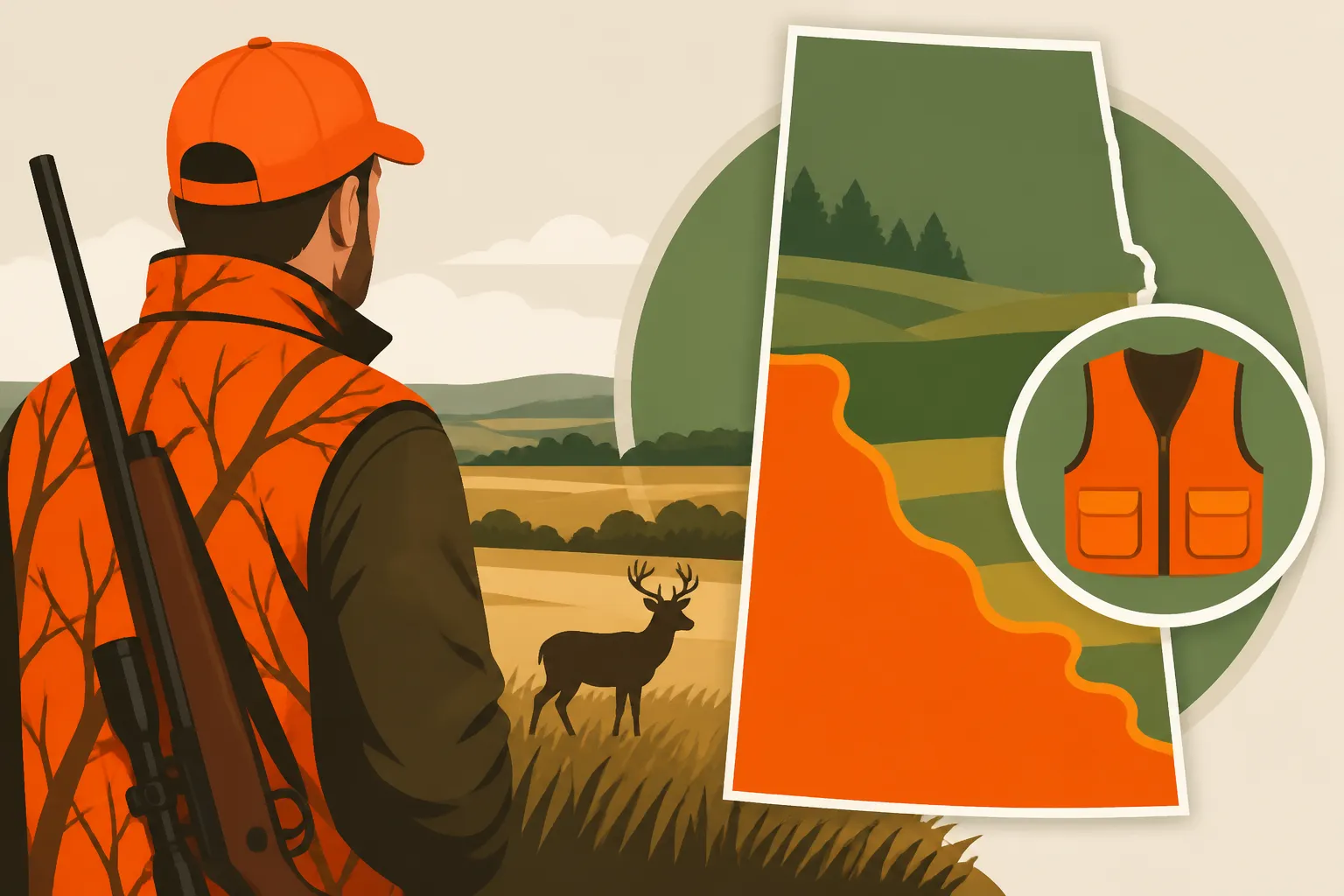
The regulations mandate a minimum of 400 square inches (2580 square centimetres) of blaze orange on the upper part of the body, which must be visible from both the front and the back. This typically translates to a vest or a jacket. Additionally, a blaze orange head covering must also be worn. This means a cap, beanie, or even a hood, as long as it's blaze orange and worn on your head.
Here’s a quick breakdown in a table for clarity:
| Item | Requirement | Specifics |
|---|---|---|
| Upper Body | Minimum 400 sq. inches (2580 sq. cm) of blaze orange. | Must be visible from the front AND back. A vest or jacket usually suffices. |
| Head Covering | One article of blaze orange headwear. | Cap, beanie, hat, or hood. Must be worn on the head. |
| Total | 400 sq. inches + head covering | Applicable to big game hunters (rifle, shotgun, muzzleloader) and their companions. |
This isn't just about meeting the minimum; it's about being as visible as possible. A vest that wraps around your torso, combined with a bright orange hat, provides a good 360-degree sphere of visibility, making it much harder for another hunter to miss your presence, even in thick cover or at long distances. Remember, even if you're just driving someone to their stand or walking with them for a short distance, if you're in a big game hunting area during an open season, you need to be wearing your orange.
Exceptions and Specific Hunting Scenarios
While blaze orange is largely mandatory for big game hunters in Saskatchewan, there are indeed exceptions, and it's vital to know where these apply so you don't inadvertently break a rule or, worse, compromise your safety or the success of your hunt.
Archery-only Seasons: If you're bowhunting during a designated archery-only season, typically the early part of the deer season, you are not required to wear blaze orange. The philosophy here is that bowhunters rely heavily on close-range stealth and concealment. Wearing bright orange would severely hinder their ability to get within ethical bow range of game. However, a critical point to remember is that if you are bowhunting during a general season where firearms are also permitted, even if you are using a bow, you must wear blaze orange. Always check the specific regulations for Saskatchewan Archery Season Dates to confirm.
Waterfowl and Upland Bird Hunting: For those pursuing ducks, geese, or upland birds like grouse and partridge, blaze orange is generally not required and, in fact, can be a disadvantage, particularly for waterfowl hunters who rely on camouflage to avoid detection by sharp-eyed birds. The focus here is on blending into the environment. However, if you are bird hunting in an area where big game hunting is also occurring concurrently, and especially if you are walking through fields or cover where a big game hunter might be present, wearing at least some blaze orange, even if not legally required, is a smart safety precaution. It’s always better to be safe than sorry, and ensuring others see you is a huge part of being responsible.
Predator Hunting: When calling coyotes or other predators, hunters often aim for concealment. In Saskatchewan, if you are actively engaged in calling or hunting predators and are not simultaneously hunting big game, blaze orange is not required. Again, the principle of concealment takes precedence. However, the same caution applies: be acutely aware of your surroundings, especially if you are in an area known for big game hunting, and consider wearing orange when moving to and from your stand or if visibility is otherwise poor.
It’s about understanding the intent behind the rules. For big game, maximum human visibility. For bowhunting (in archery-only seasons), waterfowl, or calling predators, maximum concealment. But always err on the side of caution when in doubt or when multiple hunting activities are happening in the same area. A quick check of the current year's hunting guide before any trip is always the best policy to avoid any misunderstandings.
Practical Tips for Ensuring Your Blaze Orange Game is Strong
Beyond just knowing the regulations, it’s about practical application. You’ve got the 400 square inches and the headwear, great! But how do you ensure that you're truly visible, comfortable, and that your blaze orange gear holds up to the rigors of a Saskatchewan hunt, whether you're navigating dense bush or crossing an open stubble field? It’s more than just a purchase; it's a strategic part of your hunting kit.
Choosing the Right Gear for Maximum Visibility
Not all blaze orange is created equal. When selecting your gear, look for materials that are genuinely bright and resist fading over time. Fluorescent colors, by their nature, can degrade with prolonged sun exposure and washing. Quality counts here.
- Vests and Jackets: These are your primary pieces. A good vest should fit comfortably over your heaviest hunting layers without restricting movement. Look for vests with adjustable straps or generous sizing. Jackets are excellent for colder weather, combining warmth with visibility. Brands like Sitka or Browning offer robust options that prioritize both durability and high visibility. Remember the "visible from front and back" rule, so a full wrap-around design is often better than just a panel on the chest and back.
- Headwear: A simple blaze orange baseball cap is a common choice, but a warm blaze orange toque (beanie) is a must for hunting in Saskatchewan's colder temperatures. Some hunters even opt for full balaclavas in blaze orange for ultimate warmth and head visibility. Ensure it fits snugly but comfortably, and won't easily be knocked off.
- Layering: This is critical, especially when hunting through Hunting Saskatchewan Winter Weather Safely. Your blaze orange must be your outermost layer. That means your orange vest or jacket needs to be large enough to go over your heavy parka or insulated layers. Plan your layering system from the start to ensure your orange always has pride of place on the outside.
Maintaining Visibility in Diverse Environments
Saskatchewan offers a vast array of hunting landscapes, from the open prairies where visibility can stretch for miles, to the dense aspen parkland and boreal forest fringe where cover is thick and sightlines are short. Your blaze orange needs to perform in all of them.
- Open Country: On the prairie, where you might be Glassing a Saskatchewan Coulee for Mule Deer or Hunting a Swathed Grain Field at Dusk, your orange is easily seen. The challenge here is ensuring it remains visible if you drop into a coulee or behind a rise. A well-fitted vest and hat are usually sufficient.
- Bush and Forest Fringe: This is where the 400 square inches truly earns its keep. When you're Hunting Whitetails in Saskatchewan's Forest Fringe or still-hunting through poplar bluffs, branches and thickets can easily obscure portions of your orange. Choose gear that covers a broad area, making it harder for a single branch to hide you completely. A vest that extends down your torso and a prominent hat are key. Even a blaze orange pack cover can add extra visibility if you're carrying a backpack.
- Tree Stands and Ground Blinds: If you're sitting in a tree stand, ensure your blaze orange isn't obscured by the stand itself or by the tree trunk. The same goes for ground blinds; if you step out of the blind, make sure your orange is immediately visible. Some hunters remove their orange inside a fully enclosed blind for concealment, but it must be immediately put back on when exiting.
Using resources like GoHunt can help you understand the terrain you'll be hunting in, allowing you to choose gear that best suits the environment. You might even find it useful to scout out areas with satellite imagery, identifying potential high-traffic spots where maximum visibility will be paramount.
Common Mistakes and How to Avoid Them
Even experienced hunters can sometimes make simple errors that compromise their blaze orange safety.
- Forgetting the Hat: It's easy to remember the vest, but a blaze orange hat is just as crucial. It's the highest point of your body and often the first thing visible over brush or from a distance.
- Orange Patches vs. Full Coverage: Some jackets have small orange patches, or you might see a "blaze orange" item that's mostly another color. Remember, it's about the minimum surface area visible from all angles. A true blaze orange vest or jacket designed for hunting is usually your safest bet.
- Obscured Orange: Tucking your vest under backpack straps, having it bunched up under another jacket (even if momentarily), or letting it get covered in mud or snow can all reduce its effectiveness. Always ensure your orange is clean, unobstructed, and prominently displayed.
- Not Wearing It When Not Hunting: This is especially important for non-hunters accompanying a big game hunter. If you're simply walking with a hunter, helping carry gear, or driving them to a spot, you are still considered "accompanying" a big game hunter and must wear blaze orange. The rules for How Much Blaze Orange Saskatchewan Requires apply to everyone in the party.
- Ignoring Conditions: In heavy fog, driving rain, or twilight, even standard blaze orange can be harder to see. In these conditions, consider augmenting your visibility with additional orange, such as a blaze orange pack cover or even tying blaze orange flagging tape to your gear.
By understanding these nuances and making conscious choices about your gear and its use, you'll not only comply with Saskatchewan's regulations but also significantly enhance the safety of your hunting experience for yourself and everyone else in the field.
The Consequences of Neglecting Blaze Orange Regulations
You might think, "It's just a vest, what's the big deal?" But the "big deal" can range from a hefty fine to, in the most tragic circumstances, a life-altering accident. Saskatchewan's Ministry of Environment takes hunting safety extremely seriously, and the blaze orange requirement is a cornerstone of that safety protocol. Disregarding it isn't just a minor infraction; it's a direct threat to the safety of others and yourself in the hunting community.
Penalties and Legal Ramifications
If a conservation officer encounters you hunting big game without the legally required amount of blaze orange, you can expect to face consequences. These typically include:
- Fines: You could be issued a significant ticket. The exact amount can vary, but it's designed to be a deterrent, making it far more costly than simply buying the appropriate gear in the first place. These fines are subject to change, but they are never insignificant.
- Seizure of Equipment: In some cases, and depending on the severity or context of the infraction, a conservation officer may have the authority to seize your hunting equipment. This could mean your firearm, bow, or other gear, until the matter is resolved in court.
- Loss of Hunting Privileges: Repeated offenses or very serious safety violations could lead to a suspension of your hunting privileges, potentially for several years. This means you wouldn't be able to purchase licenses or hunt in Saskatchewan for that duration.
- Criminal Charges: In the most extreme cases, if your negligence in wearing blaze orange contributes to an accident, you could face severe criminal charges. This is, thankfully, rare, but it underscores the serious nature of these regulations.
It's also worth noting that being found in violation can impact your ability to hunt in other jurisdictions as well, as provincial violations can sometimes be shared across different wildlife agencies. These are not just abstract possibilities; they are real consequences that hunters face every season. Ignoring the rules here is simply not worth the risk. Always ensure you are up-to-date on all regulations, perhaps by regularly reviewing resources like Saskatchewan Hunter Education Requirements.
The True Cost: Safety and Ethical Responsibility
Beyond the legal penalties, there's a far greater cost associated with neglecting blaze orange requirements: the potential for a hunting accident. Every year, across North America, preventable incidents occur because one hunter failed to properly identify their target or, tragically, mistook another person for game.
- Misidentification Accidents: This is the primary type of accident blaze orange aims to prevent. In dense cover, at dawn or dusk, or in poor weather, a hunter in camouflage can look remarkably like a deer or a bear. Blaze orange breaks up that outline and provides an undeniable "human" signal.
- Ethical Obligation: As hunters, we have an inherent ethical responsibility to ensure the safety of ourselves, our hunting partners, and any other individuals who might be in the field, whether they are other hunters, hikers, or landowners. Wearing blaze orange is a fundamental part of fulfilling that obligation. It speaks to a shared respect for wildlife, the land, and one another. When you're knocking on doors for Saskatchewan Landowner Permission Law, demonstrating your commitment to safety, including proper blaze orange use, fosters goodwill and trust.
- Reputation of Hunting: Every hunting accident, especially one that could have been prevented by following basic safety rules, reflects poorly on the entire hunting community. It fuels negative perceptions and can lead to stricter regulations or reduced public access. By adhering to blaze orange rules, we contribute to a positive image of hunting as a safe, responsible, and ethical outdoor pursuit.
Tools like GoHunt, which provide mapping and regulatory information, can be invaluable for staying informed and planning your hunt responsibly. They help you scout areas, identify potential conflicts, and ensure you're aware of any specific zone requirements. Ultimately, wearing the correct amount of blaze orange in Saskatchewan isn't just about avoiding a ticket; it's about making a conscious choice to prioritize safety, uphold ethical hunting standards, and protect the future of our cherished tradition.
Disclaimer
The information provided in this guide is for general informational purposes only and is not a substitute for the official Saskatchewan hunting regulations. Hunters are responsible for consulting the most current Saskatchewan Hunting and Trapping Guide and any relevant provincial and federal legislation before engaging in any hunting activities. Regulations can change, and it is the hunter's sole responsibility to ensure compliance with all applicable laws.