The Biggest Moose Ever Taken in Saskatchewan
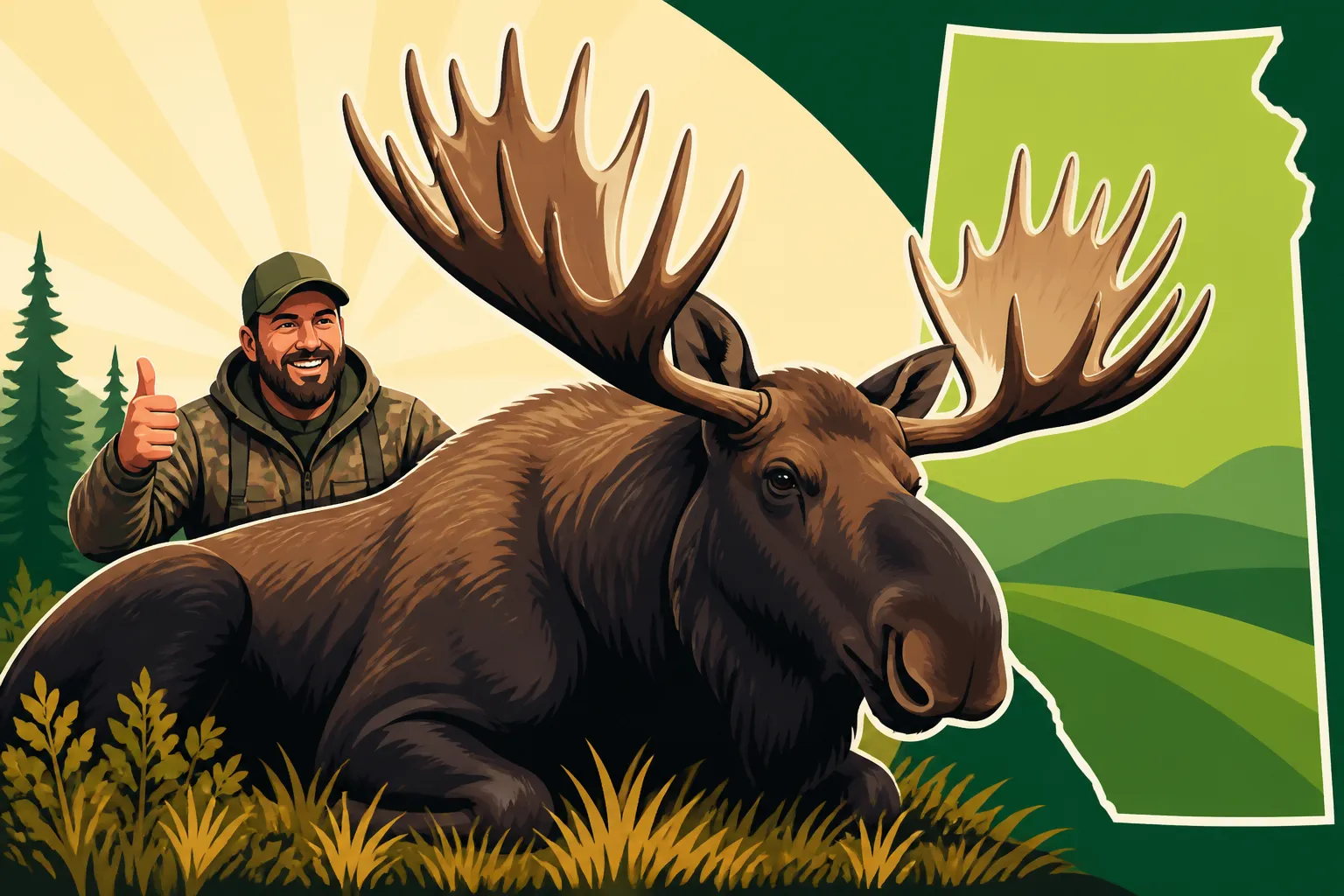
Every hunter who dreams of big game in Saskatchewan has a picture in their mind: that massive bull moose, antlers spreading wider than a pickup truck, an undisputed monarch of the northern bush. Finding reliable information about the largest moose ever taken in this province can feel like chasing a ghost, often lost in old campfire tales and grainy photos. This comprehensive guide will cut through the lore to explore the incredible dimensions of Saskatchewan's record-setting moose, what makes our province a haven for these giants, and what it truly takes to pursue such an awe-inspiring animal.
The Legend of Saskatchewan's Giant Moose
Saskatchewan holds a special place in the hearts of moose hunters, and for good reason. Our diverse landscape, stretching from the rich farmlands and aspen parkland of the south all the way up to the vast, wild boreal forest, provides an exceptional environment for moose to thrive and grow to gargantuan sizes. It's not just a matter of luck; specific factors contribute to why some of the biggest bulls on the continent call Saskatchewan home. The sheer immensity of these animals, especially those that reach an age where their antlers are truly magnificent, is something that has to be seen to be believed.
Imagine stumbling upon a bull whose antlers measure over 60 inches wide, a heavy, dark rack that seems to defy gravity. This isn't just a fantasy; it's a very real possibility in Saskatchewan. While an average mature bull moose might have a respectable 40 to 50-inch spread, the true giants push far beyond that, developing incredible palmation and point counts that captivate anyone fortunate enough to lay eyes on them. These record-book animals are a testament to the wildness and richness of our province's ecosystems.
Habitat and Nutrition: The Fuel for Giants
The foundation for growing a truly massive moose lies in its habitat and the quality of nutrition it receives throughout its life. Saskatchewan offers a mosaic of prime moose country. In the northern reaches, the dense boreal forest provides vast expanses of willow, birch, and aspen browse, rich aquatic vegetation from countless lakes and muskegs, and ample solitude. Further south, in the Hunting Saskatchewan's Forest Fringe and even some surprising farmland zones, moose benefit from agricultural crops that offer a high-energy diet, especially during the lean winter months. This abundant, high-quality forage, coupled with clean water sources, directly translates into exceptional body size and incredible antler growth. A healthy diet allows a bull to allocate maximum resources to antler development year after year, eventually leading to those legendary racks.
Think of a moose browsing on the succulent new growth of willows along a beaver pond in the spring, or foraging on pea fields after harvest in the fall. This variety and abundance ensure a consistent energy supply. The undisturbed wilderness areas mean less stress and more opportunity for these animals to focus on feeding and resting, contributing to their overall health and longevity. It's a complex equation, but rich, varied habitat is undeniably the biggest piece of the puzzle.
Genetics and Age: The Unseen Contributors
Beyond prime habitat, genetics and age are crucial components in the making of a record-book moose. Saskatchewan's moose populations carry strong genetic lines for large body size and impressive antler configuration. This inherent potential, passed down through generations, lays the groundwork for what a bull could become. However, even with the best genetics, a moose needs time – many years, in fact – to reach its peak antler development. It's not uncommon for the truly giant bulls to be seven, eight, or even ten years old or more. Each year, as they mature, their antlers grow larger and heavier, adding mass and points.
Effective herd management practices, which often aim for a healthy age structure within the moose population, indirectly support the presence of these older, larger bulls. By allowing a good proportion of bulls to survive beyond their younger years, the province ensures that some individuals have the chance to express their full genetic potential. This combination of robust genetics, sufficient age, and incredible nutrition creates the perfect storm for growing the biggest moose ever taken in Saskatchewan, and continues to produce trophy animals for dedicated hunters.
Unveiling Saskatchewan's Top Moose Record
When we talk about "The Biggest Moose Ever Taken in Saskatchewan," one name immediately comes to mind for many hunters familiar with the record books: a phenomenal non-typical bull harvested in 1999 by a hunter named Ricky Delorme. This incredible animal etched its place in hunting history, not just for its immense size, but for its truly unique and spectacular antler configuration that left scorers in awe. It's the kind of story that fuels dreams and confirms the legendary status of Saskatchewan as a destination for moose hunters.
Delorme's bull, taken in Zone 76, scored an astonishing 246 6/8 points, securing its position as one of the largest non-typical Shiras moose ever recorded globally by Boone & Crockett. While specific details about the hunt often remain private or passed down through word of mouth, the sheer scale of the rack is what captured the hunting world's attention. It wasn't just wide; it had incredible mass, palmation, and a myriad of non-typical points that added significantly to its score, showcasing the wild and unpredictable beauty of nature's design.
The Record-Setting Bull: A Closer Look
The Delorme moose was truly a spectacle. Its antlers were not just massive in spread, but incredibly heavy and dense, with deeply palmed main beams that extended out in impressive fashion. What truly set this bull apart were the numerous non-typical points and unique formations that adorned its rack, adding to its overall character and immense score. While specific measurements like exact spread aren't always publicized in the same way as the final score, imagine a rack with palmation so wide and thick it could barely fit through a standard doorway, laden with numerous tines and drop points that defy typical symmetry.
This bull's score of 246 6/8 by the Boone & Crockett Club is a testament to its exceptional qualities. The scoring system carefully measures every aspect of the antlers, from beam length and circumference to the width and length of the palms, and the number and length of all tines, whether typical or non-typical. To achieve such a high score, a bull must have not only impressive primary growth but also those unique, character-adding features that push it into the upper echelons of trophy status. It represents a lifetime of growth, good health, and perhaps, a touch of genetic magic.
The Hunter's Perspective: A Moment in Time
For Ricky Delorme, encountering and successfully harvesting such a magnificent animal would have been the hunt of a lifetime, a moment etched forever in memory. Imagine the adrenaline, the awe, the sheer disbelief upon seeing such a colossal moose emerge from the Saskatchewan bush. Hunts for these truly giant bulls are rarely easy; they are often the product of immense patience, deep knowledge of moose behaviour, and a good deal of fortune. The moment of truth, when everything aligns and you're presented with a shot at an animal of this caliber, is what every big game hunter dreams of.
The process of recovering, field dressing, and transporting an animal that might What a Bull Moose Weighs in the North well over a thousand pounds, especially with a massive rack, is a monumental task. It speaks to the dedication and physical effort involved in hunting these northern giants. Beyond the score and the record, there’s the profound respect for the animal itself, a majestic creature that roamed the Saskatchewan wilderness for years, living a wild existence before becoming a part of hunting history. It's a memory that undoubtedly transcends the antlers themselves.
Understanding Moose Scoring and Records
For those new to the world of trophy hunting, the concept of "scoring" an animal can seem a bit mysterious. It's not just about how wide the antlers are, although spread is certainly a factor that catches the eye. Official scoring systems, like those used by Boone & Crockett or Pope & Young, provide a standardized, objective method to measure the true quality and size of a trophy animal's antlers. This allows hunters to compare their successes and appreciate the truly exceptional specimens that nature produces, like the biggest moose ever taken in Saskatchewan. Understanding these systems is key to appreciating the Delorme bull's monumental achievement.
The scoring process involves a series of precise measurements, taken with official tapes and calipers, to quantify different aspects of the antlers. These include the length of the main beams, the circumference at various points along the beams (for mass), the length of all tines, and the width and length of the palmated sections. These measurements are then summed up, and deductions for lack of symmetry (in typical scoring) are applied to arrive at a final score. This meticulous process ensures fairness and consistency across all entries.
Typical vs. Non-Typical: What's the Difference?
The distinction between "typical" and "non-typical" is fundamental in trophy scoring and directly applies to our record-setting moose.
- Typical antlers are generally symmetrical, with matching main beams and points that mirror each other from one side to the other. The ideal typical rack is perfectly balanced, with all points growing upwards from the main beam in a uniform fashion. When scoring a typical rack, deductions are made for any significant differences in length or shape between corresponding points on each side, or for any abnormal points that don't fit the symmetrical pattern.
- Non-typical antlers, on the other hand, are characterized by asymmetry and abnormal points. These can include drop tines, sticker points, clusters of points, or any growth that deviates from the clean, symmetrical pattern of a typical rack. For non-typical scoring, these abnormal points are actually added to the total score, rather than being deducted. This is why the Delorme bull, with its unique and complex antler structure, shone in the non-typical category, where its extraordinary characteristics contributed to its record score.
The Scoring Process: More Than Just Spread
While a massive antler spread is often the first thing people notice on a big bull, the official scoring process digs much deeper. It’s a detailed mathematical exercise performed by certified scorers. Here’s a brief breakdown of what's involved:
The main measurements include the length of each main beam, typically measured along the outer curve. Next, the circumference of the main beams is measured at several predetermined points to account for mass – a critical factor in a high score. Then, all points (tines) are measured from their base to their tip. For moose, the extensive palmation is also measured for both its width and length. For a typical rack, symmetry is paramount, and any non-symmetrical features result in deductions. For a non-typical rack, these "abnormal" points are actually measured and added to the score, rewarding unique character and growth. The final score is often presented as a "net score," particularly for typical entries, after all deductions are applied. For non-typical, it's often more about the raw total including all those wild, unique growths.
It’s an intricate system that truly captures the grandeur of an animal like Saskatchewan's record moose. Many hunters use platforms like GoHunt for research, often looking at these scoring categories to understand the potential of a zone or the species they pursue.
| Scoring Category | Typical Antlers | Non-Typical Antlers |
|---|---|---|
| Symmetry Goal | High symmetry, matching sides | Asymmetry is common and often rewarded |
| Abnormal Points | Deducted from score (if significant) | Measured and added to the score |
| Core Value | Clean, balanced, classic antler form | Unique, complex, and irregular growth |
| Focus Measurements | Beam length, circumference, symmetrical tines, palm size | All typical measurements + length of abnormal points |
| Ideal Appearance | Evenly matched, graceful curves, uniform points | Wild, gnarly, character-rich, often wider spreads |
The Pursuit of a Trophy Moose in Saskatchewan
Dreaming of a trophy moose like the Delorme bull is one thing; actually pursuing one in Saskatchewan is a lifelong endeavor that demands patience, persistence, and a deep respect for the wild. It’s a hunt unlike any other, often taking place in rugged terrain and requiring significant effort. But the rewards, whether it’s a record-book bull or simply the experience of spending time in some of Canada's most pristine wilderness, are immeasurable.
Saskatchewan offers exceptional moose hunting opportunities, but the challenge and exclusivity only add to the appeal of these magnificent animals. Unlike some species, trophy moose are not easily found or taken. They demand a commitment that pushes hunters to their limits and truly connects them with the natural world. From navigating the complex Saskatchewan's Big Game Draw to trekking through dense boreal forest, every step is part of the journey towards that potential encounter with a giant.
Securing a Moose Tag: A Journey of Patience
The first, and often most challenging, step in pursuing a trophy moose in Saskatchewan is securing a tag. Moose tags, especially for antlered animals, are primarily allocated through the Saskatchewan's Big Game Draw. This means it’s not as simple as walking into a licence vendor and buying one. Hunters must apply annually, often building up priority points over several years to increase their odds of drawing a coveted tag in a prime zone. The specific zones and their draw odds vary, with some highly sought-after areas requiring many years of applications to be successful.
It’s truly a journey of patience and strategic planning. You'll need to research which zones have historically produced larger bulls and which have better draw odds for a resident tag. For non-residents, the path is generally through an outfitter, who holds allocated tags for specific zones. Regardless of your resident status, the takeaway is clear: don't expect instant gratification. Start applying, understand the process, and prepare for the long game.
Prime Moose Country: Where Giants Roam
To find a truly giant bull, you need to be in prime moose country. Saskatchewan offers several distinct regions where moose thrive, and consequently, where the biggest bulls are often found. The most renowned areas include the vast expanses of the northern boreal forest, particularly the Moose in Saskatchewan's Farmland and Forest where thick cover, abundant water, and diverse browse create ideal conditions. Areas within the Hunting Saskatchewan's Boreal North and the forest fringe zones, where the boreal forest transitions into aspen parkland and agriculture, are also incredibly productive.
Think of zones around Hudson Bay, Nipawin, and even further north around La Ronge, which are historically strong for moose. These areas provide the necessary solitude for moose to grow old and the rich forage that fuels massive antler development. Understanding these ecosystems, whether you're Hunting Moose on a Saskatchewan Cutline or wading through a muskeg, is crucial. Scouting, both in person and using satellite imagery, becomes an invaluable tool to identify potential hotspots, feeding areas, and bedding cover.
Strategies for Trophy Moose Hunting
Once you have a tag in hand and a general area in mind, the real work of trophy moose hunting begins. Unlike deer, moose are often found in denser cover, making spot-and-stalk challenging, though not impossible, especially in more open forest fringe areas or burns. One of the most effective strategies for Calling a Bull Moose in the Rut during the peak of the When Saskatchewan's Moose Rut Peaks in late September and early October. Mimicking the sounds of a cow moose in estrus, or the grunts of a challenging bull, can bring a curious or aggressive bull right into your lap.
Still-hunting through dense timber, especially around water sources, beaver ponds, and willow thickets, is another effective tactic. Move slowly, quietly, and use your binoculars constantly. Focus on areas where moose sign is abundant – fresh tracks, rubs, and droppings. Patience is paramount. These animals are smart, and a big bull has survived many hunting seasons by being elusive. The ultimate reward of harvesting a trophy moose is not just the size of the antlers, but the immense satisfaction of an ethical hunt, an unforgettable wilderness experience, and the challenge of tasks like Quartering a Moose Alone in the Bush.
Disclaimer
This article is for general informational purposes only and does not constitute professional advice. Laws, prices and regulations vary by location and change over time. Consult a qualified professional for guidance on your specific situation.