Telling a Ruffed Grouse From a Spruce Grouse
There’s nothing quite like the thrill of upland bird hunting in Saskatchewan, is there? The crisp air, the rustle of leaves underfoot, and that explosive flush that gets your heart pounding. But for many hunters, especially those new to chasing grouse or venturing into different parts of our beautiful province, telling a ruffed grouse from a spruce grouse can be a real head-scratcher. Both are "bush birds," but they live in distinct worlds and carry unique characteristics. This guide will help you confidently identify whether you're looking at a ruffed grouse or its spruce-dwelling cousin, making you a more knowledgeable and successful hunter.
The Ruffed Grouse: King of the Bush Edges
Ah, the ruffed grouse! This is likely the bird most hunters picture when they think of prairie province upland hunting. They’re common, challenging, and provide some fantastic sport. But don’t let their widespread presence fool you; they have specific preferences that make them identifiable.
Habitat and Behavior of the Ruffed Grouse
Ruffed grouse, often affectionately called "partridge" by many locals, are creatures of the edge. They thrive where different types of cover meet, especially in young forests, aspen parklands, and dense willow thickets bordering fields. Think about those areas where the agricultural land gives way to a mix of trembling aspen, poplar bluffs, and brushy draws – that’s prime ruffed grouse country. In Saskatchewan, you’ll find them plentiful throughout the aspen parkland belt and into the southern reaches of the boreal forest fringe. Hunting Saskatchewan's Aspen Parkland Bluffs is often a great way to find them. They adore areas with dense undergrowth, providing both cover from predators and a bounty of food sources like buds, catkins, and berries.
Their behavior is often what makes them so exciting (and sometimes frustrating!) to hunt. A ruffed grouse is known for its explosive flush. You can be walking quietly through what seems like empty bush, and suddenly, a bird erupts from under your feet or a nearby thicket with a thunderous whirr of wings. This startling take-off is a primary defense mechanism, designed to disorient predators and hunters alike. They typically fly fast and low through the trees, often putting a trunk between themselves and you in a blink. You’ll also notice them frequently walking on the ground, often along old logging roads, game trails, or near a beaver dam crossing, picking at vegetation.
Physical Characteristics of the Ruffed Grouse
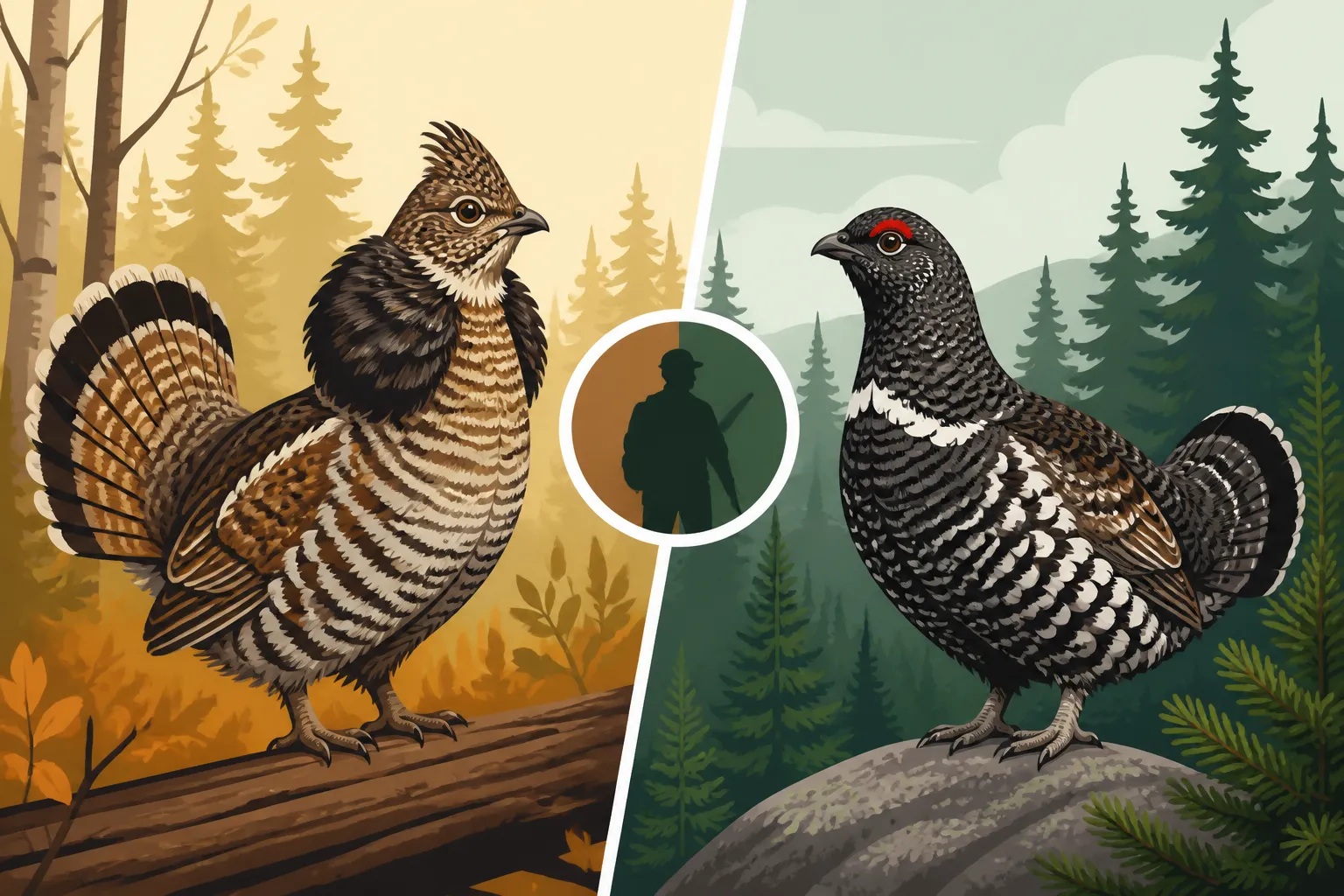
When you finally get a good look at a ruffed grouse, perhaps after a successful shot or simply observing one from a distance, you’ll notice a few key features that set it apart. They are medium-sized game birds, roughly the size of a pigeon, with a plump body and a relatively small head. Their plumage is a beautiful, intricate pattern of browns, greys, and blacks, providing superb camouflage against tree bark and fallen leaves. One of their most distinctive features is the fan-shaped tail, which they often raise and spread during displays, especially the males during their drumming ritual. This tail is typically banded with a broad, dark subterminal band.
Another dead giveaway is, of course, the "ruffs" themselves – iridescent black or dark brown feathers on either side of the neck. These ruffs are typically flared out during courtship displays or when the bird feels threatened, making the male look much larger than he actually is. You’ll also notice two distinct colour phases in ruffed grouse: a grey phase, more common in northern regions, and a red (or rufous) phase, more often found further south. Both phases have the characteristic ruffs and banded tail, so don’t let the colour variation confuse you! Their legs are feathered right down to their feet, which is a common adaptation for ground-dwelling birds in cold climates, helping them navigate snow and icy conditions.
Vocalizations and Sounds
Beyond their visual cues, the sounds a ruffed grouse makes are also incredibly distinct. The most famous, of course, is the drumming sound produced by the male. This isn't a vocalization but rather a non-vocal display made by rapidly beating his wings against the air to create a low-frequency vacuum. It sounds much like a distant, old-fashioned gasoline engine starting up slowly and then speeding into a rapid crescendo: thump-thump-thump-thump-thump-thump-thump-thump-thump-thump. This drumming serves to attract females and mark territory, and it’s a sound that resonates deeply with anyone who loves the bush. You can often hear it echoing through the woods, especially in the spring and fall.
Beyond the drumming, ruffed grouse have a few other calls. When flushed, they rarely vocalize, letting the explosion of their wings do all the talking. However, if startled on the ground or if a hen is protecting chicks, she might emit a series of soft clucking sounds or a sharp cack-cack-cack alarm call. These softer sounds are much less common for hunters to hear, as most interactions involve that sudden, breathtaking flush. Listening for the drumming, especially when you are out scouting or Hunting a Poplar Bluff at First Light, can be a great way to locate birds and get a feel for their presence in a particular area.
The Spruce Grouse: Northern Forest Dweller
Now, let's venture deeper into the northern woods of Saskatchewan to meet the spruce grouse. This bird is a different beast altogether, perfectly adapted to a more secluded, coniferous environment.
Habitat and Behavior of the Spruce Grouse
Spruce grouse, sometimes called "fool hens" due to their notorious lack of fear, are inhabitants of the dense boreal forest. Their preferred haunts are thick stands of black spruce, jack pine, and mixed coniferous forests. They don't typically stray far from these evergreen domains, which provide both shelter and a year-round food supply in the form of conifer needles. If you’re hunting in the southern parkland or farmland edges, you're unlikely to encounter a spruce grouse. You really need to be up north, exploring areas like the Nipawin Provincial Forest or the Meadow Lake Provincial Forest. Hunting Saskatchewan's Boreal North is where these birds truly call home.
Their behavior is strikingly different from that of a ruffed grouse. While ruffed grouse are explosive fliers, spruce grouse are known for their calm, almost indifferent demeanor. When approached, they will often simply freeze, relying on their incredible camouflage to blend into the shadows and needles. It's not uncommon to walk right past a spruce grouse perched on a low branch or feeding on the ground, only noticing it when you're almost on top of it. This lack of a frantic flush is why they earned the "fool hen" moniker; they often allow hunters to get incredibly close, sometimes even walking right up to them. When they do fly, their flight is less powerful and direct than a ruffed grouse, often short and hesitant, allowing them to disappear back into the dense cover quickly.
Physical Characteristics of the Spruce Grouse
A quick glance at a spruce grouse will reveal a darker, more sombre plumage compared to the mottled browns of the ruffed grouse. They are generally slightly smaller than ruffed grouse, but their stocky build can make them appear similar in size. The males, in particular, are quite striking. They have predominantly dark, sooty-grey bodies with white barring on the flanks and belly, and a distinct black throat and chest patch outlined in white. A key identifying feature for males is the bright red comb or "eyebrow" above each eye, which becomes more prominent during the breeding season.
The tail of a spruce grouse is typically square-tipped, not fan-shaped like the ruffed grouse, and usually dark with a rusty-brown band at the tip, though this can vary. Hens are generally lighter and more cryptically coloured, with mottled brown and black plumage that helps them blend perfectly with the forest floor and undergrowth. Both sexes have feathered legs like the ruffed grouse, but their overall darker, more uniform appearance and the male's distinct red comb are reliable identifiers. When you are out Hunting Spruce Grouse in Black Spruce, pay close attention to the details of the bird's tail and facial markings; they are often the easiest way to make a positive ID.
Unique Traits and Plumage
The plumage of the spruce grouse isn't just about colour; it’s a masterclass in camouflage tailored to their specific environment. The dark, heavily barred feathers mimic the shadows and broken light of dense conifer stands, making them incredibly difficult to spot, even when you know they are there. This cryptic colouration is a primary reason for their "foolish" behavior; they simply trust their ability to disappear into the background.
Their diet is also a unique trait that heavily influences their habitat selection. Unlike the varied diet of a ruffed grouse, spruce grouse are primarily conifer specialists. Spruce and pine needles make up a significant portion of their diet, especially in winter. This gives their meat a slightly resinous, piney flavour that some hunters find distinct. While ruffed grouse will eat needles, it's a minor part of their diet compared to the spruce grouse. This dietary preference means they rarely venture far from their dense evergreen homes, making habitat the single most reliable clue for identification. If you find a grouse thriving deep within a black spruce bog, you can be pretty confident it's a spruce grouse.
Key Differences for Field Identification
Distinguishing between a ruffed grouse and a spruce grouse in the field, especially during a quick flush, can be tough. But with a bit of practice and by knowing what to look for, you’ll be making accurate calls in no time.
Visual Cues at a Glance
The easiest way to tell these birds apart at a glance involves focusing on a few key visual characteristics. Size and overall colour are a good start, but the tail and the male's head are the most reliable indicators.
| Feature | Ruffed Grouse | Spruce Grouse (Male) | Spruce Grouse (Female) |
|---|---|---|---|
| Tail Shape | Fan-shaped, broad dark subterminal band | Square-tipped, dark with rusty-brown tip band | Square-tipped, mottled brown and black |
| Neck Ruff | Prominent black or dark brown ruffs on neck | Absent | Absent |
| Head (Male) | No distinct red comb | Bright red comb/eyebrow above eyes | No distinct red comb |
| Overall Coloration | Mottled brown/grey, camouflaged for deciduous | Dark sooty-grey with white barring, cryptic | Mottled brown/black, cryptic |
| Behavior on Flush | Explosive, loud wing beat, fast direct flight | Often freezes, short hesitant flight if flushed, less wary | Often freezes, short hesitant flight if flushed, less wary |
| Habitat Preference | Aspen parkland, bush edges, deciduous/mixed | Dense coniferous forests (spruce, jack pine) | Dense coniferous forests (spruce, jack pine) |
Looking at the table above, the tail is a huge indicator. If you see that classic fan with a dark band, it’s a ruffed. If it’s square with a reddish tip, you're likely looking at a spruce. And for the males, that fiery red eyebrow on the spruce grouse is unmistakable. This is why having some good optics on your hunt, or at least a quick, clear view, can be so helpful. Many hunters use mapping applications like GoHunt to scout areas beforehand, looking for the specific habitat types that typically hold one species or the other. This kind of preparation can really sharpen your in-field identification skills.
Habitat as a Primary Indicator
Honestly, more often than not, the habitat you're in will tell you which grouse species you're likely to encounter before you even see the bird. This is perhaps the most critical distinction to grasp. If you're walking through a poplar bluff, a willow run, or a mixed forest edge that borders farmland, especially in the central parts of Saskatchewan, you are almost certainly in ruffed grouse territory. These areas provide the diverse food sources and thick deciduous cover that ruffed grouse rely on. Hunting a Willow Run for Whitetails might also produce a few ruffed grouse flushes.
Conversely, if you've ventured deep into a solid stand of black spruce or jack pine, where the ground is carpeted with needles and the undergrowth is sparse beneath a dense canopy, then any grouse you flush or spot will almost certainly be a spruce grouse. They are intrinsically linked to these coniferous environments. It's rare to find a spruce grouse far from its preferred evergreen habitat, and equally rare to find a ruffed grouse deep within a pure coniferous stand without any deciduous mix nearby. So, before you even raise your shotgun, take a moment to look around you and identify the dominant tree species. It’s often the best clue you’ll get.
Behavioral Tells
Beyond appearance and habitat, the way these birds behave when encountered is another powerful diagnostic tool. The "fool hen" reputation of the spruce grouse isn't just a legend; it's a real behavioral trait. When you come across a spruce grouse, it's not uncommon for it to just sit there, maybe turning its head slowly to watch you, but generally unwilling to flush until you're practically stepping on it. This can be quite unnerving if you’re used to the frantic escape of other upland birds. If a bird flushes reluctantly and only flies a short distance before landing back in a dense tree, you’ve likely found a spruce grouse.
Ruffed grouse, on the other hand, are the masters of the surprise escape. That explosive flush, often accompanied by a zig-zag flight through the densest cover imaginable, is their signature move. If you're walking along a Hunting a Saskatchewan Bush Bluff or an old logging trail and a bird bursts out of the undergrowth with a heart-stopping racket, sending leaves flying and making your adrenaline surge, you can be pretty sure it was a ruffed grouse. These distinct behavioral patterns, once recognized, become invaluable in helping you identify which species you're pursuing in Saskatchewan's diverse hunting grounds.
Hunting Considerations and Conservation
Understanding the differences between ruffed and spruce grouse isn't just about identification; it also informs your hunting strategy and helps you appreciate these unique birds.
Hunting Strategy Differences
Given their distinct habitats and behaviors, your approach to hunting ruffed grouse will differ significantly from how you’d hunt spruce grouse. For ruffed grouse, it's often a game of anticipating the flush and quick reaction time. You'll want to cover ground methodically, working edges, thickets, and draws, always ready for that sudden explosion. Using a good pointing dog can be invaluable here, as they can pinpoint a bird before it flushes, giving you a precious extra second to prepare. Ruffed Grouse Hunting Saskatchewan's Bush Trails often involves walking old trails and cutting through dense regeneration.
Spruce grouse hunting, conversely, is often more akin to a slow, deliberate still-hunt or even a spot-and-stalk approach. Since they are less prone to flushing, a keen eye and patience are your best tools. You might walk slowly through dense stands of pine or spruce, carefully scanning branches and the forest floor. When you spot one, you can often approach quite closely, allowing for a more deliberate shot. Some hunters even describe it as almost too easy, which is part of the reason for their "fool hen" reputation. It's a much quieter, slower hunt, demanding different skills than the fast-paced action of ruffed grouse. This is where patience and observation really pay off.
Seasons and Limits in Saskatchewan
Before heading out for any upland bird hunting, it's absolutely crucial to familiarize yourself with Saskatchewan's current hunting regulations, which can change from year to year. Both ruffed grouse and spruce grouse fall under the umbrella of upland game birds, but their specific season dates and bag limits might vary depending on the Wildlife Management Zone (WMZ) you are hunting in. You can't just assume what applies in the parkland also applies way up north. This is why resources like the provincial hunting guide, often found online or through licensing vendors, are your best friend.
Always consult the official Saskatchewan hunting guide for the most up-to-date information on Saskatchewan Upland Bird Seasons and limits. While these species are generally widespread and populations tend to be healthy, regulations are put in place for a reason – to ensure sustainable hunting practices. A key tip is to always know your WMZ. You can find maps and detailed information on the province's website or through reputable hunting apps like GoHunt, which can help you understand the specific rules for your area. Don't rely on memory or hearsay; verify the facts before you even step foot in the bush.
Respecting the Resource
Whether you're targeting ruffed grouse or spruce grouse, remember that ethical hunting practices and conservation are paramount. We hunters are the first line of defense for our wildlife resources. This means more than just following the regulations on seasons and limits; it's about respectful conduct in the field. Always be sure of your target and what's beyond it, practice safe firearm handling, and ensure a quick, humane harvest.
Beyond the shot, proper game care is also vital. In Saskatchewan, we’re blessed with abundant wildlife, and part of our responsibility is to ensure that every animal harvested is utilized to its fullest. This includes field dressing your birds promptly, especially on warmer days, and ensuring the meat is cooled quickly. Learning about the birds’ habitats, understanding population trends, and respecting the land are all part of being a responsible hunter. By doing so, we ensure that the thrill of chasing ruffed and spruce grouse remains a cherished tradition for generations to come in Saskatchewan’s wild spaces. It’s all about maintaining that balance and appreciating the opportunity to connect with nature.
Disclaimer
This article is for general informational purposes only and does not constitute professional advice. Laws, prices and regulations vary by location and change over time. Consult a qualified professional for guidance on your specific situation.