Hunting the Porcupine Provincial Forest
For hunters who dream of truly wild spaces, the vastness of Saskatchewan's northern forests can feel both incredibly alluring and utterly daunting. The Porcupine Provincial Forest is one of those places – a sprawling expanse of boreal wilderness that can be intimidating to even seasoned hunters, presenting challenges in navigation, access, and finding game. This guide aims to break down the complexities of hunting this incredible region, offering practical advice and strategies to help you successfully plan and execute your adventure in the Porcupine.
Understanding the Porcupine Provincial Forest Landscape
The Porcupine Provincial Forest is a significant natural area in east-central Saskatchewan, a prime example of the transitional zone where the southern boreal forest meets the aspen parkland. This unique blend of ecosystems creates a rich and diverse habitat, but also a complex one that requires a deep understanding to hunt effectively. It's not just open timber; it's a tapestry of varied terrain.
Geography and Habitat Types
Imagine mile after mile of dense timber, punctuated by vast wetlands, meandering creeks, and hidden sloughs. This is the reality of the Porcupine. You'll encounter towering black spruce, balsam fir, and jack pine stands, mixed with aspen and birch in the more productive areas. The ground beneath can range from relatively dry, mossy forest floor to knee-deep muskeg that sucks at your boots with every step. These expansive wetlands and low-lying areas are critical for moose, offering both forage and refuge, but they are also incredibly challenging to traverse. The higher, drier ridges and older cutblocks tend to hold more deer and bear, offering pockets of mixed forest where browse is plentiful. The sheer density of the vegetation means visibility is often limited to mere yards, making close-quarters hunting the norm rather than the exception. Hunting Saskatchewan's Boreal Forest Fringe dives deeper into these unique transitional areas.
Key Game Species and Their Habitat Preferences
The Porcupine Provincial Forest is a big game hunter's paradise, home to a robust population of several sought-after species. Understanding where each animal prefers to live within this varied landscape is crucial for success.
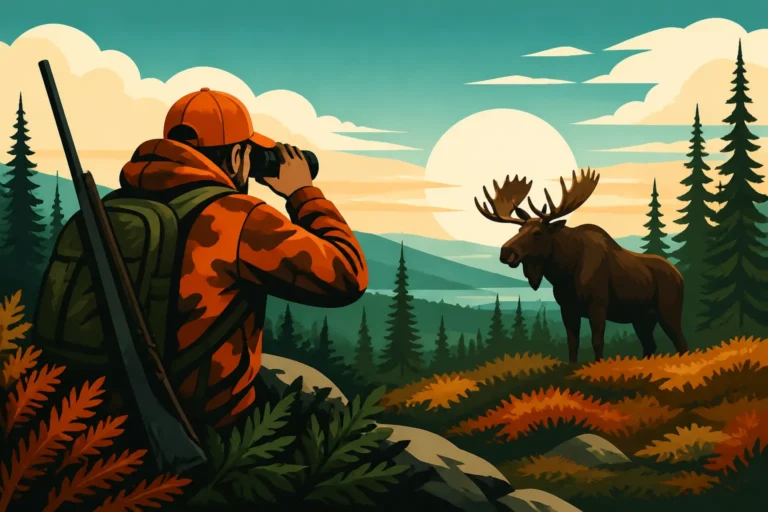
- Moose: This is arguably the king of the Porcupine, with significant populations thriving in the wet, boggy areas. Moose prefer habitat close to water, where they can browse on willows, aquatic vegetation, and young aspen. Look for them along the edges of swamps, around small lakes and potholes, and especially in areas with recent clearcuts that provide an abundance of new growth. Moose Hunting Saskatchewan's Farmland and Forest provides more insight into their general patterns.
- Black Bear: The Porcupine offers excellent black bear hunting, especially during the spring season. Bears are generalists and can be found throughout the forest, but they tend to concentrate in areas with good food sources. Look for them in younger forests with berry patches (saskatoon, chokecherry, highbush cranberry), along old logging roads where clover might be growing, and near marshy areas where they can find sedges and other early spring greens. Their diet is varied, so understanding seasonal food availability is key.
- White-tailed Deer: While not as numerous as in the southern parkland zones, the Porcupine does hold a population of impressive whitetail deer, particularly in the forest fringe areas and around agricultural clearings on the edges of the forest. These deer will utilize the dense cover for security and bedding, venturing out to browse on young saplings, shrubs, and any available agricultural crops if they are present. Focus on transition zones between thick timber and more open areas, or along the edges of old burn sites.
- Elk: Though less common than the other big game species, pockets of elk can be found in certain parts of the Porcupine Provincial Forest, often in areas bordering the agricultural belt or near larger clearings that offer a mix of forest and grassland. They are highly mobile and can be challenging to locate consistently.
- Upland Birds: The mixed forest and dense undergrowth also provide fantastic opportunities for upland bird hunting. Ruffed grouse are plentiful along old logging trails and clearings, while spruce grouse prefer the denser conifer stands. Ruffed Grouse Hunting Saskatchewan's Bush Trails offers more details on pursuing these forest birds.
Navigating and Accessing the Forest
One of the biggest hurdles for any hunter venturing into the Porcupine Provincial Forest is simply getting around. This isn't a place for casual strolls; it demands careful planning, robust equipment, and a healthy respect for its vastness. The sheer scale and remoteness can quickly turn a minor misstep into a major problem if you're not prepared.
Road Networks and Trail Systems
Access into the heart of the Porcupine Provincial Forest is primarily via a network of logging roads, fire breaks, and older seismic lines. These aren't always well-maintained; some can be deeply rutted, muddy, or even overgrown, especially further off the main arteries. A reliable four-wheel-drive truck with good clearance is often essential for reaching many hunting spots. Even then, an ATV or UTV becomes almost a necessity for penetrating deeper into the bush, where vehicle access ends. These smaller trails, or "cutlines," can sometimes lead to productive areas that see less pressure, but they also require careful navigation. Always be mindful of active logging operations, which can sometimes close roads or make them impassable. Additionally, adverse weather, particularly heavy rain or early snow, can quickly turn seemingly solid roads into impassable quagmires, potentially stranding hunters. It's vital to have a Winter Truck Kit for a Saskatchewan Hunt even in fall, as conditions can change rapidly. Remember, Vehicle Rules on Saskatchewan Crown Land must always be followed.
Using Mapping Tools for Success
In a landscape as featureless and dense as much of the Porcupine Provincial Forest, traditional paper maps are a good backup, but digital mapping tools are your primary lifeline. Getting turned around in thick bush is a very real danger, and relying solely on memory or instinct is a recipe for trouble.
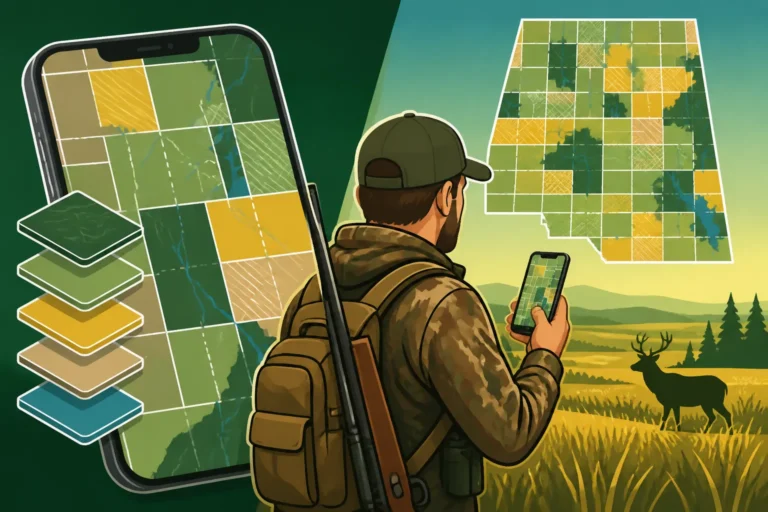
This is where applications like onX Hunt truly shine. onX Hunt provides invaluable layers that show Crown land boundaries, private property lines (crucial for staying legal), old trails, logging roads, and even topographical features that might not be obvious on the ground. You can mark waypoints for your truck, stand locations, game sightings, or blood trails, giving you a clear breadcrumb trail back to safety. The ability to download maps for offline use is paramount, as cell service is non-existent in many remote parts of the Porcupine. Similarly, GoHunt offers robust mapping capabilities that allow hunters to scout areas virtually before ever stepping foot in the forest. You can study satellite imagery, identify potential game funnels, bedding areas, and water sources, and plan your approach with far greater precision than ever before possible. Using these tools to identify access points, navigable trails, and potential areas of interest (like old clearcuts or large muskegs) is critical. Reading Saskatchewan Crown Land Layers on onX offers a more detailed look at maximizing these digital tools. Before you head out, spend hours Scouting With Satellite Imagery in Saskatchewan to truly familiarize yourself with the terrain from a bird's eye view.
Strategies for Hunting Success in Dense Cover
Hunting the Porcupine Provincial Forest is less about long-range shooting and more about patience, stealth, and adapting to the close-quarters environment. Visibility is limited, and encounters can be sudden and intense. It's a different rhythm than prairie hunting, demanding a more deliberate and observant approach.
Still-Hunting and Stand Hunting Tactics
Given the dense nature of the cover, still-hunting is an incredibly effective, albeit physically demanding, strategy. This involves moving extremely slowly, taking only a few steps at a time, and then pausing to scan, listen, and observe. You're not just looking for an entire animal; you're looking for an antler tine, a flick of an ear, a patch of hide, or the subtle movement of a branch. Pay close attention to wind direction, constantly checking it to ensure your scent isn't being carried ahead to alert game. Focus on natural funnels – narrow strips of cover between two open areas, creek bottoms, or the edges of dense swamps. These are pathways animals naturally use.
Stand hunting, while perhaps more common in agricultural areas, can also be very productive in the Porcupine, particularly for species like whitetail deer and black bear. The key is to find those natural pinch points or food sources that concentrate animal movement. Look for active trails, rubs, and scrapes, or areas with abundant browse. Placing a portable treestand or ground blind along a moose trail leading to a water source, or overlooking a prime feeding area for deer, can greatly increase your odds. Just remember that scent control is even more critical when animals are likely to pass within close range in thick cover.
Calling and Baiting Considerations
Calling can be a highly effective tactic in the Porcupine, especially for moose. The dense forest absorbs sound, making it challenging for bulls to pinpoint the exact location of a cow call, which can sometimes make them bolder in their approach. Mastering various cow and bull calls, from soft mews to aggressive grunts, can draw an interested bull out of the thickest cover. For black bears, baiting is a common and highly effective method, and it's permitted in Saskatchewan. Setting up a bait site requires careful consideration of location, adherence to regulations, and consistent maintenance. The goal is to draw bears into a predictable location, allowing for a responsible shot. Setting a Bear Bait Site in Saskatchewan provides comprehensive details on this. While less prominent for whitetails in this environment, a well-timed grunt call or rattle can sometimes lure an inquisitive buck, especially during the rut. If you're planning to call for moose, check out Calling a Bull Moose in the Rut for more specific techniques.
Safety and Preparedness in the Bush
Hunting deep in the Porcupine Provincial Forest means you are truly in remote wilderness, often miles from any roads or help. Safety is not a suggestion; it's a necessity. Navigation is paramount: always carry a reliable GPS unit with extra batteries (and your onX Hunt maps downloaded!), a compass, and a paper map as a backup. Share your hunting plan with someone reliable, including your expected return time and general hunting area.
Beyond navigation, a comprehensive survival kit is essential. This should include fire-starting materials, a first-aid kit, emergency shelter, sufficient water or purification tablets, high-energy food, and a reliable communication device like a satellite messenger or two-way radio (cell phones are unlikely to work). The weather in Saskatchewan can change dramatically and quickly, so dress in layers and be prepared for rain, snow, and significant temperature drops. Hypothermia is a real danger, even in early fall. Always carry a sharp knife, a headlamp, and a means to signal for help. Understanding basic first aid for common hunting injuries is also critical.
Licences, Regulations, and Local Considerations
Before you even think about packing your gear, it's absolutely crucial to understand the specific hunting regulations for the Porcupine Provincial Forest, which falls within particular Wildlife Management Zones (WMZs). Saskatchewan's hunting laws are designed to manage wildlife populations and ensure safety for all users of the land.
Permitting and Season Dates
For big game like moose and elk, many species in the Porcupine require a draw licence. This means you must apply for a specific zone and species during the annual big game draw. Whitetail deer and black bear often have more accessible tags, with some being over-the-counter or available for purchase directly. It is your responsibility to know which WMZ you are hunting in and to verify the specific season dates, bag limits, and any special restrictions for that zone and species. These details can change year to year, so always consult the most current Saskatchewan Hunters' and Trappers' Guide. You can find general information on Saskatchewan Big Game Season Dates and Saskatchewan Hunting Licences and What They Cost. Also, ensure you meet all Saskatchewan Hunter Education Requirements.
| Species | Common Habitat in Porcupine Forest | Typical Season Access |
|---|---|---|
| Moose | Wetlands, creek bottoms, clearcuts | Draw only in specific zones |
| Black Bear | Mixed forest, berry patches, clearcuts | Over-the-counter or draw |
| White-tailed Deer | Forest fringe, old clearcuts, transition zones | Over-the-counter or draw |
| Elk | Larger clearings, forest/grassland edges | Draw only in specific zones |
| Ruffed Grouse | Old logging roads, dense bush | General game bird licence |
Respecting the Environment and Other Users
The Porcupine Provincial Forest is a shared resource. You'll likely encounter other hunters, trappers, loggers, and outdoor enthusiasts. Always show respect for others' activities. This means giving other hunters ample space, being mindful of noise, and adhering to ethical hunting practices. If you come across active logging operations, stay clear and respect any posted signage or instructions from workers. Trappers often have lines established throughout the forest, so be aware of their sets and equipment.
Crucially, "Leave No Trace" principles are paramount here. Pack out everything you pack in, including spent shell casings, food wrappers, and any other garbage. Be responsible with campfires, especially during dry conditions, and always ensure they are completely extinguished. Responsible land use helps ensure that these incredible hunting opportunities remain available for future generations.
This article is for general informational purposes only and does not constitute professional advice. Laws, prices and regulations vary by location and change over time. Consult a qualified professional for guidance on your specific situation.