Hunting Saskatchewan’s Boreal Forest Fringe
The boreal forest fringe in Saskatchewan presents some of the most challenging yet incredibly rewarding hunting opportunities. It’s a landscape that can feel impenetrable, a mix of dense forest, swampy lowlands, and pockets of agricultural land, making it tough to navigate and even tougher to consistently find game. But for those willing to put in the effort, this unique transition zone holds some truly impressive animals. This guide is dedicated to helping you unlock the secrets of hunting this rugged and wild part of Saskatchewan.
Understanding the Boreal Forest Fringe Ecosystem
When we talk about the boreal forest fringe, we're not just talking about deep, endless woods. We're talking about a dynamic, ever-changing environment where different worlds collide. This unique blend of habitats is precisely what makes it so rich in wildlife, but also so demanding for hunters.
Defining the Fringe: Where Two Worlds Meet
Imagine a line where the vast, dense boreal forest starts to break up, giving way to the agricultural lands of central Saskatchewan. That line, that transition zone, is the boreal forest fringe. It's a fascinating mosaic of habitats: towering aspen bluffs, thick stands of spruce and jack pine, sprawling willow thickets, and low-lying muskeg and swampy areas. Interspersed within this wildness, you'll find fingers of cultivated land – fields of canola, wheat, oats, and hay, often bordered by mature forest.
This "edge habitat" is a biological hotspot. It provides the best of both worlds for game animals: dense cover and thermal protection within the forest, alongside an abundant, high-calorie food supply from the agricultural fields. Animals can bed down deep in the safety of the bush, then emerge into fields to feed, particularly during the crucial times of early morning and late evening. The constant change in vegetation type, from mature forest to regenerating clearings, also creates diverse forage opportunities, from browse to berries, throughout the seasons. It’s this intricate tapestry that supports a higher density and often larger-bodied animals than either pure boreal forest or open agricultural land alone.
Key Species That Thrive Here
The boreal forest fringe is a veritable smorgasbord for big game hunters, offering opportunities for several highly sought-after species. While many animals call this region home, a few stand out as prime targets due to their numbers and quality in this specific habitat.
Whitetail Deer are arguably the monarchs of the fringe. The combination of dense cover and rich food sources means whitetails here often grow to impressive sizes, both in body weight and antler mass. They thrive in the thick bush, using it for bedding, security, and escape routes, while relying heavily on the adjacent fields for nutrition. This makes them a challenging but deeply rewarding pursuit. You might spend days in the thick stuff, only to catch a glimpse of a true monster slipping from a willow run to a pea field.
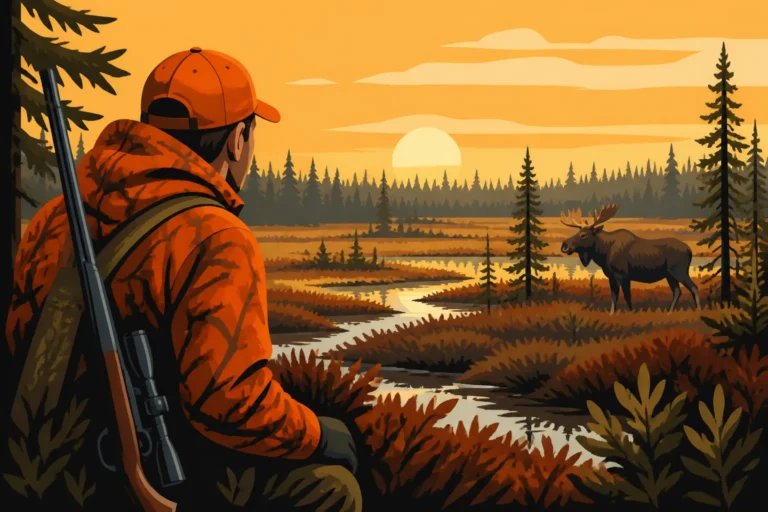
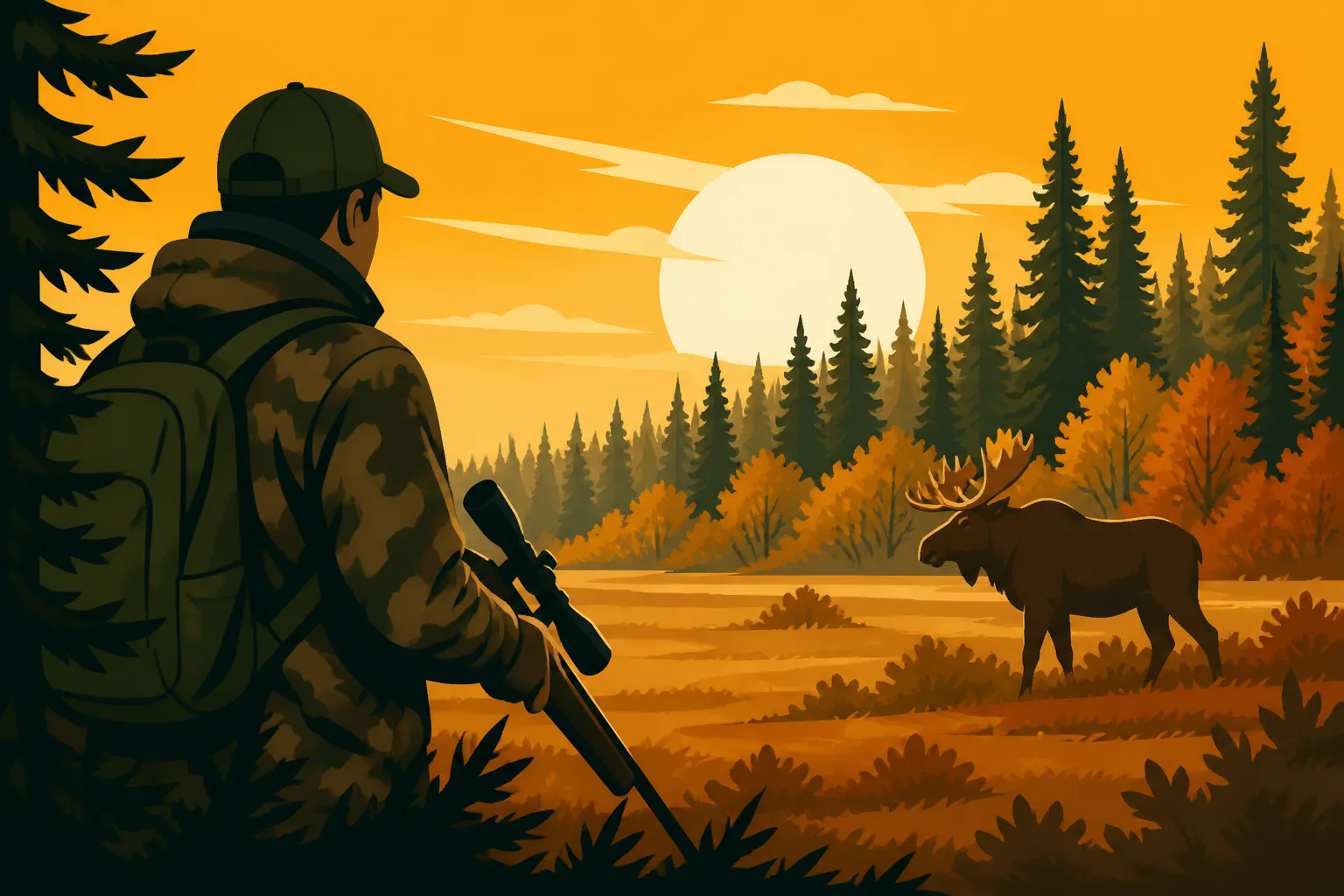
Moose are also prominent residents, especially in areas with more wetlands, willows, and young forest growth. The fringe offers excellent browse for moose, and the mix of cover and water helps them escape summer heat and find shelter in winter. You'll find them using the same dense areas as whitetails, but often deeper into the wetter parts of the bush. A bull moose appearing silently from a spruce bog is a sight you won't soon forget.
Black Bears absolutely flourish in the fringe. The diverse berry crops, abundant denning sites, and availability of protein from game carcasses (or even agricultural crops) mean strong bear populations. Spring and fall hunts for bears in this area are very popular, often producing large, healthy animals, sometimes even with striking colour phases.
Elk are present in certain pockets of the fringe, though often in more localized herds than moose or whitetail. These majestic animals benefit from the heavy cover and access to both browse and agricultural forage. Finding elk in the fringe often requires extensive scouting and knowledge of specific herd movements, but the reward of hearing a bugling bull echo through the bush at dawn is unparalleled.
Beyond the big game, the fringe also supports a healthy population of smaller game. You'll often jump Ruffed Grouse from aspen stands, find Spruce Grouse in the conifer thickets, and encounter Snowshoe Hare in the dense undergrowth, all adding to the wild experience of the area. The sheer biodiversity of this transition zone makes every trip into the boreal forest fringe an adventure.
Navigating the Terrain: Challenges and Strategies
Hunting the boreal forest fringe isn't like hunting open prairie or rolling hills; it demands a different approach. The terrain itself is a significant factor, acting as both a sanctuary for game and a formidable obstacle for hunters. Understanding its nuances is crucial for success.
Topography and Cover: More Than Just Trees
The term "fringe" can sometimes conjure an image of neatly bordered fields and forests, but the reality is far more complex and intermingled. The topography, while not mountainous, is rarely flat. You'll encounter gentle rises and depressions, often covered in dense stands of poplar and birch, or sharp-edged bluffs that provide excellent bedding for deer and secure vantage points. Between these higher points, the land frequently dips into lower, wetter areas, dominated by willow runs and sloughs – prime hideouts for moose and excellent travel corridors for all game.
Navigating these areas means pushing through incredibly dense bush. We're talking about tangles of young aspen, thorny saskatoon berry bushes, and thick stands of spruce that can limit visibility to mere yards. This isn't wide-open timber; it's a constant battle against clinging branches and hidden obstacles. This thick cover dictates animal movement, forcing them into predictable patterns along game trails, old cutlines from logging operations, or overgrown logging roads. These subtle pathways become critical for hunters to identify and exploit, as they often represent the easiest routes for both animals and humans through otherwise impenetrable areas. Recognizing the flow of these natural and man-made features is fundamental to positioning yourself effectively for an encounter.
Accessing Remote Pockets
One of the biggest hurdles in hunting the boreal forest fringe is simply getting to where the game is. While some areas are accessible directly from well-maintained grid roads, much of the prime habitat lies deeper within the bush, far from easy reach. These remote pockets often hold less pressured animals, but they demand more effort and specialized equipment to access.
For many hunters, the journey begins with a vehicle, followed by a move to an ATV or quad. These machines are indispensable for traversing muddy bush trails, old cutlines, and even for bringing out game. However, even quads can be stopped by deep muskeg or dense regrowth, meaning that often, the final leg of the journey is on foot. This is where good navigation skills truly come into play.
Modern mapping tools are an absolute game-changer here. Digital mapping apps, like those offered by GoHunt, allow you to overlay satellite imagery with land ownership data, helping you identify pockets of Crown land, private land boundaries, and potential access points. Before you even set foot in the field, you can scout potential travel routes, bedding areas, and feeding zones from the comfort of your home. Marking old trails, clearings, and key features on your GPS or mapping app is vital. Even with technology, nothing beats boots on the ground for understanding the lay of the land, but these tools dramatically cut down on wasted time and effort. Remember, not all trails are marked, and many old ones disappear into new growth, making reliable navigation critical to both finding game and safely returning to your vehicle.
Seasonal Considerations for Fringe Hunting
The boreal forest fringe changes dramatically with the seasons, and so too must your hunting strategies. What works in early fall might be completely ineffective during the peak of the rut or the depths of winter. Understanding these shifts is key to consistent success.
Early Season Strategies Archery/Muzzleloader
When the When Saskatchewan's Archery Season Opens in early September, the fringe is a lush, green jungle. Game animals are still primarily focused on food, water, and building reserves for the colder months. This is often a hot, buggy time, and animals are moving cautiously, often at dawn and dusk.
Your focus should be heavily on food sources. Look for areas with abundant berry crops like saskatoon, chokecherry, and highbush cranberry, which are huge attractants for bears and early-season deer. Agricultural fields bordering the bush are absolute magnets, especially those with standing crops like peas, lentils, or oats, or those that have recently been swathed. Deer and moose will emerge from the thick cover to feed, offering potential ambush points. Water sources are also critical in early fall, so look for game trails leading to sloughs, dugouts, or small creeks within the bush.
Trail cameras are invaluable during this period. Place them on prominent game trails entering fields, along natural funnels, or near water sources. They can help you identify nocturnal patterns and even daylight activity, giving you crucial intelligence on where and when to hunt. When hunting, stealth is paramount. The dense foliage means close encounters are likely, so move slowly, silently, and use the cover to your advantage. Wind direction is critical; if an animal smells you in the thick stuff, it's game over.
Mid-Season Rut Strategies Rifle
Mid-to-late October and early to mid-November mark the peak of the Rifle Hunting Saskatchewan's Whitetail Rut and the moose rut. This is when game patterns shift dramatically, as animals become much more focused on breeding than solely on feeding. For whitetails, the usually reclusive bucks become far more active, covering significant ground in search of does.
In the fringe, this means bucks will be moving along the edges of fields, through willow runs connecting larger bush pockets, and checking out doe bedding areas within the bluffs. They'll use the thick cover for security but are more likely to step into openings during daylight hours, especially on overcast days. Rattling and grunt calls can be incredibly effective during the whitetail rut in the fringe. The thick cover often means you can get away with more aggressive calling sequences, mimicking a fight or a hot doe. However, be prepared for a deer to appear quickly and silently.
For moose, the rut also sees bulls actively searching for cows. While often deeper in the swamps and dense bush, bulls will still move along established trails and even into field edges at night. Calling for moose, particularly Calling a Bull Moose in the Rut with cow calls or raking, can be highly effective in drawing a bull out of thick cover. Stand placement for rifle season should focus on pinch points, funnels, and natural travel corridors that animals use to move between bedding, feeding, and breeding areas. The advantage of the fringe during the rut is that animals are often less predictable, creating more opportunities for active hunting. Don't forget that many moose and deer are taken during Saskatchewan's November rut.
Late Season Cold and Snow
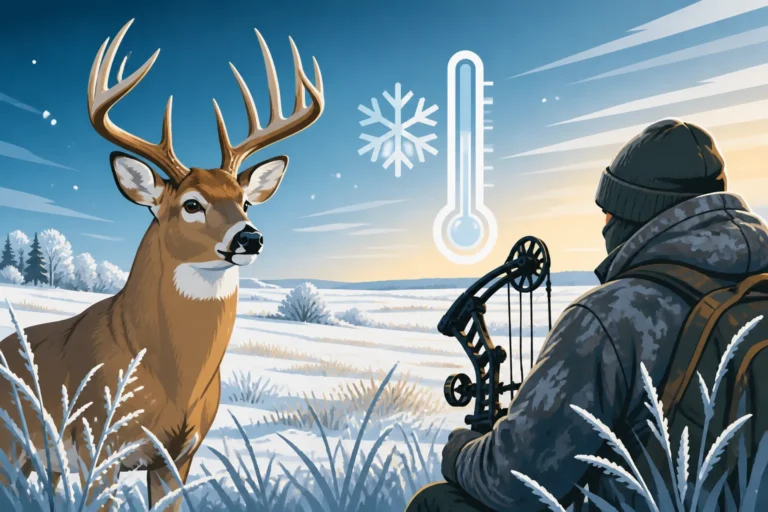
As December arrives, the boreal forest fringe transforms into a frigid, snow-covered landscape. Hunting the December Late Season Cold presents its own unique set of challenges and opportunities. Deep snow restricts animal movement, concentrating them in specific areas, while extreme cold forces them to prioritize thermal cover and high-calorie food.
Animals will seek out the thickest stands of spruce and pine for thermal protection, especially on north-facing slopes that are sheltered from prevailing winds. South-facing slopes, which catch more sun, can also be popular bedding areas. Food sources shift to browse that remains available, such as willow, aspen, and various evergreens, as well as any remaining agricultural crops like standing corn or flax that offer both food and cover.
Late season hunting often becomes a game of tracking and still-hunting. Fresh snow provides a canvas for reading sign – tracks, rubs, and beds tell a story of recent animal activity. Follow fresh tracks into dense cover, moving slowly and deliberately, anticipating where the animal might be bedded. Patience is paramount, as deer and moose will often bed down in incredibly thick spots, seemingly invisible until you are almost on top of them. The bare trees and muted colours of winter can also aid in spotting game, but the animals are often far more alert and sensitive to movement. Proper gear for extreme cold is not just about comfort; it's about safety. Make sure you have a Winter Truck Kit for a Saskatchewan Hunt with you, fully prepared for emergencies.
Essential Gear and Preparedness for the Fringe
Hunting the boreal forest fringe means being ready for anything. The conditions can change in an instant, and being properly equipped isn't just about comfort—it's about safety and success. You'll be spending time in rugged, often isolated terrain, so your gear needs to be up to the task.
Clothing and Footwear for Variable Conditions
Saskatchewan weather, especially in the fringe, is famously unpredictable. A sunny, mild morning can quickly turn into a snowy, blustery afternoon. This means layering is not just a suggestion, it's a necessity. Start with a good moisture-wicking base layer to manage sweat, which can quickly lead to a chill once you stop moving. Add insulating mid-layers, such as fleece or down, that can be easily added or removed as your activity level or the temperature changes.
Your outer layer needs to be both waterproof and windproof. You'll be pushing through wet brush, sitting in damp stands, and facing biting winds, so reliable protection from the elements is critical. Quiet fabrics are also essential; that crinkly rain gear might keep you dry, but the noise it makes could easily spook a deer in the dense bush. Choose materials like brushed fleece or soft-shell fabrics that offer weather resistance without sounding like a chip bag every time you move.
Footwear is perhaps the most critical piece of clothing. You'll be walking for miles, often through uneven, wet, and sometimes frozen ground. Invest in high-quality, insulated, waterproof boots with excellent ankle support. For early season, rubber boots are fantastic for traversing swampy areas silently. For late season, heavily insulated boots are non-negotiable for keeping your feet warm during long sits in frigid temperatures. Make sure they are well-broken in before your hunt to avoid blisters, which can quickly ruin a trip. A good pair of gaiters can also be a game-changer, keeping snow and debris out of your boots and preventing your pants from getting soaked.
Navigation and Safety Tools
Getting lost in the dense boreal forest fringe is a very real possibility, and often happens faster than you'd think, especially if you're engrossed in tracking. Reliable navigation tools are non-negotiable. While a smartphone app like GoHunt is excellent for planning and general navigation, a dedicated GPS unit or a satellite communication device like a Garmin inReach or Zoleo is a wise backup. These devices often have better battery life, are more durable, and can function even without cell service – which is often non-existent in remote fringe areas. Always carry a traditional compass and a physical map as a final failsafe; electronics can fail. Know how to use them.
Beyond navigation, a comprehensive emergency kit is essential. This should include a well-stocked first-aid kit, fire-starting tools (multiple methods), an emergency shelter (like a space blanket or lightweight tarp), a whistle, a headlamp with extra batteries, and enough emergency food and water for at least 24-48 hours. Consider a personal locator beacon (PLB) for true peace of mind in areas without cell service; these devices can send an SOS signal directly to search and rescue services.
Finally, communicate your hunting plan to someone reliable. Let them know where you're going, when you expect to return, and what your emergency contact information is. The boreal fringe is beautiful but unforgiving, and being prepared for the unexpected is the hallmark of a responsible hunter. It's often said, "It's better to have it and not need it, than need it and not have it."
Hunting Specific Species in the Boreal Forest Fringe
The diverse habitat of the boreal forest fringe provides exceptional opportunities for targeting a variety of big game animals. Each species, however, requires a tailored approach, leveraging their unique behaviours and preferred habits within this complex environment.
Whitetail Deer: The King of the Fringe
Saskatchewan is world-renowned for its whitetail deer, and the forest fringe is a prime example of why. These areas produce some truly magnificent bucks due to the abundant food and cover. Hunting whitetails here is a blend of patience, stealth, and understanding their movement patterns between two distinct worlds.
Bedding areas are almost exclusively found deep within the thickest parts of the bush – dense stands of spruce, tangled willow thickets, or elevated aspen bluffs that offer both concealment and a vantage point. Deer will often bed on south-facing slopes in winter for thermal gain. Food plots, whether natural berry patches or cultivated agricultural fields, are their primary draw. Look for travel routes that connect these bedding and feeding zones, often worn-down trails through the bush or along the edges of fields. These are your choke points.
Still-hunting is a highly effective tactic in the fringe, especially for those who relish the challenge of moving slowly and deliberately through the bush. This involves taking a few steps, pausing for several minutes to glass and listen, and then repeating. The goal is to spot the deer before it spots you, often catching a flash of an antler or a patch of hide in the dense cover. Stand hunting is equally productive, particularly when positioned on a well-used travel corridor, a pinch point between two fields, or overlooking a natural funnel. Elevated stands can give you a better view over the brush. Calling, especially during the rut, can draw bucks out of the thick stuff. Learn to differentiate between a cruising buck and one that's locked down with a doe, as this dictates how aggressively you call. Remember, hunting whitetails in the fringe means embracing the thick stuff; if you're not seeing deer, you might not be deep enough. For those wanting to delve deeper into specific tactics for these bucks, read up on Hunting Whitetails in Saskatchewan's Forest Fringe.
Moose and Elk: Giants of the Bush
While often associated with the deep boreal, moose and elk find excellent habitat within the fringe, especially where water sources and thick, mature timber are prevalent. Encountering these large animals in their natural environment is an unforgettable experience.
Moose in the fringe are often found in areas with ample water and younger, regenerating forest growth. They favour wetlands, beaver ponds, and the edges of muskegs where willows and aquatic vegetation provide preferred browse. They’ll use dense spruce and aspen stands for bedding and thermal cover. When Calling a Bull Moose in the Rut, focus on early morning and late evening, mimicking a cow in heat or a challenging bull. The thick cover can make it hard to pinpoint their exact location, so calling from a strategic spot with good visibility (or at least good listening) is key. Tracking is another viable method for moose, particularly after a fresh snowfall. Moose leave very distinct tracks, and following them can lead you into their bedding areas. Be prepared for thick cover and often wet ground.
Elk are more localized but exist in healthy herds in certain fringe areas. They utilize heavy timber for bedding and security but will often venture into adjacent agricultural fields or clearings to feed, especially in the late evening or early morning. Calling for elk during the rut (typically late September to early October) can be extremely exciting. Bugling or cow calling can draw a bull in, but be ready for a rapid approach. For both moose and elk, patience is crucial. These animals are powerful and can move silently despite their size.
Black Bear: The Opportunity Hunt
Saskatchewan's boreal forest fringe is prime black bear country, known for producing large, healthy animals, including some beautiful colour phases. Hunting black bears here can be a thrilling pursuit, often providing an opportunity to hunt a different species alongside your deer or moose hunt.
Baiting is the most common and effective method for black bear hunting in Saskatchewan. This involves establishing a consistent food source to attract bears to a specific location, typically a few weeks before your hunt. Success hinges on a well-maintained bait site, strategically located with good access and cover for a stand or blind. When setting a bear bait site in Saskatchewan, remember that consistency and quantity are key to keeping bears coming back.
Timing a Saskatchewan Spring Bear Hunt is critical. Bears emerge from their dens in late April or early May, hungry and looking to replenish calories. This is when baiting is most effective, as natural food sources are still scarce. In the fall, bears are heavily focused on hyperphagia – eating as much as possible before denning. They will target berry crops, oat fields, and any available mast crops.
While baiting is common, bears can also be still-hunted or spot-and-stalked, particularly in areas with natural openings, clearings, or along field edges where they might be feeding on crops or berries. This requires extreme stealth and keen observation skills. Always exercise caution and be bear aware when hunting in the fringe. Bears are powerful animals, and understanding their behavior is crucial for a safe and successful hunt.
Strategic Scouting and Land Access
Successful hunting in the boreal forest fringe isn't just about what you do in the moment; it's heavily reliant on what you do before you even step foot in the woods. Strategic scouting and a clear understanding of land access are foundational elements that can make or break your hunt.
Utilizing Technology for Scouting
In today's hunting world, technology has become an indispensable tool for efficient scouting, especially in complex environments like the boreal forest fringe. Gone are the days of relying solely on paper maps (though you should always have one as a backup!). Modern mapping applications, such as GoHunt or onX Hunt, provide hunters with powerful insights before they ever leave home.
Satellite imagery is your best friend here. These apps allow you to zoom in and examine the landscape in incredible detail. You can identify potential bedding areas (often dense, dark timber), travel corridors (natural funnels, old cutlines, bush edges), and feeding zones (agricultural fields, clearings with berry bushes, areas of young regenerating forest). Look for changes in vegetation density, subtle elevation changes, and water sources. You can mark waypoints for potential stand sites, glassing locations, and even areas where you want to focus your boots-on-the-ground scouting efforts. This kind of pre-hunt virtual scouting, also known as Scouting With Satellite Imagery in Saskatchewan, saves immense amounts of time and focuses your physical scouting efforts on the most promising areas.
Another invaluable feature of these digital mapping tools is the ability to overlay Crown land layers. The boreal forest fringe contains a mix of private land, various types of Crown land, and sometimes even Wildlife Management Zones (WMZs) or Fish and Wildlife Development Fund (FWDF) lands. Understanding these boundaries is absolutely critical for staying legal and respectful. GoHunt, for example, can visually represent these land ownership boundaries, allowing you to confidently identify public access points and avoid trespassing. You can also trace potential routes from accessible roads into promising Crown land blocks, assessing the challenges before you go. This technological edge means you're not blindly walking into unfamiliar territory; you have a well-researched plan.
Understanding Land Ownership and Access Rules
Saskatchewan has a complex patchwork of land ownership, and in the boreal forest fringe, this is particularly true. There are generally three main categories:
- Crown Land: This is public land, owned by the province, and generally open to hunting unless otherwise posted or restricted. However, "Crown land" isn't a monolithic entity. There can be different types, such as Provincial Forests, provincial parks (where hunting is generally prohibited), and various other classifications. Always verify the specific rules for the particular parcel of Crown land you intend to hunt. For a deeper dive into these rules, you can consult Saskatchewan's Crown Land Access.
- Fish and Wildlife Development Fund (FWDF) Lands: These are specific parcels of land purchased or leased by the province with funds generated from hunting and fishing licenses. They are managed for wildlife habitat and are typically open to public hunting. However, some FWDF lands may have specific access restrictions or regulations, so always check the signage or the Ministry of Environment's online resources.
- Private Land: This is land owned by individuals or corporations. In Saskatchewan, it is illegal to hunt or even access private land without permission from the landowner. This is not just a courtesy; it's the law.
Permission etiquette for private land is paramount. If you intend to hunt private land that borders the fringe (which often provides excellent opportunities), always make the effort to "knock on doors" and respectfully ask for permission. Do this well in advance of the season, if possible. Be polite, explain your intentions, and offer to share game or help out on the farm. A positive relationship with landowners is a treasure in Saskatchewan hunting. Never assume access, even if the land isn't posted. The "Posted" sign rules in Saskatchewan are quite specific; not all private land needs to be posted to be off-limits. Using your digital mapping tools, like GoHunt, to clearly identify property boundaries and landowner names can help you target your permission-seeking efforts effectively and ensure you are always on the right side of the law. Respect for the land and the landowner is not just good manners; it's critical for maintaining hunting access for everyone.
Field Care and Extraction in Challenging Environments
Bringing down a big game animal in the boreal forest fringe is a triumph, but the work is far from over. The real challenge often begins after the shot, especially when you're deep in the bush, miles from the nearest road, and facing Saskatchewan's unpredictable weather. Proper field care and a well-thought-out extraction plan are crucial to honouring your harvest and ensuring quality meat.
Processing Game in the Bush
When an animal is down, especially a large one like a moose or a big whitetail, time is of the essence. The dense cover of the fringe means you might be quite a distance from any vehicle access, making quick, efficient field dressing paramount.
The importance of quick field dressing cannot be overstated. Removing the entrails as soon as possible helps cool the carcass rapidly, which is critical for preserving meat quality, particularly in milder early-season temperatures. Bacteria growth is the enemy, and heat is its ally. For larger animals, consider quartering the animal in the field. This means breaking down the carcass into manageable pieces (the two hindquarters, two front shoulders, and the backstraps and tenderloins) to make it easier to transport. While it's more work upfront, it can save you immense effort and potential damage to the meat during extraction.
In Saskatchewan, you'll often encounter cold weather for meat preservation, which can be both a blessing and a curse. While cold temperatures (below 4°C or 40°F) are excellent for cooling meat, extreme cold can freeze the outer layer too quickly, potentially trapping heat inside. If temperatures are consistently below freezing, hanging the quarters in a shaded, well-ventilated spot (away from predators) can allow them to cool and age naturally. Always protect the meat from dirt, leaves, and flies by placing it in game bags. These breathable bags are essential for keeping contaminants off while still allowing the meat to breathe and cool. For more detailed advice, check out Meat Care in Saskatchewan's Cold Snaps. Carrying a lightweight saw or a sturdy knife is indispensable for this process.
Getting Your Trophy Out
This is often the most physically demanding part of a fringe hunt. That majestic animal you just harvested now weighs hundreds of pounds, and you're miles from your truck. Planning for extraction needs to happen before the shot.
If you're hunting with a partner or a group, this task becomes significantly easier. However, if you're alone, especially with a moose, the challenge is immense. Game carts can be incredibly useful for smaller deer and quartered moose/elk, particularly if you have relatively clear trails or old logging roads. They turn a dragging nightmare into a more manageable pull. For really large animals or extremely rugged terrain, a quad or side-by-side is often the only realistic way to get an entire animal or large quarters out. Ensure you know the rules for quad use on Crown land and private land where you are hunting. Many hunters will debone quarters in the field to reduce weight further, leaving the bones behind (check regulations for evidence of sex and skull requirements).
The reality is that sheer manpower is often the ultimate extraction tool. Whether it's backpacking out quarters one at a time or slowly dragging a deer through thick brush, it's going to be hard work. Having a good, sturdy hunting pack with a strong frame is vital for carrying heavy loads. Don't underestimate the physical exertion, especially when you're already tired from the hunt. Think about your route back to the vehicle as soon as you start tracking. Consider the easiest path, even if it's slightly longer, rather than trying to power through impenetrable thickets. Knowing how to efficiently quarter and pack out a large animal, such as Getting a Moose Out With a Quad, is a skill worth learning well in advance of your hunt. Remember, the goal is to get that precious meat and trophy out safely and in good condition, no matter how tough the journey.
| Species | Primary Habitat in Fringe | Preferred Hunting Methods | Key Considerations |
|---|---|---|---|
| Whitetail Deer | Aspen bluffs, willow runs, field edges | Stand hunting, still-hunting, rattling, grunt calls | Utilize cover, focus on travel corridors and food sources |
| Moose | Wetlands, beaver ponds, dense spruce/willow | Calling (rut), tracking (snow), still-hunting | Water access, thick cover, high browse areas |
| Black Bear | Berry patches, heavy timber, agricultural edge | Baiting (spring/fall), spot-and-stalk (clearings, oat fields) | Food sources, denning sites, safety, timing your hunt |
| Elk | Mature timber, clearings, grain fields | Spot-and-stalk, bugling/calling (rut), stand hunting (field edges) | Localized herds, heavy cover for bedding |
| Ruffed Grouse | Aspen stands, regenerating clearings | Walking old trails, bush roads, flushing dogs | Excellent small game opportunity |
| Snowshoe Hare | Dense willow, young spruce thickets | Still-hunting, tracking, small game dogs | Abundant, especially in cyclical population peaks |
Disclaimer
Hunting is an activity that carries inherent risks. The information provided in this guide is for informational purposes only and should not be considered a substitute for professional advice or formal hunter education. Always consult the official Saskatchewan hunting regulations annually, obtain all necessary licenses and permits, and adhere to all local, provincial, and federal laws. Prioritize safety, practice ethical hunting, and respect wildlife and private property.