Hunting the Thickwood Hills
The Thickwood Hills region of Saskatchewan, a unique blend of rolling terrain, dense bush, and scattered agricultural pockets, presents a formidable yet incredibly rewarding challenge for hunters. It's not the wide-open prairie where you can glass for miles, nor is it the endless boreal forest, but a distinctive transition zone that often leaves new hunters scratching their heads about how to approach it. This guide aims to demystify hunting in the Thickwood Hills, helping you understand its unique characteristics and develop effective strategies to pursue the diverse game animals that call this beautiful, rugged country home.
Understanding the Thickwood Hills Ecosystem
The Thickwood Hills aren't just a place; they're a mosaic of habitats that demands a thoughtful approach from any hunter. Nestled between the open farmlands and the denser boreal forest, this region offers a bit of everything, which is precisely why it holds such a rich variety of wildlife. But this diversity also means you can't just apply a one-size-fits-all hunting strategy.
The Landscape and Habitat Types
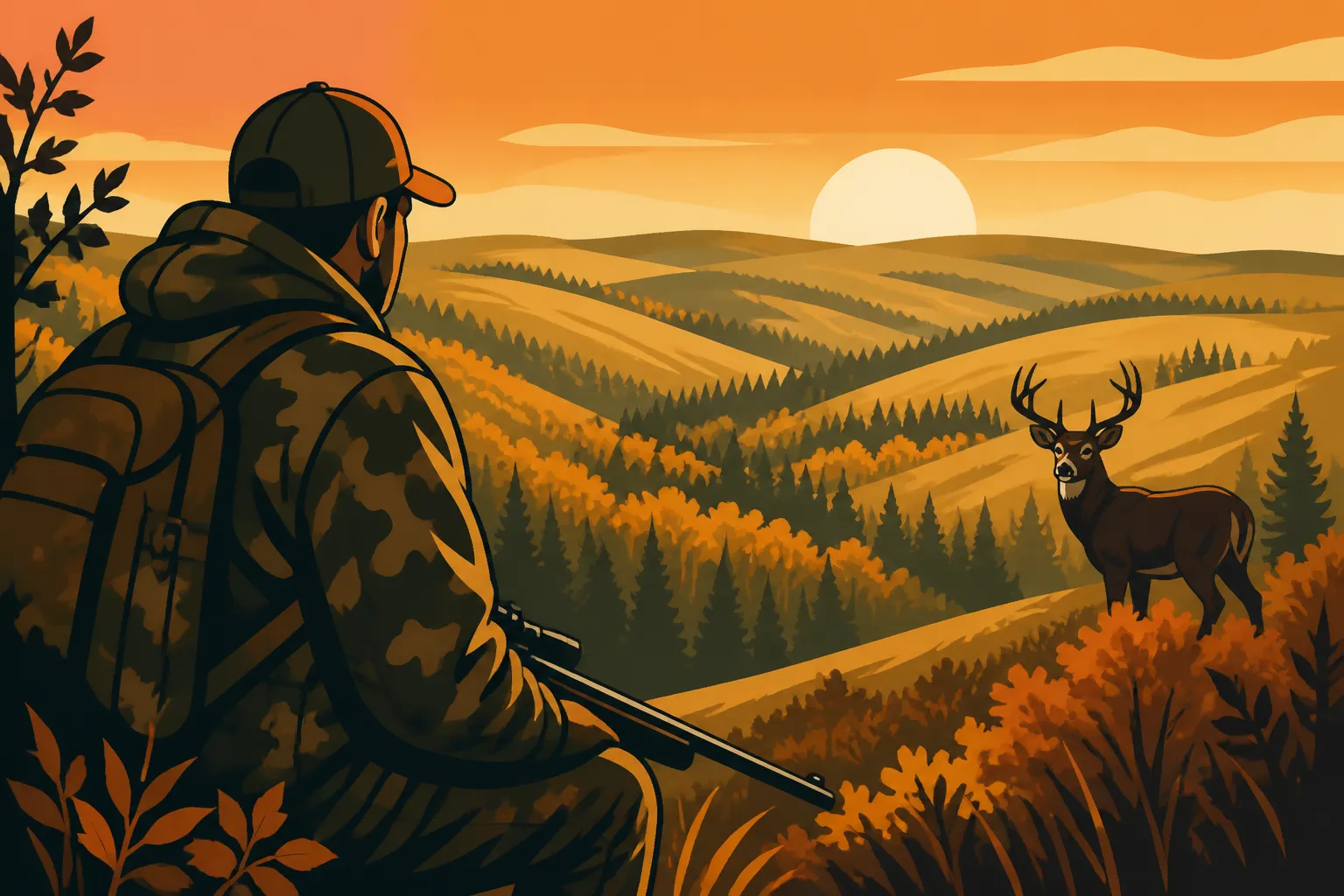
Imagine a landscape where gently rolling hills suddenly give way to deep coulees, often choked with dense willow and aspen bluffs. This is the essence of the Thickwood Hills. You'll find pockets of mature aspen and spruce, particularly in north-facing slopes and draws, interspersed with expansive natural grasslands and old hay fields. The low-lying areas often feature sloughs, marshy sections, and willow runs, providing critical water and cover. It’s this varied topography, often punctuated by significant elevation changes, that creates a haven for wildlife and a navigational puzzle for hunters.
The soil tends to be richer here than in some purely boreal regions, supporting a robust undergrowth of berries, shrubs, and forbs that are vital food sources. The aspen forests, a characteristic feature, undergo a dramatic transformation in the fall, making visibility a key factor in your hunting strategy. When the leaves drop, the woods open up considerably, but before that, the density can be incredibly challenging, sometimes forcing you to hunt primarily by sound and sign.
Water is usually abundant, with numerous small lakes, potholes, and creeks weaving through the landscape. These water sources, combined with the dense cover, make for ideal bedding and travel corridors for big game. Understanding these micro-habitats – from a dense spruce bluff offering thermal cover to an open, south-facing slope with browse – is paramount to predicting where animals will be.
Key Game Species Found Here
The Thickwood Hills are a true gem for hunters because of the sheer variety of game you can encounter. Whitetail deer are perhaps the star attraction, and the region is known for growing some truly impressive bucks. The combination of nutrient-rich browse, dense cover for security, and proximity to agricultural fields means deer thrive here. You'll often find them bedded deep in the bluffs during the day, moving towards field edges or more open aspen stands to feed at dawn and dusk. Hunting the Forest Fringe for Big Bucks is practically a roadmap for this area.
Moose have also established a strong presence, particularly in the wetter, bushier areas closer to the sloughs and lakes. Their preference for willow and aquatic vegetation makes the numerous low-lying, boggy sections perfect habitat. Catching a bull moose slipping through a willow run or browsing on a poplar ridge is a memory you won't soon forget. Moose Hunting Saskatchewan's Farmland and Forest describes some of these dynamics. Black bears are also very common, especially in the denser timber and areas with abundant berry crops. While often considered a northern species, the Thickwood Hills offer excellent bear hunting opportunities, both in spring and fall.
Beyond big game, the Thickwood Hills are a fantastic destination for upland bird hunters. Ruffed grouse drum in the aspen stands, particularly along old logging roads and bush trails, providing exciting walk-up opportunities. Ruffed Grouse Hunting Saskatchewan's Bush Trails explains how to target these elusive birds. Hungarian partridge might be found in the transition zones near farmland, and snowshoe hares abound in the thick undergrowth, offering a fun challenge for those looking to fill some small game tags.
How the Terrain Impacts Hunting Strategies
The hilly, broken terrain of the Thickwood Hills dictates a very different hunting approach than, say, glassing open prairie. Long-range shooting opportunities are few and far between, replaced by closer, more intimate encounters within the bush. This means your rifle needs to be quick-handling, and your bowhunting skills need to be sharp for those tight windows. Stealth and patience become your most valuable assets.
Navigating the dense cover requires a keen sense of direction and often, a GPS or mapping app like onX Hunt is absolutely invaluable. The hills can block cell signals, so ensure you have offline maps downloaded. Following game trails, understanding wind direction in undulating terrain, and being able to move quietly through fallen leaves and brittle branches are skills that will be tested. This is not a hunt where you can sit on a distant ridge and expect to spot your quarry at leisure; you'll be actively working the cover.
Elevation changes also play a significant role. Animals will use depressions and ridges for travel, and understanding how they move with the wind and sun can give you a significant advantage. Often, the highest points offer brief glimpses of distant openings, but most of your hunting will be done on a smaller, more detailed scale, focusing on pinch points, funnels, and natural clearings within the bush. For example, a small bluff tucked between two fields may not seem like much, but it could be a major travel route. Hunting a Saskatchewan Bush Bluff explores this in detail.
Planning Your Hunt in the Thickwood Hills
A successful hunt in the Thickwood Hills starts long before you ever step foot in the woods. This area demands thorough preparation, from understanding land access to having the right gear. Don't underestimate the physical demands and potential isolation of this unique landscape.
Accessing Public and Private Lands
Like much of Saskatchewan, the Thickwood Hills feature a mix of Crown land and private property. Identifying these boundaries is absolutely critical. While some areas are dotted with quarter sections of Crown land, often landlocked by private holdings, other sections within the provincial forests (such as the Bronson Provincial Forest that overlaps parts of the Thickwood Hills) offer larger contiguous blocks of public hunting opportunity. Utilizing resources like the Saskatchewan interactive mapping tools or premium hunting apps like onX Hunt can show you property lines, land ownership, and even designated public lands like Wildlife Habitat Protection Act (WHPA) lands. Reading a Saskatchewan WMZ Map Before You Go is a great primer for this.
For private land, always secure permission before entering. Farmers and ranchers in the Thickwood Hills are often friendly but value their privacy and property. A polite knock on the door, a clear explanation of your intentions, and an offer to share any game taken can go a long way. Understanding Getting Private Land Permission in Saskatchewan is key. Remember, a lack of "No Trespassing" signs does not imply permission; it's your responsibility to ask. Respecting landowners is not just law, it's a fundamental part of the hunting ethic here.
| Land Type | Key Access Rule | Notes | Best Practice |
|---|---|---|---|
| Crown Land | Generally open for hunting unless restricted | Check WMZ maps for specific restrictions and seasonal closures | Verify boundaries with reliable mapping tools (e.g., onX Hunt) |
| Private Land | Permission REQUIRED from landowner | Trespass laws are strict; always ask first | Approach landowners respectfully, well in advance of your hunt |
| FWDF Lands | Accessible for hunting without specific permission | Managed by Saskatchewan Fish and Wildlife Development Fund | Refer to provincial maps to identify these specific parcels |
| Community Pastures | Requires permission from pasture manager | Rules vary by pasture; some may be open, others restricted | Contact the local pasture manager well before hunting season |
Essential Scouting Techniques for this Region
Pre-season scouting is non-negotiable for the Thickwood Hills. Since visibility is often limited, you're looking for sign: tracks, rubs, scrapes, browse lines, and bedding areas. Start with aerial imagery from services like Google Earth or GoHunt's mapping features. Look for distinct changes in vegetation, water sources, natural funnels created by hills or thick brush, and potential food sources like old clearings or transition lines to agricultural fields. Scouting With Satellite Imagery in Saskatchewan can help you pinpoint promising spots from your armchair.
Once on the ground, focus on covering ground quietly. Walk old trails, cutlines, and natural game corridors. Pay attention to wind direction, especially near likely bedding areas or travel routes. A south-facing slope with thick pines might be a common bedding area in winter, while dense willow next to a slough could be a summer haven. Look for patterns in deer movement, identifying where they enter and exit thick cover, especially at the edge of fields or bluffs.
Trail cameras can be incredibly effective here, placed on well-used game trails or near rub lines. Since the cover is so dense, a single trail camera can give you vital intelligence on the quality and movement of animals without having to physically be there all the time. Remember to place them respectfully and legally, especially on public lands.
Gear and Preparedness for the Terrain
Hunting the Thickwood Hills is not a casual affair; it requires robust gear and a strong emphasis on preparedness. Footwear is paramount. You'll be doing a lot of walking, often through uneven, wet, and brushy terrain, so waterproof, comfortable, and supportive boots are a must. Dress in layers, as temperatures can fluctuate wildly, especially during the fall. Camouflage that blends with the browns, greens, and greys of the aspen and spruce forest is ideal.
Navigation tools are your lifelines. A reliable GPS unit or a smartphone with detailed offline maps (like onX Hunt or similar apps) is non-negotiable. Carry a compass and physical map as a backup, and know how to use them. The dense bush can disorient even experienced woodsmen, and cell service is often spotty or non-existent. A power bank for your phone is also a smart addition.
Safety gear should include a first-aid kit, a whistle, a fire starter, and sufficient food and water. This is not a place you want to be caught unprepared, particularly if you're hunting alone. Knowing What to Do If You Get Stuck in the Bush is not just good advice, it's essential. blaze orange is also legally required during rifle seasons, so make sure you have enough to be highly visible to other hunters.
Hunting Strategies for Thickwood Hills Game
The varied terrain and diverse species in the Thickwood Hills mean you'll need a range of hunting tactics in your playbook. Flexibility and adaptability are crucial for success in this challenging environment.
Whitetail and Moose Tactics
For whitetail deer, still-hunting or stand hunting are often the most productive methods. Still-hunting involves moving very slowly and deliberately through the bush, pausing frequently to observe and listen. The goal isn't to cover ground quickly, but to spot game before it spots you, making the most of brief sightlines. Focus on areas with fresh sign, like feeding areas in the mornings and evenings, and bedding areas mid-day. Walking into the wind is critical. Hunting a Poplar Bluff at First Light or along a willow run can be particularly effective.
Stand hunting, whether from a treestand or ground blind, can be highly effective near known travel corridors, pinch points, or food sources. Identify a natural funnel, perhaps where two bluffs converge or a game trail crosses a slough, and set up downwind. The rut, typically in early to mid-November, can be particularly exciting, as bucks become more active and less cautious. Calling and rattling can be effective during this period, especially in the more open aspen parkland sections.
Moose in the Thickwood Hills often inhabit the thicker, wetter sections. Calling, especially during the rut, can be productive. Bull grunts and cow calls can entice a bull to investigate. Still-hunting along the edges of peat bogs, sloughs, and dense willow thickets is another good approach. Moose are large animals but can move surprisingly quietly through the bush, so be alert. Focus on areas with fresh browse sign, particularly stripped willows and poplars.
Upland Birds and Small Game
For ruffed grouse, hunting involves walking old trails, cutlines, and the edges of aspen bluffs. A good flushing dog can be invaluable for working the dense cover and retrieving birds. Walk slowly, scanning the trees and undergrowth. Grouse often hold tight, only flushing when you're almost on top of them, so be ready for quick shots. Concentrate on areas with a mix of young aspen, shrubs, and berry bushes.
Hungarian partridge, or "Huns," are typically found in more open agricultural areas or the transition zones between bush and field. They often hold in shelterbelts, fencelines, and stubble fields. They are notoriously fast flyers and can be challenging to hit. Walking these linear cover features can push them into the air. Snowshoe hares are plentiful in the dense underbrush. They change color with the seasons, from brown in summer to white in winter, making them surprisingly hard to spot. A .22 rifle or small gauge shotgun can provide excellent sport.
Adapting to Weather and Seasonal Changes
Saskatchewan weather can be unpredictable, and the Thickwood Hills amplify these challenges. Early season (September) can be warm, with dense foliage, making still-hunting difficult and increasing the need for scent control. Archery hunters will find themselves focusing on water sources and dense bedding areas.
As the season progresses into October and November, the leaves drop, opening up the forest and improving visibility, but also making it easier for game to spot you. Cold fronts can trigger increased movement, particularly among deer and moose preparing for winter. Hunting Saskatchewan Winter Weather Safely is crucial as temperatures drop. In late season (December), deep snow can concentrate animals into specific yarding areas or along field edges where food is more accessible. Tracking becomes much easier, but the cold demands serious clothing and preparation.
Wind is another major factor. In hilly, broken terrain, wind swirls can make judging scent direction difficult. Pay close attention to how the wind is moving around bluffs and through coulees, and position yourself accordingly. A thermals will cause air to rise in the morning and fall in the evening, affecting how scent travels up and down hillsides.
Navigating Challenges and Staying Safe
The beauty and remoteness of the Thickwood Hills come with inherent challenges. Being prepared for these obstacles is just as important as knowing your hunting strategies.
Dealing with Thick Cover and Navigation
The dense nature of the Thickwood Hills can be disorienting. It's easy to lose your bearings, especially when tracking game or moving through unfamiliar territory. Always rely on your GPS or mapping app like onX Hunt, marking your vehicle location and any key waypoints. Carry extra batteries. Take frequent bearings with your compass. Before you head out, familiarize yourself with the topography by studying maps and satellite imagery. Look for linear features like cutlines, fencelines, or old trails that can serve as navigational aids.
Consider hunting with a partner, especially in areas with very thick cover. If you do hunt alone, always tell someone your exact hunting location and your expected return time. Plan for contingencies, such as getting turned around or needing to stay out longer than expected. The "buddy system" truly shines in this type of environment.
Wildlife Encounters and Remote Preparedness
While the Thickwood Hills are teeming with game, they also host other wildlife, including black bears and coyotes. While usually shy, knowing basic bear safety – carrying bear spray, making noise, and knowing how to react in an encounter – is always wise. Coyotes are common, and while typically not a threat to hunters, their presence highlights the wild nature of the region.
Remote preparedness goes beyond just navigation. Ensure your vehicle is in good working order and well-stocked with an emergency kit, including extra fuel, warm blankets, a shovel, and recovery gear. Roads in the Thickwood Hills can be rough, muddy, or snow-drifted, and getting stuck far from civilization is a real possibility. A satellite communication device, like a Garmin inReach or Zoleo, provides peace of mind and allows you to call for help even without cell service.
Respecting the Land and Other Users
The Thickwood Hills are a shared resource. Practice Leave No Trace principles: pack out everything you pack in, and perhaps even more. Be mindful of your impact on the land, particularly when driving ATVs or UTVs, sticking to established trails and respecting any "Hunt on Foot Only" signs. Quad and Side-by-Side Rules on Crown Land vary, so be sure to know them.
Respect other users, including other hunters, hikers, and landowners. Share the resource responsibly. If you encounter another hunter, a friendly nod or brief chat is appropriate, but avoid disrupting their hunt. Maintaining good relationships with landowners is crucial for preserving access. Leave gates as you found them, avoid disturbing livestock, and always report any suspicious or illegal activity you observe. By being a responsible and ethical hunter, you contribute to the future of hunting in this magnificent region.
Disclaimer
This article is for general informational purposes only and does not constitute professional advice. Laws, prices and regulations vary by location and change over time. Consult a qualified professional for guidance on your specific situation.